#54 Top Safety Tips Flight Instruction Dan "Taz" Christman Instructor Of The Year
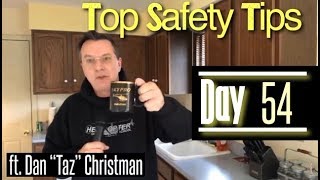
Dan "Taz" Christman, 2018 General Aviation Flight Instructor of the Year, covers pre-flight briefings, scenario-based emergency training, and loss-of-control prevention. He compares Part 61 and Part 141 syllabi and explains why continuous learning matters for instructors.
Chapters
Thank you, Sky Pro Aviation for the cool cup. It's awesome. Our first viewer to send us a cup. Send me a cup. And there's another one on the way. I'm Kenny Keller, creator, Helicopter Land Ground School. I'll put that link down below. Today we got something cool for you. Top safety tips for flight instruction from 2018 Flight Instructor of the Year, Dan Taz Chrisman. He was interviewed this week on a show, General Aviation Awards. Going to show you the excerpt from that. I'm going to put the link down below for the full episode if you'd like to watch the full episode that included two other Aviation Award members. And I'll also put a link down below for the author of the video who created this video and the interviewer. I'll put those links below. I'm lucky. Taz Christman is our instrument instructor inside Online Ground School and we authored this book together, top 10 checkride tips. I'll put a link down that for that below as well. After the interview with Taz, I'm going to put a link down below or I'm going to tell you about a really cool discount on professional pilot package for those of you that are going to be CFIs and be working in an industry. So I highly recommend you watch this from Taz Christman. Taz is a instrument instructor, airplanes, helicopters, military background operations. I'm just going to go to the video. It's awesome.
I encourage you to pay close attention. You're going to pick up some great tips, tricks, and possibly even some traps to avoid in their presentation. So with that, let's start with Dan the Taz Dan. As you can see from the slide, he has a military uniform on and he has some civilian clothes. And that's because Dan plays both roles. He is a lieutenant colonel in the military as well as being a civilian pilot and flight instructor. And during the course of his particular careers, because we split them into two, he's had a passion for flying since a very young age. So with that being said as well, Dan, I know that you have a lot of certificates, a lot of ratings, definitely a lot of flight time in a variety of different aircraft. Can you give us a little background? What got you into aviation? And I know that looking at your bio, there was a bit of a carrot that was thrown out by your parents to really get you started flying.
Yeah, absolutely. So when I was a real young kid, my dad was in the Air Force and used to take me down to the base and that's when I first started seeing airplanes flying. Around that's where my love for aviation really started. So when I got into middle school, my parents started telling me, hey, you need to make good grades to be a pilot and all that standard stuff. And they started, they cared, as you were mentioning was basically if I got on the honor roll, they'd start paying for my flight training. So that's what I did and that's how I started.
Pretty good carrot to be throwing out there for good grades at that age.
Yeah, yeah, it was, you know, I don't want to say I was a great student, so it was definitely tough for me, but it definitely got me motivated. So.
And then what took you to the military?
Well, like I said, my dad was in the military and so I've kind of always had that in the back of my mind. And so when I went through school, I went through Purdue University and got all my ratings and stuff like that. And I was on a track, I wanted to do airlines and then possibly do like reserve unit, like my dad was in the reserve. So I was thinking something like that. And then 911 happened and my airline job basically that I had kind of went away. So I decided I was gonna go active duty and it's actually turned out to be a very good thing for me. So that's kind of how I got there.
Now switching gears, going to the civilian side, other than just being a pilot, why did you really take up this pursuit of being a flight instructor?
I think for the most part. So when I was a kid, when I started learning how to fly, I learned in a flying club and we were all really close knit type of people. And I had one instructor who was kind of like the grandfather of the club. He basically started it back in 1957 and he was there for the entire time and he knew everything and flown everything. And I saw his passion for it and that's something that really got me interested and for whatever reason, it just clicked with me. And I enjoy instructing. I like teaching people how to fly.
How long have you been doing that?
It'll be 20 years this year actually.
Great. How many students?
Oh, I have no idea.
That's a good number. If you can't on one hand, then that's a very good number. They've all been successful.
Yeah, I mean, by the time you add in the military plus the civilian, I couldn't tell you. Several hundreds probably.
Now as a flight instructor, of course, you're seeing the best and the worst of students at a variety of different times throughout their learning curve, if you will. Can you tell us a little bit about what it is that you see on the good side? What makes a good student, what makes a. A student that wants to continue to learn, and of course, what makes a student successful? And then what are some of the things that you've seen where they're not.
So good or.
They fail? They don't see it as a pilot.
Right. I think a lot of it has to do with the passion, aviation for all of us, all three of us that got this award and yourself included, and everybody that's watching. Aviation is a passion. And I've seen some students, they just walk in, as soon as they get to the airport, their eyes light up and they just have that passion. You tell them to go home and read something and they'll read it and then three other things and they'll come back with 10 questions. Those are the type of students that I think really succeed. And then we have other students that maybe this is just something that they thought would be kind of cool to do. And maybe they don't necessarily have that passion, so they don't put forth as much effort towards it. And I think those are the ones that don't necessarily make it quite as well.
A lot of it has to do.
With the instruction, too.
Can you tell that when you first meet a student, somebody that is a prospective student, can you tell if they're going to be a good student or not, or does it take you a little bit of time?
I would say I can tell if the passion's there kind of right away by the way they ask questions. You know, if they're just kind of standing around and, you know, their hands in their pockets type of stuff, or, you know, if their eyes light up when you ask them about someone and you take them out to the airplane, you show them what an aileron is or, you know, what, you know, what the altimeter is, or how the airspeed indicator works. If they're really engaged with you, then, yeah, you can tell they've got the passion.
What are the things that you see that are probably the hardest for the students to really pick up, or what kind of techniques do you use as a flight instructor to get them through. Get a student through a difficult situation?
Right. So that kind of goes into my first topic here. So as an instructor, it's very important to make sure that you're pre briefing and debriefing your students. I've seen a lot of instructors through different schools that I've taught or different ones, other students that come to me from other schools. And one of the biggest problems is most of the instructors are young and they just want to get their hours and get to the next big thing. Not all of them. I don't want to characterize all instructors like that, but unfortunately, we see that a lot. And honestly, when you're. One of the biggest advantages for the student is if you're going to go out and teach them something, talk about it on the ground when you're 0 knots 1g and they can ask you questions. They're not bumping around in the winds and turbulence and trying to fly the airplane while you're talking and stuff like that. So tell them about it on the ground, talk through it, explain the maneuver, and then show it to them when you get up in the air. And then when you come back, you can debrief to it. So now that you've talked about it and you're going to show them in the air so they recognize everything that you've told them. And then when you come back, you can talk about those points that maybe they didn't necessarily do quite as well or some of the things they did really well. And then hopefully they can gain some insight from that as well. Now, when you do your debrief, do.
You allow the student, do you ask them, hey, how do you think the flight went? Or do you do the critiquing and let them listen? What kind of technique works best for not only you, but a very successful flight instructor?
Sure, absolutely. So like I said, part of the pre brief or what you should be doing is setting out those objectives. What are we actually trying to accomplish on this flight? And when you set those objectives and the desired outcomes, when you come back, you can ask the student, did we achieve those objectives? And if they can answer, yes, we did, then they understand what has been accomplished there. And I think that's important because most of your learning actually does occur in a debrief as we're taught as instructors. Learning is a change in behavior as a result of experience. Well, they can't learn anything if they haven't experienced it. So once you talk to them about it, you get up in the air and you show it to them. Now you come back, now they've got that experience and they can learn from it.
What are some of the other things that you see overall as a flight instructor with the students and some of the barriers to learning and the successes?
Yeah, so that kind of flows right into my next one here. So having a good training plan is always important. Part 141, schools do a really good job because they're regulated by the FAA. They have to follow that guideline. Part 61 on the other hand doesn't necessarily do that. You know, you can basically do whatever you want as long as you. By the time they get to their checkride, they're able to met all the tasks. But I think a syllabus is a very good, good thing to use as a Part 61 instructor. It gives the student a roadmap for the training so they know where they're at, they know what stage of training they're in. Unfortunately, I've seen students come to me and they've been flying for 30, 40 hours and they still haven't soloed and they have no idea how much more time it's going to take for them to get their rating. They know right away that it takes 40 hours to get your private at least what the FAA says. So if you have that syllabus, it gives them a roadmap. So if something is not necessarily going as planned, they're not meeting objectives, which goes back to the pre brief and the debrief, then they know how they're doing and they can understand why is it taking them a little bit longer in the syllabus.
Anything else as far as some of the barriers that you see to learning.
So you know as you go into the inefficient training. So a lot of times this is kind of, a lot of these slides are going to kind of go towards together but if they don't have that syllabus, they don't have that objective. You might miss maneuvers. So there's not a logical progression for their training. So like it says on the slide, there are missed maneuvers or topics requiring multiple flights. So you get all the way up to the solo. The instructor thinks, okay, he's been doing great, he's done all of his patterns. And then you look at the regs of the stuff that's required and he's like, oh crap, we haven't done S turns or something like that. If you're following a syllabus or then you would have that and you're going to meet those milestones. Some of the other stuff I see is not maximizing that downtime. So what I mean by that is if we have a weather day or a maintenance cancel or something like that, still get the student in here. There's other things that you can go over plan across country with them. Unfortunately, I see students if it's raining out here in the desert, everybody thinks it's crazy. And they go home. That's a perfect opportunity to plan a cross country. Don't wait until it's sunny and the winds are calm to sit there in the school and plan your cross country for three hours. That's the time you should be flying. So you can maximize that. You can do emergency procedures training, which is my next topic there. So as a pilot, one of the keys to successful outcome of an emergency is understanding the systems of the airplane, understanding the procedures that the manufacturer wants you to use in that aircraft. How important? Go ahead.
How important is that operational discipline? Because it's one thing to practice it, you do it at high altitude where it's a safe environment. But when something happens like an engine failure close to the ground, all of a sudden that seems to change. The pilot gets out of that rote mentality. What do you break that down? Because that fear factor can be overwhelming.
Oh, absolutely. And that's kind of some of the barriers to it. Pilots are scared. You know, that startle effect that people will have, you know, when you're in the training environment, you know, we're in the pattern. You're going to do simulated engine failure. Unfortunately, here at my airport we have a tower so we have to call and tell them that we want a short approach that kind of keys into the student, hey, I'm probably about ready to lose my engine. In the training environment, we always fail the engine, you know, opposite the numbers so they can make their landing, all that kind of stuff in the real world that's not going to happen. It could happen on climb out when they're 30ft in the air and stuff like that. A good way to handle that is to go through scenario based training, talk to them, give them scenarios and see how they're going to react to it. A lot of times when I'm flying, when we're doing our cross countries, I'll.
Give them.
A situation, I'll tell them, hey, your oil pressure just went to zero. What are you thinking? How's that affecting your engine? Where's the nearest airport? Things of that nature.
What are some of the other traps or tricks or things that you like to impart on a student that again will make them successful? Take that stress and anxiety out of learning how to fly, which there is a lot of, not only as a student pilot, but through all of the ratings and certificates they may go through.
Sure, absolutely. So I mean a good book knowledge going through and understanding all the scenarios that they could get, just getting into that scenario based training, understanding the systems of the airplane and the procedures and how they all relate is very, very important.
And you bring a key point up because with loss of control, which has been a big topic over the last couple of years, and how we can minimize or mitigate or eliminate loss of control accidents. And I see on your slide you've got some good ideas and some traps as well.
Sure, sure, absolutely. And I don't want to steal Kathryn's thunder here because I know this is kind of in her wheelhouse as well. But more DA pilots and passengers die from accidents involving loss of control than any other factor. And it's very important for general aviation pilots to understand that the military and corporate aviation airlines, they do a pretty good job of sending most of their pilots through some sort of upset recovery training. But your average weekend flyer doesn't necessarily get that. And I think that's where courses like Catherine's or many of the other schools out there that does this kind of stuff is very important. And it's something that all. I wish all pilots would do that.
But what are some of the other things that you want to impart to the audience with regard to not only being a good flight instructor, but being a recipient, that is a student of a good flight instructor or identifying a poor flight instructor?
So. Yeah, absolutely. So, I mean, if as a. Can you rephrase that again? I'm sorry.
Well, in talking about finding out whether or not you have a good student or a bad student, I know that student learning. They too are, of course, you know, sizing up their flight instructor. Are they a good flight instructor? Am I learning? You know, state. I mean, you can probably see that because I've seen it before where if a pilot can't fly a stabilized approach, is it because they just don't know how to fly or is it poor? Something like that.
Yeah, exactly. And that obviously brings me up to the, to the next slide here. And I've seen this, unfortunately, many times I've had students come from other schools and they're saying, like I mentioned earlier, 20, 30 hours in the pattern, they haven't soloed yet. And why is that? I go fly with them and they're manhandling the airplane. So they're trying to force the airplane around the pattern and they're not stabilized. And one of the issues that's going to lead to is it could potentially get them into a loss of control scenario. I've actually had several students tell me that their instructor told them not to touch the trim, which I have no idea where the instructor got that the airplane flight Handbook clearly says on several pages to trim up the airplane. And the nice thing about that is once you get the plane stabilized, so the FAA says to maintain a stabilized descent rate, maintain a specified airspeed, make sure your checklists are all completed, you're configured, and then that's going to require little or minor changes in your pitch control or your airspeed control. That's going to make it a lot easier to land. Like I always tell my students, you know, trim is your friend. Use it and it'll help you fly the airplane. Well, in wrapping up with you, can.
You give us a little bit of over, you know, just a little bit of an oversight of, you know, what it is that you think that the audience really needs to understand not only about the flight instruction, but being a good student, no matter what certificate or rating you're going for. Exactly.
So probably my last slide or. Yeah, my last slide there is talking about the career long training. So as a pilot, you're always a student, so you should always be continuously learning, try to put as much knowledge as you can. I think of it as a bank account trying to put as much knowledge or money, if you will, in that bank account, if you will, in that bank account. You don't want to be in a situation where empty and you bounce a check, you know, to where you don't have the knowledge needed to handle an emergency or something along those lines. So there's lots of things you can do to continue that training. You know, new ratings, new endorsements, take a facility tour, go see ATC tour a tower, do some pilot assisted maintenance, things like that. And of course use the wings program. There's lots of slides and programs on there that you can use to help increase your knowledge.
One last thing before I let you go, and that is, do you really think automation helps their learning process or hinders the learning process?
It can be both. Pilots are very good at manual tasks. They're not very good at systems management type stuff. So flying the rpa, I see that all the time. It's very sensor intuitive. So we're on autopilot. We're just managing stuff the whole time and it gets boring and monotonous sometimes. And that can lead to not necessarily taking the due diligence that you really need.
Excellent. Well, thank you, Dan. I really appreciate the time and congratulations on your award as the 2018 General Aviation Flight Instructor of the Year. Continue to keep up the good work and continue to do well in both your military career and your civilian career.
Thank you. Thanks for having me.
All right, we're back. As you can see, Taz, with all these ratings and all these cool things under his belt, is an ordinary, average, nice guy. And I'm lucky. I'm honored. I'm proud to have Taz a part of what we do and to be able to call him a friend. Absolutely awesome. We are going to be hanging out at Heli Expo this year. We weren't sure if we were going. One of our helicopter manufacturer friends hooked us up to make sure that we would be there. So Taz and I will both be there walking around, hanging out. So look for us there. Please subscribe the channel Click the bell to be notified of new videos. This is Coffee with Kenny, day 54, I think. Coffee with Kenny.com there's that's the playlist for our daily videos where we talk about all kinds of stuff. Helicopter training, ground, flight, careers, everything. Everything's fair game. So subscribe. Click the bell when you do and we'll see the next video.










