#77 AUTOROTATIONS | TIP | 180 degree turn vs two 90 degree turns
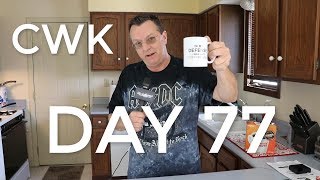
YouTube instructional video (Day 77 of "Coffee with Kenny") by Kenny Keller comparing a full 180° autorotation turn to two sequential 90° turns as an alternate technique for helicopter autorotations. The video contains a classroom-style explanation of why two 90s can help with setup and timing, a filmed demonstration flight using specific entry parameters (70 KIAS, 1500 MSL ≈700 AGL) aiming for a 2.8 target, and a brief closing note about Kenny’s Helicopter Online Ground School and a 24‑hour trial offer.
Questions this video answers
March 22, 2019
70 (stated as "enter at 70")
1500 MSL (about 700 AGL)
2.8
17,000 subscribers
Chapters
Foreign. Do you struggle with the 180 turn in the auto rotation? Do you do a full 180 degree sweeping turn? Or have you ever tried two 90 degree turns? If today you're struggling, never give up, never give up. That's good advice in life. Or trying to learn the 180 degree auto rotation. This is Day 77 Coffee with Kenny and I'm still digging it. So in the past 70 some days I've talked about the 90 degree turns in the auto rotations and doing 290s. So I thought today I wanted to give you a little bit of classroom that I did where I go more in detail on the two 90 degree turns. This is something that you can try, may or may not work for you. You may be doing a full sweeping 180 turn and maybe that works out great for you and if it does, that's great. The 290 degrees was introduced to me many years ago as a new instructor and I've talked about how I got scared during non irritation, almost quit instructing. Luckily I had an awesome examiner who said hey, you've had your scare, move on, don't do it again. Hired another instructor to come in and work with me that had a lot of experience and he taught me some really good stuff. And that's what I want to relay to you is what he taught me. And I want to know if this is something you've tried or you're willing to give it a try. And I want to know what your thoughts are. So I'm going to roll that now.
I'm going to show you something here. I want to show you these two 90 degree turns and just see if this might help you. And when he showed it to me, I loved it. And I still do a nice swooping 180 turn sometimes. But there are times depending on day, weight, altitude, whatever the case is, sometimes a 90 degree turn just works out better. And so what he showed me was he goes, Kenny, let's first start out doing 90s. So we did the straight ends practice those first and then we started doing 90s where we'd just come from at that airport. We'd come from the north, enter our rotation, make a 90 degree turn, go to our spot. So we perfected that and he goes okay, let's go do two 90s and let's see how you like that. So we came around and again on a 180 you need to take the time to go out and get set up. People make the mistake of let's hurry up and get another one in before we go in. If you crank around and you don't have time to get set up and you enter it sloppy, it's going to come out sloppy. So he taught me, make sure you take enough time. Take all the time you need. Our examiner, or the examiner I've been using for 20 years, says if.
The.
Keto good auto is a good setup. And he said on checkrides, I don't care if you take 10 minutes to get set up for an auto, tell your students, take as much time as you need to get set up for these autos. So he showed me that, introduced me to that 90, that 290 degree turns and I just liked it. So again, I'm stressing this today because a lot of times I get questions from people working on their CFI or working on their commercial and private too, but mainly CFIs that will say, Kenny, I'm really struggling with the 180s or teaching the 180s. So I'm showing you this as an alternate method. Instead of trying to get a student to make a full 180 turn, start out with some 90s, introduce them to straight ins, introduce them to some 90s. 90s and then try two 90 degree turns. Because here's what I found is cool. You always want to enter about a beam your spot. But depending on the day, if you get started into that auto fairly quickly and make a nice turn, you get turned in. Sometimes you can wait. So on a certain day you make a 90 degree turn, level out and you go, okay, I'm going to wait.
Until about now and turn it and.
Judge to get in your spot. To me, it's harder to make that swooping 180 turn and hit my spot. If I turn it into 290s, I can turn to a 90 level out and go, oh, okay, second 90 right now, roll right into it if I need it or if I want to delay a little bit to make it work out right and then make my second 90 degree turn. So I just wanted to hone that in. For those of you that struggle with 180s, this is a method you can try. I like doing 90 degree turns. Somebody will come here, been flying somewhere else for years and I said, let's do some 90 degree autos and I'll go, what? Who does 90s?
I do. Why not?
You know, we do 360s. We do 270s.
Yeah.
All right, so now we're gonna film a 90 degree auto rotation. Back when I Was brand new instructor struggling with autos. Had an instructor come in to help me a little bit and he said, you know what, let's go out and we'll start out with quick stops today. Always do quick stops at four autos. Then we'll do some straight ins, then we'll do some 90s and then we'll turn into the 180s. And I really like that because it seems like it's harder to make the 4180 turn. If you break it down into two 90 degree turns it gives you time to make the decision. You enter, you turn, roll back out. You might delay a little bit before you turn or you might be ready just to go ahead and make your second 90 degree turn. Just kind of an alternative instead of trying to make judge the full 180. For me it's easier to do it in two 90 degree turns. So we're gonna do a 90 degree turn just for fun. Again I'm going to try to hit the numbers 2.8. We'll see how close I get. I'm gonna Again enter at 70, zero rated ascent. I'm gonna do this one a little higher. I'm gonna do this at 1500 MSL, about 700 AGL just to give myself a little more of a challenge to try to see how close I can get to the numbers. So we're gonna go full carb heat. That's all the way on about 75. I got a climb going so I'm gonna lower a little collective, start a left up for my 90 degrees, get back to 1500 where I said I was going to be alright. I don't like having a bunch of descent. I don't like being too slow, I don't like things being all whacked out. So I'm going to get it straightened out here. There's 1500. I need to get back to my 70. And you know what? Last minute I'm screwing around. I'm not set up nice. So what am I going to do? I am going to go around, I'm going to make a right 360 degree turn, then I'm going to go around and get set up again because I was last minute trying to fix everything. And if I would have entered it, I can guarantee you it would have been a sloppy auto rotation. I wouldn't have been happy and then I'd be saying I wish I just would have went around. So when you're setting up these auto rotations, don't be too macho to go, you know, What? I screwed that up. I don't feel good about it. I don't have the aircraft where I wanted it. I'm going to go around and I'm going to set it up again. Totally, totally, totally. The key, good setup, feel good about it, have everything where you want it. Then enter the auto rotation. Some people say, well, you know, if you ever have a real engine failure, it's just gonna quit. You're not gonna be at this and that and that. Well, you know what? That's right. But you're gonna deal with that in the real world. We're in training mode. We're training people to go take checkrides. So for the training environment, yes, we want a nice standard. We want to have everything set up nice because we want a nice auto rotation because we want to perform well for the examiner so we can get our temporary for whatever rating it is we're going after. So again, the key is a good setup. I'm going to use 1500 70, zero rate ascent in trim. Yes, much better. I like it this time. So if I can keep that, not screw it up. Let's check carpet again. Yep, got full carpet. Got 70, 1500. I got a small descent.
White County Traffic Warrior 560 pop uniform is on a left downwind for Runway 18. White Honey traffic.
All right, got time to fix it. Little left pedal. 1500, zero radius. Need a little more speed. So Here we go. 70, 1500 in trim. Very small rate of descent. Looking good. I'm gonna guess right about now. One, two, three, enter. Okay, looking good. Got 70. RPM's good. I'm start my turn. I'm going to be kind of a lazy turn here. Really want to hit those numbers. I want to impress Gary, my camera operator over here. Getting ready to go. First commercial. There's the numbers 2.8. So I'm overshoot a little bit. That's all right. I don't care. So here comes the flare. Flare, flare, flare, flare. It was a real engine failure. We'd need a more aggressive flare and.
Get rid of that speed. Okay, we're back.
I hope that helps.
I hope that makes sense again. I would love to hear your comments below. I want to know if this has ever been introduced to you. I want to know what you think. I want to know if you're going to give it a try. I will add, I always recommend you doing auto rotations with an instructor. I really don't recommend doing them on your own. I am Kenny Keller, creator of Helicopter online ground school. I do want to mention we have a 24 hour test flight on a private pilot membership. So when you first sign up for that private pilot membership, you can go month to month. You got 24 hours. Check out the training and you won't be billed anything. Deciding that 24 hours to keep the training. If not, remove your credit card from settings or go on PayPal and your subscription. We part as friends. You're welcome back anytime. If you decide to leave your information in, you'll be billed every 30 days so at any time you can cancel. You can just go into the settings, remove your credit card, or again end in PayPal. It's up to you how long you keep the training. One month, two months, three months, you can leave and come back. We have a lot of people do that as they work through their ratings. It's all up to you. So a lot of great value. Seven years online, we're still having a blast. This month has been incredible. So please give us your comments down below. Thank you for joining us on day 77. We just hit 17,000 subscribers, which is great for our little channel. So keep subscribing. Click that bell when you subscribe, comment down below, give us a thumbs up and we'll see you tomorrow. Peace out.










