#82 ROBINSON to ENSTROM | Governor vs Throttle | NO BIGGIE
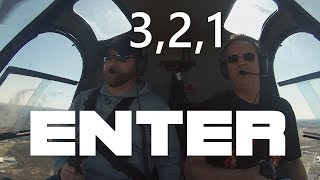
Kenny Keller transitions Brian Chalacombe from Robinson helicopters to an Enstrom 1983 model on his first flights in the aircraft. The key difference: the Enstrom's governor handles RPM changes automatically, so pilots barely touch the throttle. Autorotations feel noticeably smoother than in Robinsons.
Questions this video answers
60 hours
1983 model
17,000 subscribers
About 2300 RPM
300 AGL
Chapters
And we're gonna go 1, 2, 3, enter. Collective down. Right pedal nice and smooth. Just like that. That was sweet. Here comes the rpm, so let's raise it up just a little bit about 75, which is fine. I'm gonna raise a little more collective.
Welcome to Day 82 Coffee with Kenny. I've got mine.
And I've got mine.
All right, that little clip at the beginning. We're gonna show you the rest of that flight just in a. Just in a very short minute here. Just hear us out real quick. I want to introduce you to my helicopter land ground school member that's here. Drove four hours yesterday to get here. Give us a quick intro.
Hi, my name is Brian Chalacombe. I drove in from Peoria yesterday. Took about four hours to get here to come fly with Kenny in the Instrom. I've really enjoyed the couple flights we've taken so far, and we're gonna fly again this morning. The Instrom is a different animal than the R22 and the R44 that I've got 60 hours in between them. Boy, I thought that the throttle manipulation. I was pretty apprehensive about that. And it's really no big deal. It's very little manipulation that has to be done to keep the RPMs in the green. Back to you.
Awesome. And I'm glad he brought that up, because we're going to play the full video for you to see. Someone going with R22, R44 time. First flight in Enstrom. The only thing I edit out is just dead space. Our entire flight is in the rest of the video. We didn't have to edit out any foul language or anything. Didn't say anything bad. I was able to leave everything in. And I want you to watch the whole video if you're interested. But I like what Brian said about. So many people have questions about the throttle, and if they've flown in a governor, they're worried about the throttle. Now, I was having a conversation the other day with someone about this, and they're like, oh. But they kept making such a big deal out of the throttle. And I said, look in the instruments. Not a big deal because you've never flown one. Don't be so intimidated about it. The correlator is so good in this thing, and this is a 1983 model here, that we're flying still. Best running, strongest, smoothest. It's a beast and a cream puff all at the same time. And you'll see in the video, and every time I move the throttle, I Say it so that Brian knows when I'm helping him out with it just a little bit, and you'll see that it's very, very little bit. Subscribe to the channel if you're enjoying our content, and click the bell when you subscribe. We just hit 17,000 subscribers, and I've got to thank everyone for that. I gotta thank Brian for coming out, driving all the way up here. We've had a blast yesterday. And last night, went out for a little bit, had a couple adult beverages. That was a good time. Can I say that on TV? I mean, on YouTube? So I gotta thank Brian. Thanks again.
Thanks for having me out, Kenny. It's been great. Looking forward to this flight right now.
Awesome. So maybe we'll film a little bit while we're out today, see what other kind of cool stuff we can bring up for you. But subscribe like, please comment down below. Ask your questions about the instrument transitioning from another aircraft to the instrument, and we'll see at the end of the video.
One, two, three. Take.
Take two.
All right. I'll even let you lift this thing up. So whenever you get situated and you're ready, once you're back on the controls.
Okay.
I'm gonna let you monkey with the throttle a little bit. I'll stay there, right there with you. But what I want you to do when you're ready is just start increasing the throttle until we get up to about 2300 on the RPM.
Okay, back on the controls and just take your time.
Nice and smooth. Gently roll it. And after we get to 23, we'll stop, and we're going to start to raise the collective. And when we do, the correlator will actually increase the throttle for us so we don't have to do a lot of throttle work. And I'm just going to kind of talk you through it so you'll see how we do it. Cool. I got her set pretty stiff, so. But that helps you once you're flying. If it's nice and stiff, it won't. It's easier to fly. That's good in that range. Yep. Start raising your collective and do your normal pickup the way you're trained to do a pickup.
Okay.
And just raise collective. And if we need to adjust the throttle, we will. But the cornerator is going to do most of it. See, like, right now, you're just lifted straight up. Not moving the throttle. Not moving the throttle. But when we get to the green, we might have to roll back just a little bit because it has a tendency to go too high. There we go. And just ignore that bounce and just do your two step process the way you would normally do it. I'm rolling the throttle back a little bit and there you are, back to the hover. All right, so just take your time. Hover down the taxiway. For those of us that might be joining us in this video, we're going out for Brian's first time in an instrument helicopter. After R22 and R44 time, all we've done so far is pick it up off the dolly. A tad bit of hovering and we started hover taxi anyway to sit down to make a seat adjustment. So you're going to get to hear firsthand what it's like after how many hours you got all together.
60.
So 60 hour guy with R22 and R44 time. First time in the instrument. So we're just going to make it kind of natural. But I want to take away from your training flight. So we're just going to do our normal thing here. So what I would do next is we're clear on the left. I'd make a right pedal turn and we'll clear for traffic left and right. Make sure it looks clear. It's very quiet today at the Plymouth Municipal Airport. You'd think it'd be busier than this. And if it doesn't, we don't see anybody coming in. Looks good. Go ahead and start hover taxi now and I'll make a call for us.
Okay.
Plumber traffic, helicopter 8626 Papa departing Runway one zero. Plumber traffic.
Okay, so just take your time. Like I said earlier, I got the throttle for you. Even though I'm not doing anything with it. You have all the controls. I'm going to keep my hand close, but you're flying it. 60 hours, first time in our instrument. You're flying it. Feel good?
It feels very good.
That's what I thought you'd say. So we're gonna go. Warning, caution lights are out. In this older aircraft. We only got two. Those are out. RPMs. Top of the green. That looks good. Manifold pressure is good. Our EGT is good. You and I discussed the fuel. We know how much fuel is in there because of what I put in it. Radios are set, it's leaned. We're all good. So I want you to show me a normal takeoff the way you've been doing it in the R44.
Okay.
Just do what you would normally do. And I'll take care of any throttle adjustments if we need it. All right. If you do this nice and smooth, we won't even need it. Okay.
So normally for me it's about 45 knots. So that's miles per hour.
Correct. So what? Yeah, what would be the. So you're just off by 1.3. The poh on this one wants you to start climbing around 30, 35.
Okay.
So. And you'll feel ET and if you get ready with that trim, when we fill etl, if you give it a bump forward with the trim, it'll push it right through that etl. And then if you just keep everything steady, it will give you a 500. It'll give you 60 as you're climbing up. It'll give you 60 on the airspeed. It'll give you a 500ft per minute climb. It's a beautiful thing without ever changing the power. So just take your time. You can see it's very stable. My hands are close, but you have all the controls. And if we get down low, don't worry. Just keep the nose straight. If this gets touched, no big deal because it'll come right back up again. There comes etl. Yep. Just give it a little bump of trim. Okay. And that's about your 30, 35. So let it start. You can let it start climbing up. Okay, Going to roll back the throttle just a hair. We're just not much too high, but just a little bit. So I'm going to roll it back.
A little.
And I'm going to pull up just a little more collector for a little more power. And there you almost got your 60 and need a little more of a climb. So pull a little more power. We got a lot of fuel on, so it's. Normally you wouldn't have to pull that much collective, but I'd say you're doing pretty darn good for your first time in instrument helicopter, first takeoff ever. So we can do left or right traffic, but we should probably do left just because we got more open fields over here. Over there we got more trees, more woods, more houses. Okay. So if we do left traffic, we got more open fields to go to in the case we have some kind of a failure or something.
Okay, clear right.
Clear on the left. So ultimately we could go because there's no traffic. We could use right or left today. We'll just choose this one because we got more spaces to go. So on downwind, let's shoot for 1370 on your airspeed, which you almost have already. So whenever you're ready to start your turn, you can start your turn.
Okay.
I was. Those houses, I was kind of.
Yep. If you want to kind of hook around those, it's just perfect. There's a tree line over there. You'll see. You can follow for your downwind. So you got your 1300. You got almost 70. And we got a hair climb. So now you could maybe go down. Just a hair down collective. Just a hair leveled out. And now we're on downwind. Got 65, 1300, top of the green. Right. There's your trim ball. We don't have a string. We have a trim ball. So you look here to step on the ball. All right. Halfway through your first pattern in NSTURM helicopter.
Very cool.
What do you think? Five minutes into it, or is it too soon? You like it?
I like it. Yeah. It feels more like a big boy helicopter. Oh, I can't see.
Yeah, you can say that. I mean, when I first saw an instrument, I'd been training in Switzerland and Robinsons. The first time I saw one, I'm like, oh, wow, that looks more like a real helicopter. And people are gonna get mad at me in a video. But that's what I thought because it's bulkier, it's got a bigger cabin, it has more what looks like real controls. So it just has that look and feel of a larger, heavier helicopter.
Absolutely. It feels like it behaves like it. There's more force on the controls a little. It's very smooth.
Yep.
Excellent. As I'm slowing down and climbing here, it's okay.
Let's go a little farther out because I've got an area that sets us up for a really nice normal approach. And I'll kind of show you so you'll know kind of what to gauge for. Okay, so we'll go out a little bit farther. I'll make a radio call for us. Get that out of the way.
Plummet traffic. Helicopter two, six Papa left downwind for Runway ten. Plumbing traffic.
Okay, so I like. We only need to lose a couple hundred feet before we start our approach, because I start them at 300 AGL. We're at 1300. I want to be at 11. So we got all kinds of times to descend, so no rush there. Whenever you're ready, we can start a left turn and a little bit of a descent. We're clear on the left. Push a little bit of right pedal in there. It'll make it a little more coordinated feeling. You notice we're not monkeying with the throttle at all. We could use just a hair more. I'll turn it on just a Little for you. Try to keep that minimum of 60 and I'll make another call.
Plummet traffic helicopter 26 Papa left base turning final Runway 10. Plymouth traffic.
Okay, Plymouth traffic guard, copter 24530 is five to the east. We'll be maneuvering in an area approximately 2 miles northeast of the field.
Plymouth.
Can you see the Runway? I do. Okay, so let's steer a little bit back to the left. Here you go. Can you see those two clumps of really green trees up there?
Yep.
When we get to those, if we come over those about 1100 or 1120 or a little over 1100, that'll set us up for a nice normal approach. It'll take the guesswork out of it for you. So you're only about 100ft away from there, so you got plenty of time. Your airspeed's good. Small descent. We're in trim. RPM's top of the green. We're looking beautiful. We're looking good.
How far was that traffic?
He was five miles. And he's gonna be maneuvering either north or south of field. I forget what he said.
To me. It looks like we're on a normal approach.
Okay, I'd agree with that. Go ahead and fly this angle. Fly this angle the rest of the way down. Show me how you've been train to do your normal approach.
Okay. Trim is a little. Makes it.
I don't know.
I like it.
It's different. Like I said, the first couple hours, it takes a little bit to get somebody to use it. At first, they'll just. Even if I take even, I say it every three minutes. I don't know. I guess you're getting. In the beginning, you're used to the. Getting used to a different feel, different controls, different aircraft. And it usually takes a couple hours to get somebody really using the trim. But I'll demonstrate it for you here. After this approach, I wanted you to get the full, full effect of flying the pattern. You have all the controls. It's all yours. The RPMs just on the low side of the green, which is fine. No problem. Yeah, Everybody makes a big deal out of the throttle. It's not a big deal in the instrument. It only takes a little bit of tweaking it if you're flying the aircraft nice and smooth the way it's intended to be flown. I like your approach. Your approach looks really nice. The angle is really, really good. I'd say a thumbs up for your instructors. They taught you a nice approach. I like it. This. Probably feeling a little different for you at the end.
Yeah.
I'd trim it forward just to here. And there we go. All right. I'll take the controls for a second. Give you a break.
You have the controls. Thank you.
Let's take a look at just me hovering. Let's see how much I use the trim to keep us in one spot. Keep trimming back. I don't know if it's moving much.
Plymouth Traffic Guard copter 24530 transitioning from east to west approximately 2 miles north of the field. Plymouth.
Just over the tree line right there.
Okay. He say gyrocopter. What did he say? Guard. Oh, guard.
It's about 10 o'. Clock. Right?
Okay, I see him. All right, You've had a little break. I'll give you the controls back.
All right.
And what I want you to do this time on the last takeoff, I felt you pull a little bit of up collective, which is okay. A lot of guys do that. I want to do one without adding any collective. I want to keep that collective. I want to see me like you got a. Your job going for a commercial and you're taking off with a load of passengers on a hot day, and you've got a big load of fuel and you're right at your max power setting. You can't pull any more power. So just creep forward. What we say painfully slow. Let's try this entire takeoff without any pulling any collective. Warning caution lights are out. Gauges are still in the green. We know we got lots of fuel. Egt is good. And just work on keeping that nose straight. And if we touch. Don't worry about it. Let the skids touch and it'll come right back up again. There you go.
That is so pronounced. Isn't that helicopter?
All right, now you can let her start climbing up. If we can hold that collective there, this will give you 60 in a 500 climb without ever pulling any more power.
Okay. I haven't touched it. Leaving it alone.
Just a good method to use. If you can do it without changing the power during the takeoff, it's always a good thing because they tell us engine is going to quit. Most likely the power change. Did you see the interview I did with the young guy at heli Expo at the instrument booth when he talked about his engine failure in the instrument. No, he was getting ready for a commercial checkride add on. Got a bird up there to our left.
Yep. And down below, or that might have been Shadow.
And he was close to checkride and he was out soloing. And he said he Changed the throttle for whatever reason. And when he changed the throttle, it quit. Oh, boy. And he landed safely. Didn't turn nothing up, and the engine just grenaded. It was like, boom, done, over. And he talked about how the smoke came in the cabin and he vented the doors and landed and got out and walked away.
Wow. Left a pattern again.
Sure. Unless you want to.
I'm.
Do you want to go fly around and just kind of test out the controls? Whatever you want. What do you feel like doing?
Where was that pinnacle you were talking about?
Okay, it is. Let's see. We'll find it.
This.
Oh, it's right here.
Okay.
That's like the best we got.
Okay.
It ain't big.
I'm gonna try to get an orbit, I guess.
Sure. But it is a Pinnacle.
Plymouth traffic guard capture 24530. Clear to the west Plymouth.
So that the throttle setting, the rp, the RPM setting right now is right.
At the top of the green.
Right. Is that where you want it to be? Normally you would want to keep it.
In the middle, anywhere in the green. I usually like it, like in the lower part of the green or about the center, just because it's engines running just a little bit quieter. Clear left, but clear on the left. Anywhere in the green is good.
Well, I got pretty far away.
That's typical. We all do it.
I'm descending quite a bit.
You're flying in a different aircraft with a different view, you know, a different feel. Ages totally different in a new and, you know, different state after driving 200 and some miles to get here today.
Yeah.
So as I said, this is, you know, we're training, but we're also wanting to have a little bit of fun, too. You know, it's just about, you know, getting the feel of the aircraft, enjoying, you know, trying something new, trying a different aircraft. Menstruum Helicopter loves these videos, by the way. Of course they do. But I enjoy showing to people. And it's fun. It's always fun to see somebody come from a Robinson and get into Enstrom and then, you know, go fly for a little while and then, you know, let them just say, what did they think? You know, I'm going to leave you alone, let you concentrate on your Pinnacle. Well, if you would.
I'm not very familiar with what the technique is for Pinnacle.
Well, I would do what you're doing, flying around a couple, three times, checking it. The wind's coming out of the north, so I would probably take kind of an angled approach into it, knowing that that wind Is coming right up that what we'll call a ridgeline. And if there's any turbulence from the ground being uneven, it's going to be coming straight that way. So just to avoid turbulence, instead of going directly, because this thing's lining up with the wind, pretty much, it's north and south. I'd come at it on an angle just to avoid any turbulence. You know, eddy currents are rolling over up that hill. And that way we won't feel any of that until we get basically right down almost to the surface area. That would be. Sound reasonable? Yeah.
So from the southwest or I probably.
See it, I would. Since you're making a right hand patterns. Yeah. I would approach it from the southwest, Landing northeast. Okay.
Boy, into the wind. You slow down, start climbing.
Yep.
Or descending. Boy, coming in from the southwest. And you've got those trees there, but you're clear of the highway. It's kind of right.
You got a little. Yeah. Coming on an angle too. Helps keep steer. Keeps clear of some of those obstacles. Makes sense to me. I mean, it seems like the smart thing to do. Yeah. I'm gonna roll back just a little bit of throttle. Just a little bit. So can you see in our 10 minutes or so flying that the throttle really isn't a big deal? Yeah. It's just been using it much and I haven't done. I haven't done much with it. I try to mention it when I do it so that you get mentally getting the cue that, okay, I've just made a small change. But when I change it and it's not much. It's just a little higher, a little low, and I just either add or reduce a little bit of throttle. That's all I'm doing. I don't take much.
I don't like that.
Good call. You could do. You want to do southeast versus southwest. You do it whichever way you want.
I like that approach. It just. That was way too steep.
And I was gonna say something before you. At first I thought, let's see what he does. I am always, always, always for go around, set up again if you don't like it. Just, you know when you don't like it. Right. Yeah. If you go ahead and try to force it, it's gonna suck. You want to feel good. And I don't care if it takes you two or three times to get set up to where, okay, this feels good. And then do it. There's nothing wrong with that. People say, well, you know, real world. Well, yeah, I get real world. Right. But when it Comes to landing, you want to do it right, and you don't want to wreck, and you don't want to get something power lte or get obstacles. So when it comes to landing, Take as many times as you need to get set up to make a safe landing. That feels good.
I'm going to go to the left of this guy's property a little bit.
The key is to take your time, and if you don't like it, don't do it. Looking for traffic left and right.
It's a different engine sound to try to get used to.
Yeah, it's. It's just. It does sound different in here. And I don't know how to explain it Other than, you know, exhaust comes out a different place Than what you're used to in a Robinson. So it is a different sound. A totally different sound. Same engine, lycoming. But because of where the exhaust is placed, it's not far off my. Behind my door over here, Exiting off the side where the Robinson, that comes out the back.
Right.
So you're getting a different. A different feel or a different sound. This definitely looks a lot better.
Oh, it feels a lot better.
I'm still.
I'm gonna roll on just a little bit of throttle. Okay.
I'd call that a steep approach.
Yep.
I'm gonna go towards the far side of it, I guess.
Okay. And I just come to a hovered over. If you feel good about it. I don't really want to set down Because I don't know who actually owns it. I've done it a few times. Nobody's ever complained. I'm assuming it's state highway because it's right beside the highway, But I don't know that. Looking good. We're a little forward cyclic. Nice. What do you think of that?
I think my descent rate was way too fast.
It wasn't too bad. It could have been a little slower, but we're doing good here. We got about 30 changes of manifold pressure. We're good on EGT, so you can pull up to that red line right there at 39. So just keep that in mind when you do your takeoff. Before we go, we want a quick takeoff check. Warning. Caution lights are out, Gauges green. All that looks good. And just as you pull power, don't go above that red line. If it. If we hit the red, then we can just, you know, come back down, take another stab at it.
Okay.
Maybe back up a little bit.
I see. We'll just be real slow about it.
There you go. There you go.
Pretty good.
Little Pinnacle. Yeah, it's definitely a pinnacle. For sure. Awesome.
Giving the traffic something to look at.
And away we go.
Pretty nice.
Well, you know, the other big thing that always comes up is the auto rotation. You've heard he's heard me talking in the videos. Helicopter on ground school. He's been watching the videos so he knows I've said what a great rotation this is. So let's go around and I'll have you do everything to get us set up.
Okay.
And then I'm just gonna. I don't have you do it because you got 60 hours. Getting close to your private. I'll stay with you. Okay. Because in the instrument, all you have to do is do a nice entry and you flown R44. So you flown the helicopter with the higher inertia rotor system versus the low inertia, right?
Yes.
And there's a big difference between R22 and R44. This is going to come down more like the fill of the R44. Still going to be different fill, but we don't have to slam the collective down like in the R22.
Good.
So when we enter it, I want to enter about 72 to 75, something like that. Let's use 1500. We'll go around and do that same pattern we did. We'll come back for 1 0. Okay. And I like to enter a little above 70. We use 700 AGL. 1500. I like to be in trim, zero rated ascent. Have everything looking good and feeling good when we enter. And all we're going to do is we'll count it off. 1, 2, 3, enter on enter again, we're not in Robinson. We don't have to slam it down. We can just go nice and smooth, nice gentle push down. And if the needle is split, we don't even have to roll any throttle back. But depending on how they're rigged, this one will have to take the throttle back just a little bit. Enough to make sure that we split the needle. So it is a for real out of rotation. Add some right pedal and then it's just a cross check. On the. On the way down, we will have to add a little bit of collective. You and I are bigger guys. We got a good load of fuel on here, so I'm sure that the RPM is going to rise. But we have time. It's going to be a little slower. Definitely slower rise than in the R22.
Plummet traffic. Helicopter 26 papa left base turning. Final practice. Engine failure to the numbers one zero. Plummet traffic.
All right. Keep that 70. I'm sorry.
Did you want to make a left turn or right turn into it?
Left turn.
Okay.
I'm way past. That's okay. We can still go. We can still shoot it from here. Just line up with the numbers. You know, we can turn this into kind of like almost like a little almost. I don't know, about a 45 degree turn. Yeah, we can do that. Let's do that.
All right.
Let's keep this air speed. I'm gonna come on with you just a little bit here. Okay. I'm gonna guess when to enter. Let's go a little bit more forward cyclic just to hear. Looking good. And we're gonna go. 1, 2, 3, enter. Collective down right pedal. Nice and smooth. Just like that. Oh, that was sweet. Here comes the rpm. So let's raise it up just a little bit about 75, which is fine. I'm raise a little more. Collective. Overshooting our spot a little. But that's okay. I just want you to see how cool this maneuver is. So there's treetop level. So I start at gentle and as I get closer, I make it bigger. Bigger, Bigger, bigger, bigger. We're almost down level. Roll on throttle. Race. Collective. What do you think of that?
Interesting. I'm watching that. The rpm.
I'll give you the control.
It's a different sight picture to look at.
It is different. It's a different sight picture for you than what you're used to in the R44 and R22.
It felt excellent coming down, didn't it?
Yeah, it's like no big. It's almost like. It's almost a non event. Yep.
It feels more significant in the. In the Robinson when you dump it. Oh, you feel that elevator kind of drops.
That was so smooth. That's why I was like sweet. Oh, so smooth. So freaking smooth. Well, how about 180° out of rotation? How you game? Okay, let's climb. Let's keep climbing up a little bit. And the thing I learned over the years with 180 is not to rush it. Take our time, get set up nice. If we mess it up, we won't enter it. We'll do it right360 and we'll get set up again. If you rush it, it's going to end up sloppy. I'm going to roll back a little bit of throttle. Keep her climbing right on up. Okay, you start a left turn. We got over 300 AGL. I'm going to make a radio call early and I'll just make it on downwind that we're doing an engine failure with a 180 turn. Okay, go ahead and turn left because we're going to be a little closer than what our normal pattern is.
From the traffic helicopter. 2.6 Papa left downwind. I'll be doing a practice engine failure. To the numbers 1 0, 180 turn.
All right, let's get in a little closer. Got 1500. That's good. Keep a minimum of 70. So we know we raised the collective sum in the straight in. We're going to raise it again even more into 180 because we're heavier guys and big load of fuel. I'm going to trim it over a little bit to the left for you. Can you feel it? Did you feel that? Me relieve that pressure?
Yep, a little bit.
Isn't it nice?
Yep. I wasn't sure how close the Runway would.
I think this is looking pretty good.
Pretty high.
We got lots of altitude. Time to play in our turn. So I'm going to start counting before we're parallel. I'm going to start about right now. Say 1, 2, 3, enter. So collective down. Right pedal aft cyclic. Nice. Good. Start a turn. There comes that rpm. Let's raise it a little bit. There's a little more. Keep it coming around. Speed's good. Raise a little more. A little more. Right pedal. Still got 70. Looking good. We overshot a little.
That's all right.
Still looking good. I'm gonna get a little more aggressive in this valeto this time. There's tree tops. I'm gonna start it gentle but I'm gonna make it bigger. Bigger. Bigger. Bigger. Bigger. Bigger, bigger. Get rid of most all that speed now. Level it. Blow in throttle. And inbound on our all way one zero. I'm going to give you the control trimming. I'm going to help trim it up for you. I'm going to give you all the controls back.
Okay.
Find yourself in a hover and tell us about what you think. Auto rotations in the instrument helicopter.
Super smooth coming down. It really doesn't feel like we're in an auto.
It doesn't, does it?
Not at all.
It's a beautiful thing. What do you think about that smooth entry? No gut wrenching, just smooth.
I keep waiting for that feeling and it doesn't come.
Doesn't come.
Kinda like we're in a steep descent and pull right out of it at the bottom and everything's normal.
Enstrom has the bragging rights of one of the best auto rotations there is. I will agree there's no doubt about it. All right, What's. How about. What was you thinking?
I was wondering how much time we've been up.
If you want, I'll take the controls. Check my phone and you check your phone. I have the controls. We know we start around 4:05. 4.
52.
Oh, it's about time to head in then. Well, I'll tell you what, let's. I'll give you the controls back and we'll go around and shoot a steep approach into the wind to the ramp. How's that sound?
Okay.
And by that time, we'll have an hour in. We can take a break. If you want to go out again, we can go out again. Whatever you want to do.
All right, I've got the controls.
Okay, I'm giving you the controls back. So I'm going to shut up and just let you do a normal takeoff without me talking. All yours. Warning. Caution lights are out. Gauges green. I'll do that.
There's that etl. I haven't touched the collective. It just doesn't need it.
Wonderful thing. Roll back a little bit of throttle. Because what happens after you get through etl? And it gets more efficient? The RPM rises, right, because it's not working as hard. So a tendency is after you go through etl, we have to roll back a little because it has become more efficient.
Go through a left.
Plymouth Traffic Warrior 4358 Tango is four miles, two to west inbound RnaB.
Yeah, we'll do left again. I'll listen to this guy and see where. Well, if we stay. If we stay north, we can go right to the ramp. We won't interfere with him.
From the traffic. Helicopters two six Papa entering left downwind for one zero Boby. Landing parallel one zero.
We'll stay clear of the Runway. Landing to the main ramp.
Plummet traffic.
So since we'll just watch and make sure that we get turned in before we cross the center line of the Runway. So if you got to go out a little bit more this way to be comfortable, to make sure we could get turned in, that's totally fine. This was for fun, remember? Yeah, no stress.
I got a little rust on me in a while. How far out was that traffic?
I think he said five miles. That's why I just wanted. We can even kind of go. If we go. We can do this. We can go from the north west. Landing southeast traffic.
Warrior 4358 Tango is two and a half miles to the west. Inbound RNAV 130 0. And we'll be watching for that traffic.
That'S in the pattern. Plymouth. He's two and a half miles now. I can see him.
At traffic approaching. Plymouth, we have you in sight.
We're going to stay north of the.
Center line so we don't interfere with your approach. Going to the main ramp. That's far.
Murder.
A little more right pedal. As an instructor, sometimes you just ride around going, all right, paddle. More right pedal.
More right pedal. What's that string doing? More right pedal.
People don't want to push the right pedal. We'll push the left pedal, but they don't push the right pedal. Just the way that it is. Yeah, he's going to be down by the time we get turned in there anyway, so we'll be just fine. You start your turn whenever you want. Okay.
Yeah, I was just wanting to see him.
Yep, he's about.
I've got him inside. I wanted to see him get clear.
Gotcha. All right. All right, let me know when you got this ramp in sight and show me a steep approach to the ramp.
I've got the ramp in sight.
Plymouth traffic warrior 4358 tango is short. Final 1, 0 touch and go and then we'll be departing back to the left.
Plymouth.
And if any point you decide you don't like it right, you go around a little more right pedal. Yeah, little more.
I pedal almost. That takes a lot, doesn't it?
It does.
This thousand foot try to stay steep. I'm gonna call that steep.
That's definitely steep.
I personally, yeah, it's a bit fast.
I'd go around traffic Warrior 4358 Tango is upwind for 08 Plymouth.
Plymouth traffic. Helicopter 26 Papas going around left traffic.
For the main ramp.
Plymouth traffic.
Okay. A lot of rust.
A lot. It's okay. Praymouth. Traffic Warrior 4, 3, 5, 8 Tango, left crossway Runway 10.
Traffic got 300.
I'm gonna start.
Okay.
I think.
What do you think?
It was just too fast?
Yep, way too fast.
Lots of speed.
Yep. Pretty much traffic. We were 45, a single left. I am like, I'll give you an example. When I was EMS pilot at the last base, I worked at the main Hawaiian hospital that we went to. The west traffic. I don't know what that was. The one hospital I went more than anywhere. The guy security guy's like, I know who all of you are, by the way you guys approach. And I said, who's the slowest? And he goes, you. I mean, he's like, hands Down. I always know for sure he goes. The other guys, I'm not so sure. But you I know because you're going so slow. And I'm like, thank you. Yeah, that's how I do it. Slow, slow, slow, and slow.
Try to make that look better, especially.
Into a steep approach. Let's get a little airspeed going now. Get a little forward cyclic in there. Pick that back up just in case the engine fails. We want that 60 until we really start flying your approach. Then slower down all you want. It's definitely better. You got a little more time here. I'd get a descent going now so that you don't have to dump it later. And now being slower is okay because we're basically starting our steep approach almost now. This is much better. Yes, this is much, much, much better.
70 at this point.
Yeah, that's much better. And just remember this scenario, if you were doing that on a check, right, I know the examiner would be getting nervous going, whoa, this guy's going a little fast. I roll on a little bit of throttle for you. Yep, you're doing good. Don't be afraid to slow her down because we. We want to get that rated descent below 30.
That's what I'm looking at.
Or below 300. Before we get below. We still have the wind. We get down to tree level, we're going to lose that airspeed. So if you keep it below 300. We do have some wires here. Can you see those poles?
Yeah.
Okay. That's all we got to worry about is those wires there.
Okay.
Yep, looking good. Rate of sent, 200ft per minute. Looking good, Looking good. Just take your time. Yep, looking good. It's better that person.
Knows what he means.
He knows what he means. Exactly. Oh, my God. That's too funny. All right, I'm gonna come on with you and help you get down here to the ground, huh? And I say we go to the dolly. What do you think?
I think that sounds great.
So I'm gonna get loose on the controls. You have them. And let's make a right hand turn. Tuck her left. And if you would, let's go to. Well, you know what? Stop right here. Let's go that way and then kind of go out. And then we'll approach the dolly from the south going north. Okay, so while you were wrapping up your very first flight in an Enstrom helicopter, what do you have to say? What are your thoughts? That I'm sweating a lot. Anything that comes to mind.
Oh, my gosh. It feels like I've got A little. Little turbine time. It feels like we're in a 206.
Nice.
Honestly.
Nice.
Clear left.
Clear on the left. Enstrom has a turbine, too, by the way. It's called a 480.
Really?
Oh, my God. And it's a neat aircraft, too. All right, you stop here. Now, I know I asked you this at the beginning. I forget. Do you land on the dolly? No, not. Okay, so clear on the left. Make a right hand turn. I'll do the dolly landing. Since you've never done one. Well, actually, I'll talk you through it if you want me to.
What?
The thought process. I'll let you hover, taxi a little up there, a little farther. And then I'll take over in case later you start flying somewhere where you land on a dolly, which probably will happen. I'm gonna show you what was taught to me early on that's made the difference for me. I'm gonna go ahead and take the controls.
Hi.
The controls. And the old timer taught me, come up here and start back a few feet from the dolly. And when you have a nice hover going, slowly hover forward and descend, moving towards the dolly the whole time. Because if people, when they try to come up like this, it's hard to see the dolly, right? And then you're kind of guessing as you're coming down. So what he taught me is you can keep it more in your vision, Right. If you're starting back here, you're keeping it more of where you can see. See it. And I'm. I'm gonna use my peripheral. I don't want to stare at it because that'll mess me up. But the idea is to come in, move down, come in, move down, come in, move down. And just keep doing that. Keep doing that. I'm looking outside. I'm cheating. Looking at the ground a little bit. Almost there. And I am downst I've ever parked, but I'm down. I'm not gonna mess with it. I'm gonna leave it alone.
Okay.
Anytime you land a helicopter, don't try to reposition it to make it pretty for everybody else. Because there's guys that's rolled them over because they didn't like their landing. They wanted to fix it so nobody would give them a hard time about how they left the helicopter parked and then they rolled over because they were trying to move it. Okay, I'm gonna reach down and lock the collective. It's a one minute cool down. So we got all Robinson trait. Whenever I take my hand off the collective I'll move my left leg over there.
So if the collective comes up, my.
Leg will help catch it. Collective down, friction on. I did that. Cyclic in neutral. Yep. Pedals in neutral. Yep. Throttle reduced to 2000. I did. Probably didn't been darn near a minute already. After one minute we can reduce to 1500. Let's engage the clutch. Idle for 202 minutes or until we.
Were below 300 on the cylinder temperature.
Which we're going to get there quick because it's a cool day.
Radio's off, Boost pump off. Control off. All switches off. Blah, blah, blah.
All the normal shutdown stuff. I'm sure that's been more of a minute. So now I'm going to go throttle completely off at a little right pedal. Want to do that? Pedals back to neutral. Now I'm going to pull this thing up, click it down and then I'm going to move it forward. It's going to pop. Now there's a catch right here. See the engine just rose because it's disengaged. Now the catch is here. So we just pull it out gently, let it go to the floor. The V touching the floor is disengaged. Look down here. We're right at 300. I'm gonna let it run just another minute or so. Because it's my buddy's baby. We treat it, you know, very, very, very nice to it, you know. And these things are tough. These are tough helicopters. And I say that from the time and the years I've got flying them. I've done some dumb stuff or I've hit the ground kind of hard and they will take a beating, those shock absorbers, no problem. The oleo struts help absorb. You're right with those struts it helps absorb some of that energy when you hit the ground. Harder than what you would like to.
Had a little bit of a scare coming. Doing a shallow approach to run on landing. Once we touch down the Peoria airport at a rough spot in the Runway. We were straight, everything. It was good. But you hit that unexpectedly.
Yep.
Good thing to have everything nice and straight.
Yep.
All right. Hope you enjoyed that. Put your comments down below. Give us a like subscribe, click the little bell and we will see you tomorrow in day 83. Peace out.
Nice. Hell yeah.
I might even leave that one in one time. Hey, hey. And P.S. our private pilot monthly is only 20. Whoops. P.S. our private pilot membership is only $49 a month. Go below, click helicopterground.com you get a 24 hour test flight. And it also comes with a 30 day money back, no hassle guarantee. Took me a lot of years to start having fun doing this.










