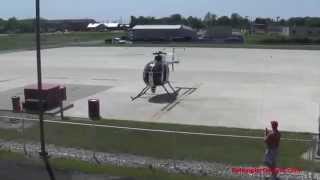
A short YouTube safety talk by Kenny Keller warning pilots and ground personnel about the lethal risk of leaving a helicopter while the rotors are still turning. Keller relates multiple real incidents (including his own ejection ~30–40 ft from the helicopter, a mechanic almost struck by the tail rotor, and a fatal head strike at an Indiana helipad), cites Robinson Safety Notices (Nos. 17, 18, 23) and his EMS experience with Omniflight Helicopters, and urges viewers to never exit until the blades stop and to share the message.
Chapters
If you're one of those people that think accidents only happen to the other guy, I'm here to tell you they can happen to anybody. And they can happen on a beautiful day when everything is going exactly as planned. In this case, this was the seat of the aircraft that I was in. This is where I ended up, about 30 or 40ft away from the helicopter. It's over there behind the ambulance that you can see here in the picture. I'm here to tell you they can happen to anybody at any time. Today I want to cover. Never exit the helicopter with the engine running. And I'm going to tell you why. One of our members just sent me an email just today, and he was upset, and he said, I just lost a friend and one of my instructors because he left the helicopter while the engine was running. Please teach your students to never leave the helicopter until the engine is out and the blades come to a full stop. So the point is, these things happened. I'm going to give you three more reasons. One would be Robinson's safety notice number 17. Never exit the helicopter with the engine running. And they go through and talk about what happens, and people get killed, people get hurt. Robinson Safety Notice 18. Overconfidence prevails in accidents. And they talk about how people get brave and cocky and, oh, nothing bad's gonna happen to me. That's when it happens. And the third one, Robinson safety notice number 23. Walking into tail rotor can be fatal. I know a fellow CFI that exactly this happened to. He landed somewhere. Somebody come walking up, walked into the tail rotor. That's somebody I know, a mechanic I know, very experienced, great mechanic, gets sent all over the world to work on helicopters. One day he was doing some tracking and had the blades spinning, and he turned to pick up a tool, and he said when he turned around, there was the tail rotor right in his face. He almost goofed. And he knew better. He was trained better, and he still almost did it. And then the third instance right here happened in Indiana a few years ago. It was a crew member on an aircraft. The crew member was trained. They knew better. They landed at a helipad. And it's a helipad I've landed at many times. Got out, walked out, didn't duck, got hit in the head with the main rotor and was fatally wounded. The last point I want to make. For five years, I flew helicopter ems, and I worked for a great company called Omniflight Helicopters. It was a super company, and we were not allowed to exit the aircraft until the blades were done moving. So we weren't kids, we weren't students. We were experienced pilots, and they didn't allow us to get out with the blades moving. There's probably a good reason why we're always talking about sharing and tweeting and liking. Here's one you ought to share, because you might just save a life, maybe even your own.