#98 MAXIMUM PERFORMANCE TAKE OFF | Day 98 Coffee With Kenny
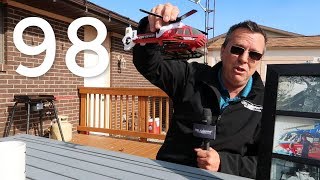
YouTube video (Day 98 of ‘Coffee with Kenny’) where Kenny Keller discusses helicopter maximum-performance takeoff methods, compares historical and EMS practices, and shares a specific EC135 technique he learned as an EMS/check airman. He outlines several takeoff styles (from-ground, hover-then-fly, straight-up climb, and a low-airspeed pop-up method), cautions to follow POH/company rules, and invites feedback. The video also includes brief promotion for Helicopter/EMS ground school and subscription codes.
Chapters
Recording and recording. Hey, got a good one for you this morning. I hope you're really going to enjoy. It involves max takeoffs and an EMS EC135 story. A lot of you are interested in that. A lot of you are interested in that. And our barrier today is going to be a household item here. Picture of my dad in Korea, me flying the EC135 with my daughter standing there when she was really small. And a picture of my dad as a police officer many, many, many years ago. All things that inspired me. So welcome to Day 98 Coffee with Kenny. I am pumped about this one. Okay. Day 98, I love it. This is so much fun and I'm excited about this one. Max takeoffs. We talk about max takeoffs and do some videos inside helicopter land ground school. And I'm going to review what we talk about in those. But I also want to give you a tip about max takeoffs that you probably have never heard of. Might be a few of you out there been shown this, but it's something that I learned that's really, really cool. And I didn't learn it until I was flying professionally as an EMS pilot. And it works for some applications. Now, of course, I have first have to say you still have to refer to the POH for the aircraft you're flying, any rating you're going for the flight school, you're working with examiners in those areas. When you get flying professionally, you got to think about companies and Czech airmen and what their methods are. Part 135 requirements. There's a lot of things that do dictate how we do things now. Max takeoffs, years ago in the 90s, I was taught you did them from the ground. Magneto check, get everything ready. Boom. And away you went. 40 knot attitude. Okay, so that was years ago. Then Moving into instructing 20 years ago, the examiner that I started using when I was brand new and I've used all these years, he didn't want to see them from the ground. He wanted to see them all from a hover and then fly away with that 40 knot attitude. Okay, so there's two methods. Then I got the opportunity to fly with some factory gurus, something I had never seen before. This is prior to ems, had a guy that taught, he preferred straight up. His thinking was, if you have a failure, you have time to do this versus if you have a failure going to here. Then what happens? A failure, Boom. Right into your obstacle. First I didn't know what I thought about it, but then after I tried it and worked with it. I decided there are some times when that might be a better option. Depending on what you're doing. Then you move into helicopter EMS flying. And of course you're going to be taught to do this one because sometimes that's all the room you have. You have to go straight up. Okay, so there's several methods. And then the examiner I talk about all the time that I've been using for 20 years. There's another one that he showed that you can, in a certain circumstance, stay low, get some airspeed when you're in ground effect, and then pop up over your obstacle. So the thing I've learned over the years is I think it depends on the application, it depends on where you're flying, depends on what you're doing, what kind of work you're doing. So again, follow the guidelines of the PoH and the company or flight school that you're working with. Then when you get in the professional environment or flying on your own, there might be a method that's best for you for one certain application. Now what I want to show you is something really, really cool. Chuck Airman showed me. And the fun part of the story is 5 years I flew EMS 2 and a half years I flew a BK117 heavy duty truck of helicopters, right? They were bad boys, all kinds of power. And man, I love that aircraft, would love to get the opportunity to fly one again someday. Two and a half in years into it, I moved bases for the same company and they had an AC135. So I got trained in the EC135. Now any of you that have flown in EMS or flown these style of aircrafts, you'll know what I'm talking about. If not, you may have not heard this before. You transition to the EC135 and even though it had a lot of available power, you were only allowed to use so much power. And the EC135 is all electronic, right? And it's going to tell on you if you cheat. You cannot go over a certain max setting for your power. If you do, the light goes off, the mechanics going to know about it and you have to let your company know why you did it, what you did, and why did it happen. So you're limited to the amount of power that you can use, unlike the BK where you could just brute strength, man, do what you got to do. I'm training in the OR. I'm flying the EC135. And this check Airman that trained me originally was really Neat. He was a neat guy. He trained me in the BK117. They trained me in the EC135. And when he came to that base for a check ride one year, and he said, how do you like the EC135? And I said, you know, it's. It's cool. I like it. But, man, it just doesn't have the power of the bk. And I missed that available power. And a lot of times you'd have to sit and burn off fuel because you'd get a patient that was heavier than what they told you when they call you, which happens in the industry. This is what happens in real world. They tell you, oh, the patient's £200, and you get there and the patient's 350. Now, you left your base with a certain amount of fuel all figured in, and you get there, well, you got more fuel than what you can have for that weight of patient. So you can't get out of a hole. So you got to burn off fuel or you got to unload something out of the aircraft. You got to find an alternative. And when I told this check airman that, he said, there's a technique you can use, Kenny. And he asked me if I'd ever heard about it, and I didn't. And he didn't. We didn't go out and do it in the aircraft, but he just told me about it, and I went out there and tried it, and it works for some applications. I'd love to know if you've ever heard this or if you've ever tried this. So when you're going to get out of a hole somewhere and you're trying to clear your barrier, average pilot pulls the max power and go right, and your max power. Max power. Am I going to make it? Am I going to make it? Am I going to make it? And sometimes you're almost there in your max and you. And you stop climbing out and you have to abandon the takeoff. So he said, kenny, here's something you can try in the EC135, he said, instead of pulling right directly to max power, he said, get in a hover and then pull just enough power to start a climb. And he said, sometimes you will get more height by pulling less power, by not going clear to max power. Now, I know we're all trained. Max power, max power, right. So I went out and I tried it, and in the EC135, it worked. There's a given situation where I would run out of power at a certain point, say Halfway to three quarters of the way to try to clear my barrier. So if you go back down, you try it again. Pull less than max power, let's say just above hover power, but not max. Come up slower, slower, slower. And this is painfully slow. Again, this is hard for guys to do or girls to do because everybody's ingrained to pull all the way to max. And if you're just patient, it'll keep climbing, it'll keep climbing and then you'll get to that point where you got some, maybe some airflow coming in over top of your osticle and then up it goes, up it goes and boom, you fly away. I have showed this to many people. I would have been taught that in about 2010, I guess, probably when I was taught that. So eight years ago, nine years ago. And over the years I've showed this to new pilots and I've also showed it to experienced pilots. I've showed pilots that trained with me prior to that and come back to train again. And everybody I've asked, no one has seen or heard of this method. Some of you probably have and if you use it, love to hear about it, love to hear what you think about it. If this is the first time hearing about it. I thought of this during coffee number one and I was so excited that I wanted to do it before I was even ready with coffee number three. But I went ahead and took the time to kind of get my thoughts together because I was really kind of excited about this video because I do not believe I've ever shared this before. Maybe in ground school somewhere, maybe in coffee with Kenny, but I don't remember. We're getting so many coffee with Kenny videos, I have to go back sometimes and go, have I done that yet? Have I talked about that? But even if I have, we learn through repetition, right? We learn from going over and over things. So nothing wrong with repetition, nothing wrong with revisiting things that are, you know, important to learn and important to know. Helicopter align ground school. We talk about all this stuff. We can help you get through that check, right? Are you overwhelmed? Private, commercial, CFI instrument. They all have monthly memberships you can take for a 24 hour test flight. Decide to keep it or before the end of the 24 hour trial, just remove your credit card, you'll be billed nothing. We part as friends or going to PayPal and end your subscription. Or keep the training, go month to month, keep it as long as you like. We also have yearly options if that's what you're interested in and then we have a professional pilot that's unlimited. I'm gonna throw out a code today. KK25 off. You get private, commercial, CFI, Instrument Unlimited. Doesn't expire. If you need it for a year, two years, four years, five years, it's there for you. Does not expire. That is the hands down the best deal. KK25 off. So one more time, I want to hear your comments down below. What do you think of this? What do you think of this method? I've tried it and it works. May not work every single time, but it is an option. For one of those times when you're trying to get out of somewhere, I have to say caution, you know, use caution. Max takeoffs, you just got to think about it, right? And always a good, really good hover pre takeoff check before you go. Or if you're doing them from the ground, if that's what you do when you're in your part of the world. Max takeoffs, pre takeoff checks are crucial on any takeoff. But you know, on a max takeoff you're asking more out of that aircraft. So even more reason to do a hover pre takeoff check. So you got some options. Again, refer to your poh, your flight school, your company. But you got the standard old 40 knot attitude. You got the straight up fly away. You got this one. You can always offload passengers, wait till the weather cools, offload equipment. There's a lot of options. Don't do anything dangerous. I know pilots that have over pulled the power and we've all probably done it. Most of us that's been flying for any real length of time where you had one of those situations one day where you were kind of like you were committed and you didn't feel like you could come back down and you were, you were pulling to max and maybe you pulled over max power. If you do remember, you gotta let you know your mechanic, what happened? Why did you do it? How long did you go over? How far did you go over and give him all the details? It's better to fess up. When you screw up, let the mechanic know because you could be endangering somebody else's flight later because you over pulled the power and didn't notify someone. So again, comment below like and subscribe to the channel. Love this day 98. I'm having so much fun. Looking forward to day 100. Got some big news, hopefully coming up next week. I can't say it because I'm gonna blow it somehow. Something bad will happen if I tell you so about day 101. Hopefully for me and for hogs, something pretty darn exciting that I'm gonna be able to announce. Let me know what you think. Like, subscribe, comment down below and we will see you in day 99. That sounds cool, doesn't it? 99. Today's 98, tomorrow's 99. I graduated from the police academy in class. 98. 99 or no, 89.90. Anyway, long time ago, man. I dig. This is so much fun. God, I love it.










