Advanced Autorotation Course- Engine Failure at Altitude Part 3
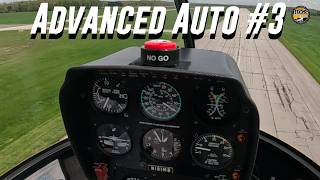
Kenny Keller teaches advanced helicopter autorotation after engine failure, covering spot selection, airspeed management, and flare technique. The lesson includes simulated failures, tail-rotor recovery drills, and off-airport landing decisions, with focus on maintaining rotor RPM and using forward speed to soften the landing.
Chapters
All right, here we go. Yep.
All right. Two, one.
Now here comes your flare because we know we made our spot. Go half cyclic. All right, come on around when you're in. Horsehall traffic. Helicopter 181, Mike Bravo. Right, base, turning final niner, Warsaw. All right, so I'll tell you when to enter. Pull back on your cyclic just a little bit.
Runway four, Marion.
Yeah. Remember, as you turn, there's a tendency to either push the cyclic forward or you also lose some of that lift component in a turn. So we were descending a little bit, as you were. All right, we're going to go to the intersection, but we're going to interlate.
Okay.
Because all of a sudden we had the engine failure, and the only spot that we had is the one that we see. Okay, so what's gonna happen as soon as we down right half, but bring that speed way back. Okay, here we go. And three, two, one, down right. We realize we're going to overshoot or it's right below us. So now just keep bringing that cyclic into you. Keep bringing it into you.
There you go.
Yep. Just kind of hold it right there. Yep. Now, if you want, you can push forward just a little bit because our spot is pretty much right below us. There you go. Looking good. Now, we want a little bit of forward air speed here in a second. Okay. So let's start pushing forward just a little bit. Build a little air speed. There we go. Now, here comes treetop level. Start your player. There you go. So there's not much of a flare when you don't have a lot of air speed. All right, give me a pedal turn. Just see where we're at. Yeah. So you're within that 100ft. So I just think it's much easier to play with airspeed. So let's go around and we'll do it again.
Okay.
And then we'll go out when we'll fly for a few minutes, and we'll throw some autos at you. How'd that feel? A little different. Feeling a little different.
Yeah, it almost felt like the zero speed, like.
Yeah.
Really slowing it down.
All right. Once you dip on the go, when you're ready. Yeah. If you can get out of the uncomfortable feeling, kinda. It's a good, you know, you can bring that air speed back because you're always, you know, through your training, it's always 60, 60 or 70, or whatever you use. You know, don't get any slower. I've actually had guys come here and they say, oh, my instructor won't let you get below 69. Well, I understand that, but know that you can't.
Taxiway 09, be on left traffic staying north of 09 at all times.
Traffic Copter 1, Mike Bravo on the go. Niner right.
Traffic.
This time we'll enter a little sooner. We'll bring the airspeed back, and then we'll realize, okay, we're not going to overshoot now. We can push it now. We can push it forward and get our air speed back Sooner.
For Runway four, Marion. Traffic, traffic Skyhawk 62689 is three miles northwest, will be number two, following that Cessna on the downwind for Runway four.
All right, Warren, car slides are off. Temp brush looks good. Deals are matched up. Got plenty of fuel, still good.
Landing lights on.
All right, come on around.
Runway four.
Mary.
Mike, final.
Four Mary, Warsaw. Traffic Copter one, Mike Bravo, right, base, turning final niner. Warsaw. All right, we're going to the same spot.
All right.
All right, let's enter in three, two, one. Down right, out. Okay, now go ahead and bring that speed back slowly. Keep bringing it back. May have to check collective. Keep on bringing it back. There you go. Good catch. Okay, just kind of hold there at 50. Maybe we'll figure out if we're gonna make it or not. Hey. Good? Yeah, it's looking good at 40. There you go. Now, if you want, we can push forward below air speed.
That's fine.
That rotor, our premium is going to come back in our flare.
Don't mess with a collective at all. Right here.
Yeah. Go last cyclic. A little more aggressive. Throttle's coming in. Stay on those pedals.
There you go.
There you go. There's your spot. Not too bad, right?
Yeah.
All right, so you see, it's kind of easier, right? There's not. I mean, there's not a whole lot to it. As long as you're looking at rotor rpm, you can. I mean, like, we'll. We'll demonstrate it tomorrow. But, I mean, you can get that speed slow. You just need a little bit of forwardness at the bottom. You need some air speed at the bottom. Now, there are videos out there that talk about no flare autos. I've never really tried one. I mean, I have been slow. Like, I've been in the 30 range and done somewhat of a flare and landed. So, you know, I haven't really messed with him, so I don't really show him. So let's go on the go, and let's depart to the south, let's say. Yeah, let's go south.
Go south.
Yep.
All right.
War traffic helicopter 181Mike Bravo on the go niner. We're going to depart to the south. All right, so we know the winds are at the airport, are coming out of the east. Right. All right, how good are awasses? Good for distance wise from the airport. What do they say?
I want to say four, but I'm not.
It's about five miles.
Okay.
Yeah, it's about five miles. What are some indications that you could use if you're away from an airport and you're trying to figure out what wind, where the wind's coming from.
Flags would be a good one. Smoke, if there's any smoke. Water, if, you know, with the, the ruffles on the water, the waves, treetops. But I found, like, it's really got to be blowing for, like, the treetops to get a whole lot going.
Yeah. So we got corn, we got flags, we got smoke, we got water. Yeah, all those are good to kind of figure out what the surface wind is. All right, just climb to, I don't know, 1500, 1800, somewhere in there and just put me on, like a 180 heading here. All right, so what's going to happen is I'm going to say engine failure or auto, and then we're going to count down 3, 2, 1. So it's not really a surprise, but yet it is because you don't know.
What it's be to going, coming, and.
You just need to enter auto and you know, whether you need to turn into the wind or not, or if maybe you need to at the last minute turn because you see an obstacle in the way, whatever. I. I don't know. But now this is just kind of like, hey, you and I are just out here having some fun. Just gonna go. We're cross country in it. We're just having. We're talking, you know, we're talking about what we did last night, and all of a sudden we just, you know, something happens, you know, auto, 3, 2, 1.
Yep.
Air speed, air speed, air speed. Where are we going? There you go. All right, so I'm gonna bring the throttle back in.
All right.
All right, let's fly out of it so you can see how it kind of. It's different when you don't. Right. So I was thinking, you know, here we had a huge open field, but you kept your air speed up. That would have been a good one to either bring our airspeed back a little bit, made a little bit of turn to the right. You had that whole field there, you know, so these are all things that, I mean, the engine most of the time is just not going to completely quit, right. But you're going to have indications. So you kind of already thinking about it. You know, you start, you might hear it. You might hear it missing or misfiring. You might see cylinder head temp getting really hot or something. You might just be expecting it. Right. So. But when you don't, when you're not planning it, it's a different feeling, isn't it?
Yeah.
Let's head south.
We'll see.
Make a right turn. All right, we're gonna have an inch bar. Three, two, one. Okay, which. Where are we going?
Go to the right here.
The right or left?
To the left.
Okay. Bring that air speed back a little bit. There you go. And now here's the other issue. Now you guys start thinking about, okay, looking for wires, looking for irrigation, looking for in the fields. There we go. Looking good. Now just keep that scan going.
We're stay. Yep.
We're taking it. Taking it. We're not going to touch down. So here comes. There's treetop level. Start your player flare. More. Let her settle. Throttle's coming back in. Okay, now look how high we are though.
Yeah. So.
I know, I know. Granted you. I mean, the closer we get, we got all them damn corn stalks that are gonna blow up. But those are just things, you know, this is kind of your real life scenario. Go ahead and start pulling power if you want and we can take off. Looking for wires. I got wires over there. Yeah, but just watch our power. Looking good. I don't see anything. That's good. Max performance here. Looking good. Nice. More wires there. Yep. And we're into the winds. We're looking good. So this is your real world. This is what's going to happen, right? This is fast. We're not in the training environment where, you know, we're going to that Runway. This. That's what I'm talking about, about the training scar. You know, there is no Runway out here. There is no, you know, whatever.
So, like in real world, like, and you have a lot of you. You have a big field there. Like it? Get that air speed. Slow down. Just so.
I mean, you're. Well, remember, we're just looking for 60 now. So on those last two, you know, it was almost like we were pushing forward. Like you wanted to build that, extend the glide, when really I didn't need to. Yeah, you didn't need to. We just wanted to. You know, we hit. We were pretty much over an open.
Field, so Slow the hell down.
Yeah, exactly. Let's head that way. And you know, there's. Right now we're not looking for a certain altitude. Right. We're on cruise. Airspeed. We're at 1500. You know, we've been practicing 1800 because we've been playing with the glide. But in real world, I mean, I don't. I don't cruise at 1800 a whole lot.
Right.
You know, it could happen at any point, you know, and this also makes yourself aware of now because I can see you looking around, looking for, like there's a tower, you know, there's some silos. It's kind of. Open your eyes a little bit. Like, if I have that in failure right now, where am I going, you know?
And my wind's coming off.
Yeah, that's another thing. You got to be aware of where that wind is. Right. Yeah. We'll just head that way. A nice day to buy for sure.
Sure is.
Can't beat this. Engine bearer. 3, 2, 1.
All right, slow down.
We're gonna get ready to check.
Yep.
Where you going? There you go.
Yep.
Just keep on coming around. That's what I would do. There you go. Now you're thinking. Now you're thinking. Okay, just hold. Okay, straighten her out. Little bit of a flare. A little bit more of a flare. Probably coming together. There you go, man. That's what it's all about. Head on a swivel. Head on swivel. Looking for irrigation. Looking for wires. Coming across. Nice. Walk away from it. Yep. So you can see we can pull a little bit of power here and we can kind of go around those trees.
There you go.
And then you just start your Ford, get into ETL there, come around that tree if you have. That's the other thing. You're not thinking about it. Right. You're not constantly thinking about the engine quitting. But it needs to be in the back of your mind, right?
Yes.
You know, start talking about whatever or start thinking about what you're going to do tonight or whatever. And then all of a sudden, that engine decides it wants to go traffic.
Helicopter six, Victor Hotel is on final run. Lane nine, simulated engine failure, Warsaw.
It seemed like getting. Getting that app cyclic. Getting everything back under control.
Yeah.
To give. I see that power there to the right.
Got it. Yeah. And that's another thing why they talk about. See, here we are at 500 AGL. Just think if we had one right now, you know? I mean, is it fine to fly at 500? I don't know. That's A decision that you got to make, you know, but it gives you a lot less time to deal with something. Right. And we'll just kind of head that way and we'll kind of make our way back to the turning left.
Base Runway 04, Marion traffic.
So like here at 500, we just go straight in?
Oh, yeah, absolutely. Because the wind's coming there. Now if we were. What if we had a tailwind, you know, start making that turn and, and again, in real world, if, like on that last one we did, we were still kind of turning when we were starting that flare. That's real world. And the, and the check ride that they don't want to see, that they want, you know, you're going to a Runway, they want to see you straighten out before you start that flare. Okay, head north.
But no, that, I mean, that makes you think because we had the trees right there. So, you know, kind of turn a little bit. So.
Yeah, and if you, you know, we want to be into the wind, but is that practical at times? No, because there might be a group of trees there. So let's, I mean, I much rather take a little crosswind than run into the trees.
Right, right.
So Marion traffic, Skyhawk 2630 Mike turning final Runway four. Marion traffic.
Yeah, just kind of hold this heading.
Skywagon turning short, final Runway 25. In the grass. Full stop.
Col water.
So do you practice autos like in the boss's machine?
I do it in the simulator.
It's.
It's kind of funny though, because being a two engine aircraft, we don't even. I, I can't remember did I ask to do one or did he say it? But I, I think it was when I worked EMS for the 2 engine. I don't even think we practice them because they are just, they're like, you either had a major issue or you had fuel contamination.
So.
But I think, I think the instructor on my last. I just went to my recurrent a couple months ago and I think he actually said, let's do an auto. I said, okay, Yeah, we'll just go north. You can see the airport out there. Okay, we'll just go kind of north or northwest here and we'll come around to the north.
This is.
Stay out of their way. Okay. And we'll go fly around the water. Yeah, yeah, we'll. We'll head to the hangar or whatever.
Finish up with some hoveradas.
Yeah, we'll do a couple hoveradas on the taxiway.
Perfect. Out a little better because. Yeah, like here we got the damn power lines.
Yep.
So we want to stay the.
Yeah, we. We don't want to turn into those. Right. Auto. 3, 2, 1. Collective all the way down. Get that collective all the way down. Where's our wind?
Slow down to the right.
Yep. There you go. Get that turn going slow. Get our air speed down. There you go. Good check. Good.
Yep.
So this is where I would. You got wires right there. So I would start. Really. There you go. Only one.
One.
There you go.
Now turn.
There you go. Here comes treetop level throttle coming in.
Okay, shoot.
Yeah, you're keeping that speed up, and that's causing you a little bit. Like, I. I would have put down in that field way back there, but. Okay, you know, it is what is. And we wouldn't have to mess with the wires and all that. Stay into the wind, and we'll just. Off that way. There you go. Yeah, I don't see anything coming across. So just normal kind of push rover and fill the etl. Yeah. So I would have messed with it to where I would have been back there in that field. But, you know, that's. That's pilot. You're in command there, so that's your decision. But we wouldn't have had to mess with the wires and all that. Exactly. We wouldn't have crossed. I was about ready to pull us out of it, but I was like, oh, we'll make that. We can get over those. We have plenty of space.
No, just. It's.
But you kept your speed. Like, I looked down, and we were hitting 85, and we were.
And then.
And then I said, hey, where's the wind? And like. Oh, yeah. And then. Then we started to return, and we were still at 85. And that's when we started seeing the wires and all that. Yeah, you're just keeping your speed up, which I guess isn't too much of an issue. Well, I Like, if you're going. If you're going. Let's say you're going into a football field, that's one thing. But if you got to put it down in a parking lot, say you had to put down in Meijer parking lot. Do you want all that speed? You know, you got cars to deal with. You got light poles in the middle of the parking lot. You know, you got cars probably driving. You don't want all that speed. You want to. You want to get rid of that speed as fast you can.
Slow it down.
Yeah, exactly. All right.
No, that. And feels better. Slower.
Oh, yeah. Things happen. Things happen slower. Right, so. Yes, exactly right.
So I, I don't. Yeah.
All right, so what we're gonna do is we're gonna head back and we'll. We're gonna stay north of the runways and we'll make. We'll come in from the west and make the approach. All right.
North Korea inbounds for left down 101811.
All right, go ahead and head west. Kind of see that road right there? Yeah. Just kind of pick that up.
Final Runway nine.
We'll stay north at niner for you. What we'll do is we'll just come in from the west and do an approach to his hangar. Okay.
We'll plan on doing so on like a downwind right here?
Yeah, pretty much. Yep, yep. All right.
Marion Traffic Skyhawk 2630 Mike, turning left base Runway 4. Marion Traffic, Traffic, Skywagon is based. Runway 25 in the grass will stop. 4.
Yeah, doing this like you were talking about like downtown or something.
Oh, my gosh. Yeah. I mean, can you only imagine if the only thing he had was a small little parking lot or on top of a parking garage or, you know.
Right, yeah.
Well, so we'll go around the commercial buildings there and come in from the.
Way you can see.
You see where there's like, grass in between them?
Yeah, yeah.
We'll come in and make that approach and we'll hit the north building. So you kind of angle that way. We just don't want to get any lower because we're going to go over that stuff. Turning left, final Runway four. Saw traffic hel up to 181. Mike Bra, who's just north of the airport. We'll be going to the north hanger. Force off. All right, let's. He's mowing over there. So let's just go somewhere right here where he's. I don't know, just go up here to this grass.
Okay.
Actually, let's do it right here on tech. Yeah, let's. Winds coming from our. All right, face north, face north. Bring me to a three foot hover. Three to five feet, 3271, come right a little bit. Line us up with the Runway or the taxiway.
Nose. Oh, nose, nose.
Yep, there you go. I got you. All right, give me a hub. Arado when you're ready. Count me down.
Okay, roll off. Right pedal. Pause for a second and then, yep, pull that.
We're only about a foot off the ground, so it may not pause very long, but there you go.
There.
All right. Just nice and smooth, remember. All right, That's good. I'll take that. You're chopping it, though. There's no reason that you're just. I mean, I can feel you.
You're just.
I'm just.
It's just.
Yeah, lower collective. There you go.
I can.
Yeah, I can feel it in my. When you do it, you're just dropping it too.
Okay.
All right, now what I want you to do is give me a nice hover taxi right down the black line there.
Okay.
Keep that nose straight. Okay, now you're going to have an engine failure, right? So instead of trying to stop and come to a hover, you're just going to continue to push forward and start slide it on. All right, I got the throttle. Here we go. In 3, 2, 1. Stay on your. Stay on your pedals. Just keep pushing forward. There you go. So there. Don't try to stop it and do a hover auto.
Just.
If you lose the engine, just keep pushing forward and just. Those skids can take that. That hit as long as you're going forward. Can't take left or right or rear or backward, but you can take forward, right?
Yeah.
All right, so one more. So bring it up when you're ready. All right. Now on this one, bring us up to about 5 foot hover. On this one, we're a little bit higher than normal, Right. Line us up with the run. So what I would tell people, if you're higher than normal, you lose the engine. Push the cyclic forward and have a little bit of a run on. You can try to come straight down, but you got to time it just right so you don't split the skids.
Right.
If you could come down and try to time it and be all good. But again, it's easier on the skids if you go. If just have a little bit of run on it. Because again, the skids can take it. Right. So I'm on with you. What we're going to do is just kind of hold right here. I'm going to count us down. I'm going to roll the throttle down, and as we enter the auto, I want you just push cyclic forward. And it's just going to become a.
Run on and not even really pull collector.
Correct. Just. Well, you will. To cushion us a little bit.
Okay.
All right, so yes, you are going to pull. Pull collective. But what I'm trying to show is here is you could come straight down, but you got it. Most people pull collective too soon or too late, and you're going to hit hard on this, the forward movement. The skids are taking Some of is absorbing some of that hit.
Okay.
All right. Okay, so just nice and easy. Just hold right here. And what we're going to do is when I roll off, we're just going to push cyclic for a little bit. All right, here we go. In 3, 2, 1. I just push forward.
Stay on it.
Push forward. As you. As you're pushing forward, raise collective. There you go. It feels rough. It does, but the skids can take it. What I'm getting at is if sometime when you're with somebody else or with another instructor, whatever, if, say we're at a ten foot and you decide to come straight down, I guarantee most will either pull too soon and then run out of collective to cushion landing, or they will pull too late, which means you're going to smack. So in order to avoid that, why not just have a little bit of forward movement? And now you're. I mean, the skids can take it. So now that forward movement is absorbing some of that impact as you're raising collective.
Okay.
All right, let's get back to the hanger.
Okay. And I just got to be more on the pedals to keep it.
Yeah, that's all it is. Yeah. And really, you know, again, is the engine going to fail, you know, just completely shut off? Probably not, unless it just. The transmission completely seizes or whatever. So you're going to hear some sputtering, you're going to hear whatever. You might hear some misfiring, you might hear whatever, and you're thinking, something's wrong. Let's set this down. So more than likely you're going to be setting it down before you actually have to do a hover auto. Right. But who knows? Maybe you turn the tail and. And the tail rotor hit something. Now you lost your tail rotor, so you're spinning to the right. And how do you stop that?
That would roll off throttle.
Roll off throttle and then becomes a hover auto. Right. All right. All right, pull us up and take us to the hangar. We're gonna park right in front of the hanger because we're gonna put it away. I don't remember. Have we. Who did your private? Did I sign you off on the private?
No, I did my private back in North Carolina.
Have you ever seen a. Have you ever seen a. If you lost your tail rotor and had to roll off the throttle to stop the spin. You ever seen.
No, I've never been in about.
You want to do that?
Yeah.
Pick us up.
All right. Yeah, I like to. Yeah, I'm always. I don't want to say, like, nerd, but I get, like, worried about, like, oh, if this happened.
Right. Like, thinking about this damn time. Yeah. This part of this is seeing some things. Go ahead and pick us up when you're ready. So if you got in, I'll just talk a little bit while you're picking up. All right. If you got into an LTE situation, the nose is going to start coming to the right, and it's going to be gradual, and then it's going to get faster. All right. It's going to start slowly. Just go ahead and put us in the intersection right here. It's going to start slowly, and then if you don't fix it, it's going to get worse. Okay. So with that, you can either come right out here if you want. With that, you can either fly out of it or get on your pedal and try to stop it.
Or.
Or, yeah, left pedal should stop it. Go ahead and point us that way for a second. But if you have a tail rotor failure, like, let's say the tailor transmission seizes or whatever, the. The spin is going to be immediate to the right, and it's going to be violent. All right, so what we're going to do here is I'm going to come on with you because we're going to do it together. What I'm going to do is I'm going to put us into a right spin, and then we're going to roll off throttle, and then it becomes a hoverado. So in an LTE situation, the spin is going to start like this, and it's just going to get faster and faster and faster.
And you can't stop it with the pedal.
Well, correct. Your first input would be like, hey, full left pedal, right. And it's going to stop right now, if you had a tail rotor failure, it's going to be a violent spin to the right. And what I'm going to do is I'm going to roll off. 3, 2, 1. See how it stopped that spin. And now it's hovering.
I got you. Okay. Okay.
So you just. The important thing here is roll off throttle first before you try to put it down. Because if you're spinning. Yeah. If you're spinning and then you lower collective to try to, you know, because you panic or whatever, it's just going to continue to spin on the ground. You got to get rid of that torque.
Okay.
First.
And that if it like you spinning.
Around and around, around. Oh, yeah.
I've been like, does it stop pretty quickly when you roll off?
I think it varies on aircraft. Like this one, it stops pretty good. Like the R22. It stops pretty good.
Pretty.
Pretty soon.
The.
The more inertia the blades, I think the. The. It doesn't stop as fast.
Okay.
This one stops pretty decent. The one where I had a mechanical failure and we were in a right spin. When I rolled off, it didn't really. It stopped it somewhat, but we were not completely stopped before we hit the ground. We didn't roll it, thank God.
But. But it takes out that. That violent.
Correct. It definitely slows you down. And this. You can see it. I mean, we weren't spinning that fast, so when I rolled off, it pretty much, yeah. All right, roll us up and we'll just.
Kind of.
The important thing, though, is if you lose that tail rotor and hover and you're spinning to the right, you got to stop the spin first.
Gotta stop the spin before.
Correct. I have had people tell me, oh, just lower the clutch. No, you have to know. Gotta stop the spin first.
When you feel the pressure to fly. But know the right decision is to stay on the ground. Hit the hogs. No. Go and live to fly another day. Helicopterground.com.










