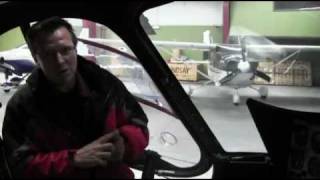
Kenny Keller walks through the four documents every aircraft needs on board: airworthiness certificate, registration certificate, pilot operating handbook, and weight-and-balance info. He shares a trick using a beanie on the cyclic to remember when you've removed something, and explains why the POH has to stay accessible during flight.
Chapters
Hello everybody. Kenny with foreign wing helicopters and I wanted to cover Arrow with you real quick. I've done this a couple times and I've always wanted to change a couple things on the past couple times I've shot it. Every checkride you take the examiner is going to ask what are the certificates and documents you have to have on board? Aeroliness registration, operating handbook, weight and balance information. And they need to be accessible to the pilot and they also need to be accessible to if say you get an FAA ramp, they need to be where they can walk up, glance in the aircraft and see your document. So first I reach in here and I just grab the airliness certificate. Got to be on board and visible along with that in the same pouch. Registration certificate. Both of those are handy to get to. They're where you can see them. They're mounted right there inside the aircraft. Airworthiness registration. Then the next one I want to talk about is operating handbook and weight and balance information. Here is our operating handbook. Weight and balance information is inside of there. And then we also figure it separately for weight and balance for commercial flights. So you have to have all these things. Airworthiness registration, operating handbook, weight and balance information. And the other key thing I want to put on this is the other day we came down and grabbed the POH and we wanted to make some copies of emergency procedures for study use. So we're not grabbing the book in and out of the aircraft all the time. And we about took off to go flying without the. So what we came up with is we're using our four wing helicopter's beanie. If we come down, take anything out of the aircraft, put the beanie on the cyclic. If we take out something to use to go study or we take headsets or somebody's flying the aircraft and you have some kind of a mechanical problem that needs looked at. We all know now if the beanie is on the cyclic, you need to investigate and find out why is the beanie on there? Is it missing documents? Is there a problem with the aircraft? Very, very important thing to do and it's very easy to take for training purposes and then forget and you take off without it. So there's your documents, they need to be out where you can get to them. There's the beanie. And then one other quick story. The PoH needs to be in the aircraft. A long time ago, a place I worked at, they always put the POH in the baggage. It can't be in the baggage, it needs to be accessible. And another quick super quick story. One of my students was with me bringing back aircraft that we were ferrying from Chicago back to Indiana. Aircraft we'd never flown before. We did a good pre flight. I checked for the PoH. It was behind the seat and on the way home we had an oil pressure warning light come on and because we had trained together, none of us said a word. I reached behind the seat, handed Jed the poh. He opened it up, verified what we were supposed to do, and everything was fine and dandy. So the POH needs to be accessible to the pilot. So please click the like button, Share this with your friends on Facebook and Twitter and leave us comments with feedback. We love feedback, good or bad. Always working to make better videos and answer questions. If you have something specific you'd like to know about, shoot us an email or something on Facebook or YouTube and we'll try to shoot it for you and get it up. So thanks everybody and we'll see you all later.