Are YOUR Weather Minimums Conservative Enough?
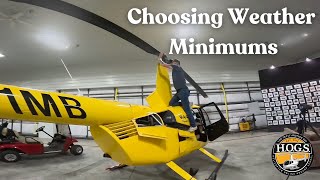
Kenny Keller and CFI Todd Ketterman discuss helicopter safety and why pilots need weather minimums stricter than their company requires. They share EMS stories of setting personal limits at 3 miles visibility and 1,000 feet ceiling instead of company standards, and how external pressure to fly can override good judgment.
Chapters
So we're back again with guest CFI. Todd Ketterman did his commercial in CFI last summer with us here at Hogs in the R44. And we are looking at a report that we get daily from our clone. We have this thing called askhogs.com and it's basically built from 13 years of my content online, print and video. And you can go to this 24 hours a day, seven days a week and ask any helicopter training related question. And we think it answers at about 99% accuracy. It's really good. It pulls again from all the knowledge that we've put online over the years. And so we're reviewing these things every day. We get a report from the clone that says here's what your audience is asking about. So one of the ones we just looked up is or looked at is safety considerations are priority for your audience, which is good. It should be with questions about when to avoid flying and focus on ground safety, indicating an interest in decision making skills under adverse conditions. This, I think is something that we probably fall short on in the industry a lot of times because we teach you how to fly, we teach you the ground, we get you ready. But I don't think that students are always given the maybe as much real world experience in when to say no. Right. We know what why helicopter pilots get in accidents and lose their lives. It's flying into bad weather. But it doesn't only happen to newbies. It happens to experienced EMS helicopter pilots that fly into bad weather. So to kind of back up the question to the ground safety, this is something we talk about all the time. Heather's injured her foot with the stupid helicopter dolly that we were moving one day and she didn't step just quite right and I pushed it one way and it fractured her foot. I put a tail rotor through a window in a hangar, back in a helicopter with a tractor. We've had doors that started to get open that the latches weren't closed.
I would do something like that.
It's happened again just a couple weeks ago. So we always talk about how much danger there is just being around a helicopter just at the hangar, climbing up on the thing, doing a pre flight, checking the rotor system. There are so many things that can get somebody hurt just moving in around the helicopter for pre flight, moving them in and out, fueling. Accidents can happen during fueling, which is why a problem with flight schools is everything's rush, rush, rush, $$, push, push, push, get the students through. That's not a conducive environment for safety a lot of the time because everything is pushed so hard. So there's one big problem. And then for me with the deciding when to go is you need to learn in the beginning as a newbie, you got to have a minimum. You got to come up with a safe minimum. Like I'll have somebody here training, maybe even for commercial and I'll go, what's your, what's your, you know, your weather minimum? And they'll be like, oh, you know, I think like 802. And I'm like, are you serious, 802? Well, yeah, right. Like if it's, you know, if it's uncontrolled airspace and I'm like in EMS, 802 is when we were supposed to be on the ground. You know, that was our bare minimum as a new pilot or even a new commercial guy. Are you serious? 802? When I was flying EMS, my minimum was basic VFR. If it wasn't three miles and a thousand feet, I wasn't going. And my crew didn't have a problem with it. The company didn't have a problem with it. Nobody had a problem that my minimum, even though the company was 802, if I didn't have three miles and a thousand, I wasn't going. Because let me tell you, three miles in a thousand is not much. It's the basic VFR minimum. But if you're going to go out in the pattern and fly around, do some maneuvers, that's one thing. This gives me goosebumps. But if you're planning on going somewhere across country with three miles and a thousand, the, the weather reporting here and over there may be telling you three miles, but between here and there it might be a mile and a half or it's as they're saying, a thousand feet you may get out there and you got low hanging stuff at 400, 500ft. So I think as newbies, one of the biggest thing is coming up with a weather minimum that is very, very conservative. And we have this thing we call the no go button that we created.
Live to fly another day.
Helicopterground.com so we pushed really hard getting the right training, being aware, making good decisions and avoiding the problem of get theiritis. I want to get home. My, my boy has a ball game tonight at, you know, 7:00pm I got to get home tonight. You know, or a multitude of other reasons why people push themselves or they get pushed from an employer, a friend, a family member. These outside influences come from everywhere. And I'm going to throw this one in. I never did a video on the Kobe accident. And because. And I didn't feel like I needed to. Everybody and their brother immediately put out videos and. Which I think is in poor taste, when the day after somebody dies, you immediately put a video out. So I don't normally do that anyway. I want families to have a chance to grieve after they've lost people. But I knew immediately what happened because I have a friend who I trained many years ago as a CFI who was there at the same airport, and he works for an emergency helicopter operation. He turned down a search and rescue flight. Another law enforcement aviation unit nearby was turning down flights. And this gentleman, personal friend of mine who called me upset, and he said, kenny, I had just turned on a search and rescue flight, and my crew said, well, Kobe's helicopter's firing up. And he said, I don't care what Kobe's helicopter is doing. What that pilot decides to do is his choice. We're not going. And he called me, and he was super upset, and he said, you know what? All we talk about is ifr. Ifr. Inadvertent ifr. Train, train, train. And he goes, that's all good, but why aren't we teaching stay on the ground? You know, why is that not our focus? You know, And I got that that day. I think that's a lot of the reason we kind of went into this after the fact was, you know, he was right. You know, IFR training is good. Right. And it makes you a great pilot, teaches you what to do if you go inadvertent. You got to have a way to survive. But we don't put enough emphasis about staying your ass on the ground and saying, no, I'm not going. Whether it's your personal pressure or a pressure from your boss or your family or your friends or whoever, it's having that ability to say, no, take it away, Todd. Oh.
They always say you die on a bad day, you get buried on a good day. Right. I mean, it's true. And you and I were just talking about this. I mean, there's so many things that we learn. We know pave, we know I am safe. We know those types of things. But sometimes it's important just to get the big picture right? And so as new pilots, it's exciting. You want to take your friends, you want to take your family, or maybe you just want to go or take your dog or whatever. And, you know, getting that big picture of the weather. Get it in the morning, watch the news, look at Your local weather, what's going to happen? Is it going to deteriorate? Is it going to get better? Where are things going? Just have that big picture. You know, we're taught to listen to ADAs or a Metar or a TAF. I mean those are, those are in the month, they're okay. They're not perfect all the time. And so having that big picture, I know myself, I've, you know, been out and on a sunny day and coming back to the airport and got caught in a, you know, in a pop up storm that was coming in. And so, you know, yeah, just be careful.
And other thing that comes to my mind is when I was flying ems, I worked for a great little company called Omniflight Helicopters and they eventually got bought out by big conglomerate. But the chief pilot told us as professional pilots in the EMS industry, they said, guys, if you go to work one day it could be sunny blue skies and if something in your gut or something inside of you, for whatever reason, you don't feel right about taking a flight, they said, we will back you 100%, no questions asked. That's pretty big coming from a little company who's providing a service to a hospital, who always wants to go. And they're going to complain if there's a day where the weather looks fit but you've got something going on that you just feel things ain't right. They said, guys, we will back you up on that. So if in a professional environment where you're doing hospital flights and scene flights and they're telling you as professional pilots, look, guys, if there's anything, anything off that day and you don't want to go, you stay on the ground, you call it off and we will back you 100%. So if you're allowed to do that in a professional environment, why would you make stupid choices climbing into aircraft? And I say it because I've made stupid, I've done stupid stuff. They're in my books, they're on video, I've told my stories about the dumb that I've done. So everybody almost needs that. You almost need that scare. You kind of hate to say it that way. I can preach in a video to you all day long, but until you go out there and you scare the shit out of yourself one time and you're wondering whether you're going to survive that flight, the next time you get on the ground, you go, that gives me goosebumps. I can remember as a brand new EMS guy, you just go through all this training, all this stuff about making decisions. And I made what I thought was the right decision one night and I'm going back to the home base and I, and I run into some low lane clouds. I was scared stiff. And when I got on the ground, you know, during that flight, I was going, I'm going to be the statistic, I'm going to be that guy that we just learned about, just trained about EMS guy flying at night, gets in the low hanging shit at night. And let me tell you, I got on the ground, I said never again, never again will I risk it because I'll go, well, I think I can, I think it's going to be good enough. And it was one of those where the reporting station was okay, the destination station was okay, or where I was and where I was going, it was the crap that I ran into out in the middle of nowhere in north central Indiana where there was nothing, no ground lighting, nothing. I was scared shitless.
So it's true. I mean that's, that's the stuff you and I have shared that, you know.
You'Ve had your own scares, different things.
And it, and it's one of those, it takes the wind out of you, you know, you kiss the ground, you get down, you're shaking and you're like, what just happened? So you hope that you don't go through that, but at the same time you kind of count your blessings when they do. I know there's a, there's a airplane pilot guy out west and he does a lot of mountain flying and he's posted some videos recently. He just lost a bunch of buddies, you know, mountain flying guys that go out and do mountain flying and get hurt. But he was saying that as a young guy, he used this rule of three, you know, like three things had to be, oh, I love it bad for him to go flying. And he said now that he's like, whatever age he is, he's like, it's one. He goes, it's not three, it's one. He said, I just don't, I don't, I don't around with it anymore.
Right. I've been flying since 97. I'm more conservative now than I've ever been my entire flying career.
Right.
I, I don't take more chances and go, oh, I'm skilled and I've been flying since 97. No, what's, what has taught me is to be more conservative and have the guts to go, no, it, I ain't going. I'm staying on the ground. And unfortunately, sometimes you got to get out there and, and find yourself one of those positions once or twice to wake you up and go, holy shit, this is ugly. I could lose my life doing this. Not fun, you know. So good topic. Peace out. Well hey, let's throw on a little something something private pilot 101 free PDF down below and go check out our social media. The girls here have been working hard with lots of fresh photos of the cool R44 and students have been coming and going. So go check us out. Facebook, Twitter, LinkedIn. Not Twitter. We're not on Twitter. There is no Twitter. All the rest of them, they're all, all the links are down below. Go check them out.
Peace.
Give us some love.
Peace.
When you feel the pressure to fly.
But know the right decision is to.
Stay on the ground, hit the hogs. No go and live to fly another helicopterground. Com.










