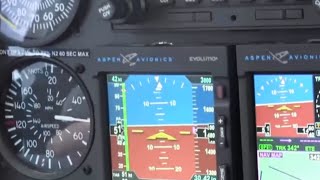
Kenny Keller (Helicopter Online Ground School author) narrates footage from flight testing performed for an Aspen Avionics EFD1000H Supplemental Type Certificate (STC) installation in an Enstrom 480 helicopter. He describes the FAA-directed test program, detailed maneuvers and performance checks (including climbs to 13,000 ft and hover holds), and emphasizes the importance of thorough preflight and performance planning when flying unfamiliar aircraft or environments. The video also briefly advertises his online ground school and books.
Chapters
Did I get your attention with that one? That sound just never gets old. No matter how many times you start a turbine helicopter. That never gets old. Hello, I'm Kenny Keller, the creator of Helicopter Online Ground School and author of the Amazon bestseller Helicopter Checkride. I want to share with you some footage of a flight I got to do. Well, numerous flights, I should say, for the Avionics STC in the Instrum 480 helicopter, for the Aspen Avionics EFD1000H system. I wanted to share the footage and share the story just because it was a really neat deal. I was glad that I got the opportunity to do this flying. We had numerous flights doing the actual flight testing, going through the parameters of all the things that the FAA set forth that they want us to do, and then after going through a long list of things that they want us to do during the testing, they sent out one of their representatives from Texas to fly with us. And we went out and basically did the majority of what we did during the testing we went out and did with someone from the faa. So it's just really neat to get to see firsthand how, how they go about doing an stc, a supplemental type certificate. So the biggest thing I learned was, you know, we all get kind of comfortable in flying in our normal place, like at home, around the airport, or whether you're doing training or whether you're flying oil rigs or whatever you're doing. Most of us, we know pretty well what we can do performance wise. And we're not necessarily every single day doing a lot of different performance planning. But when you go to an airport, go to fly at a place you've never flown before in an aircraft you've never flown before, you know, you really kind of have to get back to basics and say, hey, I really got to do good pre flight, as we should always do good pre flight. But new aircraft, you take even more time than what you normally would. It's a proven fact that the more we fly, most pilots start getting a little lax, the more comfortable they get with an aircraft. So I do a really good pre flight with this aircraft and sit down, go through the performance planning. I remember driving up the one day we're going to go up to 13,000ft for the testing. And I'm talking to a Czech airman buddy of mine on the phone, he's like, hey, don't forget to check the POH to see what your VNE is at 13,000. And I'm like, yeah, I better do that. Well, I was Surprised to find I'd never been up to 13,000ft, that the VNE at 13,000 on that day was like 47 knots or something crazy. So it's really amazing when you get out in the real world and, you know you're flying again in a different place, the different environment, different aircraft, Start doing the planning. Sometimes you'll kind of surprise yourself. And we were doing all kinds of things. Sidewards, flight, rearwards flight, hovering, taking off, turning 30 degrees to the left, banking back to the right 60 degrees, holding it for so many seconds, banking back to the left 30 degrees and then going back to neutral. And the list kind of went on and on, and we thought seemed like a little bit of overkill. But, you know, in the end, they're making sure that this piece of equipment is going to work through all the different parameters and all the different flight situations. So I think the most interesting thing was the last flight we did before going up with the FAA was we went up every thousand feet, flew at 1,000ft for five minutes, recorded temperatures. You can see they have wires hooked all over the place. And we're documenting everything that we're doing. And going up to 13,000ft was pretty cool. I'll admit. I'd never been to 13,000ft before in a helicopter. You know, most time we're 500 or 1,000ft above the ground. So going up to 13,000ft was pretty amazing. And I was amazed at how smooth it was at 13,000ft, how quiet it was. It's like the farther you go up, the quieter the aircraft gets. And I can remember being at 13,000ft holding a hover, looking out the window, down at a lake on the ground, and we're up there at 13,000ft with no ground speed, just in one spot for like five minutes with a airspeed of like, you know, 50 or 60. That was, I have to say, really cool. So hopefully that gives you a little bit of insight into all the work that goes behind. A supplemental type certificate. This is why they don't let you just, you know, build your own spray boom and build it and throw it on your helicopter and go out and start flying with it. There's a lot of testing that goes on behind the scenes to make sure that whatever piece of equipment you're adding, you know, fits the environment and works properly, and it's going to fit well with the aircraft. So please give us a like and share on this video. If you'd like to go to our website to learn more about our helicopter online, Ground School. There's a link below this video. There's also a link for my Amazon author page, which has a couple of books on it now, and we're adding more moving forward. So like share. Click the link below and we'll see in the next video. It.