Benefits of the Cabri G2 Helicopter
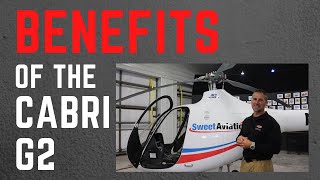
YouTube interview (Kenny Keller with instructor Chris Hauser) describing the Cabri G2 as a modern two-seat trainer: a fully articulated, low-inertia rotor system with favorable autorotation characteristics; a fenestron-style (benestronic) tail for authority and noise reduction; automatic carb heat, automatic clutch engagement, rotor brake, and crash-test-rated seats. The cockpit is largely digital (EPM/aspen, Garmin 650), with reachable baggage access and adjustable pedals. Operational notes: ~45 gallon tank, budget ~10 gal/hr, growing U.S. fleet (≈30–40 units as of the period discussed). Sweet Aviation (Fort Wayne, IN; secondary aircraft at Goshen, IN) operates Cabri G2 aircraft and offers training.
Questions this video answers
Crash-test rated up to 2,000 ft per minute vertical descent.
45 gallon tank.
Average ~10 gallons per hour (speaker suggests budgeting 10 gph).
About 30–35 in the U.S. (speaker notes it might be ~40 now).
Home base: Fort Wayne, Indiana; second aircraft at Goshen Airport, Goshen, Indiana.
Chapters
53. That's where you can find him. Chris Hauser, Chopper Guy 53. That's Instagram, Snapchat, Instagram, Instagram. That's where you can find him.
Are we on right now?
We are on. Hey, it's Kenny. Helicopter online ground school. We're gonna go over here in just a minute and Chris Hauser is gonna talk you through what he likes about the Cadbury now. He's been teaching it for a couple years. Real quick, before we go to the helicopter, there's two PDFs down below for my Amazon best sellers, Helicopter checkride and top 10 checkride tips. Both of them down below this video, no charge. They're good books. People love them. So, Chris, before we go to the helicopter, tell people where they can find you if they're interested in flying with you in the Cabri.
I work for Sweet Aviation in Fort Wayne, Indiana. We have. That's our home base, but we also have a second aircraft at the Goshen Airport in Goshen, Indiana.
So their web address is what?
Sweet Aviation.com and you are?
Chopper Guy 53.
Chopper Guy 53 on Instagram.
All right, Chopper Guy 53, let's head over to the aircraft and we're gonna check it out. So let's do it. All right, we moved over to the aircraft. I want to just quickly, quickly intro where I'm at. I've done three hours so far with Chris in the Cabaret. My first flight was with Chris a year ago, Fort Wayne. I went did an intro and I really liked how he described the cavalry that day and what he liked about it and why he felt it was a good trainer. So I want him to share that with you on camera and kind of give me that intro, same one that you gave me, and just tell people what do you like about the Cabri and why you think it's a good trainer.
So what I like about this is that one fully articulated rotor system light of inertia. Even though it looks it's a smaller helicopter, there's a lot of inertia in those blades. The auto rotation in this is very nice. You don't the arc that I have to keep my rotor speed in wide range. So it auto is very nice. The benestronic tail system on here is kind of. It's not the traditional tail rotor as you would see on any other aircraft. The EC120, the EC130, they have the finished Ron tail system. Same manufacturer, same person who designed the 120 designed this. So that's where the finished rod comes from. It's got a lot of tail rotor authority, it's quieter, it's kind of got a cool sound to it when it's out there running. Safety wise, I'm not going to walk into that tail rotor. So it's a pretty nice system there. What else we got here? It is a carbureted engine. However, the carb heat is automatic. So I have a switch in there to make sure it's working properly. I don't even have to worry about carpet rotor engagements. I have a switch on the console for the rotor engagement. So I don't even have to worry about trying to like the instruments, raise a lever and match it and all that does it all for me. So that's nice about it also has a rotor brake that doesn't seem like it's such a big deal. However, when you're sitting there after you shut down and you're just waiting for those blades to stop for safety reasons, it's nice to have a rotor brake. So we've got one of those in there. What else have we got going on?
Earlier today I was talking with Brian and I told him what we're gonna do tonight, just a general overview of the cavalry. And he said, hey, if you guys would, when you talk a little bit about what's in the aircraft, the instrumentation, what it has. And he goes, go a little bit into that if you would. So if you wouldn't mind just kind of giving us the scoop on the interior of the aircraft and what it has available.
Should turn it on. Should we turn it on?
Yeah, go over there if you want.
To let it get going right here. So while that I've flipped on the master while it's booting up, going through its self checks. What's also nice, these seats have been crash test rated. I think it's the only piston helicopter that I know that actually crash test rated. So they are crash test rated up to 2,000ft per minute. In theory, you could do an auto in this thing and not flare at the very end and hit and you'd be. You're supposed to be able to walk away because we do autos probably about 1500, 1600 foot of the minute. So their crash test rated up to 2,000ft. So that's kind of nice. Now as my instrument panel is coming alive here, there's only, as of last year, there was about 30, 33, 35 of these in the U.S. that was a year ago, so there might be 40 of them now in the U.S. they're starting to gain momentum. As you can see, it's all digital except for the analog here, a couple there, just as our backup instruments. But everything is all digital on our display arm. This is what we call the epm, our electronic pilot monitor. It's all digital. There's my rototac. There's my. What we call the mli, the multiple limits indicator. So basically our power. And then of course, all our gauges there, our digital fuel gauges over and to the right. So, I don't know, I can quickly read to see how much fuel I got in there. I don't have to try to squint or I don't have to try to look at a gauge and look at hash marks. It tells me exactly what's on there. And that fuel gauge is really accurate. We got an Aspen in here for navigation along with our attitude indicator there. So it's a very modern cockpit. We got a Garmin 650, which, if you guys know about Garmins, they pretty much do. Each one gets better. This is a touch screen, so it's nice that I can just touch the screen, push, pushing my frequencies or pushing direct to or whatever. It's a nice system. The heat works pretty good in here. You can fly with one or both doors off. That's pretty much standard. What else was there?
Now, one thing I like is how easy those tail rotor, the pedals are to change. Very easy to flip those up and flip down.
That's.
Some helicopters are a lot more cumbersome. You got to switch that.
Yeah. So like the instrument where you got to take them out and flip them over and all that. These are pretty set up real nice. There's only two positions. That's one of the downfalls. There's only two positions, either full forward or we can flip them back and they've made it so you can do that while you're sitting in the seat. So if you climb in, you get buckled in and then you realize, you know, I don't really like that position. You can just use your feet to flip them back the other way. Governor. That's one thing I really like about this. If you have any training in the instruments, which that's what I grew up with. Basically, that's what I trained with Kenny in. We just had a core leader in that one. So you're always manipulating the throttle on this. On this one, we got the governor. As soon as they roll up to 400, the governor takes over, brings it up to operating normal, operating rpm, and then it just Stays there for me so I don't have to worry about that. So fully articulated system, governor rotor brake, automatic clutch engagement, automatic carb heat crash test rated seats. Put all those together and you got a very well designed trainer for the student.
Now I remember you talking in that first game intro or you intro for me? Intro the helicopter to me. You were talking about the skids. Go a little bit into the benefit of the skids on the aircraft.
Okay. So the skids on this aircraft are not directly mounted to the fuselage to help with ground residents, which you know about. Ground residents.
Yes, I know all about.
You know all about that. So the skids, they're. So what they've done is they've. They set the skids on the ground, they've taken a few slides of the body and they put a couple of rubber bushings on top of the skid bows and then they just sat the fuselage down on top of there. And then they put a couple brackets to help support the skids from moving. But the skids are not directly. There is no bolts that go directly through the skid bows to the fuselage. And that's the help with ground resonance. So they are. There's a couple of brackets with the bushings on the front and rear skip hose that you have to check as part of the pre flight checklist, making sure that those are straight. So I have seen a picture where the fuselage has slid on the skid bow and is actually laying on its side and the skids are sitting perfectly on the ground. So that's one thing. Part of the preflight check is check to make sure that the fuselage is sitting center on the skid boat. And again, that's all about helping with ground resonance.
All right, I'm have Glorious bring the camera over here because we got to show one of the sweet aviation helicopters. And here's Randy Kingrich, one of your fellow pilots. Epic ocean. So we thought we'd show that several of the cabbies are up here on the wall for our HOGS members that have done ratings with Chris. So that would have been with you, right? Randy would have been with you?
Yep.
Real quick, our HOGS wall of fames, as we haven't mentioned it in this video yet, this is our member wall of fame. This started a couple years ago, just we were in this old nasty airport hangar with this gross wood paneling and I said, you know, we should start putting up these pictures that our members are sending us. When they're happy, they pass their checkride and we start flashing them all over the wall.
Right.
And pretty soon it got really ugly on top of the stairs, ugly paneling. So when we moved over here, we developed the Hogs and we already called it the Wall of Fame. But now it really is the Wall of Fame and we're pretty proud of this. So when members send us a picture after the checkride because they're excited passing any of their ratings, we put them up on the HOGS Wall of Fame. So I wanted to mention that as what's here behind us. All right. Next thing popping into my mind is the baggage area. I remember kind of room and give us a little bit about the baggage.
So we do have a little bit of baggage space here. £88 is your max for back here. So but you can see the hole here. You can pretty much squeeze a backpack in there. This shelf comes out or folds down. You can maybe a small suitcase in there. But what's nice about it is that you have access to it from the pilot's seat. There's an access panel or an access hole that sits right behind the pilot's head. And you know you can throw a wallet up there or throw your phone up there, keys or something. And if you need it during flight you can just reach back there and grab it. So it's kind of nice. There is space under the seats, but we don't put anything under the seats because of those. The seats are able to collapse down as part of that crash test rating. And there is a little bit of a luggage area on the front by the co pilots feet. But you can't get to it during flight especially if you're by yourself. But the passenger even can't reach forward. So. But it's about as big as maybe a lady's hand purse or purse or something small to put in there.
I really like that. That's really handy that it's as you mentioned some of the other helicopters you might have room underneath the seat. But then that can be a problem if you did have a hard landing. This is really nice where this is located. It's from close that you could reach through to set a phone in there or something that you needed to have access to. That's pretty handy. I like what they did there.
And they made this as a step to a built in step for you. So you got the step there on the skid boat and then a homemade step here and then that way you can climb up there and check the rotor head. Alright.
I think one thing I want to relay about the aircraft is I mentioned at the beginning of the video. I'm on my third hour with you. I'm going to do two more hours. So I have the five hours to technically be able to teach in one if I wanted to. And I wanted to reiterate, we did a video the first time I went to fly with Chris, and I'll put the link down below for that one. But the first time I flew this, because for over 20 years I've been flying counterclockwise systems. I was really intimidated the first time I got in, flew the clockwise system, and the first time I picked it up, I was all over the place. And it's kind of a funny video. And people actually made a comment like, hey, at least you were honest, that it kind of humbled you.
And it did.
So I came back after that first hour where it kind of kicked my, you know, kicked me in the rear, and I was like, man, I don't even know if I want to fly that thing anymore, Right. And then I since went back and had two more flights. The second flight was way better than the first because I kind of got in the mindset after talking to people that are going to, they're kind of saying, well, maybe you're overthinking a little bit, right? Because a lot of people just transition over and I let the opposite pedal and all that stuff intimidate me. But once I spent a little time thinking about it, went back, my second flight was way better than the first. Would you agree?
Oh, yeah, yeah. I think it's a mind thing, like you would say too, now. Yes. It takes a little bit after growing up that doing all counterclockwise, jumping into this. It's a little bit different now. I had some time in the 120s and the 130s, so I had a little bit of knowledge of the clockwise system. But it's kind of what you told me a long time ago is you just do opposite of what the aircraft is doing. So in the picking up, if that nose is swinging to the left, who cares if it's counterclockwise or clockwise? You're just going to add, right? So I. But, you know, I try to. Sometimes I even find myself as I'm flying these, thinking back, my trainer who trained me, he just, I'll never forget, he just gave me a simple little advice. Act like that collective is connected to your left leg. If that collective is going down, that means your left leg is going down, which means you're pushing in left pedal. And that stuck with me. That's. I, I tell everybody that. So if you're lowering collective, that left leg's going with it. It's pushing in that left pedal. And I remember that as I'm flying. And even if I think I might get backwards or trying to remember which one's what, that's a nice little keynote there.
That helped me a lot on this last flight that we did, you saying that. Then it started finally making sense that I wasn't so intimidated by anymore doing the opposite aircraft. And that made a lot of sense when you said that. And then to reiterate what you already said, it's kind of like when you just go back to the basics of just do what it takes. Right when, when I was overthinking left, right, counterclockwise, clockwise, I made a big deal out of it and I struggled. The last flight we did, once I realized, just push the pedal, Just do what it takes to get the nose to go where you want. If you overthink it, you have problems. And that's just like a student. I've told students that, you know, thousands of times. Quit overthinking it. Because if you're sitting there trying to go left pedal, right pedal toward this, that, and you think too much, then you sit there and you struggle with it. You just go, I know the nose. I want the nose to go that way. So just push the pedal, whichever one you need to make it point that way.
Try not to think of like, left, right pedal. It's more like, which. Which one's your power pedal? Right. Just think about which power. Which one's your power pedal?
Well, I know that I've. In just three hours now, I'm kind of taking the aircraft just as I learned more about it and now that I'm getting more comfortable in it and that third hour really just kind of everything started coming together. And like I said, we're going to do two more and we'll do another video or two and do some. Do some more videos. As I kind of finish up the five hours, but I'm really starting to kind of. At first I didn't like it, you know, because. Right. We all don't like change. And you're like, ah, it's the new thing and spinning the wrong way and it's easy to cop an attitude. But now that I've been flying it, I'm kind of digging them. I get the advantages of them and I get why people Widex bicycles are buying them. I understand that. Why don't you touch on, you know, how this is the latest technology and how it does help someone moving into the larger aircraft, because you've talked about that before.
So as I mentioned earlier, you know, it's, they're still new. I mean, they've been flying over across the pond for years, but they're just starting to come over in the U.S. maybe in the last, what, four or five years, maybe six, something like that. And as I mentioned, there's only, you know, by now there may be 40 of them in the US so they're starting to catch on. Are they ever going to catch Robinsons? I don't know. You know, I don't have any issues with Robinsons. I like flying Robinson. We all know that. They're the number one trainer. Sure.
And they will be for a while.
And they will be for a while. It's just what it is. However, this coming in here, it gives them a good run because we offer, like I said, the fully articulated system. Usually that's a little bit safer. We got the autos in these are. There's more of a play there than the R22. Of course, the Robinson's got the governors and all that, but, you know, for people that don't know any better and want to try something different, this is a great machine. I really like flying this. And you know, will it take time? Yeah, it's going to catch. It's going to take time. To compare to the Robinsons, it's a little bit more expensive on initial purchase price. So we have that factored in a little bit more to operate hourly. However, you know, I don't know what it takes to do an annual on an R22, but I can tell you that an annual on this will be done in two days.
Yeah, you've talked about that, how quick the annual is.
You know, when we had, when we used to run instruments, it would take us three weeks. Oh, my God. Yeah. Or maybe even a month to do an annual. This will be done in two days. And when this is your, when, you know, when this is part of your first flight school.
Sure.
We can't afford to have an aircraft down for, for a month, you know. Absolutely. So I think that's, you know, a nice feature of this. It's, it's, it's heavy on the initial price, but in the long run, you know, we got 45 gallon tank, so burning, I tell my students, just average 10, 10 gallons an hour. You know, usually it's about eight and a half, maybe nine, depending on what you're doing. But if you just budget 10, you know, that's four hours of flight time. You're have to stop and go to the bathroom before you run out of fuel. So that's nice. And it's only burning. Like I said, it's burning 10 as opposed to. I don't know what the Robinsons are burning. I don't remember. But I know the tanks aren't that that big. Plus you put a couple people in there.
One thing to mention is from the last video we did, or one of the last videos was one of our HOGS members. He's a big guy and you can see in the video how much taller he is than me. And he could get comfortable in here to where the Robinson was just out for him. Just by nature. He just. There's nothing against Robinson. He just couldn't. He was too tall of a guy and too heavy of a guy to fly the Robinson. So he can't. So here's an option for someone that can't fly.
And I'm glad you mentioned that because I wanted to say that we don't have a seat limitation. And ironically, I just spoke with a guy this past week who wants to take a flight and he weighs 270. We can put him in here. I did the weight balance depending on doors and fuel. We can get him in here. You can't put a 270 in the Robinson. And you're right. The other guy that we had, we can switch those pedals around and he's somewhat comfortable. Sure. So that's one good thing. Plus this doesn't have the S bars like the Robinsons. You don't have to worry about that. Now. I would say the one con is, is that when you go get that first, that first job as an instructor or that first commercial job or whatever it's going to be is, you know, people look at you funny still, if you look at them, say, I did not train in Robinson. Right. So you're going to have that little bit of a drawback.
Sure.
But you know, but how many Companies use the 130s and tour this? If you can fly this, you can fly the 120 and you can fly the 130. This is just a baby version of that.
And I even got high hair. And I want to point out that the headroom for me, I'm five ten and a half. I was five eleven before my ground residence incident. Doctor said I lost some height in that ordeal. But so it being almost 6 foot, I still have a ton of room up here for the headroom. So, you know, for the Larger individual where another aircraft may not be on the table, it just may not be available to you. This is so it's nice that those people have a choice, you know, and the.
Yes, this is a two seater. That's the other drawback. You know, you can't take multiple people. Sure. They are in the process of designing a four seat or a five seat. So it's in the works. Gimbal. When he designed this, he took his time. He wanted to make. He didn't want to rush anything. He wanted to take his time, make sure he had every detail taken care of. He wanted to make sure things were thought out and he wanted to put up a well designed product out there. And I think he did. And that's the same concept that he's doing with the four or five seater. It's in design. He wants to take his time. He wants to make sure that, you know, he, when we met with, with Precision out at hai, we spoke with them and, you know, we gave them our thoughts and, you know, they're, they're listening to it. They're listening to the people that have these to put into that, that feature. What they even asked us, what would you like to see if we had a bigger version? What would you like to see? So it's coming and when it comes out here, that'll, I think that'll, you know, of course they're making it to run with other aircraft, other trainers, but that'll be a nice, another nice design when it gets here.
Awesome.
Well, if we miss something, they can always call me.
They can always call you Sweet Aviation.
Sweetaviation.com. look us up.
All right, so anything else that you want to add, Chris, to? I know you've hit a lot of the, the main things that people like and you like about the cavalry. Like I said, I'm kind of digging it. Tell us again where they can find you, sweetie.
Aviation Fort Wayne, Indiana is our home base. We have moved our second one to Goshen, Indiana, the Goshen airport, to try to get into the northern Indiana market. So, yeah, we got two locations for you. Look us up, get a hold of.
Us and we'll get you up and.
Give you a Discovery flight.
All right, well, I think I'm gonna wrap it up. Remember about those PDFs that are down below? Amazon number one best sellers. People like those books. You can get the PDF for free. We got a couple more videos coming up with me doing my other two hours and we'll kind of do another one at the end. Just to see what I think after five hours. But at three hours, I'm really digging it and I'm starting to. Starting to like it. So subscribe to the channel and click the bell that you can be notified of the other videos we'll have coming out very soon with the Cadbury. Among many other things. So subscribe, click the bell, leave comments down below, and we'll see you in the next video. Peace out.
Uh oh, you should definitely get me right off into the moon, into the paradise.
They'll probably act up, you know. This camera.
Bring the power back in.
Yeah, Let's make sure it's nice to move around in it.
I hate those wheels, though. I like to get the hard wheels like they have, except they're like a thousand bucks. Set. Come on, G. Definitely need to be standing right about here. Nice little angle. Oh, we gotta get rid of the hanger. Gotta get rid of the hangar door. Oh, yeah. That is what I'm talking about, Sam. All right.
Helicopterground.com free PDFs. No, no cost, no charge. They're right down below this video.
Just over 400 hours in the G2.
You know what? I don't have my mic on the FN camera.
Check, check. Am I mic on my mic up. That's all right.
You guys warmed up?
That was a warm up. Is this what you mean?
Like, I enjoyed winging and you keep talking.
Check me.
Check, check, Check it, baby.
Check it, baby. Watch it. Yep.
Awesome.
Yeah, we can do that again. All right.
Hey, it's Kenny with helicopter learning. Grad school here with Chris. Chris. Chris, Chris.
Christopher. Christ. Christ.
You said blooper reels. You know, I need to start making blooper reels.
I really do, because there's been.
Oh, my God, there's so much stuff that would be hilar.
I'm so excited. Just can't hide it. Come on, come on. Is that how it goes?
That's gonna be on the end of the.










