BTS / H.O.G.S. Prep First Advanced Autorotation Robinson R-22 Course 🚁
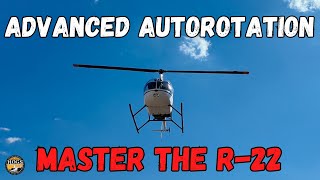
Kenny Keller and Chris Hauser prep H.O.G.S.' first advanced autorotation course for the Robinson R22, running two days with three hours total. The course progresses from straight-ins and 180s to zero-airspeed entries, 360s, and simulated engine failures.
Questions this video answers
March 1, 2025.
Three hours total: planned as two hours on day one and one hour on day two (may be adjusted for weather).
Max continuous: 23.5 (quoted as '23 and a half'); five-minute takeoff: 24.5 (quoted as '24 and a half').
Chapters
All right, so the gist of what we're doing, the videos in our R22 section, inside helicopter line, ground school, everything is probably at least 8 years old and a lot of great content. And the younger instructors that were doing those videos for us did a phenomenal job. But as you can imagine, those were done with like GoPro 2 or GoPro Hero. So it's time to update some R22 videos tomorrow. Arriving to fly with Chris Hauser is CW, who is one of our longtime Hogs members. And Chris is going to go out with him for the first two day R22 advanced auto rotation course. And Lindsey's over here putting together a presentation just to kind of show our customer when he arrives the different things that we'll be doing during the two days, the advanced auto rotation course, R22. So again, this is our first going to be our first go around. Hauser picked what he wants to do for the first three flights. So not only is that happening tomorrow, we're gearing up for our 13 year celebration, March 1, 2025. And gosh, what else we got going on? So we're doing that. We got hogs ball caps on the way, we've got hogs backpacks on the way, we've got other goodies coming as.
Well and we're good to go, ready to fly. Morning caution lights are out, gauges are all in the green. We got plenty of fuel for what we're doing. We got nav lights and planning lights off. Alright, so a nice normal pickup today here. Two step process. We're going to start to raise Collective. Get her light on the skids. We're going to cancel out any movement and then we're going to continue to bring the Collective up and get her off the ground. If for some reason you need to stop pulling Collective to neutralize any of that movement, then just stop, neutralize the movement and then start to pull Collective again. The goal would be is to have one continuous movement. All right, so I'm starting to raise collective. Needles are still joined up. They're looking good. We're getting light on the skid. Looks like we're a little nose heavy there. So I'm going to push forward and then we're going to come on up, come to about 3 to 5 foot.
Hover.
And then start moving out. All right, my tail's clear. I'm gonna add a little left pedal, turn us in here. Winds are coming off my tail just a little bit. And now for a nice smooth set down. We're just Going to slowly lower that collective. Maintain spot over the. Maintaining your spot. Come straight down if you have to. Have a little bit of forward cyclic. Goal is to come straight down, though, and then just looking for the ground the last couple inches there is what we call that down wash and got to fight through it. All right, clutch lights on. So we'll make sure it goes off within 10 seconds. Put the friction on here for a second. Give me a little vent action. It's a little warm in here. All right. All right, coming up again, two step process. Getting light on the skids. Cancel any movement. Continues to come straight up. Well, she's feeling light today. It's been a while since I've flown this aircraft just by myself. All right, upper taxi, we're gonna go. We're gonna move this way.
That way.
We can get into the wind here. Upper taxi is three to five feet, no faster than a brisk walk. I moved over to the right just a little bit so I'm not blowing Kenny around. And then I'll come back over center line. Three to five feet, no faster than brisk walk. They're just slowly applying forward cyclic, maintaining heading with those pedals. Right now I got a right quartering tailwind blowing on me. So I'm maintaining that being an LTE situation. If the aircraft should start to spin to the right, I'm either going to.
Try to fly out of it or.
I'm going to roll throttle off and set it down. Tails clear. Coming around. There we go. Now we like to be into the wind. All right, now we got a left quartering headwind. So we are still worried about. We are still thinking about LTE lost to our effectiveness. Again, nice and easy. What we're going to do is just nice, simple little. I'll do a small little quick stop here. And quick stop is just basically stop that forward movement. All right, so what we're going to do is let's come back around foreign. We're going to start our forward movement. Most time it's going to be that you're departing and as you start your departure, for whatever reason, you got to stop that forward movement. So it's going to be down right aft, down collective, right pedal aft cyclic. 3, 2, 1, down right aft. And then as your aircraft start to settle, it's going to be the opposite. Up, left and forward. All right, tails coming around again. And I think we're ready for departing here. Let's set her down here for a second. We're gonna. Get her below 80 here. Adjust a couple things here. Keep that just above 70. All right, I think we're good. I think we're looking good. All right, rolling throttle up. Governor's taking over. Making sure we don't have to run away. Looking good. Friction's off. All right, coming up. Another quick stop. Man, she is. That tail is liking to come up. I know it's coming up first. Then we'll give a little quick stop. Right, right into Kenny here. Kenny ran out in front of us here. 3, 2, 1. Aircraft starts to settle up. Collective left pedal forward cyclic. All right, let's take off here. We'll do a slight little max continuous here. Remember, our max max continues 23 and a half or five minute takeoff is 24 and a half. So we're going to slowly start to come up. The slower slower you pull, the more power you'll have available to come up. Look at that. I'm only pulling 21. Coming up on 22. And once we're clear of the obstacle, we'll push it forward. Warsaw traffic, helicopter 346 Victor Hotel is departing the north end of the Runway. Big northbound.
All right, everything good to go? No, I felt this thing picks up different. I don't think I've ever flown about myself.
Yeah, I know.
Honestly, I've always been in here.
Somebody with you. Always.
Well, I mean, at least this one. I mean, Obviously I've flown 22s myself, but it that first pickup, that nose started coming up, I'm like, oh, I don't have. Not used to not having somebody in here with me.
Right.
People are probably gonna watch this and be like, what the. That attractor sucks.
Well, but it's ugly. We won't put it up. Well, whatever.
You look at it and see what you think.
Beauty of editing.
Oh, God, yeah.
Since you just landed and you went out to kind of brush up, take a look. This is what we put together earlier. So tell the your audience because everybody wants to hear from the famous Chris Hauser.
Wait till you see my flying today. I won't be so famous anymore.
Tomorrow we have our first official R22 advanced auto rotation course. And CW, one of our longtime Hogs members, he's been here to fly with us in the R44. I don't remember who flew with him. He was here last summer. Whether you flew with him or not, I can't remember. But. So we put this together this morning on what we made up a month or two ago. We scratched out what we thought would be in the course. And then today you and I sat down kind of Went through this and had Lindsey make us up a nice little PDF that we can, you know, show our customer when he comes in. So tell us, what are you going to do with CW tomorrow? We know this course now is planned on three hours, so we're going to do two hours, one day, one hour the next day. And it looks like rain possibly tomorrow. So maybe we'll do one tomorrow and two flights on the second day. But right now the course is based on two days, three one hour flights and then we may adjust after we see how this goes. So explain to us what you're gonna do on those three separate flights or just kind of give us an overview of the whole thing.
You know, it's classified, Kenny. We're not allowed to talk about it.
Okay.
No, we're gonna start simple and then we're gonna get into the more advanced. So, you know, as this looks good, you know, for training we want to train to a standard. And you know, and the training is all about doing straight ins and 180s and that's all you really get to.
Do.
To go for your checkride. Well, this course is all about. We want to have fun as number one. But we're going to go out there and do things that we. You may not have done before. Maybe you have, maybe, I mean if you've flown with me, maybe you've done some of them. But this is all about going beyond the straight in and the 180. We are going to do some zero airspeed entries. We are going to do some 360s, we're going to do some full downs. We may do some S turns. We may do. The first hour is just going to be like a warm up, right? It's kind of going to be like the training. We're going to, you know, do some quick stops to get you warmed up, see what your straight in, your 180s look like. And then from there we're going to progress into the more advanced stuff. And by day or second day or hour three, we're going to be really doing all the fun stuff, the 360s, the zero airspeed. And we may just be flying along and I may just say engine failure. 3, 2, 1. And then we're going to enter it and we may be at, you know, 500ft with a tailwind and you've got a. What are we going to do? We're going to turn left or right and we got to get into the wind and pick your best spot. And that spot might be over here where you Got to figure out how to get there. So we're going to play with air speed. We're going to figure out how to extend the glide. We're going to figure out how to shorten up the glide. We're just going to go beyond the commercial checkride standard. That's what we're going to do.
Cool. So, like we were talking this morning, I'm always pushing nice, smooth entry, good setup. Like we do everything. And we do that to a standard to prepare somebody for a check ride. Correct. And we were discussing how this is.
Not what this course is, not what this course is.
This is, of course, to get to do the stuff that you don't do in a normal course of training.
Kind of more real world, I guess. But I mean, because, yes, in the training environment, you preach that a good setup always ends with a good result.
Right? That's.
You want a good setup. We want to be right at our altitude. We want to be right at our airspeed when we enter. Well, this is not what this course.
Is going to be. We may be 90 knots and 800ft, right? Correct.
Correct. Or we may be 50 knots because we just took off and we're just, you know, 50 and 50 maybe, I don't know. Or 50 and 500, I don't know. We're gonna play with it again. This. This is gonna be a learning curve for us as well, because this is gonna be our first time doing it. So, you know, I guess tomorrow CW Is gonna be our. Our victim, our first guy. And from there, we're gonna fine tune it.
So.
We'Re excited about it because, again, you know, you've heard Kenny talk about what I talk about the training scars. But you have to learn those, right? You have to learn the basic principles of the straight in and the 180 and all that. But that's not the flying that we do. Right. The flying that we do is, you know, in my aircraft and my. In my two engine, I'm doing 140 knots at 800 AGL. Okay? I've got two engines. But what if I did just refuel and have a fuel issue and now I lost both engines, you know, so that's real world. That's what we're gonna do.
So. So you're doing the first R22 tomorrow, and then we have our first taker for R44. But he's gonna split it up, he said. And he's done our. He's a Hogs member, super fan. He went to Vegas and did the mountain course already. In the R44. And he said, can I come to Indiana, do the advanced auto course? But I want to split it up. I want to do half in the R22 and half in the R44. And he even said, I'll just pay, and I'll pay the R44 price. I don't even care. I just want the course and I want you guys to split it up. So the next one, maybe both of us, or maybe just you, depending on what else I got going on. So we've got our first two official advanced auto rotation courses.
And it'll be. It'll be nice to hear their feedback too.
Right.
You know, it's always good to hear from what they think and, you know, hopefully they'll show up and they'll get exactly what they thought they were getting.
Right?
Or I'm, you know, I hope they don't walk away, think. Well, that was. I don't. I don't think that's what it's going to be, though, because unless you. Unless you're an instructor or unless you're going out and doing them on your own, which a lot of people don't.
Right. Most people don't get a chance.
Private owners or even, even people that rent, they don't want to go out there and do autos, and they won't go out there and do them by themselves. And if they do, they're usually doing the straight into it. So this is a chance for them to come out and do some things that. That they probably normally don't do. So that's what we're looking forward to.
Nice. So what we're going to roll for you next is Hauser came in. Lindsay and I put together. We've been working on this for a while. So we went through our first iteration of the stuff, seven steps. And then when Hauser came in, I had him go through it because I just kind of laid it out what I thought. And then first thing we did with Hauser Day is we went through my seven. And I said, what do you like? What do you don't like? What would you add? And he had a few ideas, so we had Lindsey rewrite it.
And this is your seven steps to being a pilot, right?
Yeah, this is the seven steps to private pilot. And we're going to start releasing those. We're going to get you the first video here in just a minute that we shot yesterday. And the whole idea behind the seven steps is a lot of, you know, that you end up out there with 100 hours 150 hours. I think we had one guy in the past two years, 160 hours, Jamie, that came for the final approach course years ago, had four years and 200 hours. And they show up and there's things that aren't done. So the seven steps is to break it down for you, to help you figure out about where should I be from off the street when you haven't even flown yet up until the day of your test. So we got seven major steps, and then we'll have some sub things, each one. But we want to give you a plan that if your flight school is not doing it, you can question, say, well, why am I at this stage? But I don't even have any solo time yet. But you're prepping me for the trek ride. Why is that? Or, you know, you're having me solo and prep for the checkride. But my requirements aren't done yet, like, because we have people showing up and this seems to be the thing around the country. And Chris can verify this with me because he sees it too, because he comes to help me with these final approach courses. You've helped me with all of them in the past year. For the past year, you've helped me with every single one of these final approach courses. You've been here and, and they show up and. Or they're calling about it and we're going, get your written done, call us back. Go get the requirements done, call us back. They're advanced into their training and they're close to a checkride, but they've got major hurdles and steps that haven't been yet completed.
They do a good job of vetting before they get here. But there have been a few times where a person has gotten here and we start really diving into their logbook and, and we're looking at it like you don't have your cross country finished, right? Oh, oh, well, you don't have your, what, three hours or five hours of instrument time? Well, they said I only needed 4.7. Well, no, you need 5. It's cleanest, you know, whatever it is. So, you know, yes, you do a great job of vetting, but I'm surprised that some of these people, people that come here and they, these, this is just basic getting into the farm far aim and reading what you need.
Right. But even, you know, we'll get an add on pilot. Well, how many hours do I need for that on? Well, add on pilot. You're a pilot. You've got a far aim. Like I do's a part. It's it's a pair. It's a paragraph long in part 61, right. 109. It tells you what you need or whatever part it is. It's not that hard to figure out.
So this, this will be good for that pilot, and this will be good for the guy who is just starting out and just says, hey, I'm thinking about taking flight lessons. They can look at this and be like, okay, so seven steps, I can do this. This is kind of what I need to do. And it kind of gets them a plan. It gets them a path to start.
Yep. Awesome. Well, so that's the latest little behind the scenes. That's the kind of stuff we do. We go through these things. I buy about one of these a month because we love just brainstorming. And again, we put things together and go, how's this going to work? So we're going to find out the next two days how our first R22 approach goes. So I guess we'll roll our first video from step one from seven Steps to Private Pilot. So we've come up with something today that we've been wanting to do for a while, and for right now we're going to call it the seven steps to Private Pilot. And we encourage your feedback down below what you think of these seven steps. But this is something we've been thinking about for a while and we wanted to break it down for newbies. When you're first thinking about becoming a helicopter pilot and taking lessons, there's so much to worry about. And there's a lot of things you can be looking at, looking at and thinking about. And then you have end up with, what do they call it, Paralysis by analysis. Because you spend all this time looking, thinking, looking at prices, looking at flight schools, doing all these things, and then you never get the dream started because you get overwhelmed. From the beginning, through our 13 years of HOGs online videos and interacting with people, working on their ratings, we see the stumbling blocks and we know where people run into trouble and we know where people end up at a certain point. And it's, why didn't you get this done before? You should have had that done a long time ago. So we've broken it down into seven steps. We're going to do seven separate videos. And this is part of our celebration of 13 years online that we're celebrating now, or getting ready to celebrate. March 1, 2025 will be 13 years online. So the first one we want to mention is step one. We call it takeoff. Just get started. That means schedule an introductory flight. So what's important is schedule an introductory flight and get started. Helicopter schools are a lot less prevalent than what airplane schools are. So you'll have to search. You know your area. You might have several options. You might have to drive a couple hours for one option. Don't let that stop you. The biggest thing is get the introductory flight, go out and give it a try because it's a 99.9% chance that you're going to get hooked and decide this is something that's particularly for you. You're going to absolutely love it. So we have a resource for you. This is an Amazon number one bestseller we put out just about a year ago. And I marked a couple of the first questions in the beginning of this book. This is free PDF down below. You can go down below this video and get this link. Two of the top questions are what is the best approach to selecting a flight school? This is a topic that, again, depending on where you're at, you may be very limited and you may find that you might have to travel a little farther to a school that's right for you. But don't spend too much time worrying about that at this point. You want to get that introductory flight and see what it's all about and get started. And you can read more about that again inside this book. Free PDF down below, which helicopter is best for flight training? This is another one we think that holds people up. And a tip we want to give you, and we mention it in this book. We spoke with Tim Tucker at one of the heli expos and he was, you know, a big will with Robinson helicopter at the time. And we just said, tim, what helicopter should a person fly? And he surprised a lot of people. Even though he's associated with Robinson, the most popular civil aircraft in the world. He said, you know what, Kenny? In my 50 some years, I don't think it matters. I think what's more important is getting good quality instruction in an aircraft that's maintained properly. And I go along with that. Right. It's more important that you're comfortable and go to a flight school where you're getting good valid training and they're not taking advantage of you, which you'll learn more about that as we go. This is a great resource. We opened up, or we not opened up, we put this book together for newbies. The books, we've got several books on Amazon and that we sell on our own, but most of them are more for somebody who's already out there flying and already working on a rating. We specifically made this book for beginners. So there's a ton of information. Again, a link below where you get the free PDF or you can order the paperback copy down there as well. So we're gonna go to the next video here. Shortly after I open up a couple of boxes here. In the next video we're going to talk about what you need to get started. And just for fun, I'm open a couple of packages because we just ordered fresh copies of everything that you're going to need. This is for later on if you're going to become an instructor. You'll want the Helicopters Instructor Handbook. And again, the next video we're going to go through what kind of resources you should use. In the beginning, I just like opening stuff on camera because I think it's fun. Always enjoy watching other people open stuff. You can go to helicopterground.com we'll put that link down below the video as well. For 13 years we've been online helping people get through the knowledge areas to get the rating. That's private pilot, commercial pilot, instrument pilot and certified flight instructor. And you can see back over here on the wall we have what we call the HOGS Wall of fame. So over here, these are people that have used our training, whether they're doing private pilot, instrument pilot, commercial pilot or certified flight instructor. And when they pass their test, they send us a just a short testimonial. They send us a picture along with their testimonial and we just ask for a couple sentences like let us know how we helped you get through the rating. So they send us in their picture and then we send a HOGS no Go button. I'm looking for one real quick. We send you a HOGS and no go button after the fact. So just to give you an idea of what it is specifically do, you might be new to our videos. This is what we do. And we also do training in the R22 and R44 helicopter. We do what we'll call advanced training. We don't really do much for brand new students and private pilots. We like to do the advanced stuff where someone has been working on a rating somewhere and they've got their qualifications or regulations or requirements all fulfilled, but they just, they're struggling to get done. So they come to us and we help them finish up. And we also do advanced auto rotation courses. So in the next video we'll go over some of the stuff that you might need. Here's one that's a good option. Aviation Weather Handbook. We'll talk about that more. And then here's the one we'll talk about more in the next video Helicopter Flying Handbook. That's where you're going to start. So do us a favor and subscribe to the channel if you're on YouTube and click that little notification bell because that way you'll know when we put out the next video. Because we've got six more videos to go along with the seven steps to Private Pilot. And to recap, we're breaking down seven steps, where to start and where to start moving forward. Because if you follow these seven steps, it's going to help you kind of get through the training with a little bit less overwhelm. And again, we'll explain more in each video. We'll see you in the next video. Subscribe click that little bell. And don't forget about the free PDF down below to get started with Private Pilot 101 helicopter training blueprint. Peace out when you feel the pressure.
To fly, but know the right decision is to stay on the ground, hit the hogs no go and live to fly another day. Helicopterground.com.










