BTS: Robinson R-22 Advanced Autorotation Day 1 at H.O.G.S.
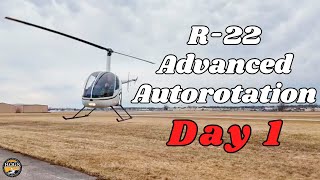
Kenny Keller leads an advanced autorotation course in a Robinson R-22, starting with straight-in autos and 180-degree turns at different altitudes and speeds. Day 1 covers sight-picture adjustments, airspeed management between 30 and 75 knots, and surprise engine-failure drills into fields. The course is expanding from 3 hours to 4 hours over two days.
Chapters
Sam, Sa. All right, Self evaluation of your first flight. How's it. We're not gonna put CW on the spot. We're gonna put you on the spot. So you devised how you wanted to operate this advanced out of rotation.
Well, this actually worked out exactly how I wanted it to. And of course, it's variant on the student. For CW's case, it was. He hasn't flown in a few months. So we went out, warmed up with some quick stops, and then we started in just within straight in autosomal. We started at 1000 AGL and then brought it down to 1500, and we probably did three or four of those. And then we got into the 180s and we did the same thing. We started at. I think we stayed at 1000 AGL and then we did three or four of those. We stayed with just those today because he was not. What do I want to say? Not struggling. I don't want to say that word. But, like, since he hasn't flown in several months.
Right.
And hasn't done any autos since, whenever anybody's rusty, you know, he was kind of concerned that he wasn't really hitting the spot because he was trying to use his sight picture. So we were discussing that. He's like, well, what do you use as a sight picture? And honestly, I've been doing this so long, I do it by feel. And I hate that answer because it doesn't help my student out at all.
Right.
But I just know each time he was coming up short. And I told him every time he entered, I said to myself, he's going to be short. And every time he was, Yep. And then that's common. And so what happened was. And I said, okay, this time we're going to do the same thing, but I'm going to tell you when to enter it. And I don't want to brag, but we hit this.
Go ahead, it's fine.
And I can't tell him sight picture. It was just experience on. I told him that I would rather enter late because I know that I can play with air speed or play with other stuff in order to hit my spot. So once he saw that, it kind of gave him a better picture of what he wanted to see. But of course, today we had pretty much a direct headwind of 8 knots. Well, tomorrow we might have a crosswind of 20, so it's going to be totally different tomorrow. But it was good for him. So all we did today was really straight ins and 180s at different altitudes. We tried to keep the airspeed, we're between that 60 and 70.
And.
But I think for today, it was just. For the first one, it was really good for him just to get back in there and do some of them.
And to reiterate, for somebody who might just be coming, haven't heard about what we're doing. This is advanced auto rotation course. But this is the first flight where you chose to just, let's just warm up doing the normal stuff. Well, then we're gonna move. Then you're gonna move into the more advanced stuff.
And I think that's really kind of the concept. Anywhere you go when you're doing advanced stuff, right, you at least gotta warm up with the normal stuff. Right. Or you gotta do a few before. You can't. You just can't show up here and be like, okay, we're gonna go out and we're gonna do zero airspeed autos. First thing you know, we got to make sure that, you know, we got the basics down. And then. So I think he's doing well. And on the next one, whether that's later today or we'll start fresh tomorrow, we're gonna play with air speed, we're gonna play with S turns, we're gonna play with extending the glide. That will be hour two.
Nice. All right, so we got Hower bringing the aircraft in, and we're going to eat. Jimmy John's here in a minute, but we're going to put CW on the spot. Get. Get his thoughts on what we did so far. I'm. Get the door. Door coming down. Well, CW has been out. You came out last year, September, and you did R44, me and Hauser. And did you. We weren't even really a package. You just wanted to come and fly.
Right. I don't get that opportunity to fly that often.
So that we didn't really have a course. It was just, hey, I want to come out, fly the R44. Sure. So you flew two days with me, or you flew two flights with me and two flights with Hauser and just to kind of go out. And we just did everything right.
Exactly.
And so CF your CFI with about 400 hours. Right. And then Hauser just said that it's your first flight in a while. So you came out just to be our very first Robinson R22 advanced auto rotation course. We've already kind of given them an idea of what we. What the first flight was going to be, which was kind of warm me up. So it's early stages, but what would you share with. Sure.
Well, for myself personally, having that flown step since September, getting into the R22 for the, for the first time or whatever, you know, it was very slow. I just tried to start out with the basics easy, you know, two step lift off. Today was a little interesting because I think the last time I was here there wasn't any winds and today the winds were about 10 knots. And so basically it was going to be into headwind, but from where we lifted off, we were basically flying perpendicular to the headwind until we got out to the, to the Runway to take off and stuff. And then basically we started out with 15, 1800ft and then 1500ft for the straight in autos and the 180s. And what I was noticing because I hadn't flown in a long time, my sight picture was more or less defaulting to no winds. So because I had a 10 hour headwind, I kept coming up short every time. So him and I talked a little bit about, you know, how he determines when to go into an auto versus the way I was trained. So basically we kind of let him call the one to descent and I noticed that my sight picture was different, but I got much closer to the, to the spot. And then in the 180s we ran into one situation where I delayed a little bit going into the 180 because I was concerned about an aircraft on the Runway which by the time I would have turned, he would have been off anyways. But still I always get a little nervous when I see an aircraft on the Runway. So then again came up short and then on the last time kind of hit the spot. But one thing I was doing on the 180s was keeping my speed a little higher than I should. So that's how the first flight went or whatever, and I'm happy with it and picked up some points to look forward. What goes on to the next, next lesson.
Nice. And what immediately is interesting to me is in the R44, in the last two years we've been flying it, people come here from some other state, they come here and almost every time we start doing autos, almost every time they end up short. And not only just short, like way short. And so I thought it might have been something about that specific R44 and the way the panel sits or something compared to other R44s. So it's interesting that in your first flight in this, you're coming up short. So so far here's a theme of what people perceive and we'll have to think about that, but maybe it's like because you're in a different environment, you know, why is it that people are in in general. Coming up short. Yeah. All right, well, we got some Jimmy John's ready, so let's eat some Jimmy John's and then I'm going to show you my new cfi, the one that just came in without the expiration date and open up some other mail. Uh huh. All right, let's eat.
Okay.
We had lunch and CW brought us chocolate chip muffins this morning and I didn't eat at home like normal. And banana nut muffins this morning. That was cool since I hadn't eaten. I feel like we should have had donuts for him. So while these guys are out flying, they're on their second flight for the advanced auto rotation course. They'll be back shortly. So real quick, I wanted to show you just came in the mail today. I got my CFI renewed. And yes, I did it after the two more two years or the 24 months I expired, but I did it expired December, in January I jumped on did the online course submit everything. And here is my new license without the expiration date. So we know now that this is something that's for real. Yes, we heard about it. But so now after 24 months, if your CFI expires before you had to just take, you had to take another check ride. That was the only thing you could do. Now you have the three month grace period after your CFI expires. You can't exercise privileges, but you can do an online course or do whatever you need to do to renew. And you have three months to renew your license. So I did it and now there's no expiration on it. And everybody says they just did that to save money. We still have to follow the 24 months of renewal. You still have the three months grace period, but they're not going to send you a new certificate every time anymore. Just a bit of interest is, hey, I did it. I did it. After the 24 month expiration, I got the new one that doesn't have an expiration on it. And then we're just going to open up mail here real quick because we're ordering stuff every day. We have stuff coming in. Something just showed up at my house. I think it's the new hogs polo. A polo with the logo that we never ordered just arrived at my house. We got hats coming, backpacks coming, like I carry every single day. We got the new knee boards, got some new badass knee boards and that's the Actual name badass knee boards. I don't get paid for those, by the way. I buy those. I have five of those coming for giveaways for our sale. That's on now. And with propilot, you get your choice of the backpack, the ball cap, or the knee board. So we're just getting fresh materials in for courses to show you the different things you need. Here's the good old E6B. That's a guy who bought a different package with all the gear, everything that we don't really advertise anymore that we might bring back out again. What else we got here? So we're just showing you what's coming in the mail just for the heck of it. Because again, I've reordered everything that a person needs. So I have new fresh of everything on hand. When you come for a final porch course, somebody always forgets something. So we have everything on hand. This is actually a hog study guide. We just put in order to update the interior file from ac, you know, pts to acs. Even though things haven't changed that much. We ordered a new interior file. There was a few left. So I don't know if this is one with the new file, but we'll check it. Oh, here it is. This is. They did it. It's updated and it says acs instead of pts. So private pilot study guide. We'll throw a link down below. These are available. We just got 100 in inventory from the place that ships them. They take the orders, they do the shipping. But the private pilot study guide. So that has been updated with acs. And I guess that's all the mail we got for today. But keep tuning in. We're gonna check with these guys here in a minute. They're about to come in. We're gonna check and see how their second flight, where they're gonna go a little more into the advanced stuff. The first flight was warm up. Flight number two is getting into doing some more out of the box kind of auto stuff. Because you all get the standard old, same old. Straight in 180. Straight in 180. Nice setup. Blah, blah, blah. Now they're doing stuff that you don't get to do at your typical flight school in your typical course of training. So we'll fire up the camera again. As soon as they roll, It's. Heather's modeling the hat. Because we don't. She's the only one that's got a hat. The new ones are on their way. There's 12 of them coming. So what we're doing is. I'll let them pull inside because it's raining and cold. We'll let Hauser go first. This is flight number two. They did their first flight a little while ago. So this. On this flight, what did you guys do?
So on this one, we warmed up again, just did a couple of quick stops, and then we went around. We did a normal, I think, straight in, just again, just to kind of get right back into it. And then from there, we started with playing with airspeed as far as trying to hit the spot. So we entered late, knowing that we would go over our spot. So what we did was we played with the airspeed we entered at, you know, cruise airspeed at whatever altitude it was. And then, you know, we. We. Like the number 60, 60, 65 is kind of what we do. But, you know, we brought it all. I think on the first one, we brought it back to 40 to see what that was like. And I think at first he wasn't really comfortable with that. But, you know, we discussed it about, hey, you can. You can bring it down pretty slow as long as you have that airspeed at the end to kind of get that. That flare going. So the first one was, you know, kind of, I don't know, eye opening, maybe, just to see it. So then we came around. We did it again. This time we brought it way low. I think we got it down to 30, you know, something like that. And we hit the spot. And also, he could really see the difference with, hey, we knew we were going to overshoot, bring that airspeed back maybe 300ft AGL, start pushing forward, building the airspeed, and then flare. So we did that. And then on the next one, we used that. We entered too early, that we had to. What's the word I'm looking for? We had to extend. Yeah, we had to extend the glide. So we were, you know. Robinson R.22 book says 75 knots and 90 on the. On the RPM. This one does not have a VNE barber pole for power off. But so we kind of talked about that. You know, if we, you know, if you went much faster than that, you wouldn't have enough air up through the blades to keep us up in the air. So 75 is where they want you. So we were doing 75, and we were doing 90, and you could really see how that stretched the glide. And I thought he did really well on those.
It just looked good.
So we did two or three of those, and then we went out and I said, we're just gonna Go fly. And I'm gonna tell you, auto. And you may have to do a straight. You may have to turn 90 degrees. You may have to do a 180. We don't know. The other issue with that is now we're going into fields, right? So you got to worry about power lines. You got to worry about irrigation systems. You got to worry about, you know, maybe a ditch or something or whatever. So on the first one, we took off and we were right into the wind, and I said, engine failure. And so we entered, and as we're coming down, he goes, oh, there's an irrigation in that field. I go, yeah. He goes, we better do something about that, right? So we made a turn, and it kind of got a little. We aborted. That's what we ended up doing on the first one. Aborted with about 300ft to go, maybe. And we talked about that. It's like, hey, when you get down in there, you might be again, power lines, irrigation. And he goes, yeah, I didn't even see the irrigation until we actually kind of got a little closer. Said, so, yeah. So then we did a couple more of those where we did actually go down into the field. We never touched down, as they were all power recoveries. I kind of gave him a surprise one on a departure. We were. He's like, well, let's do one more.
I was like, all right.
So we were here, and we departed. We were coming around the pattern.
I said, let's.
Let's go around the pattern and we'll figure out something, what we're going to do. Well, when we departed and we started making our right crosswind, I said, engine failure. And he kind of got. It's kind of a surprise, right? I mean, I didn't. I said, engine failure. Three, two, one. But it was kind of a surprise. You know, airspeed got low. RPM kind of got a little. But, you know, that's what. That's what this course is about right there.
Correct.
Is even though he knew. Well, he didn't know when it was coming. And I did kind of announce it. It was still a sub surprise, Tim. But, you know, we talked about it, and we did one more, I think straight in at the end there. Yeah, you wanted to do one more straight normal. Straight in, just. Yeah, But I think overall. Well, I think another hour, we're right on schedule where I wanted to be kind of with. With the lessons and looking pretty good.
For somebody that's just coming along this video. Maybe they ended up halfway through. What we're doing is Advanced auto, giving you a chance to do something outside the normal training. So a lot of these things that Hauser's going to talk about, you may not be doing at this point in your training. This is for somebody who's advanced, you've got a rating, you're out there flying and you want to experience more real world stuff. So the things we're going to talk about for the next flight as well are going to be things you don't normally hear about and you may not want to be doing right now at your flight school with your low time instructor. This is more advanced stuff.
Well, what I found in the second hour was I really like the way we started out with the first hour, just doing straight ins 180s, getting the feel back to the helicopter especially. Haven't flown in a while. So even though I was trying something that I don't think I've ever done, I felt more comfortable with it. And you know, through his input about watching the speed and stuff, you know, it was, I like the glide ones better than the, you know, overshooting or whatever. But I think it's just a mindset because in school you're constantly trained 65, 65, 65, you know, until you flare and all of a sudden, you know, we're in between and we're doing 30 or 40, you know, before we get, push it back to 60, 65 or whatever. So. But I really enjoyed it. And again, today was a little more challenging than I thought because I was dealing with a 10 knot wind, which last time I was here it was, you know, no wind. So that's always something to add or.
Think about when you're out there, nice flying and you've done two flights, but you guys are going to do two more tomorrow because we made this course at three hours, right? And I said, okay, we're going to give you a fourth hour just because you were good enough to be the first person to trust us with this new course and let us kind of hammer it out. So we got talking about it and we thought maybe we're going to switch this to four hours, four hour course. And hour number four is okay, we've done what we wanted to do with you for three hours. What do you want to do the last hour? So maybe that's kind of, maybe what we do next with this course is make it a four hour course. Two days, two hours each day. We've got the things we want to take you through, let you experience those and then number four, go. Okay, what do you want to work on during that fourth hour.
I think that would be good because you're gonna get people in from all different schools and say, you know what? This is something I'd really like to know or try, basically, because I'm, you know, in a high elevation school or, you know, I'm down in the desert or whatever. And this is something that I thought about, but for whatever reason, my school doesn't really want to, you know, try that just yet or something like that.
Yep, perfect. All right, well, I think now we're going to step number two of the seven steps to Private pilot. So stay tuned this week because we got lots more to come. Welcome back to the seven steps for Private pilot, where we're breaking down seven major areas to kind of focus on from day one to getting to your rating. So our first step was get an introductory flight, go give it a try and get started. Next, we want to say chart your course study resources. So we'll move over here just so I can kind of show you. Now, don't get overwhelmed in the beginning. I don't think you need all of this stuff to get started. We have one picture up there on the wall, the hogs Wall of fame of the most prepared student ever. He came for his first flight and he had everything under the sun. And we were pretty proud of him. We thought it was really, really cool. But for the most of you, if you buy everything from the start, it's probably going to overwhelm you. So I want to help you with where should you get started? And what I would say is this one right here called the Helicopter Flying Handbook. The FAA tells us, as student pilots, private pilots, instrument pilots, certified flight instructors and examiners, we should all be referencing, referencing this book. And when I started back in the late 90s, it was called the Basic helicopter Handbook. And I can remember going for my first couple flight lessons. The guy sold me one of these and said, here, take it home and read it. I remember going through in the beginning and thinking, oh, my God, this stuff is really super complicated. Well, let me tell you, don't worry about that. I think this is where you should start. This is the first book you should get. But just start working through it in the beginning. It's going to talk about flight controls and. And helicopters specifically. Get it and start going through it, because it's gonna help you in the beginning to help understand what the controls do and the basics of what helicopters do when they fly and how they fly. But don't let it overwhelm you because as you start flying, these things will make more sense and more sense. So just the tip is I remember getting started and thinking, oh my God, I'm never gonna learn this. But I didn't let it stop me. I kept moving forward and then eventually at some point the light bulb comes on and you go, oh, I get those things I was reading about that were kind of overwhelming. I get it now. It makes sense. So as you start doing ground school, whether you do it with your instructor one on one, or you use something like helicopter online ground school that we have here to help you get through the knowledge areas and the flying portion, this is where you want to start. So that's the first, first thing I would get. Now we'll go through some of the other recommended things. I would next consider a POH or pilot's operating handbook for the aircraft that you're going to be flying. Now, you'd want to wait, make sure you've, you maybe you've flown a couple places and you're going to pick the helicopter that you want to fly with. But having your own copy is nice to, to study at home. These you can go online and you can download these for free. So it's no cost to get the PDF version. I like hard copies of everything. So as we go through this list, you know, in this day's world, almost everything you need you can get electronically and that's fine, it's accepted. However, having paper copies, they're always available and ready for you to go, versus iPads that freeze up, get too hot, lock up, cause all kinds of problems. So I recommend having both have your electronic version and have your paper version too backup to back you up as well. And again, when you first start reading through these things, it's going to be complicated, but it'll get easier with time. And it's not like you got to start studying immediately, but start kind of leafing through it and learn about the aircraft. That's going to help you a lot along the way. Then some of the basic tools. And I want to mention that in this day and age, there are flight schools where people are only learning electronically and it's acceptable to go to the test and use all electronics during your test. However, many flight schools, as we do here, we still want you to have the basic knowledge of an E6B computer, a good old plotter and an actual chart and people. First objection is, oh, but you can't buy them anymore. Well, you can go to Sporty's or different places on the web and order them for 8 or 10 bucks or 12 bucks. And these are really super nice for studying. And something else in the beginning that ties into the chart is a helicopter kneeboard. We use these and they're from a guy who calls them badass kneeboards. And I mention him not because this is a paid advertisement at this point in time we have none of those. But this young man sent me a couple versions of this and I really liked it. So we've started giving these away. And by the way, we're going to be giving these away during our 13 year celebration that starts March 1st. So we're going to have a lot of different giveaways. A knee board, we're going to have some hats, the Hogs ball cap and the Hogs backpack like I carry every day to and from the hangar. We've got some of those on the way as well, and we'll open those up in some future videos. But a knee board in the beginning is super nice. Let's exaggerate that. This is your checklist. And when you're learning, the nice thing about having a knee board to take with you during your lessons is you can slide your checklist in here. Again, we're pretending this is a checklist and students, when they're learning, they got to go through a whole list of items, right? And if something gets messed up during the startup, you can do hundreds of thousands or thousands of dollars of damage to an aircraft. And we know because we did that just a little over a year ago with a new student on his third lesson. We made a bad mistake and we should have stopped and went back to the beginning, but we tried to continue on and then we had something dumb happen that cost about $36,000. So the nice thing about a knee board is as you're learning, we order them with this little plastic strip on here. So if you can imagine, this is a checklist with a whole big long list of items. When this is on your leg and attached, you can keep working through the list and just keep sliding that checklist so that when you go to do an item in the helicopter, you're checking this, you're checking that, you can come back and you know where you're at. Otherwise, if you're just trying to lay the checklist on your knee, it's falling on the floor, it's falling between your legs, then you're picking it back up and you're trying to go back to where you were. So a knee board is really, really nice in the beginning to help you learn the checklist in a systematic way to go through that checklist and that will help save time and money. The sooner you can get comfortable with that checklist because it takes a little bit of time, right? You climb in there and you're a little bit nervous. Instructor's letting you start the thing up and go through all the steps. If you can stay organized, it just makes that more stress free and you're going to learn more. You're going to save time and money by staying organized in the cockpit. So highly recommend these. You can find him on the Internet by just it's moagear.net or search badass and kneeboards. It'll come right up. I love that he had the guts to name his company or his knee boards Badass knee boards. I think that's freaking phenomenal. So again, these tools are for getting through private pilot. We want you to learn these things. And a little tip for later on when you take your test, you're probably going to want to use an electronic piece of equipment like an iPad to do foreflight for your cross country planning. The nice thing is you can have your chart folded for the route that you're going to be on the day of your test and your iPad can be on top and you can just slide this as it's on your leg. You can slide it as a backup underneath your knee board and have it right on your leg. So if that iPad would freeze up, go dead or lock up from the heat, you can simply just pull out your chart, put it down and not get lost on the private pilot. You only have to fly to one checkpoint. It's only one leg. And we had a guy in the past year and a half or so that failed his iPad locked. He didn't have. He had one of these underneath his leg. But he was too frustrated when this quit because he didn't have any experience with these and he failed the test. So something for you. Basics. Starting out learning. Know how to use these along with electronic stuff. Get a knee board to help you out in the cockpit. I say there's two other big choices. Something that I like and I used throughout my private pilot training. This is an updated version is the Jeppesen private pilot manual. Again, this is not a paid advertisement. I like the private pilot manual and I know it's got an airplane on there, but don't put up snoot your nose because we're flying helicopters even though it's got an airplane on there. This book covers cross country planning, airspace, weather. It's a great resource to cover tons of the things that you're going to need to know for the written test, tons of things that you're going to know for the practical test. And to this day I still use this book like if I'm making a presentation for helicopter online ground school and I want to refresh my memory on something because I'm not confident I don't remember for sure. I want to go back up and look, I look, I use this all the time applying human factors, flying cross country. So you can see there's a wealth of information in here that you're going to need and use throughout your private pilot training. So I think this is a good resource. If you don't go with that, I would recommend next the Aviation Weather Handbook because again weather, even though on the helicopter pilots end of things they ask us questions about whether getting ready for the test or do it during your private pilot test, but it's going to be more real world stuff. Most generally they're going to ask you about thunderstorms and fog and all the things that you're going to need to be able to make good no go decisions. So if you don't go for the big private pilot book like that, I would recommend having the Aviation Weather Handbook because then you've got a really good resource for studying throughout your training and also looking things up when you maybe you're working through the written test, which that's going to be another video that we'll talk a little bit about later. And then something else that's in the industry people don't have a lot of time is what we used to call the pts. Now they call it the acs. This is a must. Now you don't need it in the beginning when you're first going for your intro flight and you're going to go start taking some lessons. You don't need it in the beginning, but I would get it sometime near the beginning and just kind of start looking through it. And as you progress through the training and you get further and further along, this is going to become more and more important. In the day of the test when you go for your private pilot rating, the examiner is going to ask you questions that are all relative to this book and the maneuvers that you're going to do are also listed in here. This book is something that you need to have, your instructor needs to have a copy and you should both be going through them. It's something that I've seen in my 24 years of teaching. Instructors don't want to use Them students don't want to use them. Or I ask them, hey, you've been going through the acs?
Yeah.
Well, I've kind of looked at it and I'm like, pull it out of your bag. And they pull it out and it's all nice and neat. And I'm like, you've never even looked at that, have you? And half the time they're like, no. And I'm like, you need to start going through it. And it needs to look more like that right where pages are bent. And I can tell that you're actually going through the thing. I can't stress enough how important the ACS is. So these are just some of the basics to get started. Another thing you're going to need we didn't pull over here is a pilot logbook. And a lot of people are now using just using online logbooks. They do it in of front foreflight a lot of the time, which is fine if that's what you choose to do. Then there's a standard old log book that we've all used for years and years. This is nice because it doesn't go dead. It's always with you. If it's in your flight bag, the thing that we caution you to do to do is either start with this and stay with it until you maybe move to another rating later. Or if you're going to start using electronic, just stay with electronic. When somebody comes here for a rating, it's kind of unhandy. Well, I've got part of my training in my pilot logbook and then I switch to foreflight. So then we're trying to put their paperwork together and we got to download reports from foreflight. So it's nice and laid out for the examiner because the day of the test, your iPad doesn't work or your foreflight accounts expired or whatever the case is, I would say use one or the other. Either go for the standard old logbook for private pilot, get through private pilot, and then maybe when you start working on your commercial, if you want to go further, then maybe switch to the foreflight and. Or an online logbook where you can tuck this away in your safe or somewhere where it'll stay nice and neat for all your original training and all your ratings. So that's a basic review or not review, but a basic view of what I think you should have in the beginning. Of course. What am I thinking? Helicopter online ground school. We launched March 1, 2012, and we're getting ready to celebrate 13 years online March 1, 2025 and I created this because I failed my first private pilot checkride. And we built our training on what I've learned throughout the years starting back to me failing the first time. And I can tell you that if I'd have been going through the pts that's now the acs and I would have been utilizing that correctly in the beginning, I wouldn't have failed. However, I'm not mad about failing because it changed my whole outlook on everything that I've done since and it changed the way I trained, it changed how hard I studied. And I'm sure I wouldn't be sitting here doing what I do today, which is really, really cool. And I'm super lucky that I have this opportunity to work for myself and run my own business. That's been online for 13 years and we've helped hundreds of people around the US and other parts of the country or other parts of the world. Helicopter line ground school. That's since you kind of started that way. That's what we do. And I've taken my experience of 24 years of teaching now and put it all my best stuff in the course. So we go through and we'll talk about private pilot, for example. We help people get there, right? Because it's an overwhelming amount of information that you need to know. And like I mentioned at the start of the video, that's why we breaking down these seven steps to help you focus. Step one, do this. Step two, do this. Step three, do this. And through my trials and turbulations, I've done all the stupid stuff, right? I'm not even going to bore you with the story. Everybody that does this is going to have some kind of struggle, financial, personal, whatever it is. And you got to face these struggles and hurdles and find ways to get past those to get to private pilot. So we have private pilot courses, we have instrument, commercial and cfi. And the beauty with private pilot is you can go monthly. It has a 24 hour test flight where you can go in and look for the look at the training for 24 hours. And if you want you like the training, you just keep it and pay monthly. Cancel anytime, come back anytime. Or from that first 24 hours, your site's not right for you. You just Unsubscribe before the 24 hours is up and you get billed nothing. So we offer helicopter line ground school and we help you from day one. So you could start with that minimal monthly fee month to month you can start and come back many times as needed. And we have people that start out with private pilot and they unsubscribe. And then a little while later they come back and they'll start working on their instrument or they'll come back to do commercial, or they might unsubscribe then. And then you see them. A few months later they come back because they're working on certified flight instructor. So we help you with all those ratings. It's helicopterground.com there's a link down below you can take you direct to our courses. And there is actually a downloadable mobile app right inside the course where you can have a mobile app as well. Best case scenario, log in every day for 15 or 20 minutes. You'd be amazed if you put a little bit effort each day, how much over time your knowledge would grow. And if you hit it too hard in the beginning, of course it's overwhelming. So it works best if as you're taking your lessons, you're actually going through ground school as well and working on both together. We've had people that learned all the ground first and went to fly and you can certainly do that. But as you're learning, if you're going through helicopter line ground school, you're learning about these concepts through video and audio cues. And then you get in the helicopter and you go, oh, that video, that, the symmetry of lift thing, once you're in a helicopter, you go, oh, okay, now I get what they were talking about in the video. So it helps bring the concepts together. And you could have. We've had people who bought the course and went through 40 or 50 hours in a week before going to take their trek ride. You could do that as well. But that's jam packed every day, you know, hitting it super hard. So. So if a person even studied three or four days a week for a half an hour, you would be amazed. And we have progress tracking, which is nice. So you go in, there's a series of 18 lessons and as you work through the lessons, it keeps track of how much of the video you've watched and what videos you have or haven't watched. So you can go back at any time. Hey, I've watched that one already, but I'm going to watch it again. Or I only made it through 50% of that video and the phone rang and I got distracted. I'm going to go back and finish the second half of that video. So through progress tracking, you can go through the videos as many times as needed, but also know your progress as you go through. Go down below for helicopterground.com go and take your 24 hour test flight. And then remember, we may have not mentioned in this video. This is a resource for beginners. Private pilot 101 helicopter training blueprint. That link is down below and we're also going to put together something cool for the seven steps and we'll put a link down below for that. Maybe by this time they see the video, we'll have that done. We'll put a link down below for the seven steps as well. We're going to put this together as a nice clean PDF for you to look at. So we'll put that down below as a PDF as well. And if you're on YouTube, by the way, subscribe. Click that little bell. Just a favor to us. We're trying to get to 50,000 subscribers. It doesn't mean anything. We're approaching 48,000. Personal goal of mine is to hit 50,000 and then I don't care anymore. I don't get anything. I don't get any money. I don't get a button. It just sounds cool. 50,000 YouTube subscribers. So do a favor for us, for all the free content we put out, give us a subscribe and click that little bell and we'll see in the next video on the FA written test. Peace out. When you feel the pressure to fly.
But know the right decision is to stay on the ground, hit the hogs. No go. And live to fly another day. Helicopter ground.
Is somebody talk. Is CW talking too much? Is that why it's all foggy on that side?
Yeah, he's breathing heavy. I got him sweating.
Yeah, I got him sweating thinking about.
That nurse from North Carolina.
What does he want to ride? I don't know. Is he riding along?
I thought about pulling him in while he's in there.
Maybe he doesn't.
Maybe he doesn't want to get wet.
Maybe he.
He melts if he gets wet.
Cut.
Now let's do it all again. Now we got the helicopter behind us.










