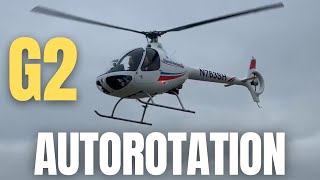
Kenny Keller and instructor Chris Hauser walk through a straight-in autorotation for the Cabri G2, starting from cruise at 1500 feet. When the engine fails, you'll see the nose yaw right and the needle split. Lower collective, slow to 60 knots, keep rotor RPM up, then flare and level for landing. Watch the throttle and pedals to avoid a tail kick on power application.
Questions this video answers
About 80 knots.
About 1500 ft.
About 60 knots.
Chapters
3, 2, 1.
So today we're just going to demonstrate a straight in auto and we're keeping this for the beginner. We had somebody in the comments during the HOGS daily flight review video. He said, can you show us some odd rotation videos for the beginner? There's millions of ways of teaching these. Chris is going to show you today what he does in the cavalry. So just know, like teaching quick stops, there's a million ways of teaching them. A good setup is key.
Okay? Yep. See, if you have an engine failure, you're gonna want to fly into the wind. You want to get your nose right in the wind for safety reasons, for the Runway, you know, in case we actually do run it on. Then we got the whole Runway, but that gives us a pretty good crosswind. We're right now we're at about 80 knots or so. 1500ft.
Indicated warning.
Caution lights are out. Gauges are in the green. Got plenty of fuel. Landing lights on. Tech final looks good. So that's how I teach these. I always like to be in cruise flight because that's how you're going to fly. You're going to be at your altitude that you like be at. I'm usually around 1500 or so, which is kind of where we're at, maybe 100ft low. Everything's looking good. So right now I would just have the students, you know, here we are, two guys just flying along. And what I will do is I roll the throttle down for the detent and I want him to recognize the engine failure, which will be the nose to the right, the all to the right, and the needles split. As soon as that happens, you're going to lower that collective and start slowing your speed for 60. So here we go in 3, 2, 1, roll off. There's nose to the right. There's needle split. Now I'm getting my scan going. Rotor rpm's looking good. Air speed's looking good. I'm in trim, looking at my spot on the Runway. Coming down. Everything's looking good. Keep that scan going, keep that air speed right where you're at, about treetop level. You're going to start a little bit of a flare. Player is going to get more aggressive as I'm doing that. I'm rolling throttle back on for the student. Level the nose by forward cyclic up collective and right pedal. And here we are.
Awesome.
And the thing that we have to be concerned about in the D2 as we're rolling that throttle back on, if you don't coordinate that with the pedals, you're going to have a kick. So it's with the instructor. As the instructor, I've learned that if you just barely roll that throttle on just a little bit, the cord later kicks in, brings it up to the governor, governor brings it back, and then as you're doing that, as long as you're on that pedal, you won't have that kick. Saw that. We barely had anything there. And that's how you do an auto.
Free PDF down below. There it is. And you can download it, print it off if you like, subscribe to the channel because there's going to be a lot more coming from Chris Hauser and Helicopter Land Ground School in the videos. Oh, yeah, Chris.