Class Charlie Photo Flight Notre Dame
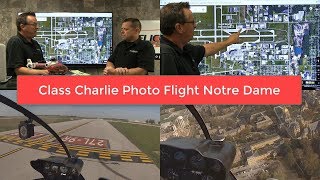
A live YouTube session (hosted by Kenny Keller with participants Gary and Blake) that teaches helicopter operations in Class C airspace through a pilot-to-pilot preflight briefing, a recorded GoPro cockpit inbound and photo flight over Notre Dame (KSBN South Bend International), and a post‑flight debrief. The session covers radio procedures (ATIS → approach → tower → ground/Atlantic), squawk codes and frequencies used during the event, and operational risks for aerial photography (settling with power, tailwind cautions). It also includes community Q&A and a promotional offer (T-shirt and magnet for submitted checkride videos/photos).
Questions this video answers
About 270 aircraft (busiest day described arriving for the Notre Dame vs. USC event).
4207 (pilot reported 'squawking 4207' on approach).
4221 (tower: 'Maintain VFR at or below 3000 and Squawk 4221').
Atlantic frequency announced as '122.9 or 5' (presented in transcript as 122.9/122.95).
Altimeter values heard: 30.16 on approach (3016) and later 30.14 (3014).
Chapters
Checkride passed. So I'm about 10 hours away from taking my checkride, and I'm pretty confident that once I get to that day that I'll be fully prepared from everything I've learned from helicopter online ground school. Hey, guys, My name is Blake. I'm currently working on my private helicopter rating. I've been using helicopter online ground school for about a month now, and I really think it's a great program because I can study from my house, and all the instructors at helicopter online ground school are really great about putting stuff into context where everybody can understand it and really helping break down the process of learning everything that you need to know to get your checkride passed. So I'm about 10 hours away from taking my checkride, and I'm pretty confident that once I get to that day, that I'll be fully prepared from everything I've learned from helicopter online ground school.
Hey, Kenny. With helicopterground.com subscribe to our channel. We got a bunch of cool stuff coming. We're gonna do class Charlie operations. Gary and I did a quick debrief last week before he went and did a flight, and then he recorded it. So we're gonna roll the video from his flight as well. So we're first gonna roll our preparations, getting ready for him to go, and then we're gonna show the flight, which I haven't even seen it yet, and I know some things popped up that I didn't cover with him, or it ended up different than what I told him, the way it might happen. So we'll do the show the briefing beforehand, then his flight come back and debrief with everybody. So let us know who you are, where you're from, where you're watching from, where you're at, as far as you're working on your rating. We're gonna buzz over to Courtney, cam here, make sure you can see her. So, Courtney, say hi to everybody.
Hi.
So make sure that you let us know who you are, where you are. Subscribe to the YouTube channel, please. I'm gonna go over to Gary's camera, and I'm gonna go over and join him. We got some goodies. We're getting ready to ship out, and we're gonna show you that real quick because this is kind of exciting. You saw that first video. So I'm gonna let Gary get started, tell you what we got, and I'll go over there and join him. So here we go. Over to you, Gary.
Hello again. Good to be here on Live Tuesday. Danny Pate. I hope you got logged In. Okay. I just got off the phone with one of our members that we were in panic mode. How is he going to watch the live event? He was having problems with his computer and I think we got him on. I hope so. That video just watched. Blake Woodward, thank you very much for that video. If you're watching today and we have your shirt all packaged up here, we're gonna get shipped out with the other three along with the magnets that we're going to get shipped. Cool idea that Kenny had from a little tip he had from a friend some time ago about having a little magnet to stick on the locker at work or the refrigerator or who knows, somewhere in the hangar. Just to kind of remind you of your checklist when you go out to fly the I'm safe going down through. Are you on medication? Are you tired? Are you hungry? So forth aircraft being airworthy, airworthiness directories, everything is on there. It's a nice little checklist. At a glance now, some of the letters are a little small, right, Kenny?
Yes. And if you. The idea is throw this thing on your refrigerator so when you leave home, before you leave home to go fly, you go down this real quick. A lot of you know, I was in a helicopter accident in 2005, and that day I left home on time. I made sure I had everything. I called pre flight and I was through the investigation. I was proud of the fact that everything prior to going to fly that day was good. So I didn't rush. I was on time. I did everything I was supposed to do. That's what this is for. Before you leave the house. And I want to say if you read this and you're having trouble reading the little stuff down here, you need to go see your eye doctor before you get your next medical. Because if you can't read these, we thought they were too small at first, but we left it because we thought, you know what, if you can't read this because I'm struggling with my bifocals, but that's my age and my bifocals and I can read it. But if you can't read those, you're probably not going to pass your medical and you're not going to be able to read a chart in the helicopter at night that I can guarantee you.
I know I cannot pass my class 2 medical without my glasses on now. And I can barely read the small letters on here without my glasses, but I know I cannot pass the Class 2 medical without my glasses. So what you're saying is definitely correct.
Yes.
If you can't read those small letters, go to the eye doctor.
Yep. So if you send us a video just like Blake did, if you send us a video, you get the hogs T shirt, send us a picture with your checkride success and we'll send you the magnet. So it's not for sending us a picture with a T shirt of your checkride and a quick testimonial on how we helped you. You get the refrigerator magnet, pilot pre flight checklist before you leave the house, send us a video, you get the T shirt. So these are all going to the mail. These are all ready to go. So those of you that have been waiting, sorry it took us so long. Just been crazy around here for. Well, it's been crazy around here for a long time. All right, I'm going to get your video or our video ready to roll. You want to tell them what we did?
Okay. What he's going to do now is he's going to. You're going to roll the pre flight discussion that we had. So basically I was getting ready to go on a photo flight up, pick up a guy at Charlie airport, KSBN South Bend International and take him over Notre Dame to fly around and take some aerial photography. And I said, hey Kenny, I need a little help. Brush me up on class Charlie in and out. And so we made a video of our little pre flight discussion the day before I went, which this is very recent, I just went on Friday, so we did this on Thursday. And he's going to roll that video for you to see our pre flight discussion. Then we also mounted a GoPro in the R44 and I recorded as much as possible going in to the airport and some of the photo flight actually stayed until the camera was full.
Awesome. Subscribe to our channel down below. Courtney, just put links to our Instagram, our Facebook. There's a free download down there for my book helicopter checkride. Not a copy laying here, but you can get my book for free PDF copy by going down in the description box below. So subscribe, get my free PDF copy. I'm going to go back over there.
Okay, here goes our video pre recorded.
From Thursday and 3, 2, 1, go.
They needed to be flown over Notre Dame to take photographs with an aircraft and so I started looking at picking them up at ksbn which is South Bend International Airport class Charlie and I haven't flown into South Bend for a little while. So I decided to ask Kenny for a little bit of advice of what to expect going in and out of the class Charlie and operating in their to the surface class Charlie area around Notre Dame for these photographs. This also is my first photo flight as a commercial pilot and I need advice from Kenny on that. So we decided to share this little conversation with all of our members and possibly bring it up on Live Tuesday because there are other people that would benefit from the advice that he gives me.
Alright, so yeah, that's. Gary gave you the rundown real quick. I flew in and out of South Bend for two and a half years flying EC135, flying EMS. So I know the basics of the operation in out of class Charlie and kind of how they operate. I'm gonna put my disclaimer in now. I'm gonna tell you how we did it for two and a half years. They may have changed something since then. And no matter where you're flying in the world or in the United States, you might have something that's done differently that's acceptable or not acceptable from what we do or what I did. So I'm going to give Gary a briefing on how we operated when I was there for two and a half years. So as he mentioned, you haven't done even any photo flights at all. You've done candy drops, done candy drops.
Never a photo flight.
So he knows I've been preaching to him all these years about staying out, selling the power and don't get downwind and all the dangers of photo flights. And he's already talked to the photographer, who is an experienced photographer and said, Gary, don't worry, I'm not going to put you in those bad spots. I understand out of ground effect, I understand getting slow with a tailwind. So he's already had that discussion with the photographer, which is huge because normally when you go out for a photo flight, if you're a new commercial pilot, you don't know this yet. If you're an experienced pilot, you'll agree with this. Most likely the best shot is always when you're downwind and the photographer or the news station like, oh, can you hold it right there? We love that shot. And the wind is almost always behind you when the perfect shot's out either side of the aircraft. So Gary's been prepped with all that. In the last five years we've talked about photography flights. He's already talked to the photographer who he's going to fly with, they've discussed it, he's experienced, so we're good with all that. So basically I'm just going to give Gary just a quick rundown. There is a Video of when Gary and I went to Class Charlie at South Bend. It's been a couple years ago or well, maybe a year ago when he was prepping for his commercial. So there is a video and it's free on YouTube and it's in our ground school where Gary does his first flight in Class Charlie. So he's been there since. He just doesn't go there a lot because we're in class G environment, very common for many of you out there. There you learn in a class G, you're out in the middle, kind of nowhere like we are in Indiana. You just don't get a lot of opportunity to fly in a towered environment. So Gary said, hey, can you refresh me on all this? And I said, absolutely. And we thought it'd be some good training to cover the basics. So Gary will be meeting his photographer at Atlantic Aviation, which is where we hangered. So I went in and out of there on a daily basis. Any day I was working, basically. So this is South Bend Regional Airport. This is where Gary will be going to meet his photographer at Atlantic. So this would be the ramp area right here. And I know for years what they had us do. They would have us depart and land from the ramp. Not from the ramp. Check that from the taxiway. So when we get ready to go on a flight, we'd pull out. And of course the tower is right over here. So they knew we were getting ready. They would see us. Once we're ready to go, we would ask for departure and they'd send us out to the taxiway to depart. So I'm going to cover that with him. So since he's going to be flying there to meet his photographer, so the first thing when he goes to fly into the Class Charlie is going to call out approach about 10 miles out. Simple radio call to get their attention. South Bend approach helicopter such and such.
I had a question about that.
Yeah, go ahead.
While I was looking up all the frequencies and I made a list and I was looking in the airport facilities directory, when I looked under approach, I noticed that there was some headings. There was two different approach frequencies depending on headings. Is that the heading that I am flying? The heading that I'm coming from should.
Be the heading that you're flying. If you're flying between this heading to this heading. If you're flying on one of those directions, that's the frequency you're going to use going in.
Okay, that makes sense. Okay. So then I call. I call the approach frequency, call approach.
Frequency and I've had people argue with me and say, oh, no, you should give him everything that you want to do on your first call. And I don't agree with that. I don't do that. I want to get the guy's attention. And that way, in case he's busy at that moment and he wants to respond in 10 seconds or 30 seconds, they'll come back and say, helicopter such and such, what can I do for you? I'm helicopter so and so, I'm 10 miles south. I'm inbound to the Atlantic ramp for parking. They'll come back, give you normally give you an approach frequency. You should listen to the ATIS ahead of time, tell him that you have atis Bravo, ATIS Charlie, whatever the ATIS is. And he'll give you, normally, they'll say, helicopter such and such squawk this code. So you'll report that or tune that squawk code in. And shortly thereafter, once he receives it and sees your altitude, he's going to call you back and say, okay, helicopter such and such, proceed on inbound call two miles out or set up for a left base to Runway such and such, he's going to tell you exactly what you want to do.
Now, for somebody that's watching that hasn't operated a helicopter a lot or I know you know, out there training with you early on, you know that box down there that said 1200? We didn't really talk about it a whole lot. It stayed 1200 all the time. So when you say they're going to give me a squat code, they're going to give me a number specifically to put in there besides 1200, correct?
Exactly. They're going to give you, let's say it's 5572. So you just reach down, you repeat to him, 5572, reach down your transponder, tune it in, and he's going to see you on radar and then he's going to call you back and then give you direction on into the airport. So yes, that's putting in your specific transponder code so that they know exactly who you are. You've talked to them, they've given you a code pops up on the radar. Now they know exactly who you are, where you are and where you're going to go. And then they can direct you into the airport. So that's going to be approach. And as you're heading in, at some point he's going to turn you over to take tower. He'll say, helicopter such and such Contact tower on whatever the frequency is. So then you're just going to call the tower again, call him up, give him your call sign, tell him who you are, he'll come back and give you his directions to come on into the airport. Or if there's somebody coming in on approach or somebody departing, he may say, stay south of the airport until we let you know when it's time to come in, or whatever the case is, depending on their traffic. He's going to tell you what you want to do or what he's going to want you to do, but he's most likely going to send you to the taxiway. He'll say, clear taxiway. I should have looked real quick before we started, but he's going to clear you most likely to this taxiway. And then once you're down there in a hover, he'll tell you to go on into the ramp. If it was busy, there was something else going on, he could send you to a Runway and have you taxi down. But on a normal basis, he's probably going to let you go right to that taxiway and then into the ramp. So you'll go in, clear the ramp, shut down, go and get your passenger. I would leave that squat code in because he may very well just keep you on that. So then this has always worked for me in the past, and it's worked to South Bend. Come back out, fire up, get ready to go on the ramp. And then when you're ready to go, you're just going to call the tower, tell them who you are, tell them where you're at, and you're going to go tell them that you're going to go do photography. You know, you'll be heading, departing the. Departing the airport to the east. There's going to be doing some photography work over Notre Dame. So then he's going to give you, most likely he's going to say, okay, proceed out to the taxiway. And then he's going to tell you you're either cleared for takeoff or he may say, go out to the taxiway. We'll let you know we have a jet inbound. We'll let you know when you. You can go. So he's probably going to direct you out to the taxiway, depending on the wind and conditions, maybe it's calm and he'll let you go right from here and head for Notre Dame.
Now, if I was there for, let's say, 20 minutes or 15 minutes, is he wanting me to report that I heard the ATIS again?
I would Just to. I mean, I would. I guess actually what I would do is if I only been there 20 minutes, and it was. It's 12:30 and you got it at 12:10, he knows you've only been there 20 minutes. You had it coming in. I probably wouldn't. I probably wouldn't give it again. But you could. I personally probably wouldn't. If I wasn't. If I didn't think anything had changed. There wasn't much change with wind or weather because it updates every hour. Right. Unless there's something that has transpired in that hour. So I probably wouldn't. But it probably would be the best course of action, too. But me being kind of lazy, I would just. If I just had got it 20 minutes before and it's still in that same hour, I probably wouldn't give it to him, but it's probably proper to give it to him.
Do I have to repeat back every instruction he gives me? Let's say he. Let's say he tells me, okay, inbound helicopter, stay south of the airport. Have an inbound jet and do I say, clear, South Bend tower, stay in south of the airport.
Yes. Try to repeat. Try to. You don't have to repeat every single word that he says, but repeat what's most important. Like, you know, I'm clear. South Bend tower, helicopter, such and such. We're clear to stay south of the airport for the incoming traffic. So you don't have to repeat every single word, but repeat anything that's of relevance so that he knows you understand what he's told you to do. So depending on what it is, it could be really detailed, but usually it's going to be something you're going to be able to get within a sentence. And especially when they say stay clear of something. As long as you're stating that you understand to stay clear and what your boundary is, then it's not going to be an issue. But if there's any. If on the radio you sound like you're unsure, then he's probably going to prompt you for a little more to make sure that you understand what he's giving you.
So not like the old police days where we just say clear.
Exactly. Exactly. So now we'll take and move the screen here just a little bit, most likely because Notre Dame is not far away, and we'll go to that part of the screen here in a second. Most likely he's just going to keep you on the tower frequency. He's probably not going to send you to approach because you're still going to be fairly close to the airport. So I would guess that he is going to send you.
He's going to have me leave from probably the taxiway, right?
Depending on the wind. He's gonna have you leave from the taxiway. And depending on what's going on, you know, you might want to depart into the wind if it's out of this way and make a turn. But you'll just have to think about what's going on that day and how busy are they, because there's another Runway over here. So when you go to leave, if like, say you want to go to the east but the winds out of the west, you're gonna want to depart west and either make a turn going this way or turn going that way. But you can request and tell him what you would like to do, and if that's okay, then they're going to clear you for that. Or they may say, well, helicopter, so. And so we'd rather you do a 180 to the south and stay, you know, stay to the south as you proceed towards Notre Dame, because you don't know exactly what all they got coming and going and what Runway. So you can ask him for what you want. He may approve it or he may say, helicopter, we'd rather we, you know, we prefer you do this and then just repeat to him, what does he want you to do? So he's going to keep you on the tower frequency, most likely, because Notre Dame is not that far away. So he's just going to keep you on frequency. He's going to be communicating with you while you're over there. Let's zoom the screen out a little bit. Here's the airport where Gary will be departing from Notre Dame is over here. And as far as he knows, the photography he's going to be doing is just in general of the whole Notre Dame area. I didn't ask if it was the golden dome or. Or I asked Gary, is it just the dome or the stadium? And he believes it's going to be Notre Dame in general. So you can see Notre Dame is a pretty good size area right here, which is approach and departure path off of South Bend. So before we started rolling the cameras, Gary said, well, is he going to tell me exactly where he wants me height wise at the stadium? I said, well, you can. He may ask you, or he may tell you, while you're at the stadium, we need you to stay below 2000ft or below 1500ft, or he may ask you what altitude do you want to operate Today, for your photo work, he may allow you to use the altitude you have. So it just depends on what's going on for the day. What's going on with weather, what's going on with traffic, is it departing, is it landing? It depends on whatever else he has going on. So it's really going to be, you know, can be kind of intimidating when you're going to class Charlie and doing your first photo flight and you're not super experienced with it. But basically, as long as you stick with the good old rules of who am I, where am I and what I want to do? And 24 years of law enforcement, use your short to the point, get your point across, answer the tower as brief and precise as possible. And he's going to have you go over there. He'll probably ask you how long you're going to be there. And you just communicate with him back and forth. Let him know what you're wanting to do. You know, you tell him we'll be orbiting around the area at 1500ft. Just give him kind of a general idea.
MSL, they're always talking MSL, right, right.
Always talking, always talking to MSL. And then when you're done, you know, he may leave you over there for 20 minutes and not bother you. Or you said the photographer said it'd be quick, right? You said you wouldn't be there long, maybe 15 minutes. So most likely, depending what's going on, if it's quiet day in South Bend, he'll probably send you over there and you'll just be flying around and you won't even hear from him until it's time, until you're ready to go back. Or he could call you up because something has changed. Maybe there's a medical helicopter coming in because there's a helicopter pad downtown. So aircraft could be coming or going there. So something else could change why he may call you. But if it's quiet, may not be a big deal. When you're ready to go back, you're just going to call him back up, tell him, donald, we're here at Notre Dame. I'd like to return to the ramp in Atlantic. And he's going to give you directions. He could say, if it's quiet, he may say, clear, helicopter so and so you're cleared back to the taxiway beside Atlantic. He may clear you all the way back. Or if he's got traffic coming and going, he may say, okay, helicopter such and such fly heading of 270. Stay south of the center line, notify us when you're half a mile south of the airport, just whatever he wants you to do, he's gonna tell you, but it's not gonna probably be real complicated. South Bend can get a little bit busy, but they are familiar with helicopters. And we, and all the training that we do, we are always telling you how some airports operate with helicopters all the time. They're very familiar with them and they know what they want to do. Sometimes you go to towered airports where they're not that familiar with helicopters and they might give you strange requests. But South Bend is not going to be that case. Medical helicopter coming and going all the time out of the airport, and the medical helicopters coming and going out of the hospital, plus everything else they have going on. They're very familiar with helicopters, so they're very easy to talk to. Two and a half years of flying there, I never had a problem ever talking to the tower or airplane. They're very easy to work with and very laid back. So that's the key things I'm thinking of is, you know, what altitudes will you be flying? You'll work that out with the tower. He'll tell you where he wants you ask for what you think you need. You need to go higher or go lower. You can always ask. And I would just think this, probably the one thing is he's going to be thinking about the traffic, but it's still, I don't know the mileage here, but it's not like you're right at the end of the approach path, but you still could have people coming in on final. They're going to be probably well above as far as their flight path, but still just something to be thinking about. That was going to be things you most likely be watching for. Helicopters coming or going from the downtown area, Elkhart. Airports not far that direction. So you might have some traffic from Elkhart, but other than that, that's the gist of what I'm thinking. And we could go back to the airport. So then when you come back to the airport, most likely, like I say, he could send you direct to the ramp, depending on when, what's going on in other traffic, so on, so forth, come back in, he's most likely gonna clear you to the taxiway. You'll go in, shut down, finish up your paperwork or whatever you need to do with your photographer. And then when you get ready to go, you're just gonna come back out, fire up, get ready to go. When you're ready to go, you're gonna call him up, your helicopter Such and such. Maybe by then the ATIS has changed. If the ADAS has changed, you have now have atis, Charlie versus Bravo and just tell him where you're at. You're at the Atlantic ramp. You'd like to depart the area, go into the south. If it's quiet in the wind, there's light winds, you know, let's say out of the southwest, he may clear you right from the taxiway, direct south, right out of the area. Or depending on winds, if he's got traffic coming and going, he may have you park, parallel this Runway and you know, do a 180 turn. And it just depends. He's going to tell you what he wants you to do. And you're going to have your departure frequency either on your knee board or if you have a second radio, have that ready to go. Because once you, once you give the directions, you're going to repeat what he said to you, start departing. And probably a mile or two south of the airport, he's going to ask you to contact departure. You'll have that frequency ready. You'll dial it in South Bend departure helicopter such and such is with you departing south. He'll come on, acknowledge that he hears you and he usually leaving South Bend. They'll usually say something like proceed on course at or below 3,000ft. So you'll respond at or below 3,000ft and you get clear of the airspace. It's a good practice to, once you're clear, to just give him a quick call, hey, helicopter, such and such, we are clear of the airspace. If he doesn't, if you don't do it and you forget, he will probably mention it fairly quickly. Well, for departure though, he may ask you how long you want to stay with departure. So it just kind of depends on the day and whether you want flight following back to Plymouth. But usually a short time after you get out of there, away from the actual, you know, airport environment, they're going to usually cut you loose pretty quick.
You've prompted a couple questions for me, all right. And I'm sure other people wonder. I'll be flying up there alone and got all these frequencies. My radio in this R44 has one standby frequency and one frequency that you're using the toggle. So how do you usually switch from approach? First I'm going to have to have ATIs, then I'm going to have to go to approach, then I'm going to have to go to tower. Tower is going to say contact ground, then I'm going to have to Switch with ground before I'm sitting down and get a hold of Atlantic on their unicom. How do you all this radio?
Okay, so here's what I do. Going in, I would have your ATIs and your approach in there first so you can listen to the ATIS before you give the guy a call. And in a helicopter we're usually lower, so usually you have to get fairly close to the airport. I mean if you, if you call when you leave Plymouth, they probably won't hear you at 500ft AGL. You're going to need to wait till you get a little closer to that 20 mile mark or 15 mile mark. Just make sure you stay below the upper level of the Class Charlie and wait until you can hear ATIS clearly. I mean if it's broken up, then the tower is going to have a hard time hearing you too. So what I would do is head towards South Bend. When I have ATIS clear to where I can hear it and I can get it and know it's a good signal, that's when I would go ahead and bring up approach. And then put your tower in as your backup because then you can kind of forget about ATIS for the moment because you've already listened to it. You got it, you know, it's ATIS Bravo. So then put your approach and your tower in.
And for people watching, you're just letting go of the collective holding the cyclic.
Depends on what I'm flying. If I'm in the.
It's just the Robinson, I'll be sitting on the right side.
You're in a Robinson. Right. So flying the Robinson, you'll be using your left hand for changing your frequencies. And I'm trying to remember in our 44, do we, can we lock collective during flight? We can. Right. You put a little collective friction on as you use your left hand to reach down and change your frequencies.
Good.
So you have approach up and ready to go. So you can call them, have tower in your second one because eventually he's going to switch you to tower. And then ground and clearance. I wouldn't worry about on the way in. I never in two and a half years flying in out of South Bend or the other years I've been in and out when I wasn't flying there full time. I've never had to call ground or clearance delivery on the way in. So going in you don't have to worry about ground. Shouldn't have to, shouldn't have to worry about clearance delivery in Atlantic. You could certainly call them if you Wanted to, but you don't really need to. I mean, that's another frequency. There's no reason you have to call Atlantic. A lot of times you'll hear, like, jets calling in, hey, you know, we're coming in, and Lear, blah, blah, blah. Can you have our cars ready and our golf club and our coffee and. I'm just kind of making a joke. You know, people get to. Can afford to fly around in jets. But you could certainly call Atlantic if you wanted to, but it's not required. You would not have to call them for any reason unless you wanted to. So you could kind of forget about ground clearance in Atlantic frequency if you wanted to.
Clearance delivery is not necessary. I could go straight to the tower when I'm ready to leave the area.
Yes. And this is the one that in some of our other radio. If you're watching any of our other radio courses I've talked about two times in my life I've had to call clearance delivery. That's it. Two times in 20 years. One time was at South Bend. One time was in Fort Wayne, Class Charlie. And early on, before flying ems, when I was a fairly new pilot, I went to South Bend one day, went in, landed, got some fuel, did whatever, and I went to leave and I pulled up to a hover and I get ready to go, and I call tower and tell them I wanted to park. And the tower says, helicopter such and such. We need you to contact clearance delivery. Well, I didn't have the frequencies set, didn't even know what it was. I'm in the Hamstrom by myself. So what do I do? Set it back down on the ground, lock the collective, figure out the frequency. Whether I asked tower for it or I pulled it out of my afd, I don't remember. But then I dialed in clearance delivery, called them up, told them who I was, where, where I was, what I wanted to do. They'll come back and give you their direction, what you want to do. And then when they're ready to let you go, they're gonna switch you back over to tower. I do that once at South Bend a long time ago. Never had to do it. As far as EMS goes, same thing in Fort Wayne. All the years I flew in and out, never had to call clearance delivery. Then one day I go to leave and they said, we need you to call clearance delivery. That was one time in two and a half years that they asked me to call call clearance delivery. So most generally with the helicopter, you are not going to need to call clearance delivery. But Having the frequency ready and be prepared that they could ask you to do it. You could certainly do it if you want to. So you don't have that moment of, oh, okay, now I got to sit back down and call them. So you could call them.
So if I was sitting, let's say I rolled a aircraft out of the hangar at Atlantic, who's going to get my departure squat code? Would it be the tower or would it be clearance delivery?
Clearance delivery. They might give you the squat code.
Because coming in approach gives me one.
Going in approach is going to give you the squawk code. Yep. Approach will give it to you on the way in. And if you called clearance delivery on the ground, they would probably give you the squawk code. Then.
Are these people in the same room? Approach, tower clearance delivery?
I don't know. I think it probably depends on the airport and the size. I. I would imagine a South Bend being a smaller Class Charlie, the people in the tower and approach probably in the same. And maybe Clinch deliveries in another part. I really don't know. I can't honestly answer that question. I would think that would depend on, of course, I mean, if you think about a really big airport like o', Hare. God, how many, you know, how many different divisions and floors are just in a tower. But South Bend, fairly small tower, but I can't tell you how many of them are in the same room. Room. I don't know.
Does the tower and approach both have a radar screen in front of them? Do you know, I've never been in a tower. That might be something. Take a little field trip in a tower, and if you.
You can try, I think nowadays it's probably not a big deal. Immediately my mind goes to after 9, 11. It was. Wasn't very easy to get into access to an FAA control tower. Things have probably been relaxed a little bit since then, but that's. You got to call ahead of time and say, hey, would there be an opportunity for me to come in?
We should make a video.
We should. And it would be an awesome one. I have done it one time, and it was when I worked in Cleveland and we flew there every day. And at one point, I remember we had some miscommunications with things that were going on with training invited us up there, and it was cool after the fact because once we went up in the tower and got to meet the people who we were talking to every day on the radio and see them and shake hands and them explain what they do from their end, and we get to Input what we do with training. We walked out that day kind of going okay. And we all communicated better after that point once we had that chance for all of us to talk and for us as pilots and instructors to understand what the tower's job is and how they operate. And we felt like it helped us too because they were more helpful with us understanding exactly what works for us and what helicopter. So certainly if you have a chance to visit a tower, I would. And you could always call them and ask them and there you go. Give them a call and see if we can go up there sometime. Number one, if they would let us in and if they in, if they were, would they let us film any of it? Would they be willing to talk to us on camera about anything they'd be willing to talk about as far as communications in the cold control tower. That's pretty.
We'll put that on the list.
That's a pretty good idea. Only I can think of now is we're gonna try to send a GoPro with Gary and a mic for the intercom and he's gonna try to film a little bit, at least some of the communications of what he does during this flight. He wanted me, asked me to go, but on Friday, tomorrow I'm not available to go in the afternoon or I would go along and try to do some extra filming. So he's gonna film what he can. So we'll have that as another video and then hopefully we'll have that maybe as video number two. And then we'll do a deep brief after he does the flight so we can kind of, you know, look at the whole flight after knowing that. Here's the prep work we did, just the pilot to pilot kind of stuff of what to expect a little bit of footage from the flight and hopefully some communications with the tower. And then we'll do a third video, a wrap up video on how his first photo flight went in Clash Chirli airspace as a commercial pilot.
Excellent.
So comment down below and we will see you in the next video. Here we go. All right, we're back on.
Hello. Kenny's going to go down through some names here of people that have logged in.
Hello. Mike from Alabama, John from Oklahoma City. Abdullah from Turkey. Awesome. From Turkey. Kennedy from Kenya, John from Tampa. I gotta scroll down here real quick. How do I scroll on this page?
Arrow key.
Oh, yeah. I don't know how I've ever built an online business because I still can't hardly work a computer. There's the cic, Lee, we know him That's Lee. You've seen him from some of our training online. CFI out in New Jersey. We did some stuff together. Paul from Rockford, James from Washington, Roman from Cleveland. Hey Roman. Kevin from South Africa. Nice. South Africa. Brian from Florida. Gene, I'm sure that's probably Gene, I think long, long time member Taz. There's Taz, one of our CFIs in there. You see Taz in the helicopter Instrument ground school, our new instrument Taz is in there doing a bunch of those videos. There's Harley who's doing smoking the banner stuff every week. Chris Hauser, another one of our instructors. You've seen him live with us today. He's home watching. We should have had him here and we just last minute didn't get him invited down. Sorry Chris. Come next week because Chris can give you some insight on the questions. We know Chris is answering some now and Taz is answering some. So we might get to some of those questions when we show the Gary's flight video that we're going to get to in just a minute. So we'll sum it up at the end, make sure we get everybody covered. Rick say he's down there in Vegas with Taz. Rick's a member and is coming a lot joining in each week. That's awesome. Chris from Pasadena, Greg from New York. Heck yeah. These are getting better every week. Make sure you subscribe to our channel so you keep getting notifications of live events. Other cool stuff we got going on. Go down below description box. Download my book PDF for free. Helicopter checkride. Check out our social links, Instagram, blah blah blah and whatever else we got in there. So I'll go get Gary's video ready to roll. I haven't even watched this yet and I know just we only had a little bit of a discussion and some of the the things that I told him ended up being different because South Bend had a record day of aircraft there and Gary can give you just a little more on that. The advice I was getting from was the normal run of the mill day where there might not much be going on at South Bend. Gary goes there on the busiest day in South Bend history. So of course the tower operations are a little bit different than what I was used to for two and a half years. He goes in there first photo flight going into class Charlie and goes on.
The busiest day of the year, Notre Dame versus usc. And it was on our WNDU news channel that they actually had a reporter out at the airport did a little quick interview. They said they had 270 aircraft on the Runway on Friday. It's all the people coming in town with their jets and so forth to watch the game on Saturday. And so we were trying to get some photographs done of all times on that Friday over Notre Dame for a man out of Texas that was contracted to do some aerial photography. And I had a GoPro going for the inbound flight to KSBN South Bend International. And it lasted for about half of the photo flight when the memory was full on the camera. So we can go ahead and roll that GoPro video that we have prepared and then we'll get to some of the questions afterwards and I'll tell you how the departure went since we didn't get that captured on the GoPro.
All right, here we go.
South Bend Approach helicopter November 939 Foxtrot Mike. South Bend Approach helicopter niner three nine.
Or Foxtrot Mike south and approach up and altimeter 3016A position altitude. Enter quad.
I'm at 1,500 about eight miles southeast. You inbound. Full stop at Atlantic, sir.
4207 and you're pretty much over the antennas. You know about the highest obstruction. 1900 and I think 49.
I'm clear on the towers. Squawking four two zero seven helicopter niner Foxtrot Mike.
Not observed yet, but squawk 4207.
I am squawking 4207. South Bend approach. Helicopter nine three nine Foxtrot Mike.
Helicopter nine Foxtrot Mike. Radar contact eight southeast at South Bend. Understadt Kilo, are you a full stop at South Bend? You going at Atlantic east side?
Affirmative.
I have information. Kilo going to Atlantic 939 Foxtrot Line. Contacting tower 118 point niner. Helicopter nine three nine foxtrot mike. South bend tower. Helicopter nine three nine Foxtrot mike.
Helicopter niner three niner foxtrot. Mike's open. Tower welcome. Wind 220 at seven. Runway 27 left. Clear to land.
South bend helicopter 939 foxtrot mike cleared land. Two seven left. Thank you, sir.
Helicopter niner Foxtrot Mike. Continue your air taxi down the Runway and then it'll be a right turn on November and then a right turn on Alpha. Once you get on Alpha, it's a non movement area. Switch to Atlantic frequency 122.9 or 5.
Helicopter 939 flagstrip mike. Clear up the taxiway and I'll call on contact Atlanta Atlantic on their ground. Thank you tower. Trailblazer 870 visual 27 left. Park in Atlantic.
Trailblazer 870 south and tower, welcome. Wind 190 at 10 gusting 1 6. Runway 27 left. Clear to land.
27 left, clear to land. Trailblazer 870. Okay, so you got me going all the way down this Runway with a wind right into my tail rotor. This is the real world, guys. Oh geez. Now he's going to put me in a tailwind. Tower helicopter nine through nine Foxtrot Mike. I have taxiway off. I'll have to land to switch their.
Ground frequency number nine or Fox Shot Mike. See the white truck off your right. They're going to have you follow him for your parking. I'm not sure where they want you 1 to 2.9 or 5 if you want to hold position. That's approved. It's all non movement area the rest of the way through.
Okay, well I upset anybody if I just follow the truck. I'd have to land to change frequencies.
And it looks like he's taking you now, sir. So sorry about that.
Have a good day.
You too. S.
Trailblazer 870 right turn on Taxway November, then a right turn on Alpha. Contact Atlantic 122.9 or 5. Why don't you get on Alpha?
Good day.
November Alpha.
Contact Atlantic. Triple Azer 870. South bend tower. Helicopter November 939 Foxtrot Mike.
Helicopter niner three niner Foxtrot Mike. South Bend tower, how can I help you?
I'm started at Atlantic and I have a photographer for about a 15 minute flight, maybe 20 minutes over Notre Dame. Your instructions, sir.
Helicopter Niner Fox Mike.
Roger.
And how high are you going to be doing the photo work over Notre Dame?
No more than 1,500, sir.
Helicopter niner Foxtrot Mike Rogers. Stand by while I coordinate Helicopter niner Foxtrot Mike. Maintain VFR at or below 3000 and Squawk 4221421.
South of Tower 939 Foxtrot Mike Clear to stay at or below 3,000. Squawking 4221 November Niner Foxtrot Mike.
Reback is correct and departure from the non movement area will be your own risk. Remain north of Runway 27 left at this time and fly westbound. Remain north at 27 left.
Helicopter 939 Foxtrot Mike Clear to depart at my own risk from the Atlantic ramp. Stand clear of the 27 left Runway. Departing to the west.
Left on course.
South bend.
Helicopter 939 Foxtrot Mike. Turning left on course. Thank you.
48, right turn on November. Right turn on Alpha once you get on Alpha, Atlantic 122.9 or 5. Good day.
November Alpha or Atlantic 48.
Sa.
And helicopter Niner five strong Mike, Keep South Bend in sight as most as much as you can can have. You remain south with 27 left extended center line once I get more inbound.
South Bend. Helicopter 939 Foxtrot Mike. I will keep South Bend in sight and 27 will be to my north until you give me the okay. We will need to get north a little bit for some of the photographs.
Helicopter Niner Foxtrot Mike, Roger. For now, remain south on Runway 27 left. Extend center line. I've got about three inbounds. I'll let you know when you're good.
South Bend 939 Foxtrot Mike. Clear to remain south until you advise, sir. Yeah, basically we're right in line with their path. Yeah, the winds was out of the. A different direction, maybe not. But they're all coming in from this way now.
And he says he's got three of.
Them, so we already got Notre Dame, but we can't go that way yet. So we got some. This is like the Notre Dame downtown. I don't know. You're not really on campus there.
Okay.
And then you got your golden dome. Looks like we can see the stadium. And again, I've never been here. You've looked at it.
Oh, yeah. I see the stadium now. It's right there.
So if you want me to lower down and then go right.
Well, I think kind of. We can shoot right on this path here. Okay. We'll put this. My skid right over this pathway. Right over there, I think the US Flag.
Okay.
That's the. I'll put the camera right on top of that.
All right.
I believe. Or actually it's the X in the sidewalk right before the flag.
Okay.
That'll be the center to line up with that building. I think this altitude's good.
Mike. South and altimeter 3014. 3014.
Rapid tower, helicopter nine through nine, Foxtrot Mike, repeat, please.
Helicopter nine or five shore mike, stop and altimeter 3014. Thirty fourteen. Say your altitude.
South bend. Helicopter 939 Foxtrot Mike. Altimeter set.
Okay.
She already started to settle there.
So.
I'll circle around here. We'll try it again.
Get it back.
Up to about 500. That way we got a little room to recover if it settles.
Helicopter nine or Five star Mike, fly southbound until we get these inbounds and just don't want any of their tcases going off. Fly southbound for now.
South Bend 939 Foxtrot Mike.
Clear.
Flying southbound. Okay, I'll see if I can go really slow to make them happy. I'm still making progress.
Okay, we want to be over this way. Over that right next to the flag here.
Okay.
The X right before the flag on the sidewalk. Slow down.
Okay, I'll try and slow down.
Right.
Here if we can hold it. I'll try.
Kind of went right by it.
372 Echo X Ray, south bend tower.
Try to do the stadium sensor right here.
Zero Runway 27 left. Clear to land traffic. 11 o' clock in one mile southeast. Power is a helicopter at 1,900ft right over the logo. And helicopter niner Foxtrot Mike, do you have the chase building? The white tall building downtown in sight.
Okay, looking, sir. Standby. They're giving us a problem here. I'm looking for the chase building, a big white building.
River 2 echo x ray say parking.
All right, we're back. Thanks, everybody, for being here on those questions. Class Charlie on your chart. Class Charlie, upside down wedding cake. For any airport. It's going to give you the specifics for that Class Charlie. Very, very basic. You go to the class Charlie airport where you're going to be flying on your sectional chart. It'll show you explain center line. Center line is the center line of the Runway and extends out past the airport. So when a tower is saying stay south of the center line, they mean that path going in to the airport. Gary's going to give you a debrief on his flight because he was there. I was not. Remember, subscribe to our channel. Please go down below, download my free book. Remember, send us a video hogsmember about your checkride. You get a T shirt, send us a picture. You get the cool refrigerator magnet. These things you got to do before you leave the house. So we'll try to. We think Taz and Chris answered some of their questions, so hopefully got everybody covered. Try to get everything covered before we quit. I'm gonna let Gary tell you how the flight went. He was there, I was not. So I'll just let him kind of give you the debrief on how it went.
Okay. Well, it helped to go over it with you, Kenny, before I went. And unfortunately, I'm a new GoPro operator, so you can see the footage. Kind of ran out in the middle of the photo flight but it went as expected. Listening to the atis, contacting on approach being switched over to the tower. What I did not expect is to be sent to the Runway. So it sent me to 2 7L which would be the heading 270 and the left Runway because I they have two of them. Then they took me all the way down the Runway to a taxiway November over to a non movement taxiway Alpha. And then they caught me off guard a little bit because instead of going to the ground frequency for KSBN airport, they actually told me to get a hold of Atlantic ground on their unicom. I was all set up because I figured I would have to go to the airport ground frequency and then transfer over. So I just told the tower at that point that I was not set up with their unicom and I could sit down and program my radio. And they said, the truck is waiting for you, just follow the truck. So they made it easy. I followed the Atlantic truck in. They parked me in the grass because the ramp was all full of jets and shut down. Went in, met my photographer and we took off. And you, you can see they were a little bit easier on me on the photo flight in that they let me take off from the non movement area from Atlantic. They gave me specific instructions to take off to the west, staying north of the center line of 27L. And I heard them bring an airplane in and land. And as that airplane was nearing the taxiway, they told me to turn left and go on course towards Notre Dame. So that's what we did. And we had to remain in communication with them on the tower freak because it's inside their class Charlie to the surface area. And they kicked us out of there repeatedly. We would get all set up for the picture and the photographer is saying right there, hold that, slide left. And then the tower would be on the radio saying, get it moving south until we tell you further, stay south of the center line of 27L. And then they would notify us, come on back in. And it happened several times when we would be all set up and if you look close, we also talked about settling with power being one of the main concerns when you're doing photo flights. We did have a wind that was, it was averaging about 10 or so, I think gusting 16. You probably heard it on the ATIs there. And we did, we did get into settling with power, which I kind of expected. You're just setting yourself up for it. Hovering out of ground effect at 1500. You can see at one point in the Video there it was showing the airspeed and the VSI and it got to 1250 really fast. And that happened when we were hovering out of ground effect near the stadium and he was trying to get a straight down photograph and he actually needed me to back up a little bit. And so I tried it and soon as we started backing up, even though we had a headwind, it fell rapidly. And so I simply lowered collective a little bit, flew forward, circled around, set up for it again. Now the trip back to the airport was pretty easy. They just had me land straight to Atlantic, then to the non movement area they call it. Then we went in, took care of payment with the photographer and I came back out to leave the airport to go back to home base. And I contacted tower hoping they would be just as easy as they were during my photo flight. But instead they said contact clearance delivery. So I contacted clearance delivery, they gave me a squawk code, I typed that in and here's one point. They gave me a squawk code coming in. They gave me a different squawk code when I was flying the photo flight and then a third squawk code when I started up clearance deliver gave me my third one, had me contact the tower. Then the tower gave me instruction to leave the non movement area. So they never made me use a Runway to take off. And then they gave me to departure and I stayed on departure and they never contacted me. Finally I was near Napanee and I contacted them and said request to go VFR and switch to Napanee frequency and squawk 1200 and they said go ahead, have a good day. I only listened to the ATIs or I only had to prove I listened to the ATIS once and that was on the approach. Probably because it was all within such a small time frame frame but hopefully that helps some people like me that have not done a whole lot of class. Charlie towered airport flights. That was only my third time going in and out of class Charlie and my luck, it had to be the busiest day they've ever had. But it went just as expected and I'm glad we did the little pre brief the day before. It helped me out and hopefully helps some of our members out as well.
Awesome. Gotta mention Rich from Florida that's here. We hadn't mentioned him early. We think Greg from New York was the last before that we think we mentioned him already. And then another question, if I can go back up. Oh, I read the question, had it in my mind. Oh yeah. Do you call ground for permission Permission to start. I've never done that. I start, I get ready to go and then I call them once I'm all running because helicopter takes three, four, five, six, maybe 10 minutes to get started. So I mean you ultimately could, I guess, but I don't. I mean I always, I get everything ready as I can before I go just because I want to. When I tell them I'm ready, I want to be ready. I don't want to be messing around.
Now what I did there is I started up and when I felt I could rev it up and, and pick it up into a hover, that's when I contacted clearance or first I tried the tower and then they told me to contact clearance delivery. So I never really used ground from that point.
And I think is the altimeter off in that bird? I don't know. I didn't fly.
I noticed in the video when, when they asked me to set my colesman window or set my altimeter. That's right when we settled. So they probably saw something crazy on the. We told them we were going to be operating around 1,500 and suddenly the VSI was showing 1250 during the recovery. So it was right during that fall to recovery from settling that they told me the altimeter and I told them it's set but I really had to do nothing. It was already set.
Awesome. Well, hey, I think we're going to wrap up. I'm going to roll that video from Blake and you talk to Blake, give him just a quick description. Blake's flying a what? R66?
Yes. He's helping with an ag operation and he helps out with an ag operation involving an R66 and currently is using our training to get his next rating.
We'll roll that again so you can see what we want from you for a T shirt.
Hey guys, my name is Blake. I'm currently working on my private helicopter rating. I've been using helicopter online ground school for about a month now and I really think it's a great program because I can study from my house and all the instructors at helicopter online ground school are really great about putting stuff into context where I everybody can understand it and really help them break down the process of learning everything that you need to know to get your checkride passed. So I'm about 10 hours away from taking my checkride and I'm pretty confident that once I get to that day that I'll be fully prepared from everything I've learned from helicopter online grading.
Alright, wrap it up, Gary. Tell them to like and subscribe and tell them one more time about the the deal on the shirts and the magnets.
Okay, well, like the video, subscribe to Kenny's YouTube channel and send us those checkride success videos for your free shirt, your checkride success picture with your helicopter for your free I'm safe checklist magnet, and we will see you in the next.
It. Sa.










