Class E, Compass Errors, Instrument Course Details
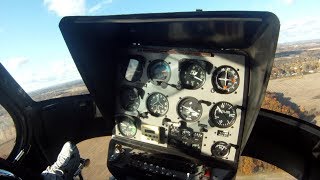
Gary Cleveland breaks down Class E airspace and Part 91 equipment rules, then Tannen Austin walks through compass errors using VD MONA: Variation, Deviation, Magnetic dip, Northerly turning error, Acceleration/deceleration, and Oscillation. Kenny Keller hosts live Q&A on both topics.
Chapters
Facebook. All right, what the hell?
Got time to figure this out then for next time?
Well, we. We should, you know, email to us and say, hey, we just did a big upgrade and now we're still getting booted during.
Hold on. Something just says live now.
It does?
Yeah.
On YouTube. Yeah.
Hey. Yeah. All right, All right. We don't know what's going on. We've been trying to go live for 23 minutes and it kept saying it wasn't live and now says we're live. So we don't know what we did, we don't know what we changed. So bear with me here. As we regroup, we are getting ready to go. Getting ready to do two presentations. Gary Cleveland is going to go over Classy and bring up some things that, you know, we. He dug into the class cuz some questions came up recently on a checkride and he did some digging and he has some pretty interesting information about Class Echo. And then we're going to have Tannen do compass errors in between those two. We'll take some questions, see who's here. We apologize for coming on late. We tried to go live right at one and for some reason our system wouldn't go live. We just upgraded this system. So of course, after spending money and going to the latest and greatest, we go to go live and we can't. But that's okay because here we are now. So thanks. For those of you that were hanging around, make sure you go ahead and introduce yourself whether, wherever you're viewing this at, let us know you're here, where you're from, ask any questions. And after Gary's presentation, we will come back and answer those questions before we get to Tenon. So a lot of cool stuff going on. The new instrument training. Again, we're gonna talk about that later. So make sure you let us know where you're at. Leave your questions and we'll get to those after Gary's pr. Gary's presentation. So I'm going to go to Gary now with his presentation on Class Echo.
This is a short presentation that I put together concerning the requirements for certain equipment in Class Echo. The reason that I put this presentation together is because there is some confusion among pilots as to what equipment is needed in Class Echo. I actually made it through my private checkride, commercial checkride and CFI checkride without really putting the pieces together on what is actually required in Class Echo. It wasn't until I was already a CFI and one of our ground school members was in town for checkride prep. He was a very experienced airplane cfi and I was preparing him for his commercial helicopter add on checkride. Going through my lesson plans. The actual lesson plan that I had with me for my CFI checkride but didn't need to use on my checkride because I wasn't assigned airspace. In my lesson plan, I listed that there was no equipment needed for Class Echo and he said, wait a minute, I know you need at least a transponder if you're over 10,000ft. And he's exactly right. And it got me thinking. There is a lot of equipment you need in Class Echo. So it's not as simple as maybe part 71 or the aim would lead us to believe and quite frankly cause us to be confused for some of us. So I'll go through this presentation for you. I've got a slide presentation and we'll be open to discussion if you want to send in your comments or questions during the time that I go through my PowerPoint. We'll try and address them afterwards as best as we can. First, let's briefly describe Class Echo. Class Echo is controlled airspace. Class echo airspace below 14,500ft MSL is charted on your sectional. Class Echo exists upward from 1200 AGL in most areas unless inside the magenta marking of a Class G airport. In this case, Class Echo exists upward from 700 AGL. Class Echo can also be designated to the surface as depicted by a broken magenta line. This is generally associated with an airport. The airspace extending upward from 14,500ft MSL to but not including 18,000ft MSL is class echo. In most cases. The airspace above FL600 is also class echo airspace. A quote from the AIM3 2 6B2 and feel free to look this up. Follow through with me and you'll see that it can get very confusing. No specific equipment required by the airspace. There also is no mention of required equipment in 7171, which is a regulatory description of Class Echo airspace. Here's a Part 7171 quote within which all aircraft operators are subject to the operating rules specified in part 91 of this chapter. No mention of equipment unlike the language in 7141 for Bravo, 7151 for Charlie, 7161 for Delta. Quotes from part 71 for Bravo, Charlie and Delta airspace. They all read the Consist of specified airspace within which all aircraft operators are subject to operating rules and equipment requirements specified in part 91 of this chapter. Let's look at some Examples of Part 91 requirements that apply to Class Echo that we know remember the word helicopter and aircraft apply to helicopter pilots. The word airplane does not. Part 91 equipment requirements and echo for helicopters would be first off. 91205 camouflage this acronym. We'll go over it here in a second and you'll remember it from watching the ground school videos in the site. 91209 Navigation Lights 91215 Transponder Requirements 91211 Oxygen Requirements let's go through camera foot as a quick reminder and review. Compass Airspeed indicator Manifold Pressure gauge Altimeter Fuel gauge Oil temperature gauge Oil pressure gauge Tachometer for each engine Seat belts for each passenger two years old or over. If over water beyond power off glide distance from shore, you must have an approved flotation gear readily available to each occupant. Night operations Add in navigation lights, anti collision light, adequate source of power for all installed equipment, spare fuses and a landing light if the aircraft is operated for hire 91.215 transponder Requirements states unless otherwise authorized or directed by ATC, no person may operate an aircraft in the airspace described in paragraphs B1 through B5 of this section unless the aircraft is equipped with an operable coated transponder having Mode C capability. So then we look at 91.215 B5I, which states in all airspace of the 48 contiguous states in the District of Columbia at and above 10,000ft msl excluding the airspace at and below 2,500ft above the surface oxygen requirements above 12,500 msl for over 30 minutes and the pilot must have oxygen. This could easily be class echo above 14,000ft MSL for any length of time, pilots must have oxygen. This also could be Class Echo. And then to finish off we got 15,000ft MSL. All pilots and passengers must have oxygen. This could be Class Echo, but not for us helicopter guys. So this is just an example of some of the confusion that we find in the FAR aim and what I plan to do in the next few weeks is just grab a hold of topics such as this that may have caused me confusion and go through them on Live Tuesday events like this. Look forward to your feedback and your questions as we move through this stuff together. If you have a topic such as this that you would like us to discuss on one of the Tuesdays, feel free to email me@garyelicopterground.com and we'll add it to the list of things to bring up and discuss. So at this time, if there's any questions, I'll do my best to address them.
All right, that was Gary's presentation on class C, and that's pretty cool because, you know, Gary's been helping me do a lot of stuff in the background. That's his first presentation that he built on his own. Just did it, put it together, and I really liked it. He showed it to me earlier before he presented it. So thank you for those that hung around. Sorry for the mishap, getting going, but that just happens sometimes when you go live. Some things just don't go right. So next we're going to bring up the camera for Tannin and we're going to acknowledge those of you for who are here and also see what questions we might have for Gary's Class E. I know that he pointed out some good stuff in that presentation. I was like, yeah, you know what, that's cool how it says, oh, no equipment needed, and then, oh, yeah, but you got to have this, this, and this. So the faa, That's. That's how they. That's how they operate. All right, let's go over to Tannin and see who is here with us today.
All right, we have Brian Bay and Taz Chrisman, both from Las Vegas. And we have Mark from Sioux Falls, and then Jim Hardy from North Texas. But he is currently in Quito, Ecuador, which I'm a little bit envious of because he's sitting at 9200ft MSL. And that's got to be some good mountain time that if you're flying in there, Jim, that's guaranteed mountain time. That's gonna be fun to fly around.
Any questions?
Not. Not yet. We're probably soaking in Gary's video, making sure they got everything down.
All right, well, we'll go ahead and have you guys switch. Gary, you can take over comments, and we'll get Tannin up there. He is going to tan, is going to present. He is going to present compass errors. So this is something that will be in the original ground school site. Part of this we can probably use in the new instrument ground school, which we could talk about a little bit more. A little bit. So Tannen was here. As most of a lot of you know, he was here last week. We shot 23 videos for the instrument course. Gary Tannen, Taz Christman, he's making some videos for us in the instant new instrument ground school, and that's looking really good. Taz is doing an incredible job with a bunch of weather stuff that you're all going to love. That's inside the instrument course. That's all going really well. So we will keep monitoring your comments and we are going to go ahead and roll Tannin's presentation on compass errors. So keep letting us know who you are, where you're from. If you have any questions for Gary, put those in the box down below or beside wherever it's at. And any questions for 10 as well on the compass errors. So we're going to go ahead and roll compass areas. Areas, compass errors now with Tannin. So we'll be back to get your questions here in just a minute or two. Well, about, about seven minutes or so, 10 minutes, however long it takes him to get through his presentation.
Hello, Tannen Austin here with Helicopter online ground school. And today we're going to be going over compass errors which you can find in the Pilot Handbook of aeronautical knowledge. 7:22. There is a really good memory aid for this. It's VD Mona and that's variation deviation, magnetic dip oscillation, northerly turning error, which is part of magnetic dip and acceleration deceleration error, which is also part of magnetic dip. So first variation, and the variation is the difference in distance between the geographic north pole and the magnetic north pole, which are separated from each other by approximately 1300 miles. So true north and magnetic north, depending on where you are in the world, can vary considerably. And these lines of variation are the isogonic lines. And where the variation is 0 is called the agonic line. And the agonic line in North America goes from around Orlando and then curves up to just east of Chicago. So for example, if you're flying in the Washington D.C. area, the variation is 10, 10 degrees west. If a pilot wants to fly a true course of South 180, the variation must be added to this, resulting in a magnetic course of 190. And then conversely, if you're flying in the Los Angeles area, The variation is 14 degrees east. So to fly a true course of 180 there, the pilot would have to subtract the variation and fly a magnetic course of 166. There's a good memory aid of this as well. Which is west is best, east is least to help you remember, if you have to add or subtract that variation from your true course and the variations themselves do not change with the heading of the aircraft. It's the same anywhere along the isogonic line. But the isogonic lines do subtly change over a long period of time, which will actually require airports to renumber the runways with the new magnetic heading. And here I have a VFR sectional chart with a couple arrows pointing out the isogonic lines. And on a sectional chart they're depicted by a dashed magenta line. And on these it's just 1 degree east and on the left 2 degrees east. And you just subtract that value from your true course to get your magnetic heading. And then next we got deviation and this is the magnetics in the compass aligned with any magnetic field. So local magnetic fields in the aircraft conflict with the Earth's magnetic field and cause compass error called deviation, which can be that deviation. Magnetic error can be caused by anything from having the radios on, electricity, electrical current flowing through wires, other ferrous metals in the aircraft can cause the deviation from your magnetic compass. Each aircraft will have a compass correction card which shows the deviation corrections for any heading. So if you wanted to fly 180, the pilot must fly 1760. If the radio is on and on this one it has the deviation corrections with the radio on and off. So with our Washington D.C. example with a heading of 180 flying south and having the 10 degrees west, you'd have to add that. So that's now 190. And in this aircraft to fly now 190 for your deviation error with the radio on, we'll extrapolate between 180 and this 210 and get a 178 for heading from 190 with the radio on is now 17 8. So we take our 190 for our variation error and we'll then subtract 2 because of our minus 2 deviation error. So now we'll actually be flying 188 for the. That's the math for then the deviation and variation errors. Next we got magnetic dip and the magnets in the compass align with Earth's magnetic field near the poles. They dip or tilt the float and compass card. The float is balanced with a small dip compensating weight to dampen the effects of dip when operating in the middle latitudes of the northern hemisphere. So the dip and the weight causes two very noticeable errors, and that's northerly turning error and acceleration error and northern turning error which is apparent on a heading of north or south heading north, a turn towards the east, the aircraft banks to the right and the compass car tilts to the right. The vertical component of the Earth's magnetic field pulls the north seeking end of the magnet to the right and the float rotates, causing the car to rotate toward the west, the opposite direction of the turn. So the opposite is true for A turn to the west. So on northerly headings, the compass lags behind the turn heading to the north. Turning to the east, your compass is actually going to be a little bit later than your actual turn. So it lags behind the turn. And then heading south, a turn to the east. The Earth's magnetic field pulls the end of the magnetic that rotates the car towards the east, the same direction as the turn being made. The same is true for a turn to the west on a south heading. So on a southern heading, the compass leads the turn. So if you're on a southern heading, turn to the east, it'll actually turn a little bit ahead of your turn. Compass leads the turn. There's a good memory aid for this. It's UNO's, and that is undershoot north, overshoot south. So you'll actually want to stop your turn when you're turning with the compass a little early. If you're heading to the north, you'll want to overshoot your turn to the east or west on a southerly heading. Then an acceleration and deceleration error. The dip correction weight causes the end of the float and card marked north, the south seeking end of the card to be heavier than the opposite end. So when the aircraft is flying at a constant speed on a heading of east or west, the float card is level. If the aircraft accelerates on a heading of east or west, the inertia causes the weight to lag behind, the card rotates to the north. If the aircraft decelerates on a heading of east west, the inertia causes the weight to move ahead of the card, which rotates to the south. The memory aid for this is ANDS a N ds, which is accelerate north, decelerate south. Next, then we have oscillation error. The oscillation error is just a combination of all of the other errors, and it will result in your compass card swinging back to forth around the heading being flown. The next part is particularly important for instrument flying, or if you have a DJI and you're actually still doing VFR flights and also utilizing your DJI or here, your gyroscopic heading indicator, they have natural variants, well, that will get off from the true compass heading. So you'll want to make sure that your DGI gyroscopic heading indicator are agreeing with your magnetic compass. And when it's in that oscillation, you'll just use the average indication between the swings.
All right, I want to thank everybody again for waiting around for us. We went live late about 25 minutes because we had trouble with our feed going live. But that just happens sometimes. So we started out with Gary's or Gary's presentation on. What'd you do, Gary? I forget already. Class, Echo Tannen just did a presentation on compass errors. So we're gonna go over to. Gary says I can pull up to Gary's camera and see what we got for questions and see who's here. Make sure we let you know that we know you're here because we appreciate you being.
Oh, okay. We have Mike Sienda here from Charlottesville. Taz says I'm still not able to get it on hogs. Is that part of the difficulties? Yes, it is, Taz. I tried to bring it up on my phone a minute ago and I see that there is a problem. I think it's because we had to change the code, the coding with the new Wirecast upgrade to make it join with YouTube and then there has to be some coding to make that work then with our HOG site. And there was just no time to make it work for today. Next week, hopefully we'll be better prepared.
Right now I want to add that the recording will take from. Luckily we have a backup recording. So the recording will go into the HOG site for private commercial cfi. We'll put the code in there or we'll put a code in there for a recording of today. So if you missed it live, it will be there. We most generally leave the live event inside HOGS for one week and then we take it down as we get ready for the next live event the following Tuesday. So this recording will be inside ground school for those that want to see it. And I had another thought and I've already lost it already. So, yeah, the. The recording will be in HOGS today within an hour, probably an hour or two before it's rendered and in the site. But if you're coming in late and you want to watch this later, it will be in the HOG site. And one thing that we're going to change here in the future, we have a new domain, HOGS Live, and we're going to transition over to doing these live events at HOGS Live so that already we're going into the private commercial and CFI to change codes every week. Then like today we have a problem, we go live again. It's like, okay, so we'd have to go back into the site, change the code in private commercial cfi. So what's going to. We're going to transition to is HOGS Live. We have the domain. We're Building that page now, that will be, you know, access for members, and then others that want to view it will get access through joining our email list or our news newsroom. They will get access to those videos as well. But you'll have to give us their email in order to get in and see those videos. So that's something else that's coming. So the recording ground school members will be in there later today under the private section, the commercial section, and the CFI section. So I hear Gary typing away over there. So I'm going to go back over to Gary's camera and see what else has transpired since I've been run in my mouth.
Okay. First time I sat over here, and what's honestly messing me up is a delay between YouTube, what I'm looking at here and what you're looking at over there. You have the camera on me, but you're still talking on my screen because there's a little bit of a delay. So anyway, Taz is interacting. He likes what he's seeing. Jim Hardy says oscillation, same as precession. Question mark. Can you help us with that, Tannen?
Let's see here. Well, let's see. No, the oscillation is going to happen from, you know, your actual compass card rotating and just kind of getting jostled inside of the compass housing. The procession is from, like gyroscopic procession for your dji, and that's just an error with the gyroscope itself. Itself will slowly lose its heading and where. You have to then reference your compass and DJI to make sure that your DJI is correct. So, yeah, the procession is a gyroscopic error. And then the oscillation. Yeah, oscillation is actually just part of the compass moving around in its housing. So I hope that. Hope that covers it.
Okay, we'll go back to Geary in a minute. I had another thought, and as soon as they go into my mind, they go out of my mind. Anyway, let us know how you like the new digs, the new setup. You know, we're. We're trying to build these. Getting better, better every week. We're all learning new jobs today. Gary said he's somewhere different, I'm somewhere different. We got tannin up front, but we're really happy with everything that's been going on. This is a. This is just. We just keep growing and we get better as each of these events, and we're really, really happy that everybody's tuning in. Every Tuesday, we're committed to this. Every Tuesday, it's great for ground school. It's great for us to interact with members live. We're also creating new content, if you haven't figured that out yet. We're taking and updating older presentations by presenting new ones. And then we take those good recordings, move those into the site. We're rebuilding older videos like the night we did a couple weeks ago. You know, that video was five years old. It needed to be rejuvenated so bad. So we're creating new content for all of our members. Updating older content. It's just been awesome. So we appreciate everybody sticking with us. I'm going to go back over to Gary because I hear him typing over there and see what else he may have.
Chris says hi from Pasadena. Jim Hardy says, okay, makes sense. Just when you referred to the cross check, I thought that may be a new term for this old pilot.
Maybe. I don't. Maybe. Yeah. In the instrument cross check, you will check your compass to make sure that your DJI has not erred too far away from being useful. I mean, generally the idea is about every five minutes, just make sure that your DJI and compass are aligning. So if you're flying 090 on your compass, make sure your DJI is 090 because it will slowly start rotating off of its accurate heading. So, yeah, that's part of the cross check. Or in the scan is making sure that your compass and DJI are in tune.
Awesome. So what we're going to do next, I'll check in with Gary one more time, but I'm going to jump up there with tannin up in front of the big screen and we're just going to kind of roll through what we have so far inside the new instrument course. It's available now for members. It's not open to the public. We're offering it to members as we continue to build on it, add presentations. We decided to do a beta program with a special offer to members. Again, not available to the public. And yes, you get a discount on the current prices. We've already decided as that instrument training is turning into something really cool. We are going to. The price of the public will be even higher. So the price we have now, we just kind of set it to get started. We have a 20% discount for members to join the instrument ground school. So I'm gonna see Gary. Do I need to come over to you? Do you have anything else over there you want to add? Let me get your camera ready here. Here you go.
Jim Hardy says compass to dg cross check for procession, the your.
Because your DGI is gyroscopic based, so it will precess. So the DG will have procession because of its gyroscopic principal properties. So, yeah, the cross check is then cross checking to make sure that the natural error that will happen in the DJI can be compensated for by referencing the compass and the dji. So the compass will be your accurate instrument and your DJI will start varying over time that you just then want to correct it as you're flying. So the cross check is cross checking, compass and dji, making sure that they're saying the same thing? Mainly, yeah. I mean, if you're using your DJI predominantly as your navigational instrument, making sure that it's saying the same thing, your compass is.
Awesome. Hopefully that answers your question. Keep them coming if you want to add some more. I'm going to move. We're going to move around here. I'm going to have Gary come over while I jump up there with Tannen. We're going to take a look at the instrument pilot course. So keep your comments coming. And Gary, if you want to come over here so you can kind of scroll and you and I will share mics up there. Tannen. So I'm gonna go back to camera one. I like this. Camera one, camera two, camera three. This is cool. It's fun. All right, I'm gonna head over, let Gary take over cameras. We'll check on your comments again before we sign off for the day. So let's go to camera one. So the new instrument course, stay in the camera there. Coming the way. But go ahead and start rolling through, Gary. And we have a couple of intro videos. I shot these just quick with my iPhone. What's kind of fun is we do have one option inside of ground school is I can, if I need to make a quick video to handle something side to side, I can just shoot it from my phone, go directly into the hog site, which is really, really cool. So starting out, we have a couple intro videos. Hit the things you got to know, recency and experience. There you go. Nice, Gary. Good job. Awesome. That's why we have that fancy pan and tilt camera over there, so we can do stuff like this. So recency experience. Because everybody wants to know whether you're new to instrument training or you're a person like me, coming back and refreshing your memory. Any. When you go to do your flight review, it's called a flight review. Right.
Instrument.
You need to know what you got to do to be current. And it covers regulations and publications. And then if you would scroll further, Gary, we have Taz busting out some awesome weather videos. He goes through and gives you some basic weather stuff, some thunderstorm stuff, high pressure, low pressure. He sent Metar's tasks, he's got a couple others he's just sent in the last couple days that we haven't edited yet. And quite frankly, I'm really happy with Taz's weather videos. He's getting in there and getting to the meat of what you gotta know. But the beauty is it's the same pretty much whether you're going for private, commercial, cfi, instrument. When you go for these additional checkrides, they're gonna go back and hit this stuff again. Because as an instrument pilot, like any other pilot, you gotta know understand weather, you gotta know where to look, you gotta know how to make those good no go decisions. So we're really happy with Taz's weather videos. Then we've put in airspace because if you go to take your instrument check ride, gonna ask you airspace questions, right? They're go back and ask you. So even though you're flying ifr, you still gotta be familiar. So we've got a couple of videos from Holley that are really good airspace videos. The recent one I did on security related airspace because you still gotta know about the TFRs. And then Tan goes into IFR charts, approach play, instrument approach procedures. And we're currently lining all this up to follow the instrument flying handbook. So when Tannen first came up, he had about 23 presentations he wanted to go through. So we just got all those shot the first time. We're still editing those presentations and enlarging some pictures and zooming in on things. And he brought some more presentations that we're going to shoot today. After we get it done going live, we're going to work on some of the areas where we want to start filling in. So as of right now, the online ground school has instrument Online ground School has 39 videos. I think there's more being edited that Taz sent me last night I haven't even seen yet because we were busy getting ready for today. We're gonna do some more today before Tannen leaves and heads back home. We're gonna shoot some more that he brought with him. And yeah, so we're pretty proud of it so far. Is there anything you want to add to what we've been doing or what where you're kind of coming from? We're happy with the job you've been doing and we're happy with your presentation style and we feel like we're getting a good handle on the instrument. Of course we got absolutely really good start. Anything you want to add really?
I'm actually just looking forward to hearing comments for things that either go into more in depth. It's like I know Kenny and I have talked and it's like right now there is a lot of good information for refresher. I'd like to know what we get more in depth with for beginners or straight starting right out in the instrument which is the our end goal for this and have all the information you need to get through your checkride. But yeah, other than other than yeah, really just looking forward to hearing comments and feedback and what else you'd like to see.
Awesome. Well, I think we should probably run over and check comments. Run over and check comments Gary, if there's anything. Okay. Yeah, go ahead. So yeah, so email Gary while Tan is checking comments. The deal for the online the instrument ground school is available for HOGs current members only. It's not open to the public because we don't want to open up to the public. If we go oh well this, this course is under construction and once it's live to the public the pricing will change and it's not going to be the prices where they are now. So we set them low enough. We're proud of the training. We have a 20% discount if you want the instrument online course. So to make sure that people are members you got to email garycopterdround.com Gary Cleveland is our chief pilot. Gary has done an awesome job at taking over member support for me. Coming in every Monday through Friday. Monday through Friday he's here at 8am Checking your comments inside the HOG site. Checking emails, a lot of emails. I refer to Gary sometimes it's because he's now directly taking care of any kind of like say an upgrade. Say if you remember from three years ago and things have changed and you want to do an upgrade. No, you don't have to go purchase something at the full price. If you're a member, we always make some kind of deal for you to get you an upgrade. Like we just did a private today Harvey, you know, private quite a while back and he's like hey now I want commercial. Do I have to just go online and buy it? No, of course we give you access. Figure that just the upgrade charge what it would be the difference. So if you're a member, don't think you have to go to the site and just buy all over again. We'll make you. We create special offers for those of you that are current members because you've invested us, believe in us, invested in us, and use our training, and we appreciate that. So anything I need to think of. You ready to go over to Tannen? I see him doing that. So, yeah, let's go over to Tanner and see what he's got.
All right. I was just going to. Let's see. This is Taz saying thanks. He's having fun making, making his videos. I actually just want to thank him also because I didn't want to make them. I'm glad you made them.
They're.
They're really good videos. So, yeah, thanks, Taz. And yeah, that's. That's all our new information here, other than just apparently an echo issue that we will sort out for next week. So.
Yeah, we're trying to figure out. You know, it's a learning process. Each one of these keeps getting better. Those of you have been back each week realize that they're getting better. You know, hey, we're helicopter pilots trying to run a little TV studio, so we're proud of what we're doing. We're really happy with everything's been going. Since all the comments are done, I think we'll probably wrap it up. If you have any questions about anything. Member support Gary, helicopterground.com chief pilot has been here. This is week number six. It's been amazing having Gary here today. Earlier I said, how did I ever get by without you? If Gary left now to go decided he's going to go flying to Tennessee mountains and sorry, Kenny, I'd be like, oh, my God. Gary left me after six weeks. I'm just already counting on him heavily because it just relieves me to be able to do other things and take some of the burden off me. It's awesome having somebody right here helping editing and helping keep me focused and helping with getting people answered right away instead of me taking two or three or four days to respond to somebody. So it's been awesome. Tanner's doing great. Tan's doing a great job. We love having him coming up. He's going to continue to come up each week. He's got a couple other jobs he's doing, so, you know, we'll keep him coming back with the instrument training. Taz is doing an incredible job. I talked to Brian Rogers last night on the phone for quite some time, and Brian gave me a list of things. Hey, you need to check, see, make sure you have this in there, this in here.
And this.
And then he just emailed me another list of things that, you know, he's kind of going through and prioritizing too. So there's lots more content coming. It's just trying to decide what do we want to do first, what's the most important in the instrument that we want to get in there first, and then some of the little bitty or smaller pieces that, you know, everything's important because any checkride, it's a wide range of knowledge that you're going to have to have. So we're getting in the meet. And like Tanner said earlier, I think it's a great refresher, as is right now for a guy like me who hasn't flown instruments in a while. It's a great refresher for somebody brand new. One of the things we're talking about, you might go, oh, that's great. But I don't understand what that terminology means. So we're going to be adding more descriptive areas. Like we'll go back through and say, you know what, the person just coming in might not understand that concept. So don't feel bad. If you become a member of the instrument ground school and you don't understand something, go ahead and put that comment inside the site. All of our comments inside private commercial CFI instrument, they all go to the same place in our administrator side of our site. So when you make a comment on the R22, the R44, any section, they all go to one place. So every Monday morning, Monday, Tuesday, Wednesday, Thursday, Friday, Gary's in there answering those. And over the weekend, Gary checks in on him and I check on him too. So we don't usually make you wait clear the following week to get you an answer. If it's a membership problem or something that, like, you're studying for your check ride and you don't have access. Absolutely. Email us either kennyelicopterground or garyelicopterground.com if you're having a problem getting in over the weekend, of course we'll help you because there's people asking that, oh, my God, my check right is Monday and I'm trying to study now. I can't get in. So anything have a log issue, login issue, something like that? We'll definitely try to take care of them over the weekends. All right. Unless Gary has anything he wants to add or Tanner, you want to add there? He's shaking his head no. Gary shaking his head no. All right, thank you for everybody that was here. It's been a great presentation as far as I'm concerned, we're just thrilled to pieces everything that's going on. So queue up our little Tuesday. Oh, I didn't even load that. Didn't want to load that track. So we're gonna call it Good. Thanks, everybody. Leave your comments down below and we'll see you in the next video.










