Confined Area Landings - Helicopter Lesson
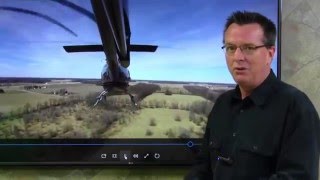
Kenny Keller teaches confined-area helicopter landings, giving mnemonics, procedural checks, and safety tips and illustrating them with JetRanger cockpit/tail footage. Key guidance includes the WATTF EEL mnemonic (Wind, Obstacles, Turbulence, Forced-landing areas, Entry/Exit, Low recon), the Five S's for site assessment (Size, Surface, Slope, Spot, Shape), and procedural rules: perform a minimum of three high-recon circles at about 60 knots, keep descent rates very low (under 300 ft/min), verify power/weight (powercheck), be prepared to go around, and never move the helicopter once committed to a touchdown; always clear the tail before maneuvering.
Questions this video answers
Three circles around the landing area.
About 60 knots (minimum).
Keep descent below 300 ft per minute.
Chapters
Okay, let's talk about some confined area landings. We're going in for one right here with this spot on the ground. I'm gonna first go over some memory aids for you and some techniques for confined areas. And then I'll roll some video with a couple examples of this landing area that we here use occasionally off the end of the Runway. So the first memory aid we have for you is watt fill, which is W O T F E E L. I like this as a memory aid. Wind, obstacle, turbulence, forced landing area, entry, exit, low recon. Number one, the wind. You got to know where the wind's at and use it to your benefit. Of course. Obstacles, you're looking for them around your area, inside your area. Turbulence. What kind of a turbulence are you going to get from the wind moving over the different obstacles and terrain around your landing area? Forced landing area, meaning if you're forced to make a landing on your way in or on your way out, where are you going to go? Which is also under entry and exit. So as you're doing your circles, you want to be looking, how am I going to enter in there so I can try to land into the wind? Where am I going to go if I have a failure on the way in? On the way in? And where am I going to go if I have a failure on the way out? It's very easy to get down in the hole and then you're down inside there and you get ready to take off and you're going, what's on the other side of the trees? Or what's on the other side of the buildings? It's very easy to forget. And then low recon. Low recon is just verifying what you see when you're up at 500ft and doing your circles on a low recon, you're verifying when you get to the lower altitude that everything looks the same. And there's no surprises from what you saw during your high recon when you're circling your landing area. So during your high recon, if you can remember these, your examiner is going to love you for it. There's the five S's. So you're doing your high recon. You're going around looking at your spot on the ground. You remember size, surface, slope, spot and shape, the actual shape of your landing area, the five S's. So you're thinking about all these things as you're circling during your high recon. So again, I think wind is probably your a number one biggest concern. Where is the wind at obstructions your Path in and out, which we already basically mentioned. Power check. How much power are you going to have available to you once you're down in the hole? You should have an idea of how much power you had at your first takeoff. You have to be thinking about this ahead of time. And I can tell you, you can do something dumb like I did, you can be at the end of the day, top off your tanks and then go land at somebody's house. Not the smartest move. So you want to be thinking about powercheck and plan your fuel out so that once you get into this confined area, you'll be able to get out of that confined area. If you can't get out, you're going to have to burn off fuel, Unload passengers, wait till the weather cools. And I can tell you in the EMS environment, it was very common for us to go in somewhere with a certain amount of fuel on board. Expecting an average sized patient, they bring out a 400 pound and put in the helicopter. All of a sudden you can't get out of that confined area. And we literally sometimes would sit there and burn fuel. We'd raise a little collective, protect the controls, burn fuel for about five minutes and then try it again. And I can remember there was a couple times it took us 10 or 15 minutes to get out of a certain hole because we were heavier than expected. And sometimes it just happens. Approach angle. Hopefully you can do a normal in there, but most likely not. Most of the time when you're doing an off airport landing or confined area landing, it usually turns into a steep approach and then your touchdown zone. Are you going to land in the middle of your spot, toward the other end of your spot? There's some different things to consider when you're planning on what spot am I going to actually touch down. I can tell you this little tip. I trained with some Vietnam pilots and I learned a lot of really good stuff from these guys. And the one guy that I learned a lot from said when you go to a landing area, you pick the spot you like, you go in and you stay there. Do not pick up the helicopter and move the helicopter for the benefit of someone else. Meaning in this case, he was talking about your EMS personnel. You know, you'll land somewhere and they go, well, hey, can you move us over there a little farther so we don't take the stretcher as far? He said, once you're in a landing area, don't move. And this makes a lot of sense. And I've heard about these problems and seen These problems, you go to move the aircraft and you put your tail into a tree or you hit a wire, or you end up rolling the helicopter over from dynamic rollover because you went to move the helicopter. So something I learned from the Vietnam guys I flew with, once you're in, pick your spot, go there and land, and then don't move. Set it down. So I'm backing up to high recon just for a second. I want to make clear that I personally think three times around, three circles around your landing area, keeping it out your window. I say minimum three times around. That's the way I was trained as a commercial guy. And I can tell you that getting the EMS environment, the Czech airman liked my style of confined area landings. And he one particular examiner said, or check and said, I wish we could get everybody to do these the way you do them, because everybody rushes into a spot and that's how you get into trouble, not really looking your spot over and planning your approach and your takeoff. So three times around during your high recon, when you're looking at everything and keep a minimum of 60, it's worked for every aircraft I've flown. R22 Angstrom Jet Ranger EC135BK117 60 is a great number for minimum airspeed. You want to keep that 60 as you're making your circles around your area. Could be faster if you needed to, but a good solid number for minimum speed is 60. So during your high recon, I also recommend kind of in your mind setting up a base, a final, you know, into your spot, kind of like you do a normal pattern. And then as you're making your three circles, kind of be looking. I'm going to go out to that barn and I'm going to turn at that pond. I'm going to turn my final, and that's going to be my final leg into my spot. So as you're approaching your area, before you're down in it, you're doing your low recon. Info verified meaning, does everything look the same at 200ft or 100ft as it did at 500ft? Use a normal approach if you can. Most likely you'll probably have to use a steep approach the next one. Go around. Do not be afraid to go around. I can tell you on all these years of training, people don't want to go around. And I can tell you that, like, again, I'm going to use the EMS environment. Flying with Czech airmen, you know, their complaint would be, guys, don't go around. And you know, In a commercial environment, people are always in a big hurry and, you know, guys will put themselves in kind of a sloppy approach and then ends up being sloppy all the way in. And, you know, hopefully from the beginning of your training, your instructor's teaching you, man, go around. If it's not set up nice, go around and do it again. So especially in a confined area, do not be afraid to go around. Rotor clearance. You know, of course, the rotor blades, what keeps us in the air, they're spinning. You hit something with your rotor blades, you're pretty much done. So you know, you're looking at your area, obstacles, wires, trees, what you know, can I get my rotors in mixed up with to get me into trouble? Etl. You're probably going to be below ETL on this approach. So on this approach, you want to be super duper slow because we're worried about selling with power. So these approaches in these confined area landings, you really need to be under 300ft per minute, ready to send. You want to be very, very slow. And you want to be slow so that you can make the choice to go around. You could actually stop if you had to. If you're coming in slow, gives you more of a chance to see obstacles. So these approaches into these confined areas really need to be slow with a really low rate of descent. So again, there's selling of power. Selling with power has got to be on your mind. You got to be thinking about it. Then again, specific spot, pick a spot in your mind. If you, for safety, for some reason, you didn't need to move it on the way in, you can. But again, once you're there and you pick your spot and you're on that spot, don't move, then you're gonna have ground recon. Once you're down in the hole, you may need to do a magneto check depending on what you're flying. If you're in a piston powered aircraft, you may want to do a magneto check. If you're flying a turbine aircraft, no magnetos involved. So you don't do a magneto check. And then of course, clearance clearance is for your tail rotor, for your main rotor. What clearance do you have to get out of your area? What obstacles do you have to go up and over as you go out of your area? You know, you may find that once you're done in your spot, you may want to go more to the rear of your open area and get a little bit of running start, get a little bit of air speed and then pop up out of Your hole going to mention this again. 60 knot circle three times around and mention again also how much power versus your limit for the day. You really have to be on top of this power management, be planning these things ahead of time. Like I already mentioned, I did a stupid thing once with a student guy owned his own aircraft and it was the end of the day and he wanted to top them off, so we did. And then he goes, well, hey, let's go to my house. I wasn't thinking, I should have said no, man, we just topped it off. We'll go to your house another day. We're not going to go there with full tanks. And literally it took everything that I had in order to get out of there. And if we would have had any kind of a malfunction, you know, would have flown into his house or the trees because we went out just, you know, barely skimming across the buildings and the trees around his home. So you got to be thinking about these things before you go in. Alright, let's now look at some footage from a confined area landing I've done with the Jet Ranger. I have both video from inside the cockpit and from the tail. But the cockpit video isn't. It's a good video, but you can't see the spot over to the side. So I'm just going to use the tail video you saw in the first scene. Opening scene of this video. The spot is out ahead of us right here. The spot is over on our side and the wind is coming out of the northwest. So right now we are heading to the south. So we've been circling around. We know that as we're coming in here, we have some open areas here, or we could even divert over here if we had some kind of a failure over on the other side of this area there's big open areas. So let's just take a look at a little bit of it. So kind of as we're turning here, you can see our spot. This is where we're going right here. So I can guarantee you I'm training with a student. I can guarantee you I made him go around three times. Okay, so I've advanced it here a little bit. We're coming around. This is our spot. So you can see here path in right over this way, we're coming into the wind. We've got a spot. We can go right there. If we have a failure when we're getting close to the ground, we go over to this field here, there's our spot and we're going to hit it Kind of catty cornered, which gives us a little more running room. And we're going to shoot for the center of this confined area. And again there's just a line of trees. So coming out of there we have a nice big open area if we would have a failure. Now, of course we're doing training and we wouldn't do training and go downtown, a major city and have all the obstacles. But you could imagine, you know, this is a parking lot you're going to or a friend's house. I mean, these are helicopters. What are we going to do? What are you going to do in the real world? Are you going to land at airports? No, it's a helicopter. You want to go out and have fun and land in cool places. So you really do need to pay attention to these tips that we're giving you on the confined area landings. You want to be careful. You can see right here our rate of descent is slow. And I don't care who you are, rate of descent needs to be below 300ft per minute. You don't want to be too steep, you don't want to be too fast. So we're coming in nice and slow. We have plenty of clearance. Very low rate of descent. At any time we could stop if we needed to, we could fly away pretty much open to do whatever we want to do. So we're coming down more to the center of our area. We get into the center and we're going to turn around and move the aircraft back over to the corner to kind of give us a little bit of a room to get a little bit of a running start. This particular day, it was springtime, it was cool. So I think there was just two of us. We probably had plenty of power and the Jet Ranger probably wasn't an issue. Just clear our tailed right. You always got to clear tail left and right. I don't care how redundant it is. I've had students that said, ah, I'm not training, I'm not with Kenny anymore, I'm not doing that stuff. Well, you know what, experienced pilots turn their tails into stuff all the time. EMS pilots do it. You know, when I was an EMS pilot, they did a study within our own company and they said, guys, the people wrecking the helicopters have more than 15 years in EMS and have more than 6,000 hours. So it's not always the newbies or the new guys running this stuff. It's the experienced guys that say, ah, I've been flying a long time, you know, nothing bad is going to happen to Me. So you got to clear the tail every single time. No matter where you're at on the ramp, confined area, wherever you're at, anytime you turn that tail clear. Depending on which side you're on. If you can clear your own tail, clear it yourself. If you have somebody beside you, have them clear the other towel. So now you can see this view. We're back in the corner. Look at all this room. If we had poor performance, if it was hot and we were heavy, we could actually get a little bit of a running start before we start to lift up just to get that air speed and use ground effect. And again, this thing, there's two of us in a Jet Ranger, probably 50 gallons of fuel, 30 gallons of fuel. We just come up riding out of there, no problem clearing the trees. So again, this is training. This is an example, but it gives you some things to think about how you could get into trouble. So don't rush these things. Do your three circles, three times around. Plan out your downwind, your base, and your final. Know your hover power. Don't be too heavy. Be ready to go around. You know, machoism, that's how we get in trouble, right? You know, we're all macho and we want to. We can do it. I can get it in there. You know, screw that. Wrecking the helicopter is the absolute worst thing that can happen. Not only your pride could kill you. So take a lot of time thinking about this. Practice these with your instructors. Memorize as many of these tips as I gave you in the beginning of the video. Examiners will love it. I swear, I've taken a lot of checkrides with people, different examiners, different check airmen around the country, and they like my confined area landing. So take these tips, use them, be careful, and we'll see in the next video.










