Do NOT enter SQUAWK CODES or Radio Freqs while in a hover and more
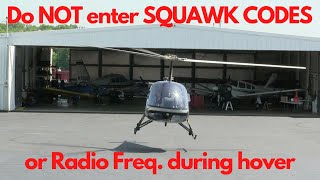
YouTube video by Kenny Keller (Helicopter Land Ground School) giving practical helicopter training advice drawn from a one-on-one coaching session. Kenny emphasizes: do not enter squawk codes or change radio frequencies while in a hover (protect the controls and, if needed, land briefly to make changes); reasonable expectations for autorotations prior to solo; track fuel burn by time (use a watch/timer and never rely solely on gauges); pros/cons of training in controlled airspace; always understand traffic flow, winds and runway choices; listen to LiveATC to build radio familiarity; always state your intentions succinctly (who you are, where you are, what you want to do); keep cockpit workload and kneeboard organized; prioritize aviate→navigate→communicate; and embrace continual learning. The video ends with a short live Q&A/giveaway using questions from a Private Pilot Study Guide.
Chapters
All right. Hey, it's Kenny with helicopter Land Ground school. Got the cream puff instrument taken off here. Some footage of a helicopter we used to use for training all the time. We're going to cover some more helicopter training stuff today. Some things that came up in a conversation with one of our pro members that I did last week. We're gonna do another one this Thursday. And he sent me an email with some other things that I helped him with last week that I didn't cover. So I thought, well, let's go ahead and cover these because if one person's struggling, then there's probably a bunch of other people struggling as well. So what we're gonna do, you can flip over to other camera anytime you want. Heather. Thanks everybody for tuning in. And what we're going to do is we're going to cover 10 things that he mentioned that were helpful in our discussion with our one on one. And when we get done with that, we're going to ask a few simple questions from the private pilot Study guide. Brian Rutledge is here in chat. We just saw his name pop up. Brian put this together with over 400 questions. There's a link down below for this book. We're going to ask you three simple questions at the end and give away a medium shirt, large T shirt and a extra large hogs short sleeve T shirts. So thanks everybody for tuning in. And we started off with this one to get people's attention today because this is one that this is the way I teach. Let me back up. Everything I'm going to talk about today is the way I do it, okay? And it's depending on where you're at, flying at in the country or the world. Some of these tips maybe don't work the best for you. But I've been training a long time and I know what our examiners expect and what they will allow and what they will not. So the first one that we titled the video today is do not enter squaw codes or radio frequencies while in a hover. And the reason I say that is in this discussion with this pro member, we're just talking through his flight training and the different struggles. And this came up, he said, well, yeah, we were in this controlled airport and they were getting mad at me over changing frequencies. And you know, he was getting all frustrated. I'm like, wait a minute, were you doing this in a hover? And he's like, yeah. And I go, how often do you do that? And he said, we do this all the time. And I'm like, okay, let's just stop here for a second. Again, what I do and what somebody else may want to do in another part of the country could be totally different. But all the training that I went through before becoming a CFI and everything I've done since becoming a cfi, nobody in this part of the country, as far as training environment goes, they do not change squat codes or frequencies. A hover, because in a hover, you don't want to take your hands off the controls, particularly the collective in a hover. So all the places I've trained, examiners I work with going for, taking students for private pilot, they. The one in particular, I think both of them, they'll fail you if you take your hand off the collective during a hover. So what I was taught back from the beginning, and I use it today, you know, I used it when I was flying ems. If you need to change a squat code or you need to change your radio frequency and you're only a couple, two or three or four or five feet above the ground, why not sit down on the ground, protect your controls, reach down, do what you got to do, and then pick back up into a hover? So when we started talking about this, he was like, really? And I'm like, yeah. And I go, you know. You know, you're flying in a different part of the country, and your instructors can do, you know, they're going to do what they're going to do. However, the training environment that I come from and the examiners that we use, we don't allow students to take their hand off the collective during a hover. So. And I know it depends on the aircraft you're flying, which hands you're using. I'm used to instrument on the left hand side, so you can't take your hand off the cyclic and reach down here. So if you're on the other side, it can be a little bit different. Right. But are you ever in that big of a hurry that you need to change frequencies in a hover? I know not only did we do this through training, but I remember. I don't know if I was a CFI yet or not, but I remember being at a controlled airport, and when I lifted up, it was a class Charlie. They gave me something that I wasn't used to. And I remember being in a hover, struggling, trying to reach down and change stuff. This was before cfi. I was moving an aircraft for somebody, doesn't matter. And I remember getting all frustrated in a hover trying to change frequencies. It just doesn't work out well. So you know what, again, what him and his instructors do or what his instructors wanting to do, what their examiners do in that area of the country, I don't know, but it's not something that I recommend, especially at the training level. There's never a reason why you can't just sit down, guard the controls, change what you need to change, and lift back up to a hover. So. And again, our examiners in our part of the country, they don't allow it. They don't allow you to take your hand off the collective during hover. Heather, if you want, go ahead and switch to what's next. I'll try to move through these kind of quick so we can get to the T shirts. Autos. We were talking about autos. And again, these are my ideas and where we come from in our part of the world in general, when we're training you for a private pilot, we don't expect a dead smack right on everything. By the book. Out of rotation before hover. And he was talking about the guys he's fly with, he flies with, and he's talking about the amount of autos they do in one day. And we were talking about it. And anyway, they wanted perfection prior to solo, like straight ins, 180s, which isn't even required for the private, the 180. And anyway, at a certain point I said, well, you know, where we come from, ultimately, when you're preparing a student for private, you want to be really, really confident that when they go out on a solo, they know how to get that out of rotation, entered properly. They know to look for the wind, they know what the flare looks like. They know how to control the rpm, they know what their airspeed should be. They know what to do at the entry. They know approximately treetop level or whatever number any particular person uses. Start your flare. We want them to be decent, but at the solo level, they should be good or good enough that if you really lose the engine out there during a hover, I'm sorry, you're out there beating around the pattern and you lose the engine. We want you to be able to get the thing on the ground and when it's done, unstrap your seatbelt and crawl out. It doesn't have to be. Again, where I come from, we want you to be pretty confident in it, know how to do it and know how to get the aircraft on the ground. It doesn't necessarily have to be check ride perfect prior to solo. I mean, if it is Great, but that's not what we're going after. All right, what's next? Heather, bring up the next one. Oh, fuel burn in time. I actually grabbed my notebook when we were discussing this. He was getting a lot of flack from his instructors on fuel. And so we started talking about it and I just backed the story up to Chris Hauser, who I like to talk about. Chris Hauser's on our Hogs wall of fame back here. Chris did his private commercial and CFI with me. I'm proud of that. And then I've flown with Chris over the years. Did the Cadbury videos with him last winter in the Daily videos. And Howser was a private fixed wing doing his helicopter add ons. And when we got flying together, I was always harping on time in fuel barn. And Hauser never had wore a watch at that point in his life. And now since that time, I got him in the mode of wearing a watch so he didn't have to rely on the timer in the helicopter. And to this day, you know, Hauser wears a watch. And learning however you do it, depending on what aircraft you learn. We had a nice diagram in my notebook of for the Robinson where I believe it was breaking it down into 15 minute sections. So you're thinking as you're out flying two gallons every 15 minutes, breaking it down in four quarters and just that simple thing. Talking about that, he was like, I like that a lot. So whatever you're flying and your fuel burn per hour, there's a lot of different ways. There are little memory aids you can come up with. But so many times you run into people that really aren't timing their fuel like they should. They just order some fuel and start a timer, but never really think about it. And you should come up with a method that works for you, for the aircraft that you're flying and be able to process that in your mind as you're flying. And you should never trust your fuel gauge. So you should be, you know how much fuel you put in the tank. You're using the fuel gauge to kind of monitor what you think you're burning. But you should always be going on time. So either you should have a watch you're using or a timer in the aircraft. But we talked about this last week, but it's so important that I wanted to hit it again. And I helped him out again just by discussing it and talking about it and getting something in his head that he could use during his hour flight or however long it ended up how he could, you know, Keep track of that fuel goes back to the one hour flight lesson we talked about last week. If you're going out for an hour at a time, that's a lot easier to keep track of that fuel burn and know how much you're burning and knowing when you're going to be on the ground, how many gallons you should have at the end of the tank. He was running these real long flights and of course they were getting low and that's where a lot of this frustration was coming from. So coming up with a way to track your time is so important and knowing how to figure it during that hour flight time is super, super, super important. All right, what do we got next? Heather, bring up the next slide. Learning in a controlled airspace. This is a good thing to discuss because this comes up a lot of times and we get a lot of questions. And I think learning at the airport that's right for you, location wise, aircraft wise, I think there's pros and cons, which either way you do it. I mainly did most of my training in class G airspace. Then when you go to get into the more complicated airspace, it's harder for you to learn, right. So you excel faster flying in class G, but you're always flying off somewhere else to get that experience in a towered environment. So for someone like this pro member who's flying consistently every time he flies, he is in controlled airspace. And I said, well, I understand that it, you know, it is a little harder for you now, but in turn, just keep practicing, keep flying and it's going to get easier. And even though it might take you a little bit longer to get through that private, because you're in controlled airspace, it is helping you build those skills and in turn, you'll be comfortable, faster controlled airspace and it will help you then when you're off doing your cross country. So, you know, people ask all the time, well, which should I fly in? I really think you should fly in. You know, pick the airport and the flight school and the aircraft that's right for you and just kind of, I wouldn't change a flight school just because, well, I don't want to fly in controlled airspace or I don't want to fly in uncontrolled. I think you should get as much as you can in either or the more versatile you can be and the more experience you get in both, the better off you're going to be. So that was the discussion that we had and I wanted to bring up because we do get that question a lot and I just Always tell people, you know, yes, it might take you a little bit longer, but you're building those skills sooner if you're learning in a controlled environment. So it really is good. Even if it takes you a little more time to get through your training because it is more complicated airspace and there's more work, it still can be a big benefit to you. Alright, what do we got next? Heather? Understanding the flow of traffic favoring winds, runways, this seems kind of obvious. However, people don't always take the time and as an instructor I've seen it so many times where somebody didn't know where the wind was, they didn't know what the Runway is. You know, as a private pilot or as a pilot in general, you're required to know everything about the airport or the environment that you're going to be flying in. That's part of your, you know, pre flight planning. So if you're one of those people who's just getting in the habit of just jumping in a helicopter and not reviewing what the runways are or well, just figure out the Runway numbers when I get there. A lot of pilots do that. You need to take the time, that little bit of advanced planning to look at the airport facility directory or whatever choice you're using to look at the airports, making sure you take the time to know what the Runway airport's on. My good friend Dr. Nick, you know, when he started out, all the years he was flying, he no matter where he was going, he always religiously had his knee board on and he not only did it have his chart on his knee, but he would make sure he would write down the identifier for every airport he was going to, what the frequencies were. He would draw his own little diagram so he wouldn't have to flip to the chart necessarily every time. But he had each individual airport written down with that basic information, Runway numbers, frequency numbers. You know that just taking that little bit of extra time to be prepared can help you a lot by taking the time to look these things up. And people run into trouble a lot with winds and that could be from the wind changing on you. A lot of the times, you know, you start out in the winds this direction, 20 minutes later it's over here, 20 minutes later it's over here. So the wind is always something you should be thinking about the whole time you're flying. Whether you're out going on a cross country trip or you're beating around the pattern, you should be occasionally glancing down at the Runway. Whether you're using a wind sock or A wind tee or smoke coming out of a smokestack, water across the pond or a lake. You should always, always be thinking about where the wind's at and checking it throughout that flight. Because there's been many times where I know it's done it to me where I was flying and all of a sudden the aircraft's acting funny on approach and you're going, man, this just feels funny. All of a sudden I'm getting a lot more vibrations. Then all of a sudden you figure out in an hour flight that wind changed on you and reversed a full 180 degrees. So taking the time slow down and making sure that you understand where you're flying to, what the runways are, all these things seem so simple and obvious, but if you don't take the time to do them, it definitely can get you into trouble. All right, what's next, Heather? What do we have going on? Oh, he brought up listening to Live ATC if you can. And again, we were talking about radios and we talked about radios last week. In the first one, I gave my tips on the almighty tower God and sounding confident on the radio. He brought this up and added this to this email. And we discussed that something like listening to LiveATC or listening to your local airport. If you've got a busy airport near you, that is a great way to start getting used to it. You know, it's a struggle for many, including me, when I learned to start talking on radios, even though I talked on radios in law enforcement, towing business. For 10 years I had towing service. Then I get an aircraft and it's like I'm learning how to talk on the radio all over again. So anytime you can listen to anything like that, you're gonna get better at it. It does take practice. And I admitted to this pro member when we were talking, I'm like, you know, because I trained mainly in class G, one of my first jobs was south of Chicago. And I really struggled. And there was a lot of times I would give flights to one of the other guys because it was like a maybe a photo flight over into Midway and that traffic was Midway, just like non stop. And I would be chicken. I would give up that I would give those flights up because I just didn't even want to deal with the traffic. And it takes time. It takes listening to it and it does take. It takes effort on your part. But the more you do it, the more practice you get with it. And listening to something like Live ATC can be a huge help for you when you're when you're learning, but don't get so overwhelmed and think that's just you. It's difficult for many of us when we first start learning. All right, what you got next, Heather? Always state your intentions. And this goes back to, this can be class G or this could be controlled airspace. And I know in our conversation with this member, again, he's having trouble because of all this airspace he's in. He's in a class Charlie, and they've got several other controlled airspaces nearby. And he was just struggling and through the conversation kept saying what you have to remember who you are, where you are and what do you want to do. And, you know, we got into some of the lingo and he was talking about, well, people want it stated this way or stated that way. And I said, you know, until you get good at it, just tell them what you're going to do. Tell them who you are, where you are and what you want to do. Even if you have to use very simple, I guess the word is layman's terms or just very simple wording. Yeah, you don't sound like the guy with, you know, 8,000 hours talking on radio being all fancy with this a firm and this and that and everything else. You don't have to do that when you're struggling on the radio and you're not sure what to say, who you are, where you are and what do you want to do. Be as short, but be as descriptive as possible. And you're going to get a lot farther if you are clear about who you are and where you are and what you want to do. And you'll be surprised amount of people that just don't give enough information and in turn causes you more trouble when you're trying to communicate on the radio. And why you get flustered is because you didn't take the time to think about it. You know, I know I'm approaching that airspace. Did I have my frequencies ready? Am I ready to go? Be thinking about what you're going to say before you get there. Start planning that out as soon as you can. What is your going to. What is your call going to be? Is it clear to you where you're going and what you're doing? If you haven't done the proper planning and you don't really know where you're going, you're going to struggle on whoever you're talking to on the other end. So always state your intentions. And if you're struggling, who you are, where you are and what you want to do. Plain and simple, and be descriptive in the shortest way that you can to get across your point of what it is you need to do. All right, what you got next? Workload, Cockpit management. Big, huge subject. But let's back up to kneeboard again. The years of training, I've seen so many people that, you know, people. Some people are neat and some people are messy, right? And you see people in a cockpit where they got a map on the floor and they got this over there, and there's stuff everywhere. I can't stand that. I want everything. I don't want anything in the cockpit more than what we absolutely have to have for that flight. And I want everything nice and clean and organized. And by taking the time, number one, using a knee board, taking the time to have your knee board organized, having your chart folded the way you need it, anything you can do to keep that cockpit organized and know where things at is going to help you. There's a lot. There really is a lot to it. But by being organized and taking the time to be prepared is going to help you more than anything. And let's go to the next one, Heather, because I really want to go to. I think that's the aviate, Navigate, communicate. You know, you want to have everything prepared in the helicopter, but I like to go to this one right away because, number one, you're flying the aircraft, right? So first thing, more important than anything is aviate, right? Then navigate, then communicate. You don't want to get in an accident or do something stupid and wreck the aircraft because you're not paying attention to the aircraft because you're screwing around with the radio or you're so worried about, oh, well, I'm not sure if I'm supposed to turn this way or I can't find my landmark. Number one is aviate making sure that you're on top of everything going on with that aircraft, then worrying about navigate and then worrying about communicate. So you make a radio call. I mean, other than busting airspace, which is one of the number one things that pilots get in trouble for, I don't know if this still is true, but at one point, they said busting airspace was the number one violation among anything else other than busting airspace and getting yourself in trouble, flying that aircraft first and making sure that you're keeping under control is absolutely 100% more important than anything else. Aviate, Navigate, communicate. And there's one more, and I like that he said this, that he put this in the email. He said, I don't think you ever graduate when choosing to fly helicopters, you are always learning. I say this all the time. None of us know it all. You know, nobody knows that complete Far AIM manual. And I swear every time that I go out and fly, even now or even here, building presentations and doing videos and doing ground school, I learned something. I swore to God every single day, this is true, about learning to fly a helicopter. You know, in the beginning you're learning what it takes to be a safe and prudent pilot. You're never going to know it all, but knowing enough to keep you, keep you out of trouble. Sticking to the basic 101 private pilot stuff that we learn, I think really is the key. And when he said that, I liked that. I said, I said, you're right, you're always learning. And another comment was made about how when you go out there are so many things thrown at you and people get overwhelmed because they don't necessarily feel like they did well enough on any one given lesson and they feel like they don't remember anything. It's repetition. We learn through repetition. And if you can go away from that dual flight and even though you covered so much in an hour, if you can go away with one thing that clicked for you that you never really realized before, you're probably doing well. And that's the truth. Alright, let's give away some T shirts first. We'll do the medium. Again, these are short sleeve. So I'm going to open up the Private Pilot Study Guide put together by Brian Rutledge. Again, there is a link down below. This video if you'd like to get yourself a copy. Has over 400 questions that could be asked and we've been making the point that, yeah, it's called Private Pilot Study Guide. But you know what? When you go in for a commercial checkride, guess what? They ask you. The same stuff. Starting off, you go to your CFI checkride, guess what they ask you. The same stuff. Starting off, what do they ask you when you go into your instrument checkride? The same stuff. It's what do you have to have on you, you know, the nighttime requirements, all that simple stuff that we learned day one. The examiners must always start with all that same stuff. And it happens to you again when you get in the 135 environment. So don't overlook this. It's a great study aid. And again, it's for people that want to put in the work. This is not for sissies. This is for somebody who really wants to sit down and spend the time and work through this Thing. But I'll guarantee you by the time that you're to the end of it, either you're going to be ready or you're going to know that you're not ready. Right. There is a lot of stuff in here. So I picked three real simple easy questions. Now remember, your device may show differently than what our device shows. Okay. I'll have Heather come over here when we start watching for winners so that we can look at. Actually, this is simple enough. I'll let you go from there. Heather, these are very simple. The first one is a yes or no answer. That's it. This is very easy. Must you comply with a service bulletin? This is for the medium T shirt. Should I have said that first? I should have said that first. For the medium shirt. Hog shirt. Must you comply with with a service bulletin? That's the first question. Looks like we've had a lot of people in here. Ooh, 37 watching. Awesome. I. You've been typing away over there like crazy. You're a lot of interaction, lot, lot going on.
Yeah, A lot of people saying hi and all that stuff. I. I did just mention if they just recently won one to give other ch. Other people a chance to win one.
Okay, there's looks like who Munchers. Yep, yep, that's what I see here. So munchers, you get the medium shirt. All right, next question. Now don't let this trip you up. This is for logbooks, but this isn't for your pilot log book. This is for aircraft log books and these could be combined into the same folder. Let's say how many log books at minimum are there for the aircraft that you fly? There's a minimum of how many and all you got to do is type in the amount. I know we're a little bit behind. Let's get ready on the next one. Oh, by the way, if you're new to us hogs, no go button. Live to fly another day. Helicopterground.com Yep. Alright. Salty dog. Salty dog. You got it. So, winners, I know Heather's typing to you. Email heatherelicopterground.com and she will ship you. That was for a large shirt. I should have said large shirt. Hopefully you're taking care of that over there. Sheesh. Been a long day already. All right, awesome. So very easy. Type the official name for those two minimum logbooks. What's the official name? This is very specific. Type it correctly. Heather can do a little switching around over there if you need to. We're down to like one size of everything, so we don't have a lot. We don't have extra to be like giving away three mediums ain't gonna work because we're down to like one of every size. So the first one, this would be for the XL shirt. Heather has her under control. Of course she does. Isn't it nice having her back in the studio instead of doing it from home? It's been handy. We've been getting a lot of stuff done in here. We're getting ready for the arrival of a helicopter. Okay, you're close, Nick. Come on. It's. Come on. Looks to me like Salty Dog again. Salty Dog. Let's go with somebody else. Okay. What are we going to do here? We'll go back to Nick. It's airframe and engine. You know, I kind of asked for the specific name. It is frame Airframe. Let's just back up and go with Nick. Otherwise we're going to get an argument here over proper, you know, what you want to call it. So Nick, email heatherelicopterground.com know that down below there's a link for helicopterground.com we have for November we have all the private stuff together. Private, private. Add on all in one course. It's only 87 bucks. For November it's $10 off and that's for as long as you keep the course. Then we've combined everything else. Commercial instrument, cfi, all in one membership. So it's just easy. Less switching around. That's available helicopterground.com below and we've got a link down there. Just talking about Daniel, if you want to talk about of the professional pilot one on ones and there's a link down there for the private pilot study guide. Shaking your head over there. What's going on? Oh, okay. Do we need another winner then or is he going to forfeit his shirt or what?
Well, unless you see the other Airframe and engine. Doesn't look like anybody else answered it right anyway.
Is he giving it up? Did he say he doesn't want the shirt or what?
Juan said engine. Airframe.
Yeah, it's engine and airframe is the proper so. So Salty Dog was number two, but Salty Dog won a shirt already. Right? All right. So then airframe, Samuel, Airframe power plant. I mean. Yeah, I guess you'd call it Power plan. Let's go with Samuel. Close enough. Alright, cool. Thanks everybody for tuning in. All those links are down below. Stay tuned for what's next. I'm not sure exactly what it'll be, but we'll know soon. Peace. It. Didn't feel as good as last.










