Dynamic Rollover From Live Training Tuesday
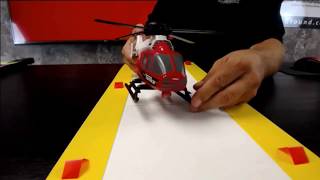
Kenny Keller explains dynamic rollover, when a helicopter pivots on a skid and becomes unrecoverable past a critical angle. The fix: reduce collective immediately. Keep slope practice under 5 degrees and avoid gusty winds over 10 knots.
Questions this video answers
5 to 8 degrees (per Helicopter Flying Handbook cited in the talk).
Rapidly reduce collective ("collective down").
5 degrees maximum for slope practice.
Be wary when wind is gusty or greater than 10 knots.
Tuesdays at 1:00 pm Eastern Standard Time (recurring live events).
Chapters
Hey, it's Kenny with helicopter. All in ground school. Thanks for stopping by today. We're gonna get started the presentation in about 10 minutes. We're gonna take this 10 minutes to let people get logged in, check our cameras, check our feeds. Today we're doing dynamic rollover and it's been pretty. We've been talking about a lot here lately because, well, we'll get to more in the presentation, but we've been asked by the FAA to let them review our site and they may be using us as remedial training for some people have been through accidents because they recently had a dynamic rol. And when they tested the guy's knowledge, either he didn't remember or he didn't have the proper knowledge in the first place. His knowledge was not where it should have been about dynamic rollover. So pretty obvious he got into it not understanding the proper. The ways to keep out of it and what to do if he got into it. And then we had a member that just got into a dynamic rollover. That's the picture here. He's agreed to let us use the photo and tell a little bit about his story and all I can think of at the moment. So we're gonna go live or we're already live, but we're gonna roll the. Start the presentation at 1. So as we're getting ready, we want to know who's here. If you're logged in, where you're from, give us your name. We're gonna check that in a minute, but first we want to check and make sure our cameras are going and our microphones are working properly. Looks like we're good on number one. So we're gonna go to number two. We're gonna go to Gary's camera and check, make sure that his feed is working. There he is. Hello, everybody. Yep, looks like his mic is working. Now let's go over to the Courtney cam. Courtney will be fielding your questions and keeping track of who's here and letting us know who's inside. So there's Courtney. So go ahead and check Courtney, see if there's anybody in either one. We just want to know and see if anybody's there and if they can hear us, if they can see us and how it all looks.
On the YouTube.
Oh, Check. Let me go over here and see what the. Oh, 15 watching. It's showing you here, showing live. So it looks good there. Let me go inside the site. Oh, it's not going in there. Wait, let me click play. Yep, There we go. 15 Watch them. There we Go. All right, from what I can see there, it is live inside both ground school and. Okay, I would. I'd just open it back up. All right, so let us know if you're here. We thought we had a little technical issue, but this is why we're logging in, starting about 10 to 15 minutes early each Tuesday when we go live. We're gonna go live or we're gonna start our presentations at one. We're gonna go live from around 12:45 to 12:50. Just like there, we had something pop up. Server error, blah, blah, blah. Running multiple cameras. You know, we're transmitting to multiple places. So we just want to give that time to log in, make sure everything's working, see who's watching, see where you're from. Let us know where you're from. Let us know if you're a ground school member yet or a future ground school member. Put your questions in. Courtney will be taking your questions, and I see her shaking her head over there. So apparently someone has probably commented. Let's go to Courtney. Cam.
Lars says, good morning, Kenny.
Nice. Lars comes in every week. Thank you, Lars, for being here.
I'm not sure how to pronounce his name. That says, hi, from Massachusetts.
Awesome. Cool. So how for the two of that have commented. Thank you for commenting. Thank you for letting us know you're here. How is the video? How is the audio? Does everything sound good? Look good from your end? Awesome. She's shaking her head yes. All right, so let's see what time it is. 12:53. We have a little Runway built here today that we're going to use for demonstrating during the presentations. We're going to talk about dynamic rollover, talk about how to avoid it, talk about what to do if you start to get into it. As I mentioned, we started rolling. We just had a member get into dynamic rollover in the past week. It's unfortunate, but he walked away, and it's a, you know, a learning tool. He agreed to let us use the pictures and tell a little bit about his story. We're gonna, you know, not mention names or flight schools because it doesn't matter, number one. And number two, I'm sure there's some type of investigation going on, so we're not gonna say anything or do anything that could hinder any of that, but sounds like a simple, dynamic rollover. Hate to say the word simple, but a dynamic rollover incident. And he was. Talked to Gary yesterday on the phone, and he said, hey. They were actually pretty cool about it. Everybody talked to, including the Owner said, hey, it happens. Which we know this. Helicopters get rolled over even by experienced pilots. So this is something that you really have to understand. You have to try to avoid it and not get into it in the first place. And then you have to know what to do in the event you get a dynamic rollover. So we're going to talk about these different things. So we get started at 1. We got 1254. I know. I wanted to mention if you're a ground school member and you haven't went to our Facebook page yet, we have a new private Facebook group for helicopter online ground school members that are current. I wanted to mention that. And also for ground school members. Some of you may not be getting emails for events like today. If you didn't click the box when you signed up and joined helicopter online ground school, if you didn't click the box to receive emails, then you're not getting our emails. And if you want to be notified, certain events like today, like what's going to be happening, what we're doing, what updates are, you need to join our email list. So just send us an email, actually send it to garyelicopterground.com and we'll make sure we get you added to the list. We'll get a link set up where it's an easy place to go find place to add your email, which you can go to most all of our blog posts. But for the next live event, we'll have a series of links for these things like the Facebook group, the private group, how to get on the email list if you're not. That's something that we're going to make sure that we start covering. We're about to hit 3 million views on YouTube and we're about to hit 10,000 subscribers. So we're kind of excited about that for our little niche. That's cool. I mean, there's of course lots of people out there that have 100,000 subscribers, a million subscribers, and that's cool. They're usually doing something that's, I don't know, they could be celebrities or they might be just have a huge audience. For us in a small little helicopter niche, we're pretty proud of our 3 million views and our almost 10,000 subscribers. So if you're on YouTube and you haven't subscribed yet, please do that. Please subscribe to our channel and make sure it's tuning each week for the live events on Tuesday. This is week number four. We're really excited about these. They've been going really well. We're committed to every Tuesday 1:00pm Eastern Standard Time. We might change that at some point in the future but right now that's the way we're doing it and we're going to keep it that way for right now. What else? We're down to about ready to 1 o'. Clock. We're going to go right at 1. It's about three minutes away. Anything I haven't mentioned yet Gary, that recent going on, going ons or recent happenings that we want to mention? Anything big?
No. It's exciting to see us going live every Tuesday at one adding new content after we do the live event. It's just keeping fresh content in the site.
Okay, let's check in with Courtney. Anybody else ground school member wise or YouTube wise? Either one.
Taz said hi Taz.
Of course Taz is here. Awesome. Glad you're here Taz. Anybody else?
David Brooks says New Braunfels, Texas.
Nice. Another Texas. We have a lot of interest in Texas. We have a lot of members from Texas. We've had a lot of people coming to Florida with us from Texas. So that's pretty cool and I'll openly say it. Gary can verify this. We seem to get a lot of feedback from people from Texas that are having trouble finding good quality training. Not only good quality training but somewhere they can go where they can get quality training and have an examiner available. It just seems to be this recurring story and I don't know just because Texas is so darn big and people just so spread out. But we have a lot of members from Texas and a lot of people coming from Texas so we appreciate that. Alright, 12:58 another minute or two. Anything else to new comment wise? Anything else you want to add Gary?
No, I'm not sure if anybody can comment whether they're getting feedback. There's some engine maintenance going on down in a hangar. I may step down and see if they can put it off for a little bit.
Yeah, never fails. And we are at an airport so you know if the noise continues, nothing we can do. They're out there tracking a helicopter so it is an airport. We can't expect them to stop what they're doing because of us. But maybe if they can take a little break and delay for a little while that'd be cool too. So if we have a little added noise, do the helicopter run outside? Part of it. We're helicopter ground school and we are online at an airport. 12:59 all right, I think it's about time to get started with our presentation. What do you think.
Hold on, let me step out and see if they can shut this helicopter off just for about a half hour.
All right, so you want me to just keep talking about nothing? It's a minute, it's 1 o', clock, 12:59. We promised him 1 o', clock, 1pm.
Okay, go ahead.
Alright, well, let's get started with this presentation on dynamic rollover. Dynamic rollover. This. The same day as he got notification of this event. So he had this event, was getting ready to solo, got into dynamic rollover and when he went home he got an email that we were doing this training this week. So maybe it would have been more fresh in his mind, maybe we could have helped him, you know, not go through that. So here's the aircraft that he was soloing in that day. So hopefully we got your attention right off the bat with that. Dynamic rollover is a big deal. It happens to new pilots, it happens to experienced pilots. I know that when I first started years ago when I was training for the private, I've told this story a lot about how I'm training with the younger guy, then the older guy comes in and kind of kicks your butt a little bit. And the good news is I never forgot anything that he trained me when I was new, prior to solo, getting ready to solo and I fly with the older guy and he's like, you have to pick this helicopter up in a two step process. Experienced pilots roll these helicopters over from not doing a good two step process. So not only does it happen to newbies, it happens to experienced pilots as well. So as far as this example goes, we're not going to mention the flight school, we're not going to mention the member's name because it doesn't matter. He agreed to let us use the photos. Gary talked to him this morning and he said, go ahead and use them. And I'm gonna move the camera over to Gary and let you hear firsthand from Gary what their conversation was they had just this morning about dynamic rollover.
Can I talk to our member who unfortunately was involved in the dynamic rollover incident. Ironically, coming home from this incident, he sees notice that we're going to do this live event today. I asked him what happened and asked if we could share that with our other members. He said absolutely, keeping his name out of it. He basically has been training in an R22. He's had a lot of experience with slope landings, pickups and set downs. With his CFI on board, this would have been his first solo flight. So his CFI was Off in the distance a little way with a portable radio and he went to pick up the aircraft on a grassy surface and all he remembers is the aircraft suddenly the canopy is cracking and things are going south fast. It happened that fast. He didn't have time to recognize that it's coming on. He just recognized that it was way different with him in there by himself instead of having the weight of the CFI next to him in the R22.
Alright, so again, it's no disrespect to the instructor or the flight school or the member. We thought it was something that should be shared. And Gary talked to him and he said, yeah, you know what, I want to talk about it and I encourage it because I talked a lot about my helicopter accident when I got involved in the helicopter, ground residents all those years ago. And of course everybody, all the attorneys and the factory and everybody's like, don't talk to anybody, don't repeat the story. Well, what are you supposed to do after a traumatic event? You're supposed to go home and just keep your mouth shut and not talk to anybody. I think that's absolutely wrong. I ignored the advice of the attorneys, I ignored the advice of the helicopter corporation that owned the aircraft or who manufactured aircraft. And all I did was talk about it. I was home, I was hurt, I couldn't fly, I couldn't even pick up my daughter, I couldn't even pick up a gallon of milk because of my back injury. I had to go home and recuperate. So not gonna sit at home and not repeat the story, not tell anybody about it. They were like, you can't even talk to your friends and your family. So anyway, I'm glad this member came forward. I'm glad he shared that with us because it's a learning, you know, it's a learning tool. Helicopter pilots in general, the thing that I've noticed in 20 years is not too many of them talk about their mishaps. And I don't know why that is. I openly talk about the ground residence accident that I was in. This member or wanted to share his unfortunate incident. He walked away. He was okay. But here's an example. Training day and going for solo and he rolls it over and I know I overheard a little bit of the conversation and he basically said, you know, even the kind of the FAA and instructors he talked to said, hey, you know, things happen, it's. And things do happen in the end, you want to walk away. So it's fresh on everybody's minds here with a member that just happened to, you know, unfortunately it happened, but he walked away. And at least he's talking about it. And he's going to continue to train. He told Gary he's going to continue to train. And I believe Gary even said earlier that even the owner of the helicopter or the flight school said, hey, things happen. Isn't that what he said?
The owner of the helicopter said, don't sweat it. You walked away safe. It's just a training incident. So there he had the encouragement to continue with his training. And hopefully not only him, but a lot of people can have the realization that dynamic rollover is not just something you have to know to pass your checkride, but it's the real deal.
Exactly. Perfect advice. You're right. It's not just for the checkride. This is so that on your solo, for your ratings for your checkrides, and then throughout your career to make sure that you stay out of trouble and not destroy an aircraft. So again, we thank that member for sharing the story. Again, it happened. So we're gonna go through a presentation. It's brand new. We just built it. And the information did come from chapter 11 of the helicopter Flying Handbook. So, you know, and this chapter is Helicopter Emergencies and Hazards. So I just want to point that out. That is the reference for this, this presentation. So first, let's talk about what is it? A helicopter is susceptible to a lateral rolling tendency called dynamic rollover when the helicopter is in contact with the surface during takeoffs or landings. When I trained, it happened. So we'll go back to me on my camera again. When I was new to this, I had my private. I'm working on my commercial. And one day I was going to go for one of my lessons, and they called me and said, hey, don't come in today because the helicopter's wrecked. And I'm like, really? What happened? And the instructor that I was training with to help me with my commercial was out with somebody that worked in the office that was working on their private. So they were. Didn't have the private yet, but they. I'm not sure if they'd been soloing it or not, but they were out practicing some hoverados. And when they did their hoverado. Let's go out to camera three, Gary. We'll give them a little bird's eye view of our Runway and everything we have set up for you today. So what they did, they were out in the field practicing hoverados, and when they entered it, they went this direction and came back, caught the rear skid flopped it over, destroyed the aircraft. So going back to that flight school firsthand, here's one of my instructors who, he was a great instructor, student, was a good student. It just got away from him during a training event. So point being, it does happen. And I have purposely, ever since that incident, I've always made sure that I use a little bit of right cyclic and a little bit of right forward cyclic because that helicopter has a tendency to do that when you roll off the throttles. Some helicopters anyway want to go to the left and they want to go backwards so it's easy to catch that skid and roll over. So I purposely always use a little forward and to the right. So I just wanted to relay that it happened at a flight school where I was flying instructor, I was flying with one, that they were sloppy and that they weren't doing a good job. They just, you know, got away from them. So I wanted to share that. So next I want to share. This is kind of cool. We just recently got a call from an FAA inspector. And when he first called, I was hesitant to call him back. He left me a message and I handed over to Gary, said, hey, here, call the faa. Because I've always had good experience with the faa, but this was one time that, you know, when you first get a call from the faa, you kind of wonder, what did I do wrong? Or you know, they have a problem with something I did. So anyway, Gary called up this inspector, see what he needed and they told Gary that they had just had. Oh, they were investigating an accident where a pilot rated pilot got into dynamic rollover. And when they went out to question this pilot, he didn't remember the basic elements of dynamic rollover. So they indicated to Gary that our training helicopter rolling ground school may be something that is going to be implemented to use as remedial training. I'm going to have you go over to Gary's camera and let Gary explain to you what they were talking about since he talked to him direct.
Yeah, Kenny. I called the guy back and, and not knowing what to expect, calling the FAA helicopter inspector. It turned out to be one of those goosebump experiences because he was actually asking permission to review our site, to assign our training, our online video training as remedial for accidents. And then he shared with me that he had just covered an accident where, where I believe it was a Bell 47 had rolled off of a trailer and the pilot was not well versed on dynamic rollover as he was investigating the incident. And so we gave him full access to the site to review all of our training and he'll be hopefully implementing it as remedial training for pilots that are involved in an accident and need further training.
Awesome. So that's exciting. That's why I turned it over to Gary, let him explain to you. Hopefully that takes place. And so in turn, with the recent, we'd already chose dynamic rollover for this week. So between the FAA call and giving that an example and then happening to a member, the timing just seemed right to do this presentation. Our dynamic rollover presentation we've had was quite older back from the original training five years ago and there's a couple things that had been changed since. So this is brand new, fresh from the Helicopter Flying Handbook as stated. So we're going to go through the details, the meat of what the Helicopter Flying Handbook tells us and we're going to do some examples here with our little miniature Runway. So we'll cover a little bit more of what they're telling us in the Helicopter Flying Handbook. So for dynamic rollover to occur, some factor must first cause the helicopter to roll or pivot around a skid or landing gear will until its critical rollover angle is reached 5 to 8 degrees depending on whether, depending on helicopter winds and loading. Then beyond this point, main rotor thrust continues the roll and recovery is impossible. So let's go back to me for a minute, Gary, because I want to point out it says right here impossible, okay? When you have the situations combined together, whether you get into it and you go past that rollover point, that critical angle, once it's going over, it's impossible to recover from. So we're going to go through the typical ways that it happens, positions people put themselves into that happen. So I want to point out impossible, there's a point where it's impossible to recover. Okay? So if the critical rollover angle is exceeded, the helicopter rolls on its side regardless of the cyclic corrections made. Dynamic rollover begins when the helicopter starts to pivot laterally around his skid or wheel. This can occur for a variety of reasons including the failure to remove a tie down or skid securing device or if the skid or wheel contacts a fixed object while hovering sideward or if the gear is stuck in ice, soft asphalt or, or mud. Those are just some scenarios so you can think about a lot of them. And we're going to go now to our Runway scenario here. So if, Gary, you want to turn us over to our Runway camera, you know, these are representing our Runway lights here on the side. These little Red marks Gary just made this morning. So anytime you're around an airport environment, whether you're hovering down the Runway, or let's say this is a taxiway, or you're moving along the edge of a ramp, taxiway lights are a big one. You always want to be thinking about that, because if you're hovering around and you catch that taxiway light very quickly, that could turn into a dynamic rollover situation. So everything that we just listed, taxiway lights. Think about a uneven concrete. Let's say that the concrete pad has a hump, and the concrete is just raised a quarter or half of an inch, and you slid sideways and caught that concrete. That could be dynamic rollover. So any uneven surface, any obstruction, anything that you could come along with a sideways movement and catch that skid, you got to get that collective down and take that lift away. If it gets too far, you're going to roll over, and we're going to stay on this shot here, and we're going to remove one of our taxiway lights. Let's see which way we want to go. We'll use this one here. Let's say when we're practicing slopes, one thing that we always do is we very often do them along the edge of the Runway, because our Runway here at C65 works out perfect just about anywhere to practice a slope. And I want to point out we never do them more than 5 degrees. So we'll do them equidistant between two lights so that we know that we're not going to get into trouble. So we usually start over here. We come in at 45 in parallel. We go about halfway between those taxiway lights to perform our slope landing, and then we move away parallel in 45. So that way, if you know where they're at, you start about beside a taxiway light. We know if we go about halfway, if we keep our eyes out and keep an eyeball on this taxiway light up here, we know we're about halfway between. We know we're never going to have a problem. And again, I want to emphasize, when we're training, we never do a slope more than 5 degrees. So I'm going to pull up a slope landing here for you. And this will come up again in the presentation coming from the helicopter flying hammock. But I just want to demonstrate here a little more for you before we get to it. And we can always come back to this. So there's going to be several things that we're going to point out during this presentation. And in this presentation, the helicopter flying hammock, they're using a PIC helicopter with PIC on the right. And they're gonna. We're gonna point out several things, like if you were. If your center of gravity is to the right, if you have a wind coming this direction hitting the fuselage of the aircraft, we're gonna point out translating tendency. And there's one more. There's four of them. I'm trying to think of the other one. You remember the other one, Gary, left pedal. Go ahead and put your questions in now and we'll get to those in just a little bit. After we get through the majority of this presentation, we'll check comments. So we're going to continue to work with that. Hopefully you like our Runway, so put that down here for now and we'll get back to the presentation. So lots of different ways you could get stuck. Mud, soft asphalt, really hot day. Think about that. You go somewhere and you land. One skid sinks in, one skid doesn't, you go to pick up and the helicopter flops over on its side. So you got to think about all these different scenarios of how it could happen. Dynamic rollover may also occur if you use an improper landing or takeoff technique or while performing slope operations. Whatever the cause, if the gear or skid becomes a pivot point, dynamic rollover is possible if not using the proper corrective technique. Once started, dynamic rollover cannot be stopped by application of opposite cyclic control alone. Quickly reducing collective pitch is the most effective way to stop dynamic rollover from developing. Dynamic rollover can occur with any type of landing gear and all types of rotor systems. Okay, so we'll go back to camera one. I just want to reiterate that. Oh man, I said a thought there and now I've lost it. Let me go back through my presentation here real quick. What was I thinking? Oh, I know I was gonna say one time and this was kind of a joke from the examiner, but during a checkride he just threw in, he said, well, hey, there's a new way to get into or recover from. There's a new way to recover from dynamic rollover. It's a three step process. Ever heard of it? And of course the student's like, no, because I had said, hey, there's only one thing you can do. It's down collective. And the examiner said, down collective. Down collective. Down collective. And then we laughed and joked because he was making the pull point. There really isn't anything else you can do. And people will say, oh, but if it's starting to go I can put the cyclic back and I can try to. No, if you're on the verge of dynamic rollover collective down, to take away that lift and get it back down, you could move the cyclic, but the cyclic is not what's going to stop it. You need to go down collective to stop that rollover before you get past that critical point. Alright, so there's several conditions. Critical conditions, certain conditions. Whoops, let me go back, getting off on my thing here. Critical conditions, certain conditions reduce the critical rollover angle, thus increasing the possibility for dynamic rollover and reducing the chance for recovery. The rate of rolling motion is also a consideration because as the roll rate increases, there is a reduction of the critical roll rollover angle at which recovery is still possible. Other critical conditions include operating at high gross weights with thrust approximately equal to the weight. Refer to Figure 11 7. The following conditions are most critical for helicopters with counterclockwise rotor rotation. So we're going to go to those now. We mentioned those just a little bit ago. So this is figure 117 in the rotorcraft flying hand or I'm sorry, Helicopter flying handbook number one. Right skid or landing or wheel down since translating tendency adds to the rollover force. So you can see in this diagram, the right hand skid is down. So you got to think about that. Translating tendency pushing against that tailboom. Because we know thrust goes against the tailboom, not away from the tailboom but against the tailboom. Number two, right lateral center of. Center of. Right lateral center of gravity. Cg. Right. What I think about in this diagram is on my private commercial, I had the same examiner in both times on slopes, he said, okay, I'm your passenger and I want out. What are you going to tell me to do? Okay, you got to make sure they're going to go around the nose and they're going to head down slope. You never want them to go up slope. But we also talked about how that's going to change the CG if your passenger had to get out for some reason. So think about, you're going to add the first fact that you were used to the weight being more equal. All of a sudden your passenger gets out. Now you're heavier on the right side. So you know your CG could change crosswinds from the left. So think about your transverse flow effect we mentioned, or translating tendency. I'm sorry, you got translating intensity pushing against the tailbone. You got that right skid low. Now you got a crosswind on the side of the aircraft. So you're pushing against the side of the aircraft again. So you see how this is building and how this is like the, one of the worst case scenarios. And then left jaw inputs, because they're putting a left jaw input, then you're also going to be putting more stress on the tail boom on the side. You need to be aware of cyclic trim when maneuvering with one skid or wheel on the ground. Care must be taken to keep the helicopter cyclic control carefully adjusted. So what we want to mention there is if like say in the instrument, you know, we've occasionally from time to time have had maybe a control stick on the cyclic on the trim hat. So whether you're in a Switzer, an instrument, whatever, be aware that if you had a lot of, a lot of trim in there that could cause you problems on a slope, if it was too much and you were trying to force it back the other way and maybe you had a trim failure and you were close to the ground. So I would just keep in mind that be very careful with trim when you're close to the ground, doing a slope landing, anything along that lines. So we'll go back over to. Yeah, go back over there. Normal takeoffs and landings, dynamic rollover is possible even during normal takeoffs and landings on relatively level ground. If one wheeler skid is on the ground and thrust is approximately equal to the weight of the helicopter, you could get into dynamic rollover. And I want to mention in this one, there's a video I recently saw on Facebook and most of you probably seen it. I think it's like a Bell 407 or something. And the guy comes up in a big and he takes off and he's doing something like this and he just catches that ground and it rolls him right on over. Because he was, it was, as far as I'm concerned, it was sloppy the way he would have picked up, done a nice turn and took off like he was supposed to. He'd have been fine. But he did one of those fancy just put passengers on, pick up and go. He starts going like this, catches, rolls it on over to the side. And I also want to mention the rotorway video. There's a rotorway video on YouTube. Probably most of you have seen it. If not, I encourage you to go see it because I remember when I first started training this was popular and we were all watching it. I have it in the old, in our old presentation. I put it in there inside the site and I thought versus, you know, putting that in here. You can easily find that video on YouTube Rotorway rollover. A rollover Rotorway. It's about a 26 second video and it's one of the best. Hate to say best, never want anything bad to happen to anybody, but it shows you visually somebody in a rotor way who gets close to the ground and he's indecisive and he gets down there and you see that pivot point where he gets it and it's right on the verge where he could have saved it. And instead of going down collective, it goes on over. So if you want to see a video of how it happens in a small training aircraft, I would highly suggest that that rollover rotorway video, just Google it. It comes right up page one. We just tried it. Before going live with this presentation, Gary and I both checked from different devices and it came up number one in Google. So rollover rotorway or vice versa. Okay, so we'll get back to. We've already covered slope takeoffs and landings, but we're going to hit it one more time. During slope operations, excessive application of cyclic control into the slope together with excessive collective pitch control can result in the downslope skid or landing wheel rising sufficiently to exceed lateral cyclic control limits and an upslope rolling motion can occur. Let's go to that for a minute. We didn't actually cover that. We covered the other scenario. So basically what they're saying there, if you think about it, what they just said, we're always working worried about dynamic rollover. This way you could actually have a dynamic rollover going up slope without using the proper technique. And you had too much cyclic in there, boom. You could go over this way, especially if you had some sideways movement and you hit and you had too much cyclic in there and boom. So not only can you roll over down slope, you can also get in a situation where you can roll up slope. So this is why we always use the two step process with whether you're on nice level, flat ground, two step process to lift the haircraft, get it light in the skids, pause, neutralize, and when you're ready, you gently lift up. Same thing with a slope. You're going to bring that skid up nice and slow and get it level, pause just for a second and then bring it up nice like that. So as you're coming up with that skid, you're bringing that cyclic to center, you're getting the aircraft basically parallel with the rotor system and then you're going to come straight up. So not only can you go roll down slope, you can also roll up slope. So keep that in mind and we will get back over here. Use of collective. The collective is more effective in controlling the rolling motion than lateral cyclic because it reduces the main rotor thrust. Before we. Let's see, anything you want to add to that, Gary? While we're rolling? We're going to go to some precautions next before we finish up and start taking questions from everybody that's here live. Anything you want to add real quick?
The only thing Kenny, I could point out is some people get confused about when you're doing your pickup on the slope, the leveling of the rotor system with the horizons. Maybe you could help people to understand what they're talking about in the helicopter flying handbook about that.
Yeah, I know what you're saying there. What I said maybe didn't quite make sense. I was trying to spit out the words. Basically, before you go to look back up on the slope, you're going to make the tip path plane parallel with the horizon. And as you start bringing the skid up, you're also going to get the fuselage basically horizontal where it matches the rotor system before you come up. Does that make more sense? Is that explaining it better or is that still confusing?
So what you're saying is the cyclic will become neutral as you lift the.
Skid right, you're gonna be neutral on the ground. You're gonna go left cyclic to level the tip path plane. Then as you're bringing that skid up, you're going to level the aircraft. So the then you'll be level and you'll be back to neutral on the cyclic. As you're coming up, you're moving the cyclic back to neutral as the fuselage is coming up like this.
Yes.
Then straight up.
That helps me to understand when you say it that way.
Alright, so if I confuse anybody else out there, put your comments in there and Courtney will have them ready for us here in just a minute because we're just about to the end and then we'll start taking questions. So we want to go through precautions. Okay. There's 12 of these and they come right straight smack dab out of the helicopter flying handbook. So if they took the time to put them in there, they're telling you this is how you can help yourself. Avoid these. Number one, always practice hovering auto rotations into the wind and be wary when the wind is gusty or greater than 10 knots. Great advice. I never do them when they're real windy. I mean, a little bit of wind is good, but too much wind could be a problem. Use extreme caution when Hovering close to fences, sprinklers, bushes, Runway, taxi lights. We went through that a little bit ago. There's a number of things. Mud, frozen ground. The list goes on and on. Humped up in the concrete, anything that's protruding up, anything that's an obstacle of any kind, even if it's a half of an inch, could be enough to catch that skid. Number three, all the time, use the two step, two step liftoff. I told you the story about. I got spanked as a student pilot, and I don't even mind saying his name, Adrian. One of the cool things about Adrian was he taught me so many things that I'm still using to this day that have really helped me with my career. So as much as I was intimidated to fly with Adrian, I never forgot anything that he taught me. And he taught me some really good stuff. Number four, hover high enough to have adequate skills or landing wheel clearance. So we all know they say three to five feet for a good hover. Maybe you need a little more than three to five feet if you've got some obstacles on the ground. So this is kind of a. Use a little bit of common sense. If the ground's uneven, you have a lot of obstacles you might need to higher than you normally would. Number five, remember that when the wind is coming up from the upslope direction, less lateral cyclic control is available. Number six, avoid tailwind conditions when conducting slope operations. I can tell you we never do slopes downwind. If I've ever done it downwind is because I did it by accident and I misjudged the wind. I never trained with doing slopes downwind or with a tailwind. I don't do anything with a tailwind other than a. Sometimes practice a pickup and sit down with the wind behind you because there's. Once in a while there's a good reason to do that, but most of the time you don't want to do that. Let me go back. Let's say, let's go to camera one. Just so I can elaborate on what I was talking about. Where to hide the helicopter. Let's go to camera. What is that? Camera three. Actually, let's say this is your ramp area. And let's say the wind is coming this way. Okay, but there's a group of people over here too. So am I telling the story right? What I'm getting at is, okay, let's say wind is this way. There's a group of people here. You go to sit down. I would sit down in that instant with the instance with the tailwind, I don't want a group of people over here watching me come up with a tailwind and then turn just so that I can land back into the wind. Then I can't see any of these people approaching that tail rotor. I don't know what's going on. So this is the one time that I would sit down with the wind behind me is if I had a group of people and I wanted to be very careful. I didn't want anybody approaching the aircraft. That's the only time I could think that I really do anything downwind other than maybe a hover taxi. We do practice hovering square patterns on a ramp where we teach people how to control the helicopter. This is a great way to hone your skills. Going around a square pattern. Each corner we pick up and do a set down. When you're doing that, okay, we're doing a little bit of tailwind because we're teaching them how to do it with tailwind. Crosswind off the nose. That's the other time that I might sit down with the wind behind me. Other than that, that's the only time that I can think of that I do anything with a tailwind. You want to add to that, Gary?
Yeah, Kenny. Just when you're talking about set down, pick up people over from all different experience levels. My question would be, if I was inexperienced, would be the difference between an approach and a set down. You would never do an approach with a tailwind just because there's people out in front of you.
Yes. Go ahead and go back to me because I'll elaborate on this because I've even had gurus argue with me on this. I did a video once and I was talking about the Robinson safety notice never to do takeoff and landings downwind. And so I do this presentation, I make a video following the safety notice and I put it online on LinkedIn or something. And I had a couple big time gurus got on there and argued with me. Oh, we teach, teach those in the Navy. And I used to land from 16 to 18 knots on Navy carriers and blah, blah, blah. Well, that's fine in the Navy, if that's what you have to do do to properly land on an aircraft carrier, okay, that's fine. We're talking about the training environment. So what we train is anytime you're doing a landing, an approach, what Gary was asking about, we're not talking about where there's a group of people. We're talking about doing a landing wherever you're going from say 500ft to land, whether it's to a Runway, to a parking lot, we always land with the wind off our nose or we land with a crosswind. We never land with a tailwind. Because you can get into this thing called Song of Power. It's not good practice. And even in five years of EMS flying, out of all the crazy calls we got daytime, middle of the night, landing in every place you can think of. I could always find a way to approach that landing area either with the wind up my nose or quartering or from the side. I was never forced to land with a tailwind. So some people will argue and say, oh, but that's in our train. So. And we train downwind landings. That's great. If that's what anyone's school does, that's their prerogative to teach what they want to teach. I don't teach them, I don't do them. Only time I'd ever do a landing downwind from altitude is if I made a mistake and misjudged the wind. Does that that cover what you want me to cover?
Absolutely.
To make that clear. Cool. Alright, let's finish up these. So avoid tailwind conditions when conducting slope operations. Absolutely. Number seven, remember that less lateral cyclic control is available due to the translating tendency. Number eight, keep in mind that the lateral cyclic requirement changes when passengers or cargo are loaded or unloaded. Nine, be aware that if the helicopter utilizes interconnecting fuel lines and we'll go back to my camera for that one. In this example, we'll use the instrument we have interconnected tanks. So you put fuel in both tanks and the fuel will level itself out. But let's say you went and parked on a slope and you shut down and left it sit there for a certain amount of time, that fuel is going to run from one side to the other and your center of gravity is going to shift to the lower side to the downslope side. So if you're flying a helicopter, as example Enstrom, with interconnected fuel tanks, remember when you park, if you parked on a slope and shut down, that's going to move the center of gravity. All right, got three more, I think. Number 10, do not allow the cyclic limits to be reached. May cause mass bumping. Most all of you at this point should know that mass bumping is bad. If you're new to this. Mass bumping is when the rotor master, the rotor head comes in contact with the mast during flight. If that happens, you can snap off the rotor head. Happens in two bladed systems. So mast bumping is something that you want to avoid at all costs, regardless of in flight or during the situation where if you use too much cyclic, you could have the rotor head come in contact with the mast even if it didn't snap off. In that condition, you would seriously damage your rotor system and could cause hundreds of thousands of dollars or weaken something that might break off later in flight. So mass bumping, not good. You want to completely avoid that. So that's what mass bumping is. If you're new to the whole helicopter thing and you're just getting started. Alright, let's do two more. During a takeoff from a slope, begin by leveling the main rotor disc with the horizon, which, which is what we talked about just a little bit ago. What I was trying to spit out and I was having trouble saying this is what I was trying to say. During a takeoff from a slope, begin by leveling the man rotor disc with the horizon, number 12. Be aware that dynamic rollover can be experienced during flight operations on a floating platform. Okay, that would make complete sense. We just talked about that earlier. Let's say your floating platform is a boat. You're going to have to be, you know, thinking about how that situation is when you get to your platform. And I don't, I've never flown on a boat, so I can't give you any information on what it's like landing on a helipad on a boat. But you could imagine if that was the case or whether you're on, you know, platform on a lake, whatever the case is, you can see the problem here. If something was floating or moving, how you could go from level to downslope to upslope. So using precautions during that time would be big. Back to you.
Well, we'll check with Courtney's camera and see what comments we have. There you go.
The same man that commented earlier said, do you have a suggestion of a flight school in Massachusetts?
Oh, back to me. I do not have any I can think of specifically for Massachusetts. We do have a blog post where I asked ground school members to recommend their flight school and I didn't have time, of course, I haven't had time to look it up. But one of our blog posts on our site in the newsroom, just search. Recommend your flight school. Helicopter land, Ground school. We have a post and we encourage people to let us know. Ground school members, let us know about your flight school. Recommend your flight school. Recommend your instructor. We won't take any bashing. So if you're going to email us and bash your flight school or bash Your instructor. We're just going to delete it. That's not what this is about. We want to share from our ground school members, instructors and flight schools you recommend. So go to our site and you can check the blog. Fastest way is probably just Google recommend you'd flight school, helicopter, airline, ground school should come right up in a search. That's where we currently have our member recommended flight schools. But as far as Massachusetts, I know after the fact some they'll go, hey, what didn't you recommend us? Let us know. I can't think of anybody right off hand from Massachusetts, so let's go to the next one.
David says, love my flight school.
Well Kenny, what I've been telling people when they call and they want flight schools recommended is that the CFIs are moving in and out of the flight schools and the best thing I can do for them personally is after their first few lessons is to call me and let me know how the training is going to how long they're flying, how often they're flying, what type of flying they're doing. And I could just offer them my opinion.
Yeah, I'll chime in on that too. Depending on any one person, you may drive with a flirtin a certain instructor and you may not. Don't feel bad if you go to flight school and you just don't like the feel. You don't drive with a certain instructor. That's okay if they've got other alternatives. Go with a different instructor, go to a different flight school. You'll get a feel pretty quick. Whether you think, are they using checklists? Are they doing things by the book? Are they being careful and safe? You can kind of make your own judge on when you get there. Even if you're a beginner, just kind of look around and really think about it and don't be afraid if you don't jive with a certain person. As instructors, we're taught not everybody jives. Sometimes there's just personality conflict between two people. Doesn't mean one guy might be giving bad instruction. They just personally don't jive. So that's something to think about. Let's go to the next one.
Lars said, I hope we can get this culture started in the helicopter industry talking openly about times we messed up.
Awesome, Lars, thanks for coming back. You've been here every week and you're right, we're trying to do cool stuff. Stuff I talk openly about my helicopter accident. I was glad that our members shared his recent problem with the dynamic rollover. I'm telling you in 20 years of being around helicopters, I know a lot of helicopter pilots, but I can't count on one hand how many out of everybody I've met have ever talked about an accident or incident they've been involved in. It's just a macho thing. People don't want to talk about it. And I think that hurts the industry. We need more. More talking about accidents, talking about what happened to us and sharing it. Because that's how we learn is through other people's mistakes and through our own mistakes. So thank you, Lars. Thanks for being here each week. Let's go to the next one. What do you got next, Courtney?
Ian says howdy, Checking in from South Africa.
Cool.
Thanks for leaving the comment and for watching the live video. And it's exciting to see people from all over the world literally tuning in to watch. Thank you for joining us.
Very, very cool. Very, very cool.
What we got next, Courtney Kennedy says, watching from Kenya. Happy to be in class.
Very nice, Kenya. So add Kenya to the list. You know, how cool is this again? This is the beauty of helicopter align ground school and what we do, we help people all over the world, people that are already in the US we help people that train from outside the US and come here to do their training. And we also have people in other countries using our training, knowing that there are some difference in regulations between the U.S. and Canada or the U.S. and any other country. But you know, when you talk about helicopter safety, helicopter aerodynamics, weather, there are so many things that are relative and we. I don't know if I should mention this yet or not, but we're trying to put together something together for Canada. We won't be able to do every country. That would just get to be too much. But we have a company from Canada that's wanting to work with us to develop a specific section on Canada rules and regulations and add that to the ground school site. So that's something that hopefully will be coming up. All right. So thank you, thank you, thank you. All the way from. What was that one? Was Kenya. Right. And what do we got next?
Harley says that's about the pinnacle of helicopter instruction. When the FAA contacts you wanting to use your material, hopefully army will follow suit for their Iurwer.
Wow.
I hope so. I was excited to talk to the FAA helicopter inspector and just for him to be on the phone telling me that he's looked at some of our stuff and there's nothing like it out there. He had compared it to some other companies that sell video learning platforms and really Wanted to look at ours closer to assign it after an accident to a pilot.
Awesome. What do we got next?
Troy says, great training, guys. Been a member for over a year now. And I contribute, Hobbes, not only passing my private for the first time, but also increasing my knowledge as a B737 captain and Czech airman. I can tell you firsthand this training is a must. So tell your friends to become a member.
Very nice. That shows that I want to be careful how I say this. We have members from all over the world, all walks of life, from brand new off the street, just getting started to accomplished pilots. Just like. What was his name again? I missed it. Troy. Troy. Thank you, Troy. And that we really appreciate that, especially coming from, you know, an experienced pilot. So we have people off the street all the way through instructor. We have instructors that join because they haven't flown in five or six years and they want to get current and they buy our training and go through it. So, you know, we thank all of our members. Brand new experienced, but we just been happy lately with the amount of really experienced pilots that are in their careers and have gone a long way and have all kinds of ratings and do great things. And they, they're still coming in, joining in our training, using it to refresh. And we're bringing some of those in to help us like Taz has been helping us present. And there'll be more and more of that in the future. So that is awesome. Thank you. Thank you, thank you. Thank you very much for that. What's next?
Jim Hargarty said about the dynamic roller. He let his rotors feed decay.
I think he. You're right. I've watched that video. Owning a rotorway myself and having a lot of hours in the rotorway, it seemed to me he was trying to recover by rolling the throttle down for a minute. Possibly this pilot either panicked or just didn't have the training necessary to be a safe pilot.
I think there's one there. This one off screen for a second there. One other question I see logged in the course library. Two, let us know. Are you saying you're logged into both YouTube and inside ground school? Just for curiosity's sake. Doesn't matter. You can be watching it either way. But I wanted to add somebody's question that said start over. Oh, yeah, Jim Hardy. Jim's here every week. Jim, I believe you're a member. I think you're a helicopter online ground school member. This replay will be inside ground school and it will be for limited time on YouTube. So you can always watch it later. If you're a ground school member, you can watch the full event for we usually leave them up pretty much for the for the following week inside ground school so you can come back watch the live event. Then we'll edit out the good portion of all the meaty part of the training and we'll move it to the proper area. So like this one, the dynamic rollover that we did or the dynamic rollover that's currently in the site as of right now, today it's five years old. I built that dynamic rollover video five years ago and in the beginning I was hesitant to rebuild stuff because I spent so much time building it and I was proud of it. But over time, times change. We have better audio, we have better video, we have lots better ways of presenting things. So what we're doing each week is we're presenting new content. Sometimes it might be something brand new, but a lot of times like dynamic Rollover, that's a presentation that we knew we wanted to rebuild because originally I was teaching 15 degrees for the critical rollover angle. And this morning on Facebook, several people made comments. Well, hey, I thought it was 15 degrees. I taught 15 degrees for many years because that's what I was taught. The Helicopter flying handbook says 5 to 8 degrees. Somebody on Facebook says, well, Robinson says 15 degrees. So my response is, well, we're going on the Helicopter flying Handbook what it's teaching us now. And for me that's going to the conservative. So if the Helicopter flying handbook says 5 to 8 degrees, I'm not going to tell people, oh well, you can go up to 15. So maybe that works for Robinson specific. But we're now using 5 to 8 degrees because that is what the Helicopter flying handbook tells us. And that's a more conservative figure. So again, we don't teach when we're practicing slopes, we don't go any more than five degrees. And I've done that across the board since I was first trained. Alright, anything else new that came in? Oh, shaking her head. Let's go back to Courtney.
Harley said he's watching simultaneously on YouTube and the helicopter course library on the website.
Awesome. Well good. That's good. We know that the feed worked in both. Very cool. All right, well I think we're about ready to wrap things up. Unless you can think of anything, Gary, you want to add. I'm sure there's something we've probably forgotten. But you know, we can always add to inside ground school. We can always do a. I just now thought of this, this just came to mind. Mind. We can take the presentation, put it in the dynamic rollover section inside ground school in appropriate places. Then we can always do a follow up video. You know, anything that comes up that we might have missed or was misstated or a good story somebody wants to add or some other input. We can always add a supplemental video to what we just what we did today. Well, we're going to wrap it up then. Thank you for everybody that commented. Glad you're all here. You know, I'm do something on the fly. I'm going to create a special link as soon as we click off of here. Let's create a special link for anybody that's here on YouTube that's not a member yet because people inside ground school are members. Let's create a link right now on the fly. A special discount for anybody that's on YouTube and following us, wants to get into ground school and has not been here yet. Let's do it for the yearly and unlimited membership. And I think our most popular discount's been 15%. Let's do a 15% discount. And how long should we keep that available?
Let's do 24 hours.
24 hours. All right. On the fly, 24 hour link. I'll create it as soon as we get done and let's call it Dy. No. Okay, dynamic rollover doctor. So let's do Dr. 15. Give me 10 minutes to build that link as soon as we go off air and I'll make that live Dr. 15 off. So when you go to helicopter land ground school, at the checkout there'll be a box for a coupon. Put that code Dr.15OFF in that box and get a 15% discount off the yearly or the UN membership. All right. Anything else? All right, I think we're done. Thank you. Thank you. Thank you everybody that's joined. If you're a helicopter ground school member and you're not in the new Facebook private group, we encourage you to go add yourself and we'll approve you as soon as we can check. But make sure you give us your name as it is in the ground school site and if it's different from Facebook, we need to know what your name is on Facebook. If you haven't signed up for our email yet, make sure you do that in one of our blog posts. Come back next Tuesday. What are we gonna do Tuesday next week? I don't think we've decided on Tuesday of next week what we're gonna do. Guess we'll just make it a surprise or you have something in mind?
Gary well, the thing I had in mind was we get a lot of questions about the new Basic Med. Yep, that's out. So possibly a lot of pilots pilots or members could benefit from video just kind of laying out the basics of Basic Med.
That's a good one. And maybe we'll try to combine in we have one section in the private section that has nothing in it yet. That's instrument flying, not instrument flying attitude. Instrument flying meaning how you're using your instruments during VFR flight. We'll try to squeeze that in to was try to do a double whammy next Tuesday. Basic Med and then instruments. So that's some new content they can go on the site that'll be brand new, never seen before. Subscribe to YouTube Keep leaving comments even after we go off air. Want to join up? Coupon code Dr.15OFF in the coupon box. Thanks everybody. Like share leave comments and we will. Well see you in the next video. Thanks for joining us.










