Ease the overwhelm of the Private Pilot Check Ride!
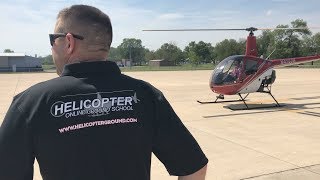
A webinar-style YouTube video (Sep 29, 2018) where Kenny Keller (Helicopter Online Ground School) and Gary Cleveland (chief pilot) walk through top tips to ease overwhelm before a private pilot helicopter checkride. Key advice: start document and chart prep three weeks early; use the PTS (or ACS when it replaces PTS) as the study guide; keep logbooks totaled, signed, and properly endorsed; verify aircraft maintenance logs and equipment lists; know IACRA login details; arrive an hour early and lay documents out; rehearse via repetition; answer oral questions concisely ("like you're in court"). The video also promotes the Helicopter Online Ground School private pilot course (about 120 videos, ~18 hours, practice tests, FAA WINGS credit), with a special 7-day free trial and monthly subscription (~$49/month).
Chapters
Hello. Welcome to Top 10 Checkride Tips. I'm Kenny Keller, the creator of Helicopter.
Online Ground School, and I'm chief pilot Gary Cleveland.
So today we're going to go over some checkride tips for you based on our Amazon number one bestseller top 10 checkride tips, authored by me and Taz Chrisman, who is 2018 flight instructor of the year. So we're going to kind of go through some of these tips. And even though they're basic, these the tips to help you get through the checkride. Of course, there's a lot of things that you got to know, there's a lot of things that you have to learn. And we understand the overwhelm. Right. I failed my first private pilot checkride many years ago and that's why I created Helicopter Airline Ground School, because I know how tough it is to study on your own, learn all the information that there is to know and go in and take the test. So don't overlook these and go, oh, that just sounds easy. It's because these simple little easy things that mess people up. Where are we starting out, Gary?
Well, let's just start out with tip number one. Start three weeks in advance like you taught me back when you were training me. Start looking at your documents three weeks in advance. And it actually caught a problem with my medical. Get out your driver's license. Make sure the photo ID that you're going to pose with, your student pilot certificate not expired. Make sure that your medical is legible. That's the problem I had going to my commercial checkride, pulled out my valid medical that was within date range, but you could not read the date on it anymore. It had been in and out of the pocket too much. And so at the last minute, we're cramming to get another medical sent to us from the faa. So three weeks in advance, start getting things in order. Current charts, current chart supplement. Make sure you have everything that you want to take with you on your checkride. Your FAR AIM helicopter flying handbook, PTS E6B plotter. If you have an iPad, make sure that your account with foreflight is updated so you can get the latest charts and chart supplements downloaded on there. That has to all be updated if you're going to go digital three weeks in advance. I can't stress enough has saved so many checkrides. Start preparing early.
Well, that's a lot of the problem that we have. A lot of our members come to us from around the country to come here to finish checkrides because they have a lot of trouble, you know, you're kind of preparing for that checkride all the way through your training from day one up until that day. But when we say three weeks, we mean literally three weeks getting everything that Gary mentioned, you know, the charts and anything that you're going to need that's listed in the pts, which we'll get to in a little bit about the pts. But start getting that stuff three weeks ahead of time because we see it time and time and time again. The night before you told a student to get something and here you are and they're going, oh, I don't have this, I don't have that. And you're rushing around trying to find something and there's nothing worse the day before than trying to find that one stupid little piece that you should have had three weeks ago.
Not only that, make sure that you have your username and password for Iacra and have it written down right in the front of your logbook. So that way you get to the checkride. The first thing the examiner is going to have you do is log into Iacra. And so why not three weeks ahead of time, make sure that you know your username and password to get into Iacra. So that way you start that check right off. Right?
Sure. And the next we're going to go to is prepare with the pts. Okay. The practical test center is what we've been using for years. And as the making of this video, the ACS is what the PTS is going to change to. That's going to happen sometime in the future. But every time we talk to someone in the know from the faa, they say we're a ways away yet. So even though in the fixed wing world maybe you're already a fixed wing pilot and you're doing the helicopter add on, as of the time of making this video, we are still using the PTS for helicopters. Fixed wing is with acs, helicopters with pts. It's going to switch to the ACS sometime in the near future. But again they say every time we ask them. So using the pts, and I keep picking up this book, this isn't the PTS, but it's about the size of the PTS, about the thickness of a PTS. It's a $6 book. You can get it online. You can download the PDF for free from the FAA website, right? Yeah, you can go to the FAA website, faa.gov and you can download the free PDF. Whether you download it for free or whether you order your own copy, your instructor should be working through that PTS with you. You should have your own Copy of the pts. It's very common that people, especially these people that come here from around the country, they've either been working on rating anywhere from six months up to over 20 years and they'll come in and a lot of them don't even have a pts, never used a pts, or they pull it out and it's all nice and shiny, no pages bent, no dings or scratches and you know, they're not using it. I met a 40 year examiner a while back and he asked me what I did for a living. I told him about helicopter online ground school and we based our training on the pts and he was like, wow. Finally, you know, he told me a story about a guy who showed up for a CFI checkride and he didn't have a pts, had never used it and the examiner almost didn't give him the checkride and the guy begged and begged and he finally let him take the test. But he said he's seen it over and over and over through the years. People don't want to use the pts. It's the checkride laid out in front of you. It tells you what's going to be covered during the test, the subject areas you're going to have to know. One time I had a student argue and say, well, not everything's in, not every bit of information know. There's a lot of books that contain all the information you have to know. But the PTS is the guideline hitting every subject area. When you go through that pts, if you don't know a certain section or a certain area, if you're not 100%, you know you got some more studying to do.
Excellent.
So let's keep it moving. That is the checkride. It is the checkride. The PTS is the checkride. So if you're not using it, you need to be. If it's changed to the acs, that's what you should be using. But at the time, again, at this time it's still the PTS and still will be. We're in 2018 now, 2018, so it's probably going to be 2019 or 2020 is my guess before you'll actually see the ACs out for helicopters.
So tip number three, we'll move on to tip number three. Make sure that your pages in your pilot logbook are totaled, make sure that they're signed and make sure that you can quickly point out the aeronautical experience flights that are needed for the rating in your pilot log book. Don't wait till your checkride to do this. Have it Ahead of time. Tab it if you want. The examiner is going to pick out a few things from part 61 and he is going to ask you show me your long cross country. And you should be able to flip to that pretty quick. He's not going to want to sit there while you flip through your logbook trying to find it. He's going to want to see your total time all added up. A lot of pilots don't add up their time in their logbook. Sometimes they skip signing each page. And these are important things.
Yeah. And I want to add a little bit to that with a great example. There's a guy named Jamie that came up here from Texas and pretty orange R44, he's in some of our videos. And Jamie came here with four years working on a rating, 200 hours, eight different instructors, and we spent one day going through his logbook. His logbook was a mess and we had to go back through and figure out what was covered with the right signatures, the right endorsements, because a lot of these instructors sign things off, but they sign them off for the wrong date. And all, all the different problems you could have with a log book. He had every one of them. The endorsements is huge. If you don't have the proper endorsement, you can't take the check ride. So we get these examples all the time. And a lot of people that come here, we find problems with the log books. Even when they come in and say, oh, everything is done, I just need prep work. We'll always find something in that logbook that endorsements not correctly filled out. Cross country was supposed to be two hours and theirs was 1.8. Boom. They got to go out and do another two hour cross country. So what do we have coming up next?
Gary, tip number four, the aircraft maintenance logbooks and equipment lists.
Yeah, and I have a story for that one right off the bat on my failure on my first checkride during my private pilot training, every time we went to talk about the maintenance log books, the instructor would say, oh, well, the mechanic's not here and they're locked up. Well, checkride comes around. I'd never seen the maintenance logbooks. And one of the first things this examiner asked, I'm taking it with the faa, when the first thing he asked me is, oh, pull out the log books and show me the 100 hour inspection. Well, I'd never seen the logbook before. It was an older aircraft with lots of entries and I look really dumb as I'm going page to page trying to find the hundred Hour inspection and the FAA guys huffing and puffing and writing stuff down. It's making me nervous and making me sweat and blowing my confidence. And I finally say, honestly sir, I've never even seen this book before. And he's like, well, do the best you can. Well, that was the very beginning of the checkride and the checkride went downhill after that. So the very number one thing that started my checkride downhi was the fact that I hadn't seen the log books. We got them that day and I had to leaf through them. You know, like an examiner doesn't want to watch you leaf page to page trying to find an endorsement. He wants you to know where that is. And the other real world problem we have, I worked at a flight school where every time a checkride came up, they were at the maintenance shop. And that maintenance shop was over an hour away. So the night before, somebody's always tearing down south to go get the log books to get them back for the checkride. So don't overlook the log books, don't overlook all the things that go in the logbook. You got to know whether you have an MEL or MMEL for your aircraft, need to know where the equipment list is. All these things your instructor should go with you, go through with you. And we also cover those things with you inside helicopter, airline, ground school. All right, what we got next?
Every student, first thing they do, examiner says, show me the annual on this aircraft, show me the 100 hour on this aircraft. Show me that the transponder and altimeter is. It's all about first impressions. Just like you just alluded to. A lot of what we're talking about today is going to be first impressions.
Exactly. If you start the checkride off on a bad note, most likely it's probably going to continue down that path for the whole stinking check ride. It's just like setting up a normal approach. If you set it up nice, it'll be nice. If you set up for a good hoverado, set up nice, it's going to be nice. Otherwise, if you start sloppy, it's going to be sloppy. Your checkride is going to be the same way. You got to start this thing out with all these tips that we're giving you. And if you go through all these top 10 tips and you really feel good and you've covered everything, chances are you're going to start that checkride out on a really, really, really good note. Alright, what we got next?
Well, you know, we haven't covered everything that you're going to find in your log books for the examiner. But what today is about is just putting you at ease, putting you at ease with a few tips. You know, get the book, read the book and you'll know a little bit more about how the checkride is going to go. Cement your knowledge. Make sure that your knowledge is cemented. Don't go to your checkride until you feel like you're ready for your checkride. Be able to look things up, be able to rattle off helicopter emergency procedures. And the way you cement your knowledge is through repetition. We learn through repetition. And that's why Kenny created Helicopter Online Ground School. Because you can watch the videos as many times as you want. That's the beauty of it. When I went to my checkride, I bet I watched every video in Helicopter Online Ground School five times to prepare for my commercial and CFI checkride private checkride. I had the luxury of one on one with Kenny Keller through his notebook and he was building Helicopter Online Ground School. But the beauty of it is with the online video course, I don't care if you're running on the treadmill or you can even be cooking supper with the iPad on the counter next to you, quite literally. And you can watch these videos over and over until the repetition has done its job and your knowledge is cemented well.
And we'll go back to Jamie's scenario again, who I just mentioned with the orange R44. Jamie went through helicopter land ground school over and over and over again before he got here. And all the trouble he had. We had him done here in about nine days. And he told me at the end, he goes, man, if I was you, you should make anybody wants to come here and fly with you, you should make, tell them they have to be a ground school member and make them go through the videos. And so we implemented that after Jamie was here, he's like, as a businessman, I'm telling you everything that's in the course is what you told me when I got here. And because he went through, he said every video at least twice, some videos even more, more on the things that he had trouble remembering. So repetition, whether you're studying a book, whether you're doing it on your own, if you want to do the whole entire study, you can on your own. If you want to do and read every book and go over and over and over, you can, you can use whatever form of study material you want. But if you want help with this overwhelming mound of books, a lot of people don't want to read and study on their own anymore. That's why we built helicopter online ground school. And we walk you through step by step for all the private commercial CFI and instrument ratings.
So do you want to have Heather go ahead and put the link in for the new offer?
Sure. Heather will put a link up here in the box where we've created an offer that's just special for this webinar. Today you can try out the private pilot monthly membership for seven days. We're calling it a seven day test flight. Sign up and you will not be billed for seven days. You have seven days to take your time, check out the private pilot course, see if it's right for you, and if you want to continue on, do nothing, keep the training and you get billed monthly. As a monthly membership. You can cancel anytime. But if you decide, hey, this isn't right for me, it's not what I was looking for, or the timing isn't right for me, you just remove your credit card before the end of the seven days and you'll be billed nothing. And if you have any trouble with that, you can always contact us Gary as our full time member support. You can contact Gary with any question on membership or any other matter, but he can take care of you if you have trouble with that. And you can contact Gary at 574-767-1797. You can also email garyaryelcopterground.com and you can text that customer service number too and he'll take care of you.
I can tell you a question right now that's going to be at the top of everybody's mind. I might be considering the seven day test flight. So for free I can watch all of your videos or am I going to be limited to partial videos or part of the course?
No, and this is something that we're proud of is the seven day free trial. You can watch the whole entire course. There are a lot of other courses out there from our competitors. Oh, here we give you a sample lesson. Here you can watch video number one or one through five out of 50 or whatever. You can view the entire course for seven days, no charge. And then if it's not right for you, we part as friends. You're always welcome to come back later. We have people who have refunded and then come back and purchased, you know, they purchased one of our bigger packages. We have a 30 day money back guarantee on all of our products and services which is 30 day, no hassle, money back guarantee. We never have a problem with the refund as Long as within the 30 days and the seven days, it's the whole entire course. It's the whole entire private pilot membership. How many videos? 100.
Oh, you put me on the spot here.
But 120 videos, 18 hours of training, I can't remember. We have a whole inventory list on our checkout page that you can see the whole entire.
Well, I could tell you this, and it was just earlier today that Kenny mentioned that he was going to do this seven day free trial. And we talked about it a minute, we said, wait a minute. People could watch the entire course in seven days and then pull their credit card and pay nothing.
Sure.
But back to the repetition. Repetition cements your knowledge. Once you watch every video, you can cram it in seven days, but you're going to want to keep it. You're going to want to watch these videos again. A few days for your checkride, a few days before your written test, you're going to want to go back and revisit the video on settling with power when you have a lesson coming up with your flight instructor, that type of thing. So on to tip number six.
We have a whole wall full of member success stories over here that maybe we'll throw a clip of that picture in, of that wall. Private commercial, CFI instrument. But the private pilot is the one you got to get through first. So that's why we're giving you the special on the private pilot monthly membership that's in the box. So number six, be an hour early. This one sounds simple, but I'm telling you, if you get there an hour early. When I say get there an hour early, I don't mean landing an hour early. I mean you're there, the aircraft's there, you have all your stuff and you are in the room with everything laid out nice and neat one hour before then you've got time to, oh, I need to make that phone call. Or I got to call home because I left the stove on. Or, you know, you got a chance to breathe, have a cup of coffee, have a bottle of water, whatever it is. If your instructor is with you, you can sit and talk over some things to try to calm down. In 20 years of doing checkrides, I've had three failures with my students. One was the very first one, my first student ever, 20 years ago, and there's only been two others. And I can tell you we are always, always, always on time. There was one time that we weren't. There was one time we landed that when we were supposed to be there, a Few minutes after, and this gentleman passed. Well, it's Chris, Chris Hauser, one of our instructors that you'll see online ground school. We got there a little bit late, and the checkride started off kind of on a bad note because we got there late and he was having trouble at home and, you know, arguing with the wife and maybe some other things going on at home. On his commercial checkride, he almost failed the private. He smoked because we were there early, everything was ready, he was feeling good, we were ready to go. Commercial checkride, totally different. And I'm telling you, the fact that we didn't get there on time was absolutely part of it, because I've always made sure that we're an hour early. And back when I was a new instructor, I asked examiner, I said, so what is it? Tell me as a new instructor, give me some tips. And all he said is, make sure your students have what they need and make sure they're on time. That was it. I mean, that was all he gave me. Twenty years later, I've done hundreds of checkrides with this gentleman, and he's an awesome examiner, and that's what he told me back from the beginning. So I've always made sure that we go through the pts, have everything we need, and that we get there early. I'm telling you, it is one of the biggest things I think it's just, to me, it's to be there early, have everything ready to go. That gives you last minute, you know, quick, we got to sign this endorsement, or you find that last little thing you're trying to take care of, you have a little bit of leeway time instead of screwing around in front of the examiner and having things all messed.
Up, which takes us to tip number seven. It's kind of hand in hand. Get there early, and when the examiner comes walking in, have your documents all laid out. Have your PTs out there, your FAR aim, your helicopter flying handbook, your E6B, your plotter. Have your log book there, because he's going to want to look in that right away. Have your identification. If you have a certificate, have it there. If you're operating as a private pilot, have your private pilot certificate there. Your medical. Have everything laid out to where he can see that you're prepared. It's right back to square one. First impressions count big.
Yeah. And when we say that, that means literally, look organized, play the part, be dress decent that day. You don't have to wear a certain tie. But if you look good, you feel good, books stacked up nice and neat. Over here, everything that you're going to need in a pile, maybe smallest to biggest, a folder with all the necessary paperwork. Even though there's only a few things missing, that one piece of paperwork, something slides out, oh, you forgot it. My medical is not in my wallet. I left it on the table at home. Before you leave, have everything in one folder. So every piece of document, everything you need is all in one folder. So you got all your books stacked up nice, got a folder with all your documents in it that's all ready to go the night before or several days before. We like to not fly or do any ground the day before if possible because towards the end of that, the last day before the checkride is always the worst somebody does flying wise and it's always the worst they do on the ground. We say relax, stay at home, do a few minute last a little bit of last minute studying. But the earlier you can be ready, the better off you're going to be.
I'm telling you, one little tidbit on that lay all your documents out is an excellent checkride tip. Do you want to be the guy with nothing but an iPad on the table?
Table?
I'll leave that question in your head. I've seen it done and you can. Most examiners now will let you have everything in digital form on your iPad, but I think it leaves a big question in his head. I'd rather see my student have all these documents laid out to where he knows you've had your nose in the far aim. You've had your nose in the helicopter flying Handbook and the pts, not just trust that you must have it all on this iPad.
Yeah, that's another good one. I mean check with your local examiner. Your instructor should check with the examiner. Gary's right. More and more examiners are allowing electronic devices. You need to get a hold of the examiner ahead of time, make sure you know what is approved. And we personally say if you want to use electronic, great, have the paper backups. You know, in this day and age, people don't want to have paper. But you know what? Having the paper document backup is never going to hurt you. It's never going to hurt you. So it's just a great, great, great tip.
If you have your aeronautical charts on digital only, he's going to want to know what your backup is. I've seen it with one of the students this year and that student, his backup was the same program was on his phone. So there you have it. Take it for what it's worth.
All right, next One we want to cover is know that the checkride is hype. Okay? When I say that doesn't mean it's easy. But if you prepare properly and you're working with a decent instructor or a good instructor and you're studying, whether you're studying on your own or on your own and with your instructor or if you're using our helicopter online ground school, being prepared and being ready to go is what it's all about. It's not as bad as everybody makes it out to be, right? There's so much hype about it because that's all people talk about. And you hear the horror stories just like mine where I failed. Well, why did I fail? I failed because I wasn't prepared. We failed in the logbook issue. And then there were some other areas where I wasn't solid in the ground. Knowledge is what I should have been. Well, I can guarantee you it didn't happen when I went back a second time, I aced a second time. And he said, well, what changed? And I said, I studied my butt off because I was not going to fail again. And I aced it. And it was easy only because I put the effort in. So I kind of, I compared in top 10 checkride tips in the book that we're giving you. By the way, if we haven't put the PDF link in there, we will. When I went to the police academy, they had our minds blown on, oh, you know, and every other cops like, oh, wait till you go to the academy. Oh, it's so horrible. And oh, they're gonna kick your, you know, rear end and you get down there and it's tough and it's not easy. But you know what, once you're through it, you go. That wasn't anywhere near as bad as what the hype was getting prepared for that. And I found the private pilot rating was the same same way because of that hype. And everybody had me freaked out and worried and you know, that pressure on top of it. But that again, that was going unprepared, going back prepared. The checkride was easy, but I put the time and that work in. So when I say, or we say, it's all hype, it's hype because you hear the horror stories, people get you upset, people get you scared, you hear all these bad things. Well, you know what, if you go prepared, you'll be just fine. You'll get the first time around and it's not going to be a big deal. So there is a lot of hype around it Just because it's you going to sit in front or sit across from a guy who knows all the answers and he's asking you questions and you got to make, you know, satisfy him. That's intimidating, but again, that's hype. He's just going to go through the pts and make sure you have the knowledge you need. He wants to make sure you're going to be a safe and prudent pilot. That's it. He's not there to trip you up, he's not there to fail you. He's there to help you. So again, back to helicopter land ground school. We do have private commercial instrument and certified flight instructor courses. Gary, tell them about all the things you've done the last year as far as what you've added to our courses that were already in place, but you've added quite a bit in the last year. Oh yeah.
Where do we start? We just decided that we wanted to be FAA approved. So we started digging in and actually got a hold of FAA safety and they reviewed our courses and every course that we have was looked at and approved and now actually appears on the FAA safety website as online courses. And you can get credits towards your wings phase just by taking one of our courses. Part of this was installing tests at the end of each course. We had to have a reporting measure for the faa. So at the completion of the private pilot course, for example, there will be one test that says for FAA wings credit. When you take that test and you pass with 70% or better, it will automatically shoot the results to the FAA and they will give you your phase credit for wings having added on the testing feature. We went crazy with that and thought, why not add some extra questions, some extra tests that are not necessarily for wings questions that will help you on your FAA knowledge test, your written test. So we've just added a lot in the past year, mainly getting accredited as FAA online courses. And Kenny and I are both FAA safety representatives as well.
And you did the actual written test, you did those before the FAA wings was put into place. So you developed actual practice test with questions that are the same questions as the FAA written test, correct?
Yes. You'll see exact questions that come from the FAA knowledge test on our practice test at the end of the course.
So that's just some of the things we've done in the past year. We just keep, we've been online now almost seven years, loads of happy customers around the world, 30 day money back guarantee on all of our courses. And again, we're going to mention Today because you've attended this webinar, this offer for the 7 day free trial that's not available to the public online, you get one day free trial. We call it the 24 hour test flight where you can go in and view the training for a day. Because you've attended this webinar, if you go to that link right now, click on that link, you can sign up 7 days, check out the private pilot course, and if on the 6th day at the 23rd hour, you decide it wasn't right for you, remove your credit card, you will be billed. Nothing. We parted as friends. You're always welcome to come back anytime. Alright, so in respect of your time, let's finish up with a few more tips here. What do we got next, Gary?
Well, I guess I'll cover tip number nine.
There you go.
Answer like you're in court.
This is a good one for you. 24 year police officer, retired before he came to work here at helicopter Lane ground school. So coming from somebody with 24 years in law enforcement experience, check out his tip.
Well, maybe some people don't know what answer like you and like you're in court means because maybe they've never been in court. But in court you answer the question and you stop and that's it. And you think about your answers before you utter them. So when the examiner asks you a question, take a minute to think about it. It's not a speed contest. You think about the answer, you tell them the answer and you tell them just the answer. You don't elaborate. There's no need to, you know, move from what is retreating blade stall into gyroscopic precession. Just stop with tone. And what retreating blade blade stall is, for example, where the retreating blade has exceeded the critical angle of attack and there's no need then to, for example, proceed into. And it will cause the nose to pitch up and it will cause the aircraft to lean to the retreating side. And you know, we could talk about all the helicopter emergencies or aerodynamics issues along the same line. Just answer the question.
Yeah, and I originally talked about that because I felt the same way. That was the same thing I learned early on. I became a police officer in my early 20s. And you know, with check rides it's very common that people will want to, in the heat of the moment, they're nervous and they just start blurting out everything they know, you know, and it's so hard for people because they, they study hard, they apply themselves. So you have to sit there and remember, keep it short Keep it to the point because the tendency is you're going to want to just start blurting stuff out and the examiner is going to run you in a hole. Guaranteed every single time he's going to run you in the hole. So to touch on the checkride failure just a little bit more, you know, back years ago when I did, my private pilot should have studied harder. The first instructor I flew with, he was a great instructor. We're still friends to this day. But I was his first student and a lot of times the first student an instructor will send for a checkride, it's very common for them to fail. So I was this instructor's first student. I could have applied myself harder. I was always ready to fly. I knew I was a studying quite as much as what I should have, but he thought I could get through it. And so the hype got to me. Not knowing the stuff just is ironclad, you know, cemented in my brain. I didn't have it just. I just didn't have it down. So that's why I failed. And I can remember back in my days driving, I would drive two hours, one way to a lesson, do a lesson, drive back home, spend a lot of money, a lot of time on the road. And I was always like, man, I wish there was something I could like listen to in the car or, you know, DVDs I could watch at home. But there was only fixed wing stuff out there. That was it. I did use some fixed wing training for my instrument rating later in the helicopter and just kind of adapted it over. But there was just. The helicopter industry just always overlooked helicopters. Nobody ever put the time and effort into building a course. So after I became an instructor, I started using my notebook. And after my first failure, the way that I got through it the second time, I didn't have an online ground school to purchase. I couldn't go anywhere. There was nobody that sold anything. So I thought, you know what to get through this. I sat down and I created a notebook, went to the drugstore, bought a brand new notebook. And I had scattered notes from all over the place. So I took every note I had and started with the things that I had trouble remembering. And I started putting those in my notebook and arranged them in a way that made sense to me. And then I would just. It was a big thick notebook with a lot of information. I would just sit down because I wanted one place to study. And I'd go over it and over it and over it and over it. Repetition, you learn through repetition. So I go over and over it, study the heck out of this thing. I go back, smoke the checkride, use the same method. Three through the rest of my training. Once I became a cfi, my last test before sending somebody for a checkride was just go through my notebook. I'd open it up and just ask them a page or a question from every page. If they could answer everything correctly, I knew they were going to be in good shape for the checkride. People used to joke and say you should start your own training manual. Well, it was a joke 20 years ago and eventually that's what I ended up doing. And I first started online ground school based on my notebook, just as kind of checkride prep. But our members took it way beyond what I ever designed it for. And in seven years we've improved it, we've added and now the training follows the pts. So we teach you everything you need to know. We go over it and over it. We help you with the written test, we help you with tips for the oral test and we even have flying videos that we're going to be adding to and updating those moving forward. We got another new aircraft coming in that we just heard about, we're excited about, but we'll give more details about that later. So we encourage you to try out the seven day trial on the private pilot membership. That link again is over in the box. You can click on that. We'll have a link there also for the PDF download for top 10 checkride tips. And we want to put a shout out to Taz Christman 2018 flight structure the year. Taz is in our instrument training videos. He did a lot of the instrument training videos along with Tan and Austin. And Taz won 2018 Flight Instructor of the Year. And there's a chapter, a bonus section in here that you'll love. Taz went out and he talked to examiners in his area in the Las Vegas area and said as of now, currently, what do you see going on? What are the problems that you see with checkride? So we've added that to the book. Top 10 checkride tips. The feedback he got from examiners on why people fail, what trips them up at checkride. So that's in the book as well. So again, free PDF, it is available on Amazon. You can grab the digital copy for 99 cents or the buy the paperback copy. I think it's four or five bucks for the paperback, but you can download that, click the link in the chat box. You can download that PDF for free. And again we encourage you to sign up for the seven day private pilot test flight. Go in, check out the training, view the whole thing as far as we care. We're confident, confident in our training. We have enough testimonials from around the world. We know the value of the training and it's priced awesome. At $49 a month, you can keep it as long as you want. You can keep it for one month, you can keep it for six months. You can sign out or you can. How do you want to say it? You can remove your credit card and come back six months from now if you want to. Some people do that will say, hey, I'm going to leave for now, I just broke my ankle, I'm not in flight training. I want to save that money. But thank you for the training, you know, I'll be back. And we're like, you're welcome back anytime. Same way with the few refunds we've had, we don't have a bunch of them but we've actually had people refund and I've done a couple videos on this subject. We've had people that refunded, went and failed their checkride. The guy emails me and goes, kenny, my instructor told me to get rid of ground school because I didn't need it. And then I failed and I don't want to fail again. I want the training. I'm like, sure, sign back up, no problem. Goes on, passes his checkride and. And he was a happy camper. Anything you want to add there, Gary?
Well, the bonus tips in the book are worth your free download to look at. So Heather's put the download in the chat box for the top 10 checkride tips. Take time to look at it. There's some pretty helpful tips in there that we didn't have time to cover today. Wanted to keep this as short as possible and just to let you know what we have to offer you so that your checkride can go smoothly and you can be more calm going into it. Take Kenny up on this first ever seven day free trial. You could literally watch the entire course if you applied yourself in that seven days and cancel if you wanted to. But odds are you're going to want to keep it and you're going to want to watch it again and again. So that way you have the confidence when you go to your checkride to be calm and know that you can slam dunk the checkride.
Awesome. Any questions about helicopter, airline, ground school, we'll try to answer them before we go here. We'll leave this roll for a few minutes afterwards and answer some more questions in the chat box. But take us up on that free trial, grab the free PDF copy of the book and we will plan on seeing you in the next video.










