Eligible VA Benefits, Personal Loans, Scholarships with College Degree
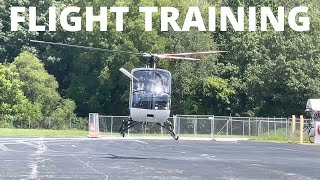
Interview (YouTube) between Kenny Keller and Todd Smith about Madisonville Community College's aviation programs. Covers the college's helicopter and airplane pilot training within an Associate of Applied Science degree, facilities (simulators, new hangar), VA eligibility and student financial aid options, community support, and the advantages of a relaxed training environment in Madisonville, Kentucky.
Chapters
All right, so Kenny with helicopter Line ground school here with Todd Smith from Madison Madisonville Community College. I'm going to get to it right here real quick with Todd. He's going to explain to you the benefits of attending a college program for helicopter flight training. I did all my ratings the years par 61. You just go to the local flight school. And that's been all my experience all along. So over the past 10 years of making videos for Hogs, we get a lot of questions about attending a College and Part 61, 141VA, a lot of things that I don't have a lot of experience with. So we can cover a lot of that today. Students here at Madisonville Community College are using hogs to supplement their classroom here. They're flight training in the Schweitzers, they're training in the Redbird simulators. They're using our training. And I was invited down here and I'm having a great time and I'm. Thank you for inviting me down here because I'm learning a ton. So I'm going to turn it right over to you and just let you give a brief description of a little bit about your background, whatever you want to share, and then go right into telling us why someone should travel down to here, to Kentucky to attend the college here to get any of their helicopter ratings. Private commercial instrument, cfi.
Fantastic. Well, thank you, Kenny. It's. It's a pleasure to have you here with us. And you're correct. Our students are using Hawkes products as. As a core for a lot of our courses and we really love the content and it's done a great job for us.
Thank you.
I appreciate that very much. It's a real. It's a real honor to have you here. The program here, Madisonville Community College, we run a Division 2 programs currently, two pilot training programs, a helicopter professional helicopter pilot training program and also a professional airplane pilot training program. Both programs operate or exist inside of an Associates of Applied Science degree. So you effectively end up with an associate's degree and all of the certifications on the helicopter side to take you through cfii.
Nice.
Yeah. Program's relatively new. We've been operating for about a year down here. I've been. Program's a little more than a year old. I've been here about a year. I am super excited to be here. The community, the state of Kentucky, the Kentucky community and Technical College system, there's so much support the region here and I think you've seen a little bit of it.
It's amazing. I'm blown away with what you have going on. It's amazing. Yeah, absolutely.
That's one of the things for me having been in this industry for a long time. I left the military in 1996, went into the civil side of helicopter maintenance and helicopter operations. And I've spent the bulk of my career on the training side of that sector. So I've seen a lot of flight schools. I've seen a lot of even flight schools inside of collegiate programs over the years. I don't think I've ever seen the level of stakeholder support that I see here in this community, in this area for. I don't think I've ever seen it like I see it here for this program.
So new hangar going up just for the helicopters. That's right.
That's right. New hangar being built right now at Madisonville Municipal Airport. Really neat airport. It's actually exist inside of the. The Madisonville city, not limits, but portfolio if you will. New hangar being built there with a brand new apron that's specific to skid helicopter operation. And we all know the difference there between tarmac and pressure reinforced concrete.
You have a decent facility now you're up and running with a really nice facility. But you're going to move and moving to an even better facility.
Absolutely.
Brand new.
Absolutely. Yep. And you know, one of the advantages for me, honestly, Kenny, is having been in the this side, the training side of the industry for so long and having been parts, you know, played a part in businesses that started small and grew and eventually grew to be really large, I have the luxury of seeing what things did we struggle with along the way. Right. As an example, it was always frustrating to see our flight instructors not having necessarily adequate space to brief pre and post brief flights almost everywhere I've worked. Yes.
In 20 some years.
Those are the type things that we really thought about when we had the opportunity to say, okay, we were going to build it. I mean, without a budget, of course, everyone always has a budget. But. But if we were going to build and we were going to build a smart. What types of things would we do? And there's a great example, plenty of.
Room for briefings just, just in this room here with these two simulators, kind of your office and the main base of the operation and classroom space over here and a whiteboard and desk and everywhere you've taken me. Lots of room, lots of space.
Yeah.
Open, good places to go sit with a student one on one. Plenty of places to go to this room, that room, whiteboards Everywhere. Yeah. So, yeah, that's very refreshing to see because my experience, typical flight school, you're at a small airport with a little spot in a hangar and a little spot over here in an office, and you're usually fighting for the conference area. Right, that's typical. That's what you normally run into.
Right, right. Yeah. We're very fortunate in that there was some space that existed that we were able to repurpose, make a little bit of investment into. And like I said before, the support from the Federal Aviation Administration from a grants perspective with some other grants, some other economic development groups, it's all come together really, really well.
Can we say the governor was just here a week ago?
Governor Bashir was here. That's correct. Just not last week, but the week prior. He was actually in Muhlenberg. When I say here. He was in Muhlenberg where our airplane, Muhlenberg county, where our airplane program is being run from. He was here for a groundbreaking ceremony, which I thought was a really neat thing for Governor to do, to take the time to make it to that event, especially knowing how full his plate has been dealing with the really unfortunate and, and tragic events that took place in Eastern Kentucky in August.
Well, most of our audience is. Well, our videos are geared towards helicopters. However, one thing that you and I've talked about is, you know, probably half the ratings I've done in 20 years have been add ons. And a lot of people that watch our videos are involved, are involved in fixed wings. So that's a nice addition for our content that you have both just like the simulator sitting here. You have six redbirds, three or four fixed wing, three set up for the Robinson R44, which I was impressed over because I didn't know opportunity to be around them. And when I walked in yesterday, I went, wow. And then when you fired it up, I'm like, wow, this is a, this is a.
They're great.
A very nice machine.
They really are. Red birds done a phenomenal job. But with, with pulling together some really neat technology to provide a really, really valuable training tool. We do have, like you said, three airplane configured Cessna 172G1000, configured Redbird MCX, and then three Redbird VTOS configured for the R44. We use them inside of our programs, the ones that are here at the, at the main campus, which is where we're at the aviation center at the, at the college campus. We use these a lot for demos, actually even we'll have the STEM groups from one of the local high schools who will request a presentation on aviation and come spend a couple hours with us. And all the students will get an opportunity to fly one or the other of the sims. Usually it's the airplane sim. To be honest with, it's a little easier for him, but it's exposing. It's one of the great things I love about this college is we have the opportunity to influence young people with respect to aviation. So it's one thing to stand in front of a group of young people and talk to them about aviation. It's another to be able to give them an experience like flying one of these great simulators.
We know from the airplane and helicopter side both there is a pilot shortage. And people want to argue and say there isn't, but there is. Okay. And did. You can bring a group of kids in here, 20 people, you're not even crowded. And I'll expose them all to aviation in a quick, safe environment where in, out, in and out, versus trying to haul everybody to an airport and put everybody in an airplane. You're right. That's a great way to introduce somebody to see if they go, wow, this is great. I want to learn more. Or they go, yeah, you know, that was cool, but not my thing.
That's right.
Very quickly. And a good way to, like you said, get the younger generation evolved because we need the new pilots coming in.
Yeah, we do. We absolutely do. I mean, and you're right about the shortage. We do have a shortage of pilots across the industry. Shortage of maintainers as well. And you think about from a perspective of where, where aviation is going, growth wise, it's only going to get worse. Yeah. And then, you know, I had this conversation with someone the other day. Traditionally when we, when about aviation, you think of traditional, right? Traditional aviation, pilot in airplanes, flying helicopters. But we know what the uav, UAS scene has looked like in the last several years. And now we're moving into all these other adjacent commercial space flight and other sectors of the aviation industry. That's going to require talent. Right.
Which plays into the reason we're sitting here. Because you told me on the phone, I said, you know, I never thought about the benefits of going to the community college. And on the phone, before I ever drove down here, you started listing why. And it was the, not just the pilot jobs, but if you, the fact of attending the college, you might be getting an airplane or helicopter rating, but it opens up those doors of other business parts of aviation, other areas you might want to move to where you need the degree, you need that training because you. Maybe the pilot's not going to be your main job. Maybe you're going to be in sales or operations of a company or whatever.
There's or something unfortunate occurs in your life and you lose a medical.
Right.
Ability to get a medical.
Right.
Right. And it can no longer fly professionally.
Sure.
So yeah, you're absolutely right there. A number of, I feel a number of advantages to obtaining your ratings, learning to fly and becoming a certificated pilot inside of a collegiate program. I want to be real clear and say also though that I have a lot of experience with non collegiate programs and they can be fantastic and produce just phenomenal pilots.
Absolutely.
But really, especially on the helicopter side, what we know is funding and financing is often the number one barrier to entry.
Every day.
Right, right.
Every day we get this. I want to do it, but I don't know how or I have VA money and I don't know how to apply that or is there any scholarships or is there any like for me what I do, it's like, oh, you have to get on Google and research.
I don't know.
I wasn't able to have a good conversation and. And that's why you're here to tell us all those benefits. Yeah.
So seeking out the pilot ratings within a degree program or at an institute of higher education, it opens up a number of options for traditional student financial aid and loans that wouldn't necessarily have been there. Going through a vocational pathway. Further to your point, with respect to veterans specifically, our programs are VA eligible. So the Veterans Administration eligible.
And this is big. And this is where I was hoping you were getting ready to go because we get those calls all the time and there's so many people that have those benefits that need to use them. And now I will be able to recommend a place to go before. Never been visited a college. And that was why I was happy to come down here and get to see firsthand the benefits. And now I have a place I can recommend and I will so touch a little more on the VA and how it works.
Yeah.
How that somebody can come here and use those benefits to get their training.
I'm always reluctant to say it'll pay for. It'll pay for because there are no guarantees.
Sure.
From a vet's perspective. And then, and then really what it comes down to is if anyone is interested in and speaking with us about the eligibility and getting an idea of how much of the program that the benefits will pay for, then contact us directly and we'll provide that information current and it's at the moment because it does change from semester to semester, sometimes based on how we've amended curriculums or what may have actually occurred. So I'm reluctant to say it'll do because that kind of dates the content of what we're talking about here.
Right. Everything's changing. There's always things that are updating.
Yeah. A large portion, very large portion of the programs, the fees, the flight labs are eligible for Veterans administration benefits. So it makes a huge difference. It really does.
The other big thing that might take away in the first 24 hours of being here is everywhere I've went aviation related over the years, whether I was working somewhere or traveling for hogs or anything I've done, usually the flight training environment, you're going to a larger city and the congestion and parking and the hecticness of the nature of where you are. My biggest takeaway from here is this city is about the size of where I'm from, so it's easy to get around, it's easy to find parking. I'm on the south end of town. It takes 10 minutes to get over here to the campus. So my takeaway in first 24 hours, not only is this a professional operation with all the benefits that we've already mentioned and there'll be more to talk about, but my first takeaway is it is so laid back here. And there's a lot of stress when you're going for flight training and if you're going to a larger city where, where parking's a problem, traffic's a problem, getting to the school's a problem.
Airspace.
Airspace. I mean, this is so laid back. And so that's my biggest takeaway in the first 24 hours is if you're looking for the laid back atmosphere, this is it. It is right here in Madisonville, Kentucky, that's for sure.
Well, I certainly take that as a compliment. I agree. Madisonville is a. It's a really quaint and nice town. The people are fantastic. Like you. Lived and spent a large portion of my career in really big cities. And when I first came up here to start interacting with the folks at the college, I was captivated. They're just good people, the community, same way. And I made some really good friends in a real short amount of time up here. So we're. They were very proud of the culture and how they welcome people and how the city operates. And now I am too, so it's great.
Well, what you said earlier when we were at the airport, you talked about all the open areas for flying And I totally got that because I did my first five years of my career, downtown Cleveland, which was great experience and it set my career. But we were downtown Cleveland every day, either over the city or over water. And after five years of that, I go back to Indiana to fly and teach. All of a sudden, oh my gosh, open spaces. I could set down anywhere if I have an engine failure or a problem. And you can always fly to the larger areas to get experience in a more sophisticated environment. But boy, for the training environment when you're trying to learn, there is a benefit to not only the laid back atmosphere of the college, but the area where you're flying, where you have open fields, open areas very conductive for learning when you're less stressed.
Yeah, agreed, completely. I mean, you know, I think back to my early days in the, in the commercial civil side of this industry, the training industry with helicopter ventures out in Northern California. And it was, you know, the dot com prior to.com time frame and the sprawl was just unbelievable. And we eventually had to leave Northern California and relocate down to Florida to get away from areas that just were not conducive to us doing helicopter training. Sure. So yeah, we're in a great spot here and to your point, lots of open space. And then we have Nashville to the south, we have Paducah to the west, we have Owensboro and Evansville, Indiana just to the north. So we're nestled in a really good spot to be able to reach busier airspace, to monitor busier airspace users.
Go get those experiences.
That's right.
And I think you'll have people that are going to come from one around, around the country are going to want to come here. I'm just saying.
Well, we hope so.
I mean it's. So you're serving that local area, you can get to those busier airports and busier areas. But also I think you're gonna see people coming from all over. Quite honestly.
It's great. Well, we hope so.
So we've talked about a whole ton of stuff and we're gonna have some stuff coming up on maintenance because from my personal experience of 20 some years, mainly dealing with small flight schools, I know what I normally see maintenance wise. I've got a lot of insight from your experience from the amount of aircraft that you've managed in the over the years, plus what you guys are doing here. And quite simply three aircraft and pretty much about every day there's a mechanic there and they're interacting on a daily basis with the pilots and the students And I've got a lot of insight on better ways on the maintenance side of things that I definitely want to talk about because I've learned a ton from you. Just of our conversations in the truck, driving to the airport and you tell me about the things you've experienced, I go, wow, never thought about that before. Because as pilots, we're trained as pilots, we don't always get exposed enough to the maintenance side. So, yeah, we'll talk more about that in some upcoming videos. There'll be more to come. Any questions, put them below. We'll get them answered over time. So for anybody that comes across this video now or a month from now, how would you like them to reach out to? Madisonville Community College? Yeah.
Yeah. Thank you, Kenny. It's been again, great having you here and look forward to hopefully working on some future video projects with you. You can reach us through our website. It's Madisonville, kctcs. Excuse me. So Kilocharlie, Tango, Charlie, Sierra, Edu, Madisonville, kctcs edu. And we also have a couple of email addresses for the department here that come into generic boxes. They're harder to read off. We'll put them in the links below.
Yes, we'll get them down below the video.
Yeah. And we'd love to hear from anyone who's interested in either airplane or helicopter from a pathway perspective. And I would also like to offer up too, you know, if our program's not right for someone, if helicopter versus airplane or vice versa is not right for someone, we're here to help people find what it is that they want to do. So we always offer an unbiased, candid. Yeah, I think this is great. No, it's not. I have folks sometimes contact us and saying, okay, this is what I want to do. But here's what I have from a medical perspective. Do you think I can or do you think think I can't? And we give our candid advice. So whether you are coming or you aren't, you want to talk to us, you want to have a conversation around what's the best pathway for somebody we'd love to hear from.
Awesome. That's the way we do it at hogs too. I mean, we have our services, what we offer, and we're always willing to talk to you about it. And if it's right for you, it's right for you. If it's not, it's not. But that's part of being a business. So about any of our memberships. Go down below to learn more about Hogs memberships. We've been doing this for over 10 years. So I'll put that information down below for our direct or website to see what we offer. And then they always have. Heather, you can text or call at 574-767-1797. So thanks again and there'll be plenty more to come. I can't live how much I'm learning. Stay tuned for the next video and we'll see you in the next video.
Awesome. Thanks, Kenny.
Peace out. All right.
Yeah.
I think we did freaking amazing.










