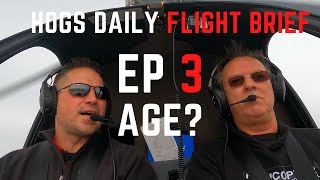
Kenny Keller and Chris argue you're never too old to learn helicopter flying, citing a 72-year-old who earned a private license and pilots flying into their 80s. Career roles like EMS require 2,000 hours minimum, mostly for insurance, so older starters need financial means and time to build hours. Flight instructor jobs typically need 300 hours, tours 500 to 700.
Questions this video answers
72 years old.
About 2,000 hours (total or helicopter time, depending on the employer).
They mentioned examples of 500–700 hours per year; the host reported getting about 450 hours in a year.
Around 300 hours.
About 500–600 (or up to 700) hours.
Chapters
All right, Daily flight brief number three. Am I too old? Am I too old? We agreed this morning, talking, you know, Chris mentioned somebody that was 59 that sent him a question. I get a lot of people, all ages, but lately seems like a lot of 52, 54. And I want to start off with saying we've had a ton of people in the last year or two getting their ratings in their 50s, in their 60s, and we even had a guy got his private in a jet ranger at 72. Okay. He's flying for fun and flying his own aircraft. So back to Am I too old to learn to fly? I don't think you're ever too old. I mean, if you could climb in the aircraft, there's people flying into their 80s and probably even 90s. I mean, as long as you keep your faculties together, I think a person can learn at any age. Okay, but what Chris brought up earlier today was, you know, for a career, when is it too old to do it for a career? Give us your opinion, Chris. What do you think? What's a good answer?
Well, again, I am never going to crush someone's dream. Okay, if you. If you're 80 years old and you think you are up to trying to get a career in flying, then I'm not going to tell you. No, me either. But there are some, you know, there are some criteria, there are some factors that go into that. You know, just know that if you're 60 and you want to go fly EMS as a second career and you have zero time, you know, most EMS jobs, they want you to have 2000 hours of total time or helicopter time, depending on the outfit. You know, so just think, if you're 60, how long is it going to take you to get 2000 hours of helicopter time?
Exactly.
You know, we were talking earlier about that, too. There's only really two ways you do it. Either a military career in flying or you become an instructor and you build and you go to a busy flight school where you can get 5, 6, 700 hours a year instructing. And then, yeah, then you. Then you can do it. But if you're like me, who had it, you know, I was only doing it part time. You know, I was before I started flying full time. I was only getting about 100 hours a year. I mean, think how long that's going to take to get 2000 hours exactly once I started flying full time. And, you know, I would say that sweet aviation is. I mean, we're not the busiest, but we're steady with the helicopters. You know, now I'm getting 450. I think last year I got 450 hours of flight time.
Sure. And that's pretty good.
And that's, I would think that's average.
That's not bad.
So, I mean, let's just say that I got 500 as an instructor. It's going to take me at least four years to get that 2,000 hours.
Yep.
So, you know, if you are an older person, in your 60s, 65, and you still want a career in an EMS or commercial flying, you know, just realize you can do it, but you're gonna have to figure out how you're gonna get those, those hours to give, be eligible for that. Because some people I think, also think, well, once they get their commercial rating, oh, then I'll apply for that EMS job or that power line job. And that's not the case. Once you get that commercial rating, it just means that now you can fly and get paid to fly. You're gonna have to build those hours, those requirements that the companies want and that all. It doesn't come back to flying ability, it comes back to insurance. And that's, that could be a whole other session. But yep, insurance runs it. And it's because of insurance reasons that you got to have so many hours for that.
Right? Sure. And using, you know, you're using your example of someone that's 60. When I was flying EMS, I know there were guys in their 70 still flying EMS, but say you started at 60, if you had the money to financially just go fly like a madman and you could go fly a job like in Alaska where you get like, you know, an ungodly amount of numbers in a year.
Right.
It is feasible. Correct. It's feasible for someone to do it. But I think, and it's sad to say, but unfortunately it's money. You know, if you have the money in the bank, let's, let's use the example of you're financially secure and you can afford to just go wherever you need to go to fly, build a bunch of time and that's all you got to worry about. It would be feasible. But if you're later in life and you don't have much in the bank, it's not going to be a very profitable thing for you because it takes time to start making decent money. So again, we don't want to shoot anybody's dream. I always tell people, if you're even thinking about it, go take some lessons and at least get to private.
Right.
You might change your mind about whether you Want to go try to do it as a career. Maybe you get to private and go, you know what, I don't care about doing it for a career. I just want to go fly for fun.
And that's a good point is, you know, you're never too old to get that private rating.
Exactly.
Fly for fun, fly with your family, fly just for the heck of it. And I guess I should mention too, there is a third option. You know, I mentioned military or cfi. The third option is, yeah, buy your own and then you can fly it eight hours a day for the next six months or whatever and build all that time. But that's, you know, that's for another topic and we're going to talk about ownership later. But, but that is another way. But you know, just expect that you, you know, you're gonna have to build the time, you know, so if you're later on life thinking about a, you know, you hate your current job, you want a second career, you have, and you always thought EMS looked cool, just realize you could do it. But it's gonna be a long road. You gotta, you know, where there's a, well, there's a way. Right? So, you know, just know that you're gonna have some hurdles and maybe the.
EMS is a stretch, but maybe, let's say you start at 60, you get to do your private, do your commercial and you can get away to build a little time. Maybe you get a job actually helping somebody fly some rides at a fair or something like that too.
And then where you can go fly.
Have fun and be happy that you're out flying because it's a great deal whether you're, let's face it, whether you're flying a six million dollar aircraft or $100,000 aircraft, helicopter flying is fine.
Correct?
Correct. So you can still enjoy, have fun regardless of what aircraft you're flying, hands down.
And don't get me wrong There, you know, 2,000 hours is for the EMS. You, you can get a flight instructor job at 300 hours. You could probably fly tours at, you know, five or 600 hours. You know, there is different, there are stepping stones there. But just know that if you want that EMS job, if you want that, that type of career, power line or utility work, you know, you're going to have to have at least 2,000 hours probably.
Absolutely. All right, well, hey, down below, I'm going to put a free copy of our number one Amazon bestseller Top 10 Checkride Tips, co authored by myself and 2018 Flight Instructor of the Year, Dan Taz. Chrisman free PDF down below a link for our ground school memberships. Down below. Please give us a like on the video. Subscribe the channel, click the bell and put Down Below. What else you'd like to hear us answer in our series of videos where we're answering your frequently asked questions every day. So click that link and we'll see you next video. All right, that's a good one. We're on a roll.
Yeah, we are.
We're doing good. That was a good one. All right, we're just going to keep rolling.