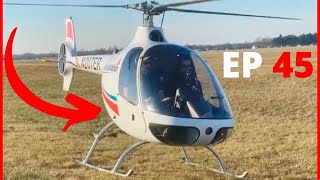
Randy Sharkey, a Designated Pilot Examiner, explains what pilots must memorize for checkrides: emergency actions and immediate failures at low altitude, not trivia. At 500 feet there is no time for a checklist. Know your systems cold, not rivet counts.
Chapters
Okay, keep rolling. Let's do it. All right. Welcome back to HOGS daily Flight Brief. We're going to get right into it with Designated Pilot Examiner Randy Sharkey with sweet helicopters. Randy, give us your next top ten checkride. Pet peeve, Kenny. Chris. Welcome aboard the H130 today as we cruise along here in northern Indiana. So we are on number five. And I. I really feel that this is an important one as well. And it is. Knowing your equipment is essential. Basically, just know your helicopter. I've had a lot of cases where guys and gals have shown up and they've had to change helicopters at the last moment. Maybe it is as simple as changing from the same make and the model just a different year, all the way from an experimental to where they have had to go from their own aircraft, because I can't do experimental aircraft, to where they've had to learn the instrument real quick or they've had to learn the gimbal real quick. You know what? I get it. And what's really important to me is that you know what each emergency light means. Unlike the guys and the gals in the jets, when they see a light, they have time to look it up in the checklist, and they follow the checklist. We as helicopter pilots down here at 500ft above the ground, if we get a light, we are not going to have time to respond and go to that checklist, go to that bullet to tell us what to do. So know what to memorize. Know what not to memorize. I don't care if you've got the oil pressure memorized. The red line is right there. Look at it. I don't care about that. What I do care about is if you experience smoke or fire in the cabin, I want you to know what the checklist says memorized. I want you to know exactly what to do and explain to me what's going to happen. So back to that tip number five. Know your aircraft is essential. And I like that. What comes to mind is. Comes to mind. And I lost my train of thought. Oh, when somebody says, well, what do I need to know? Anything that's going to kill you. Okay. And anything in that cockpit that you don't understand, a lot you don't know about, or anything that Randy just talked about. If you don't understand, it could kill you. If smoke's coming in, you know what to do that can kill you. Do we care how many rivets are in the tail boom? No, we don't. Nobody cares. But the specifics, especially emergencies emergencies, aerodynamics, what to do, how to notice all these problems. Absolutely. So that is a great one. Anything to add, Chris to her Hauser? No, not really. We're good. Okay. All right, we'll save time for the next one, so give us your thoughts down below. Give us a thumbs up free PDF top 10 checkride tips. Get that down below and we'll see you next video. Peace out.