FAA Issues Rotorcraft Icing Bulletin
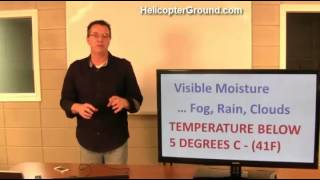
Kenny Keller (Fort Wayne Helicopters) recorded a video for his online ground school covering two customer questions: crosswind helicopter takeoffs/landings and rotorcraft icing. He demonstrates the online training platform briefly, then summarizes crosswind technique (below 50 ft align with runway; above 50 ft trim into the wind) and reviews an FAA Special Airworthiness Information Bulletin about in-flight engine power loss from ice/snow ingestion. Keller emphasizes that most rotorcraft are not approved for flight into known icing, warns that icing can occur in visible moisture below 5°C (41°F), and shares several personal EMS-related anecdotes urging conservative go/no-go decision-making.
Chapters
Hello, I'm Kenny Keller with Fort Wayne Helicopters and the creator of Helicopter Online Ground School. The content you're about to see is the content I prepared for a online class tonight. I was going to do a live class with members and then my live feed went to put at the last minute. Slow Internet tonight. So I thought, you know what, I'm just going to shoot this in a video and go over the things I was going to talk about because I can do it more effective with video anyway. And some of the questions are some basic things about that we've just changed about the online ground school and we're taking and we're answering a couple of questions from our current customers. One about crosswind takeoffs and landings and two, about helicopter icing. So first I want to show you. We get asked a lot. Does it work on an iPad? Does it work on a tablet? Does it work on my smartphone? I'm going to show you. So here we go with all of them. Laptop, iPad, iPhone, There you go. Works on iPhone, works good on the mini iPad and as I said, laptop, Android, so on, so forth. We've been bragging about how cool this is. When it comes up, you can go down here, down the list and work down the list step by step. We've numbered everything now. So when you go through the PTS, you have the 10 main sections and then each section start with section one and you go down the list. 1, 2, 3, 4, heart and soul, everything I got put into this right down the list. And so I'm going to show you here is when you're working through the pts, just click on it and then it's a drop down and you go right down the list. So there's pre flight preparation, pre flight procedures, airport and heliport operations, hovering maneuvers. Write down the list. When you want to go back, you just go to that tab and there's a drop down that comes down and you work down the list. And again when you're in each section, if you're in the first one, start here and once you're in, then over here on the left hand side, it just works right down the list. 1, 2, 3, 4, 5, 6, 7, 8, 9, 10. You just go right down the list step by step. So that's the latest. That's where we're at with our training. I'm super proud of this and I have a tutorial video for our customers. And I honestly said I don't think there's anything on the planet right now as far as an audio visual aid. All in one place. I don't think there's anything better on the planet right now. And that's just my honest opinion. I've spent a lot of time and effort building this thing, and day by day, week by week, it gets better and better. Hands down, my opinion, it's good stuff. So to the questions for the customers, the one was, what do I need to know about crosswind takeoffs and landings? Really, the main thing that you need to know about crosswind takeoffs and landings is above 50ft, trim into the wind. Below 50ft, line up with the Runway. Different helicopters have a. You'll find the POH controllability up to usually says 17 knots. Seems like about every helicopter I've flown always says hover shown in any wind. Controllability up to about 17 knots, that seems pretty common. But as far as crosswind takeoffs and landings, I mean, you want to always take off and land into the wind if you can. Crosswind is okay as long as it's within reason that it's not going to get too crazy on you. If it's a wind that you can handle, the main thing is below 50ft, stay parallel with the Runway. Above 50ft, trim into the wind. And same thing with moving, like across the ramp. So you're at the ramp and you're going to go over the Runway, you know, an angle down this taxiway, follow a parallel line. No matter what the wind's doing with wherever you're moving, always this direction, stop, turn. Because if you have an engine failure, you want to have the nose straight. You don't want to be cheating sideways. And a lot of guys will do that in a crosswind. They want to go from here to there. So they're going along and they're creeping it sideways doing this. Well, you don't want to do that because if the engine quits and you're hovering kind of sideways, boom, you hit the ground, catch your skid on something, and roll the helicopter over. So that's kind of the essence of the crosswind takeoffs and landings. If you got something else you're thinking I should have added or want to put in there, put it in the description box below. And the next I want to get to is helicopter icing. So first I want to cover the Special Airworthiness Information Bulletin, and then I want to go over a few stories regarding helicopter icing. Some things that I did or I got myself into some good choices and not some so good. So the Special Airworthiness Information Bulletin states as continued emphasis on Rotorcraft and Icing Conditions the Special Airworthiness Information Bulletin alerts you owners and operators of turbo powered rotorcraft of the possibility of in flight loss of power due to the ingestion of ice and or snow. Accumulation of ice and or snow can occur in the area of the airframe engine inlet while the rotorcraft is on the ground or in the air at this time. This airworthiness concern is not an unsafe condition that would Warrant Airworthiness Directive ad action under Title 14 of the Code of Federal Regulations 14 CFR Part 39. However, this SAIB describes procedures to reduce the probability of an engine in flight shutdown due to ice and or snow ingestion. We're revising this AIB to remind you that most helicopters are not approved or equipped for flight into icing conditions. Ground Operations we have determined that ingested ice and snow accumulation in the airframe engine inlet can cause the engine to lose power. This has resulted in accidents and fatalities. Snow and ice can build up in the engine intakes and and plenums when the rotorcraft is on the ground with the engine or engines not operating or operating at a low power setting for extended periods. When a pilot increases engine power during takeoff, the accumulated snow and or ice can separate from the airframe inlet surface ambient adjusted into the engine, resulting in decreased power or complete engine failure. Some of the early turboshaft engines with axial inlets are particularly susceptible to to loss of power due to ice and snow ingestion. Some inlet designs do not allow for easy detection of accumulated ice and or snow and may require detailed inlet inspections to determine if any accumulation has occurred. Some rotorcraft require a snow protection kit for the airframe engine inlet to successfully operate in falling and blowing snow. Operation in snow without the kit can be especially risky when hovering in snow and then transitioning to takeoff. When weather conditions clear, snow may accumulate on or in the engine inlet area during hover, then be dislodged and ingested into the engine during takeoff. Pilots should not believe that they have escaped the danger following successful hover and snow with an unprotected inlet. The flight crew should follow the published Rotorcraft Flight Manual procedures for inadvertent ice and snow encounters. If procedures do not exist, we recommend landing the aircraft as soon as possible after any hover or flight in snow or icing conditions, shutting down the engines and thoroughly inspecting the engine inlet for ice and snow accumulation prior to takeoff. Pilots should be alert for visual cues of ice accumulation on mirrors, wipers and antennas. Pilots should also be mindful of possible increased vibrations or power requirements. The degraded performance of the helicopter may be due to increased weight and possible degraded rotor performance due to accumulating ice. Now here's where I really want you to pay attention. Most rotorcraft are not approved for flight. Known icing conditions for rotorcraft not approved for icing conditions A pilot can expect icing anytime when operating in visible moisture such as rain, fog or clouds when the temperature is below 5 degrees Celsius 41 degrees Fahrenheit. That's what I really want you to pay attention to. Back to the bulletin. Pilots should be aware that icing is possible in these ambient conditions and and should be prepared to leave the area visible moisture or change to a warmer altitude as soon as possible. This warmer altitude may not always be a lower altitude. It might be you need to go up for warmer air. Could happen. So the recommendations are we highly recommend and strongly urge you to perform the Review the limitations and operations sections for the Rotorcraft Flight Manual for guidance for flight in falling and blowing snow and or icing. Many aircraft are prohibited from operating in known icing or falling and blowing snow. Perform basic airmanship and pre flight by evaluating current and predicted weather briefings from the area Flight Service station. Other resources available out there include the icing tool, Weather Arrow icing and then there's the Helicopter Emergency Medical System which I've used. That's pretty cool and that is Weather arrow, wind, weather aero hemf. When the aircraft is on the ground without the engines operating, install inlet and exhaust inserts or covers. Make sure that the Remova 4 flight streamers are clearly visible. Prior to engine start, remove the inlet exhaust inserts or covers and perform a complete intake exhaust inspection using a flashlight. The inspection should include surfaces inside the inlet, the cowl area forward and around the inlet, and the area behind the particle separator or screen. If installed, some aircraft may require fully opening the cowlings to gain access to inspect the inlet, assuring that a properly certificated person performs this task. Remove all accumulated snow or ice. They have a caution. Do not remove ice or snow by chipping or scraping using heated air or de icing fluid as appropriate accordance with the manufacturer's procedures. In freezing temperatures, pay particular attention to sheet ice on the bottom and forward of the inlet. This ice can also form behind particle separators. Engine preheating may be required if it is necessary to keep the rotorcraft on the ground for an extended period of time. Example Waiting for clear weather. You should shut down the engine or engines prior to takeoff and you should accomplish a Detailed pre flight inspection, removing any snow ice buildup. You should perform the inspection even if the rotorcraft is fitted with some form of inlet protection such as screens or baffles. So that is really good stuff. And I want to give you a few examples of things that I've seen over the years. And the first one was when I was a younger pilot, a new pilot, and we were going out on a news call and they were calling for possible icing conditions later in the day. Going back. Now, I know what I did was stupid and it was a stupid move. We got a call to go south of the city where I was flying and I'm looking at the weather going, well, the icing isn't for several hours yet. I'm thinking, you know, this is an accident. We're gonna go out, do some quick filming of the accident, and we're gonna come back in plenty of time before these icing conditions start. So we're pulling the helicopter out and the line guy who was fueling us was also a camera operator that had been flying with us for a long time. So he'd been in and around helicopters and aircraft and, you know, he knows what goes on around the airport. When we're pulling the helicopter out, he kind of looks at the sky and looks back at me and you know, I felt a sprinkler too. And he kind of looked at me and I go, yeah, I know. You know, icing isn't supposed to happen till later. You know, it's forecasted for later in the day. So hindsight being 20 20, I should have never left, you know, but being a young pilot and being kind of cocky, you know, I guess I decided I could get out there and if we got into some kind of trouble, I'd just try and come back. You know, that was my attitude. So we take off and we get flying to the south and the cloud layer starts coming down and the visibility starts coming down. And I know some rain on the window. Well, it doesn't take long before I figure out these raindrops that were moving, they stopped moving, they're not moving anymore. So pretty quickly, quickly I realized, I think this is turning to ice. So needless to say, I turned around, started heading back home. And before we get back, I can barely see out the front windshield. So we're over a big field and I make some right hand circles. I'm looking out the side window so I can get on the ground safely. And we just, we try to decide what to do. So we cleaned the window off and There was a little airport like a mile or two away, and we decided to go ahead and hop on over to that airport. We probably shouldn't have even done that, but didn't want to be stuck in a field, so I should just stayed in the field. But we made over this little airport, and the aircraft sitting ended up sitting outside for three days. So that's pretty embarrassing. You know, everybody was fine. We didn't get hurt. Nothing bad happened. But then. Then there's the embarrassment of, why did you go out anyway? You knew there was icing forecast later in the day. I didn't get in trouble. You know, the boss was cool, and he said, well, at least you landed and nobody got hurt, and, you know, everything was fine, but use your brain next time. So that was my first experience that really made me think about how you really cannot mess around with this icing. And it's pretty scary when your windshield starts icing up and all of a sudden you're going, hmm, I cannot see so well. So, you know, it happens so fast. It's just how guys get themselves into bad situations. So there's icing number one. The next story, or next thing I want to tell you is us flying a Jet Ranger and flying in Northern Ohio, and we go down to West Virginia to pick up the aircraft after some maintenance, and we waited a day or two for it to get ready, and the helicopter is done, and we're getting ready to head back, and it's snowing outside, and it wasn't heavy snow, but it was snowing, and I'm not thinking that much about it. Visibility is pretty good. And of course, I'm getting pressured from the guy I was working for, you know, calling you every 10 minutes. Are you heading back yet? Are you heading back yet? And, you know, there was a lot of pressure there. So he's paying for the motel, you know, and he's paying us to be there. And, you know, he wants his aircraft back home, which I understand that I owned an aircraft, and I know what it's like. So you want to get the aircraft back home. So the aircraft's all done. We're getting ready to go. And there's this gentleman there who had an office at this maintenance facility who used to work for Bell Helicopter. And we get talking, and, you know, I'm a new pilot and new the Jet Ranger. So he's looking outside and looking at me, and he's like, you sure you want to do this? And I'm like, well, why not? It's just a little Bit of snow. And he's going, well, do you have the snow kit? Do you have the baffle kit? And I'm saying no. So he proceeds to tell me about the snow baffle kit for the Jet Ranger and the company I worked for. They didn't have the snow kit at the time. Nobody used it. And people just went out and flew in the snow and didn't think anything about it. So this gentleman proceeds to tell me how many years he worked for Bell Helicopter and he had a really impressive resume. And he goes, you know what? He goes, I know you're feeling the pressure because I know the guy that you're working for. And you know what? He goes, I'm just going to call him myself because I don't think you should fly. And you know, once we talked about it, I said, hey, you know what, I'm going to take the advice of a pilot that's been around a long time. You know, he calls him up and tells my boss that he encourages to stay there for the night. And everything ended up okay. We went home and it was clear the next day. So then my third story. Having a couple of first hand scares, then learning a little more about the dangers of icing and exactly what this bulletin was talking about. I move into the helicopter EMS world and by this point I'm pretty respectful of the whole icing thing. And anytime the temperature is really close to freezing, I was concerned about turning down the flights because the temperature could be a little below freezing or could be a little above freezing. I think particularly gets guys in trouble when it's say around 39 degrees. Well, yeah, it's 39 degrees on the ground, but as we go up in altitude, the weather gets colder normally and the speed of the blades moving through the air makes the air colder too. So you can get icing prior to 32 degrees. So I can think of two instances specifically where I turned down a flight due to possible icing. We had light rain, it was close to freezing, and I said, nah, I'm not going to take it. I took some flack from the companies I was working for. And the interesting note is on both of those flights, later in the day, another helicopter EMS company who accepted the flight had to land in a field. One was by a landfill and one was out in the boonie somewhere. But you know, it doesn't really matter. Both of these flights, I turn down another helicopter, EMS takes them, they go out and get an icing and they gotta land. So that gave me the confidence to just be able to say, you know what, it's close to freezing. I'm not taking it, you know, know, I'm not comfortable with this. So you just have to know when to say no. And sometimes you're going to be pressured, you know, and there might be a time where it costs you your job, you know, you just never really know. So this is something you really got to spend some time thinking about, and you got to be conservative. So the last one I want to give you is in the EMS world, the last place I was working, the lead pilot, he was about my age and, you know, he'd been flying for a long time, flew in the military, and he was really sharp pilot and he was a good pilot. But there was one night where the temperature was like 36 degrees and we had light rain, and I turned down the flight. The next day, he's like, and he's a base manager, by the way. He says, oh, why'd you turn that flight down last night? And I said, well, it's like 36 degrees and the weather was in the, you know, the temperature was going to drop. And he's like, oh, there's no problem at 36 degrees. I'm like, okay, well, you know, go up three and a half degrees per thousand feet, and it gets colder. And were flying at night at least 1,000ft. AGL wasn't really sure why he was questioning me about that. So then a fellow pilot I was working with was an ex Coast Guard pilot, and I asked him about it and he said, are you crazy? 36 degrees and raining? No way. He goes, I wouldn't take it either. Not with the temperature, especially coming down. So just to kind of give you an idea that some people are brave and bold, some are conservative. The same individual I'm speaking about, you know, him and another pilot that both been there forever, they kept repeatedly going out and getting themselves into icing conditions. So, you know, I'm the guy turning on the flights and I'm Mr. Conservative and, you know, kind of upsetting everybody because I'm so conservative. But then these guys are going out, taking flights and getting icing and having to land. So, you know, what I'm getting at is icing is nothing to mess around with. Any job that you go out to, whether it's ems, flying, law enforcement, whatever, all across the board, there's always pressures put on us by the places we work and the people we work for. And then there's the pressures that, you know, we. We put on ourselves. So those are just some of my you know, first hand experiences as a young pilot being kind of stupid, you know, that first one was really stupid. The second one, I'm glad that that guy stopped and said, hey, you know, you got a long way to go to get home. So think about this bulletin. Think about the 41 degrees Fahrenheit and 5 degrees Celsius and anytime you got that visible moisture, it's always to be better on the ground wishing you were in the air than being in there wishing you were on the ground. And I can tell you that firsthand. You know, I've had some other scares along the way, so that's my spill on that. So if you, you know, be careful, make good choices, be conservative and please leave comments in the box below. Give me some feedback, let me know what you're thinking and you know, we'll get a conversation go about whatever you have on your mind. So we'll see you in the next video. Make sure you like subscribe comment. Thanks. See you later.










