First Flight Robinson R-44 Helicopter Transition
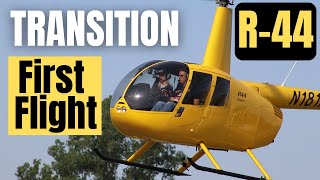
Kenny Keller coaches Zoe through her first Robinson R-44 flight after 90 hours in an R22. The video covers hovers, running landings, painfully slow takeoffs in high-density conditions, and autorotations at 70-75 knots, with multi-camera footage of the transitions and maneuvers.
Chapters
Hey, we have a full 20 minute video we're gonna play for you. You can see up above, we've got multiple camera shots. So when we took Zoe out for her R44, first flight she had at the time, about 90 hours in R22. We're gonna show you the whole video here in about 20 seconds. But we got the standard old face view. We did a over view looking down so you can see what's going on with the controls. We got a skid view and then another view from the left. We even got a couple shots from our camera guy Dylan from the outside for that nice opener. So down below you can get a free PDF download of our maneuver guide. We have the links for all of our ground school memberships. Down below website link down below phone number down below. Everything's down below. So there's freebies and sign up options. Enjoy the video of Zoe going out for her first time and experiencing all the maneuvers in the R44. How do you think the hydraulic spills to you for the first time?
It's very. It's just powerful.
How much different does it feel than the R22?
A lot.
Honestly?
Yeah. More than I was expecting.
Okay.
I didn't know if I would really notice it that much. And you can definitely notice it.
Okay.
You don't have to control near as much.
Okay.
Okay.
Maybe just do some left turns, right turns, just kind of.
Okay.
Kind of get the feel of it.
Sounds great.
Altimeter 3 ready to do a normal landing.
Sure.
We'll Descend down to 1100, but take your time, no rush. Just because when we intercept our normal approach angle, I want to be at 300 AGL, which will be 1100. So you got plenty of time.
Okay.
Because we're going to do Runway nine over there.
Okay.
And I'll make a radio call for us. You can just enjoy flying Warsaw traffic helicopter November 181, Mike Bravo extended left base for Runway nine, Warsaw. So what I want to do is have you about 70 and 1100. When we intercept, our normal approach angles down to the number nine. And then just show me a normal approach to the number nine the way you would do it on the R22.
Okay, sounds good.
This is the kind of stuff that I like to do because I've done a lot of instructing over the years. And it's more difficult for me taking brand new people. I like working with somebody who's already flying and is working on an advanced rating. Or like you go into R44, you already know how to Fly lord.
Hope so.
Yeah, well, obviously you do. And it's just, this is the kind of stuff I enjoy.
This is the fun stuff. You get to help, like make help somebody learn a new INS or a new aircraft and.
Yep. And you never know, you might come back, fly with us again later. We are 2500ft on the east side of Warsaw, northbound, just past Chapman Lake. Never be afraid to go around with me. If you.
Okay.
If you don't like an approach and you mess something up, I will. I'm always for a go around.
Go around.
Yep.
Now, do you land or do you just. Usually just hover and then take off again?
We go to a hover, so. Okay, let's go to a hover.
Okay.
And then when you're ready, why don't we do a set down? Just so.
Okay.
Yeah. Let's give you the full experience.
Okay.
Pick up, set downs. We'll run through all the maneuvers.
Perfect.
Take your time. No rush or anything at all.
It's different. I didn't think it was gonna be this different. Okay.
Like I said, take your time. No rush. Everything I teach is slow, smooth, methodical.
I like it.
Ever a need to rush anything.
Well, if I would quit moving sideways.
And you know what people forget to do? They forget to breathe in and out.
Oh, yeah.
If you're over there, that would probably help.
I'm gonna move over a little bit.
If you're not breathing over there, just go. Hey, it's okay. It's all good. Take a big deep breath. Breathe in and out. And that helps a lot of people. Hey, you're not breathing over there. Breathe in and out. Right. And he was right. Once I took a great big deep breath. Look at that. Nice job.
Yeah. After I started goofy and around.
That's all right. Hey, it's your first time with hydraulics, so when you're ready, pick us back up.
Okay.
Take your time. Clear on the left.
Clear on the right.
Once we're up to a hover, clear your tail. Right. And then. All right. And then give me when you're ready. Clear right. And give me a left. Left pedal, 360 turn.
Okay.
Nice and slow. Left pedal, left turn.
Oh, sorry. I was clearing right.
Okay.
That's what I was doing. My bad.
That's all right. And just take your time. Nice and slow. Does the tail rotor feel any different to you, or does that feel pretty normal?
I think it feels different.
Does it?
A little bit.
All right. Do you verbalize your hover pre takeoff checks?
We do not, but I will if you need me to.
Yeah.
Okay. RPM in the green. One, two, three, in the green. Carb heats out of the yellow. Ready to go.
Awesome. Okay, show me a normal takeoff.
Okay.
When you're ready. Awesome. Nice job.
Thank you.
60. Climb at your 500ft per minute rate or climb. Perfect. So if you want, let's do right hand traffic.
Okay.
And we'll come around and do a steep approach.
A steep approach? Yeah, sure.
We're 19 minutes in now. What are you thinking?
I think I love it.
Good answer. The auto rotation will. If you want to do one or two before we go in, we'll do a couple. Yeah, that will. That one I bet you'll like, go, oh, wow.
A little different.
Hopefully that will just be. Hopefully you'll think it's a lot more docile and you'll just go, oh, wow. This thing wants to float.
Oh, I'm excited.
Warsaw traffic helicopter 181, Mike Bravo right base. Turning final Runway nine. Warsaw. I don't know what that made me jump.
I'm sorry.
I don't know what that was. Just a vibration that went. All right, push your left pedal in there as you're pulling that power in. So in your training, does anybody have ever have you do the painfully slow takeoff? Like so slow, it's like, ridiculous?
No.
Okay, I want to show you.
Show me.
I want to show you something.
You want to have control?
Nope. I'm. I'm going to have you do it.
Okay.
And we're going to simulate your like it's a hot summer day. You got a full load on whether you're doing ag or you're taking passengers or whatever you're doing.
Okay.
You're hot and you're heavy. And let's say right now at 21 inches, where we're at is our max power.
Okay.
Let's say you can pull no more power.
Okay.
So I'm going to guard the collective. I want you to put your left hand on your leg.
Left hand on my leg.
Yep.
Okay.
And so I'm going to keep that power setting right there. Okay, now just start inching forward. Let's do a pre take up. Pre took off.
First RPM in the green. 1, 2, 3 gauges in the green carpet out of the yellow. Good to go.
Awesome. So just start creeping forward and just start little bit by little bit. We're going to build air speed and it keep the nose straight. And if it touches, don't worry, Just let it touch and keep just kind of moving forward because again, we're simulating you're in a turbine aircraft. It's going to tell on you if you over pull the power.
Right.
So you can't take any more. So just keep. Yeah, and just keep adding. Yep, keep adding. And just keep moving that forward little bit. That's why we call it painfully slow.
Okay.
And we're going to keep it here, and I'm going to show you that it's hover power will give you 60 and that 500 climb if you let the helicopter do its thing.
Okay.
But just keep accelerating when you get your 60, pull back a little bit. And let's see that 60 and 500 with actually less than hover power now because we became more efficient now with the get through ETL. Now we're at 20 inches. I didn't move it, but we're at 20 because it's more efficient now.
Yep.
And you're almost there. Go a little aft cyclic. Okay. Five miles, five feet, and there you go. You got 65 and 600ft climb with hover power.
That's incredible.
So that's. That's a nice skill for you to have.
Absolutely.
Especially going to the commercial level. You got your private. Now you're going to go for a commercial. So you're going to be put in those. You know, the examiner is going to look at it as though you're going to be put in situations where you're getting paid to fly and you're taking people and or cargo and you're flying them somewhere.
Yep.
And there's days going to be those hot, humid days, full load, where that's all you're going to have is hover power because you're going to be hovering it at a max.
Wow. Very cool.
All right, how about a. We'll do a running landing.
Okay. I haven't done very many of those.
Okay. So let's go around to a shallow approach and running landing.
Okay.
And what I want to show you is.
Right, traffic pattern.
Right. Traffic. Yep.
Sounds good.
Probably when you've been taught this, you've probably been taught to slide like a quarter mile down the taxiway, right?
Yeah.
Like great big long. Yep. Okay, we're gonna do one, but we're gonna do one with just a short slide.
Okay.
So that we're not putting as much wear and tear on this on the skids and. Descending if you ever have a real failure and it's just a partial power failure where it's still running, but maybe it's got a cylinder miss or something.
Right.
I'll tell you what, we Will, what we can do, we're gonna turn a little bit early.
Okay.
And we'll go to the grass area. That way we're not interfering with the airplane, guys. Okay, Warsaw traffic, helicopter 181Mike Bravo. Right, base. Turning final. We're gonna do parallel to the grass. We'll stay south of the Runway. Warsaw. Okay, so let's just pick us an area out here.
Okay.
And as we come in, we'll look for a smooth area. I haven't specifically done any running landings over here, so maybe even past there's some kind of obstacle up there. We'll get past that and we'll do it to the grass and just keep bringing us down, bringing us down. I'm going to talk you through this. Sounds great, but just start slowing her down because we want to get rid of a bunch of this speed. Keep coming down. Go a little. Coming down a little left. Just keep bringing her down. Keep slowing it down, bringing it down. No rush. And of course, especially stay on top of those pedals. Keep that nose straight. A little forward cyclic in there. Just pull as much collective as needed. Just nice and slow. Keep it moving forward, keep it moving forward. Keep raising and just ease her onto the ground nice and slow. And there you go. Boom. Collective all the way down. Awesome.
Awesome. That's right.
All right, you have the controls.
All right.
You gotta find your sweet spot.
Yep.
And I'm still learning where that sweet spot is. But when you feel it shaking, you can usually move it around a little bit and find you a smoother spot.
Perfect sounds plan.
So take your time and lift this up when you're ready.
RPM green. One, two, three. In the green. Car beats out of the yellow.
Awesome.
Clear on the left. Clear on the right. Up.
Clear on the left. Maybe pick up to a hover and let's do another hovering turn. Left or right pedal, whichever you want.
Okay.
Give you a little more work with the cyclic and the pedals.
Sounds great.
A little more feeling. We'll watch for. See traffic, see where everybody's at.
Good.
Looking good, Looking good. Four talk traffic left. Romeo Delta is entering a left down wind Runway niner at departing traffic. And strike.
Go ahead and do a left pedal turn.
All right, when you're ready, verbalize this pre takeoff check and do another normal takeoff.
Okay. RPM in the green. One, two, three gauges in the green. RP out of the yellow.
All right, so we'll do a normal takeoff. We'll go around and we'll do a straight in auto.
Okay, sounds great.
Let you see how it looks and feels. Can I get some fuel at the motor hangers, please? And so it's going to be similar, you know, like you've been doing in the R22. I like to enter about 75, 72 something. Cuz when we enter, I want to do just a small F pull so the nose doesn't drop.
Okay, sounds good.
And of course. Right, Got some airplane traffic and a bird here in the tower. Sorry. Yeah, can you give me some fuel?
Want me to go ahead and take a right?
Or I'll just keep an eye on him and keep an eye on him. We'll go a little farther, see what he does.
Okay.
So we don't, you know, in the R22, you feel like you got to slam the thing on the floor. Right? We can do it in here. And it just. We still want a nice smooth downward movement, but we don't have to go bam it down.
You have a little bit more forgiveness.
We can just go 1, 2, 3. A nice push down, all the way down, Roll the throttle off. And I, I don't go all the way to the detent.
Okay?
You can, if that's what you're comfortable with.
Okay.
I split it enough that I have a nice split.
Okay.
I'll talk you through it. Cuz you're not going for a check ride today. You're just experiencing the R44. So I'll stay with you and we'll talk through the whole thing. And I'll help you. I'll help you. What's the entry and the throttle?
Perfect. Sounds good. All right, I think we're clear of traffic now.
And so I'll Count it off. 1, 2, 3. Enter Down Collective right pedal. Aft cyclic. Perfect. And if you set it nice? We set it nice. If we get the speed set, maybe a hair up, a collective. And if we get it set right, we don't do anything. We just hold it and we just sit there all the way down, waiting for the flare.
Okay.
If we enter sloppy and our speed's high, low or high, then we'll be chasing that. Or if we mess up the collective, then also when you're going up, down, up, down, the key is a nice entry to get everything set.
Yep.
And if you do it right, then the whole way you just, you're just waiting. You're just waiting. You're just waiting for the flare.
Okay, sounds good.
And we'll talk through it.
Perfect. Clear on the left. Clear on the right.
Warsaw traffic, helicopter 181, Mike Bravo entering right downwind for Runway nine. Warsaw. What. What speed do you guys use in the R22 when you do autos? Left downwind, two zero, have traffic in sight, Good speed. You can, of course, do a little slower, you can do a little faster, but 70 is a good number. And then what I do and I'll. And we'll do it together. I'll talk you through it.
Okay.
I started. I start a auto rotational flare about treetop level.
Okay.
When I'm coming down, I'm doing my cross checks. I'm kind of. I'm looking over at the trees, and I'm just watching. And I'm watching. And when I think about tree level, treetop level, I'll start a gentle flare. And as I get closer to the ground, I'll make it a little bit bigger. A little bit bigger. A little bit bigger. So I'm kind of adjusting for that day and for the wind and where my spot is. So it might be shallow, it might be kind of aggressive, depending on that particular auto.
Okay.
No two autos ever come out the same.
Right.
One's never exactly like another. We just want to safely, you know, perform the maneuver and have a good outcome at the end. Back to hover. Yep. And I'm not. We got the Runway, so I'm not going to be like, super aggressive. Yanking it clear back. Warsaw traffic. Helicopter 181Mike Bravo, right face for Runway nine. We practice engine failure to the number nine. Warsaw should have a pretty good glide. I'm totally guessing here. We're about 75 on the speed. I like it. Zero. We're in trim. This is a nice setup.
Perfect.
So we're gonna do an auto in 1, 2, 3. Enter down collective right pedal. Roll off some throttle. There we go. Let's try to keep that 70 or 75. RPM is going to build a little. So we'll just raise just a tad. Now let's hold this. Look at how beautiful this is.
Yeah, it feels good.
And we're just going to hold it. Just keep holding. Just keep holding. Beautiful. There's 80. That's okay. Maybe slow just a hair. Looking good. Needles are split. RPMs. Nice. Ore is a hera collective. We know it's going to build when we start our flare. So we're in good shape. 70. Beautiful. I can see treetops. We'll start it gentle. We'll make it bigger. And it's just kind of nice. We'll go bigger. Bigger, bigger, bigger, bigger, bigger. Level out. Roll in the power. And look at that. Right back to the green.
Boom.
What do you think of the straight in auto in our 44 compared to R22?
Totally different, isn't it? I don't feel like a rock sinking out of the sky.
It wants to fly.
It does want to fly. That's awesome.
Okay, I'll let you get your hover situated here.
Okay.
And when you're ready, let's do a hover pre, duck off, check, and we'll go do a 180, auto.
Okay, sounds great. All right. Got RPM in the green. One, two, three gauges in the green. Car beat out of the yellow.
Awesome. How long has it been since you did a 180, auto?
Oh, gosh. For my private check ride, it's been a couple months.
Okay, no problem. And again, with this helicopter, it likes to fly and it wants to keep going. Even when you lower the collective and roll the throttle back, we just can't keep our altitude right.
Yep.
And so the turn, we'll just do kind of what you're used to in a turn. And almost every. Almost every helicopter, when you do a 180, you pretty much know you're going to always race some Collective. Nine three seven Victor taxi into Runway nine. Warsaw. Because of the aerodynamic factors going in a turn, we just know that we're probably going to need to raise collective because RPM is going to want to climb on us.
Sure.
Warsaw traffic, helicopter 181, Mike Bravo practice engine failure down to the number nine. Warsaw. So we're going to go and we're going to wait just a little bit. We're coming up on our nine. One, two, three, and our dinner down. Yep, dinner down. Collective right pedal, roll up the throttle, start your turn, and start eyeballing that number nine. And do what you think. There comes the rpm. So we're going to raise that a little bit. Yep.
After on the cyclist.
Just kind of keep looking for your number. And I don't care if we overshoot the nine. Okay. I just want to show you the maneuver. You haven't done one in a while.
Okay.
So looking good. Rpm's nice. Got our 70. Beautiful. Beautiful. Looking good. We're gonna overshoot nine, but that's okay. We're not doing a check ride. We're just practicing the maneuver. So keep your air speed in there. Skyhawk. Six, two, triple. Looking good, looking good. Miles to the east. Very nice. Still got 70. Beautiful. There comes treetops. You'll start a general flare as it sinks. Make it a little bigger. A little bigger, A little bigger. Let her sink a little bit and level it out. Roll in the power. Look at that beautiful boom. There you go. I'll let you clean up the hover a little bit, level around. There's about 47 minutes. You got anything you'd like to specifically do?
Not unless you do that. I am happy. Happy as can be.
Okay. Can I take the controls?
Absolutely. You have control.
I have the controls. So now you've had 47 minutes in the R44. What is your thoughts in like one or two or three sentences? Whatever. Whatever comes to mind.
Oh, man. Well, I really enjoyed it. I like how the difference is not what I was expecting, but it's better than I was expecting. There's a lot more power and I think it'll make you a really precise pilot.
Yep.
Flying with it and continue just to be better.
Absolutely. Michigan City traffic. Cessna 2 only miss. I'm sure you've heard people say that if you fly the R22, you can fly anything.
That's what they say.
And I. And I agree with that. You know, I started in R22 and then so every time I've transitioned to something, everything that else you get into seems relatively easy to fly. So it the R22 even a lot of people like to bash them and some people hate them. But if you trained in it, transitioning to other aircraft, much easier. So I go along with that. Live to fly another day. Helicopterground.com.










