Flight Planning From HOGS Live Training Tuesday
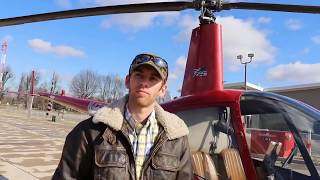
Kenny Keller and Gary Cleveland walk through VFR cross-country flight planning for helicopters, from plotting a course on a sectional and filling an ASA form to calculating wind correction with an E6B and opening a flight plan by phone. Student Bruce recently passed his commercial checkride.
Questions this video answers
January 30, 2018
24-hour free trial to view the entire training site
30-day money-back guarantee
They state they are FAA-certified for WINGS credits
Chapters
Day six boys are on their way back from checkride. I'm gonna get computers fired up for live training Tuesday, so we'll see them shortly when they. So this is a congratulations commercial pilot.
Thank you.
Awesome. So your text said one of the best examiners had in a long time.
Eh, he says best he's had in a while. He said it again then in front of Bruce.
Awesome. You want to get the heck out of here?
Yeah.
You've been here for seven days. Plan on five real quick. Ground school helped you a bunch, apparently, right?
It helped me a bunch, yeah. I probably wouldn't have done it this quick without helicopter online ground school.
Awesome. What'd you think of our examiner?
He was real cool, real easy to work with. Awesome.
All right, well, I'll let you get your stuff rounded up. I know you want to get the heck out of here.
Yeah.
Oh, yeah. We don't take them over unless they're gonna pass.
And there is Heather taking your comments today. Make sure you let us know who you are, where you're from. Put your questions in there, and Heather's gonna keep track of them for us. We can answer your questions. And here is Gary Cleveland. He just landed. We just edited a video. The video you just watched. We just edited that in the last few seconds. They Landed at what, 12:30. Shot the video real fast, come up here and did some editing. Right, here's the picture. Bruce just got his commercial rating. And I'm gonna let Gary fill you in on it because he was there, I was here getting everything ready to go. We've done a series of videos this week. Hogs Vlog. So go back if you want to start the beginning. There's a link below this video. You can check out our Hogs vlog. We've been doing some behind the scenes stuff just for fun. Us goofing around in here. Plus telling the story of Bruce getting ready. And we had the maintenance issue, we had the weather issue. So it's all kind of good stuff. So they just landed. This is a picture Gary sent me on the phone. So I got it up and ready to go. He texted me the landing time so I could run out there with a camera and catch him landing. And this is fun because I worked alone for so long that I could never capture things that I really wanted to capture. And that's one nice thing about having Gary here and having two of us and having Heather helping and Chris jumping in and guest instructors, because now I get to do some of the stuff that I want to do. Capture Some of these stories. So you want to give everybody a little background on Bruce before we get started with your sectional charts.
So Bruce wants to be an agriculture spray pilot like a couple of others that we trained out of Illinois. Bruce is actually from Arkansas, but he will be working with Norman up in Illinois with that agriculture spray outfit. He's a private fixed wing pilot and he just went straight to commercial helicopter today and after some trials and tribulations of having a mag failure, what was that on Friday? And then we had a checkride scheduled for Monday morning and we just had horrible weather with threatening icing conditions going on. So we rescheduled it for this morning and we met here at the airport at 5:30 and flew over there to.
Meet the examiner at 8.
So we were all there at 7:30. Got going a little early on it. The examiner always steps out after the oral while the student's packing up his books and things and kind of gives me a nod. And he came over and said he knows his stuff. He said it's one of the best orals that he has had in a long time. And so here come Bruce out of the room and I give him a thumbs up that I just gotten some good feedback there. Then he went out and was pre flighting and come back in. They finished up a couple of pre flight questions that the examiner wanted to ask them and then they went out, looked the aircraft over together and they flew for just under an hour Again, the examiner always makes his way back into the FBO before the student and he says, man, he's a good pilot. He says what is he wanting to do with his rating? I said he just wants to be an agriculture sprayer. And he said he's talented. I really hope he does more than that in his flying career. He said that's one of the best check rides I've done in a while.
And he does a lot of check rides, a lot of check rides and he's been doing them for over 25 years.
So he really wanted to give Bruce a pat on the back. But I haven't told him he passed yet. He says, let me tell him. So yeah, it went really well and made it back here just in time to shoot a quick video before live training Tuesday so we could show you another check ride Success.
Yeah. And it's fun for me again. I'm glad that this week I've been able to shoot some behind the scenes stuff that's below. If you want to check the Hogs vlog, go to that link. Start with introduction and so that does make seven videos. And Bruce came from kind of a family or a group of people you mentioned already. And they all came here to finish their rating. But they all used ground school videos before coming here to cement their knowledge. And that's what we require here is you become a member before you come and go through all the videos. But hey, if you're not a member yet, take our 24 hour free trial, all of our memberships, private commercial, CFI instrument. You can go in for 24 hours, see our entire training, not just a, not just a portion of it. You can see our whole entire site. Sign up, no charge with your credit card, take out your credit card before the 24 hours is up and you'll never be billed anything. So we're getting ready to celebrate six years online. We're the number one ground school, helicopter ground school on the web. There's nobody's going to beat us or catch us.
I think we are the only FAA certified for wings credits.
Yep, we have faa, the FAA wings program. We've been hitting it hard and doing so many things. So become a member, check out the private commercial CFI or instrument either monthly or yearly. There's no charge for the first 24 hours and we know this because we've checked it. You will not be billed to like hour 25, 26, 27, take the test flight, see the whole entire site and if it's not for you, remove your credit card before the 24 hours and you billed nothing. Boom. We're excited. This has been a fun week. So we're going to roll a video here that Gary prepared for you on sectional charts. Heli Expo. We are going to be at Heli Expo. We got our tickets confirmed. Brian and I will be there all three days. So hopefully we'll hook up with some of you. Subscribe to our channel if you haven't done that yet. Anything else going on we want to relay?
Well, there's a partnership that's going to be discussed at Heli Expo between Helicopter Online Ground school and HAI to sponsor.
Our training for their members.
So that'll be cool. So we'll have more details on that after Heli Expo.
Yep.
We are going to shoot video down there, try to go live down there. Our helicopterground.com link is right below the video too, by the way, to take up our 24 hour test flight. Oh, we have a 30 day money back guarantee, no hassle.
If you want a chance to possibly win a membership for free, there's a fundraiser that whirly Girls is putting on. It's an online silent audience auction and it's in light of the Hai Heli Expo where you can purchase chances to win a year subscription to the CFI membership level.
All right, well, ready to roll your video? You want to give a little intro to. We shot this yesterday so that we knew today was going to be, you know, today was going to be.
We didn't know if I'd be back in time, so. But anyway, basically we're just following through with did the plotter, the E6B and we talked about foreflight and paper charts for VFR sectionals and we just bring it all home to what you would expect to have to do the day before your checkride. So you'd have something to show your examiner for the assigned cross country plan that he wants to see. So you'll see a short video here where we kind of walk you through how to get your flight planner started.
And at the end of the video we show Danny opening a flight plan with the telephone before climbing in the aircraft. Yes, we tacked that on the end too. Alright, well I'll roll that now. Give Heather a big wave. Put your comments in over there. Say hi to Heather. And we will roll this video now. And we'll be back just shortly to take your questions.
In a previous video we talked about the plotter and the E6B VFR sectional.
Now we're going to put it all together.
We're going to use a flight planner. This is a form we use here at Helicopter online ground school for our students when they go into checkride. And this is a real nice form from ASA because right on the back, boom. You can put your weather briefing on here, you can put your flight plan over here before you call flight service, have all the information handy and of course your weight and balance, which is a different video.
So let's get started.
We'll pick a couple of class golf airports. Let's say the examiner told us that we're going to have to prepare a cross country from this airport to this airport. And usually there will be a third airport involved. But for the sake of keeping this video short, we are going to just pick two airports here and do a flight planner. So the first thing I like to do is just take this and use it as a ruler. What we want to get first to fill in the very first block here.
Is our true course.
So true course is going to be using the plotter and we're going to be lining up on the line we drew. You can See it? I'm overlaying it with the plotter here. And then I'm going to line up these arrows with a line of longitude and double checking it before I call it. Okay, so we look right up here and we see that we got 042. So our true course. Now, on our flight plan, we're going to pick an altitude. Remember that these are minimum altitudes out here in the areas that we're flying. Let's just say we're going to fly at 2500msl because we'll be able to clear everything that's in our path. The biggest number we have here is 2,000, so 2,500. Now, we're just going to make up a wind. But you would call and get your flight briefing six hours prior, get an outlook and then closer to departure time, get a standard briefing from flight service. And then just before you leave, you could get an abbreviated. But your wind direction will go in here. And so I'm just going to say that 090 is the wind and the state of velocity is 15 knots. We'll note the temperature on that day of the checkride, but it's not relevant for our flight planner right now. Our planned airspeed, say we're in the nstrom, so that's in miles per hour. And we'll plan on traveling at 90. We will then move to the E6B and we will get a wind correction angle. So you're going to use this side. We always start this on 100. And when I say we started at 100, I'm putting 100 right underneath this grommet right here. Wind correction angle. We're going to follow the instructions up here. Set the wind direction under the true index. So right here be our wind direction. Be 09 mark wind velocity up from the center point. So go up to 15 knots. So let's see 10, 20. So we'll go right in the middle of those two. We're going to put a pencil mark on this clear plastic, set true course under the true index. So go back here, find our true course was 042. Rotate this to 042. You can see they're lined up here. Slide wind velocity mark to true airspeed. So our pencil mark. Then we are going to slide to our true airspeed. And we're planning on doing 90. So we slide this whole thing down where the pencil marks on 90 ground speed then reads under the center. So we look under the center, we're losing about 10, so we're going to be doing 80. So I'll make a note of that for down the road. Right now we want to get our wind correction. Wind correction. Angle reads between the center line and the wind velocity mark. So these lines here are 2, 2, 3, 4, 5, 6. So we know it's 6 and it's on the right. So we're going to add it. We'll go back to our flight plan. We're going to put plus six. So then we take four, two, add six. We got 048. Now we need to figure out what the variation is in this area. So we find our sectional here where it's telling us magnetic variation from the isoconic lines. There's one. It's kind of busy in here, but it's seven degrees west. Get this back up in the camera view. Plus seven. We've got 055. Now, magnetic heading deviation. You're going to look at the compass on your helicopter and it will give various deviations based on the magnetic heading. And that's where you add it in here. So I would go down to the helicopter, I would look at the little card on the compass called a compass card, and I would look in the area of 055 and it might say 1. Let's just say it says +1, hypothetically, that's O5,6. So we know that we are ultimately going to be flying a heading on the compass of 056 in order to be traveling 042. Now the next step in this cross country plan would be to get our overall distance. Make sure you have your plotter on the side that shows statute miles for a sectional. And this shows to be about 32. Make a note of that. 32 nautical miles. Statute miles. I'm sorry. Now we've got to break it down further with some checkpoints. VFR checkpoints. If we travel out of this airport, we know that we're going to see a cluster of towers here and we're going to pass right over one of them. Let's measure and see how far that is. So about six miles out. We are going to pass over.
Towers.
Put a little hash mark here. I know that we've talked about towers not being the best VFR reference for checkpoints, but in this area, to know that we're on course at six miles, it's about the best thing we have going here. Right off the bat you can see we're going to cross a railroad. But then about six miles out we're going to cross this tower and we're going to start looking off to our right to make sure. We're passing these windmills. We've got one, two, three windmills. And we're going to cross a power line right after we see the three windmills. I got about 10 miles between those two. So I'm just going to write in power line after windmills. Okay, so we'll do the total distance. This would be at our 15 mile mark. Okay. And so forth. I would probably pick another checkpoint out here being this river. When I cross over the river, I'll start to see it on my left and then I'll cross it. That would be my next checkpoint. And then there shouldn't have to be another checkpoint before we get to the airport, but we'll have to go back here and pick our ground speed. We had that figured out at 80. So then we want to know about how much time it's going to take us to get this six miles so we can time it do an 80. So that's where we can go to this side. And we're going to set a little carrot top on 80. Okay. And our instructions are right down here. Set miles per hour at the little Carrot Top distance outer, time inner. So if I want to know my eta, then we're going to find the distance, which is six on the outer. We're going to follow it in to see what, what kind of time we need to figure. So let's go right here. 10, 9, 8, 7, 6. We're going to go on down in here and see that just a little over seven minutes we should be passing over that first checkpoint. Now let's see how much fuel that we're going to use on this first checkpoint. So we know we're in the angstrom traveling along burning 16 gallons per hour. And we're going to do this for seven minutes until we get to this first checkpoint. So we look down here and it says set the gallons under Carrot Top like I did. And we'll have to go on the inner and find the time and then travel out the side. See how much fuel we've used. Just like it says right here. So let's find seven on the inner right here. This could be seven seventy or seven hundred. We're going to travel on out and this could be 18, 180. But right now it's going to be 1.8 and this is 1.9. So I always estimate up on my fuel. So what I'm going to do is put fuel used two. Now you'll carry these down for each checkpoint. You'll keep subtracting your fuel you'll keep adding up your time to get your total time for the trip. And that's how you fill out your flight planner. Now over here, before you call flight service, there's some information you can gather here so that when you're on the phone with them, it sounds like you have it all right in front of you, because you will. Here's your type of flight. It's VFR. Your N number, 8626P. Aircraft type, special equipment. So we got an F28F and special equipment. We're going to look down here. They kind of give you a little cheater down here. We know we got a transponder with mode C, and that's a U. So special equipment code is U, and that means something to flight service. I'm just going to report to them that we'll be traveling at 80 miles per hour. Even though this form says knots and. Departure point, we look at this airport, we see amn. I'll just put that identifier in there. When you're talking to flight service, they're very adamant about you using the proper phonetic Alphabet, which is something I struggled with with previous law enforcement experience. They'll be quick to tell you if you say a apple or a atom, they're going to want you to say A Alpha, M, Mike and November departure time proposed. And they want this in Zulu. So let's say I'm going to leave at 1:00 Eastern. They got a little cheat sheet on this planner up here. So I'm going to look right up here. I know I got to add 4 hours, 5 Zulu. Now we leave this blank until we actually leave cruising altitude. We talked about that 2500 MSL route of flight. This is where you can use the direct symbol, just like you'll see on your gps. It's a D with a line and an arrow through it. Route of flight. We're going to go directly to this other airport, which is ikw, India Kilo Whiskey. Destination is India Kilo Whiskey. Now, how much time is this total trip going to take? We can figure that real quick. Even though we didn't take all our checkpoints all the way down, we did figure out it was 32.
Miles.
So let's figure that real quick so we can fill in that blank and give you another overview of how to use your E6B. Crank this up to 80 and we'll look down here every time. Look down here. There's no reason not to. It's right here. So we set our miles per Hour. We want to know how long it's going to take to go 32 miles. So distance is on the outer and times on the inner. So we find 32. Here's 32. We bring that on in and we can see that about 24 minutes to go that distance. Traveling that speed. 24 minutes, zero hours fuel on board. Let's say that we're going to have one hour worth of fuel in there. That way we've only used a little less than half of our fuel. So what would one hour worth of fuel be? We'll review that real quick. We know we're burning about 16. We go down here, set gallons per hour. We did that and we want to know what an hour's worth of fuel is. So we find an hour on enter and we go out and get our answer. This is easy math because we're going to go right back to the Carrot Top. An hour or 60 minutes, that's 16 gallons. Alternate airports as we're traveling along here we might have to go to a different airport because of weather or because something's going on with the helicopter. Lets just throw in this airport mbs. This airport is a Delta, so it has a tower. It'd be a good alternate because we could start talking to them about why we are changing our flight plan anyway. Possibly they could help us with some vectoring, some type of a plan whether it's a maintenance issue or whatnot. Okay, so here it's pilot's name, address, phone number, aircraft home base number on board. Let's just say I'm going on a checkride. There will be two of us. Examiner is going to be with me. Destination contact, telephone optional. You might put an emergency contact in here. I always like to tell them my phone number if I do file a flight plan because if you forget they will call you before they send everybody out. I've also had them call the FDA at the airport that I was going to. And the manager at that airport actually.
Stepped out to the helicopter as we.
Were shutting it down and said that they wanted me to call in right away because we were a little late, color the aircraft black. And we're going to finish this when we close it by just making a note just to cover our rear ends on how we closed it, whether at a 1-800-WX brief or whether we call in Radio 12 to close our flight plan. So like Kenny says, they'll tell you a frequency when you call them that they want you to go to to close that flight plan. I know when you call in on 1-800WX Brief, which is typically how I close them because I'm on the ground and the radio is not going to get out very far anyway. So I just grab a phone and dial 1-800WX Brief. Then you get a recording and you have to follow the prompts to get the person that's in the right area for where you are to close that flight plan. If you are going to. And we do have a video we can roll here with Danny actually on the phone with flight service.
Just call in to get a standard.
Briefing before you go. They'll ask if you want to file a flight plan. If you do, you say yes and they'll want to know when you're leaving so they can activate it. Usually they don't want you to file it any closer to a half hour.
So if you can tell them yes.
I will be airborne within a half hour, then they could go ahead and file your flight plan for you giving them all this information.
Just don't forget to cancel it when.
You get to where you're going because they will be looking for you. They'll start by trying to call. They'll call that airport and worst case scenario they send search and rescue out.
Yes, hi, my name is Danny Martin, I'm a student pilot and I would like to open a flight plan I filed about an hour ago.
November.
8625 kilo. It should be Charlie 65 to Charlie 20 is correct?
Yes.
Yes I do. I, I am standing right next to the aircraft now. As soon as I hang up I'm starting up and taking off. Excellent, thank you very much.
You too, very nice. Take your time, be careful, stay in a little bit.
In a previous video we talked.
Alright, back to you Gary.
Alright, well there you have it. That's the basics of your flight planner that you'll need to show the examiner. And for example, today the student showed him his flight planner and that took all of about a minute and then he started looking at the VFR sectional and asking him questions on that. So it's not a real big deal but you have to be able to do it. And we also filed a flight plan before we left Plymouth airport to go over to his checkride and it went pretty much about like what Danny did there in that video, just giving them all the information that you've jotted down ahead of time. And we ended up getting a call from flight service on shutdown before we even called them and we had not gone over. So I thought that was kind of strange. But Bruce answered his phone and said, yeah, we're just, we're just shutting down now. And so they closed his flight plan. So it's kind of.
Kind of different. Yeah.
And I want to elaborate real quick on that how we had. We showed Danny calling in by the phone. And I just started doing that years ago. When, you know, it's when you send out a student on their first cross country, there's a lot going on, of course. And so to all their workload to go out and open a flight plan, it's easy for them to forget and not open it. And we want them to have that experience. And then a lot of times, depending on where you're at, it's hard to reach flight service. So I started doing that phone thing just because it makes it easier for a student, takes the workload off. And if you ever try that, they'll act a little weird at flight service because they're not used to people doing that. So you just tell them, I'm standing here right beside the aircraft, I'm crawling in right now. And they'll go, oh, okay. And just say, I just want to open it now before climbing in so I don't have to deal with that during the flight with everything else I got going on. And then they're okay with it, but. And I've done it several times. And they're like, you're opening by phone and you're like, yeah, I'm in a helicopter, so I just want to throw that in. Why? We threw that clip in a Danny.
Yeah. If you're at 500 AGL, you may not be able to get flight service.
On the radio anyway.
Right. It can be very tough. So I'll run over and run over to Heather's camera and I will read comments real fast. We'll put Heather over here to take us back to camera one. It's ready to go. You have to hit the spacebar after I get this real quick. So she said, we don't have a lot of questions, but I know Heather's been in here saying hi to everybody. We appreciate that. We're glad to have Heather here. Want to mention everybody here. Sam Daughtery, Rex Jester, Harley D. Becky, Rex Jester, Helicopter services back from South Africa. Awesome. Mark Schmidt, Sioux Falls. Taz Christman, checking in every week as always. Harley D. From Missouri, Paul G. From Rockford, Illinois. And that looks like about everybody. Dave Faulkner. Great to see you, Jensen. Heather too. And hopefully I got everybody. And we want to mention that they were talking about can't find the info in the R22 manual.
Right. Robinson doesn't put in their poh what the fuel burn is.
Yeah, we don't know why that is, but we've investigated that before because other people have asked that question. So you know, wherever you're flying, they'll know approximately what it is. But you should be checking it yourself. Know exactly what you put in, watch the gauge and very quickly you'll learn what it burns an hour on an average basis.
Well, like the R22 is so different according to loading. I was talking to our student here and with two of us in there, we figured eight gallons per hour. But he's thinking it's probably more like seven when he's in there by himself. So it's just something you have to get to know your aircraft and the loading and how it changes your fuel consumption.
Brian said you are a mean teacher, mean tutor, mean pilot, mean operated, even guys behind the desk. What does that mean?
Maybe we're too old for the new language. What does mean mean?
I don't know.
Hey, I resemble that remark.
Well, take us back to camera number one, if you would. Heather, just hit that space bar. Oh, you're already there.
Okay, here we are in camera one.
Awesome.
Here comes Kenny.
Well, I think we're gonna wrap. Oh yeah, sorry I walked in front of the camera.
I've been gone since 5:30 this morning and I haven't eaten since I left. Yep, I barely got a banana for breakfast. So I think we're gonna wrap up early.
We are.
We're gonna get out of here. Thanks everybody for tuning in. Subscribe to our channel if you haven't subscribed yet. And when you subscribe, there's a little bell beside that subscribe button. Subscribe and hit that little bell to that way you make sure you get notifications. We're right now putting out new videos almost every single day and we're doing this live training Tuesday every week. So remember to subscribe to our channel, click that bell button like the video, hit that thumbs up button, and if you don't like the video, click the like button twice. Yep, you know how that works. If you don't like this video and you don't like our videos, click the like button twice. It's the best way to handle that. So I'm going to go over here so we can wrap this dude up. Any parting words? Take our 24 hour test flight, go.
Below helicopterground.com and just for watching the video today, the yearly and we still have an unlimited.
Not for long. Grab it now because I'm taking it away.
GC15 off. If you want to have a discount on unlimited or yearly, any unlimited. It is going away soon.
Where do they put that GC1 5 off?
There's a coupon code box on checkout. And when you purchase a membership with helicopter online. Ground school.
Yep. And tell them about the 30 day money back guarantee and how many times you've seen anybody use it.
I've never seen anybody ask for their money back.
You've seen me refund a couple.
Yeah, I've heard you say that. If anybody asks for their money back, give it to them.
Right. I don't. And I do it immediately. The minute I get it, I go, boom. And I. And I. There's no arguing. There's no me whining. There's no me emailing them. They say refund. Boom. I hit refund. And they got to do it within 30 days.
Usually what I deal with is people that are on the monthly and members have been in there two, three months, and they quickly realize that they'd rather have the yearly. And so I'll credit them a month or something like that to make it worth their while. But it is a money saver to get into the yearly and right now, the unlimited while it's available.
Well, I want to say nice job, Gary. You did a great job on that presentation that we rolled today.
Thank you.
You do a really good job at going through and explaining that stuff. And I meant to tell you that, and I didn't. And I just. In all the hustle and bustle, you can do that stuff better than I can. You're just real. The methodical, calm, cool way that you go through that stuff. That was a real good presentation.
No, thank you.
And that will be in ground school for our members. All right, we're gonna get out of here then, like, subscribe, take the test flight, Use the Gary Cleveland GC115 off, and we will see you next week. Click the like button if you like the video. If you don't like the video, click like twice.
See you next.










