Full Touchdown Autorotation Certified Flight Instructor Preparation
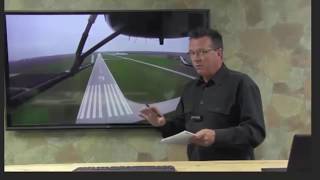
Kenny Keller and Holly Gardell practice full-down autorotations in a helicopter. They work through quick stops and angled approaches before attempting a straight-in landing in wind, then debrief on throttle rollout timing, flare execution, and how crosswind affects sink rate and runout distance.
Chapters
Alright, welcome to the new full down auto rotation section inside the CFI section, inside Helicopter Land Ground School. It's May 9th. Just finished up CFI with Holly Gardell and I'm gonna be adding some new content to the CFI section and some other section as well from some of the training that we did and just give you a real brief description here. I'm editing the full down auto rotations that we did. Now I'll give you a little bit input on this day of filming. We have prepped and started getting ready for them. By number one doing the ground, talking about auto rotations. Then we did quick stops, then we did straight ins, we did 90s and then we did 180s. This was after we did all the other maneuvers, got her comfortable. It was an instrument transition. She has bell time and Schweitzer time previous to the instrument. So it was getting her, it was all about getting her comfortable in the instrument to start with. So we're now down to the week of her checkride. Waited for the full downs as the last thing. So previous to these videos we've done a few, but it was just kind of getting started, getting warmed up. So at this point we're really trying to perfect the full down the entry, you know, the set down at the end. So I'm going to break these down and this section will probably change as time goes by as I go through and edit them. But I'm going to work at, you know, making it a cool section and I'm going to put, you know, maybe a little pre and after each video a little bit on the common errors people make, what to look out for. And just give you some really good insight on what it takes to do the fold auto rotations. We'll go to straight in full down number one.
Okay, so we're going to go around and we're going to set up a straight in auto. You know how to set them up. You know how it should look.
Yeah. And airport elevation here is just about the same.
So yesterday the pull downs were challenging because we didn't have much wind. Today we have wind coming almost right down the Runway. I think you're going to notice a big difference in the auto pull downs today versus yesterday. So we're going to make good use of this time because we're here where the checkride is going to be. We got the wind coming down the Runway yesterday. We kind of, you know, got comfortable doing them and just got the feel, got the look. We know that the really nice entries was giving us the really nice pull down. You nailed a couple of them right to the numbers.
We're clear. Right.
Clear on the left. You had lots of practice. Enter deciding when to enter, how to enter, how to do a nice entry, how to have a good setup. We'll come around. Then I set up. Count it off. 1, 2, 3, enter. Once we enter it, if the entry is good, the glide's nice and we like it, then go ahead and just roll your throttle all the way off. Not chop it, but just smoothly roll it the rest of the way off. Maintain your minimum of 60. At TreeTop, we're going to start a gentle flare or a little below treetop, start a gentle flare. As we get closer to the ground, we'll make it bigger, make it bigger, make it bigger. And the wind today, you're going to notice how it's going to happen. Slower, the flare is going to be slower. We're going to have more time to react, and we're not going to have the run on that we were having yesterday.
Are we going to go. Where do you want to go to that first intersection?
I want to go to the number nine.
Oh, on the number on the Runway?
Yeah.
Okay.
Unless some airplanes come in, then we can move over to the taxiway. But again, I like to focus. I like it when we have a solid. We know right smack dab there, that's where we're. That's where we want to go. That's better for student and instructor. When you're clearly defined spot, you know exactly where you're going.
All right, so let's get everything stabilized here before we make our turn. Going for 1500 and 65 to 70. And I'm going to go out just because I can give myself lots of time. Flick and clear on the right, turn the left.
And I'm gonna do my best job that I can at keeping my hands off the controls, which is hard for me just because.
Understandable.
I'll do my best.
Plenty of people trying to kill you over the years.
Yep.
I'm gonna try to be lean on, let you be as hands on as absolutely possible. So.
Okay, I'm gonna make a radio call here.
All right.
Goshen Traffic helicopter 26 Papa is on final four, Runway nine. Going for engine failure. Practice to the number nine. All right, we're at 1500. Get that VSI stabilized here. We have a good entry because key to a good auto is a good entry.
A little bit of left pedal.
Just a little RPM's top of the green.
Very nice. Nice setup.
All Right. And because we have so much wind, we want to enter a little bit later than we did yesterday.
Yep.
I'm going to get that nine pretty much. Pretty close to the black line there.
Yep.
On my windscreen visual.
Looking good.
Looking good. We're still too far. Do you agree?
Yep.
And I'm going to go. 3, 2, 1, enter. Collect it down. Right pedal.
Nice. Good entry. All right.
RPMs.
I'd go ahead and roll the throttle off. What do you think? Okay, go ahead and roll that thing.
Throttle's coming off.
Oh, yeah. Nice. Enter. You decided at a good point.
All right.
You got it first. Yep, yep. Let her sink before you. Before you level. Pull it off. Yeah, look at that, look at that, look at that, look at that.
Yeah.
Nice. That's right.
See the difference in the wind? Oh, man.
Pretty sweet.
We perfect that flare a little bit. Go ahead and pick us up and we'll see how far past we are.
All right, I'm gonna roll it up.
Yeah, I'm liking that.
All right.
I think I pushed you to. I think I was afraid you were gonna level out too early. We could wait later. We could get it even closer.
Okay, hold up a little longer.
It still came out good because of the wind. But yeah, I'd hold the flare and get even closer before you level.
Okay, that was a pretty decent drop. All right, 3,000. I pick it up in a nice gentle two step process. Managing those RPMs as we get. Light on the skids, eyes out front. All right. Actually I'm gonna clear my tail. I just want to see really how far we came.
We're probably. That might be 50ft.
Nice. That's not bad. So the flair was right over the. Over the number. Yeah, I mean I was seeing it.
So maybe. Yeah, I like it. Maybe enter a hair sooner.
All right.
Just to try to nail that nine. Alright, let's go do it again. And your choice. Straight in or 180. It's up to you.
Let's do another straight in.
Alright.
Get the feel for that a couple times.
Okay, let's debrief number one. And I want to start with a disclaimer. I am doing these autos the way I pretty much always done them in the n strom the maneuver itself. The full downs, they're not going to vary a lot between the helicopters you fly. Maybe a little bit. Maybe depending on where you're flying and a method by a certain instructor that you're using, you know, may be different than what I do. This is just kind of a guideline the fold out rotation maneuver itself is still the same. Numbers may change a little bit. How you want to do the flare may change a little bit. So just remember, you know, I'm kind of giving you some insight, giving you a guideline and just showing you how I do it. Doesn't mean you have to do it my way. Doesn't mean there isn't other ways. These auto rotations never come out the same. One thing I want to put in now is Holly works for a guy named John and she was talking to him after we done a bunch of these autos and he said, well, she goes, well, about one and four came out really nice and then two were kind of. And then like a fourth one was pretty iffy. And he said, well, that sounds about right. And this guy's been flying a long time and is also an experienced instructor. And I never heard anybody put it that way, but he said out of about four, you probably have one really good one, a couple that are so so. And then one that's maybe not so good. And I kind of like that verbiage the way he said it, because that makes sense. You're not going to get out there and nail them perfectly every time. I mean you might and if you do, more power to you. But in general at the end pressure, the checkride, nobody flies that well. They all come out pretty decent. We don't do anything dangerous, we don't hurt the aircraft. We make, you know, a few mistakes here and there. But that's why we're breaking this down, to just kind of give you an idea and kind of show you. So I'm going to go through my notes here, kind of let this play in the background just for fun and just made some notes. I sat and watched it just after I made the first intro video the previous day. We didn't have much wind the previous day that we're practicing them. This day we had around nine or ten knots, I think. And it was a little bit off the right hand side, off the nose, off to the right. We make the comment nice entries, you know, produce the best fold downs. And you'll see that through this series of videos. That's kind of the case. Not kind of the case. It is the case. Next, I want to explain to you how we do the throttle. Again, this may vary on where you're flying and how your instructor wants to do it, but we do what we did was we enter it, roll back a little bit just to split the needles to make sure we're in an Auto rotation. And then if we liked it, we'd go ahead and roll the throttle all the rest of the way off. We wouldn't chop it. So that's our method on how we do it. And that's the way I kind of like it. If you enter it and it was kind of sloppy and you want to recover early up high when you still have 400ft or 500ft, no big deal. You don't want to be waiting to the end and going, oh, my God, this is sloppy. And I'm just going to clean it up and fly away. Now the idea is set it up nice, get a nice entry. Does it feel good? Judge your spot. Do you think you're going to be able to make it? Do you feel good about it? And then we roll the throttle off and we do that kind of early. We're using 60 as a minimum. We're entering at 65 or 63 or 64 we're entering. And then a slight aft pull so the nose doesn't drop in the instrument. We could use 70. We could use 75. 60 is what we chose to use. So we enter about 65. Small pull back to 60. You're setting that beginning of that auto rotation. If you enter at 60, then your nose is going to drop. If you don't do aft cyclic pull the way I do my autos or do our the way I do the flare, as I like about treetop level, somewhere 50 to 75ft, 100ft, depending on what you're flying. Manuals will tell you different, but I use treetop level. Start with a gentle flare and then pull it and make it bigger, bigger, bigger near the end. Then level out the helicopter. We're using the number nine on the Runway as our clearly defined spot that we're shooting for. If you start changing spots around, you're trying to go to second taxiway light or that spot in the grass or, you know, the oil spot. On the Runway, it's harder to have a really nice auto. You really need to have a really good confined or confined, a really good clear spot. So we're using the number nine on the Runway so we know exactly our spot of intended landing. As a cfi, it's hard to keep your hands off the controls. You know, I'm responsible for this aircraft. Belongs to a really good friend of mine. It's his baby. Last thing I want to do is damage this aircraft. It's hard for me as an instructor, even after all these years, to take my hands completely off the controls. Got to find a happy medium with your student because they need to feel like they're doing it. So we have a little bit of discussion about this, and you'll hear us talking about it a little more in the later videos. Have everything stable at entry. You'll hear us talking about that in this video. VSI at zero speed, set in trim, everything set up the way you like it. Your airspeed, your altitude. You have to get good at deciding when to enter. And with practice, you'll know on the windscreen about where your spot should be, depending on the wind. And you get good with this, with practice. In this video, we had a nice entry. Looks pretty good. We roll the throttle off, I don't know, within 100ft. Probably after we've entered it, we go ahead and roll it off. The flare is a little bit high, and we kind of struggled with this problem throughout the maneuvers. And I understand the problem because I've always been this way too. You know, I recover higher in my autos where I do a power recovery. The full downs, it's easy to get nervous and, and level out too soon. You got to let that thing get close to the ground, but you got to find again the happy medium to where you're not striking the tail boom, but you're not leveling out too high. So the other point at the end of this, we thought when we were finally done sliding, we were at about 50ft away from the spot. Okay. We did our flare over the number nine, leveled out just past it. So that's pretty good. We slid a little ways. Okay. What is your examiner going to say about that? That depends. I've asked two different examiners in this last. See, if I check ride, one examiner that was kind of giving us a little mock check ride, we were just talking about it. And then with the examiner that gave her the test, he didn't seem to be that concerned. He liked it, you know, if it was over the spot and you had some slide, he wasn't that concerned about it as long as you got really close to your spot. The other examiner, I asked, he said, ah, you know, it's a toss up. My opinion has always been, you want to try to come up, you want to try to hit your spot if you can, or at minimum level out over your spot. In our case, number nine, if you slide a little bit past, that's acceptable as far as I'm concerned. How picky is the examiner going to be where you're at? That's up to that specific examiner. So you want to get as close to your spot as you can. The commercial Standard says within 100ft. So again, get as close as you can, but, you know, don't wreck the aircraft trying to land it right on that spot. So let's move on to auto number two.










