Handling Helicopter Tail Rotor Malfunctions
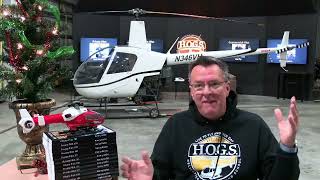
Kenny Keller walks through tail rotor emergencies: stuck pedals, complete failures, and loss of effectiveness. He covers what each means, how to respond according to the Helicopter Flying Handbook, and answers questions on training, aircraft costs, and career paths.
Questions this video answers
Helicopter Flying Handbook, page 117 (cited as 'page 11 7').
"Do not autorotate" is quoted in the video as appearing in the referenced handbook passage (context discussed further in the talk).
Code: SANTA40 — advertised as 40% off any private/instrument/commercial/CFI monthly or yearly memberships, offered until New Year's Day (ends New Year's Eve).
574-767-1797 (text or call).
12 signed copies remaining (count mentioned live).
Chapters
There's a clear concern among users regarding tail rotor control with multiple questions about what to do in various scenarios, indicating a need for more guidance on emergency procedures and handling malfunctions. This is from our clone from our day in review. We get a report each day and also the mention of a stuck right rotor pedal highlights a specific mechanical issue that users are worried about pointing to need to a need for troubleshooting tips or best practices in dealing with pedal related problems. So we're going to talk about that first and then we're going to take some helicopter questions from you people that in live chat and we're going to give away a book Private Pilot 101 and we're going to give away a commercial one year membership. So do us a favor. Right now, subscribe to the channel. If you haven't yet, please do us a favor. Subscribe helps us out a bunch for all this free content that we put out. Put a like on there and today comment in chat. But comments below on other videos are very useful for us as well. So we're talking about our clone and our clone is located@askhogs.com you can go below and click on the link to go check it out. 24 hours a day, seven days a week, you can ask training related questions. Flight and ground 14 years of my contents loaded in this thing. Blogs, podcasts, videos, paid content, free content. There's over 6 million words piped into my clone. It's amazing. Go down below ask hogs.com and Santa 40 is our code for a Christmas special on now until the until New Year's Day. So so it ends New Year's Eve. 40% off any private instrument, commercial CFI monthly memberships yearly and the big pro pilot 40% off. Santa40 go to helicopterground.com that's below this video as well. Go there. Use that code in checkout to get the discount. So the book giveaway. So we're going to do signed copy. We're down to 12. The pile is getting smaller. We got 12 more of these to give away. So first person, if we don't have one in there yet, she's shaking her head no. No. Okay, so just type a general helicopter training related question. Anything you want to know about flight or ground training. Type that in chat and you win a signed copy. I'll sign it for you. And then once you once we declare the winner in chat, we will pin it down below before we're done and Then also email heatherelicoptergrown.com with your shipping address and your name, and she'll ship it off to you. So back to the questions coming into the clone. The clone is to everyone. And the clone is also inside of our hog site on every video, every page. So you can be in viewing videos and you can always ask the clone a question while you're at it so you can get an immediate answer. And it does really, really well. So knowing this is a great topic because this is something that our examiner has been telling me for 10 years, the same story. People are having trouble with understanding the difference between stuck pedal, tail rotor malfunctions, tail rotor failures, differences between the different things. So this is a common problem. And maybe we'll even walk Back to the R22 in a minute here. And I'm going to tell you my resource. So we're going to, we're going to go with this conversation right now about stuck pedal. Okay? My resource for this is the Helicopter Flying Handbook. You may or may not know if you're flying a Robinson in the Robinson manual. It doesn't give us in the R22 or R44 anywhere, it doesn't give us a procedure for stuck pedals. It's not mentioned. So Robinson's not telling us what to do. So if you don't have the resource from the manufacturer, you have to go to the Helicopter Flying Handbook. And when you go to stuck pedal, pedal issues in this book, it's about two and a half pages of reading. And you read it and you're going, okay, what the hell is really going on here? Right? So what we did is this past summer when we were doing our final approach courses, I had a young man here from down south and we were working on his commercial and we were talking about stuck pedals. And I go, you know what, let's, let's really dissect this chapter in the Helicopter Flying Handbook. And here's what we came up with. And my resource is Helicopter flying handbook, page 11 7. It says, do not auto rotate. Okay, so do not auto rotate. That's not the answer. Auto rotation. So we deciphered that book and here's what we came up with. The best description that we can give you. On stuck left normal to steep approach at 2 to 3ft. Increase collective to align with Runway stuck, neutral or right low power approach, run on landing, reduce throttle as necessary. So I wanted some kind of a memory that people could come up with so they could, when you're having a discussion with examiner, something you could kind of go to and where that resource is. So this is a great question. And I'm not surprised that people are asking in the clone and having trouble because from my examiner, people struggle with these. So you got to study the differences. You need to make sure you understand. And I'm even walk back to the helicopter real quick since these good. Okay, we'll do the, we'll do that question as soon as I cover this right here. So the thing that the examiner has told me commonly, here's where people are getting confused when they're taking their check ride, you'll see him first. He sends them out to the helicopter. He'll say, go ahead and go out in pre flight and I'll be out in a minute. So they go out, grab the checklist. They start working their way around the helicopter and usually comes over and talks to me for a minute or two. But then when they get back here near the tail rotor, I'll almost always see him come walking up and they'll start having a conversation. They'll be here for about three or four or five minutes at the tail rotor. So the question that he asked, that people mess up all the time. I don't have to yell at the camera. I got a mic clear over here. He's going to ask which way? What is the movement of tail rotor thrust? Tail rotor thrust pushes against the tail boom. Okay, So I think people, what they get confused about, they think about that turbulent air that's being blown away from the tail rotor. They think of that as thrust, but that's just dirty turbulent air moving away from the tail rotor. The thrust from the tail rotor in the R22 specifically is actually pushing against the tail boom. So the thing that he points out is, remember, a stuck pedal is something, you know, a cable is jammed, a foot pedal is, you know, something maybe an iPad jam in the pedals. That is stuck pedal. That is not a failure. The tail rotor didn't fail. Something in the system for moving those pedals. So that's not necessarily a failure. A tail rotor failure is the drive shaft breaks. It's going back and driving that tail rotor, it snaps, tail rotor flies off. You lose a rotor blade, the gearbox locks up back there. That is a failure. Okay, so make sure that you understand the difference between stuck pedals, tail rotor failures, and then lte. And he always brings that into the mix. Loss of tail rotor effectiveness. So again, coming from an examiner of 35 years telling me over and over, please do videos on these. Please make sure your viewers understand before they come to a checkride. They understand stuck pedals what to do. Lte. What do you do? Tell rotor failure what do you do? And to wrap that up real quick, there's a myth out there, and I'll ask this all the time, I'll say, so what do you do if you're flying along 500ft, 70 knots and a Robinson, and you have a tail rotor failure? A good majority of people will say, well, I'll just manipulate the nose with the throttle and I'll start and I'll like. Nope. Stop. Stop. Not acceptable. The PoH clearly states inner auto rotation. Try to make your auto rotation landing. If you can't go clear to the ground, pull the power in. Fly until you can make an auto rotation landing. Re Enter auto, go to the ground. That's it. That's in the Robinson manual. So don't tell an examiner you're going to manipulate the throttle, because that is a wrong answer, and that is hands down a failure. Lindsey has her hand up.
Do you practice stuck pedal landings with your students?
You know what? I don't. I used to when I was flying the instrument, like, on a daily basis, all the time, every day I would mess around with stuck pedals. And recently I haven't done that. And we've even talked about that. Like, I've thought, you know, we should probably start doing a little bit of that. That it wasn't in the pts, it's not in the acs. The examiner is going to ask questions about those. But we don't test you on that in the aircraft. So we've kind of, you know, over the years, I've just kind of let that slide and not actually done that in the helicopter, but I feel like we should. And so I'm glad you brought that question up because I plan to when we get to making videos again here soon. I'd like to freshen my skills up on that and do some videos on that. And here's what I can tell you from a real world standpoint. Know what the book says, but those tail rotor stuck pedals, the ones I have done over the years, because I have done them, I've done them or I've done them in ems. We were tested on that every year. Every time you come in, the aircraft's gonna act different depending on the day. The wind, the weight, the conditions around you. So it's. I think the reason they don't have us do that in checkrides is because it is a difficult. Can be a difficult maneuver, and you can wreck the aircraft. And because it varies so much every day, it's not the easiest maneuver to do. And I can remember even in ems, like, doing what I thought was right, and the examiner or the checker was like, well, you just killed us, you know? And I'm like, no, I didn't. Why aren't we still flying? He's going, but you could have. And I'm like, yeah, but I flew out of it, right? And as long as I got fuel, I can go around and try again anyway. Is there another question?
We got quite a few coming in.
A bunch of questions.
Okay, I'm going to start off with Nick Good, who was in our chat yesterday, and he receives. He's going to receive the copy today.
Okay, so email heather, heatherelcoptergroup.com your physical location. We'll sign it for you and Heather. That'll be next week before Heather ships it out.
And Nick Good wants to know what is the best way to build hours between private and commercial certification?
Get your instrument rating. The best, smartest thing you can do between private and commercial is go get that instrument rating, even if you're not even sure if you want the rating, even if you're not going the pro route. The beauty is, while you're building time for your commercial, you're logging pic with an instructor. And with that, as you're building pic time, you're learning instrument training, which is something that can save your life. Instrument training absolutely could save your life. You might need it in your career if you're going to apply for jobs. So that would be the number one best way you're building time anyway. Yes, it's extra money for an instructor and it's extra money for another checkride. But if you're going to be building that time to get to commercial, hands down, do that instrument training then. And I can say that firsthand because I did all my ratings, I did private commercial CFI. Wait till I got about 800 hours flying, and then I got to go back and get my instrument training. So then I got to start studying again. I kind of got to learn how to study. And it was a real pain in the ass going back and doing it later. I wish I would have done it in between private and commercial then. Another good way is you got to research. You can research for ferry flights, which they're kind of hard to come by, but you can also research. There are things that happen, like, say, like out in California, they'll have a news station where they'll let you go along, fly the helicopter. There's an instructor that's flying and you can pay a reduced rate to go along and actually get to be pic while the instructor's talking on the radio or doing whatever. So there are some ways like that, but you have to research them out. I can't tell you where exactly. I know some people have done that way back, but that's been a long time ago. And then I, the flight school I went to, they had a pipeline that we could go along on for like 75 bucks an hour R22 time. And that has, that school's no longer there. But that was another one of the ways I built about 40 hours for my commercial was going along on a pipeline, instructors watching the pipeline. I'm flying and I'm just, you know, there's turn right, turn left and just fly. So you have to research those opportunities out. But that's the best ways I can think of to start trying to build that time.
Next question is from Robert. He is 27 years old, no military experience and is at a dead end job with up to 30,000 to his name. And he wants to know if it is too late for him to start helicopter pilot training.
Absolutely not. I was 32 before I had my first helicopter flight. So I started at 32, had my CFI by 36 and started my career at 36 years old. So simple answer for me, I started at 32. So you're 27, you got 30 grand in the bank, you don't have to finance the whole thing now. Focus on that private pilot. Make that step one. When people focus on private commercial instruments, cfi, it's overwhelming and it's a ton of money. I didn't have all the money either when I first started. So break it down, work on the private. Get that first. That's your first goal. Just focus on that. And then as you move forward, you know, you work, you save, you sell stuff, you do a second job, you find a rich uncle, you scrunch and save and do what you got to do to find the money to keep moving forward. So the answer, you're absolutely not too old at 27. Absolutely not. Next.
Well, this kind of tacks on this. I'm going to jump ahead into chat because Mr. Vinyl over here from Italy, welcome.
Nice. All the way from Italy. Love it.
Yes. He, he tacked on to it, asking if 43 is too old to start with commercial.
I'd say no either. We have. This is the beauty of hogs back here on the, behind me on that black wall. If you're new to us, this is the hogs Wall of fame. There are four big screen TVs back there running. All of our members that have gotten their commercial, private, instrument and certified flight instructor ratings over the past 14 years with us. And a lot of the guys up there on the wall in their 60s and 70s getting their ratings. We know there are instructors out there teaching clear until their 80s. So at 47, if you want to do it, it's in your heart. I would, hands down, go after the dream. I don't think you're too old. There'll be some people that say, oh, you're starting too late. So you'll always get that negative side of it, but you always have negative Nancy and Debbie Downer and everything you ever want to do in your life. That's just the way the world works. Hands down. I don't think you're too old. Start flying. Start building the time. Personally, I have no problem hiring somebody at 57, over 27 if they have the qualifications that I need to fly the helicopter or I don't care if they're 67. Me personally, I don't think it's too late. Not at all. If you want to do it, I think you should go for it.
He said, thank you for your kind answer. He's been following hogs for quite some time and your answer is really encouraging.
Nice. And when the other thing I tell people is, hell, at least go do it. You have an inkling to do it again, just like the other gentleman. At least get the private. Go get the private, because then you can do it. You can go fly for fun. Take up your friends and your family. Go fly to have lunch. Go fly along the lakeshore. There's so many wonderful things you can do. So absolutely do it.
And moving on, we have Bill. He has two, two questions. Okay, this first question is, what is the difference between VRs and settling power?
And okay, let me answer that first because that's pretty quick. For years in the books we learned in, I started out with the Basic Helicopter Handbook, then we went to the Rotorcraft Flying Handbook, and now we're in the Helicopter Flying Handbook. For years, the terminology was settling with power. They changed it in the Helicopter Flying Handbook. So now when they refer to selling with power, it's actually called Vortex Ring state. And for years people complain because the US Called it selling the power. Other country called it Vortex ring state. And people go back and forth, back and forth. Which is it? That's the main simple answer is for years it was called selling with power. It's now called Vortex Ring state. So I believe that should clear that answer up for you. And what was the second part?
He wants to know. Bill wants to know if someone becomes a military pilot, does his flight hours count for a civilian pilot license?
I can tell you that in the US it does. And I can't tell you the exact steps you go through, but I know military pilots that came out of the military, went to the FAA and got a license issued on their military experience. And I'm sure that involves some documentation that you bring over from the military. I can't comment on it because I didn't go through the military. I did the civilian route. But yes, I know pilots hands down that were in the US Military and then got out of the military and converted to the FAA license. Absolutely. That it for now. Okay, we got a couple other things and then we'll ask the question for the commercial pilot giveaway. So I want to mention that we have R22 and R44 courses inside our private, commercial and CFI courses. They're added. So if you sign up for private, you get R22 and R44. If you sign up for commercial or CFI, same thing. They're additional. So those aren't. We don't sell just those courses. They're there as a complementary to, for example, the private pilot course. So you can go through the private pilot course and then you can go to the R22 or R44 course for specific information on those aircraft. So now that we have an R22 that we're operating sitting back here behind us, as you can see, and we have an R44 that we're operating, we're updating the images and updating some of the videos and trying to update those courses a little bit. Now that we have those helicopters available to us, when we originally built those, we didn't have any Robinsons available to us. And then something special. This is time sensitive, 50% off instructor time. This is not going to last long, but this is short term. You got to get on the schedule. We put you on the schedule with payment, whether you're doing a, let's say an SFAR sign off or you want to do a checkride. Anybody that wants to get in before January 20th, we can give you a 50% off instructor time. That is 50% off our daily rate because we charge by the day. We don't charge by the hour because we do one on one. Exclusive training is what we do here at hogs. So that's available. And you can reach out to Heather 574-767-1797. Text or call her to get information about getting on the schedule for whatever type of flying you would need in the R22 or R44. So let us know on that then. There's still time for a mountain course, but you got to act fast. The R44 that we have is currently in Las Vegas and it's with Taz Christman, one of our online instructors, personal friend of mine of say, last eight or nine years. Taz is currently flying it in Vegas, but it's going to be moving back the end of January. We're bringing it back to Indiana. So if you want to get into a mountain course, I was out there flying with Taz in the mountains and it's amazing. It's absolutely crazy. So if you'd like to get in on a mountain course, we can get you hooked up. So again, text or call 574-767-1797. And one other thing, passive income. We have an affiliate program. We're going to put a link down below. Anybody can sign up, become an affiliate. And this is geared mainly for instructors and flight schools. You earn 50% of any, let's say a membership offer. Let's say the monthly is 97amonth. You get someone to sign up for our membership through your link, you get 50% of that. Or a yearly might be 697. You get half of that ProPilot's 2800. You'll get 1400 bucks if you get someone to sign up through your affiliate link. So you can go down below, you can sign up for that and you'll be able to take your own link and share that on your social media through email, however you want to share it. So for instructors who usually don't have much money. You driving a piece of shit. You got nothing in the bank. You're eating animal crackers and freaking ramen noodles. Here is a great way to receive passive income by getting your students to sign up for Hogs flight schools as well. You could sup your lunch or your flight school income because maybe you don't have enough time to get all the ground covered with your members or your students, sign them up through Hogs with an affiliate link and earn passive income. All right, so real quick. Oh, question. All right. Okay.
This is going back up to lp. I accidentally missed his question earlier.
Okay.
To know if our 22 can be used for instrument training.
The one that we have here. No, unfortunately, it's just a VFR ship. I wish I Could say yes, but the answer is no.
And going back to Mr. Vinyl again, I wanted to ask. He wanted to ask if the cabaret G2 is better for a commercial rating or would he be best to go with the 22?
That's really your choice. I like all of the aircraft. R22, R44, Schweitzer, Instrom, Cabri. I've got time in all of them. I've taught in all of them. Either one is a good choice for your training. What you might look at is, are you going to do the CFI route and are you going to go look for a CFI job later? Because if you do, that's always the big question. If you want to go get a job in R22, how much R22 time do you have? How much Robinson time do you have? Do you have the 200 hours for the SBAR sign off? So the biggest thing I think should be if you're going pro route where you're going to be a cfi, I lean towards the aircraft that you want to try to fly once you become a cfi. If. If that's not the case, you could really fly either because the time is the time. It's still helicopter time. They're both great aircraft. I had one. We had an interview with Tim Tucker out at one of the heli expos and we asked him with Robinson Helicopter. We said, what you think is the best helicopter to fly? And he said, you know what? I don't think it matters. I think what matters is you have proper maintenance on the aircraft. You're getting good quality instruction. And he talked about a. In the military, they did a study on. They took a large number of pilots, some trained in this aircraft, some trained in this aircraft. And after the study was done, they basically said it didn't matter what aircraft the person flew. Made no relevance on how well they did in the aircraft. So I think that's your personal choice. Whichever helicopter you prefer. Okay.
I have to scroll through chat a little bit.
All right. Well, you're screwing through there. Whoops. Sorry. We're live. So.
OG Paul, what is the primary purpose of the freewheeling unit?
Freewheeling unit is like a clutch will be my quick short answer. You know, you push in the clutch on your car and you can roll to a stop. Basically, the freewheeling unit allows on the helicopter so the blades can keep spinning when the engine quits and becomes disengaged. You got to have a way for the engine to become disconnected from the rotor system. Otherwise the engine would draw the rotor system down and you'd fall out of the sky and most likely kill yourself. So you have to have a way for the aircraft to disengage engine from transmission.
Mr. Vinl, very chatty today. A lot of questions. This is going back to our mountain course training and he wants to know how that works.
The way that works is Taz Christman has been flying in the Las Vegas area for 13 years. He's a retired Air Force lieutenant colonel. He's flown every aircraft under the frickin sun and is a nice guy in a very low keyed everyday individual. He could have a big chip on his shoulder but he doesn't. He's been flying out there. And so we just have this immersive course and I believe we have it set up for three hours which you could always add to it. But it's an immersive course, it's for like two days. And Taz has his own curriculum he's put together for you and I can tell you that he takes you out and you land on pinnacles and you'll land on mountaintops and you learn about the wind and you go fly in, land in ravines and learn all about flying in and out of the mountains and specifically high altitude operations. And surprisingly enough, I'm a flatlander. I've been flying here my whole entire career. So when I went out there to Las Vegas, I thought, oh you know, it's higher to see altitude, no big deal, you know, I can handle it. I've been teaching this theory in books forever. Well, I was surprised when we first time we went into this pinnacle. I think it was around 3200ft. And we come in and it was a warm day and we had a lot of fuel on, we had four passengers. And I was surprised at how much power we pulled coming in and how much power it took to get out of there. And it took some special care and technique to get flying and get off that pinnacle safely. And it made me realize that it makes a big difference from flying at about 800ft above sea level where we are just go somewhere with say 3,000ft elevation on a hot day. It's amazing. So you'll learn a ton about mountain flying. High gross weight, high density altitude flying. It's super, super eye opening.
This is coming more as she was asking chat. This is coming from Ms. Randy Cook. She is located in Elkhart.
Nice.
And she wants to know typically why are the rates higher in the R44 than 22?
Oh, you asked this question Lindsay's at Thanksgiving, one of her relatives asked this question, and I can give you this simple answer. I insure two of them. I insure an R22 and I insure an R44. The R22, the policies around $12,500 for one year. The policy for the R44 is 26,000. So just fuel alone. The insurance on the R44 is double fuel. The fuel we burn, more fuel per hour. Price of the helicopter, doubled price of an inspection. Well, I'll give you an example. If we had an R22 sitting beside the RR44 and we had them sitting here together, I could point out to you the mass of the rotor blade. And if when you looked at them side by side, you would realize that the rotor blade on R44 is like double the size of the blade on the R22. So I can pretty much guarantee you the blades to replace the blades on R22 is probably 50% of the cost of replacing the blades on an R44. So that's a valid reason why that price is higher. And just a fun little note, we just did the math for operating R44 in 2024. People will say, oh, you know, and they'll say, blah, blah, blah. Here's what it's cost us this year. $803.17 per hour. And I, when I did one of these before and come up with a quote like halfway through the year, somebody said, well, yeah, but if you flew it more, it'd be less. And I'm like, yeah, I get that. I'm just giving you one scenario on the particular aircraft that we've operated, and we had two months down because of an overspeed and it cost us some money. But overspeeds happen. So that gets, that gets worked into the deal. Then we had an engine problem on the 100 hour that we were down for three weeks. So totaling everything that we've had to spend to operate that aircraft in 2024, $83.17 is what that helicopter costs us per hour. So as you could imagine, we really should be charging like 850 to even make anything to even cover our expenses. So R22, those are. I just heard somebody charging 400 an hour. We charge 350. There would there be. Why you'd be a 400 for an R22 and 800 for an R44. So pretty simply, that's, that's a valid reason behind why the R44 is so much more expensive. Hands down. It's just Related direct cost of the machine.
Next question is coming from Dread Nova. And they want to know why does fuel consumption reduce the higher we go in altitude?
Well, there's several good reasons for that. As we go up in altitude, there's less air, less air for combustion. So that means the engine is not going to run as well. It's going to run hotter and in turn it's going to burn more fuel and the air becomes less dense, as we mentioned. So it's harder for the helicopter to do its job as the air is less dense. The rotor blades have to work harder to keep that thing at the same speed, the same altitude. So as you go up in altitude and your altitude goes up, the air gets thinner. It's performance of the engine, performance of the actual aircraft itself. Rotor blades moving through the air. Those are the main reasons that you burn. Would burn more fuel. I believe that was the question.
Paul answered it in the chat and said he simplified it. Airspeed over altitude when departing a pinnacle. Maybe that was the question. Airspeed over altitude when departing a pinnacle. That's basically what you said.
Yeah, I mean, we did. I didn't dive into what we did that day. What we did was kind of weird. I've never done it before. He kind of did a. I don't know how to put this. I wanted to do those slow, get moving and just try to build airspeed kind of thing. And he's like, now here's what we do. It's more of a. Like this and build up air speed and fly away. It was pretty freaky. He's done it a million times. It made me kind of go. I don't know how much I like that, that method, but, you know, anyway, that's a whole other story for another day. We are so. So we're going to give away one year commercial pilot membership. And remember the way the questions appear in chat, depending whether you're looking on a computer, iPhone, iPad. Where I'm at. Where you're at. We have to claim the winner by our chat. Lindsay will claim the winner by what she sees pop up first. And every time somebody complains, I answered first because in their chat, it appears that they answered before another person. We can't go by what someone else's device shows. So I'll ask the question and Lindsay will be watching in chat. So as I get ready to ask the question, we're going to recap real quick. Remember the clone? It's down below. Ask hogs.com, go down, check it out. 24 hours a day 7 days a week. Ask your helicopter training questions. Santa 40 go down below helicopterground.com Santa 40 40% off any membership now till New Year's Day. Free PDF down below for private pilot blueprint. Free PDF down below and the same link will also offer you a paperback copy if you like. We're giving away one every day until New Year's Day along with more memberships and some hoodies and a nice fancy helicopter jacket that we're going to give away coming up and maybe even a profile. That we discussed earlier. Subscribe. Do us a favor. Subscribe. Please subscribe the channel. Give us a like and you'll that way you'll be notified each day as we go live. The change the date time should be relatively close to the same. Okay so commercial pilot question. This is a giveaway. So my reference 2024 FAR AIM manual. Lindsey knows what the answer is so she's gonna claim it as she sees it as it comes up in chat. So from the far a manual for a helicopter rating and this is under commercial rating. We must have 150 hours of flight time as pilot. That consists of at least 100 hours in powered aircraft of which 50 must be in helicopters. 100 hours of pilot in command flight time which includes at least how many hours in helicopters? That is the question. So it's a simple two digit answer. And this surprises a lot of people when they want to do their helicopter add on. When they realize how much pic they got to have, they go, oh, maybe I'll just get the private add on first and then do the commercial later. Got a winner.
I did. And he put in the wrong answer yesterday and got it correct today. And it is. I'm so bad at pronouncing your name and I am so sorry. It is Gilliard.
See, he came back. I saw his comment yesterday. He was all frustrated. I'm not coming to live anymore. I always lose. See? And you came back and you just won. That was good. 35 hours correct. All right, it's right there in the far aim. So they're in argument about the answer. 35 hours pic. So thanks for everybody for tuning in. We appreciate it. All those links are down below for all the fancy great stuff that we're offering. Come back each day and if that's all you got, Lindsay, we'll, we'll do a piece out. Book's going down each day. All right, see you in the next video tomorrow. Peace out. You feel the pressure to fly, but know the right decision is to stay on the ground. Hit the hogs. No go and live to fly another day. Helicopterground.com.










