Helicopter Approach General Safe Rule (30 until less than 300)
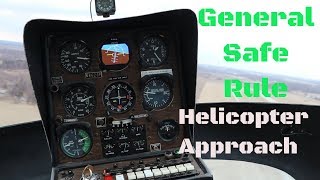
Kenny Keller teaches the 30-knot minimum airspeed rule for helicopter approaches: stay at 30 knots until your descent rate drops below 300 feet per minute to avoid vortex ring state. The lesson includes cockpit footage showing how the vertical speed indicator lags, plus a live Q&A with giveaway quizzes.
Questions this video answers
Always keep 30 knots on your airspeed until your rate of descent is below 300 ft per minute.
About 9 seconds (VSI shows roughly 9 seconds-old information).
ETL occurs somewhere between 16 to 24 knots.
1) Rate of descent 300 ft/min or greater; 2) Using 20–100% of available power; 3) Airspeed less than ETL.
Chapters
All right, in this video, we're going to talk about the general safe rule for flying your approaches from Kenny Keller Crater Helicopter Land Ground School. And the general safe rule is always keep 30 on your airspeed until your rate of descent is below 300ft per minute. So I'm starting a normal approach right now so that you can actually see the instruments and understand a little bit better. I'm always talking this in theory. You know what, let's go out and put it on camera where you can see it. So I'm going to get my approach started. I'm on a normal approach right now. You can see around 300ft per minute rate of descent, and I've got about 50 on the airspeed. I'm going to start slowly bleeding that speed off and I want to keep 30 on that airspeed until that rate of descent is below 300. You can see it's around three to five. I'm about 35 on the airspeed. It's not very windy day, so this is a little more difficult than a day like this.
But.
But that VSI is 90 seconds behind too. So right there it's at 300 and I'm at 30 on my airspeed. Okay, I'm just going to keep gently bringing in a little bit collective, keep my nice angle going from my normal approach and see I'm at 200ft per minute still up right about 30.
Okay.
So as long as you keep 30 on your airspeed until that rate of descent is below 300, you will not get into sailing with power. And most of the time by a normal approach. It's not usually an issue, but it can be if you don't have a lot of wind, you're getting steep, you're getting a high rate of descent with a little bit of air speed. And it happens to all of us. It happens to anybody. Right. So we're going to do it again. But that gives you the essence of what it is we're talking about. Not sure how well the camera caught that. So let's go around and we'll do it again. And while we're going around, yes, there's some fudge factor built into that. But the idea of the general safe rule for flying approach is to keep you safe.
Right.
So there's a fudge factor built in there. So as long as you keep 30 on your airspeed until that rate ascent is below 300ft per minute, you won't get into it. Now, on a windier day, if you got some decent wind coming off your Nose. It's pretty easy to do that. Tonight I got about 7 knots of wind I flew last night and it was calm and I was just doing some normal approaches, perfecting them, you know, sharpening up my skills. And with no wind, that's hard to do. It's hard to get it under 300 before you drive below 30. Lima is four miles to the east of the Andrews airport. Climate is 4,000ft Andrews. So for years I've been teaching this in theory, teaching it in the classroom, talking to somebody, it's in our videos. So I thought let's go get it on video so you can see in real time exactly what it is we're talking about. It's a pretty simple thing once you get it, but when someone first explains it to you, it might not make a lot of sense to you. So I thought let's go do it, get it on video and then you can understand what exactly it is we're talking about. Okay, I'm on another normal approach here. I've already started. I'm up to about 55, rate of sense, about 2 to 300 right now. I'm going to get a little more of that altitude out of there. You're going to see the VSI climb a little bit. Then I'm going to start pulling collector back in. My angle is really nice right now for my normal approach.40 on my airspeed and it's showing about 400ft per minute on that VSI. So now as I'm coming in, I can start bringing collective back in. Everything's looking good. My angle is nice and I'm just going to start raising that collective nice and gentle there you can see the 300, it's going below. And again, remember that's nine seconds behind, about 20ft above the ground. My sight picture is looking good. Still 30 on the airspeed even though I'm barely moving. When you look out the window, look like you're barely even moving. And there you go, well below 300 before that airspeed dropped below 30.
Alright, three days left on the Hogs birthday special. You got till Sunday. So I did that video yesterday, went out, just shot that from the cockpit because of course we've been teaching about the general safe rule for years, right? And we got a PowerPoint we're going to roll through here. Just for those that may not understand, experienced flyers have already heard this. Many people are flying by this rule. This is General Safe rule for flying approaches, okay. And it's got some fudge factor built into it. It's Just something you can use to make sure you keep yourself out of Vortex Ring State, formerly known as Selling with Power. So we're going to take that first little presentation, put it in ground school. And the presentation that's in ground school now is a little bit older. So we're going to basically use that same PowerPoint. We're going to go through it here just a minute and go through it. For those of you that aren't quite sure what we're talking about on this 30 and 300, we're going to go through it real simple with the PowerPoint to make it really, really clear. And we're going to go through that. And then we're going to do three giveaways. At the end, we're going to make this really easy. We're going to bring up three questions from our written test practice in the private pilot. Three simple private pilot questions. Each question we're going to give away first top 10 checkride tips. And then we're going to give away a helicopter checkride book. And then we're going to give away a T shirt. We just got a whole lot of T shirts in. So they're ready to ship. Heather's got five ready to ship now from last week. So we're ready to ship shirts. So we're going to do that at the end after this PowerPoint. So just know that the sale for helicopter land ground school ends Sunday night. I've put links down below in the description box. You don't even need a code for any of the unlimited on private pilot, commercial pilot, CFI or instrument. You can get those unlimited courses. No expiration. The links are below. You don't even need the code. When you click on that link, it's going to show you the full price, the discounted 50% off price. Enter your credit card and go. You don't even need a code. Go down there below. We made that really easy for you. And also the email we put out to 4,000 people today on our email list that aren't members that are interested in becoming members. Those are below. So let's go over here. Have Heather bring up camera two and she's going to roll through this PowerPoint for me. Got it up. Okay, so it's general safe rule for flying the helicopter approach. So again, a lot of you already know what this is. Some of you may not. I'm surprised I ask radio pilots sometimes. What's the general safe rule for flying helicopter approach? Good setup. Yeah, that's true. You need a good setup. But what's the general safe rule, and a lot of people have never heard of this, so go ahead and start scrolling, Heather. The general safe rule for flying helicopter Helicopter approach says. That happens always keep 30 or a minimum of 30 on your airspeed until your rate of descent is below 300ft per minute. Okay, so go ahead. Yep. And if you do that, you will not get into vortex ring state, formerly known as sailing with power. I wanted to bring that one up just because, you know, the original video says selling the power. The rotorcraft flying handbook changed in 2019, and now says vortex ring state formerly known as selling the power. So you're gonna have to give us old timers a little time to get the terminology switched over. Right. You teach something for 20 years, what you've taught first comes out of your mouth. So go ahead and start scrolling, Heather. Three things for selling with power are rate ascent, 300ft per minute or greater. Number two, using 20 to 100% of available power. Number three, airspeed less than ETL, which ETL is for those newbies, effective translational lift. I'm guilty a lot of times of not always explaining, and somebody says, well, I don't know what ETL is. I don't know what SWP is. I don't know what far means. So airspeed less than etl. Effective transitional lift. So let's go to the next slide. Heather, number one, one more time. Radiuscent, 300ft per minute or greater. Next one. Click it twice there. Believe we got two of them icons that'll come up. Okay, so when you're up, go back. Okay, maybe it's just the one. Okay, so this is what we're looking at. So we're talking about right here on your VSI. 300ft per minute. Now you got to look at your vsi. This one's not instantaneous, so this is always lagging behind. So you're looking at 9 seconds ago what was going on. But when we're talking about above or below 300, we're talking about your vertical speed per minute. And this is the number we're looking at. You want to keep 30 until you're below right here. Okay. If you're above 30, you want to get it that below or you want to. You want to keep 30 on your airspeed till this rate of descent is below 300. Let's go see what we got next. Oh, there's the red arrow. Now it pops up. So, yeah, we're talking about greater than in that instance. So go to the next one. Number two, using 20 to 100% of available power. So go ahead and go to the next slide, Heather. Depending on what aircraft you're using, you might be talking manifold pressure, whatever the case is. This is showing you where we're actually using power. If you're in auto rotation, you're not in vortex ring state. You're not in selling with power. This is just showing you that in this instance, we were using some available power. So let's go to the next one. Number three. Go ahead and roll it. Airspeed less than etl. Keep going. Effective translational lift. Now, there's some numbers you need to have memorized for ETL. Go ahead and roll. ETL occurs somewhere between 16 to 24 knots. In the old days, we said less than 10 knots, but they now say ETL occurs somewhere to 16 to 24. So that's why in this 30 scenario, you're staying above that 16 to 24. That's why we call that a fudge factor. Okay? Because if you're keeping 30, you know you're above that 16 to 24. Hopefully that makes sense to you. So what do we got? One more slide. This is just showing quickly, showing you an airspeed indicator. I think we're done there on the slides. I think that's it. So right there is your magical number. You want to keep 30 until that rate of descent gets below 300, and then you can let that airspeed drop off. And that is going to help you on your approaches. And again, general safe rule. A lot of people fly by it. Robinson people, you're taught that at the factory school. You've probably been taught that by your instructor. It's a general rule everybody flies by. Some people have never heard it. And again, it's not a regulation. That's why we call it general safe rule, okay? It's just to help make sure on your approaches that it keeps you out of trouble. If you follow that rule, you'll never get into vortex ring state, slash, selling with power, or formerly known as selling with power. It will not happen. It is such a great tool for you to put in your toolbox to help make sure that you avoid this dangerous situation. So I hear Heather over there chatting away. We got some people in there.
Daniel, Paul, Michael, Jim.
All right, all right, cool. Well, we'll get to it. Like I said, we're just going to do three questions because the thing froze up on us last time. Small crowd. The small usual crowds here. But that's okay because you guys are here. So we're giving the three. Giveaways And Paul, you've won everything.
I guess he said he'd refrain from playing.
Oh, well, you can play if you want. If it's okay with you, we'll move on to the next guy. Unless you want another book or another T shirt. We'll send you on a shirt if you want. If you win, you're here, man. So let's just do it. Heather. Ah, 24. Okay, let me go back to this screen. So here's how we're playing. We're playing on YouTube live. People will see this video later and they'll be in the description box answering, this is live. We are streaming live right now. Soon as this video ends, contest is over. So we're going to do three questions. The first person to put the correct answer in is the winner. First is top 10. Checkride tip. Second helicopter checkride. Third T shirt. So this is question going to be question 70. So when you type in your correct answer, type 70A, B, C or D, whichever. The correct answer is. Boom. Giveaway. Same thing for question 71. Same thing for 72. That way we know in the live chat on YouTube who answered first. If you're watching on Facebook, sorry, we're not monitoring those comments. We don't get much activity on Facebook. We get a few people watching, but just not enough activity to try to monitor both. So to be eligible, got to be on YouTube in the live chat. Comments below. Does it work? It's got to be in the live chat. And one more time, sell on Sunday night. The links are down below 50% off, people. Biggest sell ever. You got three days of our special today with a bunch of threes. So let's get to our three questions for our three giveaways. Tell me when the question's up. Heather. Here you go. How long is your class three medical good for at age 40? Is it a, at the end of the last day of the 24th month after the month of the date of examination. B, at the end of the last day of the 60th month after the month of the date of examination. C, at the end of the last day of the 12th month after the month of the date of examination. This is Claire's mud, right, class D. The next one won't be so long. D, at the end of the last day of the 36th month after the month of the date of the examination. And the answer is. Get my mouse going. Here it is. A. Anybody answer? A. Heather? Yeah, we got three.
A. Scott Parkus.
Scott. Nice. So I don't think have you Shipped him anything yet?
I feel like I have, but maybe not.
Okay, Scott, have you won before? If not, we're gonna send you top 10 checkride tips. Let Heather know in the chat if you've already got that book. Or number two helicopter checkride. Let me know if you got that or we'll send you a T shirt.
Yep, he's got it.
He's already got him. This is his first win. All right, we'll figure out the prizes either way. We'll figure that out. I'll go the next question. So here we go. Find my mouse, Heather. I steal the mouse, back and forth. We're operating off the same computer with two mouses. All right, here we go. Question 71. First one answer. What is the rule for when navigation lights must be on? A, one hour after sunset until one hour before sunrise. B, from the end of civil twilight until the beginning of civil twilight as published in the airman's almanac and converted to local time. Blah. Or C, from sunset to sunrise. D, any time visibility is less than three statute miles and the correct answer is C, sunset to sunrise.
Okay, so Michael got that right. And I just sent him top 10. So let's get. Scott has helicopter checkride. So tell Scott we'll ship him top 10.
Scott, we're shipping you top 10.
And Michael Worth, we will ship you helicopter checkride.
Michael, do you have helicopter checkride? Because we know you're pretty active in here.
No, no, he only has top 10 and t shirt coming his way.
Okay, so we're good on the first two winners. Yep. All right. All right, so now we're giving away the T shirt. Yep. As long as you've got it straight in your head. Me keep it straight in my head? That's another story. All right, one more. This will be for the helicopter on the ground school. We got 24 of them in today, so they are ready to ship unless you need some different size other than what we got. Here we go. When must a pilot win? What must a pilot do if he conducts a preventive maintenance action Described in part 43? A, notify the mechanic to take the appropriate entry in the maintenance log. B, notify the FAA of the maintenance action by submitting the appropriate maintenance form online. C, make an entry in the aircraft maintenance log, including date completed, description of the maintenance hours on the aircraft hubs and his or her pilot certificate number with signature. And D, a pilot cannot do any maintenance on a certified aircraft. You're all correct. You're all so freaking awesome. Zane.
Winner.
A new winner. Zane Zane. Zane, are you a first time winner? I think so. Sounds like it. All right, I'm going to turn the big screen now too now because I can, if I do this right, I can see the comments. Oop, TV went off. Oh, we just need to exit on that. Can you exit this screen and I can see the comments or do I even need to see them?
Well, they're right there.
Let me grab over here. There we go. Oh, well, you know what, I'm gonna move your screen over here. Is that okay? Sure. Oops. I mean to move this screen Now I can see. Now I can see what you're seeing. Okay, I'll go back to my hole. All right, back on the camera one. All right, any, any questions in there that we should answer? You can scroll back if I need to because I can see the screen. All right, well, hey, if I didn't Already say, email heatherellicopterground.com with your shipping information for your prizes today. There's any confusion at all, we'll make it right with you. We always do. Let me mention this. We have a lot of members that do upgrades during sales. So if you're a current member coming across this video, yes, we'll work with you. Like, I just had a guy who had just bought the private membership two weeks ago and he emailed me last night, said, hey, Kenny, I just bought the private two weeks ago. Can you discount that towards the special on the professional pilot? And I said, you know what, just sign up for the professional and I'll just deactivate your monthly and I'll refund your 49 bucks. And he was thrilled with that because we have to cancel that subscription anyway. So if you're a current member wanting to upgrade, we're always willing to work out some kind of a fair deal with you. You've already paid some money for something and you need something else. We'll work with you. We always do. So that's part of the beauty of it, right? We'll take care of current members. You come across the cell and you go, hey, well, I'd like to upgrade to that. So we'll work out something with you. Just email me@kennyelicopterground.com and we'll figure something out. So do us a favor, click that thumbs up button down below and help us celebrate eight years online. Most of you know, a lot of you are here every time we go live. If you're new to helicopter online ground school, my name is Kenny Keller. I am the creator of helicopter online ground School I launched at 12 years ago. God, man. It's just coke. That's it. I swear to God, that's all I'm drinking today. So we launched March 1, 2012. So March 1, 2020, is eight years online. So we started to sell that day. My birthday is Sunday. So we did this last year for my. For the hog's birthday, my birthday. And we thought, you know what? Let's just do it again this year. We fell short this week on some live videos because Heather and I both had turns of getting colds, and we were avoiding each other like she worked. And then I'd go in when she left because we didn't want to contaminate each other. And we're good. We're good now. No, we don't have the, you know, what's going on in the world. But let me throw this in. This is a public service announcement. Many of you already know this, but one thing that I. That I thought was really awesome when I went. When I became an EMS pilot, one of the Czech airmen that did our initial 10 days of training told us something. He said, you know, guys and girls in the room, you know, you're our new class. We're sending you out into the EMS world. And I want to tell you guys something from me personally, you know, and part of your training in law enforcement and fire department like I previously had then also with EMS's, you know, communicable diseases and viruses and all this stuff, and trying to keep yourself healthy. He said, listen to me, guys, I have not been sick in 20 years. He said, now listen to me, because this isn't easy to do, but I do not take my hand, my finger, nothing. And I do not take that to my face. I do not put my finger near my nose, near my mouth, near my ear, anywhere near my face without going and washing my hands first. He goes, this is a little tricky when you start doing this, because I'm telling you, I have not had an illness in 20 years, not even a common cold. And I've thought about that over the years, and I've never went to that extreme. But I have always been kind of careful about what you touch and try to be good about washing my hands. And with what's going on in the world, you keep hearing, wash your hands, wash your hands, wash your hands. I wanted to add that story to it because I found that a very interesting. And I've told that story in the past couple weeks, and people like, well, I never really heard it put that way. And I Think he used something like I put nothing to my face bigger than my elbow or I can't remember what he said. But ultimately he said if you touch anything, the way to not get sick is do not put your finger, your hand, anywhere near your nose, ear, mouth, anything. And he said if you do that, you'll be amazed at how healthy you will be and how much of these different common colds and flus and things that you will avoid. And of course being in the, you know, law enforcement EMS that was always part of our training. Blood bowed pathogens, things like that. And then also like the, you know, keeping your least your six foot distance, you know, limiting your time and you know, law enforcement, of course we're always taught to keep our distance, right? And something else they taught us in law enforcement was, you know, anytime you transport somebody, they're like, I don't care if it's zero outside, always crack your window in the police car. Because just that little bit of ventilation in a squad car can be the difference between you catching some type of a virus or the flu or a cold from up transporting a prisoner. Just having that little bit of airflow in the car can help keep you from, you know, getting these different common colds and things. So with what's going on in the world, I don't want to harp on it because I want to. I think people need to remain calm, go about your business and be smart about what you do. But I think it's very helpful when you really think about it. How many times, you know, you, when you went into the gas station and you used your credit card and you just touched a machine in a door that how many people just touched? And I told Gloria, I went and got some supper last night at the drive through at Jimmy John's and I'm coming back to the airport because I'm gonna, I'm working late and I'm editing, going to edit this video up that I just shot and normally I start eating in the jeep, right? I'm like, I'm gnawing my food down because I'm starving and I'm like, no, you just been inside a building, touched doors and the credit card machine and got back in the jeep. I'm like, no, drive to the hangar, wash your hands, sit down and then eat your sandwich, your billy club, you know, so little bit of something that hopefully will help. Alright, so I'm going to wrap it up, give us a thumbs up. I only see five down there. There's 20 people watching. Come on people, give us Some thumbs up. Leave us some comments down below. Sign up for helicopter and ground school. It's a no brainer, man. I had a guy last night tell me a big long story and I'm like, dude, right now the professional pilot is the cost of an hour in R44 with an instructor will probably cost you more than the professional pilot membership. I had a kid the other day, oh man, and he was talking about the money and I'm like, the money you're going to spend on a rating 15 to 20 to $25,000 just for a private. The cost of helicopter, land, ground school is a freaking no brainer, man. And we have a 30 day money back, no hassle guarantee. And I'm telling you, eight years. And Heather can vouch for me being here for two years. I don't, it's ironclad 30 day, you know, it's 29 day, 29. Oh, it's didn't work out. I'd like a refund. Okay, boom, we refund you, we shoot the money and we move on with our day. I don't sit around going, oh, how come you didn't like the course? Well, what could I do better? Because we do our best to take care of people, but we realize not every product and service is always right for the right for every single person. And we have people maybe got started and then, oh man, I can't get the medical right now. Whatever the case is, our guarantee is 100% ironclad, 30 day money back, no hassle guarantee. What more do I got to tell you? And we stand behind that 100%. We don't argue. So go down below. You can get unlimited on the private commercial instrument cfi. Click right to the link, it shows you the discount. When the page comes up, you enter your credit card info and become a member. It's that easy. And then the big professional pilot, you get everything. Private commercial, CFI instrument. That is a great deal for 50% off. It is a ton of training. I can't even tell you how many videos. Private pilot alone is 120 videos. And then you got all the videos on the other courses that go along with that. You know, you pay your instructor anywhere from thirty to a hundred dollars an hour to sit in ground school, you know, and that's, that's the real deal. The cost of our training is cheap. It's dirt fricking cheap. I think it's cheap at any time. Even at full value to me, I think it's still cheap for the amount of training that we give you and the hard work we put into it for years. And our customer service that is that we do the best we can is getting ready to turn even better. And you're going to hear more about that at the end of the month, saving some of the details on that. But we're striving. The next big thing is to take the customer service to a new level and give our members service they've never had before. And you're gonna like it. You're gonna like some available things that are gonna be available to you as members. All right. Do I need to answer anything before we go?
Yeah, no questions.
Well, that made it easy. I like that. Was it Michael that says instructors 45 an hour? Yeah, it's 45 an hour for an instructor, which is fine. There's nothing wrong with. You have to pay your CFIs to work with you in the aircraft, do pre flight stuff, post flight, signing log books. They still have to go through a certain amount of ground with you, make sure you're prepared for the oral. And $45 is fine. That's. That's a normal rate for instructor. That's a good rate. What my point is at the private pilot level, $49 for an entire month of 120 videos, 18 hours of training that you can watch anytime. Another email I want to mention, I'm going to go, I swear I always do this, but 18 young man emailed me. He's like, well, Kenny, is there really advantage any advantage to one on one, your online ground school versus one on one. What would be the advantage? And I'm like off the top of my head. You can do it at home in your pajamas, eating cereal any day, anytime, seven days a week from any device. Log in, watch as many times as you want, go at your own pace, step by step for $49 versus paying an instructor $50 an hour for an hour that you had to schedule that time at the airport, drive to the airport, expose yourself to people that you may not want to be exposed to at this point in time. Sit down, do ground, pay 50 bucks an hour. I said, so we're off the top. Yeah. There's a whole bunch of reasons why the one, the online school can supplement the training that you do have. There are plenty of schools that have really good school or really good ground training programs. And we hear that and we have members that say, we're happy. I'm happy with my flight school and I'm happy with the ground I'm getting. I want your training as a supplement. Great. We have people that say, my instructor went, well, we've been flying. Hey, you need to get ready for the test. Here's the book. And he said, here's the book. Read it. Flight schools. Some flight schools will do that to you. They don't want to do the ground. So we can do. You can do the majority of it with us, or you could be in between. We just had a young man that said, well, my school says, I can't use hugs. I can't use your hugs. And Heather asked me about it. I'm like, that's horse manure. You can use whatever you want. Just because your school says, you know, you can't use hugs. What you do at home, on your own, study, private time is your business. Nobody can tell you. You can't use a supplemental training system of any kind or any book or any publication, you know, to tell someone, oh, you can't use that. That's just wrong. You know, that's just them, I don't know, being dicks. How else can I put it? That's. That's the case. All right, let's get the hell out of here. Thanks, everybody, for tuning in. Email Heather to get your stuff, and we'll see you on the next video.










