This is a spoken transcript from a Kenny Keller YouTube video giving practical guidance for helicopter check rides and the flight test. The excerpt includes in-flight callouts (gear "three green", RPM 102) and extensive post-oral advice: take a short break before the flight, verify METAR/NOTAMs, use and follow checklists (engine start, walk-around), confirm endorsements and IACRA login, know the POH/RFM and emergency procedures, and use personal strategies to calm nerves. Keller emphasizes organized appearance/timeliness (acronym OAT), being thorough with maintenance records, and the mantra that "you can't do anything too slow" in a helicopter.
All right, you're below 100 knots. Here comes the gear. Three green. I see them. You see them? Yep. And we go to 102% on the RPM. Landing gears down. Three green. RPM switch 102. Radar is off. Never used it. Brakes are off. Nose wheel steering off. You're good to land.
Rotor temps brought to you by helicopter. Online ground School's no go decision button. When you feel the pressure to fly, but know the right decision is to stay on the ground, hit the hogs no go and live to fly another day.
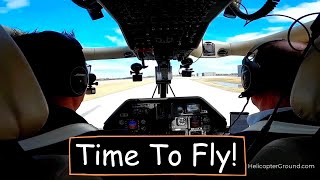
Checks. Everything's done. Looking good, Mr. Show off. And our last rotor tip is talking about. You just passed the oral. Congratulations. Now it is time to fly. Tell the examiner that you would like to take a small break before flying. Use this time to catch your breath, grab a snack and make sure to stay hydrated. Use your iPad to check the current metar. Know the surface winds and go over in your mind how you're going to hover taxi for the takeoff. Know the notams for the airport and the airspace around you as you pre flight the aircraft and make sure to take your time. Have that checklist in your hands at all times and reference it. And do one final walk around before entering the aircraft to confirm that all of the doors are now closed and latched. Use the checklist for your engine start again. You'll want to listen to the AWOS or ASOS to verify the winds. Speak clearly on the UNICOM or the tower frequency. And remember, you can't do anything too slow. Did I mention I used the checklist? Before placing the checklist down prior to takeoff, do one last final print check. I had an applicant try to take off with me with the boost pump off and the red light staring right at him. Yes, he had to come back later, but I felt bad for him because he was so nervous and he was carelessly rushing through the checklist that he had overlooked that he had left the pump in the offed position. So anyhow, that is the rotor tip that we want to talk about after you've got through your oral portion of the test. So let's recap the rotor tips. First impressions. Remember the acronym oat. Oat. Organized Appearance Timeliness. Know your maintenance records. Maybe grab a status sheet to take with you. Know your IACURA login and password. Write it down, whatever it takes to have it with you thoroughly. Know the pts. Anything in there is fair game for the examiner. Know your aircraft. Memorize the emergency procedures when necessary. Know the limitations section like the back of your hand. Know the different sections in the POH or RFM and what each section represents. Fly on the windy days and don't be intimidated with stronger winds. Use the winds in your favor. Make sure that your iPad is charged and ready to go. Do you have the correct weighted balance in your iPad? What is your backup paper or another electronic device? Have something to fall back on? Have your instructor confirm and reconfirm the proper endorsements. Too many checkrides never get started due to incorrect endorsements. This does add to the stress level if the instructor has to get involved at the last minute or to make those corrections. Calm the nerves. What is relaxing to you? Everyone has a different way of relaxing. Figure it out before checkride day. And for heaven's sakes, don't tell everybody the day of your checkride. Be organized. Be early. Be smart. Be confident. Be a safe pilot. One word checklist period. Use your checklist and remember, you can't do anything too slow in the helicopter. I truly hope in some small way that this video has helped you. Here's to much success and say fly it live to fly another day. Helicopterground.com SA.