Helicopter Check Ride Part 3 Frequently Asked Questions
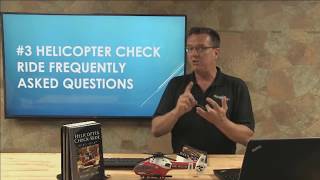
Kenny Keller (YouTube video "Helicopter Check Ride Part 3 Frequently Asked Questions") answers viewer questions about starting helicopter training and pilot careers. Key guidance: take an introductory flight to confirm interest; obtain a student pilot medical certificate early so it does not delay soloing; glasses are acceptable; a college degree is not mandatory (high school diploma currently required) though it may become more commonly requested; accelerated full-time training can reach CFI in ~8–9 months but many take years depending on finances and commitments; Keller emphasizes ground study (he estimates ~75% of learning) and persistence. Promotional notes: Keller references his book (Kindle listed at $0.99) and a limited-time coupon code shown during checkout.
Chapters
Alright, so you're probably getting a little bored that that video was about 30 minutes long anyway, so probably a good thing the computer went to sleep while I was over here answering questions. So that's where that problem came into play. So again that was on the pts. Next is going to be next video. Well actually let me catch up on comments here. I believe we were talking about Sarah Green last and he said he was hoping she'd still be single. Then we had Fox Deuce commercial pilot working on Private pilot, fixed wing and ASP. A&P. Love the channel. Thank you very much, I appreciate that. Please give us a like and a share. Luke stokes I'm grade 11 Canadian student. I'm inspiring to achieve commercial helicopter pilots. I'm struggling to understand how to get started in industry with so little hours. That's a problem for most. But what I can tell you is you got to apply yourself, go out there and hit the streets. There's a lot of poor instruction going on out there and not saying there isn't good instruction. There is a lot of good instructors out there too and a lot of good flight schools, but there's also a lot of not so good. So to get started in this industry you want to study really super hard, be as good as you can, strive to be the best, and if you work really hard at it, it's not that tough to become better than most. So my advice is you got to work your butt off, study really hard, be the best you can be and then get out there and beat the bushes. When I was a new CFI, I just started teaching and then the events of 911 happened. So most of us know what happened around the world. Air travel shut down. The school I was working at almost went out of business and I was lucky because nobody was doing anything anywhere. So I just started emailing every single helicopter school that was within my reasonable driving distance, every state around me. I was emailing every company I could find on the Internet and luckily a guy liked my original email, got an interview and got a job when nobody else in the country was doing anything. And I got that by applying myself and getting out there. And I had a good reputation. Even though I was a new instructor, I worked really hard at it and I had some impressive things on my resume and I and that helped me get the job. So if you want to do it, you can. I'm a firm believer that anybody can do it. You just have to apply yourself. And that's no different than any other profession out there. I mean many People that I know I went to college with to this day have never used the training they got in college. Now they're working at the local farm store or whatever the case is. So many of them never found the job that they wanted. But I don't know how far, how hard they actually went after it. So the Next Video Helicopter Checkride Frequently Asked Questions. Some of you might get a kick if you know our newer videos. A few of these are a little bit older, but there's some good questions and I can give you an idea what these are going to cover. Flip a couple pages here. So again, this is out of my book, Helicopter Checkride, Amazon best seller. You can get on Amazon $0.99 for the Kindle copy and you can also get the paperback copy on Amazon. But I have some questions. How do I get started flying helicopters? If you have high blood pressure, would you still be able to come help become a helicopter pilot? Can I wear glasses? Do you need to go to college? And some of the other basic questions that people ask about getting their helicopter license. So I'm going to roll that now. I'm going to keep watching the chat. I'll come back after that video. And one other thing I mentioned earlier, we do have a special going on limited time special. That code is when you go to our site@helopterground.com when you get to the checkout page where you fill out your credit card information, look on the right hand side about midway down and there is a coupon box where you can enter that code 15BR1 5OFF and when you click apply that will show you the discount. So thanks for all of you that are still here watching. Thanks for making the comments. Thanks for any like and shares on YouTube that you've done. Please subscribe to our channel. We're going to keep bringing you new content, more live events. We have a lot of really, really cool stuff going on. So I'm going to go ahead and roll that video now and we'll be back just shortly to answer some more questions.
Could be a dream.
Along with my dream of wanting to shoot a video by the ocean. Been wanting to do this for quite a while and now I'm getting my chance to do that. We can help you make your dreams come true. The first question a lot of people ask is how do I get started? Getting started, the best thing to do is just schedule an intro flight.
Find a helicopter somewhere near your area.
And schedule an introductory flight and go out and get your first helicopter lesson. You can sit and think about it all Day long, you can read books, watch these videos, but until you go out and try it, you're not going to know what it's really all about. And the actual flying experience speaks for itself once you go up.
So.
So if you're wanting to know where to get started, schedule yourself an introductory.
Flight and go out and give it a try. If you have high blood pressure, would you still be able to become a helicopter pilot? Now, the course, that question would be one that you have to take to your medical examiner, which brings up a great point. A lot of people ask questions about their health and getting their medical certificate. You can have certain problems and still become a helicopter pilot. And we urge people, when they first start training to get your medical student pilot medical certificate right off the bat. Because if you start flying and then find out later that you have some kind of a medical problem, of course that drags out your training, costs you more money, and in the end maybe you would find that maybe you couldn't become a pilot. But there are a lot of different things, different health problems that you can have, and if they're monitored by a doctor and, and following certain guidelines, you can fly with certain medical problems. So that is a great question, and I'm not going to even attempt to answer because high blood pressure probably depends on your, you know, the medical examiner, your age, the other things going along with your health. So I wouldn't attempt to say for sure on that, but I would think that probably under a doctor's care, and if it wasn't too out of control, I would think that that probably would be okay. So that is a great question. But again, the main point is get a medical certificate early on. You don't have to get it before you start training. You can become a student pilot, start taking lessons. But a lot of people wait, they're ready to solo and they still don't have a medical certificate. So if they don't have that, they can't do the solo flight and continue on with the training. So then if you say you did get an appointment with medical examiner and you had some kind of a problem, then again that's going to drag out the training. So go do an aviation medical examiner early on and find out your health situation. If there's any problems. You may be surprised on certain things that can be allowed and still fly. A lot of those questions come up like, can I wear glasses? Yes, you can wear glasses. I've been wearing glasses for years. So any questions on your medical certificate and becoming a pilot? Go to an Aviation medical examiner and get the test done right off the bat. And the other part of this young man's question, do you need a college or university to become a pilot? No, you don't. At this time, you only have to be a high school graduate. You have to have a diploma at this point, you do not have to have college or university. Now, with that being said, are there some companies that are now requiring potential pilots to have college or a college degree? Yes, there are so many. By not having college, you may be limited on that specific job that you want by not having a college degree. But at this time, there is a lot of helicopter jobs that do not require a college education. I didn't get college. I've been lucky enough to do all the different forms I've wanted to do as far as jobs in the helicopter world, and it hasn't restricted me from any, but it could in the future. So if you're questioning whether you have to have college or not, I would say get it. Because as time goes on, I do believe there's probably going to become more of a requirement and probably more and more companies are going to start asking you to have that college degree. So not an absolute, but get it if at all possible. I would definitely get the college degree, but it's not mandatory. And the other last part of his question, how long will it take to complete your training? That is a good question. It's a great question. There are so many things that are involved in how long is your training gonna take? I've heard of people that went from off the street to CFI in like eight or nine months. And to do that is you're going to have to have all the money available. You're going to have to commit yourself to studying and working at it full time to get through it in eight or nine months. So it can be done in a short time span like that, but I wouldn't recommend it. I think that would be a huge stress to try to get through it in that amount of time. But it can be done. And then we'll go to the other end of the spectrum. Use me, for example. I started in 97 and I didn't get my CFI until 2001. And it was because I was operating a business and trying to scrounge up the money for more training. And, you know, like most of us are a lot of helicopter pilots. I struggled along the way and had different things that held me up with I failed my first private pilot checkride because I didn't have the Ground knowledge I needed, which to say is why I'm here and why I'm offered the helicopter online ground school that I currently have is due to that lack of knowledge that I had in the beginning. Everybody wants to fly. We all want to go fly. Nobody wants to do the ground part. The ground part is, in my opinion, 75% of learning to fly helicopters, 25% is the actual flying.
So.
It can take three or four years to get to CFI from off the street, or it could even take longer. It all depends on, again, how much money do you have available? How well do you study on your own? There's just so many different factors on how long it's going to take to get your helicopter rating. And I tell people when they're looking at doing it as a career and they're worried about the private and the commercial and the cfi, I say, you know what, get your private first. Make the private your goal, Start the training, get your medical, get to private pilot, and when you get there, then the next step is commercial pilot. And then you can get started on that. It can be overwhelming if you look at the total cost and the time. So my opinion, focus on that private rating first and go from there. So that's three great questions from one of our young subscribers who's in high school and looking at becoming a pilot later on. So if you have any questions you'd like answered, leave them in the comment box below. Thanks for stopping by and we'll be back again tomorrow for more questions. Thanks for stopping by and we'll see you soon. Question today is a good one. And question from one of our free members in our online ground school site. I have a private rating on a Schweitzer 300 CBI in 2010. Now I'm planning to do my commercial training. If I do my commercial on different helicopter, is that going to be a problem with getting a job or getting the rating? This is a great question and it doesn't really get asked a lot. Maybe sometimes people don't think enough about this one in the beginning. And there's two big sides to this. Depending on where you're gonna try to get your first job at, you may just be willing to go anywhere or maybe you want to work at a specific flight school in a specific aircraft. So the big thing is when you go to get your first job, they're gonna want to know how much helicopter time do you have and how much helicopter time in specific aircraft do you have if you're trying to get a job on an R22 and you've got only got 20 hours in the R22, that's not going to happen. There's certain regulations on the amount of time you have to have in the R22 to teach or if you're going to fly in the Schweitzer or the instrument, depending on where you go. Things are going to be different with different flight schools. And the example I want to give. For four years I was operating in Enstrom with a flight school and the first insurance company I had. For the first three years, I battled with them constantly because I would train a guy, private commercial cfi, and I'd want to put him on the insurance and they'd say, well, have him get, you know, a total of 350 hours and then 250 in F28F. And I would be really frustrated and say, what are you talking about? I trained the guy. He's familiar with my operation, my aircraft. And it was a very, very frustrating situation because who knows better my aircraft and my operation than somebody that I trained and did all their ratings with me. So I battled with that the whole time. And I was actually a check airman for that insurance company, and I still am today. But I didn't have any say or pull in getting someone insured. Then I changed in my last year, and the company I changed to, not only did they save me a little bit of money, they were very reputable. But they said, you hire who you want, we'll insure who you want. You're the instructor. Why should an insurance underwriter tell you who can safely operate your aircraft? And I was amazed. And I thought, wow, I wish I'd been using you guys three years ago, because that's the way it should be. So those are the kind of scenarios that you're gonna get into is how much time you have to have in that specific aircraft. What is the insurance going to require? Everything in this industry, like everything else is, is pretty much regulated by insurance. So that is going to be the main thing as far as getting your rating. You know, would it make it tougher if you did Switzer first and then you switch to another aircraft? I personally think the benefits outweigh the fact that it might cost you a little more money and might take you a few. A few more hours to get that commercial rating, switch into a different aircraft. But flying different aircraft is good. It takes you a little more time, you'll spend a little bit more money. But it's sure nice to get training and instruction in different styles of aircraft from different instructors. Because everybody has their own way of teaching. And two guys may teach the same maneuver, say a quick stop, and they might teach them totally different. And it doesn't mean one guy's wrong and the other guy's right. They could both be a good maneuver as long as it's performed safely. You know, there's, there's a lot of benefit to flying those different aircraft and playing with different instructors and seeing the different ways people teach. So it's a pretty open ended question. There's lots of things to think about. Do you have a specific place that you're gonna want to fly and a specific aircraft? If that's the case, then you're probably going to want to stick with that one aircraft. If you're going to be searching around again, it's just kind of, you got to kind of look at what's going to be right for you. And getting that first job sometimes is very, very tough. For most everybody, that first job is the tough one. And it's usually the problem is having the amount of time in the aircraft that you're trying to get that job to fly is you don't have enough time in that specific make and model of aircraft. So I know that it may not answer the question to a T is what most people would like to be answered, but that's pretty much the case. It's a great thing to fly different aircraft, fly with different instructors, get different experiences. Different experiences. There's a lot of good involved in all that. But just knowing that it could cause you a little bit trouble later when you're going to get that first job, when you don't have enough time in that specific aircraft. So hopefully that kind of answers that question and gives you a little bit of insight on that. And as far as making it the rating harder, I don't think so. I mean helicopters, they all have collectives, cyclics, pedals, they all fly virtually the same, virtually. But they're just, there are different characteristics. Buttons and switches are different places. You have different limitations. So although there are differences, they're still helicopters. So again, bottom line, I want to sum it up with. In my training I did Robinson, Schweitzer, Enstrom, between off the street up till cfi. It did take me about four years to get there and it took a lot of extra money because when every time I'd switch to a different aircraft I would have to kind of like back up and something you kind of, not that you have to relearn anything, but you have to learn how to handle another aircraft differently and different emergency procedures and different performance things and so on. So I still think to this day, for me, I'm glad I had that experience in the three different aircraft because it, it helped me just have a well rounded idea of kind of how all these different aircraft fly. And traveling around and flying in about five or six different states with different instructors in the end was a really good thing. But it did cost me more money and you know, did kind of delay the training. So these are all things that you want to think about when you're looking at what aircraft should I fly? Is it going to be hard to get the rating by switching to aircraft? And what about a job later? Hopefully that helps. Response to the question that I get a lot about commercial training, becoming a commercial helicopter pilot. And of course everybody wants to know what's it going to cost. The cost is pretty much going to, can range from. I'm going to throw out a couple of numbers. I'm going to say I know guys have done it for around 50,000 and I know a guy that took almost 100,000, was 95,000 for all of his training, commercial CFI, instrument instructor, the whole work. So maybe even.










