Helicopter Fatal Accident - PILOT'S POOR IN-FLIGHT DECISION TO LAND DOWNWIND
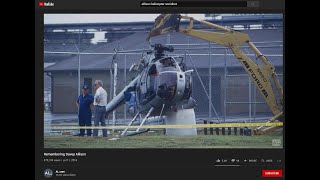
Kenny Keller (Helicopter Land Ground School) reviews an NTSB helicopter accident in which a pilot attempted a downwind landing in a confined area at Talladega Speedway and crashed. Keller summarizes the accident sequence, highlights pilot experience (about 54 helicopter hours, ~9 hours in the specific Hughes/Schweizer 369 HS), cites the NTSB probable cause (pilot's poor in-flight decision to land downwind and failure to compensate for tailwind; lack of experience in type as a contributing factor), and offers instructor-focused safety lessons (avoid downwind landings, prefer larger landing sites, follow insurance/checkout minimums, maintain currency on LTE). Keller also notes collaboration with the U.S. Helicopter Safety Team and placement of related LTE training on the FAA Lessons Learned library.
Questions this video answers
168 ft long and 105 ft wide.
Approximately 54 hours in helicopters (about 1,073 total flight hours overall).
About 9 hours in the used 369 HS (two training sessions totaling ~2.8 hours dual noted; report states ~9 hours in the aircraft).
The pilot's poor in-flight decision to land downwind in a confined area surrounded by high obstructions and his failure to properly compensate for the tailwind condition; a related factor was the pilot's lack of total experience in the type of aircraft.
Chapters
Fatal helicopter accidents are always tragic, regardless. My heart sinks every time I hear about a helicopter going down, especially when they are fatal. These tragic things happen, whether they were yesterday or 25 years ago. And the only really good, I guess, can be that we can learn from these things that have happened in the past. Right. So I'm Kenny Keller, creator of Helicopter Land Ground School, and I just want to do a little bit of review of this accident tonight. I'll put up the accident number. This was obviously a fairly publicized event from a celebrity that crashed. I want to say that I just was asked by the US Helicopter Safety team and this is an honor to help kind of spread the word about helicopter accidents and particularly their FAA library of helicopter accidents. And I'm going to put the link up on that as well. This is something they've made available. And at the time of making this video, there's only a couple accidents in there. But I just had a conversation with them the other day, and between now and Heli Expo, they've got several other accidents that are going to start going in there. And this is something that they want or they asked if I would share with our ground school members and our viewers on YouTube and Facebook and the different social media that they wanted to get the word out about the Lessons Learned library. Because they talk about past accidents. Right? And we can all learn from a past accident. I do want to add next that everything you see today in black and white when I share the screen with you is all information that I've taken from the NTSB report. And this was sent to me by the gentleman, Scott Terrell, of the US Helicopter Safety Team. This was the first thing that he wanted to kind of talk about. And they've been looking at this. And again, there's a lot to learn from this tragic accident. So again, everything in black and white, I'm taken directly from the report. And then I'm going to put a few of my own opinions on things in there about why instructors do what they do, why insurance companies kind of make some of the decisions they do, and things that happen along here that, you know, maybe with a little bit of more planning, maybe this tragic accident wouldn't have happened. So starting off, the helicopter pilot had attained nine hours of flight time. And in this make and model of aircraft, he was attempting a downwind landing in a confined area of the Talladega Speedway. Although open and unconfined areas were located nearby, the site was 168ft long and 105ft wide. Okay, so first, what I want to elaborate is he went from a Robinson R22. According to the report, he did all of his training in a Robinson R22 and then he transitioned to this used aircraft. So this particular helicopter is more of an advanced helicopter. And going through the report, you'll find out he had around 54 hours total time in helicopters. That's not a lot of helicopter time. However, he had around 1000 hours total time because he had time in fixed wing aircraft. And what I want to say as an instructor of 20 years, as instructors, we're taught, when we're teaching, add on pilots going from fixed wing to helicopter, teaching downwind landings or not to do downwind landings is very, very important because a fixed wing aircraft has a little more leeway with getting away with landing downwind. Most generally, we teach not to do downwind landings at all. Now, of course, it could happen if you say you misjudged the wind, there could be some reason that it happens. But most generally we do not teach to land downwind. Then next I want to mention when they say although open and unconfined areas were located nearby. So what I want to mention next is the thing that I took away from my five years of EMS flying is right off the bat, they teach you as an EMS pilot that many times emergency personnel will call you to a scene. They're picking what is usually very close to the accident, right? Which makes complete sense. So they're picking what they think is a good spot. And we, the company I worked for, we would tell emergency personnel we like to have a minimum of 100 by 100ft, even more if possible. So that's what we tried to tell them as a minimum was an area 100ft by 100ft. And a lot of times as a helicopter pilot, when you're coming in, you can see a scene where someone wants you to land, but from above you can see a parking lot, an open field. Many times you can see a large area nearby that would be safer to land. So many times landing for what's convenient for either the medical crew or the emergency personnel, or might be convenient for the pilot because he wants to be closer to where he's going. It could be a lot safer to pick a spot not that far away. It's just going to take you a little more time to get there once you've landed. So many times there is a better place close by than what some people will pick. So when we talk about the site was 168ft long, 100ft wide, that's kind of the point. And again they mentioned and was surrounded on all sides by tall fences and power lines. Okay, so starting off there was probably a better spot that he could have picked to try to land. So let's go next to probable cause and findings. The National Transportation Safety Board determines the probable cause of this accident to be the pilot's poor in flight decision to land downwind in a confined area that was surrounded by high obstructions and his failure to properly compensate for the tailwind condition. A factor related to the accident was the pilot's lack of total experience in the type of aircraft. So next I want to point out some of the factual information for the history of flight and the personal information. And again, I encourage you to read this report. If you like. I'll make sure I put the link down below this video where you can actually go see and download this report. But I highlighted the things that popped to my attention reading through it the first time, and I read it a couple times and the things I highlighted are again, just what immediately popped out to me. As a reader of this report, you may find other things that are very interesting and pertinent to you, but this is a discussion that I just want to have and I'd love to get people talking. You're more than welcome to put your comments down below about this accident. And again, I'm just giving you the data that I have that I am taking from the report. Witnesses stated that the aircraft approached the intended landing area from the south to the north at an altitude of about 50ft. Once over the landing area, the aircraft began to descend very slowly from a 50 foot hover to approximately one foot above the terrain. All right, so the reason I highlighted that this as far as in my opinion, this is more of an advanced maneuver. Not to say a private pilot could never do this. But when you see someone going into a landing area and starting up at 50ft or 100ft, that's usually more of an advanced maneuver. And this is what you see on television all the time, right? Straight up and straight down. As a helicopter pilot, we're trained to avoid these type of situations unless it's absolutely necessary. The safest way to land is always going to be coming in on a nice angle and keeping the aircraft moving forward. So again, I only know what I'm reading from this report, but it does first make me think, why did He Start at 50ft and try to go straight down? The spot would have been big enough according to the report that he should have. Should have. Again, just my Speculation that more of a normal angle of approach could have possibly been done, and especially if he would have picked a different spot. So with 58 hours coming to a hover up here in a turbine aircraft and going straight down, most generally would be more of a advanced maneuver. So next, the report tells us that at that point the aircraft began to oscillate from side to side and then climb to an altitude of approximately 25ft. After climbing, the aircraft began to rotate in a counterclockwise direction. The aircraft then banked sharply to the left and impacted the terrain and a 10 foot fence adjacent to the original intended landing site. The right front seat passenger on the aircraft stated that the approach seemed to be normal until about 6 inches to 1 foot above the ground. He said at that point, the helicopter appeared to turn to the right approximately 30 degrees and then rapidly ascended to a height above the power line poles. He stated that at that point the ride became very violent and he became scared. He recalled bracing his hands on the console and the right door of the aircraft. However, he gave no indication of where he braced his feet during the event. He stated that the aircraft impacted on the terrain on the left side. So when you read that, it's tragic that they were that close to the ground, 6 inches to a foot. So of course that brings up a lot of questions like you're that close, you know, why didn't he do this? Why didn't he do that? We weren't there. We don't know. But think about how close he was to terminating this landing. He was a foot above the ground. Just a foot. Okay, so next I want to go to personal information for Mr. Allison. Mr. Allison had accumulated approximately 10, 73 hours of flight time. He received his helicopter rating in July of 1992 and had accumulated approximately 54 hours of flight time in helicopters. He had flown approximately nine hours in the used 369 HS. And the remaining flight time was accumulated during training for his helicopter rating in Robinson R22. So again, I wanted to go back to the fact of, if you think about it, 53, 54 hours is not a lot of time. And to go from the Robinson R22 to the turbine aircraft that he was flying, that's pretty early for it for a transition. And a lot of times, you know, we really complain about insurance companies, but many times insurance companies have a pretty high requirement before they'll allow you to fly a turbine aircraft. And we'll get to a little more of that in a minute. Many times, you know, people are frustrated I know guys that have bought turbine aircraft that their insurance policy required them to get 100 hours, 200 hours. I know private individuals that have hired pilots to come in and fly with them to fly off those hours before they could get insured to fly on their own. So, you know, sometimes insurance requirements can seem overboard. But then on the other hand, there are reasons why a lot of the time that they set the requirements that they do. So we do have a gentleman who went from an R22 into a pretty advanced aircraft with only 54 hours total time. That's not a lot of time. And he is still a fresh pilot at this point. And again, going back to the fixed wing, I'm not picking on fixed wing pilots, but we're trained as instructors to make sure people understand the difference. And again, the downwind landing thing comes into play a lot of the time, you know, and there's safety notices about downwind landings and there's safety notices about airplane pilots, higher risk when learning to fly helicopters. So as instructors, we always got to do our best to really make sure people understand the differences and make sure that they do not do downwind landings. So next I want to point out Mr. Allison's flight experience in the used 369 consisted of two point hours of flight instruction, 2.8 transitioning to a turbine aircraft. Not a lot of time. It's really not so. His instructor stated that during the flight training in the 369, they did takeoff and landings, auto rotations to power recovery and quick stop procedures were practiced. The instructor stated that at no time during the training had they practiced downwind landings. He stated that at the completion of the two training sessions, Mr. Allison had stated to him that he intended to fly the helicopter to his Mr. Ellison's residence and park it until after the race at Talladega. At that time, Mr. Allison would make an appointment with the flight instructor to complete a thorough checkout in the helicopter prior to conducting any flights with passengers. Okay, so I'm taking this as exactly how I'm reading it. He was expected to do more time with the instructor before soloing and do more time before he started taking passengers. And I'll go clear back to when I was a new pilot and I got my private. And I remember the examiner, you know, a legend in the industry, said, kenny, you're a private pilot. And at that time I had probably 80 some hours, right? Like 88 hours when I got my private. Took me a while because I struggled. And the examiner said, hey, you're a private pilot, you're legal to go take the aircraft and do what you're going to do. And he said, you're legal to take passengers with you. But he said, let me give you a little bit of advice. There's a guy that's been around for a little while, right? And he's an examiner that's been given checkrides since Vietnam. Vietnam era pilot, right. And again, very well respected in the helicopter industry. He's a legend as far as I'm concerned. And he said, kenny, get a little bit of time in your belt before you go out and start giving a bunch of rides. He said, I'm not saying you can't do it, just saying get used to having the license. Get used to being in there by yourself and just fly and get a little bit more comfortable and just don't rush right into taking passengers. And most of the time people are restricted. Right. When you first get your license and you go to rent that helicopter, most flight schools are going to restrict you. They're going to probably tell you something like, no off airport landings. You know, we prefer you not going to your house. There's a lot of reasons why, when you first get your license and you don't have a lot of helicopter time, why you're going to be restricted by insurance. Why you're going to be restricted by an instructor or a flight school is because they're just trying to be careful and don't want people to go out and fly beyond their experience level when they're brand new. Okay, I mentioned insurance a little bit ago. Let's talk about that real quick. Insurance companies were contacted on behalf of Mr. Allison and asked to provide a quotation of premium of coverage on the UC369 helicopter. One company who offered a quotation would have required Mr. Allison to complete 25 hours of flight training in the UC 369 HS prior to his solo flight and 25 hours of solo flight prior to the carriage of passengers. Okay. This is one time where I would probably agree with the insurance company. And again, this was back in 93. I'm sure that. I know I've seen restrictions a lot higher on private individuals that want to get insured in a turbine aircraft. And let's be real, the reason that it happens a lot of time is because of the accidents that have taken place when somebody has possibly moved a little too quickly into situations where they probably should have had some more time. So. So in this instance, I don't think this, and I don't know who ended up insuring it. But, you know, usually private owners are upset when they say, oh, I gotta go do that and I have to go do this. There's usually a reason behind that. And in this case, I could understand why an insurance company would say, let's get you 25 hours of dual and then go fly it by yourself for 25 hours. That, I believe is a reasonable request. There's a lot of information under the wreckage information section of this report, and you're welcome to go read it again. I'll put the link down below the thing that I highlighted. The tail rotor pedals were found with the left pedal fully depressed. So the reason I wanted to start with this video is with this collaboration of the U.S. helicopter safety team. They are going to use one of our helicopter laying ground schools on LTE loss of tail rotor effectiveness. They are going to put that video, our video, which I'm honored on the FAA Lessons Learned Library, along with this accident. So I'm very honored that I've been asked to help out and spread the word on some of these accidents. And I'm thrilled that they are going to use one of our training videos along with this accident. So, again, you know, we're covering these things for awareness. I saw a video when I was early training and I searched for it today and I haven't found it. And it was at a flight school on an old VHS tape. And it was a tape where they were talking about LTE and they were going out and just walking up to experienced helicopter pilots and asking the question, what is lte? You know, when they're not prepared and experienced pilots out there, civilian and military both, it was amazing when someone was confronted with the question, what is lte? How many times the pilot was being asked that question would stutter, laugh, giggle, start trying to spit out what LTE was and couldn't do it. So what that tells us is, you know, people learn to get their ratings, but they don't always stay fresh on knowledge, right? So just because you get your private license doesn't mean it's time to stop studying. You know, you have to review these things because if you don't review them over time, if you don't use it, you lose it. Right? At last. I want to cover some of the findings. And they have two sections. First occurrence, one, loss of control in flight, phase of operation hover one in flight planning decision making poor for the pilot in command. Weather condition tailwind. Three, compensation for wind conditions improper. Number four, lack of total experience in the type of aircraft five, terrain condition high obstructions. Number six unsuitable terrain or takeoff landing taxi area selected. Number seven object the fence occurrence. Number two in the findings in flight collision with object phase of operation descent uncontrolled. Could this accident been avoided? Sure. Most any accident probably could have. I tried doing this in good taste. No disrespect to the pilot that lost his life, but reading through that, I'm just giving you my opinion of what I see as an instructor of 20 years. Number one problem landing downwind. Number two, kind of an advanced maneuver, going to a spot and starting at 50ft and then trying to come straight down. We could sit and you know, armchair quarterback this thing all day long. But it's a learning experience. And again, most of all that is directly from the report. I'll put the link for that report down below. If you want to go look at it, you can download it just like I did. I'll put a link to our LTE video down below as well, the one that they're going to be adding to the FAA accidents license learned. So again I have to reach out to the US Helicopter safety team and Scott Terrell and thank him for asking me to get more involved with the U.S. helicopter Safety Team and start using some of our videos with accidents and for us to point our not only our helicopter land ground school members but also viewers and followers to that accident library. I know when I first started many years ago, the one instructors I had at a flight school had a big great big binder of just R22 accidents. And because that's what I was flying, that's what he recommended. I studied and I did. I took that book home and it was common for them to ask the students to sit down. And of course they say you don't have to read the whole entire book, but just sit down and start leafing through it, right? And I did that and I felt like that did help me early on in the training because it gives you a lot of respect for the aircraft. And when you read what goes on out there in the world and you read about the reasons why accidents happen, majority of the time it's pilot error. Sure, sometimes it could be maintenance, sometimes it can be other things. But most generally when aircraft get wrecked, it's most generally an error on the pilot's side. And most anyone in aviation most generally agree with that subject. So put your comments down below, do us a favor and subscribe to the channel. Subscribe. Click that little bell so that you'll be notified of our new training videos when they come out. This is the helicopter line ground school wall of fame behind me. We've got another row of 10 going up tomorrow. Heather has 10 more pictures ready to go up and fill across this way. We've been online eight years, blown away by what we've been able to do in the helicopter world with helping train pilots and helping people with the knowledge. It's been my opinion for many years, 25% of the work is learning to fly the aircraft. 75% of the work is learned the knowledge you got to have the knowledge, you have to have the understanding of the aircraft. And it goes back to good pilot technique. Most of the time when pilots get into trouble, have accidents and lose their lives, many times it's because they made a bad choice. We're all human beings and we all occasionally make bad choices or dumb choices. Most of the time we make it through and then we're a lot smarter after the fact. Sometimes not so much so. Subscribe to Channel Click the bell. Go down to helicopterground.com that link is down below the video to go check out our helicopter online ground school memberships. So give us a thumbs up comment down below. We'll see you in the next video. It.










