Helicopter Fatal Accident Trap: Continued Flight in Reduced Visibility
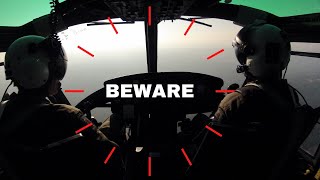
Brian Rutledge (Operations Manager, Helicopter Online Ground School) presents on the hazards of continuing flight into reduced visual conditions. He uses personal examples (training flight in smoky Sierra Nevada), explains accident types (CFIT, UFIT), cites recent fatal accidents (Kauai tourist crash; Kobe Bryant crash), and emphasizes aeronautical decision-making: preflight briefings, personal minimums, decision points, and the imperative to 'fly the aircraft' and 'say no' to unsafe flights.
Chapters
All right, today we are going to talk about continued flight in response reduced visual conditions. I'm Brian Rutledge. I'm the operations manager with Helicopter Online ground School. I was in law enforcement aviation for 15 years, spent 25 years in the sheriff's office and went to work for Kenney full time Helicopter online ground school. This one particular topic is something that's very serious in the helicopter industry as well as the fixed wing industry. People get themselves in trouble all the time flying in reduced visual conditions. So how bad can it really be? Have you ever flown in conditions that were reduced in visibility? I have and I'll tell you, it was a very uncomfortable feeling. This particular flight that we're going to talk about today was a training flight for the agency that I worked for. And we were going up to the Sierra Nevada just east of Sacramento. And it was in the summertime. And you can see in this first photo that there's some smoke, that's actually smoke from wildfires in California that summer. It happened to be really, really bad like most years around here. And when we first took off from Sacramento, visibility was fine, ceilings were clear, and as we continued east, the visibility slowly started to degrade. Now in this picture here, you can see the sun is right in our face as we're heading east. It was early in the day and that was playing a big role on the visibility that was reduced from our vantage point. Now, I'll tell you from here, if you look straight down while you were in flight, you could see the ground easily. It was a thin layer of smoke that progressively got thicker the further east we traveled. We started discussing our options. Were we going to be able to continue the flight or were we going to need to either turn around or go land somewhere? So me and my partner here are discussing those options. But we also had in the back of our minds, we've got 11 passengers sitting in the back that are expecting us to make the right decisions. And that's really what it comes down to. So we continued on to the originally planned landing zone, which was up in the, up in the Sierra Mountains, about 10,500 foot elevation. And as we continued, I started to notice that that mission mindset was starting to creep in. We've made this, this plan. We've been working on it for several weeks to a month. Everybody's there. We're trying to get up to this particular location so that the day can go as planned. And so me and my partner discussed it. We decided we'll continue on. So we ended up getting to the actual location. And this is something that slowly started to creep into my mind as well. You know, we're getting ourselves into a trap. And that trap is continuing in reduced visibility conditions. And if you end up losing the horizon at any point in time, it's that spatial disorientation that can creep in. And that's something that typically results in a loss of control type accident. And I knew that, my partner knew it. We were talking about all these different things. So as we continued on, I'm looking at these mountains that are all over, all over the place. You know, we're talking 9,000, 10,000, 11,000 foot peaks, and we're flying around these mountains that are very difficult to see. And you start talking about loss of control. And the result that comes from that is pilots impact terrain while they're trying to maneuver the aircraft. And that's the last thing any pilot wishes for themselves. So when you talk about impacting terrain, you talk about cfit. And for those of you who've been around the aviation industry for a long time, you know, CFIT is controlled flight into terrain. And that's basically just a pilot flying a perfectly good aircraft, has no idea what about what is about to happen. And they either crash into a mountain, hit an obstacle, crash into the water, there's no loss of control, they are just flying and they strike something. And that's usually because of reduced visibility that they're flying in. The other one is U fit and that's uncontrolled flight into terrain. That is where a pilot either has a mechanical failure of some type and the aircraft is uncontrollable, or the pilot loses control of the helicopter themselves. So in reduced visibility conditions, they've lost the horizon, they've got spatial disorientation, they're not paying attention to their instruments to stay straight and level, and they lose control of the aircraft and they crash. That's uncontrolled flight. There's many risks associated with flying in reduced visual conditions. I'm sure we're all very aware of those. But the biggest one is the loss of control. Pilots do this time and time again. Instead of flying the aircraft, they lose control of the aircraft and they crash. Becoming disoriented, you know, you have this reduced reaction time to see and avoid terrain obstacles. When you become disoriented and you're trying everything you can to maintain control of the aircraft, but you're spending more time worried about what's going on. As far as I can't see, there's no visibility. So Your reaction time when an obstacle appears is severely reduced. And that's where becoming disoriented or off your pre planned route creates problems in possibly impacting terrain or an obstacle. Pilot reaction time is reduced anytime you're flying around and reduced visibility and you have an aircraft maintenance issue. Pilots tend to become distracted with this issue. Maybe it's a mechanical issue, maybe they're hearing something that doesn't sound right with the engine or the rotor system and they're really paying attention to that, but yet they don't have good visibility outside. They start to get lower and lower because of the weather and eventually they impact terrain unsuspectingly. Pilot fails to adequately understand the weather conditions that resulted in the reduced conditions in the first place. So doing a proper pre flight briefing at the very beginning and knowing what the conditions are or what they're possibly going to become while en route is extremely important. Then pilots, a lot of times they have a breakdown in good aeronautical decision making. So the decision making starts at the very beginning from pre planning the route to departing, to continuing the flight, making the decision to turn around or to land. Pilots who find themselves in reduced visibility, reduce visibility, tend to stop using good aeronautical decision making at times. And that's how CFIT and UFIT happens to pilots. Failure to just simply turn around and avoid deteriorating conditions when first able. Have pre planned decision points along your route. So if you take off and the weather is, it's flyable, but yet, you know, maybe there's a weather system that is supposed to come in. Plan some decision points along that route that if the weather turns such that you shouldn't continue beyond this point, turn around, go back, find the nearest airfield or just land, just land somewhere. And that's the big one. Pilots just fail to simply land the helicopter. They're more worried about what people are going to think than actually protecting themselves and passengers that are on board. Back to that training flight where we were at. Here's just a screenshot of VFR sectional and you'll see in the middle the private airport, Bear Valley. Ultimately that's where we ended up going. We were due to continue a little further east of that airfield, just a little further. But because the smoke was so thick and the mountain peaks were so high, we could see the peaks, but the visibility was really restricted because of the sun was reflecting off of that smoke, made it very difficult to see. So we made the decision to go back to Bear Valley and we landed there. We sat it out for about two and a half hours and waited for the smoke to clear. This picture here, this was on final approach to the little airfield. And it's kind of hard to tell in the picture. The sun is still kind of shining there out in the background, so it looks a little hazy. But we had great visibility once we got below that smoke layer. The problem was where we needed to go. We needed to be in the smoke at that altitude for our planned lz, and that just wasn't going to be possible. So we stayed there for a couple hours and smoke started to clear out and we completed the flight, had a great training day. It was beautiful up there, and no harm, no foul, but we learned some lessons with it. But let's talk about this real quick. The Kauai helicopter crash in December, this past December, this was a tourist flight. Seven people on board, including the pilot. They all were killed. Witnesses at the time reported that there was adverse weather. I pulled up the NTSB report and I looked at it and sure enough, helicopter struck the mountain at about, I think they said, 3,003ft. But there was also a special weather report was issued during that flight, and winds were 350 at 102 1/2 statute miles, rain and mist and then an overcast layer at 3,000ft. He struck the mountain at 3,003ft. So was this weather related? Absolutely it was. Was it preventable? Absolutely. Was this C fit or U fit? Well, if. Kind of hard to say. I mean, we weren't there. But if he was in complete control of that aircraft and he just didn't see that mountain and he flew straight into it, then that would be controlled flight into terrain. If he did something, lost control of the aircraft and spiraled down and hit the ground, you know, losing control, and that would have been ufit. Either way, it's a problem that could have been avoided by simply staying out of the weather. Next one, the one we're all very familiar with, the Kobe Bryant crash in January of 2020. Nine people killed in that crash. We're all very familiar with that. Dense fog, lapd, they stayed on the ground because of the fog. The pilot requested special vfr, and the report was initially that the helicopter struck the ground while descending at about 4,000ft per minute. Minute. That's moving weather at Van Nuys airport, according to the NTSB report, which is about 14 miles northeast of the crash site. Eleven hundred feet, overcast ceiling and two and a half statute miles visibility. Weather related? I believe so. So do you ever try to convince yourself it looks like it might clear up today? I want to Go flying. I really want to go flying bad. Have you done it? I have, I've done it on many occasions. I found shortly after taking off I had to land. So my question is, do you have personal minimums? Do you have any personal minimums we talk about? You set a maximum. I won't fly if the ceiling is such. I won't fly if the visibility is less than five miles. I won't fly if the wind is in excess of 20 knots. You know something, the newer pilots, your minimums are probably going to be much higher than a seasoned experienced pilot. That's not to say that as you longer you fly, you can change those minimums with experience that you've gained and updated training, staying on top of emergency procedures and those things. Sure you can change your personal minimums, but have something, have some kind of a minimum that says no, I'm not going to go fly. This particular picture here. This was another flight during smoky conditions in Sacramento and we're about three, about four miles from downtown Sacramento. When I took off on this flight initially VFR and we had clear skies, the fires erupted, the wind was blowing just right, blew all that smoke in about 30 minutes later we were down to just above three miles of visibility, just barely three miles. And by the time I landed, 10 minutes, 15 minutes after I landed, I went in and checked the, checked the Metar and it was showing the field had gone ifr. So the whole area went IFR in a very short amount of time. So if I was a pilot that was maybe on a cross country flight and I was not familiar with the Sacramento area, I could see where you could get yourself into a lot of trouble flying into an area and all of a sudden you go from clear skies to IFR conditions in a rather short amount of time. This here was something that one of my prior flight instructors had taped up on his office wall and I think it sums it up pretty good. What pilots, instructors, supervisors, all have the responsibility. When you're dealing with pilots and talking about your experiences, the do's and don'ts in aviation type thing, I would say you got to follow your personal minimums, do a thorough pre flight briefing every single time, have those pre planned decision points and always, always, always, no matter what, fly the aircraft. Doesn't matter if you get yourself into situation that the pressure's on, you've got reduced visibility or whatever is going on, you have any kind of a mechanical failure or whatever, fly the aircraft. Don't become another NTSB report that says it was a loss of control accident or a CFIT accident or UFIT accident. Fly the aircraft. All the way to the ground. Fly the aircraft. We got to reach as many pilots as we can regarding the importance especially of making good go or no go decisions. And finally, it's always okay to say no. Just say no. And that's really the wrap up for this particular presentation for continued flight, reduced visibility conditions. Make sure you like and subscribe and go check out helicopter online ground school for all of your helicopter training needs. It.










