Helicopter Maneuver Tips and Tricks! Private Pilot Study Guide giveaway at 5 P.M. Eastern!
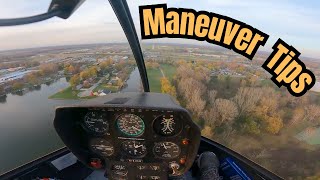
Kenny Keller teaches helicopter instructors and students the fundamentals: slow preflight checks, hover procedures, clearing turns, and painfully slow takeoffs. The stream includes giveaways of a Private Pilot Study Guide and other training tools.
Chapters
Okay, I'm gonna talk to you about the basics of instructing. Like, I don't know, just kind of the. My core feelings on what I think on instruction and what I see, especially in the last year of just doing a ton of checkrides, I've had people coming from around the country. I gotta line up my cameras here real quick. And I'm warming up the engine on the R44, so clutches lights out. I can go up a little higher. So here's the theme, what I'm thinking. You know, I've always preached it. Stick with the basics, right? Stick with what we learned from Basic Private Pilot 101.
I think a lot of people kind.
Of lose a lot of the basic stuff. And I'm going to talk more about that through this whole video because I want to show you some clearing turns and other things that people do. I get them to do and then they go, ah, Kenny's not around, I'm not doing that anymore. So the thing that I'm noticing is guys are coming from around the country and they're rushing everything. They're rushing the startup rush, rush, rush, go, go, go. And when I question them, they say, oh, well, that's my flight school, right Then I've had other instructors say that, well, instructors are, you know, a lot of flight schools pushing people. My question is, I flew EMS for five years and in the EMS environment, everything we did was slow, smooth, methodical. We were taught, we walked the aircraft. We don't do anything in a hurry. Whether we're going to accident scene or a hospital, or we're just transporting for maintenance. We fly the helicopter the same way every time, point A to point B, safest manner possible. You don't do anything in a hurry. So if we don't do anything in a hurry in ems.
Why would there.
Ever be a reason to hurry in.
The cockpit of the aircraft?
I don't get it and I'd love for somebody to go down and tell me why. The why there's a good rush, good reason to rush anything in the helicopter because I haven't figured it out yet. And the examiner I've been using all.
These years, he's like the same thing.
He's like, slow, smooth, methodical. Everything we do is slow, smooth and methodical. Nothing's in a hurry. And he ran an EMS operation, still running another one at this point, for 30 some years. And that's the theme. Everything should be slow, smooth, methodical. So I really don't understand why these flight schools are pushing in Russian People, I'd love to hear a valid reason why people do that. Alright, I'm going to go a little farther along the checklist here.
Okay.
So I've completed my pre flight checklist, my startup checklist. So instructors teach a good pre lift check. Make sure everything is good before you lift up and put a load on the engine. I do have a carbon monoxide light. A lot of you know that happens occasionally in the Robinson. Going to go get in flight after a good hover pre takeoff check. Make sure that light goes out after takeoff. If it doesn't go out the minute or two, I'm going to turn around, come right back. But first thing pre liftoff check. Everything looks really good. I think that's important. And then what I teach students is I want them to get out away from the hangar or whatever obstacles they might have near them. And maybe you have a location where there's nothing around you. But most of the time you've pulled out of a hangar or you're near a dolly or other aircraft. So get up to a hover, kind of move away from everything and then point into the wind, get stabilized and check everything out. So let's do that. So I can't stress enough the two step process of the pickup. As a cfi, hopefully you're already teaching this. Hopefully you've already been taught this. Get the aircraft, line the skids, pause, neutralize.
Step two, lift it up.
So I'm about 19 inches right about there. So I'm adjusting that nose up and.
Down left and right with the pedals.
Feels pretty good. Step number two, gently lift it up off the ground. And there we go. So I'm going to get out of way from my hangar and I can see the wind is out of the west southwest. I'm going to move over here, get out away from everything. And now I can do a good hover pre takeoff check. I got away from the hangar. I feel good. Carbon monoxide light still on, but I'm going to get him to flight here shortly. Open my vents and make sure that goes out. Everything else is looking good though. My timer's running. I'm out of the yellow on the carpet except the carbon monoxide light.
Everything else is out.
Gauges are in the green. We're looking really good. So I'm going to get a quick lesson or a quick listen to weather. Warsaw Municipal Airport Automated weather observation two two zero zero Zulu weather. Wind two four zero at eight. Visibility one zero. Great beautiful night. Sunset or close to sunset. It's beautiful. I Don't see any traffic whatsoever. But I'll make a radio call anyway and get in flight because I want that carbon monoxide light to go out. So good hover pre take off again. You want to make sure the aircraft's good to go. Looking everything over looks good with exception that light. Hopefully be out here shortly. Warsaw Traffic Helicopter 181 Mike Bravo's departing the north hangers to the west or so. All right, Clearing the Runway left and right, making sure it's good gas, dressing up the hover pre takeoff checks. And my examiner tells me, right, same examiner been using now 23 years. He's like, there's still people not doing a good hover pre takeoff check. And their school's not teaching them, instructors not teaching them. And that's a bad thing, right? Luckily I had good instructors and I was taught to always do it. Ems, they pushed it, they wanted it every time. And that's just what we do. I'm going to open my vent here. Little air coming in, and I'm going to open this vent over here just to make sure that light goes out. I'm going to actually circle back towards the airport. If that thing doesn't go out in like the next minute, I'll go back and land. Clutch light came on there for its normal. As it's tightening, it's like, oh, great.
Carbon monoxide and clutch.
I'm like, okay, start counting. Wait for that clutch light to go out.
It did.
It went like six or eight seconds. Still waiting for the carbon monoxide to go out. I'm right back over by my hangers where I can go inland. If that thing doesn't go out here in the next minute, and there it's out. Here's another thing, CFIs, some of you may have been flying for years. Some of you may be brand new to aviation. You only have a couple hundred hours warning and caution lights. Listen to me. I didn't really learn this until I was out working in the world. And I had a mechanic that did all the maintenance and I really trusted and he was a great mechanic and I trust him with my life. And I called him once over. I was over Chicago in a turbine aircraft. Low oil pressure light came on and I looked down. Oil pressure, oil temperature is good. And I had a student with me who I trained and I just hand him the poh. I didn't even say anything. He knew exactly what I was doing. He verified at the PoH that we could as long as we had oil pressure and oil temperature, we could go ahead to the next airport. So we got there, landed, checked it, checked the oil, looked for leaks. We checked everything out. Temperature pressure was still good. So we landed, checked everything out. I called the mechanic and he goes, all right, so you check the oil level? Yep. Anything dripping?
Nope.
Air helicopter act funny?
Nope.
Oil pressure, Oil temperature was good?
Yep.
He goes, all right, bring her home. He said that specific aircraft, that model is known for a faulty oil pressure warning light. So since you checked everything, it's acting normally. Fly it on home and we'll take a look at it. And of course, if anything pops up during flight, land, you know, take the next area. Necessary actions. So he's the one that, when we had a length, a lengthy discussion, he's like, kenny, those warning caution lights are out are idiot lights. They're in the fact that they're just trying to drive your attention down to oil pressure, oil temperature, the other gauges, and to get you to go, hey, what's the aircraft doing? Is the aircraft acting okay?
Is everything fine?
The majority of the time that you're gonna have a light come on, it's gonna be probably just some break in fuzz, a little piece of metal on. On a. On a chip detector. And, you know, I learned that early on and I found that throughout my career that I've had all kinds of, you know, chip lights and warning lights. And they've always been. They've always just been, you know, either faulty light or it had a little chip from a piece of metal in a detector on a main rotor gearbox or something like that. You clean them, you check them, everything's good, and you go again. Alternator light had that many times, and it was almost always a bad alternator. Usually you could recycle it and the light would go out. Fly a little bit longer, and then as your frequency of flying goes on, it could keep getting worse and worse until the alternator go out. So you want to take warning and caution the light serious, of course, but know that a lot of the time when those lights come on, it's taking your attention somewhere else. So you as the cfi, you know, you want to be ready for these lights to come on. And I know in the beginning there's gonna be a lot of things are just gonna kind of make you nervous and you're gonna not be super comfortable with. But with time, these things will come to you. So understand in your own flying and teaching your students, teach the students the same thing. Poh for this aircraft, like a lot of them, basically, for most of the warning and caution lights, a majority of them are check temperatures, check pressures. Is the aircraft acting funny? If it's not, usually it's land as soon as practical. Every aircraft can be different and every situation could be different. But in general, just know that engine chip. I was flying a jet Ranger once and I'm going to maintenance actually engine chip light come on and I'm like, okay, everything's looking good, nothing's going on. Oil pressure, oil temperature is good, aircraft's not acting funny. I'm gonna continue on to the airport. I get there, I land, the mechanic goes, I tell him what happened and he goes good. He had just come back from Bell and he said people make the mistake. And they told about an accident. A guy in a jet Ranger chip light, engine chip came on, he autoed totaled the aircraft and after they did the inspection, the aircraft was fine, engine was fine. It was a faulty chip light. He destroyed the helicopter over a chip light. So food for thought moving forward in your CFI career.
Alright, check this out.
We're going to show you.
This is the propilot special ending tonight at midnight. Check this out. So we're going to get to the study guide giveaways. We're going to give away one, do a video, give away another, do a video, give away another. But first I want to show you before I grab that study guide, this is, this is pro pilot right here. All right, so you got the cool Hogs bag with the Hogs logo. Got a insulated here for your drink, another over here.
It's got a.
Laptop sleeve in there. It's got an extra little thing in there for documents or whatever you put in it. Oh yeah, Heather's going go to this side. Yeah, we're rolling right now. Right there we are rolling the Hogs wall of fame that you see behind us. As of this date you're seeing everybody unless somehow you got omitted. So coming out of this package for pro pilot, which is private commercial instruments, cfi, all courses, unlimited Hogs ball cap number one. No specific order. I'm just gonna start pulling stuff out. Flight patch number two.
And this is.
For the person starting out and you know you want to be a cfi, you're going all the way. You're going to have to have a plotter if you're going to be an instructor right there. If you're going to be an instructor and you're going the pro pilot route, you still have to have an E6B to teach your students the basic elements. Oops, we got that jammed up while I was in there. You want to teach your students the basic route. Our examiner allows students to use the private iPad on the private pilot, but he wants them to have a sectional chart as a backup to the iPad for when it freezes. And that happened to us this year. Checkride outcome was not good. So you need the basics. You need to learn and be able to do that. Yes, you can use the iPad, but you need the basic fundamental skills. You must be taught. Pilot logbook A must have. You start logging time. FAR aim 2024. FAR aim 2024 right there in the bag. You got to have a far aim if you're going to be student through cfi, gotta have it. And again, I'm just pulling them as they come out. Instrument Flying Handbook. That doesn't go with that package. Whoops, sorry. No wonder. Was this a tad bit heavier? Private Pilot Study guide. This is going to be nice at the student level and I'm telling you commercial level as well. It's all the same stuff with you know it, you have to know it to higher level and you have to know commercial pilot provisional limitations. You'll use it again for commercial and as a CFI, you'll be teaching out of this 400 questions that's included. Helicopter Flying Handbook. A must have for everybody. You gotta have it. FAA says student, you need it. Private, you need it. Commercial, you need it. Cfi, you need it. It is an examiner, you need it. Next up, Aviation Structures Handbook. You must learn the FOIs. That's the beginning of your CFI checkride. If you don't get through the fois.
Your test is over.
You got to know the FOIs. Yes, we're building brand new FOI videos inside hogs. Part of it's completed. So you have video help inside the helicopter line. Ground school course. In the CFI course, we're going to help you, but you need that book as a CFI Helicopter Instructors Handbook. Okay, so this is very similar to the Helicopter Flying Back handbook. However, this is from a CFI standpoint the FAA is laying out. What are you going to see? What are the common errors students are going to make when you're teaching them in the helicopter? So that's included.
Look at all this stuff.
And then Private pilot pts. This is a must have. You must have it at the student and the private level. And you're going to want to use it when you're teaching your students because you got to beat them and make them buy their own copy. But you need to have a copy as a cfi. And because you're going off the street to cfi, you're going to use it for your private and then commercial pilot and flight instructor in the same PTS4 helicopter. You're going to need that for your commercial rating and your CFI rating.
What else we got?
Here's the little baggie that comes with the backpack. So if you got smaller items that you want in there but you don't want them loose, so that's nice. There is a zipper inside here. There's a zippered pocket. Pocket for your laptop as I already said. And what else we got the Handy Dandy. I just placed an order for a few more of these because these are going over well. Because I'm telling the story about our screw up and the overspeed. I blame it on us not being.
Organized enough on the new student, not.
Being going through the checklist properly, getting.
Out of sequence and I didn't catch it and we had a problem.
So the Handy Dandy checklist again.
Checklist.
Hogs. It's not hogs.
I just put my sticker on it. But anyway I got more of those on order.
These are going to change. This is a pretty robust package as you can see. After this sale's over we're going to tone this down. This is a lot of stuff. As you can imagine. This is a pretty good value here. And for the price we have it at, I'm doing it for this sale but I can't do this all the time so packages are going to change up a little bit. So we got another video for you. You know most of this, a few of these are from the new CFI section but anybody can watch, right? Because whether you're a student or you're a CFI or you're in between some of these videos, I'm giving tips to the new CFIs.
Right.
What to look for. So Private Pilot Study Guide. There is a link down below for this. Oh yeah, and I want to mention we just sent out over $2000 in commissions. One gentleman got $1500 from signing up.
A bunch of his students.
We just sent it to his PayPal account. After this is done, we'll check. There should be an affiliate link down below this video. I'm going to put one down there. There are people putting decent money in their pocket. 50% commissions. I'll put a link. You get your own login page. It keeps track of who you sign up and it tells you exactly the money going to be owed to you every 30 days. Because it's a 30 day, right? We make sure they don't refund. And after 30 days you get your money. 50% commissions. Link down below for the private pilot study guide. I'm going to ask you a very simple question. Okay, let's not say simple. A basic question. I'm hitting weather again. It's November, almost December now. Weather's a problem almost every day, at least for us here in the Midwest. So there's four answers to this question. But this is something. Every one of you out there, if you're a pilot, you got to know this. I don't care what level you're at, name three of four, okay? And the first one answered correctly in chat is going to win the first one. And then we're going to give away two more of these. This is our copy. We get beat around here. Here's your brand new. We got a stack of them over there. Not stacked. We'll get a few all wrapped up nice and brand new and neat. There is a link down below if you want to purchase copy one of these and there's a link for a free download chapter one too as well so you can go and experience and see it in a PDF format. So here's the deal. Remember I have to say this every time. Heather's going to claim the winner in the chat. By the way, our HOGS chat shows your device may show differently. There's no arguing whatever Heather sees in chat is. The first correct answer is the winner. And please spell appropriately. I know you want to win the private pilot study guide because it's badass, but please spell properly so we know what it is you're typing.
Please.
All right, here we go. Name three of four of the intensities of ice. You could call it four types of icing. Name three of the four. Heather has a duplicate book over there right by her, by her at the computer. She knows what's there, so she's watching while I'm talking and she's going to claim the winner as shown in the hogs chat. So while she's watching that, you can go ahead and probably get your next video up. Get ready. You got your next video ready, Heather? I'm not even sure what it is, but any questions, put in the box. We can talk about it in between videos. And what else can I tell you? This sale ends Tonight. This is November 28th. So on these packages that was just pro, we have a package built for private 12 months commercial 12 months and CFI 12 months access. Each one of those has a package not quite as robust as this one, but close.
Remind them that it's the intensity of ice, not the three icing types.
Intensities of ice. Okay? Okay. All right. So there are. We're not asking the three types of icing. We're talking about the intensities of ice. Rich.
Grant.
Hey, Rich. Rich. He just called me. Let me a message yesterday. Rich, I got to call you back. Been crazy the last two days. I will give you a call. I'm trying to remember what your question is because I would answer it right here on While we're live.
I can't remember.
I'll check that out when we play the next video. All right, we're going to come back and we're going to do two more private pilot study guide giveaways. So, Heather, if you have that queued up and ready, we'll just go to the next video. We'll be right back.
So now I want to get to some of the basic stuff like we just talked about. The liftoff check, hover checks. How about clearing the tail? I'm clearing my tail to the right. Right now I'm gonna look back this way, have the tail off my left hand side. Might wiggle around here a little bit. So with students, let's just use this taxiway. For example, if you want to have a student hover from here to point B, which is directly ahead down this taxiway, okay. You want to make them hover this way, keeping the nose straight. Right. What do students want to do? Let's say the wind is off the left hand corner. They want to go, oh, well, here. I'm going to turn the helicopter this way and I'm going to have her taxi this way. Don't let them get into that. That's a bad habit to get into. Why? You want to keep that nose straight in case the engine quit. So the hover taxi is nice, slow, low to the ground, following your line. Then when you want to go like, okay, we're here and we want to go back towards my hangar. It's directly to the east. Do a clearing turn. And a lot of people are really good at this. Some people don't do it. You need to do clearing turns every time. So I'm going to do the best I can at clearing my tail to the left, and I'm going to make a right pedal turn. Do this with your students. Make them go low, slow, clear the tail, and we're going to go this way. So let's say we go over here a ways and then now we're going to make a turn because now we want to go back to the north. Stop, clear the tail. Right, left pedal, turn to the north. Continue on nice and slow. Those clearing turns are essential and people go. This is the one that I hear later, well, kitty's not around. I'm not doing all that clearing turn stuff. I have a student I trained 20 years ago. Now he works for the FAA. What do I think of that? You know, I have other stories and I'm not going to bore you with them. I do this. I did it at EMS when I was flying. No matter where I was doing or where I was going, everything has stopped. Slow, clear the tail turn. They even told us in the little company I worked for, they were in business for 50 years and they did a study in their own helicopter or in their own business. And they said, guess who's wrecking helicopters? It's guys with more than 15 years in EMS. Like 15,000 hours. That's who's wrecking the helicopters. And the number one accident is tail rotor strikes, turning their tails into trees, wires, hangar doors, buildings, ambulances, fire trucks. I'm just telling you from a study of 50 years in a helicopter EMS company, it was turning your tail into stuff. So train these students from the very beginning. Low, slow, clearing turns. Number one. So if the engine quits, you can go straight down, slide it on. Number two, you don't stick your tail into an obstacle. Number three. Here's something else I see and a lot of commercial guys coming this year going for cfi. I caught him doing this. Like, let's say you want to go back to my hangar. The wind is off my right, so when I turn towards my hangar, the wind's going to be behind me. So here's what people do and here's what students want to do. And you want to stop people from doing this.
They.
I'm already struggling, turning. The wind's behind me, and I want to go this way. So when you're going to have to be in these positions where hangers there, I'm going that way. So I want to stay low, I want to go slow. I want to move towards my hanger. And what people do, they're like, oh, well, I don't want to fight the pedals because it's wiggling. So they want to go faster and they want to go higher. And then what happens, you start doing that, then you start pulling more power, and then you start turning the wiggle in the tail. And then it starts getting more sloppy and pretty soon it gets Ugly. And you're on the verge of lte. I can't believe the amount of people that do that, Right? So it's like slow it down, get it low to the ground, take your time. And people can say, oh, that's too D redundant. I'm not doing all that well. You know, that's a hazardous attitude from the professionals that I've flown with. You know, I've learned from good people. I've worked for good people. My mentors have all been really good, respected people in the industry. And all I've done is followed what they taught me. I didn't create any of this. You know, my best stuff is all stolen. You know, I learned everything I'm doing, I learned from somebody else. I just took all the bits and pieces and all the good things and kind of rolled them into one little package for what my training has evolved into. Because I'm not claiming to be, you know, an expert or the smartest guy on the block. I just a guy who has stuck with the basics that I was taught. And that's it. Sticking to the basics, taking your time. Slow, smooth, methodical. Nothing in a rush. Clearing turns, tell clear right, tell clear left. Low to the ground, Pre lift checks, pre hover checks. To me, that is what makes a good pilot. Not being a hot dog that don't get it. It's easy to be a hot dog. It's a lot harder to do this stuff and do it slow, smooth, and methodical.
Okay?
Gonna have to hear me preach for a minute. Everybody's playing for the private, apostolic guys, and that's great. Only question I really saw in there.
Was somebody said something about, well, you.
Know, we're trying to get. Trying to get, you know, the most for our money. And I'm not sure in context, I don't want to take it wrong, but here's what my first instinct is when you make a comment like that, like, I don't care what it costs, right? When you're in the aircraft, everything needs to be done slow, smooth, methodical. Nothing should be ever hurried. We didn't hurry in helicopter EMS, so we all had 2,000 hours or more. And whether we're going on a maintenance flight or we're going to an accident call, we did everything the same. Slow, smooth, methodical checklist. Why would any flight school out there, why would any student or anybody working on a rating, why would you be hurrying? I don't care what it cost. If it's $500 or it's $800 an hour, four or five nice approaches. It's going to work out pretty good in that hour for your five to eight hundred dollars an hour. But if you're rushing the checklist because you want to try to get 10 approaches in in an hour, somebody's stealing your money, Right? There's never a reason to rush. There's never a reason to hurry. We just had a $54,000 incident out here because we got fucked up on the checklist and things weren't done correctly and followed correctly. And that's for people getting nervous and being in a hurry and not doing stuff right. Okay, there you go. I just can't stress enough the basics and how people. You got to go slow. You got to go slow, slow, smooth, methodical. Everything needs to be done slow in that aircraft. That's how things get tore up and how people get hurt and killed and.
Aircraft get tore up and damaged.
All right, so what's next? Very simple. Please spell correctly. Please take the time to spell correctly. Do I need to say that a third time? No. Heather just said no.
All right.
I know you want to win the study guide. All I want. There's four terms here. Please spell them correctly in order. So we have these weather systems, these radio weather thingies. We turn in. I want to know. You don't tell me what it is. I just want to know what the letters stand for. What is an awas? A wos. What does that stand for in our weather checking?
Getting ready to go fly.
We're tuning this in. What is awos? Heather has the book open over there. She will know the first person to answer correctly. So we show you the pro pilot gear. I got off on a tangent on the whole, you know, going slow and checklist thing, but, you know, I can't stress enough people. You know, this energy is coming from not Nathan. Jason. Jason. Who just says Jason? All right, Jason, you're the winner. I should have said email heather helicopterground.com to get your. She typed it in there. So email heatherelicopterground.com just a lot of sloppiness. I see this past summer, doing nine check rides. People from Maine, Florida, New Mexico, Arizona, Oregon, and these. Some of these are advanced checkrides, commercial and cfi. And we had great people that did great things, don't get me wrong, but there's a lot of sloppiness that goes on in the cockpit. And there's a lot of aggressive, you know, aggressive with controls. And the report I keep getting is, well, that's what the flight school wants. Oh, I'd switch another, I'd switch flight schools. If they're pushing you and it's push, push, push, go, go, go. Push, push, push. There's no reason for it.
There's no reason for it.
Alright, Heather, you got your next video up. All right, let's roll it.
Okay, CFI applicants, I want to really hone in on setting up approaches. And the reason I can say this with confidence, a lot of guys are coming here as commercial pilots wanting to work on their CFI and not always have they been consistent with setting up their approaches. It's like, oh, I use this altitude. Oh, I use that altitude. Oh, I just kind of wing it and I roll out on final. You can certainly do that. But in the teaching environment, you have to have your students set to a standard. And by setting it up.
By setting.
It up the same each time consecutively, that's how you can get consistent nice approaches. So I'm going to turn kind of an extended right base here. I'm 500 AGL. I'm 1350 by the time I line up. 51 is over midfield for a teardrop entry for right down on Runway four, cold water. By the time I line up for my normal approach angle, I want to be at 300 AGL. So we'll go around again. We'll keep talking about this because I want to go into this at length and make sure that you're going to work with your students and make sure that this is working out for you. So I'm out quite a ways from the Runway. You should be able to see that from the skid camera. So I want to be at 300 AGL before I intercept my normal approach angle. So I'm going to go ahead and start descending now a little bit. And the key to setting these up and being consistent and having your students pull off good approaches is setting it up the same way every time and doing it at 300 AGL, that's textbook. So I'm going to be about 11:50 to be 300 AGL when I AGL, when I intercept my angle. So I'm going to go ahead and get that now. So I'm going down collective a little bit of ripedo do kind of a pre landing check here. Warning, calcium lights are out. Gauges in the green. Plenty of fuel. I just took fuel on, timers running. I'm out of the yellow, so I got all kinds of time. I'm down to 1300. I need to lose another 150ft before I approach my angle. So take Your students out far enough that you can have this and get set up. Because we want to watch the instrument panel here. We're going to have 300 AGL, 60 on the speed and zero rate ascent. But we get to that angle, I'm getting close. So I'm going to go, I need to hair right pedal. I'll go a little aft cyclic. I want to get rid of that descent. Okay, so I have my 60, I have 0, 80 descent, a little pedal per trim, 1150. I have my 300 AGL. I'm just about to my normal sight picture. I want to keep holding this nice and stabilized. Key to a nice approach. Good setup, looking good. So now I can go ahead and start my approach. So I'm going to go down collective right pedal, a little bit of aft cyclic. Now I'm going to use the collective to control the angle cyclic to control the speed and see if I can't fly a nice normal approach down to the numbers 3, 6. So again, I can't harpen up about how I have guys coming to me at the private level, but specifically the commercial level and to be cfi and they're not consistent setting up their approaches and even struggling with even flying decent approaches. I know recently somebody on social media said, well, nobody flies a pattern anyway. Well, you do. You do for check rides, right? Entering final for Runway 29 or Folk County. And not only checkrides, but also for your flight reviews. So you can't tell me that there's not a good reason to consistently fly approaches. You got to do it for advanced checkrides, you got to do it for.
Your flight reviews.
And then you ask instructors. You want to teach people how to do this consistently every time down to the numbers. I'm going to clear tell right, do a little left pedal turn here. Another beautiful evening. Tail clear right, warning caution lights are out, gauges in the green looking good. So when people say, well, you know.
Who flies a pattern, who flies a.
Normal approach, we just go point A to point B. Well, if you're just getting your pride and you're going for fun and that's all you ever want to do, I guess, then go ahead and struggle at your checkrides and struggle for your flag reviews when you don't remember how to fly proper normal approach. So then another little tidbit that you may or may not be doing when you get established in your CFI job, whether you have one Runway or two runways or three runways, you'll figure out which runways you're going to use. Most of the time. But get a concise pattern kind of built to where you know, I'm going to turn here, I'm going to turn there. And you can help a student out if you have a pattern where you can say, hey, turn at the red barn for your crosswind, that pond, turn right for your downwind. And by helping them, you get a.
Nice pattern laid out, it's easier for.
Them to learn to fly to the numbers that you want them to fly by using those landmarks. And there's nothing wrong with that. And that's a great way to also help them get that consistency is by once you figure out where 300 AGL is for a normal approach, and if you know over, you're over a yellow house, you can tell your students, say, look, okay, we have our landmarks, we know we're going to turn. And when you come over that yellow house, if you're at 300 AGL on your altimeter over that house, you're on a normal approach down to the numbers. So using little tips like that I just think are big. When you get out there, start flying with students, because I'm telling you what I see. As simple as the pattern may be, some people don't know how to fly a good pattern. Three miles southeast, entering a left downwind. One, right, two. I had a gentleman come to me that was wanting to get freshened up. Because he was going to work on an instrument rating for 8,000 hours. He was flying tours. He couldn't.
He couldn't fly a pattern to save his life.
Why? Because he's doing PAT or doing tours or news reporting. Whatever he was doing, he never flies a pattern. So I get it. But then I had to, like, reteach him a pattern because he's gonna go do instrument training. He needs butterfly pattern, right? Still gotta fly standard takeoff, standard pattern coming in land. And examiners gonna want you flying to a standard. All right, so let's talk through it one more time. The real trick is just kind of finding your landmarks, figuring out what works. But I'm telling you, 300 is textbook Runway 22. I mentioned it in an earlier video in this series in the professional environment as EMS pilots. They want us to climb to 300 AGL before we start our turn. They want us to line up our approaches at 300 AGL. So it's good for an EMS pilot, it's good for a private pilot.
Right?
Let's do this again. So I got lined up, I got my car peak. I'm about 50ft away from 300 AGL. So I'm going to go a little aft so I can slow down and get rid of that rate of descent. Check my trim. I need a little bit of left pedal. There we go. And go down just a few more feet. There's 300 AGL. There's 60 Hera descent. I want to clean that up because that messes with your sight picture. Right? That's why you want to be zero rate ascent, have the right speed, have your 300 AGL. And then when you see your approach, you can go, okay, I have my normal approach picture down collective right pedal aft cyclic. And look how nice that starts out that entry. This is how you're going to be able to get your students to be consistent. And I'm going to tell you turning a left face, Runway two, two main traffic. As a cfi, you're gonna pull your hair out trying to get people to fly approaches and fly them correctly. You're here to be a cfi. Great. I'm trying to steer you along the right path to help make that happen. And I want you to be successful once you're out there and hopefully save you some headache and heartache once you're at your job and out there teaching. Okay, soon just be cfi. I want to teach you about the air cushion. If you've watched our private or commercial, you've heard it. But even though you've already heard it, listen again. I just had a CFII here and he's used Hawks for all of his training and good pilot and been with Hawks for some seven years. And he was like, man, I'm struggling on my pick ups and set downs. And we went out, we did this and he was like, oh my God. I didn't, I never really understood this. So there's an air cushion about 6 to 8 inches above the ground before you set down. And the reason when you're teaching people how to fly and how to hover and how to set down, when they come down, they're going to get to that air cushion and then they start wondering why it doesn't go the rest of the way down. So here's what I want to show you. Let's do a nice set down. We're coming down, coming down, coming down. I'm not moving the collective. We're coming down and we're getting down to the air cushion. Now watch what's going to happen. It's going to kind of hang, it's going to go up and then it'll go back down. It'll go up and it'll come back down. So there is a collective setting that will get you almost to the ground, but not quite because you're hitting that air cushion. And then all sudden, helicopter stuff's going back up again. See, you need to sit there all day, going up, down, up, down. That's the problem. Somebody's coming down and they have a nice set down going. And it looks good, nice and slow. And they get down here, get to the air cushion, and then boom. Okay. It's like. So then they start doing this. Well, I think I'm there, you know, and they start jiggling the controls. And you see this happen all the time. So let's go back up a little bit. Here's the key. When you're teaching them and you're getting a nice hover going, you got to teach them. When you get down to that air cushion, it takes a tiny little bit of movement. Now I'm going to go a little down collective. Look at that. I had to push just a hair down collective to get through that air cushion. And then remember, collective all the way down. People get in a bad habit of getting the collective part of the way. Then stopping. No, collective all the way down. Anytime you sit down, let's pick back up. Warning, caution lights are out. Gauge is green. Timers running. We're out of the yellow. So let's demonstrate that again one more time. Then I'm gonna have my collective take my hand off the collective. So you can tell you I'm not moving it. I'll keep it right there. So look at, look at it touches and it goes back up.
See?
We'll come down and touch again. Come on, come on. There we go. It's coming down.
It's coming down.
It's coming down. It's coming down. It's gonna come and down there touches. Now it's going back up. See? So think about that. This is the reason you even see experienced pilots out there struggling with set down. So when it gets down here, watch what I'm gonna do. I'm gonna put my hand back on the collective, and when it comes down, comes down, little downward pressure. Look at that. Boom. All the way down. Simple video. I'm telling you. If you understand the air cushion early on and you just show students this, talk them through, that, they're going to improve those set downs and they're going to make them better quicker than the average, the average student. I'm telling you, I help commercial CFI guys that are struggling to get a nice set down. They're like, oh, I never heard of that air cushion. I'm like, well, I don't know why everybody doesn't teach it. So right, there you go. There's the air cushion that causes people a big problem on set downs.
All right, so we're gonna do another easy one. Hopefully there'll be less hullabaloo in the.
Chat over this one.
You know. So one more question. Private pilot study guide.
This is the third one and I.
Think we're going to come back for a bonus and give away. We've been doing scratch and dent stuff.
So I think I'll give away a.
Commercial flight searcher pts after the next video. So this is for private pilot study guide. Kind of along the lines of the last question. And there's that damn furnace coming on again, same as last time. What? We just want four words. Please spell correctly. What is asos? A S O S. Please use the proper terminology. Spell correctly. First one to type it correctly will. Heather will have it in chat. Or she's watching the chat. She's got a copy of the book over there. This is the private pilot study guide. And you know, this thing is badass. Everybody that's used it and I had a. Some commercial CFI guys here this summer and I let them use this, take it back to the hotel. And they were like, the hat thing is nice. So if you want to get your own copy, they're down below. And you know, you get what you pay for, right? Like when I was in the towing service, I had the. In the end, I had the largest heavy duty truck, three winches. I could roll a tractor trailer over by myself. But let's say my price was, you know, $300 an hour for that truck. The guy down the street would send out three trucks and use three trucks. But he charged oh like 150 an hour per truck. So people go, oh, well, his truck's only 150 hour. We hire him. Yeah. And they take four times as long and they're charging for three trucks. Pay the guy that had the proper truck that could do it faster and do it right in the end. Cost them less money. But people don't see that same way in helicopter flight training. If you're chasing around going looking for the cheapest place, that may not necessarily get you your rating. We've had guys here. We had a guy here recently had 180 hours to get his instrument rating. And he came here frustrated like crazy. And he came from a reputable school. 180 hours to get his instrument Rating. And we've heard this. We've had guys here with 160 hours, 170 hours working on ratings. They came here to finish. So how much does the cheapo route go for you in the end? Do you have a winner yet?
Heather?
Skids up, skids up here almost every single event. All right, so we'll come back and we'll do the commercial and CFI PTS giveaway when we come back after the video. Do you have your video ready to go, Heather? She's typing, so roll that video and we'll come back for one more giveaway.
All right, so we're gonna head back to the airport, and I'm gonna just talk to you real quick about why we teach the painfully slow takeoff. You see it in our videos we talk about all the time, but the idea is if the engine is gonna quit, it's gonna quit during a power change. And if you think about this, I think it makes a lot of sense. You're driving down the road in your car, you have the accelerator set at a certain speed. You're not accelerating or decelerating. You're just cruising along. Sure, it could quit running, but that's not normally when your engine quits, right? You think about it, it's usually like when you go to push on the gas to accelerate is when the vehicle will die or you let off the gas, the vehicle will die. It's not normally when you're at a stop, steady RPM just driving down the road. So we're in an R44, we're in a gas powered, you know, helicopter. Same, same thing applies. So when we're trying to teach you to do the painfully slow takeoff and not move the collective, we're doing that because we want you to learn not only how to take off on a hot day. That's what I'm normally talking about on a hot day. You might be loaded to capacity and you might not have any available extra power. You might be hovering at your max, and you have to take off that way. But another reason why I do this takeoff all year round, winter, summer, I did it professionally in ems. I always do the painfully slow takeoff. And so ultimately we're taking off and we're not changing any power. And we've been showing this in some recent videos. But we're gonna head into the airport and I'm gonna show you again, demonstrate how to take off and how it will give you 60 to 500ft per minute climb. And you are just, I guess I want to say, narrowing your possibility of getting into or causing an engine failure. If you just think about it, if you're not changing the power, you're keeping that one power setting. It's less likely that it's going to quit. It's more likely to happen when you're changing the power. So why I would rather be up here and not at 40ft and 40 mile an hour. Right. That's a lot harder to execute that auto rotation when you're in that area of the height velocity diagram. It's not saying you can't recover, but it's going to be a lot harder to recover. So why not be at altitude with 500ft when you change your power setting? And again, the beauty of it is for two reasons. You're learning how to do it on a heavy day, and you're all going to do it, whether you're a private pilot or you're doing commercial work later. This is for the private course that we're shooting right now. But you might have a day. You put your friends in with you, you put a bunch of fuel on and you'll. Sometimes you'll make a mistake. We've all done it. Where you take on more fuel than what you should have. Then you go to pick up and you are hovering at your max power for the day. It's going to happen to you.
Clear right.
I'm going to do a left pedal turn. Check the air real quick. So what we're going to show you now is what exactly what we're talking about for this video. For demonstration purposes, I'm going to have Heather point the camera down in my left hand and we're going to point out to you that right now our hover power is about 21. But let's say it was a hot day and I'm hovering at my max, whatever it is. Let's say it's 25. But anyway, we're gonna say this is a maximum power. So for demonstration purposes, I'm taking my half the collective. We don't do this in normal flight or normal training. So I'm just gonna start gently moving the helicopter forward little bit by little bit. Called the painfully slow takeoff. Stay on top of my pedals. I am not going to touch that power. I'm not going to touch the collective at all. My hands there, in case I'm forward, creep forward, creep forward there. We touch just a little bit, but that's okay. As long as we keep it moving forward, it'll keep going. We touch the skid just a little bit once or twice. Let's see what's happening. I still have not. I put my hand close, but I did not touch it. I did not pull it. Now I got 30, and I'm getting a little bit of a climb going. I'm going to stay low till I get around 50. I'm going to get my climb going. Still have not moved that collective. I want to get in trim now. And now I'm going to shoot for 50. I'm sorry. I'm going to shoot for 60 up here on the instrument panel and 500ft per minute climb. And there it comes. There is your standard 60 and your standard 500. Could be a hot day, could be a cooler day like today. But point is, I didn't move that collective at all. It's easier on the engine. And now we're down at 20 on the manifold pressure. Why? Because the aircraft became more efficient as we gained that forward speed. And now the helicopter engine is working less. Not working as hard. I guess I want to say now I'm up here, I want to make a collective change. I got some open areas to go. I got open fields right below me and right here to my right. I could easily make those fields if I want to add a little bit of power now, make that power change. So that's the whole idea behind why we don't want you moving the collective up and down during takeoff. It's just a good habit to be in.
Okay. After the last few days, I've called it scratch and dent giveaways. We have all these products, cool training gear. And I will tell you, ha. It's been like Christmas every day at my house for three weeks. I love training materials because I'm a freaking weirdo. So we're gonna. We're gonna do a couple of things. We're gonna give away this because this got a little crease in it. Doesn't hurt it any, but it's got enough of a crease. I don't want to put it in. I want you to open up your. When you go for pro pilot and you get all this, or you go for commercial or CFI and you get all this, everything that's included, I want everything to come out nice out of the package. Heather takes the time and packs it real neat. So we'll give away this. It's got a little crease in it. And again, I told you, you know, it's for commercial and flight instructor helicopter, so that's cool. And we're gonna make this so easy to win, and we're going to Hone in on.
We're going to hone in on.
Please spell correctly, please capitalize correctly, please put spaces in incorrectly to win the pts. And then I'm going to come back after the next video because important video that you may or may not have seen, but it's important message that I want to get out there. Type in the chat the title of this book exactly as shown on the book. Couldn't be any easier. Proper spelling, proper capitalization to win. And that's for the pts. Commercial and CFI pts. And then when we come back after the video, I'll tell you, I'm giving away an E board. And because I've already went overboard, I was only going to do three private pilot study guides. Then I decided on that and I thought, you know what? If you don't know, I had an overspeed incident a couple weeks ago. That's cost us dearly, right? It's on me as an instructor. I almost went and got this before our second flight or third flight, and I said, you've been struggling with the checklist. I should get the knee board. And he's like, ah, let's do it on the next one. Next flight. I should have went and got it. But anyway, still my fault, right? I'm the instructor. It's my fault. I'm gonna give away another one of these after the next video because you will hear me pushing checklists, knee boards, proper checklist usage. Step by step, you make a mistake, go back. I'm going to be harping on this. The estimate on our aircraft is $54,000 and it's in Tennessee in pieces now. And I won't have it back for like two months. So is this forefront of my mind?
It is. Check this out.
I'm going to give one of these when we come back because I placed an order today and I like them so much. And because of what I'm preaching, I ordered, I think five and I email him back, said, you know what?
Send me eight.
Because I'm gonna do my best to prevent you or someone you know from having a major mistake. And if you don't understand limitations, that's the problem. That's the reason I fessed up to my mistake. Because if you don't mess up, fess up when you exceed a limitation and you don't tell, then the aircraft can have a failure in a day, a week, a month, a year, two years down the road because you didn't report and get an inspection, some other poor person comes along the way and has a Fatal accident over a catastrophic failure because you didn't pass up when you damaged an internal component and it was.
Never inspected and never caught.
So we're going to come back. This video is only about 10 minutes and I want to talk about this for 10 minutes and we'll come back and we're going to give away that kneeboard.
Live to fly another day helicopterground.com we're.
Going to tell you how you can get one of these to be at your flight school. Heather, you can go ahead and roll that video when you feel the pressure.
To fly, but know the right decision is to stay on the ground, hit the hogs no go and live to fly another day.
Helicopterground.com Yep, because that's why people get killed for making bad decisions and taking off and flying into bad weather when they shouldn't. Helicopter online Ground school member as you see on the wall behind us here, these are all of our members that have passed checkrides. So they use our training to get through, let's say private pilot. Once they pass their checkride, they send us in a picture, as you can see with their checkride helicopter. Usually either they're with their instructor or maybe they're with the examiner. But when they send us a picture by the aircraft and we like them right after the checkride because that's when they're excited, right? They just got that certificate in their hand and a lot of these people have that in the pictures. You'll see when they send us a picture to tell us they passed. And they usually just write a sentence or two. We don't ask for a, you know, 10 paragraph story, we just say, hey.
How did hogs help you?
And they'll usually say something like hey, couldn't the dog without hogs? You know, I could have never studied this big pile of overwhelming information on my own. Once they send that in there, then you, Heather ships them the no go button. So how many no go's are you shipping today?
Today I am shipping 6 no go's. Where did the idea of the Hawk's no go button even come from?
I like telling the story about the no go button. When I was flying ems, I was working with this guy's name was Mike Matera, Vietnam era pilot. And I learned a lot of stuff from this Vietnam era pilot. It was cool working opposite him because I would learn lots of little things that shift change. And as an EMS pilot a lot of time the pressure is to make the call. You get the phone call, you know there's a patient somewhere that needs transported from point A to point B. And they're the pressures either by your. Of your own pressure to go because you haven't flown in a while, or maybe you're feeling a little pressure from the hospital or the crew, which shouldn't take place, but in the real world, it does. Wherever that external pressure is, it's hard to make that decision sometimes. And especially, you know, the company I worked for five years, you could sleep at night. You could be in the middle of sleeping. 2am the phone rings. You have to take the call, check the weather, check the location, figure weights.
How far do I got to go?
Pull the helicopter out and be in the air in 10 minutes.
So you have to make a decision.
Really, really quickly most of the time. And there's pressure behind making that decision. So Mike had an easy button. A staple is easy button up on the shelf. I can't remember if I witnessed him do it or he just told me.
However it came about, he was using.
The staples easy button to break the. I don't know the word I'm looking for. There's a lot of pressure to make that decision. So it was a way to relieve the stress. After example, you tell dispatch, I'm sorry, I'm going to have to decline this flight due to weather. He'd hang up the phone and he'd reach up, bam, he would hit the easy button. And of course it says, that was easy. So to me, I thought it was great. It was cool, because it was a.
Way to help you relieve the pressure.
Of saying no, whether you want to.
Go or somebody else wants you to go, or you're feeling the pressure of whatever the flight is.
And ems, they try to pretend or try to not have those pressures, but pressures come regardless. Real world pressures are just something that happens. So it's the pressure of going, man.
You know, you hate telling people no, regardless.
And you can take this in your own. As a private pilot making the decision. You flew somewhere for lunch with your buddy, and then you're getting ready to go back home, and your son's playing ball that night. And then there's a storm. You want to get home because you want to go to your son's ball game. You don't want to disappoint your boy because you can't make it home. So you start going, well, maybe can I fly around this storm? Can I wait it out?
What can I do?
And so you have these pressures sometimes you might create on your own reason because you want to get home for a family event. It's the pressure to fly. And this is a way that an individual can use it in your own decision making. And that's why it says no go. Because when you make that decision, I'm not going.
You hit the button.
Live to fly another day. Helicopterground.com Nice.
So in essence, it's a visual cue, a visual reminder.
Perfect.
Can I have one for my flight school?
Can I have one for my flight school? Hmm, that's actually a good question. What we've done in the past is we've only sent them to members for passing the checkride with the exception of maybe twice when we were alive, we gave one away. However, since that's a question I wasn't prepared for, I would love to see some of these at a flight school, but I'd like some kind of guarantee that that's where it's going. So that is a great question that I need to ponder. I think maybe we should think about that.
Who could they get a hold of if they.
Heather. Helicopterground.com yeah, I think that's a grand idea. Preferably would be. We know we have flight schools and customers that send us members because they'll say, hey, where did you hear about us? And they might say Lone Star Helicopters or straight up aviation in Florida. We know and we hear when our members are referred by their flight school. We know that because they'll usually tell us because when you sign up for hogs, it's a requirement. Where did you hear about us? So many times they'll put in there my flight school or straight up or Lone Star, whoever. If you want to qualify your flight school to get a hugs no go button, I say you contact heatherhelicopterground.com because.
I would love to see these.
Well, that brings up that. Well, that question brings up a good point. We recently had a member who not only sent in a picture, we had a member, I think passed an additional.
Checkride and he already had a no.
Go button and he said, I have the first no go button I got at our flight school and we have a blast with it sitting around, live to fly another day, hitting the hut. So that kind of inspired us. It's like, you know, what if they're having fun at a flight school sitting around, clicking the button. That's pretty huge because of the idea behind the no go button. So. So if people are hitting the button and they're talking about it, that's a good thing.
Perfect.
Can I get one now before passing my checkride?
Well, good question we discussed this morning A limited time offer of selling them. And we threw out a number like $49.95. And we did say us only. I kind of said, let's think about it. And then we kind of thought, well, why not? Because in all transparency, we buy these 50 at a time. We buy a whole shipment of them. And with buying them, getting them shipped here, and then shipping them to a member, we spend about half of a monthly membership. So recently our examiner who we just did the rotor tips with down at Halle Expo, he said, man, if I.
Was you, I'd start selling those because.
That way you could help offset the.
Ones you're giving away for free.
So I think if you're watching this video and you want one for a limited time only, we will ship you one within the US for 49.95. So I think I should build a link and put below this video where you can purchase your own hogs.
No.
While the offer lasts, supplies are going to last because we're giving them away. And now that we've started it, we can't stop. But I think the special offer to buy one should be limited time only. And we'll decide later.
Can I send you a video of me utilizing the Hogs no go button?
Absolutely.
We only have a few videos. We have a few, but we would like more. For example, some one of our members sent in a picture or a video. He had his computer open looking at a storm and they had the no go button sitting there. And he sent the video and said, well, look at the weather today. This was pretty easy. Live to fly another day. Helicopterground.com and he hit the button. We love to have videos of these because we have some pictures and we love more pictures of members that have a no go button. We'd love that because we should probably start a no go button wall for everybody that sends in a picture for their no go. I think we should. Did I answer your question?
Yes.
Thank you very much.
Is that it?
Well, who can they send the video if they utilize the Hong no go button? Who do they send that video to?
Preferably heatherelicopterground.com but me too, Kenny. Helicopterground.com But Heather.
Yeah.
Or Kenny.
Yep.
Because that's why people get killed for making bad decisions and taking off and flying into bad weather when they shouldn't. And you could even go beyond weather. In the beginning we called it the weather no go button. And then we kind of thought, you know, we should just call it the Hogs no go button because it doesn't Necessarily be weather. It could be you went on that.
Flight with your buddy, you get ready.
To go back back home and you have some kind of a maintenance issue that pops up and maybe you're scratching your head going, well, maybe we could make it. Or you start playing that game of, you know, in your gut, you should probably just stay put and get a mechanic to come out and you try to finagle. Well, it's.
I could mark it, you know, inoperative and I could do this or do that.
A lot of times it'll be better just to take the safe route. Stay on the ground and hit the nose.
Go.
Or just say.
It's so funny. The reason I didn't ask you about where it came about is I. In my head.
I was sure you would get there on my own.
Yep.
Okay, let's look at our clips. Who cares?
So you gotta tell me which side to be on. I keep forgetting over here. Yep. We're back on. Yep. Alright, so we'll make this easy. You hung around. I appreciate that. Through all that turmoil. All you have to do is type in chat. But we want you to follow directions. Right. And the reason I do this is when you're taking your written test, you know, your pre solo written, your FAA written, your checkride, you know we have pts for that. You have to listen to to instructions.
Right.
You gotta follow directions. That's why we're trying to do that with answering questions. So the answer to win the knee board is a two is two digits. And that's what we want. We want a two digit answer. Not spelling out how you would write this.
Make it easy.
It's two digits.
Okay, so for the private or for the kneeboard, we will be celebrating March 24, 2024. We will be celebrating how many years online. I want two digits. It's two digits in our in our camera's about to go dead. Just in time. One minute. So hurry up. I know there's a lag. That stupid battery's gonna go dead. Happened to us yesterday. How many years? We want the two digit answer. What will it be? Our birthday. What will be the hog's birthday. Got a winner. Hog's birthday. Hog's birthday. Heather will be in chat if this camera dies. Don't worry about it. All right. She says you got some guessers. Nobody's got it yet. How many years will we be celebrating since the launch of Hawk.
Got it.
Jason, you are the winner of the D board. 12 years online as of March 2024. 12 years.
Sounds cool.
And the camera's getting ready to die, so I guess that's time to wrap it up. Thanks for tuning in, and we'll see you in the next video. I don't know what else to do because this camera is going dead.










