Helicopter Pilot Flight Training Basic Questions From The Beginner
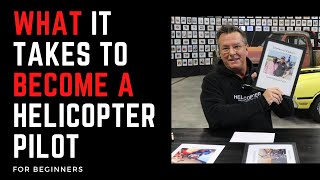
Kenny Keller walks through helicopter pilot training from first flight to career. Private license takes 60-80 hours and costs $15,000-$25,000. Most pilots build hours toward EMS jobs, which typically require 1,000+ hours.
Chapters
Hey, are you interested in becoming a helicopter pilot? Getting your license, but you have no idea where to start because you haven't even taken a lesson yet and you're just starting out. That's what this video is for. This isn't for people who are already flying and already know the course. We're getting a lot of questions from a lot of people of interest in learning to fly helicopters. And it's really cool with all the weirdness going on in the world right now, I think a lot of people are like looking for stuff. They're on the Internet, searching around. They've always wanted to maybe fly, fly helicopters. And so they're reaching out to us and asking a lot of questions. And Chris Hauser, one of the CFIs that we have in our helicopter rolling ground school, just called me today and he said, man, dude, do you have any fresh videos on how a person gets started? Because I'm getting so many questions and people sometimes have a wrong impression of what it takes to become a helicopter pilot. So we're going to do this just basic form, real easy, kind of give you an idea of what it's all about. And I made a, made some notes here because otherwise I'll forget starting out. The first thing you have to get is a private pilot license. Okay? There's an old wives tale that you have to be an airplane pilot first. That is, that is not correct. Maybe 30, 40 years ago, but not now. You can go direct to flying a helicopter. And something that's kind of cool that people don't understand is you can go take an introductory flight anytime. So if you're even remotely interested, find a flight school somewhere. And they usually have a special price for an intro flight. You can call them up and go do a little bit of groundwork with them, meaning they sit down, talk to you, check your information, and they can take you up for a half an hour, an hour flight so you can see what it's all about. And people don't realize that either. They think they got to learn a bunch of math and do a bunch of stuff, but you can actually just take an introductory flight and find out what it's all about. And of course people ask all the time, well, how long is it going to take? We've had people that studied ahead of time and then learned all the ground knowledge and then showed up at a flight school and did their license in three weeks. Now that is rare, but it can be done. We've also had people, we had one gentleman who joined our ground school and he passed his private checkride 27 years later after the first time he took the test, failed the test, got a pink slip and didn't finish for 27 years. So when someone says, how long does it take? It depends on a number of factors. How much time you can fly per week, how well you study on your own. There's weather, there's aircraft maintenance, there's all kinds of things that play into that. So, so when a person says, well, how long is it going to take? That really depends. It depends on you, the flight school and a whole number of factors. So it could happen pretty fast, like in a month, it could take you darn near 30 years or anywhere in between. Right. That's the reality of it. People also ask, what do I do to get started? Or what's the difference between ground school and flying? And I don't understand all this. The FAA requires you have 40 hours minimum to take the test. And during that 40 hours of flight time, where you're getting dual with your instructor and some solo time, you also have to learn the knowledge that goes along with flying. Right. We always say 25% of the work is learning to fly the helicopter, 75% of the work is learning the knowledge. So there's a lot of knowledge that you have to learn and that's what we do here at helicopter and ground school. We teach all the knowledge, especially like a college course almost. There's a lot of information. What people most generally do is they take their introductory flight, they get their money around and they start flying. And while they're flying, they're also studying, doing ground school at home on their own, reading all the materials. They're doing one on one with their one on one, what we call ground instruction. One on one with their instructor at their flight school. Some people use our online training to supplement that, their home study or their one on one with their instructor. So basically that's how you get the license and there's some requirements in there, and we have another video on that. But I want to keep this really simple. So you have to start with the private. Gotta do that first. It's 40 hours minimum. You can fly anywhere in the world you want to. Preferably you want to find a flight school somewhere close to home. But that's how you get started. And people want to know how much money is it? I throw the number out there at 20,000. Now it can be more than that and it can be less than that. So because again, when somebody says, what's it going to cost? It depends. On where in the world you're at, how long it takes you, what the aircraft charges are, what the instructor charges are. So it varies from person to person. There isn't one answer. It's going to cost you exactly this much. So I say 20, expect that and expect more. If you get done for less than that, that's great, but. But it's not cheap. And there's nothing about this endeavor that's cheap. That's the way it is. Helicopters are just plain expensive, but man, are they fun. Okay, so the private pilot license, you can get it. You can go fly for fun. You can take up your friends, your family, you can go in at your house. As long as there's no local ordinances, you know, prohibiting that. You can fly to an airport to get lunch, you can go sightseeing. You just can't be paid at the private pilot level. So whether you just want to be a private or you're thinking about this as a career, at least get the private, because then you can go fly and enjoy it and find out what the whole, this whole helicopter training thing is about. So let's talk about the professional route. Okay? A lot of people say this. Chris told me today. He goes, I had a guy call and said, hey, I want to get my commercial. I'm going to fly EMS helicopters. And he was just starting out, knew nothing, he was in his mid-30s. And Chris said, well, it can be done. But there's, you know, this gentleman thought he could just go get a commercial license and start flying EMS helicopters. It takes time to get to that EMS helicopter stage, right, where you have the time and experience to apply for those jobs. And we'll cover that at the end. The next step a lot of people do is do their instrument training. And this is another license. And this makes you a better pilot. And if you want to become a commercial pilot and a cfi, if you do the instrument in between private and commercial, it's a benefit to you because you're spending money on instrument training, but you're also a rated pilot. So you're building the time that you need to become a commercial pilot, because the commercial pilot is going to require 150 hours of total time. So if you're brand new off the street, you've never flown anything, it's going to be 150 hours. Now, if you're maybe have some airplane time, then it's different because some of that airplane will. Time will count. But there's still a certain amount of requirements that have to be done in the helicopter. So 150 hours is what it's going to take to get you through the instrument and get to the commercial pilot level. And again, you don't have to do the instrument, but if you're going the professional pilot route, you'll probably need it later for that, for that EMS helicopter pilot job. Because pretty much all of them nowadays require that instrument rating. So you want to get the private first, find out what it's all about, get started. Then the best use of your money is instrument rating and then the commercial test. And again, I mentioned that's 20 or 150 hours. Now what's that going to cost you? I throw this number out there and say 50 to 100. Okay? And in these videos, people always get in the description box and argue and fight and go back and forth. I'm giving you a broad range. 50 is pretty cheap. 100 is probably more like it. But maybe you could do it for 75,000. It all depends. It depends on again, the aircraft, how long it takes you. You got to have that minimum 150. Are there ways to save money? There are. Like when I was training years ago, there was at the flight school I was at, they did a pipeline patrol every week. Once you were rated private pilot, they would let you go along for a really nice discount and log time to build time in your logbook for your commercial. And there are things out there now those aren't easy to find and you have to reach out to find those opportunities. But there are ways to save money. But you're going to spend somewhere between 50 to 100, maybe more, maybe less. But that's it's going to be in that general vicinity. Again, it is not cheap. Okay, but once you have the commercial license, then you can fly for hire and be paid. You, you can't do that at the private pilot level just for fun. Now with the commercial level, when you first get it, it's very hard to get a job with low time in your logbook. And what happens in the real world, this is what happens. Most people get their certified flight instructor rating, start building their time. And as you build time in your logbook, you'll be able to advance in your career. Usually the first big stepping stone is 500 hours of flight time. And then 1000 and 1500 and 2000. It just keeps moving up. So the more time that you build, the more marketable you're going to be. The more ratings you have and the more experience through time, you can get better and better jobs. That is the path that most people take your path might vary from this just a little bit and you might be able to have 150 hours and get a job flying commercially somewhere, but probably not likely. You're probably going to have to go to the CFI route and I'm not going to dig any farther because again, there's other multitudes of things that can happen. But I'm just giving you a general picture again for the beginner that has no idea to get to the. Well, let me talk about the certified flight instructor again, just for a minute. Once you have that 150 hours and you take your test for your commercial, then the certified flight instructor is going to cost you a little bit more money. But in the big scheme of what you've spent already, that's not going to be that much money because it's not like they have a 10, 20, 30, 40 hour requirement on it. It's just whatever it takes for you to get comfortable teaching in the aircraft, which is fly to a good commercial standard because you're a commercial pilot by this point and be able to talk and teach while while flying to that commercial standard. So whoever you're flying with, it's their job to fly with you, evaluate you, help you become a teacher and not only present things in the classroom to an examiner, teaching that examiner as though that examiner is a private pilot, they're also prepping you in the aircraft to go out and fly to a good commercial standard and teach. So that doesn't have an hour requirement on it. So what are you going to spend to do that? Probably a couple grand at least. More like probably five. But again, it depends. Don't lock my numbers in. It varies so much on who you are, where you are, how long it takes, what the aircraft rates are, so many things that play into that. So you know to get off the street to private pilot and go have fun. Someone Area 20 grand length of time depends. If you want to be a professional pilot and go do like the EMS job and you're going to have to have probably 2000 hours. There might be some jobs still left at 1500, but it's pretty standard across the board that you're going to have to have 2,000 hours of flight time. How long is that going to take you? There are people that have done it in just a couple years and there's people that have taken forever. You know, again, it depends on so many different factors. If you go to work as a CFI and you can work at a really busy school and you fly a Lot of hours. You know, my busiest year ever to be honest, when I was a new, a new instructor one year, I did 600 hours in one year. And that was staying with it, that was flying a lot, and I mean a lot. So you could certainly do that many. But you're going to be busy and you're going to be flying a lot. And there's other opportunities as you build time like Grand Canyon tours or flying in Alaska. There are some jobs that you can get with certain amount of time experience where you can get a lot of hours really quickly. Going to say, well give me myself an example. For me, off the street to CFI took me four years, but that wasn't training. All that was all that time. That was train a little bit, take a break, train some more, take a break. Because like most people I had to keep finding ways to fund the flight training. Whether it was sell off personal belongings, borrow money, use credit cards, whatever you do to get the money, sometimes that holds up your training. So for me to there to cfi it took about four years and then to get to EMS pilot, I was out working the industry probably for. Probably took me four to five years to get to that 2,000 hour mark to where I could go into the, to the EMS pilot job. So it is certainly an attainable goal. But if you're brand new and you want to go do some training and hopefully in six months you're flying ems, it's not going to happen for you quite that fast. Nothing in life is easy, nothing good is free, right? You got to put the time and effort into this. But at least this gives you an idea where you're going. And I highly recommend taking the intro flight and at least go see what it's all about. And there's so many people that their dream changes like mine did throughout my career of what I thought I wanted to do to what I'm doing now. It changed along that path. Path. But I'm okay with that, right? I mean I'm okay with where my path went. And so many people I've seen, they have an idea what they want to do when they get started and then through time and experience different opportunities open up and you could end up going a totally different direction from your original plan or you might just chase that single dream and go right for it. But it's okay if your plan changes. You know, same way with life, right? It's okay to change your life. So I'm going to grab this other camera here and take you over and show you The Hogs Wall of Fame. Real quick. But Heather was just here today. Heather is our ground school member concierge. Concierge is what I call her. She takes care of all of our members here at Helicopter Island Ground School. Did I tell you who I am? I am Kenny Keller, creator of Helicopter Island Ground School. This is our HOG studio slash hangar. This is where we fly, fly with customers, do our videos. And we have what we call the Hogs Wall of Fame back here. And Heather was here today and just put up some new pictures. But to give you an idea, here's Tristan. He sent this to me just today. She has this printed off, ready to go in a frame because she needs more frames going up on the wall. A manual commercial pilot just got his rating six months ago. He was at the beginning stages, called us up, joined ground school and wanted to know about flight training. And we answered some of his questions. And here he is, already six months later, he's at a commercial pilot ready to go to do his instrument rating, which is, you know, backwards from the way I should. I said you should do. But that's okay. You can do it after the commercial. So I want to grab the camera and just take you over there because I just want you to see what this is all about. Again with our ground school, we help people get through all the different ratings. And these are all fresh that just put up. We've got Antonio, private pilot, Jason, commercial pilot. He's flying at the flight school where I learned many years ago. Here's Jason. This says commercial, but he's done his private commercial. And we have a new picture just sent in where he just did his certified flight instructor rating and he's all add on pilots. And by the way, he's looking for a lease aircraft. So anybody out there that might own an aircraft, looking to help out a university that need an aircraft. But we'll talk more about that in another video. But just want to give you an idea, right? These are all people that they all started somewhere. They all had a dream, right? Whether they just got their private or they were wanting to go to the commercial level, Everybody's got to start somewhere. So again, that's why I want to make this video today, just to give you an idea. And this is for the newcomers, and there's nothing wrong with that. Everybody started somewhere, right? I mean, everybody started somewhere. And when you're first starting out, you know, you can be a little timid, right? And people are scared to ask questions. Sometimes you're just a little bit nervous and you wonder, am I smart enough? Do I have the money? Trust me, when I started, I didn't think I was smart enough, didn't think I'd ever be able to find the money. But I got started, I got hooked up, and 24 years later, I'm still involved with helicopters and I can't imagine doing anything else. They are absolutely incredible machines, and until you've experienced one, I don't know what to say other than you need to do an intro flight and go check it out. I promise I've never had anybody that walked away going, oh, wow, that was boring. Not what I expected. I've been teaching over 20 years and I've done a lot of introductory flights for people that are brand new off the street. And then probably half the ratings that we do are people that already have their fixed wing license, already have their airplane rating and are doing an add on, what we call helicopter add on. They're adding helicopter to their license, whether it's a private license or commercial license. And even all the fixed wing people. I've never had anybody that came to fly and they went, and I don't want to do this, this sucks. It's not like that. Even the fixed wing people, they may love airplanes, but they've always had an interest. And then they come to fly a helicopter and they go, wow, this is a totally different experience. And I can tell you it's the same going the other way. I did helicopters first and then did my airplane license after I was already a CFI in helicopters. I'm just a private in airplanes, so I can only go fly those for fun. But the airplane is a whole nother experience and it has its pros and cons too. Every aircraft, make, model, category, type, every. Every aircraft has its own pros and cons. And you'll figure out what's right for you and what you like the best. But I highly recommend, even if it's airplanes, the. The thing about airplanes are, and we call them fixed wings, it's a lot less money to fly an airplane than it is to fly helicopter. That's just the nature of these aircraft. Airplanes don't have as many moving parts, so they're a little easier to maintain. They're not as expensive to purchase most generally, as far as training aircraft, and they still require a lot of maintenance, but not as much maintenance as a helicopter. So you can always go the airplane route first if you like. And then there's one last big question that people ask us all the time and they say, well, I heard It'll save money if I do the airplane first and then do my helicopter. I've done the math on that. I don't think it really benefits you that much. I don't think the amount that it might save you isn't, in the big scheme of things, isn't going to really make any difference. I say depending on the individual, pick what you really want to do the most. And if you're not sure, go do an intro on both. Try them both, because you can always do one and then do the other. But I wouldn't intertwine them. I would work on one and then after you're finished with that one, go do the other. And again, you're more than welcome to pick the choice that's right for you. But here's the key. For those of you that want to do this for a career down the road, once you start applying for those jobs, every employer wants to know, how much helicopter time do you have? How much helicopter time do you have? So the airplane time that you might have in your logbook could be beneficial. But in the beginning, getting those first jobs as a helicopter pilot, you need every single hour of that helicopter time that you can get to keep moving your career later. The fixed wing time could come in more to play later. I'll give you an example. There are EMS jobs out there where they'll say you have to have 2000 hours of flight time, 500 can be fixed wing, 1500 needs to be helicopter, rotorcraft, helicopter. And again, that can vary from company to company, but that's something that you'll hear. And any, any one individual company could have its own, you know, spin on that regulation or not regulation, but on those stipulations or requirements that they, they want before they hire you. But that's a pretty good general where you'll see those advertised. And if you jump online, you look for, you know, posted jobs for EMS helicopter pilot, you'll see that very common 2000 hours total, you know, 1500 helicopter, 500 fixed wing. And then there's other nighttime cross country again, all depending on what you want to do. All right, I'm going to wrap it up because I think that's a good general overview that we can send out for people when they ask the question. I want to get started, I want to learn to fly, but I really don't have, I don't have any idea because I haven't started yet. We all started somewhere. I remember when I first started, you know, I went down the street and bought a aviation magazine. And got home and was disappointed because all it was was airplanes and I really wanted helicopters. And I remember how timid I was in the beginning to reach out to people and you know, it is intimidating for some of us, some maybe particular individuals. It doesn't intimidate you at all, but it did me. So don't feel bad. If you're one to get started, I highly recommend an introductory flight. Like I said, they usually will give you like a special rate to go try it out for a 30 minute flight. Most schools have that. So I highly recommend go take an intro flight, find out what it's all about. And I, I'm 99.9% sure that you're not going to regret girl going for that intro. And then one little plug for us. We are helicopter online ground school, been online nine years. We have a link right down below this video where you can go check us out and see what we're all about. But what we do ultimately is we help people learn the knowledge because to me I think that's the hard part. So you're welcome to go down below, click that link, check us out, subscribe to the channel and click the bell so you'll be notified of our future videos. We're always doing so something talking about all kinds of stuff, helicopter training. We're at 900 videos now, I think in 10 years. So subscribe, click the bell and we'll see you next video.










