Helicopter Structural Icing Dangers & Unboxing Brand New HOGS Ball Cap
Brian Rutledge explains structural icing hazards for helicopters: the conditions that cause it, three ice types, and how it degrades performance. He reviews an NTSB accident where icing brought down a Bell 407 near Clear Lake, Iowa in 2013, and covers how pilots report and forecast icing using AIRMET Zulu and PIREP categories.
Questions this video answers
Between +2°C and −10°C (noting icing has occurred below −10°C in some cases).
Clear ice, rime ice, and mixed ice.
Trace: < 1/4 inch/hour; Light: 1/4 to 1 inch/hour; Moderate: 1 to 3 inches/hour; Severe: > 3 inches/hour.
January 2, 2013 — Clear Lake, Iowa (Bell 407 night medical flight; no survivors).
M03 (minus 3°C).
Chapters
All right, the new Hogs hats are here. I'm Kenny Keller, Crater Helicopter Alliance Ground school. I'm not big on wearing hats, but maybe as I lose hair getting older, maybe I'll start wearing one to cover up this bald spot that my daughter's always nagging me about. But here they are, the very first. We've been online almost nine years. Helicopter land ground school. We've never had a ball cap, so let's head in and open it. Oh, wait. Better get my trusty knife. So we're also going to show you today one of our new weather presentations from the private pilot membership. Our operations manager, Brian Rutledge has been rebuilding all the videos inside the weather section. It's got like 12 or 14 new videos in there now. Gonna roll that for you here in just a minute. Let's get right to it. Let's open up the Hogs ball caps. I order a lot of stuff from this company. It's always really, really, really good quality stuff. So these new ball caps for this cell, we are sending these to people to jump on the professional pilot membership. We send you the hat. So let's see what we got here. Oh yeah, nice. Let's go over, take a look. Give you a little bit better look here. There you go. First impression. Nice quality. And I will have to say I do appreciate the little American flag on the back of the hat. So it does have an adjustable back. It's been many years since I've had it on. Let's try it out. Hell yeah. So there you go. I gotta loosen that up a little bit. I do have kind of a large head. Alright, so there it is, the new helicopter alliance ground school ball cap. We've got one order placed and I have a feeling I'm gonna need to order some more because we just started this sale yesterday and people have been jumping all over the professional pilot membership, which includes private, commercial, CFI, instrument. All four of those courses has R22 section, R44 section, and an instrument section. Specific information on those aircraft all in one membership, never expires. One time fee never goes away. It's 50% off through this cell. September 15th. I'll put a link down below that takes you right to. It goes right to the checkout page and it'll show you the discounted price and it's a nice savings. 50% off. And there's a code American50 you can use on any membership that we have for all the monthlies. There's six options now for monthly memberships. 50% off. The first month and then it will go to the normal price the following month. Pretty good deal. The courses are cheap anyway, very inexpensive and we're really, really proud of them. So you use the code American50. Just type that in the coupon box during your checkout. It will reveal the discounted price. You know what, under this video I'll go ahead and just put all the links for each one of those. That way it makes it easy. You won't even need the code. You can just go right to the link for the membership you're interested in and click on it and it'll show you the discount right there. You'll see it as you sign up. Very nice. All right, so structural icing in a helicopter can be dangerous, can be fatal. You need to understand as much as you can about icing. That's why it's an important portion of the weather section. Understanding weather, weather reports, all the basic elements of weather, all the things that can get you in trouble and kill you. Because you need to be able to make a good decision whether you're going to go or not. You need to look at the totality of circumstance, look at all the weather, do your, you know, your own briefing of yourself, your pre flight in the aircraft, look at all those things together and make a good decision whether you're safe to go or if it's a little bit iffy and there's something in your gut that says you shouldn't do it. Live to fly another day. Helicopterground.com hit the no go. Stay on the ground. Always better to be on the ground wishing you were up there than up there wishing you were down there. That I could tell you for a fact. All right, let's roll the video from Brian Rutledge. Please give us some feedback on this. Members have been giving Brian a lot of great feedback on everything he's done so far. We've totally rebuilt the weather section inside private pilot and Brian is taking his time building these presentations and trying to really break it down and give you the meat of what you got to know in a very simple form. Not making it too complicated and not throwing in a bunch of garbage that you don't need. He's giving you what you need to know as a private pilot to make good weather decisions. So let's roll the structural icing now.
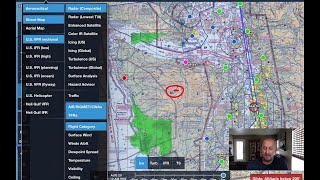
Alright, this lesson is going to be all about structural icing. Very important topic, things you're going to need to know for your checkride. We'll go in a little bit, a little deeper and we'll talk about a accident that had occurred at the very end. So there's two conditions that are necessary for structural icing in flight to occur. So first you have to be flying through visible moisture, any visible moisture, and the temperature needs to be between plus 2 degrees Celsius and minus 10 degrees Celsius. Now with that being said, minus 10 degrees Celsius, there have been icing occurrences that have, that happened at temperatures -15 degrees C as well. So you know, take this for what it's worth. But on average the temperatures need to be between 2 and minus 10 degrees Celsius for structural icing. Can it occur in other temperatures? It sure can. So hazards of structural icing. This picture pretty much sums it up. You can see lift decreases, however, weight increases due to the weight of the ice and your thrust will decrease and your drag will increase again because of the weight of the ice. So it's going to affect all parts of the helicopter if you get structural icing, increasing the weight, increasing the drag, which is a recipe for a lot of problems down the road. So you have to make sure that you do a very good thorough preflight briefing. And you know, flying in known icing conditions, you read the PoH in most helicopters, most single engine helicopters, the ones that we fly, Robinsons, and the such flight in known icing conditions is prohibited. And you'll find that line in section 2 limitations in the pilot operating handbook. Here's a picture that kind of shows a close up view of different parts of the helicopter that icing can find itself or you can find it on your aircraft. So that forward one there on the left, the rotor blades, even though the rotor blades are turning, yes they can, will get ice accumulation. Exposed parts such as your pitch change links, your control rods, things of that nature that are out of the cowling, that attach to the, to the mass of the rotor. Those areas, your tail rotor can also accumulate ice as well as the inlet area for the air where the air is coming into the aircraft for engine cooling. You actually can get ice buildup there as well. So there's icing types that the aim covers in 71 42. Now the aim that I use, I use an online one and it happens to show it on 71 42. I looked on another one that I had online as well. It was an app and the numbers were a little bit different, but you're going to find it in 71 between 20 and 42. Somewhere in there they talk about clear ice, rime ice and mixed ice. Actually they talked about a Little bit more than that. But these are the three that you need to know for your checkride. So clear ice, it's large super cooled water droplets. They strike the surface of the aircraft and then these droplets, they spread out over the surface of the airframe, creating this sheet type of appearance of ice. Ice is very hard, it's glossy, it's heavy and it's dangerous. And it's typically found in cumuliform type clouds. And so cumuliform clouds, very deep vertical type development, you know, we're not talking about, you know, yes, towering cumulus, you can, but I'm just talking cumuliform clouds in general have a very deep level from the base of the cloud to the top of the cloud. And because it goes several, you know, thousands of feet up, the ability for this clear ice for you to contact that is, is a lot greater than say in stratiform clouds. So that's what clear ice looks like on the. This is on the leading edge of an airplane. It's kind of got that. This actually looks a little more like some rime might be mixed in it. But you can see on the bottom side how it kind of spreads back and out. That's kind of that sheet like appearance. Rye mice. This is going to be more of a rough, milky, opaque type looking ice. And it freezes very rapidly after it impacts the aircraft. There's air that's trapped between the frozen droplets. That's what gives it this opaque kind of frost like brittle appearance. It changes the airfoil shape just like clear ice does. But this is typically found in stratiform type clouds. And this is what it looks like, you know, kind of got that opaque, that frost brittle type appearance. Mixed ice is just that. It's a combination of both clear and rime. It's bad either way. It forms very rapidly and it's not even, not only heavy, but it also changes the shape of the airfoil just like the other ones do any type of ice on your aircraft, bad, you do not want ice. So in the aim, this is where they show the types of ice and they say clear ice. When I first learned it was clear mix rime. And here they talk about clear, you need to see glaze, glazing, clear one in the same. And you just kind of read through it and it talks about it being clear and smooth, has some air pockets in it and it'll kind of have. And when I showed you that picture, it kind of had that lumpy, translucent, translucent appearance. So you can go through, you can pause the video, you can Read each one of these very thoroughly. It's too much to put into a PowerPoint presentation as bullet points. The next one where you see inner cycle, that's you know when you read it, they're talking about aircraft that have de icing systems. Typically we're going to be talking about airplanes known or observed or detected. Ice accretion, again that's going to have onboard sensors in the aircraft. We don't have that in our typical training aircraft or the aircraft that we typically fly around. Once we're certified commercial pilots and we're maybe working doing like cherry drying or something like that, most of those aircraft aren't going to have onboard sensors. Then mixed ice and ram ice that you can see and then run back ice and residual ice again. The ones you need to really know for a check ride and examiner is probably going to ask you about is going to be your clear or glazed ice, mixed ice and rime ice icing conditions. That's found in 7143 of the aim. And again, there's a lot of stuff here. I would say get get in the AIM and look at these sections and read them thoroughly. But the ones I have circled freezing drizzle, freezing rain and supercooled large droplets. You see them circled there, the abbreviations there that are in blue. That's what you're going to find in a METAR report. So they talk about freezing drizzle. This is precipitation at ground level or aloft. And then if you go down a little further, it's going to tell you the diameters and that's how they decide whether it's freezing drizzle or freezing rain or supercooled large droplets. So anything less than 0.5 millimeters and greater than 0.05 millimeters, they're going to consider that freezing drizzle and then freezing rain has a, has a different set of numbers with it. And then super cool, large droplets are different as well. So just make sure you know the difference between those reporting icing conditions. So if you pull up pireps or you're reading reports on icing conditions and they'll be listed in four different ways, trace is the lesser of the four. So less than a quarter inch of accumulation per hour. I don't know about you, but I'm not going to fly a helicopter around for an hour while I'm getting even trace amounts. I'm going to go find somewhere to land, get out of the conditions. Light is a quarter inch to 1 inch per hour, moderate is 1 to 3 inches per hour and severe is greater than 3 inches per hour. Again, that's accumulation per hour. Airplanes, yes, they fly at much higher altitudes, they're much faster than helicopters and they're in sometimes in conditions that are very conducive for icing. And so if they start to accumulate some ice, say the, the first one trace you, you will read a pirep. If they give a pirep a pilot report that it's trace icing. If you see moderate, then you know they're, they must have accumulated roughly 1 to 3 inches per hour that they were flying. A lot of those aircraft have de icing boots and things of that nature that they can break the icing off and continue their flight. But those aircraft are designed and they are allowed to fly in icing conditions because of the type of equipment they have on board. So forecasts, those will only provide you with the freezing level and possibility of icing occurring with the conditions that have been observed. So you're going to get a freezing level. You'll read in your, in your pre flight weather briefing if you're doing a thorough one and you, you see the freezing level and then there'll be a possibility of icing. That doesn't mean that that icing is going to happen, but it also doesn't mean that it's not going to happen. The only way they ever know that icing is actually occurring on aircraft is when a pilot flies in and actually gets icing. That's how they know. So pireps, those will tell you if icing has occurred to any other pilot. But it's not a guarantee that you will or will not encounter the same conditions. Because you could have an aircraft fly through an area and an hour later you depart on your flight and you go through that same area. Maybe the temperature has gone up to where icing is not going to form or maybe the visible moisture is no longer. Well, you won't encounter icing conditions. But you need to take all the information pireps forecasts and make a determination as what's the likelihood that you could and make your decision that way. Major icing concerns. Your rotor and tail rotor blade could accumulate ice which if that happens and you say had an engine failure, you would lose auto rotational capability. Because now the rotor blades have to, they're heavier, they've got ice on the tow rotor blades have ice on them. That main rotor blade's gotta, gotta continue to provide the appropriate amount of RPM in order for you to successfully land in auto, you know, doing an auto rotation so if you have ice built up, you are not giving yourself any help there. And then increased weight and power required to maintain altitude. So maybe you're in mountainous terrain and you didn't do a good weather briefing and, and you start to accumulate ice and first time you notice it is when you go to apply power because you need to climb to get over a ridge and you can't and you're trying to figure out why. Then as that happens, your windscreen starts to ice over by then. It's a little late by then. So let's talk about NTSB report. This was January 2, 2013 in Clear Lake, Iowa. Details of the flight with a Bell 407. It was a night flight, it was a medical emergency flight with the pilot and two nurses on board. They impacted terrain, no survivors, killed them all from about 600ft AGL, according to the NTSB report. They entered a climb up to about 1800ft and then began a descent and continued the descent until they impacted terrain. The asos. If you're not familiar with what an ASOS is, you need to go back in previous presentations and see all about ASOs. It's an automated surface observation service and very similar to maybe an atis, a little bit different. But essentially you get your pilots get in flight or they are able to in flight listen to the weather at a particular location know airport. So the weather seven miles away from the accident site according to the ASOS or metar, appeared pretty adequate for night VFR operations and did not detect any freezing precipitation. So freezing drizzle or freezing rain, none of that was in the report itself. So if the pilot did check that, he wouldn't have, you know, he would just assume. Okay, well VFR operations, it's vfr, I can fly. However, there was an airmet Zulu, remember Air Mets are, they are named according to the conditions and Zulu is for icing. There was an airmet for icing along the route of flight and there were also several pireps from previous pilots for icing along that route of flight were filed. So the Metar or ASOS at that airport seven miles away from the accident in Mason City Municipal Airport, this is what it was. So on the third day at 0253 Zulu, it's an automated report, the winds were 300 at 8 knots, 8 statute miles visibility, broken 1700, overcast 3300. Yeah, I'd say it's an okay night to fly. I mean, yeah, it's broken at 1700. As long as you don't have mountainous Terrain, Yeah, you could fly VFR there. You got eight statute miles visibility. However, the next part, M03, that means minus 03 degrees Celsius and M05 is your dew point, minus 05 degrees Celsius. So the temperature and the dew point are getting close together, which means the air is just about saturated and the temperature is minus 3. And at the very beginning of the presentation, I told you that plus 2 degrees Celsius to minus 10 degrees Celsius is the temperature range that typically you could encounter icing conditions if visible moisture was present. So the altimeter was 3005. So there you go, minus three on the temperature. And you can guess where this story is going, probable cause and findings. So the pilot inadvertently, so he didn't do it on purpose, but he inadvertently encountered localized icing conditions and then he lost control and hit terrain, impacted the terrain, killed everybody on board. So again, you can't see the ice but in flight until you actually encounter it and it starts to stick to the aircraft itself. So with that being said, I'm going to switch over to foreflight and on foreflight I want to show you something here. We're going to go up to the northwest and actually real quick I'll just show you notice down here, down here in Sacramento, where I'm from. See all these red dots? That just indicates ifr. That's because all the fires, a lot of smoke. Visibility is down to about two and a half miles out here. But nonetheless, let's go up here and let's take a look up in this northwest corner. What I'm going to do is I'm going to turn on icing and you'll see this blue area that just showed up. This is airmets for icing and this is today current time. It's 11:12 Pacific Daylight Time here in, in Sacramento and it's a Thursday. And so let's, let's click on this icing airmet and you'll see about third line down. It says Air Mat Zulu. There you go, icing Air mat. It's active from 10,000ft to 21,000ft. A lot of people will say, well I'm flying a helicopter. I'm not gonna be flying at 10,000ft, so I don't have to worry about it. Well, let's zoom in and let's take a look right here, Mount Olympus right here in the center. Let's circle that so we don't lose it. There's Mount Olympus. And you can see this number right here, 7969. So essentially 8,000ft. This is an 8,000 foot peak in this area. Now we said that this air mat, if we go back and tap the air mat again, it's active from 10,000ft to 21,000ft MSL. So at this point here, 2,000ft above it, visible moisture. If it's present temperatures. Right. You could get icing, you could be flying a helicopter through there depending on what your job is. But let's, let's add another layer to this. Let's look at the radar. Well, there you go. There is moisture in the air. And so even on a summer day in the middle of August you could essentially find yourself in a position, say maybe you're going from this airport here. What is this? I can't even pronounce that. Quila ute. Let's see what its weather is. So it's showing one and a quarter miles of visibility. Rain, mist, few clouds at 500, broken at 1100 and the temperature of 17, dew point 16. So you got a real close temperature dewpoint. So it's saturated. However, this airport elevation is only 193ft. So it is 7,800ft lower than that mountain peak. So of course the temperature is going to be warmer. But there's precipitation, there's saturation and we come back over here and if that system, let's play this, let's play this and see which way it's going to move. So I just turned on the, see what it does here. Okay, well looks like my connection is not so, not working so good anyways. I was trying to see if the, the radar was going to show the precipitation moving in a particular direction to see if it was going to go right towards that mountainside. But nonetheless you get the point. So you know, thorough pre flight weather briefings, you know, if I was a pilot that was, you know, needing to go do a rescue at the top of Mount Olympus today at this time, not gonna go. I'm looking at IFR conditions over here at this airport. I see low IFR here, I see precipitation all out here and all off the coast. And knowing that this peak is only 2,000ft below the level for this air mat again let's take a look at that. 10,000 to 21,000ft. Not going up there. I'm just not going to do it. So my, my day's over as far as I'm concerned. So again, anyways, you know you got to, the only reason I wanted to pull up the foreflight was just to kind of give you an idea that, you know, just because it's summertime doesn't mean you can't find yourself in a condition as a pilot where icing conditions can happen. So, you know, do thorough pre flight briefings, thoroughly understand what icing can do, the dangers of it, avoid it. If you do find yourself in it, make sure you advise atc. If you're, if you're ifr, you need a different route, you need a different altitude. Again, helicopters by nature don't have the same climb performance as an airplane. So a lot of times in your weather briefing you may see that the air is warmer above you, maybe it's 3,000ft above you, but you just don't have the power to get up there. So, you know, you really, really got to take the icing thing seriously and just do a good, thorough preflight briefing. That is it for icing. All right.
Hope you enjoyed that presentation. Leave a comment for Brian Give us a like on the video. Here they are. These are all the ones that are going to be spoken for first and I'm sure I'm going to have to place another order because we've got about three or four of these are already going to be ready to ship tomorrow. Heather will email you as a new member. Make sure you get logged into the site. Okay. Talk to you about your free consultation with our operations Brian. Brian Rutledge and for the professional pilot members. So get your address and get your shit. Sure your shirt, your hat shipped out to you. So with that being said, I better get over there and get another order. But I like them. They're nice. It's a really nice quality, really nice quality hat and especially for people that loves hats because I know lots of people do again, as I get older and probably start using one to cover up my bald spot. So do us a favor, subscribe the channel, click the bell, leave us a comment down below and we shall see in the next video. Peace out.










