Helicopter Training and Check Ride Tips
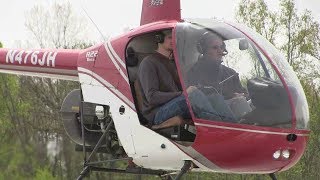
Kenny Keller talks with instructors Chris Hauser and Tannen Austin about helicopter training and check rides. They cover written test timing, the two-step lift-to-hover procedure, why ground school matters before dual instruction, and how to prepare for private, commercial, and CFI exams.
Chapters
Sam, Hey, It's Kenny with HelicopterGround.com back with live training Tuesday. So today is kind of fun because we have me here as normal. Gary Cleveland is off today. He's not around two months here and he's already taken a week off work. But that's alright because we have. I'm gonna go to the camera over here with Chris Hauser and Tannen Austin. Chris Hauser, for those that are just coming in for the first time, never been here before. Just give us a quick description about who you are. You're a HOGS certified flight instructor. Been flying with me for about five years.
I think longer than that we've been. Cause I was thinking about it the other day. I was here before HOGS came around. Really? So yeah, so I could I say that I was like the first HOGS member?
Yes, you could say that.
Your notebook way back. Well it would have been 2009 when I started flying helicopters. So I got my fixed wing rating 2009, switched over to helicopters and from there I've picked up my private commercial CFI and instrument. Three of those were with Kenny and I went out to St. Louis to pick up my instrument rating. And now here in the near future I think we're gonna start working on the Double I process. So yeah, 2008. So almost 10 years of flying, nine years in helicopter somewhere in there.
Awesome. And you've been appearing in our instrument videos as you're getting ready for your double eye. So you and Tannen today have been talking about getting together on that. Tannen is one of our HOGS members. Got his went off street to Double I in a year. He's been doing some of our instrument training videos for our new instrument core instrument course that is live now to anybody@helopterground.com it's open and ready to go for the public. Current HOGS members have a discount. You got to email either me or Gary to get the discount code for that. Now I'm going to go back over and let Tanner introduce himself. For those of you that are first time here that don't know Tannen yet.
Oh yeah, I'm Tannen Austin and that pretty much sums it up. I started in May 2016 and was got all of my private commercial instruments CFI CFII by July this year. So yeah, a little over. A little over a year, but pretty much been a hogs member since May20. I mean right when I started I got my HOGS membership and been using all of this to get me through through school. So yeah, happy to help Build the instrument course since. Yeah. Kind of give back some. Since I used all of this to get me through all of the ratings that I could.
That's awesome. We're glad you're here. You've been doing a great job with instrument training.
That's a lot of flying. I was just sitting there thinking to double I in a year, 200 hours in a year, which is for. I guess this is kind of. This is live for newer members. So that's not really typical, right?
That's not typical at all. That's amazing. Off the street to double A in one year, that is a feat. It has been done. But not many people complete it in that amount of time itself.
Right. You paid for.
Yeah, well, still paying for.
Right. But yeah, a lot of guys, I mean a lot of students that I work with are guys who, you know, they'll work, they'll save some money and then they'll start their flying and then they'll take a week or two off because they got to save some more money and then come back and fly some more. And so that's a lot of flying in one year. That's a lot of studying and a lot of.
Yeah, it was, I mean I pretty much. That was my full time job, especially getting through my private. It was fly every single day and then it was like 4 hours of ground, wake up at 8, 4 hours of ground, go fly 11 to 3 at the airport and then go to the job to pay rent and then next day do the same thing, do.
It all over again.
Yep. I slowed down going through instrument because I was actually getting ahead of myself in hours. So I had to slow my flying down some because I was getting to like commercial standard hours. So. But yeah.
Very typical that people. The flight training exceeds the ground training, which we'll get to that in a minute. We're gonna do 15 videos today. Trip tips on general helicopter training and also checkride tips. Before we get started on that, we're going to go over to the Courtney cam. Courtney's over here taking your questions. So let us know where you're from. Even if you are one of those that's logging in every week. That's cool. Let us know where you are at, where you're coming from or where you're logging in from. And if you're new, we haven't heard from you before. Put your name in there. Just give us a brief description where you're at. Courtney's going to field the questions. We'll check in here with every little bit we're going to cover a whole bunch of stuff here. I'm going to cover some of these videos and we're going to roll these videos for fun. I made these videos five years ago and the message is good but I just want to roll them because it's, it's all a lot of the core tips that are important no matter what you're doing. Private commercial, cfi. There's only one that might be maybe for the brand new person which is introductory flight. We'll get to that in a minute. So I'm going to go over to Courtney and see who might be here and who has checked in. And then as we're rolling these videos, go ahead and put your questions in related to the topics that we're talking about and we'll answer them either in between the videos or more towards the end, if you have something off subject, wait towards the end because we may cover in one of the upcoming videos and then whatever questions you have at the end, at the end you got all three of us here to pick our brains today and ask questions. So let's go to Courtney and see who is who has joined us today.
Jim Hardy says here from North Texas and Taz and Mark Daniels says hi from Vegas.
Also Gary Cleveland says he's tuning in.
From the way home.
So.
Hello everyone.
Awesome. So Gary Cleveland's in there, huh? So I guess we have to watch what we're gonna say about him. Alright, we're gonna roll the first video. Put your questions in as we go and we'll be back. These videos are short. We won't be gone more than a minute or so. So let me try to get this pulled up here. Gary's usually doing this for me so I'm starting from scratch. Alright, here we go with the first one. Helicopter introductory flight. This is for those of you that haven't started yet that thinking. How do I get started? This is how you get started. So you can make fun of me in the video all you want because that's part of why we're here. Hello, this is Kenny with Portland Helicopters. If you dreamed of always flying helicopters could be a dream. Along with my dream of wanting to shoot a video by the ocean. Been one that did this for quite a while and now I'm getting my chance to do that. We can help you make your dreams come true. The first question a lot of people ask is how do I get started? Getting started, the best thing to do is just schedule an intro flight. Find a helicopter somewhere near your area and schedule an Introductory flight and go out and get your first helicopter lesson. You can sit and think about it all day long. You can read books, watch these videos. But until you go out and try it, you're not going to know what it's really all about. And the actual flying experience speaks for itself once you go up. So if you're wanting to know where to get started, schedule yourself an introductory flight and go out and give it a try. We're putting out a series of videos to help answer a lot of the questions that people ask about learning to fly helicopters. So get that introductory flight scheduled and keep checking back with us for some more videos and more tips on learning to fly. Thanks.
We're waiting.
Helicopters.com. it's been a while.
Go ahead.
Oh yeah, yeah. Introductory flight or Discovery flight. That's exactly how I guess just about everybody should start it. We did it in Robinson. So why did you do the Robinson Instruments mainly? Okay, so in The Robinson the SFAR 73 briefing you will have to do first it's about a 40 minute ground briefing just about Robinson specific aspects and then just really how simple things on how a helicopter works. And then short pre flight and then actually with the S4R73 briefing, it's required if you actually want to manipulate the controls. But it does allow you, your very first time in a helicopter, to go up there and actually fly the helicopter. And that's highly recommended if you want to get started. Just go up for a half an hour and actually get on all three controls and see what it's like. I know we have. We'll go up and first time, if they request it, go ahead and just do an auto rotation just so people realize that helicopters do actually glide as opposed to. That's one of the biggest misconceptions is you just fall like a rock. But if they require, I mean we won't do it if they look afraid.
But yeah, yeah, it's about the same. Most of my time is in instruments and working with the flight school or if you're doing it on your own, an intro flight. Discovery flight is it's basically an hour with a half an hour of ground, maybe 15 minutes of a little bit of instruction or just ground stuff and then about a half an hour flight and then you have 15 minutes at the end to kind of debrief or talk about it. But same thing I usually with a new person who's interested is I'll take them up, let them fly kind of in cruise flight a little bit. Just get their hands on the Controls, and then I'll bring them back and let them kind of, you know, let them see what hovering's about or trying to hover. You know, some people think it's. It's amazing how many people start off with like, oh, I've heard it's pretty easy. And then I give them all the controls, and you're saving them in about two seconds. So. And then, yeah, I usually try to get an auto in just to show them. You know, everybody knows that airplanes can glide with no engine, but everybody seems to think that if a helicopter loses its engine, it's going to fly or drop right out of the sky. And it's not the case at all. So. But yeah, pretty much same thing. I try to get the students hands on the controls, let them test it out, and then a little bit of a debrief. And that's how you start into this business.
I'll add, like, especially it's fun for the introductory flight just to do things that planes can't do. Just fly low, slow, maybe, you know, fly. I mean, generally in the introductory flight, you wouldn't do anything close to, you know, like, confined landings. But I like, we do like coming in pirouettes down the Runway or down a taxiway. Just things that, you know, to show the difference between, especially if they're add on guys do.
Yeah.
This is what makes helicopters so cool, because we can just sit here and hover in these pirouettes and fly backwards. Yeah. Just show all the fun things that helicopters can do.
All right, ready for the next video?
Yep.
Go for it.
Hello again, Kenneth, with 401 helicopters, and we're taking you through a timeline here of learning to fly. And the next one I want to hit is Helicopter Flying Handbook. I checked online for one today. It was around $17, so it's going to be right around 20 bucks, depending on where you get it. Don't let the book overwhelm you. Just start out kind of easy with it. Helicopter controls, helicopter maneuvers. If you dive into it and start really reading the aerodynamics, you can read it and it can scare you way before you even get started. The aerodynamics aren't that hard. Once you start reading it and you get some help from your instructor, you'll find out it's not too bad. So just get the Helicopter Flying Handbook and learn the basics so that when you go for your first couple lessons, you already have a good idea of what the controls do and a little bit about how the helicopter operates. Grab yourself a copy of the Helicopter Flying Handbook and We'll see you on the next one.
Yeah, the Helicopter Flying Handbook, that's pretty much everything that you will need for your private. But you'll want to read it along with your pts because that will give you all of the information that is required of you during your checkride. So just follow along. You pretty much go PTS to Helicopter Flying Handbook and I think in the flying handbook it'll actually say. No, it doesn't. First I thought I actually mentioned where in the PTS this information is. But that's not, that's not the case. But yeah, you want to kind of reference both those in tandem. But yeah. So we move on to the next video then.
I don't have anything. That's great. You have to have the Helicopter Flying Handbook. You will have to read it as I quiz students when we fly. You know, I'm always saying, well, the helicopter flying handbook states, you know, three to five foot hover, that's what the examiner, you know, that's the bible, that's the rule, that's what everybody goes off of. You have to have it, you have to read it, got to know it.
Hello again, Kenny with Fort Wayne Helicopters. Next tip, start thinking about your written test early on in your training. You're doing your duel. One thing that we like to say is try to have your written test done prior to solo. Not many people do it but the guys that I've trained over the years, the ones that you could get the written done early like prior to your solo. Man, once the solo time gets there, you can get your requirements out of the way, get your duel done and get to the checkride. Which is why we're here. We're talking about getting from day one getting you to the checkride and getting your rating. So very important. Get a written test, prep early on in the training and start studying for that written test. The sooner that you get that written test out of the way, the better off you're going to be because the written test is always a hassle. There's been many times that we've had guys that they get down to a week before their checkride and they're still trying to get the written test test done. So they're working on last minute requirements, paperwork, flying written test and I'm telling you it's a pain in the butt. Get that written done and out of the way. Thanks for stopping by.
We're doing, by the way, don't go to Fort Wayne helicopters dot com. It might not be there. It's not there.
You can tell these Videos are that old because that's. That was way back in the day.
Yeah, let's see. I did my. All of my written prep through ASA on iPod app or ipod pad app. And pretty much I. If I could get, I think it was three or five practice tests with above 90% in a row, took the test. That's it. I mean, as soon as I could do it, I would take the test and really just get that done as soon as possible because then you can actually focus on really the questions that your DPE is going to ask you. You want that out of the way. And I did for my instrument, since I knew I was getting my double eye as well. I took both tests in the same day. As soon as I was done with my instrument, I had lunch, went back and took my double eye test because they are the exact same test. So if you studied for one, just get them both done. And I scored like 6% higher on the double eye because I'd just seen those questions.
Great test.
Yeah, I wish I would have known about that. But knowledge test studying, I did a little differently. I bought the ASA book that you can buy that's got all the questions in it, and I would sit down and read a chapter a night or whatever, and I would go through that book, I don't know, three or four times, make sure I saw all the questions, saw all the answers. And then if you just Google FAA knowledge test questions, I mean, there's all types of websites that you can get on that you can do practice exams and all that. I never paid to take practice exams or anything like that, but I just studied that ASA book, took several online exams, and I did the same thing. If I was continuously getting above 90, then I knew I was ready to go take it. And I think the lowest I've ever scored on a test was like an 88. So it's one of those things where you can find all this stuff online. You can buy the test prep books, which I owe. That's what I do. And I just go through and read it. And then remember that can be your ground. And then remember you need to sign off before you go take that. So make sure you get with your instructor, get signed off to go do.
It.
And definitely don't wait until the last. You don't want to be going today for your knowledge test and then tomorrow for your checkride. You want to get all that out of the way as soon as you're ready.
So, yeah, we're ready for the next one.
Hello, Kenny, with Part 1 helicopters. Again, another tip would be choose the aircraft that's right for you. The main helicopters out there being used is the Robinson, the Schweitzer, the Enstrom. They've all got good qualities. Every helicopter has pros and cons to it, but they're all helicopters. So essentially they all fly the same. Some characteristics are a little bit different and numbers are a little bit different, but they're still all helicopters. Don't let one particular school tell you, oh, you've got to fly this helicopter for this exact reason. Look at the different helicopters out there and see what's right for you. If you're a really tall individual, you might want to go into the larger aircraft. If you're a small guy and every hour is what's the most important is the cost, then you're probably going to want to be in the Robinson, Schweitzer's kind of in between. They've all got really good characteristics. They're all great helicopters. Do a little research. It might be worth your time to maybe drive a little farther to be in the aircraft that you should be in versus the one that's just closest. Spend a little time researching the different aircraft and pick which aircraft. Right for you. Thanks for stopping by and we'll see on the next one.
Yeah, this is. This is actually really good information. Especially, I know there were, there were, I think that might actually still exist. Some of the schools that allowed was that bar one one that allowed the GI Bill. And really the students could pick whatever aircraft they wanted to fly. So a lot of schools were recommending get your flight time in a R66 or a star, where the first helicopters these people were learning to fly in and got all of their training done in it. The downside with that is it's very difficult to get an instructor job if all your time is in a 66 or an A. And then also it's like there's some schools that will recommend just getting your flights, all your flights done in a 44, mainly because the school makes more money off of the 44. But if you are, you know, within weight to do it in 22, it's cheaper. Do it in a 22. Or if the school's trying to get you to do it in 22 and you weigh 220 pounds, do it in a 44. Pick the aircraft that makes the most sense. I did mine in a 22 because 22s are difficult to fly. And I figured if I could fly it, I'd be able to fly just about any of the other ones. And really, after flying any other helicopter. Yeah, 22 is. It's specific. It's difficult to fly in comparison.
Yeah, I'm not really sure how to go with that because it's kind of. Yeah, you need to pick what's right for you. However, you also, you know, if you live in Indianapolis, you're, you know, you're probably. There's only probably one or two places you can go to train. If you live in, you know, you got Robinson's in Indianapolis, Fort Wayne has Instrom's. You're kind of limited. My suggestion is get as much as you can and whatever you want, really. I mean, it's one of those things where, you know, each aircraft has its ups and downs, its pros and cons. I was fortunate enough the way you did all your training in Robinsons. I did most of my training in Instrums. The difference between the instrument and the Robinson is instruments have a correlator, Robinsons have a governor. Nothing against Tanner here, but it's hard for a Robinson guy who has governor training to go to an instrument because.
They'Re not used to having a. Yeah.
Because a correlator, you always got to adjust the throttle and all that. But for me, going from an instrument to the Robinson was very easy because I was like, oh, you don't have to do anything with the throttle. You just sit here and let it do its thing. So it's one of those things where I think you're limited to wherever you live. But if you have a choice and, you know, R22s are. Have a weight limit, so that means you may have to bump up to a 44. Instruments are a little bit bigger, but they don't have the governor. So it's one of those things where if you learn in an instrument, it's probably easy to transition to Robinson. If you train in Robinson, you're definitely going to have to have five, six, seven hours of duel again in an instrument to get used to the correlator. So It's a catch 22. And I've got, you know, I've trained in Robinsons, I've trained in instruments, I've trained in Brantley, I've trained in Hillers, I've trained in. I mean, I got a little bit of everything. And they. Each one have their pros and each one's got their con. So, yeah, so that's how it's.
Especially if you're, you know, live around, like, southern Florida or, you know, Arizona, where you have pretty much Your pick, Texas. You have your pick flight school. And, you know, one looks really good, but they're kind of demanding that you fly in this and you'd rather learn in something else.
Yeah. I think you're kind of limited somewhere.
But yeah, if. Yeah, yeah. I trained in Robinsons because Robinsons were available to me.
Right, exactly.
But I also chose the 22 because it was cheaper and I could still. It's like me and my instructor still fit fine and I.
And I chose an instrument because that's what was available to me. Yeah. You know, and I would have. Wouldn't. I've got some Simon A. Schweitzer, too.
And.
But that's, you know, I went to St. Louis to do that. So it's one of those. It's what I think it's kind of where if you're willing to travel, then, yeah, go pick it. If you're not willing to travel and you got to kind of go around wherever you live, then so be it. I mean, but if you really want to do it, you'll do it. So.
Yeah.
Answer that now or.
Yeah, yeah. Well, this is. Does anyone begin training in a Jet Ranger?
Yeah. In the military?
Yeah.
I mean, it's. Yeah.
Jet Rangers are expensive to rent. So if, like, you're at a school and you're renting a Jet Ranger, you're looking at over $1,000 an hour, easily, to rent that Jet Ranger. So. Yeah. Does anyone do it? The military. And if not that they can. I think it's expensive.
Yeah. I think with a Jet Ranger, it's mainly if you're learning to fly that, it's because you bought that and you're having. And you're learning in your own aircraft. I don't think anybody really sets out to start in turbine aircraft except for. Yeah, I know military flight schools are. They are the 206s or whatever, they are military.
And actually they're moving to the 145s now.
Are they? But, yeah, turbines are. I mean, I don't think you're going to get anything. I have paid for turbine training in the past, and it's been anywhere from 11 or $1,200 to $2,000, depending on what you. What you want to rent. So.
So, yeah, I mean, if you have the money and you find a school that's willing to let you train all of your training at a 206, more power to you. But, yeah, I would say that's the vast minority. Ready for the next one? Yep.
All right. Hello, skinny with 41 helicopters. Another helicopter training tip along your timeline of getting started with learning to fly helicopters. When you have a scheduled flight, even if the weather is bad, show up and do ground with your instructor. Students are horrible about, oh, I'm not going today because the weather's bad. There's so much ground to do. The ground is 75% of it, 25% is the flying. And time and time again, guys will cancel because the weather's bad. Don't cancel. Go in, sit down with your instructor, do some ground school. It's a common issue that happens over and over again. So if you want to save time, save money, get through the rating in a decent amount of time just because the weather's bad, don't cancel your flight, go in and do ground school. So thanks for stopping by and we'll see you on the next one. Yeah.
Oh, whatever. Video is about bad weather on the day of your flight and you're training, come on out anyway, there's always time to do ground. You can always do extra ground. Yes, the flying is fun, but the ground has to be done when you go. Take your practical test. If you don't pass the ground, you don't fly anyway. So if the weather is bad on the day that you are scheduled to train, come to the airport anyway, do an hour or two of ground and who knows, maybe the weather's improved enough to get a helicopter out and go flying.
But yeah, yeah, I would say if you planned on going to the airport that day, just go to the airport that day. And especially if you're at a school with multiple instructors just. And your instructor for some reason, let's say they're sick and that's why it got canceled. Show up anyway. Talk to another pilot. Talk to him. Just show up because worst case scenario you'll do ground and you need it. So, yeah, just. You planned on showing up. Just show up.
Yeah. Good.
Hello, Kenny with 41 helicopters. Another helicopter training tip along your timeline of getting from off the street to rated helicopter pilot. Another important thing in the beginning is make sure that you drive with your instructor, somebody that you want to fly with and that you get along. If there's some type of a personal issue or you just maybe plain don't like the guy or you don't like the way he teaches, Find yourself another instructor. You're spending a ton of money and a lot of time and effort to get from day one to rated helicopter pilot. Don't be afraid to ask for another instructor. If you're at a bigger school or Even change schools if you have to. If you're going somewhere small and if you're having personal issues or personal conflicts with the guy you're flying with, it's going to drag out the training and it's going to cost you a lot more money. In the long run, it's not going to be a good thing. Thanks for stopping by and we'll see you tomorrow on the next one.
Thanks, buddy.
Yeah, this, this is good. Even small, I mean, generally it's like my flight school was not a big flight school, but there was still. I had my instructor and I got lucky. I had a really good instructor. But the owner of the school, he's an instructor. We had two part time instructors that if mine didn't work out, the owner would have found somebody to instruct me. Or if you're at a bigger school, then you got almost your pick. There's generally 15, 20 instructors roaming around. And really you're paying for these lessons. If you don't feel like you are getting your money out of these lessons, you need to go somewhere where you will. It's your money, it's your time. If you feel like it's being wasted or not utilized correctly, go somewhere where it will be.
Yeah, yeah. You know, it's always going to be, you're always going to have a case every once in a while, whatever, where the student and the instructor isn't driving. Or maybe, maybe you've been working with the student for a while and he's just not getting, you know, maybe you're not saying it correctly or saying it where the student's understanding it. But you know, yeah. Best advice, if you don't think it's going to work out, you're right, you're paying for it. So go if you can. You might want to find another instructor or you know, maybe when I fly with a student, I'm kind of independent. I call myself an independent contractor because I don't really belong to a school or anybody.
Helicopter jiggle.
Yeah, there you go. That sounds good. You know, I mean, I've flown with guys who have bought their own aircraft and then they hire me to teach them. I've worked with Kenny, with students with his. I've worked with students over in Fort Wayne. I've gone a little bit of everywhere. But anyway, I always try to get my students to fly with another instructor sometime during their training anyway. Just, you know, it helps me out to see where they're sitting or, you know, actually I just had an instructor call me the other day and Say, hey, my student's just not getting this particular thing. Can you come over and see if you can, you know, maybe teach it a little differently or, you know, kind of instruct a little differently, see if he can pick it up. So I think all the instructors try to work together to, you know, because we're here to get you your rating, we're not here to take your money. So, you know, we want you to pass and do well. But in the end it is for you. If you don't like the instructor or you don't like the way he operates, or maybe you just saw some things that he was doing unsafe, then it's on you to either tell them that or maybe you need to find another instructor. And it might have to like a small school. And I call Kenny's place of school. But, you know, there's only two of us here, three of us here that he can call. I mean, he can call two or three of us now. But like I said, I'm an independent guy somewhat. And I know, like Fort Wayne or I mean, not Fort Wayne. Well, Fort Wayne at Sweet Aviation, they only have one full time instructor. So if he's not getting it with you, then they're probably going to call me. And so, you know, unless you go to a huge school where they have 20 instructors, you know, you might be a little limited. So you might have to go and travel. He may have to. I mean, I've, I've driven over five hours before to go fly a helicopter. So it may be something you have to do.
So. Yeah, now this, this is kind of related. It's like actually my school, I actually went out to Oregon for a week just because they had a good simulator for instrument training. So it's like if your school like it was. I got 20 hours in instrument or simulated instrument training that for my rating where my school didn't offer it. And it's like I saved myself some money. I mean, that's not really related to if you're not getting along with your instructor. But that was kind of. It's a small school. They didn't have the funding to have, you know, that type of simulator. So yeah, I traveled. It's like sometimes you might just have to get away from home to get that one rating and move on. So, yeah, I think that's, I think that covered it.
I was gonna say. I think we did.
Yeah. All right.
We do four in helicopters. And I want to give you a tip on learning plateau is something that you're probably going to hear about when you get started with your training, know that almost everybody ends up hitting a learning plateau. You don't want to get discouraged. If you're, say you're flying a lot, maybe you're studying really hard and you have a couple lessons where things don't start going so good and you feel like you're not making progress, a lot of guys will keep pushing on, and you kind of end up wasting your time and wasting your money. When you hit that learning plateau, a lot of times it's a good idea to just take a break, take a few days off, even take a week or two sometimes, and maybe you won't be able to handle it. Flying helicopters is addicting. Maybe you can't go two weeks without flying, but a lot of times taking a break, when you come back, you will fly better than you did the whole entire time you've been training. So know that you're going to have a learning plateau that's going to come up. Kind of plan for it or be ready for it. And just know when it happens. Don't let it freak you out. Don't get too discouraged. Just say, hey, I guess I've hit my learning plateau. Take a few days off, take a week off. Go relax a little bit. Go hang out by the ocean, chill a little bit, and then go back and hit it again. Thanks for stopping by, and we'll see you on the next one. All right, you're on.
Yeah.
Okay.
Yeah. To my knowledge, everybody's gonna run into a learning plateau one somewhere. And especially the length of the training and the intensity of the training. The one that I really remember for me is after I got really pretty decent at a normal approach, then we started learning steep approaches. I got really good at those, and then my normal approaches just went away. I couldn't do them anymore. So Jeff, my instructor, then we started just practicing something completely. We did start to, like, slopes or something. Just something completely different. And then in two days, kind of just. Just came back, say it was there, then I just somehow lost the touch. And then it came back. It was kind of the same thing. After I did all of my instrument training and then just going back into vfr, kind of just normal approaches and everything. After staring at instruments for months, just kind of. Yeah. Had to just do something else briefly just to get. Just kind of get past the. The plateau. And then really. And I found that when it. When you plateau and then it comes back, it's. It's there. It's there pretty good after that. But, yeah, for sometimes you gotta take a break. Yeah, yeah. Do something else to get your.
Especially when you're learning a new skill, such as flying a helicopter. Yeah. I remember when I was doing my. My private rating and I was. I was going consistently two to three times. Two or three times a week. And I was doing that for like a month straight. And then all of a sudden my instructor was like, well, I'm going on vacation. I'm like, no, you can't. You know, you can't do that. I'm on a. Lose this. I'm not sure that I hit a plateau, but I was all worried about if I didn't keep doing what I was doing, that I was going to lose it. He was gone for a week and then we picked it up again when I got back and it was actually, I flew better because I had a break. I didn't fly for a whole week. My mind was refreshed. I had slept and did a little bit of ground studying. But that plateau is always going to be there. It's normal. Taking a break is normal. And, you know, for the short term, it's just like when you first start out. The first, the private training is I break it up into two things, two aspects. One is to get you to hover, and the next one is to work on the actual. Get ready for the practical test. Well, when you're first learning to hover, you know, it gets tiring. So, yeah, we would hover for, you know, we tried to hover for 10 minutes and then. And then we'll go off and do something completely different. Go fly the pattern, go fly cruise flight, go do whatever, and then we'll come back because it's just, you know, the body gets overwhelmed learning a new skill like that if you just keep hammering it out and, you know, especially on a hot day or whatever. But yeah, learning plateau is normal. You might be doing real well and all of a sudden, for a week or two, it doesn't seem like you're improving, but you are. You just, you know, just take a break and start again.
I'm gonna jump in. I'm gonna jump in just for a second because. Just got a text on the member support line because Gary's not here to answer. It's a member. Where in the site is the live thing today? It's in private, it's in commercial, it's in cfi. It's the first category in all three memberships. If you're not getting our emails, you need to sign up for our email list. So you get notifications of these things because we've been putting this out and people keep asking, where is it? It's in the private. It's in the commercial. It's in the cfi. It is the first video under the first category. And when you go there, there's a little seven or eight second bumper. Live Training Tuesday. Just scroll down the page just a little ways. It's there. Nobody can find it. But I put on the emails. It's category one video one beginning of the training. Yeah, we're harping on Gary hard today. He knows we love him. And we're rolling my videos to make fun of these in case you are coming in later. We're rolling my little videos from five years ago and then I'm letting these two gentlemen jump in and give you their take on it. So laugh all you want, make comments if you want. My daughter's over here snickering at me because they are pretty funny. So I think since we took a little break, should we check in if any other comments or anybody said hi from anywhere, blah, blah, blah. Anything should we go to? Let me go to your. Me go to the Courtney Cam.
Wow.
Someone is wondering if there's any movies.
That would help someone get over a.
Fear of talking on the radio.
I don't know about movies, but I tell you what, when I started my instrument training, I bought the instrument. What was it called? I can't remember exactly what it's called, but it's instrument simulator communications or something. And it's a disc you can buy from Sporty's or something like that. And they send you to it and you actually load it onto your computer. And then what they do is they take you all through getting a clearance, talking to a tower, asking for getting a flight plan while in the air. It does the whole aspect for you, but what's cool about it is the purpose. Why I bought it is because I wanted to make sure I knew the right phraseology and the terms. And what they do is you go through your little study segment of it and then you actually say out loud. They have three choices there. You pick the one that you think is correct, and then you actually push the button, like the microphone button on your computer and then you say out loud what you're supposed to say. And that way it gets you talking out loud and saying it. And you know there's a script there you read from, but it won't go on unless it hears your voice. So you actually have to say it out loud and practice that so you know that's something I bought when I was trying my. Or going for my instrument. I mean, movies, I don't know if there's any. I don't know. Movies is the right word. But you know, I think the fear, I mean even with me, even. I mean even sometimes when I call up tower or whomever, I have that little, it's not fear, but that little. Am I going to sound like a fool on the radio or something like that? But you know, you just do it. But you know, it's like anytime I fly, I always hear a mistake by someone. I mean the jetliner pilots, corporate pilots, I always hear, you know, a mistake. So, you know, whether you have 20 hours on the radio or if you have 5,000 hours, it happens. And the best thing is.
We just did this in live training Tuesday, either last week or the week before we did. I did a half an hour on how to get comfortable with the radio and tips and tricks. So if you're not a member yet, you should become a member. I shouldn't point on the camera. Join ground school if you're not a member. If you are a member, it's inside ground school. We just talked about, you know, radio tips. So that's something we just did because people have been asking for it.
It's like Comm one simulator or something like that. But if you Google it or go on, you know, Sporty's or something like that, you can find it on there.
Yeah, so I know what I did. It's like, yeah, again, not sure about movies, but I. While I was just going through my ground instrument at home, I would just have my computer go to ATC.net and you can just listen to. I would bring up Indianapolis International and they're different. Either their approach control, their departure or their tower itself and just listen to them just saying stuff. And then I'd have my instructor because I operated out of an uncontrolled airport. So the first time I had to talk to towers. Yeah, it's a little, A little intimidating. So I would just have him flying around the uncontrolled airport, just pretend to be tower and just talk while we were just doing patterns or coming into land. What? You know, he would pretend to be tower and I would respond that way. But yeah, if you can find this simulator, that sounds good. I probably would have picked that up if I knew it.
Yeah, it's Comm one simulator or something like that simulation. And it's just, oh, there you go. But yeah, I mean it's kind of neat because like I Said it. You know, you and I actually bought a headset. They suggest buying a headset you can put on and plug in your computer and then you just talk in the headset and. But that helped me out a lot because not only does it get you to talk out loud, but it also gives you the phraseology and what you're supposed to say when. And it goes through the whole thing. Getting clearance, getting it goes through from A to Z on everything about what you need to do. I mean that's because.
Yeah. Especially if you're operating on an uncontrolled airport, you never have to call for clearance.
Yeah.
And it covers that and covers if you're landing or you know, departing from class C or Delta or whatever. So ready for the next video?
Yep.
Hello, Kenny with Fort Wayne Helicopters. Next training tip, which I think is the biggest of all is your self study and your dual time with your instructor. Depends on where you're flying. A lot of places give you lots of good ground. A lot of places not so much of thing that I've seen over the years is everybody's almost always lacking on the ground school. People don't usually fail from the flying portion. They usually fail the oral. Everybody wants to fly, nobody wants to do ground. That's just the way it is. The flying is the fun part. The study is not. You got to force yourself to study, study, study, duel with your instructor. Time at home again, I believe 75% of it is the ground school, 25% is the fly in. So you have to commit yourself to making study priority one. And you want to study a lot in the beginning because it makes it a lot smoother. Process of getting your license. If you start early, hit the books hard, get the training down, get the ground training in the beginning of the flying and then continue to keep brushing it up as you go so that when you go for your practical test, you can spout these answers off to the examiner. Boom, boom, boom. The ground is truly the biggest part. So you have got to commit yourself to study. Thanks for stopping by and we'll see you on the next one.
This is standby in this. So now we're live, right? Yes, on the next one.
Ground school. And again, as I suggested for what was that? Pts. The PTS will tell you exactly what you need to know.
That is the test. That's what I tell students. PTS is the test.
Yeah, if you can. When it says, yeah, you need to know weather and weather services. Right here. You need to know weather and weather services.
That's.
You need to know airspace you need to. Yeah.
Go through that pts. When I started off I went through that PTS and I, you know, opened it up and I wrote down, okay, it says under, you know, medical, it says what's hypoxia? So I wrote down hypoxia and I wrote what it was and I did that for each one and I just studied that. Because the PTS is your test. Yeah, that is your test.
The DPs cannot ask you a question that is not in the pts. So they can, but you can't fail on that question. So if, yeah, it's PTS has given you all of the questions that can be asked. So yeah, just follow along with it and follow along with the HOGS videos and your helicopter flying manual handbook and but you, I mean you do have to read and watch the videos and pay attention.
And that's what I tell students, students also is that everybody loves the flying and that's the best part about it. And I think sometimes you can tell that when you fly with it. I don't know if you have yet, but I can tell sometimes with a student or a potential student that comes in and takes a flight, he just wants to do or she just wants to do the flying, they don't understand that there's a whole lot of homework. I guess if you want to say that to this, I mean, yeah, everybody sees the flying and everybody wants the be a pilot but you don't really see. I mean if I knew how many hours I've sat at home and read and looked at videos and did this and did that to what my actual.
Flying hours are eclipses it Easy, easy.
And that's what we like as instructors too is once a person starts their training, personally, I don't want to spoon feed it to you. I would like you to show up and know some things and then I'll tell you for the next lesson, hey, go home and look how we're going to do slope landings next week. So why don't you read about slope landings and that way when you come in you kind of understand this and that but you always have those guys who they want it all spoon fed or they don't think they want the ground part and it will come cost you more in the long run and it will take you longer to get your rating. If you do a lot at home and you come prepared, you will make it through faster with less money.
Yeah, I can't imagine how expensive all flight training would be if I just relied solely on my instructor to teach me all of my ground that I needed that's.
You'd never make it. It would be almost. Yeah, yeah. I mean we can't. I mean we're here to help you and to teach you, but we can't teach you everything. I mean you've got to.
Yeah, kind of. Especially in small schools the instructor's job is to make sure what you're learning is what you're supposed to be learning and then help you through something that you're struggling with. But I mean we're not here to read the book to you.
I can, but it's going to cost. Yeah, I can, but, but you know, if there's something you can do at home where I'm not charging you to do, then I would do that.
But yeah, that's why these videos exist and exists. It's here to save you money, get the training and save you money.
Sales pitch helicopterground.com what?
All right, there's the next video.
Yeah.
Hello, Kenny with four wind helicopters. I want to talk about aircraft. Checklist, checklist, checklist, checklist. You have to use the checklist. Whether you're just starting out or you're working on an advanced rating, you have to use the checklist for your pre flight, your all different phases of flight you want to be using the checklist. It's something that you're going to have to do no matter what. Whether you're taking a checkride with a designated examiner, FAA examiner, if you become a career pilot and later you're flying with a check airman for a company, every single one of those guys is going to expect you to use the checklist. And the one thing that I can tell you over the years of training is if you don't use the checklist and then you try to use it when you go to take your test, the examiner is going to catch it, he's going to know that you haven't been using it because he's going to know you don't have a good flow as you're going through it. So it's very important to use the checklist. It's also even more important because if you don't use the checklist you're going to forget something. A lot of us over the years have think we get good enough that I don't need the checklist. I've done this many times, I know how to do this. And every single time that you try to sneak one time without using the checklist, you forget something during that startup or your pre flight or whatever the case is. And then later you're going to end up paying for it. So you have to use the checklist wherever you're flying, no matter who you're flying with, if they're not making you use the checklist, you better start using it on your own. So all the way through your training, start to finish your entire career, you gotta use the checklist. Thanks for stopping by and we'll see you on the next one.
Yeah, use your checklists.
Next video.
I had a really good DP for all of my checkrides and if I went to any one of them and did not use especially the checklist for my pre flight, he would have failed me before I got in the helicopter. You have to use your checklists and use them for everything and always use them.
That's why they're there.
Yeah. And you'll find that because there's some things that when you stop using them, there might be a thing that you just routinely neglect to do because it hasn't been reminded of you. And then something simple can go wrong that you didn't do because you didn't read your checklist. But no, they exist and they're required in the helicopter.
So yeah, I mean, the checklists are there for a reason. It's important that you use. I mean, I'm an aircraft owner and you know, I still pull out my checklist and, and run through it. Even though it's my airplane, it's my aircraft, I still run through it every time. Just because you just never know. You might be in a hurry that day and you'll just not use it and you'll skip something, whatever. I mean, it's very simple. I was flying with a guy the other day and he was using the checklist. But sometimes they get in a hurry and we went to start, it was an R22, we went to start the aircraft and wouldn't start. And I knew exactly what was wrong, but he didn't, he's like, man, what the hell? You know, can I say that? Can I say that? Whatever, we'll bleep that later.
We'll bleep it from the live video.
So, you know, he was going through it and it wouldn't start, wouldn't start. And I'm like, you know, go through your check, checklist, blah, blah, blah, forgot to check the rotor brake. I mean, if anybody doesn't know the R22 won't start if the rotor brake's engaged. And it was something as simple as that, you know, here he's thinking, well, do we Have a dead battery, you know, what's going on, what's wrong. Simple as. Just as simple as a thing like that, you know. So checklists are there to be used and trust me on, when you take your practical test, your checkride examiners will want you to use it and they will be watching. I know where I usually send people when the oral is over. The DP will say, hey, go out there and you know, pre flight the aircraft. I'm gonna go to the bathroom and get a cup of coffee. I'll be out there in a minute. Yeah, he's not really doing that. He's standing there at the window watching you pre flight the aircraft, making sure you have the checklist out. So they're always watching. So just use your checklist and that way you'll get every item on there and you'll be good to go.
Yeah, and I know for all of my checkrides, it was still even like the pre flight checklist. I just, you know, make sure that I was audibly saying every step. So the DP knew that I was. Yep.
All right.
Circuit breakers, everything. Just making sure that he knew that I was going through it. But yeah, they're there. And if you don't use them, you probably won't pass that aspect of your job. Right.
So we'll undo that. The second one. Or we question.
Up to you guys. You want to answer questions now or move on?
I didn't know because she's starting to go down.
Okay, well, the second one is asking about how to practice using the plottern E6B. I believe we have videos of pretty much showing you how to use both of these in the private section.
So. And I'll tell you what to add to that. You can find anything on the Internet. If you go to YouTube and you type in how to use an E6B, I guarantee you can find about 10 different videos showing you exactly how to do it. And you know, I don't use. I use an electronic E6B. So when I was, you know, when I trained my students, we're using the old fashioned, you know, the old fashioned one. And sometimes I forget how to do it. So I tell you what, just, you know, a month ago I was getting a student ready for his, and I'm like, how the. You know. So yeah, we sat there together and watched a YouTube video. And just to make sure that I was clear on how to use it. And he had, you know, once it came, once I saw it, it came back. But, you know, it's out there. YouTube has it. You know, helicopter ground's got it. I mean, there's another guy out there. He's a big mzeroa. He does it. I mean, they're out there. He's airplane guy. He's not really competition. But yeah, that's. I mean, it's out there. That's the. And you can mess with it at home and it. And really, if you read on there, too, it really does cover everything. I mean, how to work it, if you.
Okay, that's what I was gonna.
Yeah, it says right. On the actual instrument itself, there's the.
Instructions on how to get your windage and everything. Just go follow these steps. And if you get confused on things like is, is this my distance or is this my fuel? It'll also tell you, you know, fuel is outer, if that's correct. But yeah, so, yeah, you can find. It's like, yeah, Kenny has a good video. But yeah, there's.
And I think they actually have like practice examples in the. In the book.
Yeah, they will give you problems to work.
But yeah, you can find. I mean, you can find it all on the Internet or. And then your instructor, when you train, he can help you out too. But yeah, you're asking about how to practice at home. I just get on YouTube and look, I get on the helicopter ground. Look at that.
So I will double check and make sure that it's still in there. But I have more than one video where I'm talking about. The whole trick to the E6B is, as these guys already said, it's right on the front. Everything on the front you can work from those equations. Fuel, time, speed, distance. It's all right there. All you got to know is go down there and look at that and it tells you how to work those. Almost any of the problems you're going to need, the equations are there. And then the wind on the back, you just go through it. You go right down the step. 1, 2, 3, follow step by step what it says right there on E6B. And it's right there on there. Everybody gets intimidated by it, but it's not a big deal. It's only a big deal if you make it a big deal. I'm gonna go back to you guys while I get the.
What's the question about that? Did we answer?
Oh, prepping for your oral pts. Yeah. If you're looking for the best way to prep for your oral, it's helicopterground.com helicopterground.com allow along with your PTS, because again, that's every question that's going to be asked of you. So if you look at a category, it's like, yeah, I understand that. Then you're probably going to be good for your oral. If you look at something, it's like, I don't remember that. Go find it. But yeah, pts.
Yeah. And the only thing I would add is, I mean there's again, there's so much stuff out there that you can, you know, I've downloaded a couple apps on my iPad that's, you know, it says oral exam prep or something like that, you know, ASA Oral exam prep. You know, I've also downloaded, I think it's called checkride prep to my iPad and that covers, you know, questions and stuff like that. So, you know, I mean the oral is. But yeah, the pts, I mean, whatever's in there, you know, I mean he can ask. So again, like my example earlier, hypoxia, you know, that's right in there. What it is, how do you get it, etc. Etc. You know, carbon monoxide poisoning, you know, if you just go through that pts and you're able to answer every question that's in there. There you go. You know, and I bet, you know, examiners always like to provide knowledge and also kind of teach a little bit. They don't want to teach the whole thing but they want you to know. But they will always expand on. Yeah. On topics you know, that don't that not part of the test. But like, you know, they also like to give tidbits and you know, and help you out. So I have no idea what that that next one of is. Oh, do you want a bow?
Yeah, I don't the army pilot, so I did tutor perspective.
Yeah, yeah, yeah, that's another good isis.
We're just mumbling.
Hello, Kenny. With four wind helicopters. I want to talk about the one hour flight lesson. This is a huge training tip because the human brain can only handle about an hour of any new skill. And when you're learning a new complicated skill like learning to fly helicopter or doing helicopter ground school, keep it at one hour. Take a break now. I'm not talking about later. If you're doing a long cross country or doing checkride preparation, once you've got a little more time under your belt. But in the beginning when you're training, your flights really ought to be at an hour. If it's any more than that, you're kind of wasting your time and money. Before I was a helicopter instructor, I was a police officer and a firearms instructor and I went through an instructor Development course was the first thing. And then, and back then they said anytime you have somebody in a classroom or you have them out in the field, after an hour, give that person a break. Five minutes, 10 minutes, get up, leave the classroom, go get something to drink, grab something to snack on. Same thing in the helicopter. In the beginning you need a break after an hour. The first 20 minutes you're kind of getting warmed up. The second 20 minutes you're doing really good. And that third 20 minutes, that hour, you start to drop off a little bit on your learning. Your learning curve starts to drop off and after an hour it just goes downhill. I've done this video before, but it's been a while and it's that important of a message that I wanted to put it out there again. Keep your flight training to one hour. If you're going to a flight school and a guy's flying you 1.5, 1.6, 1.7, and this is your third, fourth or fifth lesson, they're stealing your money. In the beginning, keep your flight training at an hour and if somebody's trying to fly you more than that, tell them you want to quit. Thanks for stopping by and we'll see you on the next one.
Yeah, one hour flights.
I don't even really know how to. Yes. Ever since I've been with Kenny, he has teached and preached and swore by one hour training sessions for beginners, you know, as you move on, commercial, whatever. But if you're flying, if you're a new person, you got five, six hours in and your instructor is making you or letting you fly a 1.4, a 1.5, and then you come back the next day and you're doing another 1 point, 1.4, 1.5. Other than doing cross country, he's wasting your money. No offense. We keep, here@helopterground.com we keep our students to an hour period, maybe a 1.1, whatever. When you're learning a new skill, how to hover, pattern, work, steep approaches, whatever, you get tired and there's no point about 40 minutes, 45, 50 minutes into it. Especially on if it's a 90 degree day and you're out there in the sun, you're going to get tired, you're a sweaty mess, you're tired. There's no point in going on for another half an hour if you're already, if you're flying, I don't want to say sloppy, but by 50 minutes into it, if you're tired, you're not going to get any better. So what's the point of flying another half an hour. So, yes, here I tell students this. Kenny taught me, so I know he tells them power max, maybe 1.1. That's when you're training. Now if you're doing a cross country, then yeah, maybe you're going to have some longer times in there. But you know, if you're going out there in lesson number four, you're doing an hour and a half, you're wasting your money.
I don't have anything to add.
That's something that's.
Yeah, I mean it's. Again, just. It's time that's wasted. You're not really getting anything out of it, really. Going over an hour.
If I fly with a guy all day, then we will do our hour of ground and then we'll go out and maybe fly 50, 55 an hour and then we'll take a break, we'll go do lunch, we'll come back, we'll do some more ground and then we'll fly another an hour or whatever. But I don't, you know, I don't have a problem flying all day as long as there's brakes in there. But if you just show up and your instructor all in one time, you guys go out and fly an hour and a half. 1.7. You're wasting your money.
Yeah.
Period. On to the next video. Next one. Roll the next.
Hello, Kenny. With four one helicopters. I have another helicopter training tip that I think is absolutely crucial no matter what you're flying, wherever in the world. Hover pre takeoff checks. There's a lot of guys out there and a lot of schools teaching hover pre takeoff checks before every takeoff. And that's a great thing. There are some guys that are teaching that, and that's not necessarily the best option for your helicopter training. You want to do the hover pre takeoff checks because you're giving that engine a chance to spit, sputter, miss, quit running, start acting up. You're given a chance for temperatures and pressures to maybe go out of the limitation. You're checking to see how much power you're using for the day so that you know how much available power you have, what you're pulling. In a hover, there's a lot of reasons to be doing a hover pre takeoff check. It's keeping you safe. It's making sure you got everything set where you should and making sure that the aircraft's ready to go. One little thing that you miss could be total disaster by not doing a hover pre takeoff check.
So.
Hover Pre takeoff checks. If you're not doing them, start doing them. You need to do them every single time prior to takeoff. Thanks for stopping by and we'll see you on the next one.
Right, we back. What are we talking about again?
Pre hover tail.
Yeah, yeah, go ahead.
Yeah, that's what you just saw. Pre hover takeoff checklist. Yes.
There's no more drinking going on today. Yes.
These only make sense if you can find out something's wrong. Three feet above the ground versus 500ft above the ground, do that. If you're not doing them, start. If your instructor is not having you, do them, do them anyway. Hovering is when you want to.
If you can't hover, you can't fly. That's how I teach. Pre hover or pre takeoff checklist. Especially like I was just working with a student. He just passed a couple weeks ago. First thing we did, we picked up the helicopter and first thing we did, we hovered out to a clearing and we did a left pedal turn. Why we do a left pedal turn to make sure we have the power to do it. If you can't do a left pedal turn and hover, then you probably shouldn't be flying. That's just how it is. We don't do running takeoffs on the ground. I mean, if you're too heavy to hover, you shouldn't be flying. If you can't do a left pedal, you shouldn't be flying. And then along with that. I don't know if this is kind of part of the video, but when you hover out and you're about ready to take off, pre take off checklist, it's not an actual. It may be an actual checklist or it may just be you going through the motions and saying it out loud. You know, with the R22, it was work. Well, we did. Warning caution. Lights were off, gauges were in the green. We got plenty of fuel. Carpet, carpet off or on, whichever, and then radio call and then off you go. But that's, you know, that's something that I stress to him every time, Every time you take off. And then the same thing. Pre landing checklist, you have to say it out loud so your examiner knows that you're doing it. And as we got closer and closer, sometimes he would forget. And as I remember, one time we came in and it was a nice approach and everything happened good. But once we came in, I said, you just failed your checkride. What? I said you forgot your pre landing checklist. And then because of that you forgot to Pull carb heat. Yeah. And there you go. So has to be done. Yeah, Your instructor has to be teaching it. And it's just basic knowledge. It's got to be taking place.
And I'd add this to just the instrument guys, since we have that course up and running. Your pre hover checklist will also include a donkey dance, which is making sure, pretty much you just touch your pedals and run through your cyclic to make sure that all of your instrument gauges are responding the way they're supposed to. It's part of your pre takeoff checklist is the donkey dance. And your DP is going to want to see it. And really your instructors will. I mean, they can see out the window if you did it. Your helicopter looks goofy just sitting there, dancing around briefly. But it's. It's required. So. Yeah. And again, it's like if you can't hover, you can't fly.
Right. That's the bottom line. And you got to know that you just can't pick it. Everything starts and ends in a hover. That's what I was taught. And, you know, you do see the movies where people just pick it up and take off or people just come straight in and land. For me, I've always been taught everything starts and ends in a hover. So ask that question real quick.
Just get that out the Army.
The question is, for those that know, are army pilot folks allowed to tutor prospective wft? I'm assuming that's warrant Officer Flight training students. Assuming, of course, there are folks that would want to. I'm not quite sure what that means. I don't know if you're just talking about, you know, doing some ground with some guys that are going to go.
Into flight school or whatever.
I mean, I mean, if you're an army pilot already, you can obviously pass on your experience and your knowledge to people. Now, does it count for anything if you're not an instructor? You know, I doubt it, but I'm not all familiar with the army world. My dad was an army pilot, but he's been out for probably 15 years now, so I'm not really sure about that one. Feel free to pass on your experience and your knowledge will technically count.
I do have one thing to add. We just had. I just talked to a military instructor guy that called me up, invite me down to Sun N Fun, and he said he has people coming in the military that used hogs before they showed up. And he said, kenny, I gotta tell you, these kids are coming in. And he goes, it's wonderful. Because they're coming in with knowledge. And he goes. And I'm just repeating the story because I was thrilled when this guy told me. He said, kenny, I'm telling you, I've been watching you all this time. I am a military instructor, and these kids are using your training before they get to flight school, and they're ahead of the game and they're ahead of everybody else. And I'm like, yeah. And just since then, I've had several email me and say, hey, can I use your stuff before going to the military? And I'm like, well, they're doing it. And, you know, we hear that the military, a lot of their stuff is like, they haven't updated a lot of their stuff. It's like, pretty old. And so I just had to throw that in there on my own plug. But that's going on. And I heard that directly from a military instructor.
Right back to people, students wanting to be ahead of the game and wanting to learn, being prepared to show up for class. That's what it's all about.
Next one.
Hello, Kenny with Fort Wayne Helicopters. I want to talk about clearing turns. Now, clearing turns is one that a lot of people don't want to do every time because they think it's too redundant and they get tired of doing it and they think, ah, there's nobody around us. Well, there's a fact that I've had several times where I've had not only a tractor come up beside me underneath the rotor system. I've had cars go past fuel trucks when you think nobody's around. These vehicles come out of the blue and so do the obstacles. There's EMS pilots out there that have thousands of hours and they make a simple mistake and don't clear their tail, and they stick their tails into poles and wires and hangers and all kinds of stuff. So you have to clear the tail every single time you go to turn the aircraft. Make sure your tail is clear. Look out your side, make sure you're clear. If you're flying with somebody else, an instructor or passenger, before you turn their direction or the tail in their direction, make sure they look out and clear the tail for you. The clearing tails, the clearing turns are very, very, very important part of safe helicopter flying. And these safety things we teach you, they're not just for you to get through the checkride and then throw them out the window and never fly with them again. These are lifelong, basic things that we're teaching you to keep you out of trouble. So do the clearing turns and do them Every single time you go to move the aircraft, clear that tail and make sure it's clear. Thanks for stopping by, and we'll see you on the next one.
Clear. Whatever.
It's hot in here, man. It's sweating. Clearing turns, right? That's what the video was. Yes. I stress it, which I got it from Kenny, of course. You just saw his video. My students will clear that tail anytime that we're moving the helicopter. I don't care if we're three feet off the ground or if we're in the pattern. When I do that, I also make my students do 90 degrees degree turns. I don't do any of this follow the yellow line as we taxi out, stuff like that. I do 90 degree turns. And before that turn, before that tail is turned, we clear the left and right of the tail. I still do. I do it all the time. Even when I'm flying with other guys, getting experience in other helicopters, I'll say, hey, tail clear to the right. Yep, it's clear. Okay, tail's coming your way. Or, hey, is it clear on your side? Yep. Okay, I'm sliding to the right. Whatever. I'm always announcing what I'm doing with the tail. So the training has come with me even into my professional flying. But, yeah, students will clear their tail, you know, before. And if they don't do it, if they don't say it out loud, I will mention it to them. You didn't clear your tail. Why? Looked. No, you didn't. You didn't tell me that you looked. So that's just how I am, I think, being more verbal during your examination. The instructor or the DPE likes that because he knows that it's being done if you're saying it out loud. And like, I said the same. When you're up in pattern, you know, we're clear left, clear right. And that's just out there looking for other traffic before we make our turns. So, yeah, and if I do it on all my students, I still do it when I'm by myself, and I even do it when I'm out flying professionally with other pilots.
So, yeah, it's like my DP actually had me. I mean, pretty much told me, it's like, yeah, we're gonna. We're gonna handle this. Where if you wanted to turn, if I was gonna turn right, I was just gonna ask him, tail left. And telling him, look out the window, make sure that. So he wanted me to verbalize that in every turn. And I imagine that if I didn't do that, I Don't know how many graces he would have given me, but I mean, he was, he was asking that of me. My instructor, my instructor started early on, same thing. It's like, yeah, again, no instructor wants to be the instructor that wrecked a helicopter because you turn into a lamppost. So, yeah, this is just, it's a simple thing to do. My instructor had me watch number of videos of people that didn't do clearing turns and running into a hangar. Or I mean, you can find them, find videos of people that don't do clearing turns and the hundreds of thousands or more dollars that you just cost.
So it's just how it is. I mean, it's, I mean, sometimes it's pretty obvious. Maybe if you're out in the middle of the Runway and you want to make a, you know, pedal turn or whatever, but still it has to be verbalized and you gotta, you know, it's just good practice, it's good habits, you know, I mean, especially in these smaller airports like here we are in Plymouth. Or even where I'm from at the Mishawaka Pilots Club. You know, cars have access to coming in onto the taxiways. You can't, you know, if we're sitting there on a run up, you know, and you say clear left and right, you know, I've done how many times does it happen where you happen to look back and like, oh crap, there's, there's a car that just pulled up behind us. Well, you know, it wasn't there five seconds ago when I, you know, started the engine. So, you know, you just had to be be aware of your surroundings. And it's got to be, it's got to happen. You have to say it. And I make my students say it out loud.
Yeah, say it out loud and get in the habit. I've done a number of festivals and tours where there's families and I mean, the only thing keeping them away from the helicopter is maybe one person trying to maintain this line. So yeah, I mean, the more you actually verbalize it audibly, the more it just becomes part of your flying. So every turn just get, just get used to just saying clear left, clear right and actually looking before you say clear left, clear right. But yeah. Next one.
Hello, Kenny with four one helicopters.
Next.
Next helicopter training tip. Lift to a hover should be in a two step process. Step number one is get the aircraft light on the skids. Pause, neutralize all movements. Then when you're ready to lift the helicopter up, step number two is gently lift the aircraft into the air. Now, the maneuver has a few more inputs than that, but simply put, two step process. I've done this video before as well, and it's an important one to hit again. When I was first training, when the older instructor came along to check me out, been flying with the young guy. After we went out and flew, he took me in and he said, okay, now remember this, don't ever forget it. The pickup must be a two step process. Experienced pilots roll these things over from doing a sloppy pickup, rushing it, not using a good two step process. So it really is key. Get the aircraft lie on the skids, pause, neutralize, meaning adjust the pedals, adjust the cyclic, get everything set where you want it, and then when you're ready, gently lift the aircraft into the air. So you got to remember, and you need to use this for your methods on your lift to hover two step process. Thanks for stopping by. We'll see you on the next one.
All right.
Two stage lift to a hover. We all think this is actually in the book.
I'm bumping two step process.
Pretty certain of, you know, I'm painfully slow up on the collective until you feel light on skids, left pedal. And then once you are still painfully slow up on the collective and slowly lifting to a hover, it's. Yeah, we're pretty sure that's just the correct way.
There's not really, I mean, the only way I really simplify it because sometimes, you know, as you're lifting the collective, you're going to have to add some left pedal. But then, you know, sometimes you add a little too much left pedal. I just tell my students, do opposite of what the aircraft's doing. You know, it says get it light on the skids and then neutralize all the movement. Is what the book says. Well, you know, if the aircraft is starting to turn to the right a little bit, well, then you need a little bit more left pedal. If the aircraft is sliding to the left, then you need a little bit more right cyclic. It just do opposite of whatever the aircraft's doing. Neutralize all that movement as you're still bringing up that collective. Yeah, now I know the Robinsons don't do it, but part of small problem of training in the instruments is we call it the instrument bounce. So everybody, once the instrument gets light on the skids, it starts to really bounce on those shocks that the skids have. Well, people want to rush that. And that's part of the problem there. And then a lot of the Robinson doesn't have this either because of the governor. But as you bring that collective up and you come up off the ground, you have to be in the green. The needle's got to be in the green before you come up with the ground. So neutralize all that movement, keep the needles in the green, continue to bring that collective up and off the ground. You go. But it is a two step process. Light on the skids, neutralize movement, come up off the ground. Bam.
Last video.
Sure, why not?
Let's make more. Let's just keep going. Let's see if we can be here all day.
I'm Kenny Keller, the creator of Helicopter Online Ground School and author of the Amazon bestseller Helicopter Checkride. And what I want to talk about is pressure altitude. What is pressure altitude? Pressure altitude is what we get when we dial 29.92 and the Colzman window. Most all of us have trouble with this private level, commercial level, CFI I work with add on pilots. They come back and you ask them what's pressure altitude, what's density altitude? Everybody gets them screwed up. So what is pressure altitude? It's what you get when you dial 29.92 in your Colzman window. A lot of people say, what is the Colzman window? Colesman window is that small window there you see on the face of the altimeter. So we have 29.92 approximately dialed in that window. So our pressure altitude is about 800ft. So why do we care? We care because the aircraft's going to operate at the pressure altitude. We need the pressure altitude to work our performance chart. So if you remember pressure altitude definition, it's what you get when you dial 29.92 in the Coltzmann window. And what you read directly from your altimeter is your pressure out. Please give us a like and a share and put your comments down below. And if you'd like to learn more about our Helicopter Online Ground School, there's a link either beside, below or above this video. Click that link for an information video about our helicopter Online Ground School. We have hundreds of members all over the world. We've been helping with people with checkrides for three and a half years and we've had huge success with helping people get through their checkride. So click one of those links and we'll see in the next video.
It's so simple, they're making it harder.
And yeah, we're here. I just flash carded this until I got it right.
Yeah.
Pressure out. Camera Hydrobot standard plane density altitude is the pressure altitude adjusted for non standard temperature. I just Flash carded it until I could. I could get it. And then after I pretty much had that down, then I did more research to figure out what you know, high. To build the standard atom plane really meant, but especially for. Yeah, for private.
You.
You need to know those two definitions. But really beyond that, you kind of need a little bit description of what it is. But yeah, I think you just said it right.
Well, you.
Yeah, you nailed the definition, which I don't even know if I could just scribble off that definition. I mean, I just know pressure altitude. You dial in 29.92. There you go.
And then what your altimeter says.
Yeah, and then. And you know, for density altitude, that's what the aircraft thinks it's flying at. You know, it really is that simple. Now what I do find with students is how to. If you're not sitting there with the aircraft, how do you figure Pressure altitude. You know, that's a little challenge. But you know, other than that, which that's probably for another day but you know, it's. I don't really know how to hammer it home about.
Yeah, I mean, but this is why it's like I had. Yeah, let's see. I just had the phone numbers of a lot of the airports that I live around where I just call the weather. Or you just. That's when you look up taps and figure out what the density altitude is of your destination and yeah, but yeah, you do need to know the difference. And there is a difference. Oh, let's see.
All right.
They're set for a specific airfield. Yeah, the, the altimeter setting is the will be the pressure altitude at the airfield. That's. I mean it's going to change minute to minute. So I mean. Or maybe it's going to change. But yeah, the. Like when the. You call up Plymouth weather and it'll say altimeter setting might be like 29.82. And now if so you would dial in 29.82 to make sure that your altimeter is reading correct to. So I forget what the actual MSL implementation.
Yeah, 799, I think.
720.
But basically you use your field elevation. If you don't have an altimeter setting, I mean that's all there really is. And then, and then once you get up in the air and you get close to an airport, you know, within five miles or whatever, then use, you know, dial in their AWAS and see what they are calling for. The altimeter setting.
Yeah, but I mean it'll change throughout your flight. And you want to make sure that you have the right altimeter setting to make sure that you're not. When you think you're 600ft off the ground, you're only 300ft off the ground. Yeah.
And it's used for what? Separation of traffic.
Tri traffic separation as well. So you'll want to make sure that you have especially if ATC is telling you you're supposed to be here and make sure you don't run into that citation that's coming straight at you.
But yeah, that's so yeah, you would. So to answer the question, you would use the airfield altitude if you don't have an altimeter setting.
Correct. Right.
So like if plymouth here was 800ft and I didn't have an AWAS or available weather, I would just dial in 800 on the altimeter and then if I flew north and got up into south bends airspace, I would find out what their altimeter setting is. That way I would be on the same as everybody else in the area.
All right, I'm going to go over to Courtney here in a second. Subscribe to our channel please on YouTube. We're going to wrap things up here. Courtney's still sitting over there. Last minute question. We'll check and see whatever we might have to answer yet. See if anything else is coming in. Helicopterground.com Private Commercial CFI Our Instrument Course is now live and open to the public. If you're a current member, we have a discount code for you. Email me kennyelicopterground.com or garyelicopterground.com we'll give you a special discount code if you're a current member. Anybody off the street can buy the instrument course. Helicopterground.com we have a new fancy. I just rebuilt the site over the weekend and the homepage is real simple. If you go to helicopterground.com it's like right on the list. Commercial, private, CFI, instrument, blah blah blah. Very easy to navigate. So helicopterground.com subscribe to our channel. Like comment? I'm gonna go over to the Courtney cam. See we got anything to finish up over there.
Well, there's no questions but Harley said hogs will put you away ahead of your classmates at Rucker.
So very nice.
Military helicopter primary flight school.
Yep. All right, well, hey thanks everybody that tuned in. If you didn't put where you who you are and where, where you're from, do it now. If you're not a member yet, go to helicopterground.com and sign up. We have one day for the monthly and yearly, we have one day free trial. Put your credit card in, go in for 24 hours, check out our training. If it's not what you're looking for, remove your credit card before 24 hours is up. You'll never be billed. We part as friends and then you'll be back later after you fail your checkride. And I'm just saying we've only had. We've had a couple members in the last six months that they refunded. Emailed me later and said, hey, Kenny, I was that guy refunded six months ago. Well, last month I failed my check ride. My flight school said I didn't need your training. And so I refunded. I failed. I want ground school. And I just changed flight schools. I've had that happen twice. So I'm gonna go back to these two for their last. Any last minute thoughts? Thank these guys for being here today. This is awesome. I've loved having these two here to give another perspective on the things that I'm preaching. It's just nice to hear things explained in a different way. So I'm gonna go back to you.
I don't really have any party thoughts other than I hope the sound works.
Me too. Quote of the day, Hauser, you don't have a big quote for us?
Oh, man.
Quote of some kind?
Oh, man, I should have brought me a quote. I didn't think about it. Let me see if I can think of one.
Tell it a funny joke.
Quote of the day. Buy helicopterground.com.
There you go.
Online.
Ground school.
I don't know. All right, that works. All right, we're gonna wrap it up. Thanks everybody that's been here. Thanks for commenting, thanks for sharing. See you next Tuesday, 1pm Eastern Standard Time. We're here every week. Maybe next week I'll go on vacation. Have Gary here running it by himself. Thanks, everybody. See you Wednesday, Gary. Talk to you later. It.










