Helicopters Controls: Cyclic, Collective, Throttle & Heli Trivia 8 Year Special
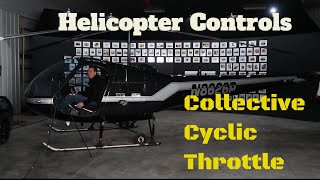
Live YouTube session by Kenny Keller (Helicopter Online Ground School) combining an instructional demo of basic helicopter flight controls (collective — lock/friction, collective effect on blade pitch; throttle — correlator vs governor; cyclic — directional control and trim; common student errors and safety notes) with an interactive trivia segment and giveaways as part of an 8-year anniversary special. The stream includes live chat interaction, multiple-choice quiz questions with announced correct answers and prize logistics, and a promotion offering 50% off memberships (coupon code KK50).
Questions this video answers
March 1, 2012.
KK50 (50% off).
Video titled 'Helicopters Controls: Cyclic, Collective, Throttle & Heli Trivia 8 Year Special' (YouTube), created/uploaded March 3, 2020.
Chapters
All right, hopefully we're live. Day three of the big birthday celebration. We're gonna have fun today. We're going to do trivia at the end of this video. But first we thought we'd do something different and kind of fun. We need to update some of the videos in helicopterland ground school. And I was wanting to come in today. I was going to shoot a new one on cyclic, on the throttle and on the collective. I thought, you know what, let's just do it live today so you'll see kind of behind the scenes of what's going on. Heather's gonna be bopping around a couple cameras and we got some others running. And if it all comes out good, you're gonna see us film in real time. The new video is going into the private pilot section, lesson four, just on basic helicopter controls. And it's those videos in the private pilot section are really for somebody just starting out that really aren't sure what the controls do yet. And because some people do join our course and start going through the videos before they even go to flight school, which is really cool, right? Because a lot of people show up and their instructors are impressed when they've already got a good, some good first hand knowledge of what's going on. I see Daniel. Man, Daniel's almost always here. Awesome, Daniel. So anything else I need to tell him before we go over? Awesome. There's Jason and beach geek. Yep, they're here all the time. So when we get to the trivia, if we have enough people, we're going to do at least 10 questions. If we have enough people competing, we'll do 15. So again today, helicopter checkride after the first five top 10 checkride tips. After that, another helicopter land ground school T shirt. So Jason's got one. We just sent his today. Daniel, you got a shirt yet? And beach geek, do you have a shirt yet Or a book? Kids got any books or T shirts? So yes. And we'll go over the rules, the road. It worked out really good last night. Everybody was playing fair and putting in like when you answer 35, answer 35 dash and then a, B, C or D. That way it's easy for us to identify who the actual first winner is. So but we'll run through that again. We get ready to do those. So what we're going to do now is as soon as I head over that way, Heather's going to go to the camera over there right by where the controls are at. And I'm just going to talk about the controls and like I said, we got several cameras running, but you can see in real time what we do here when we make videos. So if you want to roll that camera, camera two, Heather, we'll come over here. And you know what, I should probably just make this one video actually, because we've got all the controls here in one place, so maybe we'll just kind of run through them all, make this one video inside. Helicopter land, ground school might make it easy. So let's do this. Let's start with the collective. Almost any helicopter you're in, you're going to have a lock on the collective. Some of them you can use in flight, some of them you can't. And something that's come up in the past in a couple videos as people have talked about collective popping up on them during a hover or I'm sorry, during their startup and shutdown. And the first thing you need to know about the collective, the way I was taught from day one, from the time the blades start spinning until those blades stop, someone has their hand on that collective. In this one question, this student was kind of upset. He's like, well, I took my hand off to change radios when I was doing my run up and the collective come flying up on me. That's not right. And I had to be honest with him and say, look, you should not be taking your hand off the collective during run up. Helicopters are different. This bigger helicopter will pop up on you during the startup if it is not locked. The lock on this one is right down here. And we'll use this particular example, this helicopter. When you go through the checklist during your startup, there's about three times that they have you lock the collective or check it. And people say, well, I've already checked it. Well, there's a reason why they want you to check it three times on this aircraft, because during that startup, at certain points you're going to loosen it and you're going to check it for freedom. Before you start, they want you to lock it again. And then there's a couple other times where you're going to be doing things with your hands. So several times they want you to check it because it will. I'm going to unlock it and show you, watch what will happen. Boom. So somebody is always guarding that collective at all times. And in this, in a training process, if you're a student, either you have your hand on it or your instructor has your hand has hand on it and there's clear communication, you know who's got their hand, that collective at all Times. And then once you start soloing as a student, if you have to sit down and change radios or something, you guard the controls, you lock your controls. And depending on the aircraft, you might have a different, you know, operation on how you do that. But for this helicopter, when you're by yourself, students are trained. Our private pilots are trained. When they set down, if you're going to take your hand off that collective, you have to have it locked. And what I was taught back in the beginning was to put your leg over here when you're doing other things. At least if you have your leg over, if that collective pops up, you can catch it, at least start to catch it with your leg, and then hopefully get your hand there, because sometimes people do, during a certain phase, forget that they locked it. So that's important understanding for your aircraft, what you're flying, what is the procedure for locking that collective and this particular helicopter, you cannot lock that collective during flight. Some aircraft you can. Another instrument model, the turbine model, has an actual friction. That's collective friction, that's easier to move, and you can adjust it for a certain amount during flight, but that's a different model of aircraft. So in your training, at your flight school, looking in your poh, you're going to learn what happens with the collective as far as the friction and what is legal and what is not. But I'm telling you, it should always be guarding that collective. Someone always has their hand on that collective. Okay, so the next thing I want to tell you about the collective is when we raise that collective, it is changing all three blades collectively on this aircraft. I'm actually going to have Heather go back to camera one, because when I raise this collective, you'll be able to see that rotor blade in camera one actually increase, decrease. Okay, I see her thumbs up, so she's ready to go. So watch as I raise that collective up, you can see that blade going up, right? Increasing its angle of attack. Same thing. When I go down, going down, going down, it levels back up. So they call it the collective because it raises the angle of attack on all three blades collectively. Something different happens with the movements of those blades when we get talking about the cyclic, which we'll do here just shortly. So know that's the job of the collective. When you raise it up, it's changing all three of those blades at the same time, the same amount back down, decreasing that angle of attack. Okay, then the next trick is, and this can vary a little bit with helicopter to helicopter, but you realize now this one's you're using it at some purposes to go up and down, right? You're using it to lift it up off the ground. So the difficult thing, or let me try to think of this, the trouble that most people have when they first start learning the collective is they want to start. They want to do this. They're overworking that collective. These collective inputs, a majority of the time are going to be very small, very minute. When you're picking it up off the ground, it might be a little more than what some of the other movements are. Sometimes your movements are so slight going up and down that you're actually doing where you're actually just. It's more like you're willing it to move. Yoda, you know, use the force, Luke. Sometimes it's more like you're willing it to move than you're actually moving it. So one of the things, as a new student, be prepared. One of the things you're probably going to do is too much up and down on the collective. These movements are going to be nice and slow. Okay? So that's kind of the basics of the collective. That's what it does. And that's the problems you're going to normally have as a student, moving them too much. So understanding how much to move it, understanding how your friction lock works when you can and cannot friction it. Frictioning in flight, these are all things you need to find out for your specific aircraft. Now, since we're here, let's just go ahead and talk about the throttle for a minute. Now, again, depending on the make and model of aircraft that you're flying, there may be different procedures on how you handle this. But ultimately, with a throttle, in most cases this direction, moving your hand outward is throttle on. Reducing is throttle off. Okay. On this particular helicopter, we have a little. A little knob on the top. So we know that's where our start index is. We know then that the detent is this way to roll it off, this way to roll on. And in this actual helicopter, you have on off. Now, there's people that have different memory aids on how to turn that throttle. And some people compare it to a motorcycle, which I don't really like using that one because to me, it's too different because I'm, you know, on a right hand, your motorcycle hands going like this. This is your left hand. So there are different memory aids out there. You may hear different ones from the flight school instructors that you are training with. But understanding the correct direction for throttle on, throttle off is key, because if you make a throttle input the wrong way during flight, you could kill yourself by causing problems. Same thing with the collective. You could get, if you get over aggressive with that collective, some aircraft, you could stall the rotor blades. So basic use of the throttle is this wafer throttle on this wafer, throttle off. And again in the instrument, we even have it marked on, off. You'll learn the different memory aids for what works for you. So basically what we're doing on this specific helicopter, I'll explain to you how it works on this helicopter. We do not have a governor, and right outside, the wind and storm is pulling, picking up like crazy. Hopefully we'll use this, but we'll stay live and go ahead. Hopefully the noise isn't too loud. Let us know in chat if you can hear that rain hitting the side of the hangar right now. It is freaking crazy. So what was I talking about? What was I saying? What was I saying, Heather? I'm talking about the collector with the throttle. Yeah, she can't even hardly hear me over there. It's so loud in here. So basically what the throttle inputs, if you need more fuel. Oh, I know where I was going. I remember now coming down outside a little bit. This particular model of aircraft has a correlator. So what that means is as you raise this collective up, the correlator is actually making throttle adjustments for you. Or not throttle adjustments, but fuel adjustments. It's adding more fuel as you go up, reducing fuel as you go down. So that's correlator versus governor. Governor does a totally different thing. We'll stick with this aircraft and we'll talk about governor just real quick before we move on to the cyclic. But so these older model instruments, back in the day, they didn't even have correlators. So everything you did was the whole time you're going up and down with that collective, you are moving that throttle and doing a lot of work with it. But these correlators have gotten so darn good on these aircraft that basically when you go to pick it up, you set your rpm, you just start raising, Just start raising. Corollary takes care of the fuel adjustments. And then once you lift it up off the ground, it usually takes just a hair of a little bit of throttle to put it right in the green where you want it. And then if you're flying this aircraft the way it's intended to be flown, the movements are all really very small and very minute. And if you learn those movements, life will be easy for you. If you make collective movements big, then it's going to take more throttle adjustments. Same thing with the throttle. If you're screwing around the throttle, then you're making the collective can become more difficult. So learning the smooth balance between up and down, then how much you need to add and decrease throttle is really key, especially in these helicopters. Each make and model is going to be a little bit different, but we're giving you the essence of. Of what goes on with that throttle. RPM is a little bit low. We might be able to just add a little bit of throttle to just to bring that RPM right back up. RPMs high. We can go back off just a little bit of throttle, or we can also raise or lower collective, again, depending on the model of aircraft. So it really varies. Now, when you talk about a governor like on the R22 and the R44, they're very common in training. Most popular civil helicopter out there. As the pilot, you flip the governor on and then you just go out flying. You just go up and down with the collective. You almost never mess with that throttle because the governor is taking care of those throttle movements for you. Unless you have a governor failure or you got super aggressive with the controls, you might have to overpower it. But if you're flying that aircraft the way it's intended to be flown and you're making small, smooth, correct inputs, once that governor's on, you don't have to do anything other than go up, down, up, down. So that's kind of the essence there on the collective and the throttle. Cyclic. This one is kind of fun to talk about because, you know, this is the one that I think when you're training somebody, this one is the hardest one, I think, for people to learn, and it was the hardest one for me to learn. I think the collective up and down makes a little more sense. Makes pretty simple sense. The throttle, you can learn those. They're minute. This is the tough one. So what we do when we start teaching you to fly, we go out and we give you a few minutes of just the pedals, we give you a few minutes of just the throttle, we give you a few minutes of just the collective, and we give you a few minutes, maybe with just a cyclic. And as you start gaining experience through your first several lessons, we'll give you more of each one and we'll start making combinations like, okay, you take the pedals, you take the cyclic, and I'm going to cover the collective for you, or vice versa. Many instructors do that, where we. We just ease you in to learn these controls because you have to Learn muscle memory so that you, when you're talking, you're thinking, you're working a radio, you're doing other things. Your muscle memory is actually making these tiny smooth inputs and you're not even really thinking about it. Because if you try to think, I'm talking on the radio and I'm looking downwind and I'm. It's too much for your brain to go, okay, I'm adding right pedal, I'm going up collective. My wrist is going this way, my hand is doing this. My thumb's on the trim. There are so many things there, you can't think of them all at the same time. So through muscle memory, you learn these movements and you learn how all these things coordinate together. And that's the trick to flying these things. So, basics of the cyclical. On this model, we have a cyclic trim and we just have a new video that we uploaded inside the private Pilot inside Helicopter One Ground school. I just uploaded a new one today. It was from the Coffee with Kenny video series where we had a really good video. And I thought, you know what, that's good for the. That's a good update for ground school. So I put that in today. And notice these other videos were a little bit older. So I thought, hey, today, while we're live, let's shoot some of these. So we talk about the cyclic trim specifically and our private pilot course. But to give you an idea, there's motors underneath the seat. So if you have a aircraft with trim motors on it, there's motors underneath the seat and you can actually move this through the motors. Oh, I need the trim switch on. But just to give you idea, trim switches on. There goes left. There goes right. Forward's not working. I hear them. Yeah, it's wanting to push it. So in essence, that's what these motors do. You, you use the trim to help take the force off the cyclic. Once you learn this how to use the trim, it makes life easy. And I'll give you an example. Let's say I'm just hovering that way and the wind's coming at me, keeps pushing me to the right. If I don't trim it, I'll have to keep pushing my cyclic to the left towards the wind to counteract that wind. Pretty soon my arm's going to get tired. So with that trim button, you just basically trim towards the wind. Wind's this way, pushing you. You got pressure going here. You trim towards that and that moves that cyclic so it takes the pressure off your arm and then you can just Very easily manipulate that cyclic. So depending on the different helicopters, you know, you got different looks of cyclics, but they all basically do the same thing for most aircraft, learning a nice, gentle touch in the beginning, you're gonna be on there like this, and you're gonna be manhandling that thing, going crazy like this. Learning how to do it with a real nice, smooth, gentle touch is key to learning the cyclic in the end or not in the end. Later, when you get good at it, there'll be times where you might just be on there real light with just a couple fingers. And when the weather's smooth and things are going good, you can do that as long as your hand's here. Sometimes it just takes little, tiny movements, very small minute changes. And I can fly the entire pattern in the instrument with just the trim. And I've done that video. It's actually on YouTube, and it's in our course. I can fly almost the whole entire pattern with just making trim adjustments, except for going out of ETL and the end of the landing. So learning those small, tiny minute changes with the those is absolutely essential. Now, what goes on here when we move the cyclic in different directions? There's some things going on with the blades as well, but it's not like the collective, where the collective moves all those blades collectively. And I'm going to give you a simple example here. I'm going to have Heather go back to that first camera, and I'm going to move the cyclic forward. Are you on camera one there, Heather? I. So when I push cyclic forward, this will be hard for you to see in this video. Look how little bit that that blade is changing. Each one's changing a little bit. That one over there, I can see moving a hair, and I can't see that blade back there. But in essence, if I want to start moving the helicopter forward, I need to increase the pitch in the rear and make the pitch decrease in the front right, so that the aircraft starts moving sideways. And the way a gyroscopic unit moves, as in a helicopter rotor system, when you apply a force to a spinning object, it's felt 90 degrees later in the plane of rotation. If you're brand new, don't worry, this will make more sense to you later. But I just want you to understand that you're going to learn in the aerodynamics why they rig this the way they do. In this model of aircraft. If I want to go forward with. If I want to go forward with the helicopter, I push gently, gently forward, actually increasing the pitch over Here because the helicopter rotor system doesn't feel that until what we call 90 degrees later in the plane of rotation. So I push forward through the rigging. It increases the blade up there a little more than the other blades. So when there's more lift there, it's going to be felt 90 degrees later. And that's how you move that direction. So that's forward flight. Let's back up to just basically the hover. When you're learning how to hover, basically if you want to move the helicopter to the left, you're going to put slight pressure to the left, you want to go to the right, slight pressure to the right. Same thing forward and backward. During a hover, you want to go forward, you're going to push a little bit forward and a little bit back. So now you got an idea of what's going on through linkages and through the rotor system. And you're changing pitches in the blade to, to get the aircraft to do what you want it to do. And you can even go like, you know, caddy cornered. If you want to go that way, you're going to push just a little bit that way. So learning this one, I think is the toughest, and here's the toughest part, if I can explain this to you. Well, basically, helicopter wants to act like a pendulum. So when you start learning, you start doing this. Okay? So what you have to learn to do is, let's say, for purposes of this video, say I'm going this way and this way. So when I go, I'm getting kind of squirrely in the hovering and I go this way, I have to push the cyclic back to the right to stop that sideways movement. But because it's going like this, I push it to the right to stop that movement. But then if I don't do anything, then we're going to go right back that way and then I'm going to have to stop that one. So then I'm going to do this. So pretty soon you're going back and forth, back and forth, and all you're doing is going like this. So you have to learn this slight movement of. Let's say we're going that way and you're going up. I push to the right a little bit to stop that. When it starts to level out, you have to almost go back to a neutral if that would make sense to you. Otherwise you just keep doing this. So in essence, during a hover, you're using this to go forward, backwards, that way, that way, in forward flight, you're using it to turn to the left, turn to the right. You can pull a little bit aft to climb, and you can push forward. Just. I'm not even going to say that you want to learn. Basically, in most aircraft, most of your up and down wants to be here. You're not normally going to use a cyclic to change to climb or descend because you're going to get in a bad habit if you start moving the cyclic forward. You're going to learn that you should never make a large forward of input on a cyclic because you get into something called low g. And we talk about that more later in the course. And you'll learn about that through your course of training. No matter where you're at or where you're studying, you're going to learn about low G. So there's a condition that can happen that we never, ever want to make a forward abrupt movement on the cyclic. So in normal flight, we're going to change altitude by up and down collective and be using basically the cyclic to keep us level. We're going to use it to turn left, turn right. We're going to use it to slow down. We're going to use it during our autorotation practice, where you learn how to land without power. We come in on our glide, and then we actually flare the helicopter. So you're going to learn to go a little bit aft on the cyclic. Depending on the day in the aircraft, could be more, could be less, but you're going to learn that. You're going to learn an. What we call a quick stop to quickly decelerate the helicopter. You're going to learn that aft movement. So there's a lot of little things that you're going to learn when you go out and start training in the aircraft. And don't let this one overwhelm you. Instructors usually have little sayings or little tidbits of information that's going to help you learn this. And I remember, you know, my instructor saying, use the force, Luke. It's more like you're willing it to move, then you're actually moving it. Awesome. Well, hey, the rain calmed down. I'm gonna walk over and see what Heather's got going on, see what kind of questions any of y' all got out there. But there's some pretty good little video there, and we'll. We'll see how it comes out. Because who knows with that rain that was a little bit crazy. Looks like everything's still good to go. I got any big questions to answer, Heather. Anybody make anything exciting? In there? I don't think so.
People saying hi. They said they heard you loud and clear. Even the rain.
Awesome. 32 people. Heck yeah. Nice. All right, keep those thumbs up going. That little icon below the video. Click that dude. Thumbs up. Give some more of them. Hell yeah. All right, we'll get to the trivia then. That was fun. So I'm gonna go over here today. Heather's back to help me do this. Use the force, Luke. So here's the deal. When we go through the questions, make sure you answer. Example 35 is where we left off last night. You answer 35C or whatever it is. I can't see it from where I'm standing. But when you start playing, that's how we're going to do it. So we're going to start with question 36 and when we get to question 40, that will be a giveaway round. First one's top 10 checkride tips. Then we'll do four more freebies where you compete against each other. And Then so then 45 helicopter checkride. Then if we got some good players, which I think will. We got 35 people in here now. Awesome. On question 50 we will give away helicopter online ground school T shirt. So this is a good live event. Things are going good. Audio's looking good. Looks like everybody's here. So Heather, go ahead and bring up the screen for the written testing. I'm just gonna walk over here by you so I can make sure we got. Yep, yes, audio is working. So keep an eye on that Heather. Make sure that keeps going. But I think we solved the problem that I had last night. I do want to mention on this question and I wanted to mention this last night, from last night, how long should a pilot avoid bright lights prior to night flight? 20 to 30 minutes. 30 minutes is what I was trained many years ago when I was flying EMS and we went through our night vision goggle training. Our Czech airman said, you know what, that should really read an hour. And his, you know, through the training and our training in night vision goggles, he said it really takes more like a full hour for someone to become adjust it at night. So food for thought, 20 to 30 minutes is a good answer. I would say 30 minutes hours, even better. So let's mark that one. Alright, so again we're going to do 36, 37, 38, 39, let you guys and girls compete against each other and then on question 40 we will give away top 10 checkride tips. So here we go. Question 36, what is the minimum Fuel reserve in a helicopter for VFR flight. 30 minutes day, 60 minutes at night, 40 minutes whether day or night, enough fuel for the helicopter to have continued flight for 20 minutes, 20 minutes daytime, 45 minutes at night. Anybody answer yet? Heather? C. Here we go with the correct answer. Whoever answers. Well, first one in line because don't be guessing. I've read it. So here we go. The answer is C. So the first person that got C is the winner of that one.
A's and B's and C's.
All right, this one you need to know, people. 20 minutes, day or night. You got to know that every single examiner is going to ask you that question on every single check. Ride, anytime, anywhere. And if you ever get ramp check, they're going to ask you about that 27 minutes.
Don't click over until you're ready to read it because they oops, they're reading it before you.
That's okay. That's right, you're right. I got. Good call, Heather. All right, what is the term that describes the tendency for a pilot to be near sighted in night conditions? Is it A, autokinesis, B, spatial disorientation, C, night myopia, or D, none of the above. The answer is night myopia. I will admit last night, you know, I went through these. The eye questions always get me. That's one of those things. I have to go back and study. Some things I remember forever. Things that come to do with the eyes. I always have to go back and study that stuff. Alright, so we're going to do a couple more before the giveaway. Let's go to the next one. What do we got? Here we go. What is the minimum amount of time that must have passed since a pilot has Last consumed alcohol? 6 hours in blood alcohol content below 0.04. 4 hours. And the blood alcohol content must be below 0.04. 8 hours. And the blood alcohol content MUST be below 0.04. 24 hours. And the blood alcohol content Must be below 0.04. I'll bet you we got some people answering this one. We should have because everybody needs to know this one. D, it is C, now, 24 hours. Some, some companies may have a rule that says if you fly for us, you can't drink for 24 hours prior to flight. So if you've answered D, that is, that can be a company restriction, but for the FAA regs it is eight hours. Bottle to throttle, we like to say. And your blood alcohol content must be 0.04 or less. All right, how's everybody doing? We got people answering. Good. All right, here we go for 39 and then the next one will be a giveaway. So here we go. What type are the three types of main rotor systems on helicopters? A firm, flexible and hinged. B semi rigid, fully flexible and firm. C rigid, semi rigid and fully articulated. And D, industrial, experimental and trainer. So I make sure some people are answering before I say what it is. C is correct. And you'd be surprised how people will mess this one up. It is rigid, semi rigid and fully articulated. Those are the three types. There are some others too, but these are the three main types. When somebody goes, well, what about, you know, dual coaxial, blah, blah, blah. Well, yeah, there are some others, but these are the three main types of common rotor system. Alright, here we go for. I believe we're doing top 10 checkride tips on this one. So we are going to do question 40. This is for a book, so be ready people. Here we go. First one to answer in chat, make sure you have the answer of 40 dash. And the answer. Here we go. Which most accurately describes a fully articulated rotor system. A, each blade is allowed to flap, feather, lead and lag. B, the blades flap as a unit. C, the blades bend in order to compensate for Coriolis. D, fully articulated systems are the only rotor systems that flap. Got some answers going in there? Yep. All right.
Mostly A's and 1C.
Well, A is correct.
Michael word.
H blade is allowed to flat, feather, lead and lag. All right, so the winner. Michael, type. You're going to want to email Heather and Heather will type it in the chat box. Make sure you get her name right because I screwed it up. On here I. When you look on the screen it says Heather. I screwed up. I typed that. So she'll type in her email, you send her your address and she will ship you top rent top 10 checkride tips. Alright, so we got a winner. Let's keep going. Let's do another one. The next one is which is true concerning semi rigid rotor systems. A, the blades on a semi rigid system do not flap. B the blades on a semi rigid system are always numbered three or more. C, the blades in a semi rigid rotor system flap as a unit or D the blades in a semi rigid rotor system are allowed to lead and lag on a hinge. C is correct. The blades in a semi rigid rotor system flap is a unit. You'll get that question on about every single private pilot checkride. He won again.
Well, he didn't. You won this. Yeah.
Oh, we're not. Okay. Yeah, we're not giving away. Okay.
He's the only one that got that correct.
Nice. All right, let's keep going. Which best describes a rigid rotor system. A the blades on a rigid system flap and feather through blade bending. B the blades on a rigid system flap as a unit. C each blade on a rigid system is allowed to flap and feather on a hinge and D, rigid rotor systems are non existent and have no concern of mine. It's not that. All right, we got some answers in there, Heather. A and B, the answer is A, the blades on a semi rigid system flap and feather through blade bendings. Bending. Nice. He's on it. Awesome. Alright, let's keep it rolling. Oh, I got to answer it. Nice. Alright, next question. What is the symmetry of lift? A the equalization of lift across the rotor system, B leading lag of a rotor blade, C unequal lift across the rotor system and D the term used to describe how a blade bends. C's and 1B the answer is C, unequal lift across the rotor system. And I've been training people for years. When the examiner asks you that, it's unequal lift across the rotor system. And there's other things you can state, but that's very simply what it is. It's unequal lift across the rotor system. Don't dig until the examiner asks you to dig more. They give him a short answer and move on. If he wants more, he'll dig for it. All right, so I got to answer that one. Unequal lift, cross rotor system. All right, let's do 44, then we'll go. Giveaway book. How does the rotor system compensate for the symmetry of lift? A the pilot must increase and decrease pitch to compensate for the symmetry of lift. B the dosimetry of lift is equalized with blade flapping. C the symmetry of lift is corrected with Coriolis effect. And D the symmetry lift is not corrected and does not affect flight. The answer is B the symmetry lift is equalized with blade flapping. Examiner will ask that question. He'll ask you, well, how does the rotor system compensate for that? It is through blade flapping. Okay, helicopter checkride on the next question on number 45. Everybody ready? Alright, here we go. Number 45. Remember, this one's for a book. Helicopter checkride. So here we go. What accurately describes translating tendency? And people mess these up all the time. The tendency of the helicopter to drift in the direction of tail rotor thrust during a hover. B the tendency of the helicopter to drift in the direction of tail rotor thrust thrust at approximately 10 knots. C the tendency of a helicopter to drift in the direction of tail rotor thrust on a steep approach and D the tendency of the helicopter to drift in the direction the tail rotor thrust in cruise flight of 60 knots or better.
We have four A's, one C and one B.
It is a tendency of the helicopter to drift in the direction of tail rotor thrust during a hover. This is part of the three Cs that everybody screws up. So who's our winner?
Scott Parkus answered C or A first.
Nice. We're breaking it up with winners then, right? Yep. All right. Helicopter checkride. So again, email heatherelicopterground.com don't use the spelling I have here on the page because that's incorrect. Heatherelicopterground.com give her your address and she will ship that tomorrow because she's getting ready to go. As soon as we get done here, she's out of here. She's staying late for you guys and girls. I asked her to stay a little bit late so we could get this done. All right, so one more round and then we give away the helicopter land ground school T shirt. So let's do it. Question 46 of 100, how is translating tendency compensated for? A the pilot must make cyclic inputs to keep the helicopter in position. B the manufacturer handles the problem with mast rigging. C Both A and B are correct depending on the helicopter manufacturer. D There's no need to compensate for translating tendency as it occurs. Only use it only occurs at 10 knots. All right, we got some answers in there.
Yep, we have C, A and 1B.
C is the answer. And I could tell you firsthand, flying the BK117, we had to compensate for that big expensive twin engine helicopter. And it was a badass helicopter, but it was not built in. We did that manually. The instrument handles it with rigging of the mast so it depends on the aircraft. So both A and B are correct. Next question which describes dynamic rollover. The helicopter pivots on a point other than the center of gravity and experiences a rolling moment. B the helicopter catches a skid on something or one skid may be stuck to the ground due to mud, ice, etc. C A A first time solo pilot without counterbalance allows the helicopter to reach or exceed 5 to 8 degrees of lateral difference when the pilot lifts into a hover. Got some answers?
Bs and one person said a trick or trck?
This is not a trick. Let me double check here, but I don't think this is a trick and I'm not sure if I should tell you yet. Well, this is. There's no D's and D's. Okay, good, we got D's. It is D. All the above are true. Awesome. Alright, two more freebies and then the T shirt and we're done. Alright, 48. Which is the only way to attempt recovery from a dynamic rollover. A, promptly lower the collective all the way. B, center the cyclic control. D, reduce throttle. I mean C, reduce throttle. D, if RPM is in the green. Lick, lick, lick. Licking the collective ain't gonna do you no good. Lift, lift, collective and hover.
We have.
A's. Alright, that I will tell you. I had an examiner once say, have you heard the new way you get out of dynamic rollover? It's a three step process. I'm like, no, what is it? And he goes down collective. Down collective. Down collective. That's your only answer? Lower the collective. 49. Oh, I know this one firsthand. I was ejected from an aircraft. I know all about it. What is ground resonance? A. Ground resonance is when the helicopter shakes violently from being out of phase B. Ground resonance is considered an approved steep approach. Ground resonance is only an airplane problem. And ground resonance is when the helicopter enters low G. I hope everybody gets this one right. And if you don't know this one then, and you're flying a fully articulated rotor system, you better be finding out what this is. Answer Good. Everybody knows what it is. Violent. Oh my God, is this violent. But hey, that's for another day. I've actually have a video out there on that. Okay, here we go. Last round, last giveaway. This is for the helicopter line ground school T shirt. And then we are going to roll a short video giving you the details of our current birthday sale right now. Because people ask for that and they've been at the end. Hey, go over, go over the sale again. We haven't mentioned until just now. Let's get this T shirt done. So here we go. This is for the T shirt. Last question. What is the correct pilot action if ground resonance begins? A. The pilot should do nothing. B, the pilot should roll throttle off completely. If the RPM is below the green operating range, C, the pilot should lift to hover. If RPM is in the green operating range. D, both B and C are correct. So far.
We expect two Ds.
That is it. Both B and C is correct. You got it. You get the aircraft flying if you're already at rpm. If you're not at rpm, throttle off, collective down Michael's the winner again. Awesome. Awesome, Michael. Well, let's see. We now we need when you email Heather for your book, also tell her T shirt size because she'll just send you that in the same box and you'll be good to go and that we might have to come. T shirts, we got shipment coming. So the books we have, the T shirts aren't in yet. So she'll probably wait and just ship that for you together just to save us, you know, a couple bucks versus shipping twice. But I promise those are on order and they will be here. So. Yes. All right, if you'd come back to my camera for just a second, Heather, and then get that little video clip going. So we are celebrating eight years online. Most all of you know, in case you don't know and you just came back or you're coming on to our training, we're celebrating eight years online. Eight years. March 1, 2012 is when I launched. Launched. So Sunday was eight years online. It was birthday for helicopter ground school. And we're having a party here every day until the 15th on my birthday. We have the biggest discounts going right now more than ever. If you would pull that video up and have it ready for us, Heather. And this is just a couple minutes. It'll tell you exactly what we offer and exactly what the discount is and how to get it. So hang around, check it out if you're interested and we'll. Well, any other questions, bring them up and I'll. And I'll answer them. But I can turn Heather loose after this. So roll that video and we'll be back. Our hog's birthday special is 50% off any membership. Our biggest discount we have ever offered. So to break down the memberships, our basic option is private pilot. You can get that monthly. You can go month to month. You can cancel anytime. First month, 50% off. Then it goes to the normal price. Again, keep as long as you like. Cancel anytime. Or there's the unlimited option only. Only back for our special sale. It will be gone at the end of the cell. Private pilot, unlimited, you keep at no expiration, 50% off. Then next is commercial pilot. And note, this includes the private. So you get private pilot and commercial pilot. Again, you can go monthly or Unlimited. Monthly, 50 off the first month. Keep as long as you like. Cancel anytime. Or the unlimited, you'll keep the private and the commercial. No expiration right now, 50% off. Next, certified flight instructor. This includes the private pilot. This includes the commercial pilot. Again, you can go monthly. 50% off. That first month or unlimited. You keep private, commercial and CFI. You keep them. No expiration, 50% off until the end of this sale. Instrument pilot, we built this after all the courses were already up. So this is a standalone. You can get it when you need it. Keep as long as you like. Cancel anytime, first month, 50% off. Then to the normal price again, cancel anytime or unlimited or you just keep it, Hang on to it. No expiration that right now, 50% off. Then here's the big one. This one is the one that is hot on this cell so far from launch. Professional pilot includes private, includes instrument, includes commercial and certified flight instructor. That is the professional pilot membership. That's unlimited. There's no expiration. You keep all of those private instrument, commercial and certified. Certified flight instructor, you keep them. They do not expire right now. 50% off. And for Clarence, who always brings us up during our live events, you get with private, commercial or CFI or the professional, you get our Robinson R22 training, our Robinson R44 training and our NSTROM helicopter specific training that's available to you in your library with private, commercial or CFI or professional. So what do you do? You need the code KK50 that is 5450 off. You enter that in the coupon box during checkout and it will reveal the 50% discounted price off of any one of those options. Helicopterground.com do it now. All right, we should be back. Heather brought up a question somebody asked about during that pendular effect if your ties in the gyroscopic procession. You're overthinking it. Just know that the aircraft is going to make. When you're first learning, this is what you're going to be doing. And everybody does it in the beginning you're just going whoa, whoa. And it could be any direction, right? So as I was stating earlier in that video, when you go, let's say you go swinging this way, you're going to see it's hard to do. I'm not sitting on the helicopter. You're going this way. You go to the right to counteract that. If you don't do anything, then it goes back this way again. So all you're doing is doing just like this. So when you go up, you counteract and then back to like almost neutral to level it out. Otherwise you just keep going. Everybody goes through that. Very common happens to people and you will get over it. So there's the deal. On our birthday special, this is a big deal and that's why we went 50% and the professional pilots, the hot one right now, people are jumping on that and I've even had people email me go Kenny. I've been wanting the professional pilot for a long time and thank you for making this sale so good because it was just I couldn't pull it off before. Now I've joined as a professional pilot member and they're all really really happy. We do have 100% money back 30 day Ironcad clad guarantee by the way but people are utilizing the unlimited on the private commercial CFI instrument and their taken, they're taking us up on that monthly for the first month half off and know that you can unsubscribe yourself or you can just keep the training and go to the normal billing. So it's awesome. All right, well I'm gonna wrap it up because that was a good live event last night. I had a lot of trouble but I did it myself with no Heather and I'd been here like 14 hours and I was just so tired. I had, you know, a few mistakes but it was still fun. Had a good turnout. Thanks everybody. Subscribe to the channel and when you do make sure you click the bell. That will be we notified of more giveaways up through the 15th some do some more trivia long as people are coming back and enjoying it. We'll keep doing it if it's still.
Not working just to email you. He's saying he got some sort of weird blacklisted by internal reputation service. I told you for emailing.
For emailing heather helicopterground.com try kenny@helopterground.com there shouldn't be any problem. I see beach geek. Beach geek. I've had a CPL since late 80s but no CFI. Can he have an open slot? Maybe I'm not doing a lot of. I'm so busy with running the site and updating videos and I'm enjoy flying and making videos. I haven't done any training yet. Maybe in a few weeks. I got to get through this cell and there's a lot of video that I got to get shot for the site with the helicopter while it's sitting there all nice and pretty and God I love training and I want to I will say this, give me a month and then check in see what's going on. If I don't have anybody I usually do one or two people in the spring and early summer and that's what I do each year. I can't take students full time because I have to run helicopter on ground school as much as I love to fly and I love training. I usually do one or two ratings a year for members. So if you're a member and you want to come fly with me. Looking at about a month. Let me get through the cell. Actually, it'd be into April because we got something big coming, the end of the month that we have to prepare for for the week or two after the sell. We got to get some things in order for a big. We'll just say the end of the month. The first week of April. We've tied up, but you'll be hearing from us. But we've got some big stuff going on here and it's going to be a big change. Probably one of the biggest things to help ground school move forward. And it's something that a lot of members are going to really benefit from and they're going to like. They're going to like it a lot. I'm going to hold that thought. Awesome. Cool. Subscribe the channel, click the bell. I'll get Heather ready to click the button to end it, and we'll see you tomorrow. Come back and see us. Subscribe. Click the bell.










