"help, I failed my private pilot check ride last week because of slopes"
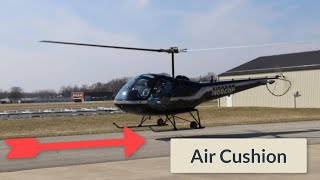
Kenny Keller breaks down slope landings for helicopter pilots who struggle with them. The key is feeling the air cushion that forms 6 to 8 inches below the skids, then applying extra down-collective to break through it smoothly. Master pickups and set downs first, then practice with an instructor before retesting.
Questions this video answers
About 6 to 8 inches from the ground to the bottom of the skids.
Chapters
Okay, we're going to talk through a set down and basically I want to set down from a stabilized hover. I like using just a hair of forward movement. You can do it that or you can come straight down. Either way I just like a little bit of forward movement.
Alright, we're going to get back to that video in just a minute because I want to help a member out here. I'm Kenny Keller, helicopter creator of Helicopter Line Ground School and I got a ton of stuff going on tonight and I thought, you know what, I'm gonna do a quick live. We might do another one tomorrow like we've been doing weekly with our pro pilot member working on the one on ones. But I have kind of an emergency video here. Not really an emergency, but one of our members sent me an email. I'm not going to read the whole thing to you, but he just failed a checkride and slow was his problem. And he said he did great in the oral and the flight went really well. But he said, I failed my private pilot checkride last week because of slopes. I can't seem to relax enough in order to properly and safely finish the maneuver. I tend to over control. Imagine that. And then he said, I wanted to add that my main trouble is when I get within a foot or so of the ground, I can't help to start feeling for the ground, which is the problem. So let's back up the story here. I'm hoping I can help him out and I'd love to hear this weekend that he goes and finishes the maneuver. He needs to go, you know, obviously fly a little bit with his instructor. I recommend that he goes through the ground school, he is a current member and refresh the knowledge even though you've gotten through the oral. I would take a minute to step back and watch our slope videos. But I thought of the several we have. I wanted to show this one because it's talking about the air cushion and when I'm training somebody from off the street to private pilot slopes is one of the last things that we work on before the checkride. Actually the very last I introduce them to that. But until somebody has a pickup and set down mastered, it's very hard to master the slope. So let's roll this video. It's only about three minutes but I want to go back to the air cushion because that's what the trouble that people have learning to pick it up and set it down nice and smooth and it's going to cause you the same problems on the slope if you haven't ironed that out in your normal pickup and set down. So let's just roll through this video because I want to specifically talk about show you this air cushion. Some people have never been shown this. It's very valuable. So let's roll through it and then we'll come back and I'm going to give him some tips for retesting this weekend.
Okay. We're going to talk through a set down. And basically I want to set down from a stabilized hover. I like using just a hair of forward movement. You can do it that or you can come straight down. Either way, I just like a little bit of forward movement. So I'm going to start from a hover and I'm just going to start lowering collective, adjusting my pedals, adjusting my collective, getting ready for an ear cushion. Right about there, there's a little bit of a cushion. See how it kind of hangs. I'm going to go a little down collective staying on top of the pedals, staying on top of my cyclic. And once I'm there, I go all the way down. Let's do another one. From a three to five foot hover. I'm going to set the helicopter down. But you want to think about this air cushion. There's an air cushion 6 to 8 inches above the ground to the bottom of your skids. And if you have a really nice set down going where you're coming down slow, you're coming down slow, you're coming down slow, you'll get to this little air cushion right there. See how it stopped? I have to go a little bit down collective to make it go on down to the ground. Stay on top of my pedals, make an adjustment, take my collective all the way down. I'm going to lift back up. And I want to show you again what happens if you come down faster. You won't hit that air cushion. And I'm not telling you I want you to come down faster. But if you come down a little faster, you won't get that air cushion. The air cushion comes when you come down with a nice slow, steady set down. So starting again, looking outside, stabilized hover. I'm going to come down a little faster. Down collective, adjusting my pedals, and it's gonna go boom, right to the ground. Because I came with a little more speed down. It went right through that air cushion. And it didn't, it didn't have to make me pause right there. So it's such a light touch that, you know, I could put the camera on the collector, but you'd never even see it. That little bit of movement to get it going on the ground is so slight. And I mean so slight, it's not even funny. I'm gonna do it.
1.
I'm going to come down super slow and explain it in a little bit more detail. I'm going to try to make it to where I'm just coming down so slow that it pauses. So here we go. One, two, three. I'm going to go a little down Collective. Watch what happens. It's coming down, it's coming down, it's coming down, it's coming down. It might even touch. Look at that. Now it's going back up. I'm doing nothing with the collective. If I do nothing, it'll go up, it'll come down, it'll go up, it'll come down. So you see what I'm saying? So let's go back up to the 3 to 5 foot hover. And I'm going to do the same amount of pressure, but I'm going to give it that little bit of downward pressure right before set down to push through that cushion. Let's try it one more time. One, two, three. I'm going down. Collective. Right pedal. It's coming down. It's coming down right there where it wants to pause. Now I'm going to go a little pressure down Collective to make it go on down to the ground. Collective, all the way down. Don't stop midway and start yanking up again. When you set it down, take the collective all the way down to the floor.
All right, so hopefully this member will watch this tonight. I'm gonna send him this link after I get done here in just a few minutes. I won't keep you too long. Doing another one on one tomorrow. Hopefully with our member. I had canceled him because we thought we were going to get the helicopter tomorrow and now there may be a wrench in that. So I told him, now we can do it. And I haven't heard back from him. And anyway, lots going on. I'm editing a new video right now. Our animator did a animation to carburetor icing and that's going to be cool. Brian did a brand new video on the dangers of carburetor ice. And we're putting our illustrators illustration of what goes on inside the carburetor and how the carb heat can help you avoid carburetor racing. So back to this member. I'm hoping that he'll go past the checkride this weekend. So in his email he said Kenny is There any? I've been watching your videos. I'm a ground school member, private pilot. Any tips for me? So after what I read to you in the beginning of the video, it just makes it sound like apparently he's getting it set up okay. And his problem is when he goes to set down. So first off, are you breathing? And I know this sounds so simple. My 18 year old daughter, I've taught her growing up, breathe, you gotta breathe in and out. And I can remember being new to training and instructor looking over and go, hey, breathe. Right? So when you get in these nervous situations, you have to tell yourself breathe in and out. So number one for a member, when you're struggling and you're coming in and you've admittedly said when you start searching for the ground, and that's the problem, searching, you're probably not even breathing. Okay, so get your good breathing pattern going as you're approaching this slope. Breathing in, breathing out. So over the rest of this week, go back and review the slope videos inside hogs. Holly Gardell has a really great classroom discussion on slopes and I checked his membership and he has watched that video, so good for him. Then there's a video in there where Hauser teaches somebody, introduces them to slopes and I know he watched part of that video. Well that's an intro video. So I recommend he goes back. Get the knowledge in your mind, use the mental technique, you know, over the next few days, sit back in a chair, calm and think through that slope. Think through that set down, think through those movements that you already know how to do. You're just struggling and screwing it up at the last minute. So if you, by your own admission, I'm feeling for the ground. When you're feeling for the ground, that's the problem because you're like, oh, I know I'm feeling for it, I know I should be there. And you're in that last foot. That air cushion is going to happen whether you're on flat ground or whether you're on a slope, you're still going to have some kind of a cushion and of course it's going to change a little bit slope, but you're still going to have that cushion. So I'm assuming when you're coming in and you're going to do that set down, you're nervous, you're probably not breathing and where are your eyes going? I'll bet five bucks that this member is eyes are going down to the ground just ahead of the helicopter. I don't know that, but I'll Bet you he is. So, number one, breathing in and out as you're approaching that slope, telling yourself to breathe and be looking outside 50 to 75ft. The ground is there. You will find it and you will feel it and be prepared as you're coming down. Like we just showed in that video, this is where people get into trouble. Whether it's a normal set down on flat pavement or you're setting down on a slope. You're coming down, you're coming down, you're coming down. And when it's nice and neat, nice and slow, you hit that air cushion about 6 to 8 inches. So if you're coming down slow, that's where the helicopter usually kind of stops. So this member is probably about this far. I'm guessing his skids are probably this far from touching the top of that slope and he's not hitting it. And then he's in that air cushion. So he's starting to monkey with the controls. By his own admission, he's over controlling. Okay, so you already know the problem. It's over controlling. So you're gonna have to slow down, breathe in and out, review, take your time and understand that air cushion. And that video is, I think 8.8. It's in the basic maneuvers inside Private Pilot. I just showed it. Go back and watch it again for this member and really hone in that idea that you know, as you come down and if you're coming down nice and slow, you're going to hit that air cushion and the helicopter is going to stop and that's probably where you're going to start searching. If you come down quick, you'll go right through it and hit that skid and then you still may screw up the slope because you're going through it too fast. A slope has to be smooth and controlled. So I would suggest, I mean, you're going to do whatever you want to do with your instructor this week. But if I was you, I would ask your instructor to go out and do some normal pickups and set downs, work through that air cushion if you haven't really had that in your thought process and get those pickups nice and smooth, super smooth, and really get the feel of that air cushion and then go work through the slope. So just have your instructor work with you. Take your time, breathe in and out, understand the air cushion, find the confidence to get through it. You've already been through the oral. Okay, so that's done. You don't have to do that again. You have to go back and do the maneuver and I know he said he had a little trouble with quick stops. And I don't know what he did in that one. He didn't say specifically, but, you know, quick stops is a slow, smooth maneuver. And I didn't check to see if he watched the video where we titled it. Maybe a quick stop should be called a slow stop. Normally, the problem a person has when they have a trouble with quick stops is because they're probably getting too aggressive and jerking too much. It ought to be a nice smooth action. Even though it's called quick stop, people have a tendency of getting too abrupt on the controls just because it's called quick stop. The control inputs as you do that flare should be smooth and methodical. It should be down collective, right pedal, aft cyclic. And you should be looking outside over the nose of the aircraft. You should have a good sight picture in that quick stop. And you shouldn't be going up, you shouldn't be going down. You should be adjusting that collective just enough to keep that sight picture out over the. Over your instrument panel. And when it's time to level out, level out and adjust controls as necessary. And the reason I say this is because I'm thinking back to when I struggled as a new CFI with autos and I hired instructor to come in and he said, let's go back to the beginning and we're gonna do quick stops before we go out. Start doing the autos. So you passed and did a quick stop on your straight in auto when you flared and did that. So if you can pull that off on the auto, there's no reason you shouldn't be pulling that off for your private pilot checkride because it's the same maneuver. Basically, the quick stop is pretty much the same as auto rotation flare. It really is. And that's what this older CFI taught me when I was young and new to this and struggling. He's like, get that sight picture out over the top. The time I was flying at R22. And he's like, look over the top of the dash and make sure you're keeping that thing level. He's the one that interjected in my brain. Just because it's called a quick stop, maybe it should be called slow stop. So I don't know specifically what trouble he's having there, but I would say do a few more of those with your instructor. Slow down, make sure your coordination's good. Do you have a good sight picture during that flare to keep that proper altitude with the collective before you start leveling everything out. So I'm hoping that that helps. Again, all I'm doing is going from an email and I thought, you know what, we may go live again tomorrow after we do our one on one if it happens. God, it's like I said, I got so much going on right now, I can't hardly keep track of all of it. But I thought I'm just going to hit turn on a computer, go live because I want to get this member through this weekend and I hope that those tips will help. So maybe we'll have an update for you next week. I'm going to send this link to him as soon as we get done. So I'm going to slide over to the computer, look for any comments. I see a question about a medical over there. We get questions about medicals all the time. You have to call an aviation medical examiner and pose your question direct to them. Either make an appointment and go in or, or call them and see if they'll talk to you on the phone. Because there's so many things involved in a medical and there are certain problems a person can have and there's certain medications you can be on. I'm just a lowly old helicopter pilot, you know, I'm not a medical examiner. So anytime you have an aviation medical question, you need to direct that to an aviation medical examiner. All right, so I'm gonna get off of here so I can send this link to our member. We got links down below for helicopter on ground school. Heather is still answering the phone, texts and emails at 574-767-1797. She's got some unadvertised specials that she can offer you if you contact her by text or phone. We have since our sell for Cyber Monday and Black Friday and Thanksgiving. That's kind of over with, right. And we're all a little bit bogged down with sell, sell, sell. So we've got our basic memberships@helopterground.com we have a yearly special for private pilot. We have a 24 month special for professional pilot. Those links are down below and there's also a link for the new one on ones we're doing. I have one pro pilot member now I'm working with. We're coming down to the last one or two sessions with him and we've done a lot of good with that and I've. And I'm really happy how that has went and I want to do some more of that where I'm going to work one on one with somebody just to help them get past the hurdles and the truth is, most people, when you're struggling, you're probably struggling with one of the basic things that trips up everybody. And usually it doesn't take a lot to get you straightened out. Everybody's got a struggle of some point of some kind, but everybody struggles in different areas. However, there's still very common struggles, and we can usually just through a conversation, walk you through these things and help you get through it. So. All right, I'm slide over there and sign out for tonight. So thanks for tuning in, and hopefully we'll see you tomorrow. After our next pro pilot, one on one links down below for helicopterground.com and contact Heather for unadvertised specials. Peace out.










