How To Become A Helicopter Pilot from Live Training Tuesday
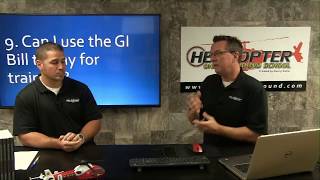
Kenny Keller, Chris Hauser, and Gary Cleveland answer 33 questions about becoming a helicopter pilot: training steps, costs, certification levels, and job types. They cover financing through the GI Bill and pilotfinance.com, and discuss careers in EMS, tours, and specialized flying.
Questions this video answers
33
Approximately $10,000–$20,000 (typical range cited)
Approximately $50,000–$100,000 (depends on training path and factors)
40 hours minimum (example breakdown cited: ~20 hours dual, ~10 hours solo, plus required cross‑country and night elements)
150 hours total (with helicopter and PIC sub‑requirements referenced)
Chapters
Sa. Hey, we're back, Kenny, with helicopterground.com. thanks for everybody that's been here today. It's me, Kenny Keller, lead instructor Chris Hauser, chief pilot. Gary Cleveland's overrunning the cameras. Let's do a quick check on your camera and audio, Gary.
Hello, everybody. Let us know how the sound is and the video quality. Back to you, Ken.
All right, so we're gonna. We've got a lot of content to cover. We got a lot of content to cover today in a short amount of time. First gotta mention everybody that's here. So Kevin McCombs, West Lavida, Indiana. Waiting on hogs. Awesome. Kevin's coming up here to fly with us very soon. T. Gregory Berry, who's here almost every week. Todd here logging in this week from Germany. Awesome. Joe Worley, Salem, New Hampshire. WestMC45 Marcus west from San Antonio, Texas. Awesome. Brandon Williamson, Portland, Oregon. Rex Jester. Hello, guys. Rex Bo is on from Cordova, Tennessee. Finally got chat to work. Gary. It's good to be here. Good. I think we got everything ironed out with the links we've had some trouble with in the last couple weeks. We just checked them on our phones. It looks like everything's working. Chat's working. Everything should be working as soon as we want it to. So keep letting us know where you're logging in from, if you will. Save your questions more towards the end because we might answer the question you might have. Gary is going to keep track of those but instead of getting a bunch of questions too soon, let me finish mentioning everybody else. Tas Chrisman, as always. There's Taz. Taz will be with us next week here in Indiana to talk about instrument training and instrument training. Common hiccups on instrument checkrides. He's preparing something for that for us. Bradley Schmidt. There's Bradley. Know him? We're going through here. Quick. Brad from Australia. Awesome. Again from Australia. That's awesome. Hello. Mark from Mark and Sioux Falls. Awesome. Bradley Smith was Australia. Yes. Greg Crump from Cincinnati. Awesome. Taz getting on a plane right now on my way to Indiana. Nice. He's getting on a plane watching us to fly up here and be with us next week and be home with his family. I should say, number one, be with his family. Number two, stop by and see us. There's Rick from Vegas. Awesome. He's every week working good. Kenny awes that's what we want to hear. Hopefully everything we're going to have a good program. Everything's working good. Dee Sony. Hello from Cali. Awesome. From Cali. Awesome. Alright, so I got caught. Oh wait, there's Mark Daniels. Doing my best can to keep up here. Hi all. Another Vegas checking in. Getting quite popular in Vegas and we'll see you all down there. Heli expo coming up soon. Alright, so I think that's everybody that has logged in so far. Thank you for logging in. We got 33 questions we're going to go through. Gary, Chris and I are going to take our turns on the different questions. We're going to give you the bare bone meat of the answers for these questions because some of them we can answer in 20 seconds, some of them could take longer, but we're going to give you the meat. No fluff today. Quick answers on each one and what's important to know is I failed to mention subscribe to our channel. Please do that for us for providing you this content. Do us a favor at minimum and subscribe to our channel if you haven't. Down below in the box we have a list of the 33 questions we're going to go through today. And we decided we probably have videos on probably 25 of these questions already. So after the presentation is done today we're going to go through and put the links that we have on videos we've already created on those subjects. Anything we don't have a video for, we'll create a new one. So all 33 of these questions will have videos links beside them down in the description box on YouTube. So that if you're watching this a month from now, a week from now, whatever the case is, you'll be able to dig deeper into the content by going down below. And also many of you are already members, you're already in our site. But if you're just happening along this on YouTube, there's a link down below for a free PDF copy of my book Helicopter Checkride. That also gives you access to Live Training Tuesday and some other cool free stuff too. And that's right below this video in the description box on YouTube. So if you haven't signed up for any of our products yet, go down there free PDF, download with a bunch of other free stuff. And again we're going to have video links for these questions down below. So anything you guys want to add or should we just get to it?
Think we ought to get to it?
Let's get to it. Alright, a couple more we got to mention. Pepe. Hi. Good program from Ecuador. Awesome. First for Ecuador, Mohamed. Hey guys, checking in from New Jersey. Awesome. Sam Daughtry on the road, Harrisburg, Pennsylvania. Very Nice. Alright, so our first question. Well, Gary, share the screen for us. Everybody knows exactly where we're at here. We're gonna run through these kind of quick. Almost everybody asks this or a people will ask us when they email in or call in. My dream is to become an EMS helicopter pilot. Can I achieve that goal? The answer to that is yes. This is a no fluff presentation. Not saying it's going to be easy. It's probably going to take you three to five years to get your time. Once you become an instructor, start building your time, you're going to have to have about 2,000 hours of flight time. But yes, you can do it and yes, you can get there. I've done it. These guys are looking at that. Maybe they might still do this as an option in their careers yet. I did it for five years. You just going to have to get out there, get your training, build your time and yes, you can become an EMS pilot. And again, this is kind of the dream for many, many of you. Yes, you can get there. So we can maybe cover that a little bit more at the end, but absolutely, if that's what your goal is, you can do it. So let's share the next one, Gary. So everybody knows where we're at. Am I too old to become a helicopter pilot? And the answer simply is no, you are not. I'm going to use one we had recently, and I'll put this video down below. We had a gentleman, 47 years old in law enforcement, looking to retire in the next few years. He's like, Kenny, is this going to be, I'm 47, is this too late in life? And I said, absolutely not. And he wants to be an EMS pilot. So back to that first question. He said, my eventual goal is goal is ems. And I said, you know what, go for it. And this goes for everybody. Get your private first no matter what. Because even if you don't end up at the eventual goal that say ems, you might have a blast being an instructor, you might have a blast just flying tours. So are you too late at 47? No, it's never too late. I say get the rating and go for it. We have a, one of our ground school members got his private rating at 72 years old and the guy was so thrilled he couldn't even stand it. We have a lot of members in their 50s, 60s and six 70s getting private ratings. So at minimum you can enjoy a private rating. But to break it down, start with the private, get that first and then see how far it takes you I don't think you're ever too old. If you can walk and talk and learn and study, you could get a private rating at 80. I mean you could. We even have a recent. Somebody got their rating, I think even at 83. Yeah. So no, you're not too old. Not too old. Number three, if I have medical problems, will I be able to get this, get the license? Okay, this is common. We get this often. A very simple answer to that is if you have any doubt about a medical problem that you might have, you need to contact an aviation medical examiner, try to talk to him on the phone if you can. If not, schedule an appointment because it's worth your time to find out. Even if you have to pay for that examination, go in, get at least the third class medical and find out and tell them what issue you're having. I can tell you this from the gentleman that I use, 40 year flight surgeon. He said, Kenny, less than like 0, 0.2% ever get turned down for medical. He said, there are many things, problems a person can have, some things, maybe you're just on medication sometimes, maybe you're being monitored by a doctor, but there are many problems that you can have and still get a medical. So he said, you know, like I always show up all nervous and excited and he's like, hey, don't worry about today. He goes, you know how many people fell at medical? He said, almost nobody. So if you have a question and you're worried about is this going to hold you up and getting your license, you need to contact an aviation medical examiner. Let's go to the next one. Do I have to be really good with math? I'm going to say no. I'm going to let. Chris, we just talked about this one before we went live today. Just real quick, what do you think about how much math you need?
Yeah, not really. You don't have to, you don't need to solve X and you don't need to solve for Y. You don't need. I mean, it's simple things. I think the most thing I use is, you know, as I'm flying along knowing that If I burn 15 gallons an hour, hour, and I've been flying for 40 minutes, roughly how many gallons of fuel do I have left? I mean that's, that's probably the most one that I ever use. And along with time, you know, if, you know, you cruise at 80 knots and you need to go 100 and some nautical miles, you know, just simple math like that, I think that's, that's really all there is to it?
Yep. And then weight and balance, you got addition and subtraction and some multiplication, but other than that it's basic math. So you don't have to be an expert. If you can get through basic math, you can do it. So don't worry about math holding you back. And I remember when I first started years ago thinking about, oh my gosh, do I have to know all this stuff? And in your mind you have this idea that you're going to have to be doing all this math equations, not like that. So don't worry about the math. Basic math.
Basic math. Addition, subtraction.
Alright, let's go to the next one. How much does it cost to become a helicopter pilot Again? We'll have a couple links down below that go more in detail. I say private pilot, you're going to spend 10 to 20 grand no matter where you go in the world. Again, this is average. If you're just going to go for the private for fun, 10,000 is on the cheap side. 20 is on the high side. You might do it for 12, you might do it for 18. But to become a helicopter pilot, you're going to spend somewhere between 10 to 20 for the private. If you want to become a professional helicopter pilot and do it for a living, you're going to spend somewhere between 50 to 100. Okay. It depends on many factors. Weather, maintenance, how well you study on your own. There's so many things that come into play and how much it's going to cost.
So I think my private cost me right around 14 or 15,000. Right. And that was an add on.
Right. And that. And you got a good discount from the guy you were flying with too.
Well, you know. Yeah, I think, you know, just back to that simple math in this. I mean, if you know the cheapest aircraft you're probably going to find is probably 300 an hour, you need 40 hours. 300 times 40, there's the baseline. Plus throw in an instructor, you know, if you want to go, you know, on the low end of an instructor is probably $50 an hour. So 50 times 40, you know, you get that number, add those two together and that's bare minimum of what it's going to be because you don't forget that there's going to be ground. So you're going to have to pay your instructor, you know, each. The way I like to teach is each instruction period is an hour of ground and an hour of flight. Well, you're gonna pay me for my hour of ground time. And then you're gonna pay me for my hour in the aircraft. So there's say if I was making 50, 50 an hour, there's 100 hours or $100 right there and then plus 300 an hour for the aircraft. So right there you have wrapped up in about $400 for two hours of training.
Yep. So going into this you got to know you're gonna spend a little bit of money. It's not going to be cheap. Nothing about helicopter training or maintenance or anything is cheap, it's just not. So if it's your dream, it's what you want to go for, you go for it and you do it and you find the money, you find the way to.
I mean we've all done it just on a back story. I used to have a Harley, I used to have a nice 23 foot enclosed vinos trailer I borrowed against my truck. At one time I used tax return money. But the simple thing is if you really want to do it, you'll find a way do it.
Yep, absolutely. Alright, we'll go on to the next one. Number six if you want to share that with us, Gary. Do I have to have all the money up front? Absolutely not many flight schools that you go to, you can pay by the hour. Some flight schools may offer you a block time discount if you buy so many hours where you can discount some of the time, if that's right for you and you're comfortable with the company you're working for, flying with, you can do that. There are a lot of horror stories out there about, you know, companies closing up and people losing their money. So it might be a pretty good idea just to go by the hour. But block time is an option so this rating is more accessible. If you're brand new to this and you're wondering, wow, you know, I'm all worried about the money. If you got a little bit to get started, you can get started and save, borrow, beg, steal, you know, whatever you got to do to find the money to keep going. But you don't have to have it all up front. It's as simple as scraping up a few hundred bucks or even less for an intro or a lot of schools do intros like at a discount, like 150 bucks for a half hour intro with a half hour ground school or something like that. That happens quite often. So no you do not. No you do not. So Gary, if you want to share the next one, which is where can I get financial aid, Are there scholarships? And I can tell you on this one, this is a question that we get a lot and have for years. And I always feel bad because I'm like, boy, there just isn't a lot out there to really relate to people. And I have good news on this one. I was just notified by somebody that works for AOPA and we're going to put the Facebook link down below near this question in the description box. Her name is Janet and she said, kenny, I found some resources for scholarships and financial aid for general aviation. And then she also knows of someone that has some links and information on scholarships specifically for helicopter people. This is the first time I've had anybody come forward and say, hey Kenny, there are some resources for out there. And we've started a Facebook page to help people find that. So I'm glad that someone reached out to us. Affiliated with AOPA Aircraft Owners and Pilots association said, hey, Kenny, you know what, there are some resources out there. We've started this Facebook page to help people and we're going to put that link down below. So it might not be there, right? Or it's not there yet, but just give us some time after this presentation is done today and we'll get that link down below and we'll even publish that and email out to all of our members and make sure that you can find that L. Because this question over and over and over, how can I get some help with the money? And in the past it's hard to, you know, it's just a pointing to tell people, oh, sorry, you know, hopefully you got a rich uncle.
Yeah, I'm sure it's out there. But the only one, the only one I can really think of is with like the Whirly Birds. And that's for females, right? I think.
Yeah, Whirly Girls, yeah, they occasionally have some scholarships. They helped Holly Gardell who was here and did her CFI with us. They paid for her training to get her cfi. She was already commercial pilot. So if you're a female pilot, you should join the Whirly Girls because they have a lot of different scholarship programs they give out to their members that gives them opportunities to get advanced training and help with rating. So if you are a female getting into this industry, you should definitely check out the Whirly Girls because they are a great resource and I know of some of their members that are our ground school members that have gotten scholarships through them. So that's. There's another area that can be a big help. So we'll make sure we'll get that link down below. Next question. Gary, if you want to share it, are there loans available? And I could tell you that I know for a fact pilotfinance.com is one that I used about almost 20 years ago. I used to help get my commercial rating. Gary and I talked about this yesterday. We checked to make sure their website is still up. So they have been around a long time. I can't guarantee you on them. What the rates are, I don't know. But I can tell you I needed help getting to my commercial. I used pilot finance, and they did give me a loan, and I paid that loan back. And I don't remember what the percent was. I think the percent was kind of high. But I needed the money and they were there and they helped me. So that is one place I know of that you can get financing or you can apply for financing. And they do specifically, obviously pilot financing, because it's called pilotfinance.com. so that's one place that you can try. As far as other resources, as far as just normal loans, I really don't know of any.
And to answer that, I never used them, but I did see them when I was searching for loans. But basically, if you talk to your bank, I think they will, like, if you take a personal loan or like I said earlier, I borrowed against my truck that I had paid off. You know, obviously there was some equity there, so I borrowed against that. Or even, you know, I think even you can take like a home equity. Even. I have known pilots that have used home equity loans to even purchase.
You know, so you get addicted and you find ways, you know, sell stuff off. You got things sitting around home that are worth the value that you're not using. I sold a car, classic car. And then move on to the next question. I was at a certain level. I was in the beginning, and I had just a few hours under my belt. And I was like, man, I don't know. You know, if I. I have this car that I was an old 77 Oldsmobile 442, and I'm like, I could sell that car and buy 10 hours, but I don't really want to sell the car. And my wife at the time said, well, it's pretty simple. Either you sell the car and go for your dream or don't go for your dream because you don't want to get of.
Rid.
Rid of a car. And I went, boom. It hit me, and I sold the car and I bought 10 hours, and I never looked back. So, you know, we all have our personal stories and struggles and Ways we found the money. All right.
My wife at the time, my ex now wife at the time, she's kind of the opposite. She said you can either fly or you can have a Harley, which one is it? So I really wanted to fly. So the Harley got sold.
Exactly.
That's how it goes.
You sacrifice because. But learning to fly helicopter is the coolest thing ever and it teaches so many other things in your life and there's so many good reasons to become a pilot even if it's only for fun, just because you want to go flying because they're cool, it's totally worth it. And we all sacrifice for what we want. That's life, you know, go for your dream, you're going to have to sacrifice. Alright, next one. Gary, if you want to share that. Can I use the GI Bill to pay for training? We get this question often. Yes you can. The first thing I'm going to say is in general going To a Part 141 flight school is where you're going to have the best luck using the GI bill. We as a small school and part 61 operator we've tried to get this approved for us and we've never been able to do this. So we personally here we can't do it for you. But there are many schools out there that offer the GI bill and if they're part 141 they have all the the paperwork and they have the affiliation with the federal government where they can get you in and pay for the training. And I can't give you a lot of details on it because I've never been involved with that program. But there is opportunity to use the GI Bill. So if you're looking for a school when you're searching search for Part 141 Flight School in the area that you want to fly and that's the best I got on that one. For us civilian guys we're not always able to answer that question so well. And Gary, pop in anytime if you want to add anything to any of these. Number 10 if you want to share this one, this one's for Gary. We're gonna let Gary handle this one because I never really thought about this that much and back when I started I started out as a private and I was told at the time I couldn't use it. But there is a catch to that. You can sometimes use this. So we're gonna let Gary talk about this one because he's personally has done it and can tell you a little bit of how this might work for.
You okay, well, this will be the first year, but I talked to my accountant about going to work here at Helicopter Ground, and she indicated that all the money I've spent to get to this point in my helicopter career is now tax deductible because of the fact that it's all training or education towards what I'm doing for a living now. So if ultimately your goal is to be a professional pilot and within, you know, a short amount of time, you accumulate a lot of expenses to get to that rating that's needed, then that should be tax deductible. Of course, I am not an accountant. We are helicopter pilots here. But I would urge you to check with your accountant about such opportunities. Like, I have.
Exactly turned out a great deal for Gary. And another example, well, it's kind of off the subject, but we have one of my longtime students who has an aircraft now. He lets us use it part of the year. Now he's deducting from years of paying for that aircraft because now he set up a little LLC and now he's recouping from the money he spent on his aviation career. So it can be like Gary said, you'll need to check his. See. So let's go to number 11. Do I need books or materials before I get started? The answer is no. Schedule your introductory flight. Go out and try it out and see how you like it. But what I've been telling people for years is spend 20 bucks on the Helicopter Flying Handbook. It's not that much money. You can even go online and download it for free in a PDF from the faa and you can start learning and reading about helicopters. But I wouldn't jump in and spend a bunch of money and worry about having all the books in the beginning, because this is for the beginner. You know, if you're just starting out, go get that introductory flight, which we're going to talk about again. It's going to come up again how I get started, but we'll get there. Yeah, don't start up a bunch of money right off the bat. Get your introductory flight. Get a couple lessons under your belt. If you want to spend a few bucks, spend 20 bucks on the Helicopter Flying Handbook. Watch our free videos on YouTube. Gosh, we got so much free content out there. You can, can you can spend days. The hours we have now is if you watched every one of our videos on YouTube, you'd be online for like four weeks or something. So there's so much free content out there for you. I wouldn't worry about spending A bunch of money right off the bat. Let's go to number 12. How often will I need to fly? I'm going to say three days a week, but I've been preaching that for 20 years. I'm going to let you know, Chris, elaborate on that just a little bit about the three days a week or his opinion on how often you should fly.
And I'm sure I got that from you. But pre solo, I recommend three times a week and not, you know, and that's an hour of ground, an hour of flight, you know, maybe go over just a little bit or even under, depending on how well the student's doing. But pre solo, I recommend at least three times a week. Once you signed off for solo and you can go out to the airport and fly on your own, then you could back the instruction down to maybe two times a week. Plus you going out there once by yourself to do your solo work, when you're first learning this skill, I mean, it's very overwhelming. So if you can only get out there one time a week, when you're first starting off, you're not going to move forward at all. You're just following the next time you come out, you're just going to be, it's going to be like you're starting all over. So I highly recommend three times a week, pre solo. If you can only do twice a week, then it's better than one. It's better than, yeah, definitely better than one. But hopefully in between you not actually being in the aircraft, you're studying and reading and doing all that. But yes, when I train students three times a week, that's what I tell them. And of course that all varies. You know, you got hell. Here in Indiana we're dealing with weather now. So there's always weather issues, there's aircraft availability issues, there's scheduling issues. You know, me as an instructor, I have a full time job. So there's my job comes first and then the instruction. And usually my student has a full time job. So, you know, trying to get him and I together. So I know there's all these variables, but, you know, at least I would try at least three times a week.
Yep. And that's just what I've seen over the years. It just works best. You can do more, you can do less. But if you can make it three times, man, you'll make really good progress. It could be more, it could be less. All right, next one. How long will the training take? Okay, again comes back what Chris just mentioned. You have to think about you're going to have weather issues, you're going to have maintenance issues, you're going to have things that pop up. Instructor cancellation, year cancellation. How many times a week do you have fly? How well do you absorb the information and study on your own? Join helicopter ground school and learn all the information first. That'll make your training go much faster by learning as much as you can before you get started. If you want to take that route. Not a necessity.
A lot of that is how motivated or how willing you are to do things on your own. Obviously the instructors always like a student that comes prepared and that we don't have to spoon feed you. If you don't do any work at home, which I don't know how you couldn't and we have to spoon feed it to you all the time, then it's going to take much longer. When I did my private and then my fixed wing, I think I did it in four months and I was doing that three times a week consistently. When I transitioned to the helicopters, I had to do some traveling to get to the aircraft. So I was doing two or three times a week and I think it took me six months.
Yep, we have. I'll put a link down below for Johan. Did it in three weeks because he drove around on a tractor at his full time job. Watching ground school from his iPad with a wireless iPad or up and down the field all day long. That's great. Shows up at a flight school in Florida and when he walks in, impresses them with their knowledge. They're like, how did you do this? He got his rating three weeks start to finish. Because he had, they go bam. They signed him off for the written, got him flying. We'll put that link down below. We also have a ground school member and we have a picture and a testimonial from him. Got his rating 27 years later, he failed his private pilot. 27 years later, went back with his pink slip. That gives me goosebumps. Went in with his pink slip. Retested from his failure 27 years earlier. They honored it. He got credit for whatever he, I believe whatever he'd accomplished when he got the pink slip, when he failed and he finished his rating. So there's a guy took 27 years. So it could be three weeks, it could be 27 years or more. You know, a lot of people takes a year or two just for private because things just happen and it gets in your way. So it all depends on frequency of flying aircraft, ability, weather, so many things. Alright, number 14, how do I get started? What do you think, Chris?
It's as simple as going to your local airport and taking a Discovery flight. Now a lot of airports I guess don't have helicopters so you got to find the airport that's got a helicopter for you. But I mean it's just that simple. Call them and say, hey, I want to take an intro flight. And like Kenny said earlier, most intro flights are at a discounted rate. It's a little bit like a half an hour of ground and a half an hour flight. And the half an hour ground is just basically you talking with the instructor, going over the aircraft, talking about control, stuff like that. And then when I give an intro flight, you're hands on from the time that we get in the aircraft. So you know, how do I get started? Pick up the phone, call the airport and say, hey, I want to take an intro flight and they'll get you scheduled.
That's it. Before you get into this, there's so many things you think, oh my God, I got to be good at math and I'm going to have to have a college education and I'm going to have to go through weeks of schooling. No, you call up the airport schedule, introductory flight and that's how you get started. It is that easy. Alright, move on to number 15. We're trying to keep them quick again. We're going to come back and talk more about these questions later on. And remember we're going to have YouTube links down below as well to go further in depth in a lot of these subjects. But this is want to get through the information, give you the no bull answers today. Can I use your online ground school prior to starting flight training? Yes, absolutely. When I started this five, six years ago, I started as checkride preparation. It's turned into a full blown online ground school. But I never encourage anyone to go do all of this first and then go fly. For years as instructors we've always said do your ground school, do your flying together. Whether it's with your instructor, you're using online help, whatever it is, we like you to do the training together. Well, I mentioned Johan a little bit ago and I'll mention again, Johan took my training and did something with it that I didn't expect. I wasn't expecting an instructor Travis to email me out of the blue from Florida and go, Kenny, your student, Johan, your ground school student showed up and he had the knowledge and he blew us all away and did his reading in three weeks. I'll put that video down below. Johan did It. So since they did it, I'd had a couple other people ask me. We have two more videos from members that did the exact same thing and then emailed later and said, wow. Starting with ground school first and getting some knowledge and then showing up and taking flight lessons. My instructor was impressed. So originally wasn't what we designed it for, but now people have taken this training that we've built and taken it far beyond what it was ever intended for. So, absolutely, you can use our online ground school to get started and start learning the knowledge. Absolutely. Number 16, where will I get my flight training? Anywhere you want to. You can go to any flight school anywhere. And I'm going to say the US because we have people logging in from all over the. All over the world you can use or you can go flight school anywhere you want. We do limited flight instruction here. There's no way we could ever handle all of our members because we don't have that many aircraft. And so we, you know, we provide flight instruction for just a certain amount of ground school members, the amount that we can handle. You can take your training anywhere in the world. You can pick any flight school that you want, anywhere that you want to fly. So no requirement. You can get your actual flight training in the aircraft, anywhere you would like. Number 17, what books do I need when I decide to continue with helicopter training? We walk you through that inside ground school. There are tons of resources out there. Any one person can overwhelm themselves with the amount of materials you can put in front of you. Just recently we went and added an addition to ground school, a video where we go through and show you what we recommend. We have Amazon links that take you right through those books and we tell you inside ground school. What makes minimum do you need for the rating? You can always add additional stuff, but the things that you're going to have to have, most of them are just very minimal. And you don't have to rush out and buy them all off the bat. You know, you can. As you get flying with your instructor, your instructor is going to tell you what he'd like you to have, or she's going to tell you, hey, you're going to have to have this and you're going to have to have that. And then your extra materials you decide to use, you know, is going to be on you. But don't overwhelm yourself. So we walk you through that inside ground school step by step, what you should, what you, what you need and where to find those materials. Number 18, what is required for the private pilot rating. I'm gonna jump over to Gary for this one. I know you're busy over there answering questions and clicking buttons and running cameras.
You want me to answer? I can answer if you're doing that. Yeah, I'll give it to you.
Okay, you've got the sheet up. All right. Just do a quick rundown.
So what is required for the private pilot rating? This is the bare minimum, bare bones, what you need. And this is straight out of the. Out of part 61. You gotta have. If this is your first certificate, you have to have 40 hours. And within that 40 hours, it's broken up into. You gotta have 20 hours of dual time with an instructor. That means you and your instructor inside the aircraft. Within that 20 hours, that's broken down into cross country time, nighttime, things like that. You also have to have three hours of checkride prep. Now that three hours of checkride prep can be part of that 20 hours, as long as you do it within 60 days. So you don't need 20 dual. And then another three, you can actually have 20 there as long as all your training is taking part within the last 60 days. Of the time you take your checkride out of that 40 hours, 20 is that duel. Then you got 10 hours of solo time. And then that 10 hours of solo time is broken into. You'll have to go do a cross country. You'll have to do some takeoff and landings at a towered airport. You have to have. What did I say? Did I say cross country already? Cross country. And that cross country has got to be a long cross country. Now if you're sitting there thinking, okay, well that's 30 hours, well, then they throw in 10 more hours of time of whatever you need to practice. So it could be more solo time, it could be more dual time, it could be, well, I guess that's it. Whatever. You need that extra 10 hours. The reason why that's 30 hours, because if you're an add on, you could actually do it in 30 hours. But I must stress as a new person, as a new person to training, that 40 hours is the bare minimum. I don't think I've ever signed off a private very first rating at 40 hours. It's probably been more.
42 is the lowest ever I've ever signed.
Really. I think I've had maybe mid to high 40s, I think is the best. And that's, you know, some people take. Take the 45 or 48, and some people take 55. It just all depends on how well you know and it's no secret that younger people learn faster than older people. So it all depends on who the student is and all that and how well you're. Again, that goes back to how well do you want to prepare yourself before you come here so you can show up here and we can do two hours of ground because you haven't done anything on your own. Or we could do 30 minutes of ground because you've answered all the questions. So at the very most, for a private pilot rating, 40 hours, one that.
I don't mention a lot, and even people that have watched our training for years, most of you don't know, it took me 88 hours to get my private because I jumped around between three different aircraft, which in the end was good because I got different experiences with different instructors. But then I failed my private, which is okay because I built a whole business because of my failure. Took me 88 hours to get my private. You know, am I proud of that? No. But I'm admitting to you it took me 88 hours and I didn't study in the beginning. All I did was fly. I didn't do ground school. I made the mistake of everybody and I just fly, fly, fly. Instructors didn't make me do ground. They didn't care and it took me 88 hours. So there's on the other end of the scale, you know, how hard do you apply yourself? Best thing that ever happened to me was failing. Okay, it's one time in my life that it hurt, it sucked. But you know what? It's turned into a whole career for me because of that failure. Because after that I was going to be the best and I was going to study and I was going to apply myself and I wasn't going to fail again. Alright, probably better move on, right? That's only 18. We got halfway through so we're going to try to keep rolling forward one. Yep, I jump forward what is required for the commercial rating. So Chris just went through all the.
Private stuff and just so I knew I had to go through and look it up in the and the regs again. But this is all under part 61. So for the commercial rating you got to have 150 hours. Now of total time that's broken into, you got to have 100 hours of powered aircraft and out of those 50 hours of that has to be into helicopters. Out of that 150 you also have to have 100 of pic time. 35 hours in that has to be be in helicopters. And then you have to have 10 hours of cross country time in a helicopter. Then that goes into 20 hours of duel with an instructor. So the main thing with your commercial is you got to have 150 hours before you can even go take your test. But that doesn't mean build up 150 hours, then start training. That 150 hours can be part of that duel, part of your other requirements that you gotta have. But the 150 hours is the magic number. So you can't go and take your commercial at 110 hours of flight time. Yep, that's all I got. I mean this is bare, bare minimum. So I mean they're under each one there is like another subpart. So you know, I recommend, you know, looking at the far aim or if you want to get into exactly what is required, you can email us or you know, send us a.
We have, we'll have a video link down below in the description box. We have a couple of videos on commercial pilot and we'll check those and if we need a newer one, we'll put one down there. But we'll go, we do have several videos on commercial pilot and for straight on or add on, I know I made a video specifically on that. So we'll put that down below so you can go more in detail. Number 20 is what is required for the certified flight instructor rating. You have to have the commercial and then once you have the commercial, there's no hour requirement on the certified flight instructor other than three hours of prep. There's two written tests you'll have to take. But then the instructor is going to work with you and he's going to, he or she will teach you how to fly from the opposite seat of whatever aircraft you're going to teach in. And he's going to work with you or she's going to work with you in the classroom so that you can learn how to teach. And they're going to teach you in the aircraft how to be an instructor and you're going to go take a test. So it's a little simpler to explain in the fact that there's not so many requirements like private and commercial. As far as the number amount of things. It's learn how to become an instructor, learn how to, to speak and fly as a commercial spot as a commercial pilot, learn to talk and fly at the private and commercial. You just got to fly to a standard at the commercial. You got to fly to a commercial standard and talk at the same time.
What's nice about that is it's all they're all the same maneuvers. So during your private, you learn the maneuvers. During your commercial, it's the same maneuvers as your private, just to a higher standard. And then for your CFI rating, it's you sitting in the opposite seat of the aircraft talking about the maneuvers that you're going to be doing or talking while you're doing the maneuvers. So, yeah, like Kenny was saying, there isn't a certain flight time required, just as whenever you feel comfortable enough or your CFI feels comfortable enough that you can talk and do the maneuvers at the same time.
Absolutely. Number 21, will I need an instrument rating for a job? Remember, next week we'll be talking more about instrument ratings here in the studio with Taz when he's here. But the answer is no. You can go out and become an instructor. You can start flying, you can do commercial work without an instrument rating. Now, if you're going to be a career pilot, we suggest you do it in between private and commercial. And I think that's actually the next question. So just to answer this and move on, no, you don't have to have the instrument rating. You can get the commercial, you can get the cfi, and you can go start working. Unlike fixed wing, where you have to have an instrument rating before you become a commercial or instructor.
I think you gotta for fixed. I think you have to have it before your instructor.
Taz will jump in and answer that one because we know he knows the answer to that since he's CFI times two.
Taz boarded this plane.
Oh, okay. Well, Taz isn't with us and he's on the plane, so. So for the helicopter, the answer is no, you don't have to have an instrument rating for the job. Let's go to 22, because 22 is should I train for instrument pilot between private and commercial training? It will save you time, it will save you money, it will help you become a better pilot. I didn't do it until after I was a CFI out working in the world. I know what you're going to say. Why didn't you make me? Yeah.
And here I'm thinking. I guess I never really thought. Thought about it. Maybe I don't have any idea. But no, I didn't do it. And I'm trying to. As we're talking about sitting here. How did I build up to 150 hours in the helicopter? I have no idea. Apparently one hour at a time paying for it like I did. But yeah, I went private, commercial, cfi, then instrument.
Yep. And so we've both Done it backwards and it's a pain later to come back, study again a few years later, find the money. I should have done it in between. So should have Kris. But you hear, oh well, you don't need it till later. Well, to save money, I just got to hammer through. But if you want to be a career pilot, we suggest you do it. Get your private start your instrument training because you're building pilot and command time for that 150 you need for the commercial. It's a great idea to do it then.
Which part of that might have been double I issues now since I think.
About it, well, could be too right because we didn't have one here.
Double eyes for helicopters are few and far between.
They are, they're hard to find. We had aircraft for instrument training, but I'm not a double eye. I didn't have anybody available to really help Chris, so I didn't push him to do it. So yes, do it in between private and commercial if you can afford it and you can swing it. Very, very wise to do that. Whoops. I crazy on the buttons, number 23. This is a big one. We get a lot. Everybody wants to know how many hours before I can solo. The answer is it's probably going to be a minimum of 20. Depends on where you go and what aircraft you're flying. Some Insurance companies require 20 hours. Robinson requires 20 hours. Depends on the aircraft. We have an instrument here and the polar that I have, I can solemn whenever I want. But I've been training a long time. The insurance company trusts me. There is no 20 hour requirement. If you're ready at 10, we could sell you at 10. But I've never sold anybody that, you know, I want you to be comfortable. I'm going to make sure that you're comfortable and we're all comfortable before you go out and fly. So most likely 20 as a minimum.
I would think if there's not a requirement, you know, a lot of the students that I've worked with already around the 15, 16, 17 area. But you're right, Robinsons, you have to have 20 insurance purposes might be 20, you know, so it all varies.
Yep, all depends. So 20 is a good number to kind of shoot for of where you will probably solo. If it takes you a little longer because your training takes longer, that's okay. Not a big deal. There's no big rush to solo. I'm going backwards. Learned around the buttons.
Color.
Is there a written test? Yes, there is a written test for private. There's one for private. There's one for commercial, and then there's two for the certified flight instructor, and there's also one for the instrument. We help you with that Inside Online Ground School. We still suggest another resource called the asa, but we now have testing. Not only do we have. Well, we have FAA testing, which we'll talk about a little bit, but we have practice tests inside ground school. That's new to ground school. That helps you. And I just got an email just yesterday. I didn't even share it with Gary yet because we were busy getting ready today. A member just emailed me, said, kenny, I just scored 88%. I wish I would have scored higher, but I'm happy with 88. And ground school most definitely helped me. And having the new written test questions in there helped a lot. So I didn't even shared it with Gary yet because we were running around getting busy for this morning. So it will help you. And yes, so there are written tests, but don't freak out over it. You can get through it just like everything else.
And I think that I just took my double I written, but you do not have to take the FOI Again, the Fundamentals of instructing.
Yeah, we didn't mention that one yet. Chris just mentioned Certified Flight Instrument Instructor is what CFII means. So you're certified in flight instructor, and you can also teach instruments. So one. One written test for that 25. This one. I'm gonna move over to Gary. He's gonna get a little break. Number 25 is helicopter online ground school, FAA certified. I'm gonna turn this over to Gary. Even though he's busy, Gary set this up for us. So Gary has all the details. He spent about two to three months building this, communicating with the faa, and he did an incredible job. And it was probably one of the biggest things we've ever done as an addition to help out our ground school members. So I'll let Gary fill you in on that.
Okay, thanks, Kenny. And basically, we can say that Helicopter Online Ground School is FAA certified. And where we started with that is a helicopter inspector out of California getting a hold of us and wanting to take a look through our course and possibly use our course to assign to pilots who have been involved in accidents. And he gave me an example of an accident he had just covered being a Bell 47 that did a dynamic rollover off of a trailer. And the rated helicopter pilot could not tell him what a dynamic rollover was. And he said he is very limited as to what he has available to him to assign to somebody who's been involved in something like this. And so we gave him full access and then started really digging into how we can get this helicopter online ground school linked with the FAA to be available and authenticated by the faa. So I worked with somebody with the FAA safety group and we are now on the authorized online course list for wings phase for the faa. And so you can, if you sign up for helicopter ground online training and complete the course, there's a test at the end and that test reports directly back to the faa. You automatically get your wings phase credit by simply enrolling on their site. So a lot of people ask that is your course FAA certified? And yes we are. It has been reviewed and it has been approved and it has been most of all, most importantly proven. So I'll go back to you.
Awesome. Cool. So we're super proud of Gary and the job he's done on that. It's huge and it's just done so much for us. He worked it really hard at building that for our members and it's awesome.
Did you get his plaque yet?
Yeah, his plaques ordered? Yeah. That's awesome. He'll be here by Christmas.
I can't wait for the presentation.
We should have flight structure of the month around here and we just alternate with each month.
Yeah. Because Gary, two of us. Chris, three of us.
Alright. How many hours will I need for a job? I think I'm going to turn this over to Chris just because I know what I think. But you, Chris has probably been more recently searching I know Chris has been more recently searching what's available out there. So I'm sure Chris can give you a better idea of hour wise what the jobs are really looking like.
How many hours do I need for a job? Yes, I have been looking just. Just because I'm at that point now where I'm getting somewhat marketable. I would say that, you know, I could probably go to the do a tour job now with 300 hours. I would say the bare, the least that you can have is 300 hours. Then you could probably get picked up doing a tour job or. Yeah, mainly just tours. I guess the next step up is probably 500 hours. Same thing, tour jobs or ferry flights or whatever the big one is. I think a thousand hour of rotorcraft time. But you're still kind of on the low end of jobs. I can tell you that. I've been searching. Mainly that comes up right now are EMS jobs and I think the least one I found is 1500 hours and that's really just helicopter time. So you Know, me being a fixed wing guy too, I've got total time. But you know, they don't. They like that number, but it's not really. They just want to see your helicopter time. And then I've seen crazy. I've seen jobs up to like 5,000 hours. I mean, some I can't even remember what it was for. I was like, holy cow, how does a guy get 5,000 hours just to apply for that to that job? But anyway, the lowest I think you're going to do is 300 hours. And that's flight instruction is probably the number one. You could go anywhere to a flight school with 300 hours and do flight instruction. The next one is 500 hours and that's probably when you get into your tours. I think I misspoke. Just a few minutes go, but 300 for flight instruction, 500 for tours. Up in the next mark is 1000 and that's still on the low end. Like I said, I'm coming up on my thousand hours. So I'm kind of looking just to see what's out there. But I kind of have advice too, is apply for them. Kenny and I were just talking about that just a few minutes ago about there's a job in this area that's opened up and I applied for it and I only met like half the requirements. I mean, worst they can do is say, no, thanks for applying. Well, maybe one day they'll get lucky and be like, here, let's try them out and see what happens. But I guess the most direct answer how many hours? If you want to do EMS or power line patrol or something like that, you're probably looking on the low end of a thousand. And that's helicopter time.
Yeah. And there are extreme cases like our boy Jed, who I'll put a link down below, who's the helicopter Treesaw pilot. Our most popular YouTube video of all time at 2 million views. I'll put his link down there by this one. Number 26. Jed got his job at low time, but he played the game of. He approached the company, I believe he was a commercial, didn't have a lot of hours and they said, you go to work for us and work the truck and prove to us that you'll work hard and you'll get out there and you'll give us 100% and then we will train you. And we're giggling because they just started making noise downstairs. We run it over our hour today. We normally done it an hour but this is a lot of content today. So we're running over an hour. They only knew they had to be quiet downstairs till one.
Whatever.
So in the middle of my thought, so Jed's one of those instances where he went out and 10 years later he's got 8,000 hours flying an MD500, sawing trees along power lines. Jed got that job because he went out there and he applied himself and he was out there meeting people and shaking hands and wanting the job. And there are those instances where you can find jobs with lower hours. You can't just sit around and just hope for a job. I mean, you're going to have to go out and beat the doors and meet people and network. But there are opportunities out there where people get hired with low time. Chris and I had this discussion this morning. It's kind of our beef with the industry. In reality, that 2000 hour thing for EMS. You know what, there are 800 hour pilots that I know that are darn good. I know 100 hour pilots that are good. Not saying that, you know, 100 hour pilot should go fly EMS. That's not what I'm saying. But there are people that have 800 or thousand hours that are really, really, really good pilots. And there's pilots with 8,000 hours that I've flown with that can't fly to save their butts. So to put everyone in the Same requirement at 2000 hours is not fair. I understand they have to have a standard, but I know there's plenty of guys out there that with 800 hours that could do that job and be safe and do it better than the guy with 8,8000 who's been at it forever and he's setting his way and you don't care anymore.
And I think part of that is insurance reasons.
Yep, a lot of it's insurance. It's not this whole industry. Oh, you and I. And I'm gonna, I told these guys, don't let me go off on tangents today. But when Chris first got his cfi, he trained for me, worked for me, private commercial cfi. I went to put him on the insurance and the company I'd been with a long time, I was a Czech airman for this company. I go to put Kris on my insurance and they go, oh well, have him go get 350 hours and make and model and we can put him on. And I blew up. I'm like, are you kidding me? Nobody else knows my business better than Chris. He flew here with my aircraft at my airport, private commercial CFI off the street to Dunn. And you're not Going to insure him, I got to turn him away. How's he gonna go get to ours? Then later I found another insurance company who said, kenny, you're the guy that's been doing it for a long time. We're the underwriter. And he said, you can hire whoever you want. And we did it. And I got a lower insurance premium by one of the top companies in the country who allowed me to hire anybody I want solo, anybody I want, do what I want. They said as long as they're trained by you, Kenny, we don't care what you do. Just let us know who your pilots are, tell us what they're doing, send us their, you know, a quick sheet on their resume and you can employ them. So right there is an insurance. There's a reason why you could get held up for one job. It could be by an insurance company. I get a different provider who says, kenny, hire who you want. So that's a first hand job on how the insurance does. Absolutely regulate what, what goes on. All right, number 27, what kind of jobs are available? We talked about this this morning. I still find ones that I, that I realized they didn't use helicopters for. I've been around them 20 years. We know all the normal AMs instructing flight tours. But then we help. This morning we're talking about all of them.
Forestry firefighting. Firefighting, eng. Electronic news gathering, power line patrol, pipeline patrol. I just thought of oil rigs while we were sitting there. You could probably go down to Louisiana and get a job in an oil rig for at a thousand hours.
Tuna boats.
Yeah, tuna boats was mentioned going out there looking for tuna. I mean there, I mean it's almost unlimited, really.
I mean when you get out there and get digging around, cattle rustling, border patrol, border patrol, it's endless. There really are so many more ways helicopters are used that we just don't really think about on a daily basis. So all kinds of opportunities in helicopters out there, all kinds. Next up, how much money will I make as a helicopter pilot? Everybody wants to know this and I'll let Chris talk. He knows some recent figures he's heard. I've been on my own for six, seven years now, so I haven't been out there researching. If you want to become a helicopter pilot, don't do it because you're after thinking you're going to make a quarter million dollars a year. It's not going to happen. There are some good paying jobs. There are some that aren't paying. So good paying going to be a road Dog for a few years, probably not going to make a lot of money, but eventually you can make a decent living. Chris, what are you seeing money wise out there?
You know, I haven't done too much research. I think I've just kind of read some things here and there. I think part of it depends on obviously which kind of flying job you're doing because if you're doing a tour guide, you're not going to get, you know, who knows, they paid different ways like that. But I think EMS in this area, which is, you know, we're northern Indiana, I think you're looking at maybe 60, 70 somewhere there. Maybe 80, probably 70 somewhere in there.
Yeah.
But I. It just so happens that a family member that lives in my neighborhood, a family member of a pilot lives in my neighborhood and I ran into him, he works for out in St. Louis area, I think, and I think he's making low six figures. So, you know, it varies on where you are in the US And I think it also varies if you're just VFR only or if you're a single pilot ifr. Yeah, obviously if you're single pilot, single pilot ifr, you got more responsibilities, you can take more flights. So I think you get paid a little better. And you know, I just thought of and you know, you could even go overseas and make, you know, 200 GS working for private contractors. I got a buddy who's getting ready to go overseas and he as a private security K9 unit, not pilot, but he's already told me that they're looking for pilots and I could probably come in there at $200,000 for one contract. So, you know, I think it all varies on what you're doing and where you're at in the country.
Yep. Like any other job or career, in the beginning you're not going to make much. The more experience you get, the more you're going to make. Over time with experience, you, you'll make more. But get into it because you love it and it's what you want to do, not because you think it's going to pay you big, big money. A lot of people are disappointed when they find out. I know Gary back in the day when he found out what I made as an EMS pilot, he went all this time and you just now tell me what you made. I mean, I left at 56,000 a year after five years. I thought that was not much money. And Gary's like, you're kidding me. I spent all this time and effort to become a pilot and that's all I'm ever going to make doing that. You just ruined my dream. I'm like, oh, sorry, Gary. You didn't ask me how much I made as an EMS pilot. So that's our take on that one. 29. What is the job outlook for helicopter pilots? This is one that there might get some chat going back and forth. You know, anytime I talk about this on social media, you get two sides of this story. I was told when I started 20 years ago, it's a great time because in the future Vietnam guys are going to be retiring. I've watched it happen over the years. I've watched EMS be consistently short on pilots. Five years I was in it. We were always short. We were always short. We were always short. Every single base was always short. They were always looking for people to fill in.
Well, and I, and not to interrupt, but go ahead. You know, I'm, I get, you know, I'm a member of several different, you know, websites or whatever that will send you emails talking about, you know, jobs or whatever. And every day I get an email and it's showing different jobs. And there's, and there's, there, there are people that are always hiring.
Yes.
The problem is, is that back to the earlier question about how many hours qualified pilots.
Right?
Yeah. You can't find qualified pilots who, who meet the standards. Well, I guess they meet the standards, but they don't, you know, you know, here I am, I'm looking for a job, but I can't get one because I need this many hours. How do I get to that point? You know, so there's, I think Kenny's right. They're always looking. You know, I've been contacted a couple times about, hey, where are you on your hours? We need a pilot. And I'm like, well, this is where I'm at. So I think there's always going to be jobs. And he mentioned the Vietnam pilots. When I first started this, the Vietnam pilot era, they were hot and heavy out there. But now they're getting to the point point where they're starting to retire out of their civilian jobs. My dad's a Vietnam helicopter pilot and he's coming up on 70 years old. So he's, you know, he fly, he doesn't fly full time now, but I mean, he still flies though, right? Yeah, he still flies. But you're looking at, I mean, guys that are late 60s, early 70s, they're going to have to a point, they're.
Going to just say, hey, I'm going to go look, my life Enjoy myself. Or they're going to lose their medical or they'll just be tired of it, you know.
So I think there's always going to be a need for the helicopters. Yes. You can start to have the debate about drones can do this and drones can do that. Yes, they're going to do some things, but they're. You know, a drone's not going to be able to pick up a patient and take him from Indianapolis to Fort Wayne or whatever. You know, a drone's not going to cover 100 school square mile looking for a lost hiker. You know, it's just not gonna. It's not gonna happen. So.
Yep. And the thing I would add is it's like anything else in life. You gotta go out and sell yourself. You gotta learn, you gotta study, you gotta be good at what you do.
And you can gotta network.
I hate saying this, but it's not that hard to be a better helicopter pilot than most. And I'm saying that from the people I've met in the years. I met a lot of really good pilots, but I've met a lot of pilots that just. They get the rating and then they just slough off on their knowledge and continued training. And the FAA will tell you this. You know, it's continued education and training. That's why we have the FAA wings program. So many people get their ratings and then they just go fly and they don't study anymore, or they only study when they have to. And it's a.
It's a skill that you can lose if you don't continue to train.
So be better than the average Joe. And you can do it by just applying yourself and plan yourself and selling yourself. Number 30. What aircraft should I train in? Whichever one is right for you. I personally like about everything I've ever flown in. I like the Robinson, I like the instrument, I like the Schweitzer. They all have pros and cons. There isn't any that I don't like. There are some that I choose not to get in because maybe it's older and has had some problems or something. Are you referring to anything? No, no, I'm not referring to anything anybody's owned around here. Whatever aircraft works for you. We could talk for a long time on this, but basically weight can be a factor. If you're a heavier person, you might have to go to the instrument because you're over the weight limit on R22. That's just set by the manufacturer. That's not me being cruel. Maybe your weight, if you're a really tall person. R22 might not work. You might need the instrument because you're tall and you need that extra space. So research what you have available in your area and find the aircraft that suits you for your purposes. Where you're going to go, what you want to do, depends on what you're going to do in your career. If it's only going to be for fun and you can afford it, do the instrument. By all means. If you're going to be a career pilot and you're scraping for every dollar, you're probably going to want to fly the R22 if you can make those work. We could go on and on like this for.
We could, because then we could really get into, like. Don't limit yourself. Try to get in different aircraft mix and models just to, you know, see what you like.
Absolutely. Every time you get an opportunity to get in a new aircraft, do it. Every time you get an opportunity to get with another instructor, do it. You get carnival instructor. Nobody ever wants to go fly with the other guy. But you learn so much by flying with other instructors. I can tell you that from day one with me flying with so many different people over the years, it might take you a little longer to get your rating. But you know, what you learn from every person you fly with, every aircraft you're in, you learn something new and.
Different sitting over here laughing, because I think of the nickname that you like to call me, which I don't think we can say here, but I have had the fortune. Anytime that I could get into another aircraft, I will travel to go and do it. I think I will call you the helicopter Gigolo. We can say, there we go.
There you go. That's the proper term.
Yes.
Anywhere he can go get it.
It's all about getting the experience and. And getting what you like, you know, I mean, I think right Now I have 19 or 20 different make and models of helicopters that I have personally flown.
And it'll pay off for you at some point. Oh, you got five hours in that. Great. I got hired at my first job that paid me the. Paid me a decent wage as a new pilot, around 300 hours. I had like five or 10 hours of Enstrom time. Everything else was Robinson. The company I worked for had an instrument. They're like, oh, you got like five or six, ten hours. Oh, great. Well, you're hired. Because I had that they had that small amount of time was enough that they said, well, hey, at least we don't have to teach you from scratch. In the instrument, you got some time under your belt. You're hired. So grabbing that other aircraft time could get you a job somewhere down the road.
Yeah. And when you become an instructor or whatever, you know, I was somehow I was found from a place in Illinois. I got a call one day and they said, hey, we heard you had this type of aircraft time. I'm like, yep. Can you. We're thinking about buying one. Can you come out here and show us? Sure, you know, why not?
So absolutely. Okay, wrapping. We're down to the end here. We got a couple more. More. We'll be through these pretty quick. How long does it take for an add on pilot? I have a video on that. I'll put that down below. But add on pilot is 30 hours. For the private add on, 20 hours of dual, 10 hours of solo. You're probably going to take you a little longer than 30. Back to the same old. How well do you study on your own? You don't get a break because you're already a pilot. You still have to know all the basic VFR stuff. You have to refresh everything for the add on. So a minimum of 30 hours for an add on. For a private add on could be more. If you're doing a commercial add on, it goes back to the 50 hours in helicopters and 35 pic, I believe without opening the book. We always open the book when we're going to quote, you know, word for word. You open up the book, go back to Faraim and look it up. That's the best way to always be sure of exactly what it is you have to do. 32, is your online ground school relevant and far foreign countries? Yes, absolutely. We have many members from outside the us. A lot of them want to come here to train, but a lot of them are just going to stay in the country they're in. But I answer the same way every time. Safety, general, helicopter safety is the same. Aerodynamics, the same, weather, pretty much the same. There are a lot of things that are relevant for any other country. There's going to be some regs that are probably going to be different, but there's only three of us here. There's no way that we can build ground school for the regs in every other country. We might try to do something in the future with a couple, but it's just hard for us to. We want to stay focused on the FAA training standard that we have and that our training is built on so you can use our training in other countries. And I always tell them we have a 30 day money back guarantee. We always have log in with your instructor if you like and say, hey, do you think this is going to be relevant for me? And if you don't feel it's going to be right for you, then you just request a refund before 30 days and it's that easy. So you're not out anything. You're not going to lose anything at all. And I'm a citizen of another country. Can I train in the United States? And we get this a lot. We get people emailing us from all over the world. So it's a question that we had to hit today. We get this a lot. My first best answer is if you want to come to the US to train, contact apart 141 flight school because they can assist you with travel visa. Everything that you need they can assist you with to help you get over here and get the training. Small flight school like what we have here, we're not part 141. So Chris just looked it up so I can let him elaborate a little bit if he wants to. But. But if you're already here and you want to convert a license or something, some of those things we can help you do. But if you're wanting to come here to train, the best thing to do is to seek out a Part 141 flight school for the area you want to fly in. Florida, California, wherever that might be. I'll let you elaborate. Chris.
You know, I kind of looked into it for a little bit because I've had some questions or I have some people ask. I don't think technically you have to be be a 141 school to do it. But a 141 school would probably know exactly how to do it and be familiarized with it because they've done it in the past. If you came here and wanted to train with us we would probably have to. We'd have to look up the regs and do exactly. Probably call some people to ask about it. But I think we could do it. But there's just a non US citizen just has to take extra measures, has to jump through some more hoops to start their training. I mean they had to contact the tsa. They got to get fingerprints. They've got to let the TSA school or let them know which flight school they're training with. There's just a whole bunch of extra stuff you have to do before the flight training even begins. But you know, just to kind of fall back what Kenny said. I don't think you technically have to be 141, but they would definitely know. They've done it before. They know how to do it. I'm sure they have all the proper paperwork. You know, for us, we would probably have to Google, okay, what forms do we need? We need to print those forms off and send them in. And it would probably just take us three times as long to do it than a 141 school.
Yep. Well, there's our 33 questions. We went over an hour. We tried to keep these in hours, but today we knew it was a lot of content. So Gary's been over there. I know there's got to be a ton of questions because he's been over there busy going back and forth and he's got it for you to see here. He's anxious for us to see. Is that what you said? All right. So we're going to try to answer questions best we can. We're going to run over. You can always come back and watch this recording later. We apologize. We try to. You know what? We don't apologize. This is a big subject with a lot of stuff and I probably shouldn't have picked so many to cover, but we picked the ones that we get a lot. So we wanted to go through and do our best quickly to answer again. We'll have links down below for each question. On other resources to find. So Mohamed, how you guys checking in from New Jersey? Awesome. Sam on the road. I think we got him. There's Alan Beaverstein. Allen is a ground school member from way back. Allen's one I know who stays current with ground school because he's a private owner and he always says, you know, Kenny, I can log in anytime and refresh things that I'm current on. And nice to see him in here because I know he's a longtime ground school member, joined way back in the beginning in 2012. Greg Crump, never too old. Absolutely. That's what we said. Taz Chrisman, if you're breathing, you can be a pilot. Lol. Absolutely. Thank you. Taz Mohammed, Working on my private I'm a New Jersey trooper trying to get on our aviation unit. And there you go. You're chasing my dream that I had, that we all have. That we all have. Any one of us here because cop, ex cop, retired cop. Brian Rutledge, flying for law enforcement, California. Our chief opera. What do we call operations manager. So we all have the law enforcement side of us. That was my dream, clear back since 1980 something when I saw Blue Thunder been my dream ever since. I probably will never do it, but. Awesome. I hope you get it. That would be awesome because that's, that's one of my dreams, to fly for Police Department Taz. If I can do the required map math, anyone can. There you go. From Taz Christman, who is an Air Force pilot, commercial or cfi. Airplanes, helicopters.
Yeah.
He can do it all. And if he's telling you that he can do it, then you can do it. So there you go. Taz can do anything. We're so jealous of him. I'm just so jealous. Taz. Anyway, he's just so cool and he's so laid back for all the. He's so freaking experienced. Unbelievable. We quote 14,500 for private. That's an R22. So that's right in there between what we talked about 10 to 20,000. Taz. Little bit more for the Schweitzer. Yep. Sweitzer's a little more money, but it's a little heavier aircraft, so, you know, you pay a little more for that. Marie Pill. Thanks for the info, guys. What do you think of using GoFundMe as a way to raise funds for training? I've seen that out there a couple times. I don't know how well it's worked for people, but I would guess, I'm.
Sure people would probably throw in, it's probably worth it.
There's people out there that want to help other people.
So even if you put it on there and you got $200, that's $200 that you didn't have before.
Anything to help you get to the rating. I mean, don't know anybody that's done it. But if anybody has any experience, you know, put a comment in here on this video if you're watching it later or now, whatever you want to do. Training on R22,330 an hour. That sounds like pretty much ballpark figure where they, where they are is that price with a. An instructor.
With that, you got to kind of read and exactly see what the flight school says. Because sometimes the flight schools will just quote the aircraft and they'll probably say it's wet, meaning that that's with fuel. So if they quote 400 an hour wet, that means that's only the aircraft with fuel. And then you're looking at an additional with the instructor. Now some flight schools I've seen where they'll see say, hey, it's 450 wet, which includes instructor. So you just got to kind of pay attention to how they Word it. Sometimes they'll just quote the aircraft and sometimes they'll quote the aircraft an hour along with the instructor. So I'm not sure how do you quote it for here we always.
We make sure that the aircraft per hour is clearly stated and then our time is clearly stated separately because we charge for our time. Pulling aircraft out, signing log books, we charge for that time. So, you know, we charge for the aircraft time, but then our time is always going to be a little more than what the aircraft time is because, you know, we've been around for a while and we're going to get paid when we're doing that stuff. Some flight schools don't. Some instructors give you a lot of their time and we've all done it in our careers where you're helping somebody out and you only charged them for the flight, but then you did an hour ground with them and you didn't charge them anything. So depending on the flight school, look at how they charge because they might charge, as Chris already explained to you. So you got to look at how the wording is wet, dry. Do they charge for pre flight, post flight? You have to look at all those stuff, all those things. Another1 Rejoin CA. I'm paying 290. Flight time 74. Ground? Yep. Right in the ballpark. Mohammed? Yes. 45 for ground. Yep. Whirly Girls Check. Awesome. Again, if you're female, join Whirly Girls and find out what they've got because they've got a lot of different things that they do to help out members. Bonnie, Seymour, Dean. We know Dean. Dean drives 10 hours. Come out, do ground school with us. Taz. Now you can get back. Now you can get your Harley back. There you go. As he laughs under his breath.
You get killed on those things, man.
Exactly. Once you become an EMS pilot, you call them or anybody. That's a sorry. Here's what in the EMS world you call them. Anytime you see a motorcycle, you call them an organ donor. Yeah, that's just what he. Because that's what you do as an EMS pilot. You go out and pick up motorcycles and you know the season is going to be from here to here where you're going out and picking up motorcyclists all the time. Sad to say, but it's true. D. Sonia GI Bill won't pay for your private pilot license in San Diego, California. At least you can use the GI Bill for the rest of your training. Marie Pill Again, you are correct. I've tried many times. Have to go commercial to get funds. Okay. Somebody else Used pilot finance. Awesome. Crowdfunding is working for me at the moment. There you go. So somebody has used crowdfunding. That's awesome. Hey, anything that you can use. Greg Crump I dedicated a second job specifically for flight training. Not the first person to do that. Taking the written test first helps a lot with funds and stress. Lol. That's a good point. We always stress get that written down, over with and out of the way soon in your training. Because so many times we've had people that showed up here. Well, the young lady I had here last winter, you know, I'm telling her get all this stuff done. Then she shows up and she doesn't have a written done. So then we're taking two or three days out of the two weeks to go freshen up that skill drive somewhere, get a test, get those written done early on. Yes. It will save you stress later on, you know, working towards the rating. Taz Christman Closing the door on the plane. See you guys next week. Marie again, would love a study buddy to help each other keep going. That's a great idea. Marie. I did that with many of my ratings. My commercial CFI did with another pilot from Chicago. We did our commercials together and our CFIs together. That was a big help having two of us working together, taking checkrides together. It was a huge help. Gregory Berry it's taken me eight years due to travel and a fear of the written test. This year I finally decided to knock my ppl out and sold it in October, November and I'm doing the checkride in January. Awesome. See, average person, it's not uncommon to take six or eight years. A fear of the written test really helped me or held me up and I ended up acing it. So I'm glad that he made that comment because I said that earlier. Something about, you know, don't let the written test freak you out. It makes such a big deal. So many people get freaked out over it and it's like just study for the darn thing and get it done and move on. You'll feel much better as soon as you get that stupid thing done. Out of the way. Asad second job just for flight training. Great idea. Like on weekends. Yep. Mohammed, get that written done. It's a relief. Absolutely. Get that thing out of the way once it's completed. Asad the women instructors more tough or men, which is better to have?
You know, I've never had a female.
I've trained some women. CFIs I've never had. I've never. Well, let Me back up. One of the people I worked for was a cfi and I flew a lot with her. One of my first jobs in the Jet Ranger, and I ended up getting to fly the Jet Ranger on news reporting. And she was a good instructor. She was no problem at all. I didn't have any trouble with her. She was good in the aircraft. I didn't train her. She helped actually train me in the Jet Ranger. So the only experience I've had with a female instructor was she was good and she did a good job. The ones I've trained have done really, really well. Holly, we loved that. We did her CFI for her here. We'd love to have Holly come out here sometime and do some more instructing for us and some more videos. Holly's good at what she does. And the others I've trained have done well, too. As far as from a training standpoint, they've done really well. And women, in my opinion, this upsets the men sometimes. Women sometimes can be. Be easier to train because of their gentle touch. Men, you got to get them over their macho. You know, I'm cool. I'm all macho. Woman has a nice simple touch so they can have a nice delicate touch to the aircraft. Okay, keep moving. Right. Kenny, I've heard you say before that commercial knowledge is basically the same as the private, but in more detail. Yep. And I'll say it over and over again. The difference is private. The privileges and limitations are different. Those are the difference between private and commercial. But everything you knew at the private, you knew it to a certain level at the commercial. You have to know it better, understand it, and be able to relay it back to the examiner better than you could at the private. There's nothing new that pops up that's brand new that you didn't ever see before. Unless there's something I'm not thinking besides.
I think part of the commercial is that you're getting the commercial so you can go out and get paid to do it.
Right.
So the examiners want to know, what can you do? Can you get paid to take a guy from this airport down to Indianapolis for a meeting and then bring him back? Does that fall under your commercial or does that fall under 135? So that's kind of where the difference in for at least the ground knowledge. I mean, the maneuvers are all going to be the same to a tighter tolerance, but he's going to want to know, what are you allowed to do now? Because private is just for fun. Take your friends and family up and go for a joyride. Now, commercial rating, you want to get paid to do this, so what can you do legally and not fall under 135 rigs?
And you're going to go out and fly and you're going to be pressured more, you're going to fly in heavier, you know you're gonna fly more, you're gonna be flying in weather less than desirable most times because you just get pushed. That's just the way that it is. The 20 hours dual for commercial in addition to the private requirement. Yes, you have to have another 20 hours of dual for the commercial. But here is a little trick that can save you some money. I know you can do this because we've done it and our examiners told us we could do it. If you know you're gonna do your commercial on your private. Do the commercial requirement for like a dual cross country, you can use that on your private checkride and then you can come back and use it again on your commercial requirement. Because like say for example, you know, if it has to be one hour or a 50 mile flight dual on your private. But then the commercial is going to be a dual 100 mile do it. That covers that commercial and you can take that times two.
Nice.
But you still have to have the 20 hours of dual on top of the 20 hours duel you had for the private. Yes. As soon as I told the FAA medical examiner I sought treatment for ptsd, I was stereotyped and told only the FAA could issue my medical. After much review and countless paperwork medical history, you know, go ahead, whatever you, I know you got something to say.
Well, regarding that, look it up. You can Google because I've done some research here recently looking into some things what would affect my medical for flying. And the best I can tell you to do is research, research, research. Because Kenny and I were just talking about this before we went live is there are some things that the medical examiner will sign off on. If you walk in there and say, whatever, I get headaches five times a week. He'll be like, oh, okay, no problem. And he'll sign you off. But if you go in there and say, hey, I have bipolar, he's going to say, nope, can't do anything with you. I got to send you to the faa and then they got to look into it. There are certain things where the examiner can sign you off and you'll be good. And then there are some things that the examiner says, nope, can't do anything with you. I got to refer you to the faa What I suggest is Google that and look at all they got them right there. What the examiner will sign off on and what the examiner has to send to the faa. And if you get sent to the faa, you're exactly right. He already scrolled up so I didn't see who said it. But you will have tons of paperwork, you will have at least a six month lapse in your training, you know, until you get all cleared up. And you have to submit all kinds of stuff to show that no, it doesn't affect me to this point. Yes, I took medication for it, but now I'm off of really gets in there. So you really got to know what. I just lost my train of thought. Basically. Here's what I did. Google it. Look at all the things, AOPA writes articles about it. There's all kinds of webs out there that tells you about it. But basically, like I said, some things the examiner can sign off and say, hey, you're good to go, and some things he can't and he has to refer you to the faa. So I just would suggest looking that up and then if it doesn't cover you, then just call the med, the medical examiner and see if he'll say just tell him what you have or what you think you have or the issue that you're having and see what he says. Some of them, I've been to two or three different examiners over my lifetime and some are cooler than others. So depends, you know, so just do your research. That's what I would suggest.
Well, what I want to add is we had a member in here and I'm going to put this video link down below too. We had a member that live on camera told us about what his problem was with his medical and he blew me away. He was a member for several years. I know he told me through email that he had some struggles getting his medical and I know it took him a long time. And then he showed up here one day and he was going to go live with us on camera and I said, do you mind talking about today why you know about your struggles with your medical? And he's like, I don't mind at all. I never asked him what it was about. And when I said, hey, you want to tell us about what your trouble was with your medical? And he went, yeah, I don't mind at all, Kenny. And he just started talking about how he'd had one or two DUIs in his pocket, passed when he was younger and at a certain point he decided to become a helicopter pilot, and it gives me goosebumps because he openly stood here to the world on video, admitted that he struggled with alcohol, had passed DUIs, and he said, I'm going to do whatever it takes. And he went through all the processes, and he explains it in detail, what he's been through with testing and everything that he's had to go through, and he's excelling. He has his private working on his commercial, has private airplane and helicopter. But he was up front and just. And I was like, wow. It gave me goosebumps in that moment because I'm like, oh, wow. I had no idea that. I thought, okay, maybe a knee injury or something. I didn't know it was gonna be that. And I was so. I was amazed that he had the guts to get on the camera and say, yeah, man, I just. I got screwed up with, you know, alcohol, and it was bad, and I had to stop. And I've been sober now for seven years or whatever, and I've been going through all these. And it was just amazing, the story of how you can do it and a medical problem can be rectified.
And now, since you talked about that, not that we keep going off on this, but that reminded me of a past student that I had addicted to drugs and was able to get clean, show that he was cleaned. Now, don't get me wrong, he had a huge uphill battle with the FAA to get his medical, but he kept on going, and he got his medical back. And as soon as he got his medical, he was right back training, and he is now a helicopter pilot.
Yep.
So, I mean, it's. It can be done, but it's. You're going to have a lot of. A lot of paperwork involved. You're gonna have to. You know, there's gonna. You can't, obviously, train without your medical. So. Yep, you know, we.
Gary and I had a ground school member that showed up here, and not only was he having trouble with his instructor, he came here only to do ground. He didn't want to fly, but his instructor wouldn't do ground with him, and he wanted to come here and talk to us about some other issues. And then he told us about his drug and alcohol problems, and same deal, he'd quit. And he's straight and sober and going through all the motions. So we heard that story a second time from another ground school member who said, hey, you know, at a point, I said, this is what I want to do. I got to quit the alcohol, I got to quit the drugs, and this is what I'M going to do. And so people can do it. People can overcome their problems and, you know, get past those times of those types of things. Jan H. Hello from Dan, Denmark. Awesome Christmas tree farming. Yeah, we've seen those videos.
Yep.
Fly over and blow seeds around.
Yeah, they. That's another one. Which pollinate corn.
Yep.
Cherry. Cherry dry.
Cherry dry.
Big up around here.
Yep.
And yeah, pollination of corn. Yeah, those. I mean, that's up here. Keep the frost off the cherries.
All. In Cleveland, we dried the grass for outdoor events. Fly in, hover over the grass, dry it before the event started. Yeah, yeah.
And then the nascar, actually, that's, you know, probably some company that does that, but yeah, they'll be, you know, they shuttle NASCAR drivers. They'll shuttle. Well, you know, the guys out of Indiana Helicopters, they have the contract with, with the Colts, so anytime the Colts players have a gig they gotta fly to or the, or the Colts head coach or president wants to fly somewhere, Indiana Helicopters goes down and picks them up and takes them to wherever they go. So, yeah, there's all kinds of things.
Yep. Gregory, Great stuff, guys. Got a bell. Hope to be with you again next week with Taz. Awesome greetings from Germany, Mohammed. Great work, guys. Brendan, what tools can I use to deal with test anxiety during checkrides? That's what helicopter online ground school is all about. Okay, We've been giving you an hour and a half of free content. We're going to plug ground school. I'm telling, you know, the knowledge. And it doesn't matter whether it's a helicopter test, it's speaking in front of a large audience. It's becoming a police officer. Anything that you go after, the best way to get through it is to know the content better than everybody else in the room. And hey, I screwed up my private and I failed. And I went back and I slammed it the second time. And the examiner said, wow, man, how'd you do this? And I said, I applied myself. I was not going to freaking fail again. So test anxiety during checkrite is to know the material so well by going over it and over it and over it and going in there with that examiner and knowing you know your stuff and realizing that it's a bunch of hype. Last week, I don't know if you were here or not. Last week we did top 10 checkride tips, and one of them was, it's all hype. Okay, yes, there's a lot to know. Yes, there's a lot to learn. But if you let everybody freak you out and just the whole thing gets you upset. Gary says, no matter what it is in life, just be calm. And I went, exactly. That's what I told myself before we went live today. I get all worked up and Gary's always in his one speed. And he's like, don't worry about it. It's okay. Be calm. Same way with a checkride. It's the truth.
Be Gary Cleveland.
Be Gary Cleveland. In the checkride, Be Gary Cleveland. Just take your time. Answer nice and slow. Don't get in a rush. Don't get excited. Be Nicknackis. I told that story last week with the top 10 checkrides. One of the best check cards I've ever seen. Nick paused before every question. The examiner asked him a question. Very super smart individual. Okay, Dr. Nick is not a dummy, but he would do this. It's when the retreating blade exceeds critical angle of attack. Examiner go, okay, cool. Well, what about this? He'd go, Making everybody get bored here while they're waiting. That's the point. He would think he was no dummy. He was very sharp. But he. Keep calm, be cool. Don't get in a rush. Take your time. You know, that makes the person on the other side table feel awkward. When you're that calm, cool, collected, that you're just so like, that throws them off. I think my opinion. All right, Antonio from New York. Thank you. Thank you, Antonio. Jan H. Samuelson, Denmark. Thank you, Dave Faulkner. Hey, Dave Faulkner, who's been here. Sorry I'm late, gents. Great to see you. Sunny in 85 degrees. Welcome back, SoCal. Dave. I saw your pictures the other night. You guys were out for supper in your Mustang and your buddy's Camaro, or vice versa. I'm so freaking jealous. I want to come out there, my 442, and go cruise the coast with you guys. Hope to see you this winter. Dave is the one you didn't get to meet, Chris. Dave's the one that flew helicopters, bought a law enforcement out in California. Now retired ex police chief and now working on his instrument rating, I think so. Anyway, hopefully you get to meet Dave sometime. He was here with us in the studio. Adam just passed my private checkride yesterday. Hogs definitely helped me out. The examiner said I really studied and it showed. Thank you, Adam. See, and to the earlier comment, use hogs. That's why we're here. That's what it's built for. Andrew Lee, Thanks. From Melbourne, Australia. Love people logging in from Australia every week. That is awesome. Well, thank you to Gary Cleveland, who, who's behind the scenes over there. He's been working his butt off the whole time, keeping track of everybody, making sure he puts your questions in a document for us so that we would try to make sure we answered. Absolutely. Everyone, leave no one unattended. Thank you for Chris for getting up here and helping me because again, at least I can take a little break. And it's nice to have the. It's nice to have both Gary and Chris both helping me. You know, three minds are better than one. They can think of things that I don't always think of and it's just awesome having them here. We love doing this for you. So we're going to wrap it up and get out of here. Rex, great stuff, guys. Thanks for sharing. See you next time. Subscribe to our channel please join hogs.com that links down below to join helicopter ground School. Join instrumentpilot.com to join our instrument course. Join BYOB that's my course on how to build your online business and do number one best sellers and do video and audio and all this kind of cool online stuff. That's joy. Joinbyob.com I think that link should be below and the 33 questions are in the description box. If you're catching this video later, promise I'm going to work on that. As soon as we get a chance to slow down and get done today, I'm sure I get those links. For all those appropriate videos that go deeper into all these subjects, subscribe to our channel. Thank you everyone and we will see you. We have one more live training Tuesday next week. Then we're going to take a break for a couple weeks because we have a lot of time and effort in these and we just need to slow down a little bit.
It's holiday season.
Holiday season. We want to not be so wrapped up and every week, oh, we got to get ready and we got this to do. So one more then we're taking a break for two weeks and we'll be back at it in January. So. All right. I think Gary's ready to sign us out. So thanks everybody. Subscribe like comment and we will see in the next video.










