"I Passed My Private Pilot Check-Ride Today and the H.O.G.S. Course was a HUGE Help!"
Kenny Keller shares how his H.O.G.S. course helped him pass his private pilot check-ride for helicopters. He walks through pre-solo requirements like the written exam and POH study, then explains a staged approach to first solos: ride-alongs, supervised practice, and three hours of solo work before going fully alone.
Chapters
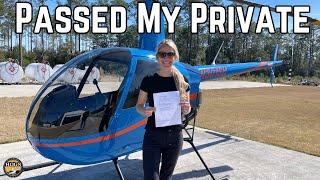
To talk about helicopter solo here in just a minute. But first we wanted to highlight Melissa up on the HOGS Wall of Fame, brand new private pilot. She sent her picture in and she said, hi, Heather. I passed my private pilot CheckRide and the Hogs course was a huge help. The videos are amazing and made all the difference in helping me pass the my checkride. I'll absolutely be using HOGS again for all my ratings. I've attached my successful checkride photo for the HOGS Wall of Fame. Thank you. So there you go, another new Hogs member up on the Hogs Wall of Fame. And the R22 is on its way in, so we're going to get right now to the video, Continuing on with our seven steps to private pilot. So remember, step number one, get your introductory flight. Number two, chart your course. What study resources are you going to use? Number three, start work on the FAA written done. Get it done as soon as possible. As you're going through that dual training, make sure that you're getting your requirements done and out of the way. We showed you already in the FAR aim. Step number five, solo. With confidence. Finish your solo helicopter time, efficiency. And I'm going to bring up, Jeff was somebody that I lived with years ago when I worked in Cleveland. He ran me a room as he was my student and he was working on his private pilot. And the way I met him was another instructor was flying with him and his instructor says, hey, will you fly with my guy Jeff? He's about ready for solo. I want to get your opinion. And I'm like, okay, cool. So I went out and flew with Jeff and I'm like, damn, you're looking good, man. You can almost fly a private pilot and you're ready for solo. I go, so you, you know, you got your written tests and everything done like the pre solo, right? And he's like, what? Pre solo, I go, well, before you go solo, we got to give you a written test, you know, cover some knowledge areas, but no big deal, it's open book. You can use the, you know, POH or the far aim. And he's like, poh, far aim. And I'm like, you don't even, you know, you don't know about any of this. And he's like, no. I'm like, okay, well let's go in and sit down. So we went in, sat down at the table in the office and I start explaining everything we need to do before solo. And he was mad, he was frustrated. He was pissed off at his other instructor who had got him all the way to solo. But his written, pre. Written solo wasn't done. He hadn't introduced him to any of these books. And he was mad. He was legitimately pissed off. And he's like, you know what? Can I just continue to fly with you? And I'm like, absolutely, why not, right? And not much was ever said with that other instructor. I'm sure he figured it out pretty quickly that, you know, he was just running, running up Jeff's logbook, flying him, flying him, flying him, flew the aircraft great, but never been introduced to any of the books. That's real world. As I was a new instructor, something that I observed, and Jeff is one of my good friends to this day. And he went through all the way to cfi and he never stopped talking about how that first instructor was really screwing him. And that's what goes on in the industry. And that's why we're laying out the seven steps. So solo time again, you can refer back to the good old far aim. There's a certain amount of aeronautical things that we need to cover with you. There has to be a pre wrote solo written test that you have to be, has to be done. And we got to make sure that we cover the things with you that you got to know. I had another guy who said, I want to do all the flying and then do the ground afterward. And I'm like, I can't do that. Well, why not? I said, because there's certain amount of things we got to cover with you before you ever go solo. So in turn, you'll never solo. And we have another example. We have a gentleman who wants to come here and fly the R44 and do his rating. He's got over 100 hours in our 44s and zero solo time. I guess I didn't even ask him. I should have said, well, why is it that the guys that have flown you for 100 hours, why is it they've not completed in this solo time with you? Right? And we hear these types of things going on. So you want to make sure that your instructor or your flight school has a plan laid out as we're talking about getting the requirements covered and how about getting the solo time done once you get it started, let's get through it and get it done. Get that 10 hours done and out of the way. And there are bad things that happen. We recently heard about an accident where instructor says, calls the owner and says, hey, I got Joe Blow ready to solo. Can you solo them, sign them off and the owner CFI went, yeah, I'll sign them off. Sent this person out in their first solo and they took their hand off the collective to pull something, pull a vent or something, trashed the aircraft, rolled it over and destroyed the aircraft. And I'm like that. That's the way I heard the story. And I'm immediately like, so the guys first solo, they just. One instructor asks another instructor to sign them off and then they just send them out. And I'm like, I kind of scratching my head. What we typically do with somebody who solos is here's one example, and this is what I did back in the beginning. As we're building you up and getting you ready to solo, we're gonna do like a pre solo check where I ride around with you for say half an hour. And. And you know, on this particular flight, I'm not even going to talk. I'm just going to sit there and I want you to take me around the pattern, do normal takeoffs and normal landings. And you're going to have to do that for me. With me sitting there and me touching nothing, you doing everything, you run the radio, you doing startup, you doing shutdown, making your decisions. You do the whole entire thing. We make sure that you can do that first. And then on your first solo, we're going to go out with you and say, okay, we're planning on solo today. We got the pre solo written done. We've been over the far aim. We have the knowledge that you need to go. We've covered everything we need to do. Now today, if everything's good, I'm gonna get out and let you solo for a little bit. But let's go out and make sure you're having a good day. So you go out, jump in with the student, student goes out, fly around for maybe half an hour. Everything's looking good. That person's having a good day. And if I feel I have the confidence to let them go, I'll get out and I'll give them. The first instruction is maybe three takeoffs and landings and then set down, I'm gonna jump back in with you. Then we're going to evaluate. That's the first one, then the second one, the second and third one. I'm still going to go with you for that day to make sure you're having a good day on any given day. And then at some point, two or three or four into it, then we're going to let you start going out and taking the helicopter by yourself for half an hour or 45 minutes. And we're going to build that up so that you're gaining more and more confidence as you go. That's a protected environment and that's the way your solo could be. And then something that Hauser and I have adopted since is we started doing something where we want a person to solo for three hours before they ever actually go in the pattern. And if you've never heard of that, it might sound kind of silly, but a Vietnam era pilot introduced that to me and talked about that's what he did. And I ended up trying it and I liked it because I'm the most nervous about somebody. I'm more nervous about them picking it up and setting it down usually than I am take them taking it around the pattern. So we've implemented where we let somebody solo. The first three hours is supervised. We're out there with you, we're standing by and watching. Maybe as you progress through it, you get to the point where say, okay, just go out, hover down there to the practice area, practice your pickups, set downs, your turns and come back. But your solo time should be protected and you should be eased into it. It shouldn't just be somebody throws you in the helicopter and you go out and start soloing. It ought to be of a protected environment. And again, there's a lot of things that need to be done before you go out to solo. Working on that solo time again, have some kind of plan. Ask your instructor, how are you going to get this done? I don't want to drag this out for months. Right? We have again people from around the country that want to come and finish up a rating. And they're like, oh, well, Yeah, I got 95 hours, but I still got three hours of solo time. And we're like, well, get your solo time done and then call us back. Right? Unless you want to come here to do the solo first. We can certainly do that, but that's an additional charge on top of the final approach course. So we really want people to have everything done so many times, last minute written aren't done, requirements aren't done, solo time's not done. The sooner that you get these things done in more of a systematic fashion and then put those things behind you. Because once that solo's done, if you're following the seven steps, you your written has been done for a while now you're concentrating on requirements. Those are getting finished up. You're starting to solo, finish all those up. And then guess what? Then it's just time to practice for the test. Which we'll cover that, I believe, in the next video. Private Pilot 101. Again, remember, this is Down Below. This is built for beginners. This is built for newbies asking or answering a lot of your most frequently asked questions. Tips for getting through your training to make the best use of your time and money. That's a free PDF Down Below. We're also going to have a PDF soon. Probably by the time this video comes out of the seven Steps, there'll be a free PDF Down Below as well. And do us a little favor and subscribe to the channel. We're working our way to 50,000 subscribers. Doesn't mean anything. I'm not getting any money. I'm not getting a play button. I just want to hit 50,000 as my own personal goal. So do us a favor, subscribe the channel and if you click that notification bell, you'll be notified of our other two videos coming out to finish up the seven Steps along with other cool things we got going on. So we'll see you next video. Peace out. When you feel the pressure to fly, but know the right decision is to stay on the ground, hit the hogs no go and live to fly another day. Helicopterground.com.










