Is Your Ground As Good As You Think It Is?
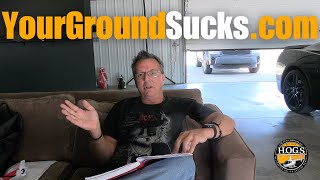
Kenny Keller walks through a 15-minute oral exam for helicopter pilots that tests Private Pilot fundamentals at commercial and CFI levels. He covers retreating blade stall, vortex ring state, pressure altitude, lost procedures, and why examiners expect short, confident answers grounded in the POH and FOI.
Questions this video answers
121.5
Set 29.92 in the Kollsman window and read the altimeter (pressure altitude).
When the retreating blade exceeds a critical angle of attack.
Abnormal vibration; pitch-up of the nose; roll toward the retreating side.
High gross weight; high density altitude; low RPM; steep/abrupt turns; turbulent air.
Chapters
Do you think that you're ready for a checkride? Yesterday I did an evaluation with a guy who was wanting to come out from another state to come up and do a cfi. And it occurred to me when I was doing this zoom yesterday, we have a common theme with people. And that common theme is, oh, hey, I want to come up and finish my check ride. Yeah, my ground's good, I'm ready. And of course, I have Heather trained in now that they always say they're ready on the phone or the text message or the email. And then once we jump on a zoom, it usually takes about five or 10 minutes, maybe 15 before I'm going, okay, you're not ready. So yesterday I said I was doing one gentleman didn't do too bad, he did decent. But it was, it's for initial cfi. And pretty quickly I'm like, okay, I'm not, I'm not going to make, I don't want to make you feel bad here, but you're pretty common to what we find. You got some more studying to do. Okay? And he was cool about it. And he's got some time. He's not looking until come until October anyway. I said, you got plenty of time to hit the fois and hit all your general knowledge stuff. And the FOI is for CFI specifically, you got to suck it up and do the studying. That's it. That's all you can do. We're not going to go into that right now because this is more of a general video for anybody. I'm going to say private commercial or cfi, because the examiner is still going to ask you all the basic stuff. Our examiner I've been using for 23s years is super fair, but he wants you to know the knowledge. And the problem that people have is the knowledge isn't as good as they think it is at the private level. And then they'll want to come and do a commercial and I'll start asking them stuff and I'll go, I'm asking you basic private pilot stuff. Like, yeah, but this is a commercial. I'm like, I know, but commercial is knowing everything you knew at the private level and knowing it even better and asking really smoothly and not spending a lot of time at the private level. Examiners expect some trouble with terminology and expect you to stumble a little bit, but they expect that same knowledge at the commercial level to be smoother, solid, more in depth. And then the CFI level, you're going to have to teach all that information. So you need to Be really smooth. So these things are relevant no matter which one you're going for. Private, commercial, CFI. I start the same way because even on the CFI, for example, he does about two hours of FOIs and then he goes in, starts asking you the general stuff that I'm going to ask you now. So my reference is my notebook. We used to sell this. We don't sell it anymore. But this is what I do. Hands down. This is the very simple process. When I jump on with someone, when I jump on someone with zoom and they're thinking about traveling up here, or if they just. They're bounty determined, they're coming and they swear their ground's good. We sit down here on the couches and this is what I use and I start asking questions. So let's give you a little example. I'm going to do the first couple pages and give you some ideas of things an examiner is going to ask you. Just ideas, right? Any examiner can ask different things however they want, no matter where you are in the world or where you are in the country. But this is how I do it. So let's get started. One of the first things I ask them is what happens if you get intercepted by military aircraft when you're out flying around right away you should think TFR. What do you do? Tune into 121.5 and comply with whatever they tell you to do. Right? You'd be surprised at the amazing answers on private or even commercial level. Oh yeah, what's that frequency? Or somebody will make a wise crack and it's like, no, you can't make a wise crack if you're getting intercepted by military aircraft. You, you have busted a tfr. That number needs to be right around the end of your time, 121.5. You need to be ready to comply with whatever they tell you to do. A couple of simple questions that always get asked. What is pressure altitude? You may amaze. I asked that question. Somebody goes, oh yeah. They start giving you some, you know, big weather statement about pressure. And it's like, look, it's not that hard. It's what you get when you dial 29.92 in your Colesman window and you read pressure altitude directly from your altimeter. Okay, very easy. Density, altitude, pressure, altitude corrected for non standard temperature, private level, commercial level, cfi. That should just roll right off your tongue. Those are pretty easy. But it'd be surprising on people that it's my first interview with them and they struggle in those first three questions. And I'm going, okay, how ready are you if you're not answering these basic, basic simple questions? So then let's move on to retreating blade stall. I usually hit that pretty bit pretty early in a, in a interview with somebody because I know this is one they're going to hit. What is retreating blade stall? Give the examiner a very simple definition. And I like it's when the retreating blade exceeds a critical angle of attack. Done. That's a very short, smooth answer. If they ask you what it is, give them a short answer. Guys or girls will start going, well, you've got an advancing blade and you've got a retreating blade and da, da, da. And they start going into all this. Examiner didn't ask you that. Examiner said, what is retreating blade stall? Give them a very short, smooth answer. So as you're preparing for your checkride, you should have short, small sentences to answer a lot of these things and then let the examiner dig further. You know, we say all the time it's like you're going to court. Don't give the examiner any more than he's asking for. Answer short, sweet and possible, or as sweet as possible. So what is retreating blade stall? It's when the retreating blade exceeds a critical angle of attack. Great. So with all these things that we talk about and we'll continue on with treating blade stall, you need to know what it is. What are you going to notice on the aircraft and what are you going to do to get yourself out of it? So keep those in mind on all these different aerodynamic things that happen. So it would be very common for them to ask what are the three things you're going to notice at the onset of retreating blade stall? It's abnormal vibration, pitch up of the nose and then a roll to the retreating side. A lot of times somebody will go, oh, a vibration and then roll to the left. Well, roll to the retreating side. It's not to the left or right, it's to the retreating side. You might be flying clockwise, you might be flying counterclockwise. So abnormal vibration, pitch up of the nose, roll to the retreating side. Why did the, why does the nose pitch up? Due to gyroscopic precession. You're starting to lose lift over here. And then you feel it 90 degrees later due to gyroscopic precession. That's why the nose goes up and then it can, as it continues to stall on the retreating side, it is then gonna go roll towards that retreating side. And I see a lot of people really struggle with that. Okay, so retreating Blade stall. We know that if we go above vne, we can get into retreating blade stall. Okay, that's a given. Second part of that question, on or on a vne, is structural limitations of the aircraft. I'll always ask that. It's retreating blade stall and its structural limitations of the aircraft is why we have a V and E. But then I'll say, okay, so what are some of the other factors other than vne? What are some other factors that contribute to that? And they'll go, well, going too fast. I'm like, well, we just said that you exceeding vne. So you. We've. That's a given, right? You exceed vne, you get intriguing blade stall. There's five things that can contribute to that. And many times, somebody will give me that deer in a headlight look. Low rpm. Okay, yes, that's one of them. And then I always say the same thing. Anytime an examiner asks you about something that's bad, something that bad that goes on the helicopter, something with poor performance, you always immediately think of high gross weight, high density altitude. Boom. Those are always two you can think of. So get those two out of the way on your dreaming. Blade stall. We have five. So boom. You think, oh, man, there's five things. Well, high gross weight, high density altitude, boom. Those two are done. Low rpm. The student said that. Great. Well, the other two, steeper abrupt turns and turbulent air. Those are five things that can contribute to that retreating blade stall. What do you do? Everybody just says slow down. That's true. Go a little more than that. Reduce collective, increase RPM if needed. Reduce force forward airspeed and minimize maneuvering. Just in that one page, from the top of that page to there, I'm formulating whether I think you're even close to being ready. If you're nailing all that stuff, I'm going, okay, let's. Let's move on. Let's dig further. But I'm liking what I hear. So I still say with sailing, with power, it's vortex ring state now, by the book. But of course, everybody that's flying helicopter needs to know the three things you combine together, they can get you into selling with power. Serrated ascent, 300ft per minute or greater using 20 to 100% of power. Airspeed less than ETL. When's ETL happen? 16 to 24 knots. The same with power. I don't care what you're rating for rating you're going for. This needs to be smooth. And most people are kind of so. So with this, but they usually kind of Struggle around with it, and they get part of it, but they don't get it. All right. The reason I'm gonna harp on this one is when I failed my first private pilot checkride, which is why I built this book, by the way. I was struggling around with selling with power with those three things. And after I failed, he said, you know, on the aura, one of the things you struggled with was selling the power. And he said, you started giving me bits and pieces, but it wasn't smooth. And he was like, you know, I'm an FAA inspector, and I don't want to come to your accident. You need to know those three things for selling with power, and you need to be able to go like this, like this and like this. That was at the private level. So I've always made sure for all my private commercial CFI applicants, they know selling with power. I'll ask them this 20 times, possibly between the time they start and the time they take their check ride. I'll ask this over and over, because you want this smooth rate ascent, 300ft per minute or greater, using 20 to 100 of power, airspeed less than ETL. When does that take place? 16 to 24 knots. So that's for everybody. Private commercial CFI. Then our examiner has three situations that he wants to hear about at the commercial level. He'll ask us at private, he won't fail you if you don't get them, but he will fail you at the commercial level. Because these are more situations that once you're flying in the commercial environment, that it's very common that you. That you could get into something with power. And one of them is a steep approach or steep approach, airspeed near zero. People almost every time say steep approach downwind. And I go, yes, but it's not necessarily steep approach downwind. It can be just steep approach. It doesn't have to have tailwind. Right? Like, downwind is bad. We know that you should be avoiding that at all cost. So steep approach. Excuse me, attempting to hover above the hovering ceiling. And people have a hard time coming up with this one. But this happens in the real world. I'm driving up to Michigan to do some testing for the FAA on some avionics equipment and a turbine helicopter. I'm driving up to go do this testing, and I was going to have to hover at 30 minutes at 13,500ft. And I'm talking to my buddy on the phone as I'm driving up there, and he goes, hey, don't forget to check the POH and make sure you can hover at 13.5. And I went, oh, yeah, good idea. So I get there, I check, yes, I can hover. FAA arrives and we're getting ready to go do the flying. Because the FAA guy was going with me, and he's like, so can we hover today up there at 13.5? I'm like, sure can. He goes, how do you know? I go, because I checked the POH before you got here. He's like, good answer. Brian Rutledge, our operations manager, had a story about out in California, they were taking a bunch of SWAT guys up into the mountains, and the guy had been flying forever, didn't think to check the poh. And they got up in the mountains and tried to hover in a UE and started selling the power because they couldn't hover because he was attempt to hover above the hovering ceiling. And then the other one is, I call it attempting to hover out of ground effect without precise attitude control. Which to me means photo flights. Right. Like a photo flight. You could be up there by nature. If you go to do a photo flight at the commercial level, you're going to be circling somebody's house to take pictures or a business, and you'll be downwind, and the photographer will always say, stop right there. That's the perfect picture. And you have to say, I can't stop right here because I have a tailwind behind me. Oh, but I. But stop. I need that shot. Right. It never fails. The photo that a photographer wants is always putting you almost always in a bad position. It's never right. The perfect shots, never when the wind is right off your nose. And that's why those three things are super important, because those are common ways a commercial pilot could get a sling with power. So good to know. At the private level, your required equipment. Some people do pretty good with this. A lot of them have to go. Yeah, you're gonna have to sit back and study that a little bit because you have to know the required equipment. Okay. There's different memory aids out there. I use camo foot or camo's foot I've been using for years. Compass, airspeed, manifold pressure, altimeter, fuel gauge, oil pressure, oil temperature, tachometer. The camel's foot, I think, is lights, and camel's foot. L is for lights and S for seat belts. I believe they're going to ask you about required equipment. That's any aircraft. Then they're going to say, for example, we fly the R44. They're going to say, okay, that's for any aircraft day VFR, what do you have to have for the R44 and for us in the Raven 1, it's governor, outside air temperature, altimeter, low RPM system, horn and light and hydraulics have to be operating. And I know that because we just recently looked that up because there's some different memory aids. Whether you're flying R22 or flying R44 on what you have to have in there that is directly in the PoH. So whatever aircraft you're flying in the robisons, there's some specific things in the POH that are added to day VFR equipment for any aircraft. So right there is just two pages. If you're struggling in any of those areas, I would say you're not quite ready yet. But if you're going through and you're just acing that and you're going, yeah, okay, you might be ready to get on a plane and come up here and do your final approach course with us. Flight reviews, minimum one hour flight, one hour ground. Surprised how many people don't know that a lot of the time, can it be more? If the instructor wants it to be more? Sure. If you're not proficient, instructor may require that to be a little bit more than that. And examiners know what goes on in the real world. And I've heard of this going on. Hey, Joe, I need a flight review. Can you sign me off? I know you need one too. I'll sign you off too. And they switch signatures, sign each other off. And they really didn't even go fly or do any ground because they're buddies. So make sure that you're not doing something along that line. So make sure you're getting a legitimate flight review. Minimum of one hour flight and one hour of ground. Annual inspections or inspections. What kind of inspections do we need? At minimum, we need an annual inspection. 100 hours for compensation or higher, 24 months altimeter transponder, comply with ADS and SBS airlines directives and service bulletins. Gonna have to know what those are. If you're struggling with those, you're not ready. That's basic, basic stuff. Here's another one I like. I love the ask. And examiners love it. If you know this, it's the five Cs. If you get lost, a lot of guys know it. And when they, when they pop these off, I'm impressed. If they don't, I say, you know what? You should know this. Because if the examiner asks, and our examiner does ask this, it's very Easy to remember if you think about it. Climb. Communicate. Communicate. Confess. Comply. Conserve. Climb. In a helicopter, you could just climb 500ft and go, oh, there's that lake I was looking for. There's that water tower, there's that highway. Very easy to get yourself unlost if you just climb. But if you climb and that doesn't work, communicate, call a local. Call a local airport, call local approach, confess that you're lost, that you don't know where you're at, comply with what they tell you to do, and then set your proper speed to conserve your fuel. So climb, Communicate. Confess. Comply. Conserve. Makes sense if you think through it. Very simple, but it's a great way if you do get lost, your GPS quits or whatever bad happens in the helicopter that all of a sudden you find yourself, you're not sure where you're at. Five C's. I've done that in bad weather. Called a local airport because I knew I was close, but the weather was getting kind of low. Visibility wasn't so great. I call up the FBO and they go, what do you see? I told them, they go, oh, well, here's where you're at. Follow that road until you see a stoplight. Turn left, and about a half mile to south, you'll find the airport, right? I called locally, told them I couldn't find the airport, and they gave me directions and I did. It works great. Squawk codes, very simple. It's 1200 for VFR, 7500 for hijack, 7600 radio failure and 7700. Emergency examiners are going to ask you that. 99.9% sure. They're going to ask you that. What's key to good approach, good setup. What's keto? Good auto, good setup. What's keto? Normal approach, good setup. No matter what it is you're doing, if you set it up, it'll be nice. If you set it up sloppy, it's going to be sloppy. Aha. Here's another good one. I asked people if they have a good memory aid for if they have an engine or tail rotor failure, which way is the nose going to go? And people that watch our videos usually know this. I was taught this when I was a new cfi. We're doing hover taxi down a taxiway. I'm getting checked out by a senior instructor to do something in specific aircraft making model. And we're hover taxi along. And he goes, okay. Right. Now if the engine, which way is the nose going to go? And of Course, I pause for a second, thinking, engine, engine, torque. And he goes, too late, too long. You have to know immediately when something happens. Was it the engine? Was it the tail rotor? And at that time he said, remember the movie E.T. and I'm like, sure. And he's like, remember, E.T. if the nose goes to the left, it's the engine. If the nose goes to the right, it's the tail rotor. Very simple memory aid, but if you can remember that ET Immediately, when an examiner gives you a scenario, you're flying along, something bad happens. Aircraft starts shaking, and the nose goes this way. What just happened, ET Tail rotor. Simple, easy to help you then decide, what am I going to do next? I remember somebody explaining. I think it was the examiner. You need to know an emergency. What's going to happen? You know, you have to be able to think quickly in any kind of a little tool you can use to quickly think through, how am I going to deal with whatever happened? Knowing which way the nose went. Engine, tail rotor, key. Another favorite that I'm amazed at. How many people don't know this. I'll ask them. We're here at our airport. We're a little Class G airport. We've got a tower down here. And during the daytime weather's. It's not like a sunny day. It's kind of iffy on the weather. And we look down and see the green and white light flashing during the daytime. What does that mean? Means the field's ifr. That's it means it's below a thousand or below three miles visibility. What's your basic vfr? Three miles and a thousand. So if during the day in a Class G, if that beacon's on, that could very well mean you're below vfr. And a lot of people screw that up, too. Simple as that is. What's basic vfr? Three miles and a thousand feet. I like telling the story about Chris Hauser. Many of you know him from our videos. And he's up on the Hogs Wall and he helps me instruct here at Hogs. He doesn't mind me telling the story because it's a great story. He did good on his private checkride. Smoked it. Then we go back, you know, a certain amount of time later to do his commercial. That day we were late to the checkride, which is not good. Chris was having some trouble at home, wasn't getting along that well with the wife, and so his day was just kind of off anyway. And during the checkride for his commercial, he was struggling. Examiners giving him some. Some scenarios and talking about airspace, and he was getting a little bit confused. And he said, well, let's just back up to what's basic vfr? And Chris started going, oh, airplane, helicopter, day, night, you know, and examiner's looking at me, and I'm going, chris, you know, in my mind, I'm going, is 3.3miles and a thousand feet, Chris. And he kept repeating these numbers in his head. And eventually the examiner's like, I'm gonna go get a cup of coffee, and I'll be back. And he left the room, and I'm like, chris, all he's doing is asking you basic vfr. And he was so rattled from just starting out the day not so well. And it's just a good story because anybody can get frustrated in the moment. And that three miles and a thousand feet is one that I see people trip up a lot in the heat of the moment. And here you go. They always ask this private commercial CFI check airmen on 135 check credits would ask this three stages of a thunderstorm. I asked the CFI add on applicant this recently, and he was like, oh, you know, that one's. That one's got all the downdrafts. And I'm like, come on, man. You're doing a CFI out on cumulus mature, dissipating three stages of thunderstorm. Another one that they just love, love, love to ask. And I think I'll wrap it up right there just because I just wanted to do an in the moment, like, give you an idea of how I evaluate somebody. That's it. There's no big special process to it. It's like, whether they're here in person on the couches, or I'm jumping on the computer over there on Zoom. It's laid back, wearing T shirts when we go, hey, how you doing today? Well, what rating you working on? How many hours you got where you fly in? Okay, well, you're ready to get started. I just want to ask you some questions just to kind of evaluate your knowledge. And then we just get started. It's just laid back, just like this. And again, I'll repeat myself. This is what I do when I'm trying to evaluate somebody's knowledge. And it doesn't take me, you know, an hour, hour and a half. It takes about 15 minutes. If you're hitting all of that stuff and you're smooth, then I know we can continue on. I know that we're on a good pace. But if you're struggling there in those first Couple pages. The things I just asked you, I don't care what rating it is. If you're struggling those areas, you're not ready. Because as we continue through the book, I'm going to ask more of the same stuff. Talk about notams and talk about air mets and pilot reports and calling flight service and the different weather briefings. I can't tell you how people overlook the basics and especially on these advanced ratings. Commercial and cfi. Yes, you're already a rated pilot. That means you have to maintain the basic things you Learned Private Pilot 101. And I'm telling you, I see this continually on commercial and cfi. People who just kind of go, oh, I'm already rated. I'm a commercial guy. I'm a cfi, I'm a cfi. Add on, I don't care. The examiner's still going to ask you that stuff. And my best example, I've told in videos before, four years ago, I had to go renew my CFI or reinstate my CFI because I let it lapse. I didn't get my, you know, my paperwork in time to renew. So I had to go see the examiner and I thought, well, you know, we've been doing checkrides together for 20 years and we're buddies and oh, this will be a quick, easy 20 minute or go do a couple maneuvers and he'll go out, you're good, and you'll sign me off. I'll tell you what, I got through it, but I should have, I should have sat down and went through my basic private pilot 101 stuff because my ego told me I could just walk in there and go do this renewal and I was going to be fine because I'm cfr. I've been doing this for all these years, blah, blah, blah. And it made me, humbled me very quickly. When he starts at the beginning, you know, what do you have to have on you? What do you have to have on the aircraft? You know, start talking about flight reviews and is it good? You're good in the helicopter, but you're, are you good in the airplane or you're good in the instrument, you're good in the R44 and all that basic stuff that we take for granted that we learned early on. They go back and review that stuff and they go back and review that knowledge with you because you need to maintain that knowledge throughout your career. It's not learn basic private pilot. And then, okay, well, now I'm a commercial guy, so I don't need to know that. Anymore. No, you still need that same Basic Private Pilot 101 knowledge. That's the knowledge that you have to have. All right, let us know below if you like that we are doing checkrides here in the R44. Reach out to us. Been pretty slow this summer. We have openings as of at this point. We have helicopter on ground school. We help you online with private commercial instruments. CFI. Those are all@helopterground.com links below. And what should we throw below? You know what? You know what we should throw below for you newbies if you're new to this or you don't even have to be a newbie. We did this last year. The Private Pilot 101 helicopter training blueprint. This free PDF. We'll make sure that link is down below. You can go down below and also get a paperback or a Kindle version as well. We made this last winter and we just went through and just tips and anything you can think of that helps a person get through getting that first rating, getting through the private pilot rating, getting through the checkrides. We'll put a link down below for that. And let us know what you think about our little checkride prep there. Was it helpful? And we'll see you in the next video. Peace out. When you feel the pressure to fly but know the right decision is to stay on the.










