Kenny's Flight Review: Student Has Become The Teacher
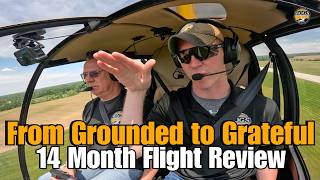
YouTube video (Kenny Keller, May 31, 2025) documenting a helicopter flight review where new CFI Hunter Gamble acts as instructor for Kenny. The recording interleaves procedural flight content — startup checklist, hover taxi, normal/steep/shallow takeoffs and landings, quick stops, autorotations (autos), 180-degree autos, slope operations, hover-autos and square-pattern hover practice — with conversational segments about Kenny's medical reinstatement, training philosophy, CFI career advice, and safety reminders. The video also promotes training services and cross-country offerings with Hunter.
Chapters
And I said, I can't. He goes, sure you can. Let me show you. Even though, you know, I don't think he really cares. That was a long time ago. Even though they're not supposed to teach. And he goes, I want to show you something different. So let's say this is a taxiway, not a Runway, but here's. Let me show you. So we just came in real super slow like this and he showed me how you could just come in and go. So we're going out to do a flight review for me, Hunter Gamble, our newest cfi, longtime HOGS member, got all of his ratings and has been helping us now for what, several months?
Yep, we're coming up on almost three months now.
Three months he's been helping. He's up past his 300 hour mark, so he's well on his way to a career. And I had my last flight review was just over two years ago and as of today, and we're going to tell you more about this in a different video, but I just got my medical today and it's a long story, but a little over a year ago, I went to the hospital one night over a blood pressure and a heart rate problem. And So I spent 14 months making lifestyle changes and getting a bunch of tests and I am now reinstated. I have been flying luckily through Hunter and Hauser helping us out, I've been able to remain current, go out and fly with CFIs. I can even train rated pilots. I just couldn't take the helicopter out by myself. A lot of medical. So kind of a celebration. We thought Hunter come up to help fly today. And I go, heck, you know what, I need a flight review. So let's go do a legitimate flight review. And Hunter's just gonna tell me what he wants me to do. So we'll get back to our checklist here. Alternator switch on. Oil pressures up. Avionics are on. Wait for clutch light out it is.
Circuit breakers are in.
Circuit breakers in. Warm up 60 to 70%. Now we're waiting for the engines gauges to come in the green. Two of one's in the green and the other two are about to come into the green. So. So Hunter, just when we get ready to go here, as soon as I get through the checklist, you're the CFI in charge. So just direct me what you'd like me to do and we can go out and do whatever you want. Hovering all the maneuvers, confined areas, selling a power, autos, whatever you want to do. You direct me. So at the End of an hour, you can give me a little ground because we need an hour minimum flight and our minimum ground. And then you can put a fresh flight review in my logbook.
Sounds like a plan.
Never thought you'd be doing that, did you?
No, I did not.
I'll be legal. I'll be legal. Once we get done and get everything signed in the logbook, I'll be legal for the first time in a while.
Exciting day.
It is. And by the way, as we're finishing war up here, I never got my medical pulled. I grounded myself when I the minute I went to the hospital due to heart rate and blood pressure, I knew I was grounded. Right. When your health significantly changes, you have to ground yourself. So of course, after visiting, the doctors are like, well, we got to figure out what's going on with you and go through a bunch of tests. And while I was going through all that, my medical expired. But we knew we had to get all the testing done because you have to submit then to the faa. Hey, here's how you're doing now. Here's the test. Here's how everything came out. So it's a process. So I never got denied. I didn't lose it. I just grounded myself. And then while I'm going through all the testing, it expired. And I had to wait until all the tests were done so I could go in and the AME could give me a physical and submit all the paperwork of all the treatment that I got after my trip to the hospital. So your medical is a privilege, and I'm going to talk more about that. For 25 years, I could take a helicopter and go where I wanted, anytime I wanted, do what I wanted. And when all sudden you can't do that anymore, you realize what a privilege that medical is. And again, we're going to do a video on it because I learned a lot and hope you like it.
Below Michigan City.
Hopefully I can save you some head and heartache if you struggling with the metal or get medical or getting ready to get a medical. I got some tips for that as well. And some of my own tips I should have followed that could have made that go a little bit easier that I my own fault for not following my own advice. Okay, so now where everything's in the green. So now I gotta find my place on the checklist again.
Circle breakers are in the green.
All right, so we're gonna go up to 75 and do a mag check. 75%. All right, there's 75% left mag. Oh, nice. Slight Drop, let it stabilize. Go back to the other mag. Small drop back to both. Carpet hunters. I just took my hand off, but hunters.
Yeah, I'm guarding it.
He's guarding the collective.
So. Yep. And then we see the rise in the needle.
Okay, so we'll push that back down. We can readjust what we pick up. Sprag clutch. Check. If I roll it up just a little bit higher. Roll off, add right pedal, needle split. Yep. So now we got doors. Those three doors are latched. We just took this door off all the pins. Everything's put away. So no danger there. No loose item in the cockpit to fly out. Because we like to keep. We like to keep the cockpit clean. Nothing laying out, nothing that can blow out the window. All right, limit map, 24 degrees Celsius. Okay, so I need to check my.
Traffic room 9-961-A uniform 15 to the north and overfly the field and enter a left downwind to Warsaw traffic.
Check the hydraulic system and check for our low RPM horn and light. And then we are ready to go. So I put the checklist away. See, that actually shows doing it. Okay, doing the hydraulic before you roll up.
Yep.
All right, so I put that away. Hydraulic is on. So first thing I'm going to do, reach forward, release the cyclic, then reach my hand back and unlock the collective. Hand back to the throttle, and I'm going to turn it off. Actually, while it's on, we'll make sure little X pattern. It moves good. Yep. Hydraulic off, it's going to be stiff. We'll make sure it moves even though it's stiff. Hydraulic back on. We'll make sure it's back working again. All right, so there's that. So now we're going to roll up to 100%, check our H. Wait for the clutch light to go out.
Clutch lights out.
I'm going to raise collective and roll off throttle. Wait for the horn. There's the horn. Down collective, let the governor take it back up to 100, and we are ready to go. So clear on the right, Clear on the left. On the left.
Forward and above.
And we're gonna take our time here. Nice and slow, because I gotta try to impress my Instructor. Looking outside, 50 to 75ft. Checking back inside. Manifold pressure. Starting to get light, but I'll continue to just keep gently raising that collective and feel what the nose is gonna do. It's going to the right, so I'll push a little. Right pedal a little more up. Collective, we're about 19 inches. I know we're going to Come up pretty quick. I think we're ready. So step number that was step number one. Step number two. Gently lift it up.
Oh, smooth.
I like it. All right, we'll get away from the hangar. Clear on the left. All right, Hunter, what do you want me to do, buddy?
So we'll do a nice normal, like just hover taxi.
Okay.
We know it's three to five feet, a nice brisk walk.
Okay.
We'll just do a hover taxi over the Runway, and then we'll start out with a normal takeoff and a normal departure we always talk about. We harp on our doing our pre takeoff check. So before we take off, we'll get to our spot, do our pre takeoff checks, and then normal departure or normal departure, and then we'll set up our normal, normal approach.
Yeah, we've been talking about how people have been coming from around the country to fly with us, and now you've seen it where like three quarters of them say speed of a brisk walk, and they're going like 15 knots across the ground.
Right.
They're saying the verbiage, but are they really doing what they're saying? And a lot of times they're going way too fast.
Yeah, a lot of times they'll say they're doing a nice brisk walk, and we're already past ETL and we're just scooting across the ground.
And our examiner will call them out on that if they do that. Okay, so we'll clear left and right. Runway looks clear. I heard somebody on the radio a little bit ago, but I didn't catch what he said.
Did you catch? I think he was over crossing the field and using two seven.
Okay. And we're gonna win. Let's see. So we could probably just. I'll depart to the north. What do you think? You good with that?
Yes, sir.
So depart from the north or depart to the north and do right traffic. Unless we hear some other traffic that conflicts with that. Would you give us just a tad bit of car peak as we're right on the edge there? All right, we'll check the Runway again. All right, so clear on the left.
Cows clear left.
I'll point to the north.
One thing that it brought up like, we just like. You did a good job there just clearing your tail. I've seen a couple videos here recently on Facebook of pilots a thousand hours sticking their tail rotors into trees and flipping things, and people are not doing their tail clearing turns.
Yep, Absolutely. Absolutely. All right. Warning caution lights are out. Gauges in the green or out of the yellow. Our timer's running. We got a little over an hour of fuel, just enough to get our flight in and have our 20 minute reserve. So it's going to start with a nice smooth takeoff. Nice and slow. So this will be your second flight review, right? Have you done more than one? I know I had you do third.
So this may be my. This may be my. My third.
Nice. Okay, so you want me to go around, do a normal approach, right?
Yep. I don't know how it looked on your end, but my end there is a separation between the needle and the car yellow. So we're out of the yellow.
All right, looks good. All right, there's our 300 AGL. So we're clear right and left. So refresh my memory.
Hunter playing the right down one for two seven.
Okay, they're doing two seven. You know what? Let's, let's. We'll go to the taxiway 27. What do you think? So we're not interfering with this pattern. Does that sound good?
Yep. Did he say he's on the right downwind for 2 7?
I think he said right.
So he'd be on this side of the Runway.
Warsaw traffic, Grumman 9961 a uniform over flying the field gun entered the Left downwind for 27. Warsaw traffic.
Warsaw traffic, helicopter November 1st Mike Bravos on a right downwind, landing on the taxiway parallel 27.
Warsaw, Warsaw traffic 0651 x Ray Charlie. We're taxiing to 27 Warsaw.
So I got him on site. He's coming down the taxiway.
All right, we'll keep an eye on him. And if I need to, I'll just go to the grass. I'll shoot for the first intersection and if we have to divert, I'll just go to the grass, parallel the spot that would be intersection.
Yes, we'll just go to the north end or I guess the grass. Yeah, you said the grass. So I got him there about Alpha, probably. I think that's Alpha too.
Yep. All right, I'll just go to the grass.
No warning lights. All the gauges are in the green. We're good on fuel. Carpets out of the O.
All right, so not my best setup of all time. I'm a little high, but I can clean it up in time. I want 300 AGL. I want at least 60 ZRA descent and then trim.
Warsaw traffic, Grumman 9961 a uniform left downwind 27 or Warsaw, Warsaw traffic, helicopter.
One, Mike Bravo's on final. We're going to land in the grass north of the taxiway. Warsaw.
Nice stable control. So doing a good job there.
Warsaw. Traffic from 9961, uniform left. Base 27, Warsaw.
This feels good. And so what we did here, if you can't see it in the camera, we got an airplane on the taxiway, an airplane landing on the Runway. So we just moved over to the grass instead of going around. I want to get some good maneuvers in. So we just. We're just going to a grass area. That way we're staying well clear of the fixed wing guys. They can do what they want with the taxiway and Runway. And we'll just go over here, the grass, and that way everybody's getting what they want. Straighten the nose out a little bit as we come down through 50ft or so.
Warsaw traffic, Grumman 9961. A uniform final. 27, Warsaw.
All right, I like that. Okay, for last minute, having to change things up a little bit.
Yep. And being flexible.
All right. So I think I'll do a set down for practice looking outside. We'll go nice and slow. We're in the grass, so we'll just kind of be kind of careful, not get too rushed. We'd always pick back up. It felt unlevel, but it looks pretty good. And now we're down the grass collective all the way down. All right, so there's our normal takeoff and landing. I'm going to pick it up. Two step process. Taking my time. Got a little rain. Might be. Doesn't feel too mucky, but still, be careful.
No reason to be in a rush.
It's kind of tall grass, so we'd want to be careful of that. I don't think it would reach the exhaust, but something to be thinking about. Tell clear. Right. I'll do a left 360. So we got that guy landing.
Got the guy holding short.
Got him ready to take off. So as long as we just stay parallel, stay north, then we're not interfering with them at all. All right, what's next?
So I guess we can go around and if you want to do a steep approach.
Okay.
And then we'll work into our quick stops. Or then we'll do our shallow approach with run on landing, then quick stops and then autos.
Okay. So warning caution lights are out. Gauges in the green. We're out of the yellow. Timer's running about 17 minutes into our one hour flight review. And here we go. Nice and slow. It's amazing lately how much as social media, you know, becomes more and More prevalent every week, every month, every year. The more stuff that I see of pilots doing that they shouldn't be doing, it's unreal. And it bothers me because it gives those people that traffic.
Grumman 9961 Uniform clear Runway 27. Taxi and SVO Warsaw.
It gives people the wrong impression of what helicopters should do and then what a lot of these hot dogs go out and do.
That was in the pattern. We're yet.
One of the other things that I've been seeing here too. Just because the helicopter. Helicopter is capable of doing it, we should.
What was that?
I said? One of the things I've been seeing here recently where like, yeah, these helicopters have the performance and they're capable of doing these maneuvers, but pilots shouldn't be put. Doing these maneuvers and putting themselves in dangerous situations.
Exactly. A lot of crazy. A lot of crazy stuff happening. All right. I think I'll just fix the taxiway again just so that in case anybody else comes in. We're not in their way.
Yep. And just to refresh some people's memory, typical helicopter traffic patterns 500ft AGL. We're within about a half a mile of the Runway because airplanes are usually flying a mile out. Thousand feet. So for helicopter, we're looking for about a half a mile off the Runway 500ft AGL.
Warsaw traffic 0651 x Ray Charlie will be departing Runway 27. Warsaw.
Warsaw traffic, helicopter one, Mike Bravo's on a right downwind landing the taxiway, parallel 27. Warsaw. Oh my gosh. Feels good to be out on a warm day. One of the doors off.
Did you see the Grumman or know where they went by chance?
Is he talking to us?
Yeah.
Did you see where they went to the fbo?
Yeah, we believe he went to the fbo. All right.
Must have been heads down.
Thanks. Yep, I saw him there. Go back on taxi Bravo to the fbo.
You know, as simple as a flight review is I'm excited about getting a fresh flight review of my logbook.
It is exciting, you know. Then it starts at 24 calendar months over again.
Yep. With my fresh medical certificate. Certificate that technically in the mail, but I'm flying with you today anyway, so it makes a difference. By maybe a Monday or two, I'll have that medical in hand.
Doing our pre landing checks. No warning lights. All the gauges are green. We're good on fuel. Car pizza. We will be clear below.
That was high again. Dang. It's all right. I can fix that.
We got plenty of time.
Warsaw traffic helicopter one mike bravo final for the taxiway, parallel 27, Warsaw.
So for this one we're looking for a steep approach which is between 12 and 15 degrees in a helicopter for me, I use the just right above the dash and then just kind of refreshing our memories. When we're looking at our spot, we should be approaching a nice brisk walk. Shouldn't look like the spot's moving up or down in the windscreen. We're using our cyclic to control our rate of closure and our collective to control the angle.
What do you think? Call this a steep.
Yep, Super. Nice and controlled, which I like.
It's such a nice helicopter.
It is.
You know, I posted one day about so one of the nicest aircraft I've that I could think of that as far as all the way around, comfort, cleanliness, everything. People go, well, you mean it's nicer than a 145. And I'm like, that's not what I mean. Right. Like I flew EC 135, 5, 4, 1 35. I've blown the BK, but I'm talking just like an everyday something that an everyday person is going to have an opportunity to fly between. Robinson Instruments Weitzer. And if anything I've operated this has been. I don't know, it just. Everything about it is friendly. The way it starts, doesn't break a lot. We do a good job maintaining it. It's just. It's just a fun helicopter. Fun and friendly. Basic vfr. Doesn't have a bunch of fancy gadgets, but we don't need fancy gadgets. All right, I'll do another set down just for practice. So looking outside, get my nose straight. Looking for the cushion. Coming down, coming down, coming down. Right, there's our cushion. So a little bit more down and right onto the ground.
Nice.
I like it.
Very nice.
All right, I'll pick us back up. Looking out the side, 50 to 75ft. Slowly raising collective. I glance in and out at manifold pressure. So I know about when it's going to come up off the ground. I just keep coming up nice and slow now there I'm getting a little movement, so I'm just going to kind of pause. I want to stop that movement as I. A little more. As I add a little more up. Collective catching the nose left and right, up and down. Feels pretty good there. So step number two, gently lift it up.
Smooth.
I like it.
Very nice.
And let's see, I'll do a right pedal turn, tail clear left. Since we got that terminal sign over There. Now go ahead and take us all the way around. I don't hear seeing their traffic right now, so. So next you wanted what shallow approach and running landing.
Yep, we'll do a shallow approach with a run on landing, which I've experienced with you before and you're actually very, I mean obviously everything, but you're very good at those.
I, I'm pretty careful though, those at this point. I remember the. Back in the day, in the beginning when I wasn't but. All right, warning caution lights are out. Gauge is green out of the yellow 23 minutes into our flight. So while I'm going around and setting up trying to think of a good question for a new CFI for anybody getting into this, what would you tell somebody now that you're 300 hours and several months into it, now that you're doing it, how's it feel?
I enjoy it. I think we've talked about before, maybe in another video where if you'd asked me a year ago when I was just getting completed with my commercial, I didn't think it was for me. But now then we've talked about another times where now for the rest of my flying career, I want to say in the teaching environment, I think it helps you hone your skills and you stay on top of what you need to do rather than just building hours and being ready for real world situations. But I think getting your cfi, not saying it's bad if you don't get it, but I think it makes you an all around better pilot. If you can teach it and explain it to a student, I think that just helps you have a better understanding of why things work, work the way they work, or why we fly the way we fly or whatever. But I would highly encourage students out there that maybe are just starting their training and looking to make this a career, looking at getting in on the CFI side or a guy that's getting ready to get his commercial look at going the CFI route, it can't hurt you anyway.
Yep. And you're absolutely right. I flew EMS for five years, but I stayed active as an instructor during those five years. And what's interesting is I flew with mainly military pilots and nothing against military pilots at all. We respect their time that they've done for us and that's a major accomplishment. You know, flying as a military guy, I think that's incredible. But most of them weren't CFIs, so because all they do is just fly EMS when it would come time for like our 135 checkride. I remember the base manager going, oh man, I'm terrified of having to do an auto. And I'm like, what are you terrified about? He's like, well, I only get to do them once a year, right. And it made me realize that when you're not in the teaching environment, it's easy for your skills to. When you just fly missions every day and you don't get to do autos and quick stops. And it's easy for a person to get a little stale or a little stagnant. And also helps keep your ground knowledge. Like a lot of times we would do, they would do two of us when they come in to do, you know, our yearly 135 checkride. And they got to do an oral. So they'd bring like two guys in on their day off. And usually if the other guy couldn't answer a question, they'd look at me and I could answer it only because I was an active instructor on my days off, keeping that knowledge fresh. It was harder for somebody who's not instructing. I mean, there are pilots, of course, to do remedial training and study on their own. But it's a fact that once the guys get into the commercial environment, especially ems, they want to sit and watch TV and take naps and goof off. And they wait until a day before their 135Checkride to open a book. And I know that from having a good friend. Let me make this a little tighter here. A good friend who was a check airman for quite a while and he said I should probably shut down half the bases I go to over pilot knowledge. But of course, you know how good that go over when you're shutting down half the bases. And another friend of mine who ran law enforcement agency said his pilots never want to study either. They just want to go fly patrol and then go take a break. Nobody ever opens a book.
I think you need to get in the book. Whether it's just maybe once a quarter. I mean, that would be eight times in between two flight reviews. If you get in there once a quarter and hit your emergency procedures and staying on top of all the stuff on the training side, it can't hurt.
Yep. Well, you were with me when we saw Jerry Ventrella a month or so ago. And for those that you don't know. So those of you that don't know, Jerry ventrella is a 50 year examiner. We do a check rise for 50, 50 years. Super individual and well respected in the industry. And we got to see Jerry at A pilot meeting. And I said, hey, Jerry, what's a piece of wisdom that with your 50 years of doing check rides that you would give for any pilot, new pilot, older pilot, you know, what's your number one thing you would tell people? And he said, well, there's about six of them, but if I had to pick one, he said, I would highly recommend people do remedial training. Don't just get your license and then just go fly and, you know, go to webinars, seminars, read, refresh, anything you could do. Take online courses, do whatever, because pilots get stagnant and the knowledge gets behind. He said, that's the number one reason people get hurt and killed is lack of knowledge over time. So right along with what you said, it fits right into a guy from. Been given checkrides since Vietnam.
I think we talked about. I think he said he did over 22, between 2200 and 2300 checkrides. I mean, that's. That's a lot of checkrides.
Yeah, I was glad you got to meet him.
Yeah, I greatly appreciate that opportunity.
You got to meet a legend.
Wealth of knowledge.
All right. That was kind of more of a normal than it was a shallow, I think, but we're gonna still use it. And yeah, so I'm gonna do my little. Because I pay for the skid shoes, I'm not gonna go do this at etl. I'm gonna do a little bit slower because I can. And again, I'm the guy that has to pay for the skid shoes when they wear down. So we're gonna do this nice and slow, just easing it down very slowly, working on keeping that nose straight. And to a stop collective all the way down.
One very impressive second. That may be the shortest shallow approach. So I mean, like you're talking about, it doesn't have to be 2, 300 yards. I mean, I give. You got stuck pedals, and you just need to get the thing on the ground and you need to run it on. That's a different thing. But. Yep, it doesn't have to be super long.
Yep. I'm glad you brought that up because that's. I got that again. I tell the story all the time. I got that from Jerry Ventrella. I'm thinking through my process here as I pick up and to give you an example, like, we're over the taxiway right now. I'm with Jerry Ventrella on my private. And he says, I want you to do a running landing. And he goes, but I want you to do it across the Runway. And I said, I can't. He goes, sure you can. Let me show you. Even though, you know, I don't think he really cares. That was a long time ago. They're not supposed to teach. And he goes, I want to show you something different. So let's say this is a taxiway, not a Runway. But he was. Let me show you. So we just came in real super slow like this, and he showed me how you could just come in and go. A short little slide like that. And I was like, wow. And then we talked about. He said, I know who you fly with, and I know he likes to fly. Slide like, a quarter of a mile down the taxiway or Runway. And he said, you might need that, but depending on the situation, like you said, you might not need a slide that's a quarter of a mile long. Tell clear left. So I. I got that on a. During my private pilot check ride with Jerry. Ventrella showed me that, and so I've been using it ever since. Okay, now what you want cfi we'll do.
See if we can get a couple quick stops in, and we'll go around and set up our straight in auto because. Okay, so no warning lights. All the gauges are in the green. We're good on fuel. Car timer's going. We're clear forward and above.
All right, here we go. Oh, it's a fun flight. That's a fun day. And, hey, do us a favor. Put a comment down below the video. We don't ask for that often, but leave us a comment. All right, here we go. In 1, 2, 3, 3. Quick stop. Down collective. Right pedal aft cyclic. Put a nice flare in. Keep flaring, keep flaring, keep flaring, Keep flaring, keep flaring. I wait till the speed's almost gone, and then I start to level, and then I raise collective, And we'll get on the go and do another one. Warning. Caution lights are still off. Gauges look good. Everything looks good. And I. This reminds me of when I was training a long time ago, and my instructor was from Germany, and he had a cool German accent. And I remember during the flare, him going, flare, flare, flare, flare. The way he said it was just still burned into my mind. 1, 2, 3.
Quick.
Stop. Down collective, right pedal, half cyclic. As Eddie would say, Flare, flare, flare.
Flare, flare, flare, flare, flare.
Keep flaring, keep flaring, keep flaring.
And as we start to settle, we reverse everything so we raise collective forward. Sidekick, left pedal. And obviously, I was taught by you and then Hauser, which you taught Hauser Then he taught me. So I've been taught by both of you. I like that. Once we start the flare, we keep moving a little forward momentum, and then once it starts to settle, we come out to normal hover. I've flown with a couple students here recently and I've had one instructor show me where they want you coming to a quick stop like a 30, 40ft out of ground effect hover and then coming down. So I would prefer like what you just did, we keep the board momentum and then come into normal hover.
Yep. Because I'm thinking about the flare in my auto. Absolutely, absolutely. All right, warning caution lights are out. Gauges in the green. We'll get on the go.
Forward and above.
And I'll turn and take this little taxiway right here. That's kind of more into the wind. All right, so now you want to straight in auto, right?
Yes, sir.
All right, so give me your spiel, man. Give me your spiel on how should I effectively perform this straight in auto.
What was.
What would you tell me if I was brand new and you were introducing this to me?
So as anything that we do in the helicopter, nothing needs to be rushed. The key to any maneuver is a good setup. So the key to good auto is a good setup. So we'll extend our downwind a little bit. We'll be 500ft AGL. So we're looking around 1350 here of Warsaw, Indiana. We'll get extend our downwind. When we roll out on final, we want to be 500ft AGL. We want to have our speed, we'll say 70, 70. So and then our VSI near zero. But as always, before we get there, we're gonna do our pre landing check. So no warning lights. All the gauges are the green. We're good on fuel, car pteleo timers running. We will be clear below when we enter it.
Bravo is about 10 miles to the northeast. And overfly the field at 2,500. Enter a teardrop for left now and.
At a 2 side.
Cold water.
Cold water subtados. But the big thing is is the key to a good auto or to any maneuver is a good setup. So extend your downwind a little bit. Give yourself plenty of time to get everything set up. You want your altitude, you want your airspeed. Get that VSI near zero. And then once we think that we're at our when we're going to enter our spot, it's just nice, gently, we'll count it down. We just lower the collective so lower so down and Then a little bit of right pedal. Because if we lower the collective and don't add right pedal, nose is going to come to left. So we lower, lower the collective, right pedal to keep the nose aligned, and then aft cyclic just to get the airspeed back. We'll catch it. And then we're just going to try to stabilize the RPMs and airspeed, and we should ride it down. When you start monkeying with it, that's when you're going to start chasing your RPMs. So we'll just try to get it set. And then about treetop level, we'll start our gentle. Flare, baby, flare. And we just keep flaring. And then just like you said, at the end of a quick stop, once you start to settle, you just reverse everything.
Okay, Warsaw traffic, helicopter one, Mike Bravo right, base turning. Final landing, taxiway parallel 27, Warsaw.
And obviously, I can't.
10 miles to the east to be doing a practice.
Like in a real engine failure. Obviously it's important to get the collective down, to take the pitch out of the blades and get into that auto. But there's no reason we don't need to slam the collector. We're not punching it through the floor, so.
Okay, Andrew, traffic archer 226 from departing the pattern, the northwest practice area.
Last call.
And.
Everything's looking good.
I know I didn't verbally say it, but I did do my pre landing checks in my head, so everything's still looking good.
All right, here we go. In 3, 2, 1. Enter.
Very nice.
Haven't raced any collective yet.
Very nice. And that's what I'm using the acronym rat. So I'm watching my rpm, my air speed. We're in trim, looking at our spot.
I'm short, but I like the auto.
Very nice. Gentle flare. As we start to flare a little bit more, roll the RPM or. Yep, roll throttle, and then we just reverse everything. Very, very smooth.
Thank you. All right, now what you want me.
To do, I guess we can go around, set up for a 180.
Okay. Warning caution lights are out. Gauges in the green. Doing good on fuel. We're about 30 minutes in, 38 minutes in. All right, well, refresh me with some tips on how to set up the 180.
So 180, obviously we're gonna just be a little bit closer to the Runway. I typically go up to at least 750ft above the ground, so it's gonna be a little bit higher than your normal straight in auto. Because obviously by the time you enter the auto get your turn and roll out. Basically, once you roll out, it's a normal straight in auto. At that point, we at least want it to be 200ft above the ground. So it's just the last 200ft of straight in auto. So you want to climb up a little bit higher. Same thing as always. A key to 180 auto is a good setup. So on our departure, on our upwind, we want to extend our upwind. I typically like to climb out to what I'm going to be at my altitude and then turn downwind, do our pre landing checks before we get to our spot. Because once we be right before we get to our spot and beam our spot, that's when we're going to enter it. So hypothetically speaking, let's see if we're going to come back and use the number. As soon as right before the numbers are out our right side, we'll start our countdown. So when we're at the numbers, we're entering the auto turn and then things to be mindful of. When you start your turn, your RPMs are going to climb.
Overflying the field right about now. Left turn into a 45 left now 125. Cold water.
That is a busy airport.
Yeah, it is. I like, I like your idea of going up to 750. I know I normally try to do them at 500, but they're so much harder at 500. That couple hundred extra feet really helps with making it executing that turn. Warsaw traffic, helicopter one mike bravo right downwind landing taxiway parallel 27, Warsaw.
So we talked about being closer. We know for a helicopter it's typically a half mile. I'd say we're right around a quarter mile out from the Runway. So this is. Distance is looking good. No warning lights. All the gauges are in the green. We're good on fuel. Car ptele. Timer's gone. When we enter, we will be clear below.
Oh, good. Pull. Full carpet.
Yep.
One, two, three, enter.
Down right, half roll.
Doing a good job.
The rpms are looking good. Air speed's looking good. We're in trim. We still got our spot. Everything's still looking good.
How about way overshoot? What the heck did I do? That's all right.
Everything's still looking good.
I still like the auto.
Yep.
Other than overshooting a little bit. Yeah, I'll take it. Other than misjudging my spot there.
Very smooth though.
Yeah, it was smooth. I just. What could I have done to make my spot? What should I have done? Turned. I Could have I turned too aggressive?
What if we just would have not turned as aggressive? We'd extended it out a little bit and then kind of drug it out a little bit farther than came up. So we didn't. I guess if we maybe shot. Not say we turned aggressive, but maybe we turned too steep, and then it just kind of leveled back out and we overshot our spot.
Yep.
But, I mean, the RPMs are there, well within your airspeed, so it's not like we were moving faster than normal. So we didn't carry farther.
All right, what do you want to see now? We got 41 minutes in.
Trying to think real quick. Is there anything you want to do?
Let's see. Warning. Caution lights are out. Cages in the green. Well, we should probably do a hover auto or two. Oh, and you know what else we could do? We could go do my favorite in yours. I'm joking. Slope.
Or you could do a slope.
Because I feel like I'm having a good day. And we're thinking about actually shooting a slope video after this, right? Yep. That's what we're gonna do next. So I'm gonna go down here to the other end of. Runway on the north end. I like that. Put one skid on the pavement of the Runway, one skid in the grass. Seems to work out real well. And wind's over there, so that'll make it a little challenging with wind off the left. Actually, I'm gonna go back around so we can do it into the wind. We're gonna go around, and I'm gonna do it off of. Off the Runway. As long as there's nobody. No airplanes coming.
Marion traffic. Skyhawk 8060-Papa left base 3, 3, Marion.
Because you have to have your hover smoothed out for the slopes. If you're struggling to hover, your slope is going to suck. And I was working with another pilot yesterday, cfi. So even though he's the cfi, he hadn't flown in a while. So I was riding along to.
Just.
Help him with his currency. And he was rushing the slope. I mean, like, really rushing it. He had blown since last fall, so his hover was a little rusty. I'm like, you really gotta do some hovering. Freshen up your hovering before you start doing the slope.
Yeah, I think that's one thing people think that they forget to do. I mean, once you get out of the training environment, you're flying, maybe you've got your commercial rating and you're flying commercial jobs. It's just. I think people forget to just go out and do hover work. We talk about the square pattern all the time. I like to do pirouettes and stuff. It's just definitely honing in on your hover skill.
Yep. All right, I'm gonna go to about halfway down the Runway, and we're gonna do them right off the edge of the. Because you're like me. You don't. You hate slopes, too, right?
Yep.
I just don't like. I just. Like I said, you really got to be on top of it to do it right. And then when you're teaching somebody new, you know, it's hard for people in the beginning. The slope is very difficult to do until you really got a good hover going and got some confidence. And that's why when I'm teaching somebody slopes is like, one of the last things I do, because I don't really want to do it anyway. But I also want them to have as much time under their belt, hovering, picking up, and set down. I want them to have as much experience as possible before we start trying to set down off the edge of the or on a slope. So we're somewhat into the wind. We're gonna do our normal setup parallel in 45, you know, back from the slope, and we'll move into the slope parallel and 45 degrees. And if we can do these good today, we'll go back and set up some cameras so we get an outside view as well. Have Lindsey help us with that. So the skid's gonna be. Or the slope is to my left on your side of the aircraft. Here we are parallel 45. So I'm gonna move in parallel in 45, and I'm gonna go about halfway between those taxiway lights. So we're not worried about catching one of those and getting into dynamic rollover.
So good job. You said you talk about approaching at.
A 45, so nice and slow. Now, this don't look like it's a slope, but we'll find out here.
All right.
Feeling pretty good. When I come down, there's my skid. Want to hold it there? Slowly lower, Push towards the slope. Collective down, back to center. Not a big slope, but it's still a slope.
Yep. You can see the ball's kind of favoring that right side, so.
So reverse. I'm going to start raising collective. I'm going to push cyclic towards the slope, looking outside, and do my best to just bring that skid up nice and slow. Some raisin. Collective pushing towards the slope. Starting to get light. Here comes the skid. Go to neutral and then straight up. I'll take that. I rushed it a little bit, picking it up, but very nice. I'll take it. And we move away parallel and 45. I'm gonna clear the tail, right. We're gonna go across the Runway, and I'll try it over there. Are we clear to the left?
Yep, clear left.
This is why I didn't want to do the slope with the wind off my left hand side. And we were doing that yesterday, and I think that was a struggle too. I'm like, man, you're choosing to do it with the wind off your left hand side. That's making you super squirrely. Okay, so technically, where you would start back over here and come in 45 in parallel, come into our slope, Bring it to a stop. Right skid's touching. Lower the left. That's not. That's still a little bit of a slope. Push back towards the slope, go back to neutral. That's okay. I'm all right with that. Like I said, I just don't. I never have, like, slopes. I just don't like them.
Nope.
Not my fave. All right, push it towards the slope. Raising collective. There we go. Left, skid up, and then come straight up. Oh, that was better, pickup wise. Depart at a 45, avoid parallel 45. All right, there's 48 minutes. How about. Can I suggest we do a couple hover autos?
Yep. And then.
Are you gonna. Did I. Am I passing?
Yep.
Am I gonna make it?
Yep.
All right. Oh, my gosh. Is this fun or what?
It's a blast. And it turned out to be a nice, nice day.
Just think, all the headache and heartache you went through and all that money and all the driving and traveling is. It. Get where you are now.
It's definitely worth it and it pays off. I mean, I remember and we learned as when we go for our CFIs, you hit plateaus and you think, is this really for me or can I really do this? Like, is this really for me? Stick with it. Just stick. Get into the books. Just, like, dedicate the time. If you're passionate about it. I mean, it will happen. You just got to have the work ethic. You got to be willing to study, make some, whether it's small or major sacrifices and.
Yep, sacrifices, for sure. I always say we spent so much time talking about doing this and not that much time actually doing it. All right, so what I'll do is just make this kind of a confined area, steep approach, going to the grass out in front of my Hangar and then that way we can do a couple hoverados and. Go do my hour of ground.
And.
Sign me off for a flight review.
Nice and controlled.
Man, this thing wants to fly. It doesn't want to come down?
Nope. It's like keep me up here.
And so while we're fishing our approach here, if you're still hanging around the video, if you're looking to do a cross country day or night to cover a requirement and to have fun or just for fun too. But the idea is for people looking for long cross country, Hunter is willing to go with you day or night in R22 or, or R44. Take you from here at Warsaw over to Lansing, Illinois. You can have lunch or supper at a cool little restaurant where we land over there, go downtown Chicago, see the Chicago skyline, go back to Gary, land there, towered airport, do takeoffs and landings that you may need for a requirement and then back to Warsaw. So that can cover a long cross country duel for private commercial, day, night, whatever you need. So get a hold of us@helopterground.com and we'll hook you up with Hunter to go on a long cross country trip. All right, so I want to reposition my hand, the throttle. I'm pointing toward the wind. I know we say three to five feet, but I cheat them down to about a more like a foot or two just because that's the way I was taught.
Yep.
Look outside 50 to 75ft. And you want to make sure as we roll up the throttle, we're adding right pedal simultaneously. And then we want a short pause and then raise the collective. So that's the theory. See if I can do it.
The one thing that you did that I really liked that I started adding where it's just a slight thumb pressure and maybe forward and to the right. The big thing is no aft and to the left.
Yep. When I was new or I was at my private work on my commercial and this commercial guy was flying with, blew with somebody and they rolled one and it went backwards and to the left. And that's what it has a tendency wants to do, wants to go that way. So I put in a tad bit of forwarding to the right when I enter. So here we go. In 1, 2, 3, enter, throttle off, right pedal, pause, pull.
Oh, I like that one.
Smooth.
I like that one.
Very nice.
Do another one just to make sure that wasn't a flip.
There you go.
So also if you're still hanging around, we've done 22 Final Approach courses in the last two years and Final approach courses where you've got all your training basically done, you got your requirements fulfilled, but you can't get an examiner, examiner's foot or their helicopter's down or your instructor just left. Lots of reasons why people can't seem to get finished. We've got an examiner we've been using for 24 years and we can get you, we can get you a date with usually within a few weeks and get you finished up. All right, so looking outside, reposition my hand on the throttle. One, two, three, enter, pause, pull.
Very nice.
Yeah, I like it. All right, 53 minutes.
So.
I guess gotta make it an hour. So you know what, let's just do some good old hovering, hovering turns.
So we do one of the square patterns.
If you want we can do a little mini square pattern.
Because I really like that. I mean you showed that to me last year working on my cfi. That was smooth.
Yeah. We normally go out in the big field over there, but we'll do it here on my, in front of my hangar. But we're just going to do a small square. So what we do is we do a set down all the way to the ground. And of course nice and slow talking through it. And then we'll pick the helicopter back up and you can start either a left square or right square, it doesn't really matter. Pick up, clear my tail right turn left 90 degrees, pick a spot about 10, 20ft away, wherever it is, go over and stop, set it down again. And we go all the way around a square and then we reverse that square and go back around the other way. So you're, each time you're picking up a setting down, you're getting wind off your left or your right or your front or your rear. Even though we, we choose to, if possible, we like to pick up and sound pick up and set down into the wind. Tell clear right.
That was quite right.
But we know in the real world maybe you're going to sit down somewhere and you. And you're going to sit down with the wind off your tail or off across it because you got to keep an eye on somebody that you're worried about walking over, over to the aircraft or whatever the case is. So sometimes we, for whatever reason, we don't always sit down into the wind. Now there I'm on a little bit of a slope. I'm gonna pick us up. I don't like that. A little, a little bit weird. Tell clear right A little bit. Yeah. How we were.
Yeah.
Because I can see the ground sloping down now. But so anybody watching this gets you the gist. So we would go clear. You know, we'd go over here, stop, set it down, pick it up, and then we would go to the left, go back to the starting point. So we would stop here, set it down, turn right, and then we go back over here to the starting point and set down again. And then you just turn 180 degrees, tell clear right. And then go back around the square this way. So again, you're hovering with the different winds, picking up a setting down with the different winds. And this is tell clear left. I use this when like, well, after I got this aircraft, I'd go by myself sometimes just like, hey, I want to go fly. And I'd go out in the big field over there and I would do this for half an hour.










