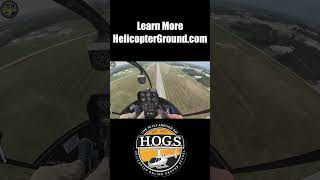
Kenny Keller explains helicopter autorotation: managing energy by reducing airspeed to around 40 knots, accepting a steeper descent, then recovering power at 40 feet with a slight pull to land. Never practice without a qualified instructor.
Questions this video answers
About 40 knots.
About 40 ft.
We're sharing this with you, but it's.
Not something we.
Want you to go do unless you're with a qualified instructor competent in teaching these types of maneuvers.
Absolutely. So we want to make sure that we have enough altitude to do a safe autorotation. What I mean by that is that of course, in our buckets of energy, as we've been calling them, we are going to deplete most of our airspeed bucket. We're going to keep our 40 knots down, as our viewers might be seeing at the moment, because we don't have that much speed. Our descent rate might look a little bit faster than in a normal auto rotation. And we are also having a steeper angle of approach at this very moment because we're not gliding the same way that we would if we had carried speed.
Yeah, it's way steeper.
Way, way steeper. Right. So passing through, all of our parameters are looking good. And as we said, we're going to recover our power about 40ft, and there we bring our power up, and then a slight pull, and then we would have it down.
Interesting.
The helicopter, of course, it behaves different because we don't have that much speed, that much energy. However, in the case of the R44 and strictly the R44 in the R22, I would not recommend this maneuver by any measure.