Last Day Autorotation Week- Kenny and Chris Autorotation Tip Review
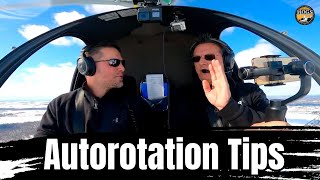
Kenny Keller and Chris Hauser demonstrate autorotation techniques including zero-airspeed drops, stretching glides to 80 KIAS, and aft-cyclic entry methods. They warn against rapid throttle chops and note that about one-third of engine failures happen during practice autorotations.
Questions this video answers
Approximately 1,500–1,800 feet per minute (fpm) descent rates were called out during the zero-airspeed demo.
Guimbal (G2) POH guidance quoted in the video: 80 knots indicated airspeed and rotor RPM lowered to about 480 RPM (middle of the low arc) to stretch the glide.
They claimed "like a third of engine failures happen during a practice autorotation." (spoken in the livestream.)
HOGS' online anniversary stated as March 1, 2025 (13 years online).
Chapters
All right, welcome back, hogs Daily Flight Brief. We say this is going to be a short topic. We think it's a short topic. Let's see how long we really go on. Key to a good auditor rotation. And I want to start off with the objection that I get every time that I talk about this. I say it, I live by it. I train, I teach it. The examiner that I've been using all these years always says, what's the key to a good approach? What's the key to a good straight in auto? What's the key to a good hover auto? The answer is always the same. A good setup. Then the objection is, well, the key to a good auto. Yeah, that's all fine and good, but that's not real world. You don't get to set it up in the real world. Do I say that with a little. Am I, Have I been aggravated by that, by those comments in the past? Let me, let me handle that objection right now. Yes, you need to go out and train in a real world environment. You're flying along, instructor cuts the throttle or however you do it, which Chris is going to touch on that, I'm sure. And that's going to. As an upcoming video, we're going to discuss that and go at length. We train to a standard. You have to have a standard to go take the practical test currently under the PTS that will become the acs. You have to have FL to a standard and we have to train students to a standard. It's also our job to take students out and give those students choices like over open fields like we are right now. And we're going to go into that more. I just want to clarify, if you set up an auto and you set it up and it's nice, it's probably.
Going to be nice.
And the examiner has said to me, and I've heard him say it to students over and over again, if it takes you 10 minutes to get set up for the auto, takes 10 minutes to get up, set up for the auto. He legitimately says that. He said rather you take your time and feel good about it and give me. And give me a good auto for this practical test today. That's the idea of training to a standard. Maybe you can give some of the real world side of what an instructor should do or whatever you, whatever you think.
Well, training is all about building blocks, right? You have to have a good foundation in order to actually do it right. So in the training world, we are having a good setup because what's happening is you're training your brain to do the motions, right. So, you know, we're having a good setup at the airport, getting ourselves lined up with the Runway. You know, we're counting off, three, two, one, we're entering the auto. You know, it's, it's all about good setup. It's all about getting the movements down with your hand, your mind, where you're looking, scanning, all that, that stuff.
Absolutely.
Now, once you have a good base and your student is, or the pilot is, has it, you know, the repetition down, you know, he understands the signs of an engine failure. He understands what he's going to do without thinking, you know, then we're going to go out there and do that real world stuff. And I'll tell you, I'll tell you right now as an instructor, when my, when I'm training my guys to get ready for that checkride, when we're in that checkride prep phase, I may tell him, okay, let's go out here and we'll do a. We'll set up for a confined area. And on the way to that confined area, I may roll throttle off to simulate the engine failure.
Sure.
And we may have a tailwind, we may have a crosswind. We may be right into the wind. But he now has the, the practice and the foundation of, and the repetition, the memory of what to do. You know, as soon as you recognize that engine fail, the needles are split, the nose is yaw to the right in the G2. He knows, oh, crap. I better lower that collective and get into an auto and. Oh, yeah, where's the wind coming from? Well, it's a tailwind. I need to make that turn. So, yes, there is. We do need to have a good setup to start that, to start the building blocks to start that base of how to handle it. But there, toward the end, we get into that training world where we'll just, I'll just do it. And you better take, you know, you better take the proper action, get into the wind, find that open area, whatever.
So that's right, you know, let's get in the comments. Let's fight it out, man. Let's, let's fight this one out because I know I'm going to get those objections. No, I'm just kidding.
Right.
Comment, whatever you like. Food for thought. We're bringing these daily videos up. We're giving you our opinions. We're giving what you think or we think. No, we're telling you what to say. No, we're giving you options to think about. It's food for thought, what works for one person in one part of the world might not work for a person in another part of the world.
Yeah.
Bottom line.
But yeah, we know there's a difference between a good setup and all that. And in the real world. We know that, but we got. If you have a good setup that's only going to transition into the real world.
The only thing the examiner cares about is the practical test standards. That will be the airman certification standards. And my examiner Buddy of 20 years, we're flying him home one day in an airplane and the pilot says, but hey, is it very hard to decide whether a student passes or fails? And he goes, never heard of the pts. The airplane probably went okay.
Yeah.
I mean that was his only thing. Ever heard of the pts?
Yeah.
Got applied to a standard that applies to the standard. Awesome. So we're gonna do some more auto rotation videos and we'll touch on these things a little more in depth with each one. But they're coming up straight in auto. Auto with 90 degree turns. Auto is 180 degree turns into one swooping turn or two 90 degree turns. Power failure and altitude. Those are all coming up. And we're gonna do them. We're gonna shoot them, we're gonna fly them, we're gonna talk about them and we're gonna do that real world. Go out and oh, we're flying along and not like right now, we're turning and like, boom, engine failure. What am I going to do? Those are coming up. Go down below for a free maneuver guide. Helicopter maneuver guide. Go down below to sign up for a helicopter ground school membership. We have a 24 test flight on our monthly memberships. 24 hours. View the whole entire site. Not a sample like the other guys. View our entire site. Any membership. 24 hours, no charge. Then you decide whether it's right for you or it's not right for you. Right now we're part of sprints. That simple. Like subscribe, click the bell and we'll see you in the next video for straight in auto rotation. Next one coming up. Peace out. Okay. We always think they're going to be short, and they never Short. Yeah, they always go, I think we can do this in like two minutes.
So are we. Where? So how do you want to.
Oh, no, The Tonka logo just fell off the helicopter. It's kind of fun when people come here to fly with us and they go, man, that's the HEL helicopter. I've seen the videos for so many years. I went out and got that for Holley's CFI that we did like eight years ago and we've been using it ever since, so. Oh no, the logo fell off. I'm Kenny Keller, creator of Helicopter online Ground school, author, Amazon number one bestseller, Private Pilot 101 Helicopter Training Blueprint. You can get that for free down below in a free PDF link. Down below. So this is auto rotation week. This is the last day of five days of live events talking about autos. A little bit later we're going to give away a copy of the airman certification standards for private pilot in chat. And just to give you a little heads up of what we're doing, we rolled one video and we're going to roll 11 more. And these are all from Houser and I, Hauser and I together out doing autos together. Howser's flying. I'm running the camera. And since we've just announced this week, we have new advanced auto rotation courses here at Hogs where we'll go out and do things with you like zero airspeed autos, 360 degree autos, engine failure on takeoff, engine failures at different airspeeds and altitudes. You heard in the first video where I complained about people always saying, well, that's not real world. Yes, we train to a standard for a checkride. So with that being said, we're going to go out and do those things that are more real world and especially the just rolling off the throttle. It may be 800ft and 90 knots. Right. Give you some different scenarios to experience what might really happen during an engine failure. And we've got 11 more videos to go. And Lindsey had her hand up.
I just have a question in chat. Whenever you're ready.
Okay, go ahead.
This is coming back to JJ Donovan and they want to know is there mathematic. Is there a mathematical calculation input variable that needs to be done for auto rotation?
Wow, that's pretty technical. I don't really know how to answer that other than you don't really have to do any math. For autos, you need to know what the manufacturer says. Number one, what is the manufacturer state as far as entry speeds, glide speed, speeds, ratios for glide distance, best speeds for different scenarios throughout, and that all comes out of the poh. But as far as pilots in the helicopter, we need to know what speed do we want to be when we enter for practice? Or if it happens to you in the real world, what speed do you need to shoot for? You've got a normal target speed you use during the auto rotation. And then there's A posted speed, normally for stretching the glide, and then they may have another speed to lessen the distance. So that all comes directly out of the poh. We just need to know what does the factory tell us about what to do when the engine quits? Good question. Though I don't. Not to make fun of how technical that was, but that's what we need to know in the cockpit. We need to know what does the manufacturer tell us about where we should enter and how we should perform those autos. And in between each video, I'm going to give you my top 10 auto rotation tips. And this is based on a video I did eight years ago. It now has 97,000 views. It's had a lot of good feedback over the years. And I thought, I wonder what it would be today. I didn't view the video when I came in today. I sat down and I went, what would my top 10 be today? And I just wrote them down, just one after another after another. And then I pulled the video up and I compared and they come out pretty much the same with the exception of the placement might be different, just one or two of them in a different place in the list. But again, when I do these, I just think of Rob, top of my head, what are the tips? And then the verbiage might have changed just a little bit. So my number one, we just, we just told you in the first video, good setup. I don't care if it's a straight in, auto, hover auto, normal approach, steep approach approach, no matter what maneuver you're doing, if you set it up nice, it'll be nice. If you set it up sloppy, it's going to be sloppy. And we'll cover the other nine in between each video. So looks like Lindsay's got her hand up.
I have one more question before we roll into our next video. This is coming from Bryce Dodge. And do you have a wind speed where you will sacrifice for a better landing spot to get pointed into the wind for an auto?
Read that one more time.
Okay.
Do you have a wind speed where you will sacrifice a better landing spot to get pointed into the wind for an auto for a not so better spot?
Okay, not really. To answer your. Your specific question, and if anybody has another idea, let us know. But in my mind, I know my target speed that I'm going to normally use and I'm going to try to use that. And as pilots, when we're flying along, luckily I had an instructor early on where anytime we were out flying, it was like, where would you go right now if the engine would quit and then 10 seconds later, where would you go? Now the engine quit and then 10 seconds later, now where would you go? Right. And he was doing that very frequently through my private pilot training. And I'm glad he did that because we should ingrain that where we're always thinking, where are we going to go? Where are we going to go? Where are we going to go? I'm going to shoot for my target speed and I'm going to try to make my spot by, you know, angle is going to be my number one. I can't think of really. You know, if you have an engine failure, it doesn't matter what the wind's doing, right? You, it's going to be using that scenario where you are at that space in time, what's going to be the best chance of getting to a spot? I want to know wind direction and I want to try to get into the wind as much as possible. And you should in a way, you know, that's, that's in your mind in the, in the glide, right. Like you already have an idea of how windy it is. And you know, if it's windy and you turn into the wind, that's going to make the distance less, right. If it's not windy, you're going to glide farther. So you take wind into consideration. But as far as me having a number on a certain wind, how I'm going to change, I think it's all of just kind of in that moment, what's going to work for you? Because I think when it really happens to you, shit hits the fan, you know. And I have had a few of those moments in my career where my heart was racing. It's going to be do whatever I got to do to try to make that spot. And a lot of things going through your head, mainly wind direction more than anything, because I want to try to be into the wind if I can, crosswind if it has to be. And I really don't want to do it downwind. I mean, maybe in some scenario you, you had no choice, maybe. But that's the only way you could do it. But man, auto, an auto with the wind behind you, the outcome is not going to be very good in the end. So I'm going to do my best to try to get into the wind or at least least a crosswind if possible. So. Good question. And that's all I got on that one.
Okay, we'll roll into the next video.
Perfect.
I have started doing that now. I've Started doing quick stops before I go into auto.
That's a great. That's a video. All right, that's going to be video number one.
All right, tail's clear your side. Power. Power check here. Oh, yeah. Good wins today.
Good for autos.
All right, so we're. We're gonna be head. And what are we doing first? We have any questions? We don't have any questions, right, or we don't have any?
Nope. I think we'll go right into the autos as soon as you're comfortable doing them. And I always like to do a normal approach first, but if you're ready to go right to them, we can go right to them.
Well, what I'd like to do is probably do a couple quick stop. Let's do a normal approach, do a couple quick stops, kind of get. I have started doing that now. I've started doing quick stops before I go into auto.
That's a great. That's a video.
Oh, yeah, look at that. Getting that full right pedal in there. Going against that wind. All right, come back around.
Goshen traffic helicopter763 share tows on taxiway off. We'll be departing taxiway off. A parallel two seven south turnout. Go.
Oh, yeah, look at that. Heck of a crosswind today. All right, warning caution lights are off. Gauges are in the green. We got plenty of fuel for what we're doing. Well, temp is still in the yellow, but it's high enough to where we can take off. Off we go.
Awesome. So you're gonna go around, do a normal first.
Yeah.
And then do some quick stop.
Yeah, I think we'll just come around, do normal, do a couple quick stops. Just kind of feel it, feel it out.
Awesome. So we're just gonna roll right into our first video. Our last video we said we're gonna do straight in autos on the next video. And as we were going out today, Chris says, you know what? I said I like, do like a normal approach first. And he goes, you know, I like to do a normal approach to warm up and a couple of quick steps before doing straight in autos. And I went, perfect. Let's make that a video because this is a great topic to get into before we do show you a straight in auto. As Chris said, he likes to do them clear on the left. And I'll try to make this short because I go on too long sometimes. But this morning we're talking about when I almost got killed as a brand new CFI by a weekend warrior pilot. Because I Wasn't ready to. I should have been more ready to fix the mistake that he was going to make. And anyway, as a brand new cfi, I hired a high time instructor to come in work with me. And because I was a brand new cfi, I was ready to start teaching autos to a particular student. And I just wasn't comfortable. So anyway, I hire this 4000 hour pilot I believe at the time at least like 4000 in R22s. And then he had other aircraft under his belt as well. He was a high time instructor where I did all my training and then had one of my first jobs. And when he said let's back up and to freshen everything up, let's do some ground school, then we're gonna go out, we're gonna do quick stops before the autos and then we're gonna do 90s and then we're gonna do 180s and we're gonna get to that in the upcoming videos. But what he said in that video or in that video, in that training, we did the ground and he said let's, let's go on do quick stops first. Let's hone your. Let's hone your flare in. And I know somebody, I met somebody at a helicopter flying years ago that was. Helped write helicopter flying handbook or do a revision on it or something. And he said, Kenny, always teach quickstops before teaching your autos.
Yep, I like doing that now.
It's a great warm up. And then same thing with this high time instructor I flew with. That's where we started with quick radio call. Okay, go right Cocea traffic copter three zero televote on left base.
Turning final two seven. All right, go ahead, sir.
So then.
Plenty of fuel. Go landing.
Awesome. What we did was we went out. And we did go out and we did quick stops first. And I was a CFI at that point. I knew how to do a quick stop. But we really talked about it like it's the end of the auto rotation almost in slow motion. And he really taught me to really hone in that flare and to pick out something on the horizon with something in the aircraft. And we were in the R22 and I think it was like the top of the dash or something with a line of trees on the horizon. And it made this instructor help me a lot. 758 pop alpha upwind, Runway 27. Staying in the pattern ocean. Get my confidence up to go out and teach the auto rotations. So we'll film Chris doing a couple here he's doing a normal approach now just to get warmed up. And I like doing that, too. Before autos, it's just. It feels better to me to go out, go around the traffic pattern one time, shoot a nice normal approach before I start doing autos. It just feels good. Just kind of like make sure you give the engine a chance to warm up. And I've heard some people say that that's a good, you know, rule to follow. And I like. It doesn't say you can't go out and do a straight in rod if you want to, but peace of mind.
Well, for me, I think it's just. It's not so much for the aircraft. It's for me, I mean, we were just sitting in the office there for a while talking, and then we came out. And then just to come out and do a complex maneuver right off the bat, it's just not, you know, why, you know, I mean, so why not just go ahead and come out and get warmed up, do a nice little, nice, easy, normal approach here. Kind of get the body warmed up, kind of get the legs and the arms all synced up together here. We got a pretty good crosswind. So today the winds are 340 at 1.5 and we're using 2 7. So we got a little pretty good. Right. Right crosswind here. Right Quartering headwind, I guess you'd say. All right, so quick stop, right? Is that what we're looking for?
Yep.
So look, basically all we're doing is transitioning into forward flight. Build a little airspeed, get yourself a little bit of height, and then when I'm training it, I always count down. So 3, 2, 1, down, left, aft. As the aircraft starts to settle, come up on the collective, push forward on the cyclic, and you're adding right pedal.
As long as you're quickly deaccelerating the helicopter and you're doing it safely. There is a million ways of performing a quick stop. We always say this in these videos, especially quick stops. And a lot of these different things is do what works for you. We're showing you what we do. It's food for thought, but there's a million ways to teach in a quick stop, just like there's a million ways to teach it in auto. So a good rule of thumb, go out, go around the pattern one time, do a normal approach, do a couple quick stops, just to get in that mindset of doing auto rotations. Awesome. Great way to start out this week of videos.
Yep.
So do us a favor, subscribe the channel, click the bell. And when you do, you'll be notified of our next video, which will be straight in auto rotations. 7, 7, 5, 8, Papa, Alpha, Ishin. And you can go below for a free helicopter maneuver guide. Free PDF down below. See you the next video.
All right, peace out.
Traffic copter three zero tele departing 27 right.
Traffic on the right downwind.
That's a nice little video.
Yeah. Nice little impromptu quick stop.
Exactly.
All right.
Are you gonna do a straight on on this? Go around?
Yeah, I can. Yeah, I'm feeling pretty good.
Okay, let me look for that airport.
Figuring out where he's at real quick. One.
Okay. Lindsay has another what sounds like a good question in chat. Go ahead and read that question, Lindsey.
Yeah, from jj. Is there an app or something that will immediately show the settings needed for an auto on the display when it starts, as opposed to having to remember all of the settings to answer that question?
I would say I don't know of anything like that. Not saying there is, isn't, and not saying with the advancing of technology and AI into aviation, maybe something like that will come about. But my response to that is the numbers aren't that hard to memorize for each individual aircraft. Like if you're training and flying in an R44 example, you need to go into the PoH and know the numbers, right? You need to know what those numbers are. You're going to need to know them for your check ride. To pass your test, you're going to need to know them for your flight reviews, and then you need to know them. Because when that emergency happens, you know, you're flying along, something happens, boom, it happens, engine quits, nose is going to go to the left. In a counterclockwise system, we use the memory aid ET if the nose goes to the left, it's the engine. The nose goes to the right, it's the tail rotor. And you immediately need to know to enter what to do. Like I need to enter and I just start turning toward my spot and go for my target speed to bring in at 500ft. I got to go look at numbers on a screen somewhere and try to compute. To me, just doesn't really make sense because the manufacturer knows through testing and years of experience what air speeds are going to work for you. And again, you're going to have a target glide speed that's established in the PoH. So it's really about entering the auto, turning towards your spot, inside, outside, managing your RPM and your airspeed. It just doesn't seem realistic to me. To be thinking that, oh, I got some screen to look at to tell me what to do. Just to me, in an auto most time, we're 500ft above the ground. I just don't see time for that. It just doesn't, that doesn't really make sense to me. It's a great question. And I'm not making fun of your question because that's a good question. But my opinion, that's, that's just overthinking, right? Because in emergency you want to know exactly what you're going to do in that moment. I'll throw in a neat little statistic from a Vietnam era pilot that I flew with. Gave me a tip that I'd never heard before. In aviation you hear people all the time say, oh, I'm a helicopter pilot and I must make split second decisions. And I'm sorry. So cool. You know, you hear that a lot. And I was doing approach in a twin engine helicopter with patient on board going into the hospital. That book right there, that's the hospital helipad is right here. So as I'm coming in on approach, hospitals in front of me, I get an engine out horn and warning light. I have two engines, but losing one engine, I know I'm not going to have the power to climb, unfortunately, fly away. I have one thing I can do and it's get down to that helipad. And you know in that moment when that's, in that split second, horns going off, light shining in your face, it is. Makes your heart freaking race and you go, holy. Right? The only thing I could think of was get to that spot, right? So I, I, I think I push the cycler forward a little bit to increase my speed because I normally do nice slow approaches. But I wanted to get to the helipad, so I just got on there as fast as I could and I sat down. And then when I had a chance to check everything, I realized it was a faulty horn and light. Both engines were still running. And so I discussed it with the pilot who I worked opposite of, and he was a Vietnam era pilot, been flying forever. And when I told him about what happened, he said, let me tell you something, Kenny. Did you know that the Average person takes 11 seconds to figure out what in the hell's going on when something bad happens? And I went, wow, that's pretty interesting because I hear all these pilots talk about making split second decisions. And he said the Average person takes 11 seconds to figure something out, right? So you're flying along, the engine quits, you have to get the collective down and establish your speed. And you got to start turning to our spot, towards a spot. So think about the human factor involved in. Holy. Something bad just happened. The nose went left. Okay. That was the engine, not the tail rotor. Okay. I gotta enter like it happens. You got to enter it, shoot for your speed. And you got to enter a little half cyclic, too, if you're above your target speed, because you don't to want. Want to start drooping the rpm. So again, there's a lot going on, and your mind does have to think through some things, but just think, you may not be able to do it in a split second. Right. So again, feels like digging a little too deep, you know, you want to know what to do, how to enter and do it. Yeah. So number two on our list of. Well, there it is. I just mentioned it. So the good time to cover it, a small aft pull at entry to the auto rotation. That was my number two from way back. And it's basically the same thing eight years later. And what we're talking about is, you know, in practice auto rotations, if I'm going to glide at 70, I enter about 72 or 73, a little bit above my target spot speed. So that when you enter the auto rotation, the nose is going to want to drop. So when you enter, if you go a little bit aft, I'm like pulling back, bringing it back to 70, and I'm keeping the helicopter level. If you don't the. No, if you don't pull, nose drops, RPM drops. So then what happens? Then you start monkeying with the collective and monkeying with the cyclic to try to fix the RPM and the speed, and then you end up cecilia on all the way down like this. And then there's a fatal accident that they determined. And this was in an EMS aircraft, actually. So this is a professional pilot was flying at his screw, his cruise speed. Let's say it was 120 knots. That was common in the BK and the EC135 that I flew. He's flying at cruise speed, has an engine failure, fails to pull aft, cyclic, loses rotor rpm and everybody dies. Now, how did they conclude that? I don't know, but it came out in the accident report. So it's very important above your target speed, if you're cruising speed. Let's use R44 example, target speed 70 for the glide is what I use. What if I'm traveling 100, engine quits, I'm gonna need to go aft cyclic and start slowing that thing down. And keep the helicopter level, keeps your RPM in check and you can continue on with your auto. So our number two on my list of top 10 checkride tips or not checkride auto rotation tips. When you're setting it up, enter a little bit above your target speed. Enter in a very slight half pull or however much takes to what I say. Set your SP speed, pull to your target speed. Okay. Any other questions pop in?
No, sir.
Nope. Okay, so we will let's roll the video we want to roll to next and then we'll get back to our rotation videos. We have a video on specifically what we're offer or offering right now in the R22 and R44. And auto rotation is what we're talking about. So we'll give you a little more info about what you're going to get in the R22 R44 advanced auto rotation courses. So let's roll that next Lindsey slide. I'm going to tell you about the, the advanced and accelerating training we have for both R22 and R44 here at Hogs. Because a lot of people don't really understand what we do. We're not typical flight school. We bring a person in for one day, three days, five days, whatever it takes to do what it is you want to do. It's all you. There's nobody else here. First and foremost, our brand newest courses. Advanced auto rotation courses in both the R22 and R44. So again when you come, it's going to be just you, me, Houser, possibly Hunter, one of our newest part time CFIs. But we're going to work with you and go out and do all the stuff you don't get to do at your flight school. Instead of just doing straight ins and 180s, we're going to go out and we can do full downs if you like. We can do engine failure on takeoff, we can do zero airspeed autos, we can do 360 degree autos. We can enter at different altitudes and airspeeds, which is what we'll do. Hauser likes calling it a training scar. He says if all you do is straight ins and 180s, that's all you're ever going to really think to do when something bad happens. Because you do in the real world the way you train. So we're offering these advanced auto rotation courses so you can come here. These are two days, these are two day courses for either the R22 or R44. And we just had a member who just did a mountain course in the R44 out in Vegas. And he called up today and said, hey, can I split it and do half in the R22 and half in the R44? And we went, sure, why not? Right? So it's still a two day course, but it'll split the time. It's three hours of flight time. So he'll do an hour and a half in the R22 and an hour and a half in the R44. So that's what we're doing with advanced auto rotation courses. All the stuff you don't get to do at a typical flight school. We also have the final approach course we've been doing for two years. We're offering those both in the R22 and R44. I've been flying 28 years. I've been using the same examiner for 24 years. We got a pretty good idea how to get you ready and get you through. And again, this is one on one, not your flight school. We don't even call ourselves a flight school. We're helicopter online ground school that offers advanced accelerated training. We just want one person at a time so you get our full attention. On the final approach course. We feed you each day and we zoom with you ahead of time. Once you book, we'll do a zoom to see where your knowledge is at. We'll schedule a date with the examiner. And again, booking takes money up front. And just so you know, there is a no refund policy for your cancellation. If we would have to cancel, we could do that, but we've had a string of those. So this is pay up front to get on the schedule and get your date with the examiner. But we will get you finished. First One we did two years ago, number one of 19 that we've done now came from Florida. He had 160 hours working on his private and still wasn't done. We finished him in a week and he went home happy. Then we had two more from that same flight school come up with the same problem. That's the final approach course. You can't get an examiner lined up, the helicopter's broken, the instructor just left to go to another job. The list is long on why people are frustrated because they can't get finished. And we don't even take away from the typical flight school. Just like the three that came from Florida. Our examiner goes, well, why don't they just work a deal with you? Since they're happy with their flight school, they just can't get the checkride done because of whatever reason, ship all the Checkrides up here. So that's what we do. We're not at flight school taking Billy Bob and Mary 10, 2 and 4. We just do one on one accelerated training so we can get you finished. Up Next we have SBAR 73 sign offs. We've done several of these lately. Maybe you just need the time you, maybe you need the time to get a pilot in command sign off. You want to come here, you've got a couple hours towards what you need for the sign off, but you don't have it all. Or maybe you want to do the full five hours or 10 hours or whatever you need on your individual case. Again, we're going to do all this in a matter of a couple days. We're going to bring you in, work with you, do flight, do ground, do flight, do ground, get your sign off, send you home. Same thing with instructor. We just did one of those this past week. We did, Joe was here, did his CFI add on and after he completed, we had Hunter here that went out and did his SFAR instructor sign off. So that's another thing that you can do. And again, instead of straggling through a month trying to get the flights you need, you just come here, we set the date, we take your money to put you on the schedule. No refunds for cancellations, you got to show up. But we can get you done on either your PIC sign off or your instructor sign off. And then time builder courses if you need to get 10 hours in the R22 or 10 hours in the R44. And of course we can, you know, finagle those numbers. But a lot of times 10's the number, somebody needs 10 more so they can get their instructor sign off or they need 10 because they're transitioning from R22 to R44 or whatever the case is. We can set you up. And again with the time builder we're going to have, you're going to have to check out with one of our instructors, but then you get the helicopter for however many days you need to get the 10 hours done. Again, the beauty of this is accelerated. It's not Tuesday at 2, next week at 5, the following week at 4. It's we get you on the schedule on a block of time that we have open. We'll get you here, get you checked out so that you qualify to go out and fly it by yourself and send you a good deal on a block of 10 hours. And again, we could work more or less, but 10 seems to be the common one that People need. So we're offering those. And of course, this time of the year we're more apt to give you a good deal because we're getting things rolling. As the weather gets warmer and things speed up, the schedule's gonna get more full between both the helicopters. So if you work now, we got, you know, spring maintenance to do, annuals to do. So we'll give you a deal. If you want to get some time in one of these aircraft, you can come here and accelerated course, get it done. And then destination flights, we haven't done this for a while since it's been wintertime. But last summer and fall we were doing quite a few trips to Chicago. We could run down to Indy, we could go down Cincinnati. Cincinnati is beautiful. If you want to get a few hours in the aircraft and you want to go somewhere cool at the same time. These destination flights have been a lot of fun and we can go with you if you want, just to get the time, get some cool photos, get out and get out of. The pattern is really, really nice. So we've been having fun with the destination flights. Those are available as well in both the R22 and R44. And then we have a day at Hogs. We were doing these last year, early in the year and then we got busy with final approach courses and we didn't do anymore. But we have a. If you want to come and experience the Hogs experience. Somebody said, what is that? It's not bragging, but it's the whole experience. That's what makes this place so cool, is we have everything right here. We have a hotel close by. We fix meals here so we don't have to leave and go out somewhere for the day. And on the destination or on the day at Hogs, you get the whole day to pick our brains, help, you know, mentor you on. Maybe you're a fresh CFI and you're going for your first job and you want a little extra help and you want a little help on the aircraft. We can book you a full day at Hogs. And that could be in the R22 and the R44. And Chris Hauser, you see him a lot in our videos, he's in our online courses. You've seen him in our flying videos. Chris is my right hand man. Been working for me off and on for more than 10 years. And Chris flies full time. A Bell 429 and his second job, we just put him on here as an actual employee instead of just independent contractor. So Chris has been flying now well over 10 years teaching, probably closer to 15. I did all of Chris's ratings. So between the two of us, we can get you handled in either the R22 or the R44. Whoops, we're over there messing around. As the video went back to the live portion. So to answer the one question gentleman asked during that video, did I do an auto into the hospital? Here's the. The interesting thing on that, we still had another engine. So no, I didn't. Auto. And when you first learn or your first start getting trained in the twin engine, that's one of the first things the exam or not examiner, the Czech airman said to me was, now you're flying a twin engine aircraft. So you've been flying single engine all your career up until until now. So you're going to fly this a little bit differently than you did in a single engine, right? Because it makes sense. You have one engine and a single engine. So it's a simple answer. If something goes wrong, you lose an engine. You, you're gonna, you got to do an auto. You got to land with a twin engine if possible. You're going to try and continue flight. So you're not trained in a twin engine failure immediate auto. You're trained to fly it on the other engine and get somewhere safely where you can make a landing. They're not telling you to complete your whole entire EMS flight. They want you to get somewhere safe and land on that one engine. So entering an auto thinking one engine was out would not be the proper procedure. Great question. I'm glad you asked because I didn't elaborate the end of that. So I just, I hurried the approach. Basically what I did, I just wanted to get on that helipad as fast as I could. And so this gentleman that taught me about the 11 seconds, he said anytime that happens or if that happens to you again, immediately look to the turbine outlet temperature for both engines. And I thought, yeah, should have thought that, right? That should have been the first thing to think of. So engine out. Look at that turbine outlet temperature on both gauges that are side by side. And if they're both up where they should be, you know that you've got a faulty engine out. So the answer, no, I didn't auto. I continued on in with that one engine. And then another question was talking about RPM during the auto or during ems. EMS accidents are normally from pilots flying into bad weather. I don't recall that many low rotor RPM accidents in the twin engines. I'm not saying they don't happen, because they certainly could. But in our environment, the problem is pilots getting killed from flying into bad weather. And, and the, the accident I just mentioned before, the last video, that's all that comes to mind on me in the EMS environment that they taught us. And it was about the making sure that if an engine failure happens in flight, to make sure you slow down to your auto rotation speed because it's a lot lower. You know, you're traveling 120 knots, you're going to want to slow that thing down to possibly 60 or 80 knots, depending on what the aircraft manual says. Lindsay has her hand up.
This is coming from Bryce. What are your thoughts on the Robinson safety course and is it worth it?
Absolutely. When I got my private, it was whenever it was the late 90s, and the examiner, Jerry Ventrella, who I mention all the time legend in the industry, I got my private and he said, hey, if you ever get a chance to go to the Robinson factory, it's some of the best money you will ever spend. So I went late 90s. And he was absolutely right. At the time, I don't know whether it was $500 or 600 bucks when it comes to helicopter training. You know, at that time, the safety course was like maybe three days. I can't remember whether it was two days, three days, four days. But you got several days, a couple, two or three days of classroom, and then you actually got a flight with one of the factory instructors. So I left that course as a private pilot, you know, knowing I wanted to move on through instrument commercial CFI with a ton of knowledge. And this is where I talk about Robinson a lot and where I. I got the first. Well, this is why when somebody asked the question, what do you think Robinsons are safe? And I say yes, if you fly them the way you're intended to be flown and you're doing the proper maintenance, I say the answer is yes. You have people that want to constantly bash them, but those are normally people that don't have hardly any time in them or no time in them. And they're only going on what they've heard. And Robinson is very upfront. When you go to the factory, they explain to you, look back in, you know, I don't remember how many years now Robinson has been actually selling the helicopter, but let's say, you know, 40 years ago, one in 10 that left the factory when they were brand new didn't make it to its destination. That sounds pretty horrible, right? It does. And they come right out in the course and say, look, in the beginning, here's where we made mistakes in the beginning. Here's where improper instruction was the cause of the problem. Instructors not doing necessarily training that should have been done. They go in and identify all the problems that caused Robinson to get a really bad rap in the beginning. And when you see the numbers and how much the safety has improved for the last 40 years, it's amazing, right? Like the number of accidents per thousand hours of flight time, it's just improved, improved, improved over the years. And as much as we like to complain about the SFAR 73, that's why it was introduced, because of the accidents. And the SFAR 73 does hold people to a higher standard. And I. I can think of things I learned from the Robinson factory clear back then that I've been using my whole teaching career. So I highly recommend the Robinson safety course. Absolutely. Now they have an instructors course that I haven't installed yet. I've been invited. They want me to come out and do it, and I want to go do it. I'm sure that that's probably phenomenal as well. And I've heard good things about that, because they want people to get. They want instructors teaching to a standard. And my conversation with the director of safety, he said to me on the phone, the problem is when instructors say, well, here's what I like to show people. Here's what I like to do. And the example he gave me was some instructor out there gave somebody a practice auto rotation with hydraulics off. And, you know, he's flipping out on the phone going, where? Who? Why? Right? I'm like, I've never heard of that. That's an awful lot to give somebody a practice auto rotation. And you turn the hydraulics off on them. Not cool, right? Not cool. So there's a lot of things that. That instructors do that they just made up on their own. That's outside of the envelope of the way Robinson wants you to teach and instruct and fly in their aircraft. So I think the Robin safety course hands down worth every single penny that you would spend to attend. So. Absolutely. Any other questions?
I don't believe so.
Okay, so let's go to number three. And the only difference between number three eight years ago and today, today I wrote down nail the speed, meaning talking about the target speed I keep mentioning. And in that same long line of thinking, what I've titled that one was eight years ago was three things you do at entry, which is down, collective, right pedal, aft cyclic. So you can kind of put those two together, right? Because you want to have the good entry, whether you're training or it happens to you in the real world, you want to get to your target speed and then working on keeping that speed. If you can start by getting it right in the beginning, it's easier to maintain that glide speed down. And if you can nail the speed first, it's my opinion that the arp. It's easier to keep the RPM in line, and you also want to put the trim in there. And I think that comes up again a little bit later. But by entering it correctly, getting all the inputs in and the right amount of inputs, and then set that speed, if you can nail the speed from the start, it's a lot easier to maintain it. If you enter too slow or too fast, then you start monkeying with a cyclic. You're forward backwards, speeding up and slowing down, trying to get the speed right, and then that causes your RPM to fluctuate. So then not only are you going forward and after the cyclic, you're going up and down the collective, and that's why your airspeed and RPM get all freaking wacky and it turns into a mess on the way down. So number three for me, enter it correctly with all the right inputs, including that aft cyclic pull to set that speed and keep that speed all the way down to your auto rotation flare. All right, well, let's get back to the auto rotations. Let's roll the next auto rotation video.
I can get a pretty good shot. Is my camera in the way right there?
Nope.
Okay, so I know if I hold it about right about my knee, I can get a nice shot of the gauges that I think will work out real well. Nice gosh. 758 Papa Alpha is clear all runways.
Goshen.
Ghoshia Traffic Copter 3 Fair Hotel departing 27 left traffic.
Goshen.
All right. As we talked about in yesterday's video, starting off your day, doing a normal pattern and doing some quick steps before doing a straight in, that's what we did. So today we're just going to demonstrate a straight in auto. And we're keeping this for the beginner. We're not going into super advanced auto rotations because we had somebody in the comments during the HOGS daily flight review video. He said, hey, can you do some. Can you show us some auto rotation videos for the beginner? So we're just going to keep this short and sweet. There's millions of ways of teaching these. Chris is going to show you today what he does in the caviar. So Just know, like teaching quickstops, there's a million ways of teaching them. A good setup is key. Okay, so I'm gonna turn it over to Chris and just let him just give you the basics, kind of. Let's say he's teaching. Say you're teaching me as a brand new student and I got a little time under my belt and you're gonna intro to me what you're gonna be teaching me in a straight in auto. So just keep it a real basic conversation and how you start out teaching them.
Okay, well, right now we're on the left downwind for 2 7. The winds today are 340 at 1 5, so we're gonna have a pretty good right quartering headwind. This is one thing I hate about autos to a Runway is because of the winds, obviously if you have an engine failure, you're gonna want to fly into the wind. You want to get your nose right in the wind. Well, you know, for safety reasons, for the Runway, you know, in case we actually do run it on. Then we got the whole Runway, but that gives us a pretty good crosswind. So anyway, we're right now we're at about 80 knots or so.
1500Ft indicated clear of Runway 27.
Goshen.
Goshen. Traffic copter 3 Sarah. Tails on the left. Base turning final two seven.
Goshen. Warning caution lights are out. Gauges are in the green. We've got plenty of fuel. Landing lights on. Tech final looks good. So that's how I teach these. I always like to be in cruise flight because that's how you're going to fly. You're going to be at your altitude that you like to be at. I'm usually around 1500 or so, which is kind of where we're at, maybe 100ft low. Everything's looking good. So right now I would just have the student, you know, here we are, two guys just flying along, and what I will do is I roll the throttle down for the detent and I want him to recognize the engine failure, which will be the nose to the right, yaw to the right, and the needles split. As soon as that happens, you're going to lower that collective and start slowing your speed for 60. Here we go in 3, 2, 1, go off. There's nose to the right, there's needle split. Now I'm getting my scan going. Rotor rpm's looking good. Airspeed's looking good. I'm in trim, looking at my spot on the Runway, coming down. Everything's looking good. Keep that scan Going. Keep that airspeed right where you're at about treetop level, you're going to start a little bit of a flare. Player's going to get more aggressive. As I'm doing that, I'm rolling throttle back on for the student.
Level.
The nose by forward cyclic up collective and right pedal. And here we are.
Awesome.
And the thing that we have to be concerned about in the D2 as we're rolling that throttle back on, if you don't coordinate that with the pedals, you're going to have a kick. So with the instructor, as the instructor, I've learned that if you just barely roll that throttle on just a little bit, the cord layer kicks in, brings it up to the governor, governor brings it back. And then as you're doing that, as long as you're on that pedal, you won't have that kick. Saw that. We barely had anything there, so. And that's how you do an auto.
Awesome. Cool. Lost my train of thought.
Lost your train of thought. That happens sometimes.
Couldn't think of where to go next.
That's how we teach it. That's. Everybody's different. There you go. Some people just lower the collective to get the needle split. Some people roll all the way off. You know, that's just how we, that's how I start to train people as time goes on. Then we will do real world scenarios where we'll just be out flying and I'll just, I'll just roll it off and you got to enter it.
Okay, I'll wrap it up.
Okay.
All right. So that was just the essence of a straight in auto. Do us a favor, subscribe to the channel, click the bell. Because tomorrow we're going to do some 90 degree auto rotations. They're going to turn into 180 degree auto rotations. And we're gonna give you some food for thought on an alternative method on that 180 auto. So subscribe the channel, click the bell. See you next video.
All right, cool.
Short and sweet.
To the point. Perfect.
Okay. Okay.
That's number three of 12 videos. We've got nine more to show you. And the reason we're showing these to you is we've just started advanced auto rotation courses that both Hauser and I will be doing here at hogs in the R22 and R44. You can find out more and schedule those at 574-767-1797. So we thought it fitting that we roll these videos of me and Hauser out together. Since I trained Hauser through all of his ratings. And we'll be working together with you guys on the R22 and R44. So I thought might as well roll through some auto rotation videos. It's good stuff, brings up lots of good content for questions and tips and, you know, tricks on these autos. I don't really like using tricks, but tips. All right, so we've been going through my top 10 auto rotation tips based on a video that I did 10 years ago. So my number four or be ready for the RPM to rise and raise collective smoothly. So what is most generally going to happen when you enter the auto rotation, if you have any amount of weight in there at all, is after you enter, shortly after you, you enter, that RPM is going to start to rise. Now it's going to rise more on some days, less on others. It depends on the weight, the wind, all the conditions. But being ready for, for, you know that you're going to enter, you're going to go all the way down, establish and then be ready for that RPM to start to rise. And as it starts to rise, you want to start smoothly pulling up a little bit of collective to keep that in your operating range. And I know some people have different things that they do or say, like check the collective or different things that they'll do. Some people go ahead and pull the collective up. I don't necessarily, I'm kind of, I'm just in my mind, I'm prepared for it. And I enter knowing, okay, your, your cross check is going inside, outside, inside, outside. So you're keeping an eye on that air speed, that rpm. If I see it start to climb, then I smoothly raise it. Because here's what people do. Like with everything else we do in a helicopter, it's about smooth input. So somebody will anticipate it and yank it up too much. So then you drag the RPM down and the horn goes off. And then you go, oh, too much. And then you go back down. And then, so you're doing the hydraulic jack effect, right? You're going up, down, up, down, up, down, up, down. And so that causes you to see saw and RPM to go up and down all the way down. So again, keeping that R speed or keeping that air, that glide speed correct, setting that collective for that, that rise in the RPM and then, no, same thing in 180s. You know, in a 180, it's going to rise every single time. And it's going to depend on how much or how much is going to depend on the day, of course. So as you start that turn, you're putting that load on the rotor system. And every time you do a 180, you know that that collective is or RPM is going to rise and you're going to need to add collective. And that's usually the trick in the 180 is getting the right amount of collective. And it's just a common thing. Everybody does it over controlling. You do it in the beginning. You do it as you start advancing, you get into the autos and you'll do the same thing. You know, we call it stirring the pot, where somebody enters an auto and you'll see them doing this with a cyclic. And you're going, what are you doing? And we call stirring the pot because people will enter and then they start doing this, and it's like, why are you doing that? And I don't know what in the human brain causes to stir the pot. Start doing this with the cyclic. But it just happens. People do it. So knowing this going, going into your autations, try to make them as smooth as possible. And then if you're really super light in the helicopter, maybe you're light or your load fuel is really light. In certain helicopters, you may not need to raise the collective in that auto. Sometimes if you're really, really light, the RPM won't climb, but that's a rarity. Normally, under normal circumstances, once you enter that auto, you're gonna need to raise a little bit of collective. And again, it depends on each day as you burn your fuel through that flight, it's gonna change. It's always gonna be a little bit different. So always be ready. Know that I'm gonna enter and watch the rpm, know when it's gonna rise. And once you get kind of a feel for it, you can lead in a little bit. Like you see it or you feel it, you know it's starting to come up, you go ahead and just pull just a little bit, just enough to. To keep it where you want it. Number three, nail the speed. Oh, be ready for RPM rise. That's number four, actually. All right, well, do you have your next video queued up?
Lindsay, we had a question from Bryson chat over asking if he needs to wait on his private. Or would it be beneficial. Now, he has approximately 30 hours before he joins the Robinson safety course.
I'm guessing that they might require you to be at least a private. I don't know. I'm sure you can go online and check out the. The prerequisites or what do you call it? You know, the qualifications to go Take the course. I would just go online and take a look. I would recommend waiting just because you're working on the private, you know you're spending your time and energy on that. I think just out of just a good general idea would be go ahead, finish the private. And you could check by now, check now and see if they allow students. But I'm guessing they probably want you to be at least a private pilot. But I can't really answer. If anybody else knows in chat, let us know. But I would focus on getting the private. That's the step. And then go do the factory course. And a lot of times the factory courses is booked out for months. So you could set a timeline. Like if you think you're pretty confident you're going to be done in three months on your private, it might be four months away before you could even get into a course. So you could go online, check it out, get the details, see when next is available and get on the schedule to go. Once you finish your private, I think would be probably the best idea.
Okay, we'll roll into our next.
Let's roll into the next auto village video.
Go.
Traffic copter three TR on a right.
Base turning final two seven go. All right, three, two, one, go.
Off.
There's goes to the right and there's our simple turn. RPM might build.
G. Traffic copter 3sh depart 27 right traffic ocean. All right, welcome back to Hogs Daily Flight Brief. Today we're going to do a 90 degree auto rotation or two. And a lot of times when I talk about these people go, well, but you do straight ins and 180s for the checkride and it's like, yeah, that's true. But going back to that instructor that helped me out. If you watched yesterday's video when I was a brand new cfi, I wasn't super confident when I first got my first job to go out and teach. So I hired a full time RA high time R22 CFI to go out with me and freshen up my knowledge. And so he taught me the importance of doing 90 degree auto rotations and how you can take those 90 degree auto rotations and turn them into an actual 180. So Chris just kind of talk us through thought press again, upsetting up and performing a 90 degree auto rotation.
Yeah. So we'll just do a 90 here. So I'm kind of extending kind of going away from the Runway here just to give us a little bit more time on base. Yeah. The reason why, again, what I call a training scar the way that we do our training makes you have a training scar. So yes, you're right. We train for straight in and 180. And if that's all you do, sometimes in the need of the emergency, the student's only going to think well I only can do a straight in or 180 because that's all I've trained for.
Right, sure.
Well the 180 is nothing. But that's the most the turn is going to be to get you into the wind. Obviously if you're flying along, you have a tailwind and the engine quits, you need to do a 180 to get back into the wind. Well you know, how often do you actually have that direct tailwind? A lot of times you got a crosswind or you may just have a 30 degree off to the right or something where you just got to make 30 degrees, you know. So that's why it gets it. You get. We do the 180 so you get right back into it. But really you know, the odds of you doing have to do a complete 180 are low I think. So what we're going to show today is just do. We're just going to do a 90 degree. So I've extended my right base here. Again the winds are 34 0. But in order to do the training we want the Runway which is 2 7. I'm on an extended right base right now for 2 7. And what we're going to do is we're going to enter an auto. We're just going to do a 90 degree turn into 2.7. Get a little closer here.
Cochin Traffic Copter 3 sirtells on the right base.
27 Cochin Again we're cruising about almost 80 knots. We're about 1600ft indicated, which is where I would be normally cruising anyway. We want this as real world as possible.
Alright.
Warning caution lights are off, gauges are in, the green landing light is on. Got plenty of fuel. Look down for final. I don't see anybody, haven't heard anybody. Nobody on the team. Yes.
Goshen, Traffic copter three trails on a right base.
Turning final two seven.
Goshen.
All right, three, two, one, roll off. There's goes to the right and there's our simple turn. RPM might build depending on how steep your turn is. If it builds then we're just going to come up a little bit on the collective and slow it down. And then once it slows down then we're lowering it back to the. And now it just turns into a straight In So just a small little turn now. I'm just riding it down. Here comes street, top level. A little bit of a flare player is gonna get more aggressive. Let the aircraft start to settle, Push the nose forward, come up on that collective. Be ready for that right pedal. And there we go.
Awesome. And I want to back up what you said. It could be straight in, could be 90, could be 180, could be 170, could be 30, could be, could be 46.
Right.
Depending on the situation. Once we get into the real world autorotations, whatever it takes to get into the wind the best as possible or to take a combination of what's going towards the wind plus an open spot versus a wooded area. The scenarios are endless. So back to that objection of training to a standard people going, well, that's not real world. Well, you go out and try to find some things to do to make it more real world. And that's a little bit of what we're doing now. And we're going to do an upcoming video practice engine failure altitude, which is a maneuver in the PTS that's going to become the ACS that's upcoming in another video. Now that we've showed you the 90, come back tomorrow and we're going to talk about the 180 auto rotation. And again, this is food for thought. And I want to show you something that this instructor taught me when I was a new CFI and I was struggling, trying to build up my confidence to teach autosom something he showed me that I think is really, really cool. We'll come back tomorrow for 180 degree auto rotations. Do us a favor, subscribe the channel, click the bell and we'll see the next video. Peace out.
I almost forgot what we were doing on that last one.
Did you?
I was like, oh, I need to make that turn. I need to enter the auto before I turn final.
Nice.
Hey, lot going on. You're flying the helicopter, you're listening to me, you're looking outside, you're trying to plan web. You know where you're going to enter. And then pretty soon, yeah, you go, what the.
Right, Yeah, I got it. Like, oh, yeah. I need to enter the auto before I make this turn to vinyl. Oops. Whatever.
We have all been there and done that.
Yeah.
All right. Lindsay has another question over there in chat.
Yes, from JJ. When doing a 90, 90, 180.
All of these are being performed without power. So you're going to execute that quick stop. I'm sorry, Your flare in the auto. The Same way every time. And that's why in the one video that we earlier talked about practicing quick stops before doing auto rotations, because in essence, your quick stop is very, very similar to the flare in your auto. So the danger of striking the tail boom is if you just got too aggressive and you pulled too much half cyclic and hit the tail. So. Good question, but no, there's not really any difference in between any of the different autos because essentially you're going to do your flare the same way. So there's really no risk of that. Good question, though. If you don't know, go ahead and ask. All right, back to my list of top 10 trips.
Trips.
Swear to God, I can't talk. This is a good one. And I like, this is number five from my original list, and it's still basically the same today. And I just changed the verbiage just a little bit. And again, this was just sitting down, writing, and they came out pretty much the same. So something that I didn't really hone in until after I'm working as a cfi. I get on my ratings, I'm out working at one of my first jobs, and the instructor that. That helped me with my private came to visit me at my new job. And so we took the helicopter out to go play. And of course, as my instructor from my private, he wants to critique me doing autos. And one of the things that we talked about that day, he noticed as I was coming down out of my auto, I wasn't really in trim. And I don't know that I knew you should. You should always be in trim all the time, whether you're a normal flight, cruise, flight, auto, whatever you doing, but never put a lot of emphasis in it. And that day, he goes, you're not putting the thing in trim. And he said, if you'll put it in trim, the aircraft's going to come down a little slower, it'll come out more controlled, and let's go around and try it. And that's. Sometimes you got to get hit in the head, right, for something to really make sense to you. And so once we went around and we did it again and I put the proper amount of trim in, I was like, wow, right?
It.
Like it felt better. It did come down slower. And so then that put in my. My thought process when teaching autos, make sure you get people to push the trim. And I see it now all these years later. In general, people kind of forget about the trim. You know, they're focusing on the entry, and they might Put the pedal in, but they, maybe they don't put enough in or maybe they put too much, but normally it's going to be not enough. They'll push a little pedal but it's not enough to really get it in trim. So you're focusing on everything else that the trim feels like it gets a little bit left behind sometimes. So in your thought process when you're practicing autos, when you enter, put in the proper amount of pedal that you believe you're going to need. I'd say get the thing set and then as you're doing your cross, check outside, inside, outside, inside, outside, inside. Add trim to what you're looking at. Right? So you're looking outside, you're going to check RPM back outside and you're going to look inside. It's your airspeed and then you're going to look back, outside, look down, check your trim real quick. Oh, I'm still a little out of trim. A little more pedal or a little less pedal, whatever you need to put it in trim. And so for something that sounds very, very simple, if you put this into your mindset of your checks when you enter and what you need do, I'm just saying it comes down a whole heck of a lot smoother if you make sure you get the proper amount of trim in there and keep the proper amount of trim on the way down. So we'll gear up for our next video but first we are going to give away a copy of the airman certification standard for private pilot in a little bit. And while we got you Here, Private Pilot 101, this is our latest Amazon number one best. We have four Amazon number one best sellers now over the idea. We laid it out last year because we, we actually published it one year ago and Lindsay helped me on the process and we started the book out with top 10 facts. Example, is learning how to, is learning how to fly a helicopter difficult? How long will it take to become a private pilot? How much will it cost to be a private pilot? What's the best approach to selecting a flight school? What are the key difference between helicopters and flight fixed wing aircraft? That's what we started with is just the typical questions. The thing that things that we know come in almost like every week. That's where we started the book. And then we have a need to know section. Talk about financing and using the GI Bill and then we get started. Get started with flight training. Flight training tips, dual training, preparing for solo after your first solo, advanced maneuvers, preparing for the practical test. Practical test day what to do the day of the night before, so on, so forth. An additional need to know. And then we talk about our clone in here and we talk about.
Just.
All kinds of things that are going to help you through your training, like flying three times a week. Flying three times a week really makes good sense and helps you make time of. Make the best use of your time and your money. So that is down below. And you can immediately download the PDF and then there's an opportunity there to buy the paperback also if you would like to do that. And then earlier, Lindsay popped in the maneuver guide, link that through these videos. At that time, the. That we made those videos, the maneuver guide was something that we had that was new. So that was the flavor, you know, pushing the videos, the maneuver guide. So the maneuver guide is down below as well. And just so you know, the maneuver guide that we have is based on the helicopter flying handbook. It's based on the proper way to do the maneuvers as per the helicopter flying handbook. All right. Got any questions?
Nope.
All right, then let's go ahead and roll the next autorotation video a little bit fast.
All right. One, caution. Lights are off. Gauges are in the green. Got plenty of fuel. Landing light is on. All right, let's see what happens. 3, 2, 1. There's the inner. Get that turn going.
All right. Thanks for coming back for the Hogs Daily Flight Brief videos. Today we're gonna do 180 autos and we're gonna, we're gonna, we're gonna do the 290s at least. We're gonna try them. I told Chris about the video I wanted to shoot, but we didn't go at length into this. So I don't know how he really feels about it. He might think he may not even like the idea, I don't know. But I'm going to ask him to do it anyway because I'm sure that 10 years ago when we were doing your training, I'm sure we talked about this and that we've done this. And my thinking is you can do a 180 in a nice full swooping turn, but sometimes breaking it into two 90 degree turns can make you a nice auto. And some people like it, some people don't. It's just an alternative method for doing auto rotation. And I like it because you can enter your auto rotation, turn 90 degrees, roll out, and then make a decision. Okay, I'm gonna hold it. I'm gonna hold it. I'm gonna hold it. And then my second 90 degree turn to judge and make it to my spot. Sometimes it works, sometimes it doesn't. But it's a, it's a method that I was shown helped me a lot. And since we didn't discuss it prior to. What do you think about the idea of the 290s, Chris?
I think they both had their time and place. It's all about, it's all about where you need to go and how fast you need to get that turn in. If you have the altitude and you've got the time, if you need to level out after a 90 degree turn or so, then do it. But I've also been in situations with training where, you know, the student sets us up to our really close, you know, to where we're going. And the only way that we are going to make that is by doing a complete 180 all at one time. Sure. You know, but if you're far enough away and you're high enough, you got the altitude. Yeah. I suggest, you know, making your turn, level out, check, you know, scan your gauges, figure out what you need to do and then do that turn again. I think, I think both, depending on the situation.
Yep. I think it's, again, it's an alternative method and I've showed it to someone who maybe was struggling with the 180 full turn and they liked it and I've shown people and then they try it and they're like, ah, I don't like this. And we just go back to the standard full 180 turn. So it's just an option. If it works for you, great. If it doesn't, are we gonna go back and try one?
Yeah.
Okay.
I was just kind of extending the upwind here, our departure here because once you make that turn and have that tailwind, you're gonna, you're gonna rapidly close in on your, on your turn here. So I always suggest, especially to the students when they're working on this, I always suggest that, hey, when you're getting ready to do the 180, extend your upwind, extend your departure. So that way when you make that turn on downwind, you're already set up, you're already at the altitude that the examiner wants you to be. You're already at that airspeed that you're supposed to be at. And then all you got to worry about is when the, when the examiner decides to make you enter the auto, that's all you got to do. So that's what we did here. So we got about a mile or two from the airport. So I'm at my altitude. I'm a little bit farther away from the Runway to try this 90, 90 turn, then level out, then another 90 degree. But again, as soon as we make that turn, that wind's going to be coming out of the northwest. So as soon as we make that turn, it's really going to push us. So we'll just see what happens. It might be. It might turn into a complete 180. I don't know. We'll just see what happens.
We'll see how it goes. I love what you said about taking your time to get set up, extra time on the 180 real quick. That instructor that helped me after the guy that almost killed me, that was the problem. He was rushing it, and I was trying to tell him, hey, slow down. Take a little more time. Get set up. And then he just. Bam, he popped it on me. I still take responsibility for the auto going bad, but I should have put my foot down with him and said, no, don't do it yet. Go back out. I want you to get some more time because I'm trying to explain that to him. He rushes it and we have a bad auto.
Yeah, yeah, that's. I mean, we've talked about this before. That's the difference between training and your test in the real world is, you know, when you take your checkride. I tell my students all the time, take your time. Have a good setup, you know.
Eight miles west. Access VOR approach, Goshen.
Traffic copter three Sierra cells on a.
Right down 1, 2, 7, Goshen.
But we all know just as right now, like I'm thinking, I know that winds are out of the northwest. If this engine should go right now, I'm making a left turn, and I'm going to that field that's right to our left.
Sure.
So. All right, so here we are 80, and we're about 1700 or so. We'll see what happens here. I'm a little weary right now, Larry, about making it to the Runway. Doing 290s, but we'll see how good we'll get that tailwind pushing us.
Awesome.
At this altitude. A little bit fast.
All right, warning.
Caution lights are off. Gauges are in the green. Got plenty of fuel. Landing light is on. All right, let's see what happens. 3, 2, 1. There's the inner. Get that turn going. Get my scan going. Get it trim here, Al's. Hey, there's our 90. A little airspeed here. Get myself in trim. So we're gonna do all right here. I think.
Awesome.
All right, coming around for my next 90. Still got my scan going. Watch my RPM because remember, the RPM is going to build in the turn. There it is. Here comes treetop level and throttle on. As the aircraft starts to settle. I have to be honest, that went a hell of a lot better than.
I thought it was going to. Awesome. I thought it was nice.
Yeah, it turned out pretty good. I was a little slow. I got down to about 45 or so. But in this aircraft, we can get a little slow, but I don't like to see that. I like to keep the speed as. As good as possible. I was out of trim a little bit, so that could have helped us to float a little bit better. Other than that, I got to be honest with you, I was. That turned out better than what I thought. Okay, you need to edit that. We're trying to be politically correct.
Okay. I'll at least do a bleep.
Okay, yeah, do that. So you don't have to, you know. Jesus.
That was good, Chris. I really like that, and I hope it gives you the idea that this is just an option. It's alternative method. It's something you can try. A lot of people have liked it. Some don't like it so much. But anything you can have in your toolbox, you know, and you.
And not just, you know, interrupt. You see there. There's a prime example of if we would have done a 180, the full thing, we would have been out there in that field. Right. We were trying to make the Runway.
Sure.
So there's a. There's exactly why you might want to do a 90 degree turn, level off, and then do another.
Sure. Definitely a place for it.
Hang on, I got a guy coming.
Okay. Goshen Traffic copter three chair tell just departed.
27.
Right. Traffic. And we'll sidestep for the inbound on. Thank you.
All right.
I can't help but think back.
All right. Gotta say thanks to everybody that's been here so far today, and we appreciate you stopping by. We're getting ready to celebrate 14 years on online March 1st. So be prepared for a big fancy sell starting either before or March 1st be 14 years since we went online. I started March 1st, 2012, and it's been quite a crazy journey. And we got here mainly through you people that come into YouTube. YouTube is our number one. YouTube is the reason that our business has been able to exist, and we have other sources of where people find us and become members. But YouTube is our number one and has been pretty much since the start. So we appreciate you coming in, appreciate you putting your comments in there. Whether you're brand new or you're experienced, do us a favor and subscribe to the channel. If you haven't, this is a personal thing for me. I'm asking a favor. I'm. As of today, we're 47,200 subscribers, I think. And for years, I'm 50,000 subscribers has been my goal on YouTube. I don't win anything. I don't get any money, I don't get a play button. Nothing, absolutely Nothing happens at 50,000 subscribers. Nothing other than I hit a personal goal. And I'd like for anybody watching to help me hit that goal by helping US hit 50,000 subscribers. So if you haven't subscribed, click the bell to be notified of other videos and do us a favor. And I don't really ask to share much, but share our content, if you would. We put out a lot of good, really good stuff and a lot of times, you know, the content kind of lays there and you think, there's sure.
A lot more people that could be.
Benefiting from this content. So do us a favor and start sharing some of the good stuff. All right, so let's go back to my top 10 list. Number six. Now, this sounds pretty redundant, but it's redundant because it's important. Small movements or inputs, like every other maneuver in the auto rotation we learned from day one. If you're new to this, we're going to teach you that in the hover, the key to hovering is small, little, tiny movements. The average person stirs the pot over controls. Everybody does it. If you're, let's say, a rusty pilot and you haven't flown in a while, you'll get in a helicopter and when you first pick it up, start hovering. You're probably going to be a little wiggly and you're going to over control a little bit. So it can be a newbie, it can be somebody just hasn't flown for a while, or it could be anybody that just wasn't having the best day. How we sleep and how we take care of ourselves really comes to play in the helicopter. I had one guy who was a steel worker and he would come like twice a week, but he worked all day at the steel factory. And he'd come and do a lesson in the evening before going home. And his lessons during the week were never really very good. And then on Saturdays he'd come and fly, but he'd come in the morning, so he's Coming in after a good night of sleep. He's fresh showered, cleaned up, up, ready to go. Coming in with a different attitude on a Saturday. And his best flights were always, always, always on a Saturday. So anyway, any of us can be over controlling at any point in time. And the auto rotation, one of the biggest problems, I've said it already in the first five we make this one is those smooth inputs. So going back to good setup, enter it nice and smooth, set the speed, be ready for that RPM decline, get that trim in and then when you get down to the flare. We've been talking about this in the, in the videos and we'll talk about it more a little bit, but I like to start at treetop. But we'll talk about that on another, on another video that's coming up. Or another tip that's coming up in between. So any new questions? Popping in.
What type of, what type or models of helicopters have you flown?
Ah, first ever Bell 47, then Switzer, then R22, then R44, then Jet Ranger, then Enstrom. Started out in like a C model, then flew the F28 to F28. Later got into the instrument turbine. Jet Ranger 206, B3, BK117, one of my favorites of all time. And EC135 and I think that's it. All the instruments, R22, R44. I have had one flight in the R66. I'd like another. So anybody's got one, you're gonna be swinging through Indiana, stop and hang out for an afternoon. Let's go fly your R66. So that's everything. I've flown good. Pretty good mix. I can't think of any in there that might be. If there's any others. There's something I just got like just an hour in or something. One of a gyrocopter. Once did one on a gyrocopter. And then I got Cessna 172 time and I learned I got my private privileges in a tomahawk of all things. An old beat up tomahawk. All right, ready for the next vid?
Yes, sir.
All right, let's roll it with two turns.
I didn't know if we were doing what we're doing.
Oh, you want to go back and.
Do a full 180? I don't know, whatever you want to do.
We could. You want to go back and do one? This might be a good time to lead into the power failure at altitude.
Why in the heck would I want to do that? Oh, power smart look at that. I know the wind's coming out of the northwest. Make a slight little turn. That's all there is to it. Going into this field. Now when we go into a field, we're looking for wires, looking for trees. I'm adjusting my turn just a little bit to give me a little bit more room. There's my treetop level. A little bit of a flare. Flare a little bit high. Don't let the aircraft set a little bit roll and throttle back in and coming back in.
Well, welcome to Hug's daily flight reap after we've entered the maneuver when I didn't know it was going to happen. Okay, we're back. We had to clear a little static there in the radio. Well, here it comes again.
So, yeah, we had that. You know, I surprised Kenny on that. You probably got the shock on his face because it true. It was a legit shock there.
It was. Was not prepared for that.
Now I have to stress though that I do know this area very well. We're close to the airport. I know all the fields around here. So I knew the field that we were going to go into gonna be just fine. But that's something that as toward the end of our training with a student. I'll do something like that. Sure.
And that's.
And back to what you were started. Maybe that's what the pts requires. They require a power failure at altitude and that's what the examiner is going to do. Our examiner, usually I'll tell the little secret. Usually on the 180 he'll tell you, let's go do a 180. But he's not going to tell you when it's going to happen.
Right. So we know that.
All right, now you can talk and introduce. Oh, today we're doing power failure.
Yeah, today we're going to do power failure at altitude. And maybe Chris will do another one for us.
Yeah, let's see what we can do here.
You know, the thought I had in mind was Jerry Ventrella. I talk about him all the time. Legend in the industry. I did my private and commercial with him. Awesome guy. Learned a ton from him too. I remember him saying, you know, just be prepared. And anytime you see the Examiner's hand kind of moving down towards the collective and you're flying over an open field like we are right now, he said, just know that there's an impending engine failure coming up. Right. So it's a little tip for you. Maybe your examiner will give you a little. Maybe you'll have a hint. Maybe Your examiner won't give you a hint, but with this examiner, you least you knew. And I could tell right after doing a couple check rides with him, I learned that I could see that he, I could see him adjusting the seat a little bit, but I'd see the, the hands start going down. I'm like, okay, I know what's about to happen. So your examiner may give you a little. If you're paying attention to him, you might catch what's coming up.
Yep, exactly.
Okay. Ghost traffic helicopter763. Sara, tell the field at 1900 Southeastbound.
Okay, so here we are just, you know.
Yeah.
Do you want to talking and do.
You want to talk us through another one? You did one, you did one on a. For a surprise for me.
I mean, how do you just kind.
Of as a cfi, if you were getting ready to start showing me about, we're going to do this training called failure at altitude or engine failure at altitude. You're going to show it to me for the first time. What is your mindset of what you're telling me and how you're planning on doing it?
This would be like toward the end of your training, you know, we're in checkride prep. We're in those three hours that you, that we're just going over the maneuvers, just over and over and over. Make sure that you're honed in on, you know, and I may say, hey, okay, let's head out to where we do our confined areas and let's do a, let's do a confined area and maybe on the way out there we may just, I may just roll the throttle off, you know, and that way I want them to recognize the main thing there is, I want them to recognize that during an engine failure in the G2, that nose is going to come to the right. And when that happens, my eyes immediately go to the instrument panel and I see the needles to split. As soon as you feel that nose to the right and you see that needle split, engine failure, you got to be thinking engine failure. And then what does that mean? That means collective full down. So the blades will flatten out. So you have that rotor rpm. Remember, RPM is life in a helicopter. We've discussed that before. Yep. Luckily, because of the fully articulated system of this, this does have a slight delay in it. Unlike the R22. You know, this kind of has a built in system saying, you know, it gives your brain time to recognize, oh crap, we just lost our engine. I better enter the auto by lowering collective. So it kind of gives you that delay, the R22 does. So there's about a two second delay in this. So yeah. So right now we're just. And usually what I do too is when we're practicing, you know, if we're practicing the autos, I'll just say, okay, here we are, we're in cruise flight, we're on the way to do whatever and I'll just, you know, roll off. So we're. I just kind of make a joke out. We're two guys just cruising cross country, just joking about life and having fun and all of a sudden, oh, there it goes. All right, I know I'm going to the left, get my scan going. I got a field picked out. Luckily in Indiana we got nothing but fields. Get my scan going, I'm making my turn into the wind. Little bit out of trim there. We'll get the trim. Come street, top level, little bit of a flare. Players gonna get more aggressive the more I come down. Pulling throttle back on because we want that. And there we go. Okay. Check for wires, check for anything out here.
Clear on the left.
Got an irrigation system out here. And that looks alright. That's far enough ahead of us. If you're gonna operate, you're gonna. It's just like in law enforcement, we train for real life, right? So you're. However you train, that's what's gonna happen when you're under that pressure, whether the engine failure or whatever that emergency is, right? So if I constantly put you in an auto and then I bring the power back in at 300ft so we don't go all the way down, then that's. In real life, when you get at 300ft, you're gonna just naturally think, okay, let's fly out of it. So I will, I mean, I train, I'll take my guys all the way in confined area, same way. I'll find a nice confined area and we'll go all the way in there. We won't land. We've had that discussion before. We won't land. But I'll take them all the way.
Traffic Seneca 2 niner 12 Runway.
How's that?
Awesome. I like it.
Were you surprised kind of on that one too? Or were you just.
Just a little bit. Because it's weird when you're. When you're messing with cameras and you're focused on trying to get the camera. Even though I know you're going to do it, it still gets my gut just a little bit. I mean, and you made it kind of realistic there with the nose Kind of, you know, you made it a little bit abrupt and that's good. That gives you the feeling of what it could feel like. We know that they say when it really quits, it's still a lot different.
Right.
It's not. It's going to feel even different than your practice rotations.
I mean you're not going to have. It's going to be really quiet. You're not going to hear. That's right. That's kind of things too. I'll ask, well, what's the indications of an engine failure? And surprisingly nobody mentions, well, it's going to be quiet. There's. You're not going to hear the engine running. Yeah.
It's going to be weird.
Right.
So we should mention for somebody that's just brand new that we're in a clockwise system today.
Correct.
And if you're in a counterclockwise system, the pedal inputs are going to be different and you're going to notice a difference.
But just that nose will go to the left and the counter clockwise.
Yes.
But the. Once you input it's all the same other than pedal down collective. Then you're going to add right pedal and a counterclockwise. So awesome.
Good video. Give us some, Give us some love on this video. Give us the thumbs up.
Yeah, tell me what I'm doing wrong because I can already. I already see when I'm looking, doing my scan that I'm out of trim a little bit. My scrap speed is kind of not where exactly where I want to be. But you know, it is what it is. Right. That's.
I'm sure we'll have some second. What do you call them? Armchair cornerback.
Yeah, that's all right. I like talking, I like discussing. It's okay.
Put those, put those comments below. Tell them how to do it right. Subscribe to the channel, click the bell and I forget what's coming up next. Do you remember what's coming up next?
I don't remember. What do you got going on?
All right, we are back. Thanks everybody for being here. Got any questions? Type them into chat. Number seven of my top ten auto rotation tips. Keep RPM in the center of the green or where appropriate, depending on what you're flying. And the reason I say this, this comes back to the video I turned I told earlier about or the story I told about flying with my original instructors when I was a new CFI guy helped me get his private and I didn't see him for a while and finished my other ratings and we went out together and not only did he talk to me about the trim is where I really kind of realized how much, how important is to get that trim in there. And something else he showed was, I don't remember if I was staying either high or low on the RPM during my auto and on the instrument specifically, is what we were in. And he said, hey. He goes, I noticed you're either low or you're high. He said, work on keeping that RPM in the center of the green and on the N strom. And this works for most of the aircraft. Your RPM range is going to be bigger than your engine range. Okay, makes sense. The green area, you're going to usually have a little more leeway and RPM that you're allowed in the green. So you could be on the high side and be in the green and be fine. You could be in the low side of the green, but outside the parameter of where the engine is. So he pushed me to start trying to keep on the instrument my RPM right in the center of the green range on the rpm. Because if you're center in the green range for the RPM that meets you the center of the green for the engine. So when you do your flare and you bring the throttle back, you're bringing the engine back to meet the RPM right in the center. Make sense? Makes it really, really pretty. If you bring the throttle back and you're high on the RPM and you bring the engine back to match the rotor system, you just oversped the engine or vice versa, you could under speed or overspeed. So I understand that sometimes we might lower the RPM to stretch the glide. Something that we've been talking about this week on auto rotations and something that we will also do with you. You. If you want to come out here for our R22 and R44 advanced auto rotation courses, I'm going to actually ask Lindsey to cue that up so we can show you what that's all about. But that's one of the things that we're going to be doing, is helping you stretch the glide in your auto, pulling that RPM down to the low side so that you can make that glide go a little bit farther. Just so if you haven't experienced you can see it, or maybe you've experienced it, but you want to do it. And you're looking little leery about getting the RPM down there to the low side. We'll help you with that and we'll do some of that. You know, something else that we talk about in training is sometimes the. The low horn is okay, right Now, I say that with a disclaimer, right? I trained in Robinson's in the beginning. I know how your heart races when the RPM goes. Horn goes off, right? It's like. And you're like, oh, right. I gotta fix this. The thing that we kind of go with now is in an auto rotation, if it's controlled and you go a little bit to the low side, as long as it's stabilized, you're not, like, just dropping RPM rapidly. You could be in an auto and the horn could be on, and you could just be to the low side still within the limits. And maybe you're doing that to stretch that glide a little bit. So, yes, the horn is there to wake us up, make sure we fix the rpm. But when you. When you're doing training and you're stretching a glide, the low horn can be okay as long as it's not decaying too fast. Now, in the R44, we have a lot more leeway. R22, not as much. That was one thing I like about the instrument. The RPM in that thing with the fully articulated rotor system is unreal. One of the best auto rotations you'll ever experience. So back to that technique. Work on keeping that RPM in the center or wherever it's best for bringing that engine back to meet the rpm. When you bring the engine back to meet the rotor system, I really start focusing on that point. So what we're doing, this is Auto rotation week. We're six videos through 12. We've got six more auto rotation videos for you. They are me and Hauser together out in the Cadbury, working on autos, filming autos. And the audio. Audio is coming up. I think we have zero airspeed. I think we have stretching the glide. Some more of the advanced stuff coming up in the next six videos. Those are the kinds of things we want to do with you. If you want to travel here to Indiana and fly with us in the R22 or R44, we are already booking these. March still has some time left in it. April's filling up right now. February, we got some time. But you can imagine as the war on the. As the weather is warming up, that's what people are starting to book. So if you want to do one of these courses there. Well, actually, I'll just have Lindsey roll the video because we explained in the video what these new auto rotation courses are about. And if you're interested, you can reach out to Hogsmember support 574-767-1797 and get you on the schedule. Find out more about it. But we'll roll that video where we give you the details. First slide. I'm going to tell you about the advanced and accelerating training we have for both R22 and R44 here at Hogs. Because a lot of people don't really understand what we do. We're not typical flight school. We bring a person in for one day, three days, five days, whatever it takes to do what it is you want to do. It's all you. There's nobody else here. First and foremost, our brand newest courses. Advanced auto rotation courses in both the R22 and R44. So again, when you come, it's going to be just you, me, hauser, possibly Hunter, one of our newest part time CFIs. But we're going to work with you and go out and do all the stuff you don't get to do at your flight school. Instead of just doing straight ins and 180s, we're going to go out and we can do full downs if you like. We can do engine failure on takeoff, we can do zero airspeed autos, we can do 360 degree autos. We can enter at different altitudes and airspeeds, which is what we'll do. Hauser likes calling it a training scar. He says if all you do is straight ins and 180s, that's all you're ever gonna really think to do when something bad happens. Because you do in the real world the way you train. So we're offering these advanced auto rotation courses. So you can come here. These are two days, these are two day courses for either the R22 or R44. And we just had a member who just did a mountain course in the R44 out in Vegas. And he called up today and said, hey, can I split it and do half in the R22 and half in the R44? And we went, sure, why not, right? It's still a two day course, but he'll split the time. It's three hours of flight time. So he'll do an hour and a half in the R22 and an hour and a half on the R44. So that's what we're doing with advanced auto rotation courses. All the stuff you don't get to do at a typical flight school. We also have the final approach course we've been doing for two years. We're offering those both in the R22 and R44. I've been flying 28 years. I've been using the same examiner for 24 years we got a pretty good idea how to get you ready and get you through. And again, this is one on one, not your flight school. We don't even call ourselves a flight school. We're a helicopter online ground school that offers advanced and accelerated training. We just want one person at a time so you are full attention on the final approach course. We feed you each day and we zoom with you ahead of time. Once you book, we'll do a zoom to see where your knowledge is at. We'll schedule a date with the examiner. And again, booking takes money up front. And just so you know, there is a no refund policy for your cancellation. If we would have to cancel, we could do that. But we've had a string of those. So this is pay up front to get on the schedule and get your date with the examiner. But we will get you finished. First One we did two years ago, number one of 19 that we've done now came from Florida. He had 160 hours working on his private and still wasn't done. We finished him in a week and he went home happy. Then we had two more from that same flight school come up with the same problem. That's the final approach course. You can't get an examiner lined up, the helicopter's broken, the instructor just left to go to another job. The list is long on why people are frustrated because they can't get finished. And we don't even take away from the typical flight school. Just like the three that came from Florida, our examiner goes, why don't they just work a deal with you? Since they're happy with their flight school, they just can't get the checkride done because of whatever reason ship all the check rides up here. So that's what we do. We're not a flight school taking Billy Bob and Mary 10, 2 and 4. We just do one on one accelerated training so we can get you finished. Up next we have SFAR 73 sign offs. We've done several of these lately. Maybe you just need the time you maybe you need the time to get a pilot in command sign off. You want to come here, you've got a couple hours towards what you need for the sign off, but you don't have it all. Or maybe you want to do the full five hours or 10 hours or whatever you need on your individual case. Again, we're going to do all this in a matter of a couple days. We're going to bring you in, work with you. Do flight, do ground, do flight, do ground, get your Sign off, send you home. Same thing with instructor. We just did one of those this past week.
We did.
Joe was here, did his CFI add on, and after he completed, we had Hunter here that went out and did his SFAR instructor sign off. So that's another thing that you can do. And again, instead of straggling through a month trying to get the flights you need, you just come here, we set the date, we take your money to put you on the schedule. No refunds for cancellations. You got to show up. But we can get you done on either your PIC sign off or your instructor sign off. And then time builder courses. If you need to get 10 hours in the R22 or 10 hours in the R44. And of course we can, you know, finagle those numbers, but a lot of times 10's the number. Somebody needs 10 more so they can get their instructor sign off or they need 10 because they're transitioning from R22 to R44 or whatever the case is. We can set you up. And again, with the time builder we're going to have, you're going to have to check out with one of our instructors. But then you get the helicopter for however many days you need to get the 10 hours done. Again, the beauty of this is accelerated. It's not Tuesday at 2, next week at 5, the following week at 4. It's we get you on the schedule on a block of time that we have open. We'll get you here, get you checked out so that you qualify to go out and fly it by yourself and send you a good deal on a block of 10 hours. And again, we could work more or less, but 10 seems to be the common one that people need, so we're offering those. And of course, this time of the year, we're more apt to give you a good deal because we're getting things rolling. As the weather gets warmer and things speed up, the schedule is going to get more full between both the helicopters. So if you work now, we got, you know, spring maintenance to do, annuals to do. So we'll give you a deal. If you want to get some time in one of these aircraft, you can come here and accelerated course, get it done, and then destination flights. We haven't done this for a while, since it's been wintertime, but last summer and fall, we were doing quite a few trips to Chicago. We could run down to Indy. We could go down Cincinnati. Cincinnati is beautiful. If you want to get a few hours in the aircraft and you want to go Somewhere cool. At the same time, these destination flights have been a lot of fun and we can go with you if you want, just to get the time, get some cool photos, get out and get out of. The pattern is really, really nice. So we've been having fun with the destination flights. Those are available as well in both the R22 and R44. And then we have a day at Hogs. We were doing these last year, early in the year and then we got busy with final approach courses and we didn't do anymore. But we have a. If you want to come and experience the Hogs experience. Somebody said, what is that? It's not bragging, but it's the whole experience. That's what makes this place so cool is we have everything right here. We have a hotel close by. We fix meals here so we don't have to leave and go out somewhere for the day. And on the destination or on the day at Hogs, you get the whole day to pick our brains, help, you know, mentor you on. Maybe you're a fresh CFI and you're going for your first job and you want a little extra help and you want a little help on the aircraft. We can book you a full day at Hogs. And that could be in the R22 and the R44. And Chris Hauser, you see him a lot in our videos, he's in our online courses. You've seen him in our flying videos. Chris is my right hand man. Been working for me off and on for more than 10 years. And Chris flies full time. A Bell 429 and his second job, we just put him on here as an actual employee instead of just independent contractor. So Chris has been flying now well over 10 years teaching, probably closer to 15. I did all of Chris's ratings. So between the two of us we can get you handled in either the R22 or the R44. And we are back. Type your questions in chat. We've got two lined up that Lindsey has for us.
Yes, our first one is from Whiskey Throttle. And they remember a few days ago on one of our last live stream that you were discussing autos and they are asking how to keep the RPM on the lower side to help stretch out the glide.
Okay, so first off you're going to want to check the PoH for whatever aircraft you're flying and it's going to give you the speed and the RPM setting for what your glide is. So you're gonna stretch the glide by raising collective and bring that RPM down to what The POH tells you for the best glide. So you're basically all you're doing, you're doing two things in general. You are going to raise the collective enough to lower the RPM to the range as stated in the in the POH for the best glide. And then you're going to adjust the speed for the best glide. I think for that, like the R44, it's 90% of the RPM and 90 knots. I think I have to look to be sure, but I believe it's 90 and 90 to stretch the glide. So you're going to want to know the numbers from your PoH, and you're basically going to do it by just raising that collective, bring that RPM to the product proper range, pick the speed that they're telling you to use, and that will be what stretches your glide.
And our next question is from R. Jackson, and they want to know if you can discuss how to utilize S turns for out of trim autos to help precisely hit your spot.
Yes, S turns are great to use and they're great to practice. To help you make a spot, would you point the camera down just a little bit, Lindsey? I don't know if that little thing is even on, but just to help, we go down just a little bit so you can kind of see the table.
Oops, wrong way.
A little bit more. There we go. All right, so let's say this right here is your spot you're trying to make. So we're back. And of course, normally we know you're trying to pick the proper spot so that you can come in and make your spot. If you realize that you're too close to that spot, you're simply going to do the S turns, which is basically turn left and right. So when you don't have the proper glide, and I don't know whether it's really best to go left or right. I can't think of any reason why one's better than the other. Whatever you would prefer. But you're just going to turn a little bit to the left, turn a little bit to the right, the same thing as many times as needed to come into that spot. Best way for me to explain it, it's really pretty simple procedure. I'd call it almost advanced. Your instructor's probably going to teach you that in the beginning. And I know I ask a lot of people, have you ever done autos with S turns? And a lot of people say no, they've never been exposed to it. So kind of adjusting for the camera here, give us a Little area. So let's say, you know, this is your normal glide to get, get there, all right? But you're a little bit closer to it, so you know that you're going to probably overshoot. So that S turn again, whether you do it left or right, you're just going to turn a little bit to the right, bring it back a little bit to the left. Focus on keeping your air speed up there and whether it's just. Maybe one is enough. Maybe you just turn left and come back. Maybe that's enough. If not, you could turn left, go back to the right, and then make your decision. Okay, am I now better lined up or do I need another one? It's going to all depend on your speed, conditions of the day. Every one of them is going to come out a little bit different. But that's the essence of an S turn. So if you haven't done that and you're interested, you should, hands down. Yes. Ask your instructor, hey, can I go out and do some S turns? And that's one of the things that we're going to do in that auto advanced auto rotation course with you. We'll do those again. The advanced auto rotation courses are completely geared for you to do the things that you don't get at your flight school. And I'm not bashing flight schools because a lot of times you're flying with instructors who are fairly new and their flight school may not want them doing more advanced stuff. I lost my list. Did I carry it over there?
No.
So that's what the advanced autos is. It's going out doing zero airspeed, 360 degree, engine failure on takeoff, S turns stretching the glide, going out and entering at different air speeds and altitudes.
I don't know what you did.
I don't know what I did with it either. Gwen carried off my stupid list of top 10 training tips. All right, we'll find it.
We'll roll the back of the paper. You just.
This is what I do. I just write up. There it is. I write on whatever's available. I get an idea. Oh, here. What can I write on? I write in the backs of envelopes, bank statements, all kinds of crazy. All right, back on track. So what do we got next on the top 10 tips? If you're just. If you just tuned in. I made an eight video. A video eight years ago on my top ten checkride tips. Not. Damn it. Top ten auto rotation tips. And that day I just sat down and wrote what I thought was the most 10 most important. This morning before reviewing that video, I took a piece of paper and I just sat down and went, eight years later, would it be the same? And I just went and I just started writing down, I wrote down my 10 tips that came first to mind and they've stayed pretty close to what I made eight years ago, which, which is good, right? I found it interesting. So number eight, start your flare at treetop level. We talked about this yesterday, we've talked about it all week, but we'll hit it again because you may not been here for any of the other videos. Now, as we say a lot, you always refer to the aircraft, aircraft's PoH for any of these numbers, right? And you also want to do what your flight school teaches you to do. What I do in the autos is I use treetop level. And the reason that I do that is when I was a brand new cfi, brand new, had a bad incident. Well, it wasn't an incident. There was no wreck involved, no incident. But I had a bad auto with a student. He was the owner of the company, had 180 hours. He wasn't highly qualified and it scared me to death. So I hired a full 4000 hour R22 pilot to come in and work with me and help build my confidence as a brand new cfi. Because after this happened I was scared stiff to teach, teach autos, that is. And so we did a bunch of ground and he taught me some techniques. And the one thing that he taught me was instead of trying to go, oh, the book says flare at 50ft. Or the book says flare at 75ft. Right? And we did. Hauser and I discussed this in either an earlier video or we will be in an upcoming video. Oh yeah, we have an S turn video coming up by the way. So we have a video coming up shortly that will be on the S turns. And the reason Adrian that taught me this, I haven't seen Adrian in forever. But anyway, he taught me treetop level, right? Because in the Midwest we know our trees are approximately 75 to 100ft, something like that. So I use the term treetop level. So about treetop level, I'm going to start a gentle flare and then I'm going to make it bigger and bigger and bigger as we continue the flare and get down close to the end. And the beauty of this is I for one think it's hard. You know, I'm coming down the flare. Do you, do you go 120ft? 100ft, 80ft. Oh, 75 now time to flare right That's. I think that's hard to do.
You're just.
You can kind of judge what you think might be 75ft. But by using treetop, for us in the Midwest, no matter where we fly, there's always trees. There's always trees nearby. You can see them out of your peripheral. You can even take a quick peek over left or right if you need to. But you get that sense of treetop level. And again, this is technique. A lot of you are probably being taught to keep it closer to the ground before you start your flare and make it a more aggressive flare. And that's okay. That's the way I was taught. Same way I was taught to wait almost to the very end, get really super aggressive in the flare, and level out. So what this instructor taught me was you can certainly do that, but by starting with the treetop level and starting it gentle, but then adjusting as you continue the flare for the amount of flare you need to try to make your spot, if that makes sense. Because you can flare more aggressively if your spot's coming up on you pretty quickly. You can get more aggressive as you come down. You start a treetop start gentle, but then you go. You pull it. You go bigger, bigger, bigger, bigger, more and more and more. And you pull more so that you level out. Vice versa. It's not windy, and you've got plenty of space. You think you're going to be a little bit short. You can do that more gradual. And by doing that flare a little more gradually, you can stretch that spot just a little bit farther. So that's why I like treetop level. And I know in the past, people said, well, we're in California and our trees are like 150ft. Great. You got to adjust this for your area. That wouldn't really work. I'm sure in certain areas of California with really, really super tall trees. And some people say, well, we don't have any trees in our area. Okay, well, you have any trees? Doesn't work either. It's just a tip. This is just something that works for us here in the Midwest. It's worked well for us in the Enstrom and the Robinson. The other things that we fly. So it's just an idea. It's just a tip. We're all about making these things simple, making these things easy to remember. And that's why I say treetop level. And that's what we use. I like that a lot. All right. Anything else popped up while we were gone?
No, we're talking about tequila and getting Your start as a private pilot.
Okay.
Okay. But no questions.
We'll roll into your treetop video.
Oh, perfect. Yeah, that's perfect.
I know it.
Okay, so I'm going to intro this treetop level statement while Chris applies his personal approach to get warmed up for the day. So we just had a member. Oh, I'm not sure if he's a ground school member or not, but been around our YouTube videos for a long time, always commenting. And we appreciate all of his comments. His statement was something effective. You guys are using the terminology treetop level during the auto rotation. Sturgis traffic. Cessna 823 Charlie Sierra's turning base for Runway 36.
Sturgis.
What I want to say is it's the terminology I used early on. I think I got it from my instructors where we fly in Indiana. It works for the height of our trees. I know his comments said it doesn't. Traffic eight pop belt final two seven helicopters in sight.
Goshen.
It doesn't work for us with trees that are 130ft tall. That's a great comment and I appreciate the feedback. Point is, it works for us.
Right. And I'm gonna.
I'm gonna let you kind of get through your takeoff here.
Well, That was kind of a crappy approach because airplane. Here's a little tidbit for airplane pilots. Helicopters move slower. We get slower. As we do our approach, we come into a hover. I have an airplane coming right up, not giving me any, any room here. So I'm just gonna get going here. So I don't make him have to do a go around or anything. Right. Heaven forbid if he would have extended his downwind or something like that for me to have time to make the approach. Sorry.
Coming from an airplane pilot.
I am an airplane pilot, so I am allowed to say stuff like that.
Gosh, your traffic copter three zero tells.
Only go two seven.
Right.
Traffic ocean.
Yeah, sorry about that. But you know, you know, if you're flying at an airplane heavy airplane school airport, they don't pay attention to us. They don't. I mean, heaven forbid. Like I said, all he had to do is extend his downwind a little bit to give me a little time to make my approach. But he obviously did not want to do that. He was turning final before I was even on my. On my short final. So I'll just get out of the way for him. Okay, sorry. So let's go back to our.
And that's okay because you know what that's like. We have a video in the free radio course about, about this topic, how going into a lot of times to a towered airport where if they work with helicopters all the time and they're very familiar with them, you don't usually have any trouble. But sometimes you'll go to an airport where they just don't have a lot of helicopters. It's very infrequent that they come in. So sometimes they'll give you a. They'll give you some direction that they think works. When us in a helicopter, it doesn't work. It's just by nature of. They're just not used to aircraft, helicopters coming and going.
You know, most time I can, you know, helicopters going direct to the spot that you want to land at. So usually I would have been going direct to the ramp or I could have sidestepped and used the taxiway, but there was already an airplane taxiing down the airplane and I could have sidestep to the side just north of Runway. But it's all snow out there, so we would have got into a white out condition for sure. Right. You know, sometimes I want the Runway. It's a, you know, I have the right to the Runway just like the airplane guy does. True. So, you know, it's just, I don't know, pilot courtesy, I guess. All right, so back to our.
That's okay. You know, it's a little bit of our reality of what.
Yes.
Happens, what goes on. And you know, always want to be prim and proper in every single video and never really let people know what really goes on. Sometimes you get aggravated.
Right. We've had a couple today. We had the co. We had that guy. It's good learning video.
It is. You got to always be ready to adapt, do what's right, do what's safest. And sometimes.
And that's part of, you know, actually that's a good. I mean, I just mentioned this to Seth who we saw earlier. You know, it's good situational awareness. Yes. You're learning what's going on in here. You're learning how to fly the helicopter. You might be learning instruments, but you also got to know what's going on around you. You.
Yep.
You know, so like the other day in the video when I forgot my train of thought. You forget, you forgot what maneuver you were doing.
Right.
All the same shot because. And I defend you in the video and say, well, you're flying the helicopter, you're looking outside, you're paying attention to what you're doing, you're listening to what I'm saying. And trying to figure out your next move. Yep, there's a lot going on.
There is a lot going on.
Okay, so now we'll get back to the top.
Now we'll get back. So you stated about a minute member who talked about they, they didn't like the term treetop level for the flare because of their trees aren't that high or they're too short or they didn't have trees or something to that.
Yeah, trees were a lot higher. And he's probably, I think he was. If I remember right, he's in California.
Okay.
So, you know, the height, I could understand that he, where he's at, the trees might be much taller than what we have here in Indiana. So the thing that comes to my mind is one poh says flare at 50ft. One poh says flare at 100ft. One poh may say flare at 75ft. Number one, you got to go with the aircraft you're flying. What's the poh say?
Correct.
But then also, how can you know, can you differentiate 60 between 50?
Well, that is my thing. If you want my two cents here.
Go ahead, jump right in.
Obviously, we all know, everybody knows that you were my primary instructor. So, you know, you instructors learn from other instructors. So, you know, you taught me tree top level. So that's how I continue to teach my students. And I'll tell you why I like treetop level is because, well, the poh for the G2 says flare at 60ft.
Okay, good example.
Okay, if you're a brand new student learning to be, learning how to do an auto rotation, I want them outside. I want your eyes outside. If you tell them flare at 60ft, what are they going to do? They're gonna be their head right down. Their head's gonna go right down to the altimeter gauge, and they're gonna stare at it until it says 60ft. And then by that time, we already just plummeted right into the ground. Right. So I use treetop level because it's a visual reference outside, outside the helicopter. And usually there's trees around the airport most of the time. So you can look. I mean, like, Goshen's a good example. I can look right down two seven and I can see a tree line all the way at the very end. So I'm just looking outside. When I see that, when I get level with the treetop, I start my flare. Now, one thing that I teach, which I think someone mentioned this earlier, which you taught me, is I start off with a mini flare. Okay? So treetop level. I'm not telling you to yank back on that cyclic and really get that nose up.
Exactly.
I'm telling you at treetop level, start a mini flare to start decreasing that speed. And then I teach that that flare gets more aggressive. So really when you really the way I teach it, once you really get into that aggressive flare, you're at your 60ft or your 50ft or whatever that is. And guess what? If your flare a little too high, I teach hold off, let the aircraft as you start to push forward, let the aircraft start to settle a little bit, then come up on your collective. So my thing is the treetop level to help so this guy, your hogs member understands. I like to tree top level because it keeps the student's eyes outside. Okay, we're already doing a scan. We're doing our rats, R A T s, our rotor speed, airspeed, trim spot. Okay. It keeps them outside. That's part of your scan. When you get down there at the very end when everything's starting to happen real fast, I don't want them inside. I don't want their eyes inside. I want them looking outside, getting ready for that flare or pulling that collective or whatever we got going on. It's hard to visualize, you know, we're 820 here at Goshen. Add 60ft to that, now you're at 880. Hey, real quick, point to 880 on that altimeter, please.
Exactly.
So you know, I could round it up and say 900. You can spot the nine real easy. But again, your eyes are back to the altimeter and I don't like that. I want my students eyes outside.
You don't want them checking rotor and airspeed and RPM and trim and then add an altitude on top of that. Are you kidding me? But no, I'm teasing. It's a good point because yeah, you're going to add trying to figure out who can who is that good that you can look down and go 57ft by flaring?
Right, right.
I mean, and I'm going to be transparent and say you can tell, you can tell me. I'm bragging. But R22, R44 Bell 47 Instrument BK117 easy. 135 Jet Ranger. I don't care across the board. Everything I've ever flown, I use treetop level.
Yeah.
No matter what the ph says. Because like you said. Well, I like what you said. You starting the flare, tree top level. And we know we should start with a small pull. Just a small pull. In that cyclic. So depending on the day and the way and every other thing that affects your auto rotation, you've got time to change that flare. Like Chris said, start small, make it bigger. Make it bigger. And depending on your situation, you can make that pull gradual or you could make it more aggressive. So using treetop level, you can still adjust as needed going in to the amount of flare that you need to make the auto rotation successful. And if you got other terminology that works better, that's great.
Yeah. And again it goes back to what your instructor teaches you. What the, you know, what, what the poh says, whatever. Yes, I understand that the booksys 60ft. But again, point out 60ft when, when you're a brand new student trying to do an auto. Show me how you're going to know what 60ft is. Easy. Pre top level. Start your flare. Flare gets more aggressive as we settle.
Before I moved to the airport I'm at now, I was at the previous airport for 10 years. I trained out of there for 10 years. One paved Runway down between two rows of trees.
Yeah.
So it was perfect for our intensive purposes. I was already used in that terminology prior to flying out of that airport. And the whole 10 years I was there, it just, you know.
Yeah.
I'm not gonna change what I say now.
Yeah, me either.
I like it.
Like I said, I, I like treetop level. I think that's, I think that's all we got. I think we killed it.
I did put down the comments below. If you got some other verbiage that you use that works for your situation because we'd like to hear it. I mean there's probably some cool things people use for inverses to treetop level.
But it's good video.
So hey, subscribe and come back tomorrow for we're gonna go ahead and hit counter versus clock counterclockwise again. It'll be pretty short, but that's tomorrow. And then we're get back to the audio videos.
Okay.
Like subscribe.
See you next video.
See how our little, our little topic where it goes.
Right. But it's good. I think we beat that.
Good.
Because I want people to understand why I do it, you know, I mean.
If we have a good rebuttal for that.
Well, the thing of it is, as you learn as you know, as an instructor, if, if your students don't understand why they're doing it, a lot of times they're not going to learn if you just tell them, you know, like now.
Lindsay has another good question lined up in chat. I want to Let her read it to you.
Yes. As you flare at treetop level, do you use slightly collective to stop the descent?
This is a great question. I like it. And a little bit different school of thought here. Again, because I started in the R22, I was taught that really low and aggressive, wait till you're almost to the ground, really aggressive flare and level out and don't pull any collective, right? Because in the R22 low inertia system, you're trying to save that energy to the very, very end. So if you really had a engine failure where you were really going to the ground, you want to have plenty of energy in that rotor system when you go to pull up, right? So if you start raising collective in your flare, you're going to start bringing that RPM down. So that's how I was originally taught, real aggressive. Don't pull any collective until you're ready to set the thing on the ground, the very end. So I go out and I start teaching and I transition over to the instrument and I'm flying the instrument for a while. I was actually teaching them both Instrument R22. And I went out and flew with a high time instructor that was checking me out in the instrument to do insurance checks for the insurance company. And so I'm flying the Nstrom like I flew the R22. And so he's like, hey, I know you came from R22, but let me. Let's talk about something here. Because the instrument was a higher inertia rotor system, he's like, you could pull that collective during that flare and slow that descent down. And when you're trained one way, it's hard sometimes to grasp something else somebody shows you. So I learned at that point you certainly can pull some collective during the flare to slow the descent. So you would just have to be careful. Depends on what you're flying. If you were flying the R22, I'd be very careful with that. Maybe the rotor RPM is high. So pulling a little bit of collective is going to bring that RPM down and slow the descent. Possibly. It would all kind of depend on the situation in the higher, more higher inertia rotor system. It was a lot easier to do R44. I could I do it just a little bit. So yes, you can. As long as you're not going to drag the RPM down too far, you can pull a little bit of collection elective to help arrest that descent rate. Again, that's the beauty of flying different places, flying with different instructors, flying different aircraft. You know, it's like, you learn something from everybody. And I know as a new cfi, when you first get the license, you go, I have no clue what the hell I'm doing. Like, you get the license, but you feel like you don't deserve it, right? You're like, oh my God, I got this license. But what do I do? You know, how do I do this stuff? And I remember my first student, I remember going out and showing him hovering. And I can remember, I actually remember just thinking, what have I been taught? You know, what did people teach me? And it's like all the good stuff that I've learned at different places, it comes back to you. And then, you know, what I've done done over the years is I just. And even from the beginning, I just took the beat, the bits and pieces that I learned from people. Different places in the country, different aircraft, different locations. So I highly recommend flying in different places. We had this question this week where somebody said, hey, I have two flight schools as an option and I'm really struggling which one to go with. And I said, said, hell, do both, right? Fly one for a little bit and then maybe go take a few lessons at the other and you can kind of then decide maybe which one you favor, which one you don't. But also maybe you'll decide you like both. And one flight school is probably not going to like it that you go flight the other one. But I think that's unfair. I think a flight school should allow you to go fly other aircraft. I know that when I was early in my training, student pilot or private pilot, I remember doing that, going to another school and I was flying the R22 and the instructor changed a different school that was flying Switzer. And the guy just called me out of the blue because I was on a list of people, right? He's like, hey, I'm a new instructor here, down here with Switzer and Indy and want to see if you want to come down to a flight with me. And I mentioned to my, mentioned it to my R22 instructor and he said, yeah, go do it. It's always good to fly different people, different aircraft. So just a little bit of a off topic, but on topic is be open to learn something new. I swear, every time I go fly, I learn something new every time somebody comes here. Let's use the last two years, for example, as people come here from around the country, they're flying in different places. We've had them from, from, you know, the East Coast, Florida, Southwest California, Oregon. It seems like it's the outskirts of the US where people come from here to little old Indiana to fly with us. And what's cool is I learned something from every single person that comes here, whether they're finishing up a private or a commercial or a cfi, they'll come and they'll repeat something that their instructor taught. Bottom and I'll go, oh, I like that. I'm going to use that, right? Like you'll hear things, you'll see things, and when somebody shows you something new, you can take that. And maybe that works for you and your environment, maybe it doesn't work. But it's always nice to have another opinion. Something else somebody stated, I hear things that I'm like, wow, that's a cool little memory item that I've never heard before, right? And so all of my stuff is just stolen from everybody else, right? Like everything I do is just a accumulation of all the good stuff I've learned by getting the opportunity to fly with a lot of really good people that knew some good stuff. And when they show me something cool, I remember it right. Or even maybe I don't agree with what they told me. But it's still good to have that thought process, you know, real quick, we'll throw in max takeoffs. You know, I've heard our examiner say many people are taught one specific way, right? And most of us are taught that, you know, 40 knot attitude type situation where you take off like that. I was trained that way in the beginning and that's all I wanted to do. And then more you get in the EMS environment, they teach you to go like this and then like this. And I know in a checkride one time our examiner said, you know, you can do this one, you could do this one, you could even do stay near the ground, get a little airspeed and then pop up over your, your obstacle. And now, all these years later, I think it depends on where you're at, what are you doing and you're in a training environment, what's your situation? Any one of those might be the best choice. One might be the best choice over the other. And it's fun when people will argue and say something only has to be done one way. Oh, you got to do it this way. Our examiner always says as long as the maneuver safe, right? There's a different way of teaching, there's different methods and techniques. And the one that he refers to all the time is quick stops. There's a million ways of doing a quick stop as long as you're quickly decelerating the helicopter and the maneuver is safe. Who cares? And I know when I was new, I was trying to get people to do quick stops the way I do them now, when they come here, I just go, all right, well, show me your quick stop and just show me how you've been trained and how you do them, and then I'll show you mine, right? Like, so maybe they'll do it exactly like I do, or maybe they'll have a different technique and I'll go, hey, that was good. I like that. Keep doing that. Can I show you how I do mine? Just to give you some more food for thought. Quick stop is one of those that really can be done a million different ways, as long as the maneuver is safe, as long as you're following the poh for the aircraft you're flying. And of course, depending on where you're flying at, different schools have different methods, maybe that they want you doing one way over another. So I would never tell you to do something outside of the realm of what you're being taught at your flight school. All right, I guess we get ready to roll another one. This has been good. Any other questions pop in while we're talking?
Nope.
All right, so we've got a good turnout today. We'll keep going. Do us a favor, subscribe the channel. And do me a favor, Put a little like down there. Do it now. Go down there and click. Like it's easy, like, ding. Just put a like on it. And do us a favor and share it somewhere. Share this video on one of the platforms. Just somewhere. Do us a favor. Come on, please do it. All right, let's roll the next video.
We made our mark on five.
So this is our landing spot where we've just touched down the snow.
Sam, one of those days, buddy.
Go to traffic. Helicopter 7630 departing five, right. Traffic, ocean. All right, what are we doing?
What are we setting up for? What do we want to do?
All right, Hogs, daily flight brief. We're gonna do S turns today. We've been doing some different videos on our rotations. Doing them all kind of for the beginner. Show you the things you're kind of going to learn. And we had. Next on the list, we had S turns because you're going to go out and you're going to learn straight ins and 180s and 90s and all these other different things. Something that's not in the pts and some instructors will teach you, some maybe not, is S turns. And an S turn would be simply, let's Say you're flying along real world and you can see outside. Let's say that little square in front of us right now, we had to get in there because we had an engine failure right now. And everywhere else was trees. But that square. Chris could enter an auto right here, do S turns to get in that spot. Now, we're not gonna do that because there's horses out there in the field and we scare the. You know, it wouldn't be a good idea. Okay, so to give you an idea, that was a good example of just you got an engine failure and there's a spot just off your nose, but you're afraid of overshooting it. You could do some S turns to get into that spot. So I'm gonna turn it over to Chris and let him set it up for you on how he would teach an S turn in the Cadbury G2.
Okay. Yeah, so you're right. I think this is more of an advanced maneuver, not necessarily something that I would show as a private student. The private rating you're looking for mainly straight in or the 180. But when we start doing commercial work, start doing some commercial training, I will show a couple different options to the student on how they can get into spot. You know, either extending the glide or delaying your forward airspeed or the S turns or maybe even a 360 turn just to lose altitude right above the spot, you know. So, yeah, we're gonna do an S turn here. Right now we're on the downwind for five, which let me call that Gosha.
Traffic cop to three chair tilton right downwind five Gosha.
So what we're gonna do is we're just at altitude hit. We'll be at an altitude. Right now we're cruising about 1600. We're at 80 knots. And again, we were having this discussion earlier. I like to. When I teach my autos, I like to have the person at. I like to have the student be in. Cruise. Well, just cruise, you know, whatever altitude they want to be at, whether it's 500 AGL or 1000 AGL, and then whatever their airspeed's going to be at, which in this aircraft best range is 80. So my thought process is, you know, let's set it up exactly how you would be going from point A to point B. You're going to be at 80 knots at 1500ft. Okay? So that's what we're going to be at to practice that simulated or to practice that. That. That auto. So that's how I like to Teach it. And that also teaches once, you know, that's kind of real world to me, is it trains the brain. Again, I've taught. I've said that before. You know, it gets the students to realize, hey, you got to come half psychic to slow down. You've got to. You know, why practice in auto it when you have 2000ft to come down if you're not really going to be flying at 2,000ft ago, you know, so that's my thought.
We've done good lately at trying to, you know, point out standard for training and then give you some food for thought for the real world stuff. Because again, I mean, the best I guess you can do is train for real world until the real world, bad things happen.
Right?
So we come up with things that we can think of to give you food for thought, put other thoughts in your mind. We understand training to a standard, and we believe in it, and we do it and we teach it. But we also want to try to give you some scenarios to make you think right that give you options to think outside the box. Because if that engine really quits, you got to do whatever you got to do to try to make that spot, whatever spot that may be, whether it's ahead of you or you're turning to go back to it or whatever. All right, coach traffic copter three share tolls.
About one mile. Final five. All right, so here we are set up. We're at 1500. We're cruising 80. Everything's looking good. What I'm going to do is I'm just going to delay my entry. You can't really see five because it's a turf Runway and it's covered with snow. But I've got my spot picked out, which we were. We landed on it earlier. So we've got some marks down there now kind of where the fence line starts there. And I'm just going to delay that entry, and then we're going to do a couple s turns to try to hit that spot. Here we go in 2, 1. Come to the right. Got my scan going already. Good. Coming back left a little bit out of trim. Get my airspeed going. Coming back to the right. Flare throttle's coming back in.
Nice.
Very nice. I don't. Hopefully you can see that in the camera. Those. Those land the skids. The marks were in the snow, and he.
I am about 1. I am less than a fuselage length away from where we sat down.
Nice.
Actually, it's right here. See him right outside my window here. So I'm very nice Less than a fuselage away from where we landed earlier, less than where I wanted to touch down.
So to give an example of that square we saw over there, within that square of trees, you just would have made the spot. You'd have made it. So if that was a parking lot, an opening, a vacant yard, whatever that spot was, you made it. The engine failed, the spot was close. You did those turns and you put.
It in there and it's, you know, and I was thinking that as I'm doing it, like for training, you know, we like to be out of that, we like to be out of that turn and kind of make it the very end. You want to kind of like a straight in. But in real life, you may, you may actually have to start your flare while you're in that. A little bit of a turn to line up with whatever to avoid trees, to avoid a fence line, to whatever. You know, in training though, we like to, we tell, we tell them that we like to be out of the turn at least. No, no less than 200ft. So that way we can be a straight in. But you know, in real life, you might be in that turn all the way down to 50ft above the ground and then finally straighten it out and flare. So, and that's kind of what happened there. We were, you know, I kind of made that last minute turn and then we flared right there at the bottom.
Yeah, that was nice. Perfect. I don't have a lot more to say other than if you haven't done those with your instructor yet. Ask, ask your instructor to do some S turns again. It's giving you some food for thought. Another tool for your toolbox. Something you could do if you ever really had that engine failure. Yeah, there's our spot again. So you can see it out the window. That's the spot we were talking about again. Let's say we had to go in there because everything else was just forest. We could have made that spot.
We make good. Here we go.
Ghost Traffic Copter 3 Startell just departed. Five, I've got the airplane in sight, so go down below for a maneuver guide while I tell you about what's coming tomorrow. Oh, the next we're going to do is zero airspeed auto rotation. This is something not in the pts, not something we teach on a normal basis, but a person could be hovering out of ground a foot fact at whatever height, let's say 500ft, doing photo work or whatever. You gotta hover. If the engine quits, you gotta know how to be able to transition into Airspeed, pick your spot and land. So that's coming up in the next video. So go down below to grab that free PDF of the helicopter Maneuver Guide brought to you by Helicopter Online Ground School like and subscribe the channel and we'll see you tomorrow for zero airspeed Auto rotation.
You.
Peace. Yeah, that was a nice S turn.
I liked it.
That came out really, really.
All right, these have been some good discussions and good questions that you guys have typed in chat today. I like it. It's a lot of. And everything you've asked plays into one of these top 10 tips. So my next on the list and one of the last ones. If the RPM is low, it will come back when you flare. Sounds pretty simple, but if you're new to this, you wouldn't necessarily understand this yet. Or maybe you've been flying but nobody's really said it. And maybe you're at that stage where you're in that flare. When you start to flare, the RPM's gonna rise, right? So sometimes you might sneak that RPM down a little bit to the low side because maybe you're stretching or maybe it's just already on the low side. And that will make somebody kind of nervous and they're like, oh, my God. They. They're worried about the RPM being a little bit low. So they might try to fix that and just continue to screw up the auto. Know that as soon as you start that flare, the RPM is going to come back. So, yes, we have to be conscious of low RPM, especially in the R22, we know it's a low inertia system, but in the R22 and R44, let's say you have a nice glide coming in and you're a little on the low side because you're. Because you're light and you're stable, but in the low side and that horn comes on, don't worry about it. If you're stabilized and you're not down to a dangerous level. Because what's going to happen as soon as you start that flare, that RPM is going to start coming back up, right? So just by the flare itself, the RPM is going to start to come back. So back to that. That horn being sometimes, I'm going to say sometimes the low horn is okay. It doesn't mean you have to just immediately freak out. Yes, you have to be aware what's going on. And there can be situations where rpm's low. You have to immediately lower and roll on or do what you've got to do to recover that rpm because you're getting into a dangerous situation. That's not what I'm talking about here. I talking about a controlled auto where you have a nice glide going and through your adjustments, the RPMs are on the low side, but you're nearing that flare. If it's a little bit low but not like losing it quickly, that's a little bit low. Horn comes on. Long as you know you're stabilized and you know you're close to that flare, don't freak out. As you start bringing that collective back, the RPM is going to come back up out of the low range and that horn is going to go off. All right, well, we'll mention real quick, but we got three more videos to go. I'll mention again real quick for the newbies or anybody, there's still great tips. Even if you've been flying, even if you have your rating, there's still a lot of good stuff in here. But it was built for the beginner. All the books that we've done in 14 years, they've always been more towards checkrides and more advanced kind of stuff.
Stuff.
And so this last book we did one year ago, we said, let's do a book that's really geared for beginners. So for beginners, free PDF down below Private Pilot 101 helicopter training blueprint. I just sat down one evening and I just started writing it out. And we actually started here at the hangar, I think, and then we used the big, you know, portable whiteboard. And I would take that thing at home at night and I'd sit out and put on it on the table and I would just sit there and go, what do people want to really know? You know, what are the questions? What are the things I can think of from teaching over the years that are going to be helpful to help you progress, help make the best use of your time, the best use of your money. So great resource. Free PDF. You can also get the paperback. And I know in the end of that video video, we mentioned the maneuver guide that's still available. Lindsay, put the link down below. So we have a free maneuver guide for all the maneuvers. It's based off the Helicopter Flying Handbook. So they. That is your resource on how we put that together. That's down below. And we don't have any questions. We'll roll another auto rotation video.
Passive. We're not passive people. But to say we're going to show you something, it might work, it might not. Give it a try. It's food for thought. Okay. Hogs Daily Flight Brief Today we're going to do zero airspeed auto. I'm letting Chris get warmed up. I'll let you talk him through what his thought process when he gets ready to do it. But the zero airspeed auto, not something we teach on a normal basis. It's not in the practical test standards that will soon be the airman certification standards. It's not a maneuver to be taught by those current standards. But if a person is hovering out of ground effect at say 500ft and you're doing photo work and the engine quits, you're gonna have to transition to forward flight or airspeed or sideways or backwards or something, get some airspeed and then perform your auto. So this is. We're showing you food for thought again, more of a real world thing. He's kind of slowing down here, so I'm gonna turn it over to Chris.
Yeah, you know, we were talking about this earlier too. I had never really been shown this until, you know, I was with another instructor. There you go. You learn, you know, you learn from other instructors. You know, he's like, let's do a zero airspeed. I'm like, what are you talking about? Out of ground effect hover into auto, then into, you know, power recovery. I'm like, what are you, Are you serious? What are you talking about? And I tell you what, we did it and it was really nothing to it, you know, and then that got me thinking about the whole helicopter principle and what it's used for. And I mean, how often does, you know, photography flights end up in an out of ground effect hover at 500 or 800ft or whatever it is, and you're just sitting there waiting for the photographer to get his picture, you know, you might be there a couple seconds or you might be there a minute, you know, whatever. And in that time frame, you might have that engine failure. And what are you going to do? How are you going to. How are you going to handle it? So here we are, we're right above the Goshen airport. We're about 800ft off the ground right now. Let me make a radio call.
Goshen traffic helicopter three zero is just above the airport at 1700 and Hubbard Goshen.
So, yeah, the thing with the zero airspeed in the G2 and I'm not going to talk about other aircraft, I'm just going to talk about this particular G2 or this particular aircraft. If you're in an out of ground effect hover with no. With no airspeed and you have to enter an auto the main thing is we want to get speed, we want to get forward airspeed, but it doesn't have to be right away. And actually you actually want to fall just a little bit to let the aircraft kind of settle into it, I guess to kind of stabilize in that descent. And then once that happens, then you can figure out when you need to apply forward airspeed. So we're, I mean, I don't know if the camera can pick it up, but the spot that I'm shooting for is directly right off the nose. Like, I can't even see the spot because of the, of how the aircraft is pictured there. So what's going to happen is I'm just going to roll off throttle, I'm going to enter an auto, but I'm going to fall a little bit. I'm going to come straight down and then toward the end I'm going to pick up some airspeed and then just becomes a straight in auto. People might say, well, if you're following at 1500ft straight down, aren't you going to get into vortex ring state? Well, no, you're not. And why is that? It's because we have no power applied. What's one of the things you got to have 20 to 100% available power. Right. We're going to be down to zero. So we're going to be falling. The rotors are going to stabilize. They're going to say, you obviously want to watch your rotor RPM because you want to maintain that. But you'll see that our rotors will stabilize. Will stabilize probably at 1500, 1700 foot descent rate. And I'm just going to come straight down until I decide that I want to apply forward airspeed in order to make our spot nice. So are we ready to do this?
Yep.
I'll slide over just a little bit. So we're right into the wind. It's nice today. Winds are about nine knots right down the middle of Runway five. So here we go in three, two, one. There's the drop. Now we're watching rotor RPM. We're at 1500ft descent rate right now. There's 1800. I got my spot in view. RPM looks good. We're coming straight down. We're holding. We're holding. There's 500ft AGL. I think I'll start pushing forward. Build a little airspeed. Building airspeed right there. There we come. Here comes my treetop level. Start my flare. Flare's gonna get a little bit more aggressive. Throttle's coming back in. As you can see, we're about what, 30ft from our original skid marks that we.
Oh yeah, we're 20, 30ft. Yep.
And really this is a non event. It really is you. Yeah, you get, you catch that breath kind of right there as you start that fall. Kind of that roller coaster motion when you drop over that first hill. But after that the aircraft stabilizes. I mean, you saw that. I think we hit 1800 foot descent rate. RPM, you know, always in. When you first start off, the RPM is going to drop, but that comes back. And we stabilized. I think we were in the green there. And then it got a little bit faster as we pushed that forward airspeed. And then we, as I came back on this cyclic and loaded the rotors. But you can. It's really a non event.
It is. And I like what you said. You know, I've been riding around these things since 1997. That still got me a little bit. When you first entered it. It's got that weird feeling of just dropping and going straight down. And then pretty quickly that feeling passes and. Oh yeah, hey, just waiting for the. You were just waiting for your 500ft to start building up your airspeed. So ultimately it really was a non event. But because it's not something we talk about a lot, not something we do in the normal course of training. Maybe we should. You know, and I'm sure, I'm sure there's reasons why they don't.
Right.
Put it in the pts. I'm sure. And I don't even. Doesn't even matter to me because right now it's not. Maybe sometime in the future.
But I would encourage to practice with an instructor. But go up. You know, I'll be honest with you. We. I did this one time in this aircraft. We went up to 6,000ft, myself and our instructor and we entered at zero airspeed and we came down. I mean we came straight down and we held that. We actually did some pedal turns. We did some 360 pedal turns while we were coming down. And then there toward the end, you know, we, you know, a thousand feet to go or something. We pushed it forward, built some airspeed. We came into a power cover and it was, it was kind of cool because it was. It's just another trick, another tool in the toolbox that if you need to hit that spot that's right there.
Yep.
You know, just something to think about. I mean, and we don't teach that. Usually we say straight in or 180, you know, and here we are. Well, what happens if I have this Failure there right now and I need to go right there off of those. What are you gonna do? Well, right, an S turn might work, but more likely if you, if you hold that speed, you're going to overshoot it. So.
Yep. I, I just remember I had a guy show it to me in an R22 when I was going for private and then I did not see it again until the Examiner. I talk about all the time when I was a brand new cfi, the company says, go out and fly with the examiner for an hour. He takes me over the numbers 27 on the Runway and he goes hover 2 7. He goes, I think I can enter an auto right here and go right directly below us. And I go, I guess you're gonna show me. And he entered the auto and he went backwards and he went sideways and he went the other direction and he backed up again and then got airspeed and came right out on the numbers 2 7. So it's not in the normal course of training. Like Chris said. I wouldn't advise private pilots to go out and do that. I would advise you if you want to do the zero airspeed, I would say do it with a CFI who's comfortable teaching it. Like you just showed it wasn't a, it's not really a non event but there's some hype over it. Oh, zero airspeed. Oh, you know, if you haven't seen it, you haven't done it. It feels a little weird when you enter it. But that's a good video and a good topic and I'm glad we that we did that today.
But do get that airspeed in there sometimes you want to have that airspeed. Right.
So we didn't go all the way to the ground. He went, dropped about 500ft Aglip, then increased airspeed, but had plenty of time to do it. You had all kinds of time to build your air speed, to do a nice flare and to come back down.
Yeah. If they could see, I think we were about 17 or 1800 when we entered and we dropped about 500ft straight down. Then I pushed it forward and got some air speed and pretty much hit our spot.
Maybe I turned this one camera back a little bit hoping that maybe we could catch a little bit of that. Awesome. So go down below for our helicopter maneuver guide. Free PDF is down below. Subscribe to the channel, click the bells. You can come back tomorrow and see what we're going to talk about next. And this is something really cool and it should be maybe taught a little More in training is stretching the Glide during a rotation. And you know, you'll read the numbers in the PoH for whatever aircraft, you know, airplanes, helicopters usually have a best glide. There's ratios and different things. But believe it or not, the examiner that we are using now, I actually did his CFI many years ago. And when we were doing his cfi, he's the one that showed me how far you could really stretch a glide in an instrument. I was kind of blown away the first time he showed me by taking it to the low side of the rpm. How far? And he was stretching a glide for his full down for his CFI checkride. And I was blown away the first time we really, like took it to the low side and stretched that glide. I was quite amazed. So depending on the aircraft you're flying, the numbers could be different and the methods might be different. But Chris is gonna show you how to stretch the glide in the cabri. I'll let you take off. Take it from there.
Chris. Are we starting the next video, Ari?
Yeah, I think I started the next video.
I think you kind of just rolled into it.
Did I?
Usually you say, hey, we're back again.
With kidding, but hey, Hogs daily flight brief. And I just now doing the intro halfway through the video.
Right, There you go. Perfect. Okay. So yeah, Stretching the Glide. And I'll have to be honest with you, you can.
You can read that again. Lindsay, she's got a question in there from Robert Hammer, Hog super fan.
Yes.
Could Hauser have gone nearly all the way to the ground and then. And then lifted the collective?
Probably been a while since we made that video. So I can't tell you specifically, but I would imagine that he probably could have. I don't remember exactly how he did it. Coming up next is Stretching the Glide. So hopefully that viewer still here that talked about Stretching the glide. We talked about it. So that's the next video. And real quick, next week is going to be seven weeks. Seven weeks, Seven Steps to Private Pilot. We started on this a few weeks ago and then we. We get sidetracked, right? We're going to do this and then something else happens and then we go do that. So next week is Seven Steps to Private Pilot. And basically it's seven major things that I think are super important. Seven stages. And then we can have like sub things under each one, right? So when somebody asks a question, well, you're a stage two. So you know what? Go back to stage one or you're at stage five if you haven't Completed stage three yet. Just kind of a guideline for people to help you know how your training should go. Like a simple seven step plan on the big points through private pilot. And we're going to shoot that, put it together and I think there's going to be like a free PDF. It's not going to be an actual published book. It'll just be a simple little ebook. We'll put some fancy images in it, maybe make it colorful and make that a new giveaway. So next week that's what we're going to be talking about. I'm probably do some live events. We haven't talked about it, but probably do some live events along with that. So that's the next thing coming up. And then we have one more here on my list of 10 things which we've kind of talked about this already but I want to mention it again because I just don't know how I got out of the sequence ever. But rolling off the throttle enough to split the needles. No throttle chops. We have talked about about this this week and it's important and I want to mention it again now. Of course you still have to go by the PoH for whatever aircraft you're flying and do what the factory tells us to do. In the R44, it tells us during the auto rotation practice, roll off throttle as needed. It doesn't say roll throttle all the way off. And the problem, we came up with a stat yesterday that like a third of engine failures happen during a practice auto rotation. So that tells you that it does happen. People are out practicing an auto and they roll the throttle up and the engine actually really quits. And I have to assume that a large, large majority of those were due to a rapid throttle chop. Right? And I know when I started in the late 90s, Throttle Chops was still a terminology and people were still talking about it. But it was that time when I got started where they started coming out and saying don't do throttle chops. If you're gonna roll the throttle off, do it nice and smooth, not chop it. When you chop it, you risk more of a risk of the the engine actually stopping. So in the R44 specifically when I do an auto, I go down, I roll off enough to split the needles and I do it nice and gentle. I don't wrap the thing off. And depending on the aircraft you're in, maybe the air manufacturer says roll all the way off. If that's the case, then you should do it the way the manufacturer says it but still be Careful not to chop. And like I said, I know in the beginning that was common terminology. And over the years, we've tried to get away from the throttle chop, because that can cause the engine to actually quit. So we got, I think, two more videos. No more. The questions pulled in?
Nope.
I think we roll the next video.
Depending on the aircraft you're flying, the numbers could be different and the methods might be different. But Chris is gonna show you how to stretch the glide in the Cabaret. So I'll let you take off. Take it from there. Chris.
Are we starting the next video ever?
Yeah, I think I started the next video.
I think you kind of just rolled into it. Did I? Usually you say, hey, we're back again with Kenny.
But hey, it's Hogg's daily flight brief. And I just now doing the intro halfway through the media.
Right.
There you go. Perfect. Okay. So, yeah, stretching the glide. And I'll have to be honest with you, I do not. I kind of talk about it a little bit, but I don't really show it because I always. I think it's in the. It's in my brain or it's in, you know, the thought process. If I have an engine failure and I enter an auto, I'm pretty much going right here in the immediate area. So I have to be honest with you, I don't really talk much about stretching the glide. When you do an auto, if you slow down, you're loading the rotors, so that's going to build them up. If you push the cycling forward and you speed up, that actually slows the rotors down a little bit. In order to stretch the glide, we want to speed up. Okay, I know it sounds weird, but that's just how it is. So if we want to stretch our glide, we want to speed up, and we actually want to slow the rotors down a little bit. In the G2POH, they talk about stretching the glide, and they want you at 80 knots, but they want the RPM down at the 480 range, which is in the middle of the low arc. Now, remember, we're always talking about keep that RPM up, keep it in the middle of grain, or keep it on the height.
We train it over and over and over. Top of the green, top of the green, top of the green.
Now, in the G2, we do have that wide, that arc there from the 12 o' clock to the 6 o' clock position. But most of the time, any type of auto you're doing, the RPMs go high. They're either in the High green or in the yellow? The high yellow. You don't really think about lowering or reducing RPM in order to stretch your glide, but that's, that's what you do. So the PoH for this is RPMs at 480 and 80 knots. That will give you your, your stretching ability. So we're gonna do that today. And I have to be honest with you, I don't do it very often. So we're just gonna have to see what happens. I'm not used to actually having to reduce rotor RPM unless I'm in that turn, you know, but I only reduce it a little bit, but not as much. I think we're gonna have to today, so we'll just. We'll see what happens.
Goshen traffic helicopter three zero. Tell us about a one mile final on 5G.
What do you think? Is that something you saw all the time in instructing or anything? Because like right now. Well, I guess maybe it's just because of the field. I was thinking I'm going right there, but I guess in, you know, like a city or something, if I got to stretch it to a ball field or something like that, you better be able to know how to do it.
I mean, I think, you know, there's so many times that things come up when we talk about training, where it comes up that why is this not in the pts? Why do we not train to this in a normal standard? And I'm sure there's a lot of people are going to go, well, we train like that all the time. I'm great if you do.
But.
Yeah, it doesn't seem to be something that in the Midwest where we're from, this doesn't seem to be really taught heavy about stretching a glide. Well, I mean, you might have to. If you lose an engine and there's a spot that's farther, a little farther than you normally would go to, but it's your only really good spot. Being able to stretch that glide could be the difference between walking away at the end or flying into a bunch of trees and having an accident and maybe losing your life. So I think understanding how to stretch the glide a little bit if you had to, I think is a grand idea that I wonder why in our area, why we don't teach it more.
All right, so I think, I think somewhere right about we'll get a little closer. I would enter it to hit the spot that would be normally do. So let's see what happens if I enter and we stretch it. So here we go in three, two, One. Okay. So I'm going to keep the speed up. RPM is staying. I'm going to raise collective a little bit. There's 70 rpms a little high for what they want. I'm going to raise collective up a little bit more. Keeping an eye that. There's 80. See, now you got to burn all that airspeed off. I'm on a float. Look at that float.
Yeah, we went quite a ways past ultimately. You stretched that quite a bit, didn't you?
Yeah, I think so. I mean, it's kind of weird. I was. Because I was more concerned of. I mean I'm scanning my gauges, but I'm really watching where my RPM is at on that one and watching my airspeed. I mean, I gotta be honest, that's the first time I've really completely done one on purpose, I guess.
I don't know.
I mean we kind of.
Tails coming. Well, it's really.
Yeah.
Oh yeah.
We went.
It's kind of.
We're way past where. I mean we had that big float there at the end.
We're fighting to tell our.
Oh, go ahead.
We're fighting to tell about our. Our side of the story.
Let's do it again.
Okay. What's cool is what, like what you said.
First.
You really done it in a while and really thought through the process. I was a CFI teaching a CFI pull down autos. I'd been teaching quite a while, obviously when I was doing that.
Right.
And I think it goes back back to. Because we're always taught top of the green, top of the green, top of the green, top of the green. Especially when we flew our 22s. Right. That's really beat into your head. So when that pilot showed me I wasn't comfortable pulling the RPM clear down to the low side during an auto because of my training. My training scar that you mentioned.
Yeah.
So when he showed it to me, it seemed very awkward. But then I saw the best of the low side of the RPM down to the bottom of the limitation, how much it stretched that glide. That's why I brought it up today. Because it was just like, hey, let's talk about that. Because it's something that. Again, maybe we should be teaching a little more. Maybe we should be pushing that. We do S turns. We talked about that first. Sometimes you might need an S turn for. To get a spot that's close to you. You might need to stretch that glide in the real world to make a parking lot.
Correct.
Or an open field or whatever it is you're Trying to get to it might be your only choice.
Here's another aircraft out there somewhere.
Goshen traffic helicopter three zero. Tiltona.
Right.
That one. Five. Goshen. Yeah. Look at our. You can see where the snow's disturbed on five on our bow spots. Look how much we floated. See, that's another thing to think about. When you stretch the glide like that, you're keeping that air speed up, but you're gonna have to burn all that air speed up sometime. Right. So either your flare is going to be really aggressive or you're going to have to just do it gradually. I don't know. I'm eager. I'm eager to do it again.
That's kind of cool. And it's kind of fun that we're. We're kind of experimenting here while we're, you know, exploring the topic.
Right.
Because like I said, we. I'm really thinking we should probably be doing more of this in regular training.
Yeah, well, I'm personally, like I said, personally, I don't really think about stretching the glide too much. I just always think about. Most of the time I'm thinking about that my best spot is probably right underneath me or just right in front of me. But like here, if we had to enter, could we make it before those trees? Probably. But would it be better to try to make it over the trees? Well, how would we do that? You know?
Right. Absolutely. Well, while Chris is making a loop here to head back to the Runway to try one more down below, we have a helicopter maneuver guide based off the Helicopter Flying Handbook. It's a free PDF, something cool that you can download. You can just look at it on your electronic device. Heck, you could print it off on paper if you wanted, make adjustments for the aircraft you're flying. But we made it courtesy of our operations manager, Brian Rutledge. Put it together. Just something that's inside ground school for our members. We decided to give it away for free for anybody that just wanted a maneuver guide that they could take and look at and just have, you know, separate from going to the helicopter, flying bat hammock and looking all foul maneuvers. So I'll turn it back over to Christopher to do his next one. Gosher traffic helicopter, three shot, big turn, final five.
See what happens here.
This morning we were kind of sitting around complaining about we are mid field, the entering left downwind for Runway six.
Kirsch. Oh, that's kirsch. I was what? But I know there's an aircraft out here.
So I'm trying to say, look how Much fun we're having now when half an hour ago we were complaining, oh.
My gosh, we even mentioned that anymore. I think it gave me a headache.
And now we're having fun.
Of course we're having fun.
Eight, four mike show. Two and a half miles.
Here we go in three, two, one.
Runway 09. Entering downwind.
Tosin.
Definitely felt a little light seat action there.
Trying to keep the speed up, trying to stay in. I'm adding a whole lot of left pedal rpm. I'm still trying to break down just a little bit. This is weird. This just feels weird to me. Start my flare. Of course it's going to have to be. God, look at that float. Bottles coming back in. I mean, that's definitely something I can admit that I, I would have to work on a little bit because I, you know, when am I going to burn off that airspeed? That's when, I mean, you got a huge flow when you're riding 80 all the way down and then you start to come in and start that flare. I mean you saw twice. It's all floating.
Yep.
That's weird. It's cool. Kind of neat though. Something different to think about.
Definitely food for thought, man. Another tool in the toolbox.
Yep.
Which leads us to our next video that we're going to do for you. Come back tomorrow, subscribe and like click the bell and like the video today. Tomorrow we're going to talk about apt cyclic entry during your entry of your auto rotation, how important this is. There is an actual accident report on a fatal EMS crash where the company was blamed for not giving any proper training for aft cyclic input at cruise speed. That's coming up tomorrow. But do us a favor, subscribe to the channel, click the bell, go down below for a free PDF and give us some comments down below in the comments down below. Give us some comments in the comments below. Give us some love, man. Give us some love. We're working really hard to bring in these videos and we're having a blast doing it. But we want to spread the word. Right. We have been happy that we've had at least two members said that they've been watching the Hogs Daily video and then discussing it. The students is discussing it among themselves and then discussing with their instructors what we've been talking about in the Hogs Daily Breed videos, which is totally what we want. That is the idea is it's put out the food for thought and you can like the idea, you can dislike the idea, you can adopt it. You don't have to but creating the food for thought and the discussions that, like, just look at how much stuff we've just done in the last week or two where we're like, how could we do that more? Or, how come we've never done this in our training? Right? We're always learning.
Always.
Every single day. I swear to God. You taught me a couple things this morning that I'd never heard of before. I'm like, really? You can do that? Yeah.
Yeah.
Never ending, man.
It is. Come on, people like and subscribe.
Hell, yeah.
And if you want to know about our day, check out Chopper Guy 53 Instagram, and you'll find out why I got in the mood today.
Yeah, go to Chopper Guy 53 and figure out the. What's Chris in a bad mood for lunch today?
Yeah.
Oh, goodness. All right, what are we doing? We go. Go around. You want to do the cyclic or you want to.
Yeah, let's do it.
We're having.
It's the fourth one on the list. We've had a good day. These are all, I think, really, really good videos.
Cool.
It's pretty outside, so we'll. We'll finish up with that. All right, and so where's that airplane?
One second.
Goshen traffic. Helicopter, three share tails on a right downwind box. I will be looking for that traffic.
I think he's on final. I saw him pass us when we were departing, but I think he's earning one.
All right, we still got one more ACS to give away. We gave away four this week. We're gonna give away this one. And we got one more autotation video to roll. We'll roll that here real shortly. And since there's only about. We're down about nine viewers, so hopefully you're still awake. And hopefully one of you needs this or wants this, or maybe you've got one. You want to give it to a friend, we can ship it to you. So, simple question. We've been talking about it all week. We're getting ready to celebrate 14 years online. And each year we make a big deal out of it, right? Because we've made another year in business. So. And it's coming up in just a couple weeks. So what is the date? So, hint, hint. What would be a good date coming up in just over two weeks? About three weeks. What would be the date for Hogg's birthday? It will be 14 years online on the date. What? And while we wait for an answer, I think let's roll what we're offering on our courses before we roll the Last annotation video. Because we everything geared this week is towards auto rotations and the R22 and R44 are here to. They're here for you. They're here for us to go out and do advanced autos with you. Three hour live event. I'm getting tired. So let's roll what we're offering here at Hogs with our helicopters. First slide, I'm going to tell you about the advanced and accelerating training we have for both R22 and R44 here at Hogs. Because a lot of people don't really understand what we do. We're not typical flight school. We bring a person in for one day, three days, five days, whatever it takes to do what it is you want to do. It's all you. There's nobody else here. First and foremost, our brand newest courses. Advanced auto rotation courses in both the R22 and R44. So again, when you come, it's going to be just you, me, Hauser, possibly Hunter, one of our newest part time CFIs. But we're going to work with you and go out and do all the stuff you don't get to do at your flight school. Instead of just doing straight ins and 180s, we're going to go out and we can do full downs if you like. We can do engine failure on takeoff, we can do zero airspeed autos, we can do 360 degree autos. We can enter at different altitudes and airspeeds, which is what we'll do. Hauser likes calling it a training scar. He says if all you do is straight ins and 180s, that's all you're ever going to really think to do when something bad happens. Because you do in the real world, the way you train. So we're offering these advanced auto rotation courses so you can come here. These are two days. These are two day courses for either the R22 or R44. And we just had a member who just did a mountain course in the R44 out in Vegas. And he called up today and said, hey, can I split it and do half in the R22 and half in the R44. And we went, sure, why not, right? It's still a two day course, but it'll split the time. It's three hours of flight time. So he'll do an hour and a half in the R22 and an hour and a half in the R44. So that's what we're doing with advanced auto rotation courses. All the stuff you don't get to do at a typical flight school. We also have the final approach course we've been doing for two years. We're offering those both in the R22 and R44. I've been flying 28 years. I've been using the same examiner for 24 years. We got a pretty good idea how to get you ready and get you through. And again, this is one on one, not your flight school. We don't even call ourselves a flight school. We're a helicopter online ground school that offers advanced and accelerated training. We just want one person at a time so you get our full attention on the final approach course. We feed you each day and we zoom with you ahead of time. Once you book, we'll do a zoom to see where your knowledge is at. We'll schedule the date with the examiner. And again, booking takes money up front. And just so you know, there is a no refund policy for your cancellation. If we would have to cancel, we could do that. But we've had a string of those. So this is pay up front to get on the schedule and get your date with the examiner. But we will get you finished. First One we did two years ago, number one of 19 that we've done now came from Florida. He had 160 hours working on his private and still wasn't done. We finished him in a week and he went home happy. Then we had two more from that same flight school come up with the same problem. That's the final approach course. You can't get an examiner lined up, the helicopter's broken, the instructor just left to go to another job. The list is long on why people are frustrated because they can't get finished. And we don't even take away from the typical flight school. Just like the three that came from Florida, our examiner goes, well, why don't they just work a deal with you? Since they're happy with their flight school, they just can't get the checkride done because of whatever reason. Ship all the checkrides up here. So that's what we do. We're not a flight school taking Billy Bob and Mary 10, 2 and 4. We just do one on one accelerated training so we can get you finished. Up next we have SFAR 73 sign offs. We've done several of these lately. Maybe you just need the time you. Maybe you need the time to get a pilot in command sign off. You want to come here, you've got a couple hours towards what you need for the sign off. But you don't have it all. Or maybe you want to do the full five hours or 10 hours or whatever you need on your individual case. Again, we're going to do all this in a matter of a couple days. We're going to bring you in, work with you, do flight, do ground, do flight, do ground, get your sign off, send you home. Same thing with instructor. We just did one of those this past week.
We did.
Joe was here, did his CFI add on, and after he completed, we had Hunter here that went out and did his SFAR instructor sign off. So that's another thing that you can do. And again, instead of straggling through a month trying to get the flights you need, you just come here, we set the date, we take your money to put you on the schedule. No refunds for cancellations, you got to show up. But we can get you done on either your PIC sign off or your instructor sign off. And then time builder courses. If you need to get 10 hours in the R22 or 10 hours in the R44. And of course we can, you know, finagle those numbers. But a lot of times 10 is the number, somebody needs 10 more so they can get their instructor sign off or they need 10 because they're transitioning from R22 to R44 or whatever the case is. We can set you up and again, with the time builder we're going to have, you're going to have to check out with one of our instructors. But then you get the helicopter for however many days you need to get the 10 hours done. Again, the beauty of this is accelerated. It's not Tuesday at 2, next week at 5, the following week at 4. It's we get you on the schedule on a block of time that we have open. We'll get you here, get you checked out so that you qualify to go out and fly it by yourself and send you a good deal on a block of 10 hours. And again, we could work more or less, but 10 seems to be the common one that people need, so we're offering those. And of course, this time of the year, we're more apt to give you a good deal because we're getting things rolling. As the weather gets warmer and things speed up, the schedule is going to get more full between both the helicopters. So if you work now, we got, you know, spring maintenance to do, annuals to do. So we'll give you a deal. If you want to get some time in one of these aircraft, you can come here and accelerated course, get it done. And then destination flights, we haven't done this for a while since it's been wintertime. But last summer and fall we were doing quite a few trips to Chicago. We could run down to Indy, we could go down Cincinnati. Cincinnati is beautiful. If you want to get a few hours in the aircraft and you want to go somewhere cool at the same time, these destination flights have been a lot of fun and we can go with you if you want just to get the time, get some cool photos, get out and get out of. The pattern is really, really nice. So we've been having fun with the destination flights. Those are available as well in both the R22 and R44. And then we have a day at Hogs. We were doing these last year, early in the year and then we got busy with final approach courses and we didn't do any more. But we have a. If you want to come and experience the Hogs experience. Somebody said what is that? It's not bragging but it's the whole experience. That's what makes this place so cool is we have everything right here. We have a hotel close by. We fix meals here so we don't have to leave and go out somewhere for the day. And on the destination or on the day at Hogs you get the whole day to pick our brains to help, you know, mentor you on. Maybe you're a fresh CFI and you're going for your first job and you want a little extra help and you want a little help on the aircraft. We can book you a full day at Hogs and that could be in the R22 and the R44. And Chris Hauser, you see him a lot in our videos, he's in our online courses. You've seen him in our flying videos. Chris is my right hand man. Been working for me off and on for more than 10 years. And Chris flies full time. A Bell 429 and his second job, we just put him on here as an actual employee instead of just independent contractor. So Chris has been flying now well over 10 years teaching, probably closer to 15. I did all of Chris's ratings. So between the two of us we can get you handled in either the R22 or the R44. There we are obviously getting tired. We're down to the end. One more video and nobody's claimed the pts. So acs, I don't think I'm ever going to get used to saying that. We got one more auto video if you need this and you're. You just popped into chat or you just hadn't typed you didn't know the date. Just type in the chat, I want to give this away today. I just say I need this. If you need an ACS for private pilot, just type in I need this. And then we'll get your info or we'll have you sip your info to Heather and we will send you that. And I want to say I goofed. It's going to be 13 years, which actually is kind of cool. 14 sounds kind of boring. 13 sounds more exciting because 13 is a good number. Some people say it's bad luck. My daughter was born on the 13th and she's a good kid. So the number 13 can be a good thing. So we're going to be celebrating 13 years online March 1, 2025. And remember, all we've talked about was flying today. We are helicopter on ground school. We have online ground school courses. See, I haven't met them. I haven't mentioned our ground school courses all day. We have private commercial instrument CFI. They're@helopterground.com below. We've been doing that for almost 13 years, not 14 years. This will help straighten the clone out, right? When we load this in the clone 13 years March 1, 2025, so.
So.
Along with our memberships is a 30 day money back, no hassle guarantee. So with the monthly options, you got a 24 hour test flight. You can check out the training, decide if it's right for you and decide to go monthly. Cancel anytime, come back anytime or unsubscribe before the first 24 hours and you'll be billed nothing. So let's roll the last auto video and we'll up wrap, wrap this thing up.
You taught me a couple things this morning. I'd never heard it before. I'm like, really? You can do that?
Yeah.
Never ending, man.
It is. Come on, people like. And subscribe.
Yeah.
And if you want to know about our day, check out chopper guy53 Instagram and you'll find out why I got in the mood today.
Yeah. Go to Chopper Guy 53 and figure out the what clip. Put Chris in a bad mood for lunch today.
Yeah. Oh, goodness. All right, what are we doing? We go go around. You want to do the cyclic or you want to. I think he's slowing down. All right, perfect.
Scotia traffic copter. Three star tells come to over top the approach end of two seven on the right, downwind five. All right.
Yep, perfect.
All right. Welcome back to Hug Daily fight brief. And today we're going to talk about something that Chris and I, even though we trained together years ago. Now we have a little bit of a different take on how we apply this and we'll talk about that. So you get two different. A little bit, two different views. But we're going to talk about the need for. When you enter an auto rotation, you need an aft cyclic pull. And if you don't, the nose drops, RPM drops and then you start chasing the thing all the way down. Once you at the beginning of the auto, if you don't enter it nice and get a nice entry and one thing's off, then you chase it all the way down, you're up and down to collective or you're back and forth with a cyclic. So during the auto rotation entry, a nice small aft pull, I call it set the speed. Because what I do if I'm using 70 for a glide, I like to enter about 72, 73, 75, a little faster than my glide speed. So when I go down collective, proper pedal, now that I'm flying two different aircraft, right, proper pedal and a small aft cyclic pull that brings me back to 70. It sets the speed, keeps the RPM nice, nose doesn't drop and it makes for a nice auto rotation. And then I mentioned yesterday that there is an accident, EMS accident, where the guys travel along at 120 knots or whatever, has engine failure at cruise speed and they determined that he didn't apply aft cyclic lost rotor rpm and I believe everybody died. And it's been a while since I read that accident, but that's a legitimate accident report that happened in ems. You know, the improper training from the company on what to do during cruise flight at that speed, not giving him the proper training to make sure that you do the aft cyclic pull. So it's more than just a training aspect. If you have it in the real world, especially going faster than your normal training speed, you need to a small amount of aft cyclic to keep the nose from dropping and keep the RPM where it's at. Now we try not to discuss this stuff too much before we go out for the day, but this we talked about a little bit today and you have just a little bit different view the entry. So go ahead and give them your thoughts kind of where you've taken it in your training as an instructor.
If you watch previous videos, you know that I like to do real world stuff, I like to teach real world. So I know once you get your rating, you're going to basically be going from point A to point B and you're going to go from point A to point B. At cruise airspeed. So why not practice your auto rotations or your entry into your autos at cruise airspeed?
Sure makes sense.
And the same with the altitude. I know that you're going to go 500ft above AGL, or 1,000ft AGL, whatever you're going to do. So why, you know why, when you enter the auto, are you exactly at 500 AGL and, you know, 60 knots? Because that's what we want during our glide. No, I want you at, you know, if you're going to go cross country at 1500 indicated, then I want to be at 1500 indicated, and I want you at 80 knots or whatever your aircraft cruise speed is. 80 knots is what we use in here. So that's how I train. That's what I want them to train. And so I'm going to have a little bit more of an aft cyclic input than you would, because I'm cruising at 80 and I want to back it down to 60.
Absolutely.
So, yeah, so it's just a slight little. And that's how I teach. And this. Down, left aft, down collective, left pedal, half cyclic. Down, left aft. Down, left aft. Down, left aft. And if you have to make a turn, down, left aft turn. So that's. That's how I get it. Get it in there. And so today we're just going to set up for a straight in auto. And you're just going to see I'm here. I am cruising at 80. I'm at 1600 indicated. Down, left aft. And then just get your scan going.
Gaussian traffic helicopter three, Searchlight, one mile, final five. Goshen. And then maybe after this one, then maybe we could do one where you don't use aft and see what happens. Or let's see, we'll pick up this aft after you get done doing your thing here.
All right, clear on the left. Everything's looking good. Here we go in three, two, one. Down, left aft. Looking for that 60. And in this. This aircraft's going to slow down anyway. So you're just. Actually, you may just be adding just a little bit of input. So you have now gone through a little bit. I'm just going to push forward a little bit. Here comes my treetop level. A little bit of a flare. A little bit more flares coming back on and pedaling.
So what I noticed was because you went from 80 to 60, your nose actually came up.
Yeah.
Which is a good thing. Right? It's better going.
It could be almost like it also loads the rotor, so it keeps your RPM up there. But in this aircraft, I don't know. It's kind of strange, I guess, because I don't. Never happened in the instrument. When you enter the auto, this thing automatically slows down. It just. It just does. So, you know, you're just applying a little bit of aft pressure, a little aft cyclic to bring your speed back. But, you know, the tendency of overdoing is great with a student because they're just learning. But. And that's. And that's part of it. We've had this discussion before. That's part of the reason why I say 60 instead of 50. And I will tell you, the POH from Gimbal states 50 in their autos, but I like to use 60 because guys get slow. So if you shoot for 60, you may end up at 55, may end up at 50. Hell, you may end up at 40. But at least 60 gives you a little bit of cushion there and you can always burn that speed off.
Can we go. Can we go do one with and not use any and see and how different it would be from what we just did?
Yeah.
And to touch on a point that you made either while we were flying or before about the. Yeah. If a student, you said it earlier, if, let's say 60 is the number you're using for your training aircraft, you'll. You'll get students that, like, they want to enter the auto is 60.
Yeah.
And they want to glide at 60.
Right.
It doesn't work if you have an aft pull because you enter it and then when you get that little bit of half pull that you need to keep the nose from lowering, then you. You're pulled back. So let's say you just went from 60 to 55. So then you go, oh, well, I'm a little slow. I need 60 pull. They go back forward and then they hit 65 and then they go, oh, not too fast. Then they pull it back. And that's why I'm saying how they'll see. Saw with the speed, if you don't have the nice entry, you don't pull the aft. The nose goes down. Then you start monkeying with that cyclic. And then you still might start monkeying with the collective too.
And it's RPM goes.
So then they pull up. They pull up too much. So what they do, they go down too much. And as a student, that's normal. Yeah, everything's going to be. Everything's going to be exaggerated.
And it's all about muscle memory, you know, so. And that's again, it goes back to why I like to be at 80 when I do it. Because you want that muscle memory of aft cyclic. If you enter the auto at 60, then you don't have that muscle memory. Or if you entered the auto, auto at 60 and still pulled aft cyclic. Now where are you going to be? You're going to be at 40 or 35 or whatever. This thing slows down by itself. So that's why I like to use that 60 because students get slow and the aircraft automatically slows down.
So in the event of that EMS pilot that was killed along with his crew, if he would have done the aft cyclic pull accident probably wouldn't happened. How do they know? I don't know. I'm assuming computers on board. How did they exactly determine when they're all dead? I don't know how they determined it, but that's what the accident report said and that's how it came out that they determined that. Well, in high forward speed engine failure and, you know, he's busy in the cockpit or whatever. We don't, we don't know such a.
Thing as, you know, airplane people don't realize this, but, you know, we actually have a vne power off, you know, so maybe if you, you know, you're already at high speed your cruise flight, you have an engine failure, you don't slow down, you could be pushing your vne power off speed. So that could have been a factor.
I don't know.
I think I've heard of the accident you're talking about, but I have not read.
I remember distinctly because it came up, I believe in our EMS training when I was still in EMS and we discussed it at length. So I know it's a legitimate accident that happened.
All right, so this time I'm going to enter the auto and I'm not, I'm just going to try to maintain our airspeed where we were, not pull aft cyclically. But I think you'll see that this aircraft, that nose comes up and even.
Even without an aft.
Yeah, okay. I'm gonna really try because now it's, you know, it's in my brain to pull aft. So I'm gonna really try to keep that cyclic right where we were when we entered it. Gosh.
Traffic copter three zero, tilt on the right base turning final five Ghost.
Everything looks good.
Yeah, I'm still neat to the Cadbury, but I know other aircraft I've taught in, it's more pronounced. If you don't do an aft pull, you actually legitimately notice the nose drop a little bit RPM drop.
I think the way it's set up, that nose actually comes up in it. That's why. So I'm gonna. I'm gonna try to hold it there. Bird 80. And I'm gonna really have to think about not pulling back. Clear on the left. Make sure nobody's coming down. I don't see anybody.
Clear on the left.
All right, Here we go. In 3, 2, 1.
Aha.
It so does.
Look at that.
Yeah. So maybe that's what it is, part of it. So it did. That nose dropped. And you see the rotor RPM came down.
Yep. Oh, it was immediate.
Yeah.
I mean, it was immediate. That nose went.
I wonder if I was kind of pushing forward too.
Well, you might.
I don't know. All right, there's a little bit of flare.
I suppose that's possible.
But it did kind of. It did.
I was expecting. I was expecting to be surprised and go, oh, yeah, you're right. The nose didn't really drop. But it.
Sure it did. I was like, surely did. It did drop. And maybe that's. Maybe when. When students enter the auto, they're pulling aft cyclic. And with the aft cyclic along with the nose coming up, it just. It's more pronounced with that one. I was really trying to keep cycling forward so we kept our airspeed, but. Yeah, you're Kenny Kepler. Yeah. That nose kind of came down, didn't it? We just kind of got to see that rpm. I was surprised by that RPM too, right away.
We got the low horn right away.
I was kind of learning something new every day, aren't you?
I am. And it's just fun to go out and it's fun to talk about this stuff and then go out and test it and see how it directly affects one particular aircraft.
Yeah.
You know. Well, you know, I guess we're just gonna have to go in because we're having way too much damn fun. I mean, you gotta quit while the fun. I mean, we're having such a great flight. I think we need to call out a day and go in because you.
Think I can do enough landings out here. I can write my name, probably.
I'm sure you could.
Maybe I can get chopper guy 53 out here written on the snow.
That would take you. That would. I bet you'd take. I bet you'd take damn near an hour to print out with your skids. Chopper guy 53. Because you'd have to do the. Because you got two skids to be like an outline.
Oh, yeah. Be like a thick lettering stick.
Two lines.
C H that would take you a while.
We got nothing but time.
Let's just burn a chopper guy. 53 in the snow.
Can I use my skid for my skid tail? My stinger. Can I just drag the stinger?
Well, you can just drag the stinger or if you were really good, you could just put the aircraft off center and just use one skid to right. Chopper guys.
Oh yeah, yeah.
Goshen traffic copter 3 Sierra Tel departing 5 left. Traffic will be on a left downwind niner Goshen. I'm sure it would work on television. You know what we need to do? We keep talking about we should do something sitting around the office. We need to do what you see on YouTube where vocal coach reacts to the Judas Priest heavy metal singer. Or you see, you know, a lot of airplane guys now. Airplane pilot dissects airplane landing on tv. Oh yeah, we need to do helicopter pilots dissecting landings. You see on TV and movies where we're sitting on the office, we got some beers and we're going, hey, look at this guy taking off. No hover check, right? Oh, he, you know, did this. Look at that nose down profile on his guy.
You see maybe like a G2 on TV, but it sounds like a Huey.
Yeah, yeah, we could make fun of that because that happens.
Well, they're always Hueys. It's always a Huey that you hear on tv. Now don't get me wrong, I love the Huey. My dad flew Hueys for 20 years. But there's other sounds than a Huey out there a helicopter makes. You ever heard of 407. That's a completely distinctive sound.
How about the helicopter always goes over the mountain before you see the explosion. Right? Because they don't want to toast a quarter of a million dollar helicopter or a million dollar. So you fly the helicopter over the hill till you can't see it and then there's an explosion.
Huge explosion.
Oh gee, that's. Yeah, we know. The helicopter really crashed. Crashed on the other side of the mountain.
Way too much fun.
It's good you get all the frustration out before we went flying because I. Because I thought I was worried that we'd have a bad flight, but because we.
Right for. Oh, you're not supposed to tell them that. Don't tell them. They gotta bleep all that out.
Yeah, I bleep it.
Lets just say we went somewhere that started with the C. They usually are known for ice cream, but they really screwed up my sandwich.
Hell yeah, I heard it. I heard a couple jokes yesterday. I Was trying to remember them so I could tell you on camera and I can't remember the joke.
I get the morning corny from how do ghosts listen to Music? I don't know by Boo Tooth, of course.
Oh, God.
Oh, that's funny.
I'm. You are also supposed to be in charge. You're sitting over here with me.
No, you're in charge of making sure the damn live camera comes back on on time. I'm.
I am oblivious. I am also taking charge of chat and typing and promoting.
Kenneth, you're the control operator.
Kenneth live to fly another day.
Helicopterground.com all right, we're done.
We're done.
Well, I think. So there's no other videos, right?
Well, no, no.
And it's been over three hours. I don't know. We've done three hours before, but it's been a long time, so we should let everybody go. All right. Boy got his book.
And.
Next week is something else. We might take a break. I don't know. We decided we've been live. We've either went live or put out a video every day since before Christmas. Except for first couple days of January, Something has come out every single day.
You're welcome.
I'm tired. I think we need to work on something else for a little while. So anyway, we'll be back at some point. I got nothing.
Well, why don't you tell our members about our affiliate program?
Hogspaysme.com we pay 50% to anybody that wants to become an affiliate. That is very easy to do. You go below the video or type it in your browser. Hogspaysme.com you can become an affiliate. Anybody can do it. It's of course geared for instructors who deal with lots of students. But even if you enjoy our products and you want to share with others, you earn 50% of whatever money comes in for any membership. So privates are 97amonth, pro pilots 2,800amonth. We've had some people that got a fourteen hundred dollar payment sent to their PayPal because they had somebody else sign up using their link. And. And when you go to hogs, paypal or hogspaysme.com youm'll sign up and you'll have access to a back or administration part of Hogs. Basically that's your sales. So you get your link, share with people and if they buy, it'll show what they bought, when they bought and you'll know exactly what you're making as an affiliate. It's really that easy of have a link. Hey, Buy Bob, you should use Hogs. Here's the link. If they go on and buy it, tracks it. So you know and we know what you're making. We know what your commissions are. There's no if, ands or buts about it. And we wait 30 days to make sure that the person doesn't refund. And then you get 50%. You do need a PayPal email in order to do this. Have to have a PayPal account. That's how we do it. And the payments are made through the email that's associated with your PayPal account. Your clone and then the clone. If you don't know, we haven't talked about today. Ask Hogs.com we have a cologne that's available 24 hours a day, seven days a week to answer your questions. It has 13 years of my content. Not 14 years of my content. Has 13 years of my content piped into it. That's every blog, video, podcast, podcast, documents. It's got so much. We've been loading stuff in it for a year. It's pulling from 13 years of my content and answering questions. And it can carry on a damn good conversation. And 99.9% of the time it can answer better than I can answer because there's a lot I've forgotten. This is not fresh up here in the, you know, noggin. Noggin. I was looking for some fancy term like the caboose, the something cortex or something, but it's pretty awesome. It's free. You can talk to it 24 hours a day, seven days a week. It'll carry on one hell of a conversation with you. And you can type in and talk to it or click the phone button and you can have a conversation. Just speak in your phone and it'll talk right back to you. And it'll talk back in my voice. However, it doesn't stutter, doesn't flubber words. So you know, speaks better than I can. Other than that. That's it.
Hog support 574 if you want to come fly.
Or again, we do have Hogs ground school. We haven't barely mentioned it all day. Helicopterground.com but if you need anything, you have a question question you can ask the clone, but you can also talk to Hogsmember Support at 574-767-1797. And that way you're talking to a human because some people don't want to talk to a clone. And we get it. Human has to sleep. So the clone is nice when the human sleeping so you can talk to a human by texting or calling. You can talk to the clone, and you can get anything answered that you want. Want answered. The other day we had fun because I went on a rant and some guy was giving Heather a hard time and she said, in seven years, he was the worst worst of anybody she's ever dealt with. Gave her a hard time in chat. And so I jumped on and read some of the lines of the stupid things he was saying, and she felt really bad about it. And I kept telling her, quit worrying about it because I'm not worried about it.
It.
I'm not worried about it at all. We know how well we've taken care of people for the last 13 years, and that guy was just being kind of an ass and was being unreasonable. So we'll always take care of you. We'll get your questions answered. We'll always try to make it right with you, no matter what it is you're after. Online ground, doing some flying, whatever. We're always trying to be fair and.
We work with you, not against you.
Yeah. His one comment. Oh, you're just for money and you don't do anything for the aviation community. And I wanted to go. That's what I wanted to do to him on that statement. I shouldn't put my finger up, but God damn it. To say you don't do anything for the aviation community, that's not right. That's horse manure. He should have never said that.
Right.
Like I shouldn't have put my finger up in the video.
Correct. Correct. If anybody has any questions about what they are signing up for, do not hesitate to reach out to our HOGS member support, either by email or by phone number, as she is always more than welcome and helpful to answer any questions about what you are signing up for, what the course is about, and what we are all about.
And she won't give you the finger.
No, she won't. Heather is too nice for that.
All right, that's all I got.
Peace out.
Peace out. Feel the pressure to fly, but know the right decision is to stay on the ground.
Hit the hogs.
No. Go and live to fly another day.










