Live at 5p Eastern HOGS Ball Cap & Flight Patch Giveaway
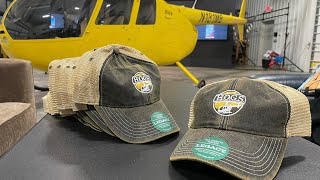
Kenny Keller goes live to discuss helicopter training techniques like go-arounds, settling with power, and auto rotations. He answers viewer questions, gives away HOGS ball caps and flight patches, and promotes helicopter training courses.
Chapters
So we have a couple minutes here while we're letting the engine warm up. Not the weather is cooled. And we'll talk about getting yourself organized in the helicopter with your chart, if you choose to use one, your iPad. But you can see from hopefully that camera over there. Right now I have. I'm using my checklist, which kind of handy for doing your startup. Then I have a sectional chart right there just for demo because.
Right.
Almost none of us use them anymore. Right. But our exam on the private pilot. On the private pilot allows you to have an iPad, but he also wants you to have a paper backup. So if the iPad freezes, you've still got something to use. And we recently had a problem on a checkride. Guy had a couple hundred hours working on his private always done the iPad. And even though he had a chart, he got confused when the iPad froze. And he was like, well, I didn't really know how to use the chart. And we're like, well, we had it all forted folded up for you. It was under there. But what do I do? And I'm like, all you do is take it out from underneath the iPad, put it in, and you could have navigated with the chart. So Anyway, in the R44, R22, you got to be thinking about, okay, how much room do I have here? And what's going to happen with the control movements, engines running, blades are spinning. So I can't get too crazy showing you with the cyclic right now, but give you a little idea. Be thinking about how much room do you have between your leg. IPad hitting the cyclic. How much room do you have over here? So this is something to consider in recent. We took this thing to 100 hour. Lindsay that's sitting here with me was.
With me that day.
I'm like, I'm gonna show you in fly how to deal with all this stuff. And I realized pretty quickly because I'm always flying around the pattern. So I hadn't done this in a while.
Right.
It can be difficult once you're in flight. All of a sudden you're going, okay, I'm at altitude. And I can, you know, put a little friction on my collector to take my hand off. But it's still very awkward once you're in flight to actually move this stuff around. So gonna just set the checklist over here for the side. So figuring out how you want this stuff to be. We are actually gonna maybe go do some radio work here at a local airport. And I have the iPad underneath. So we're gonna end up Using that, but just sitting here on the ground, blade spinning. Look at how much I'm dicking around, trying to figure out what do I want, where I can open this up for the iPad. The iPad's down below. I can even take this off. I'll put it in the backseat. And so here's one option. You could have the iPad right here. And then if you're using a backup chart for, say, a checkride, or you just wanted to have a chart for backup going cross country, you could do something more simply like this. This is what I was talking about for the private pilot checkride. He was set up like this. IPad freezes. They're on their cross country, he panics. His chart was right here, where he could have just went like this, put it here, got his bearings straight, and continued on. But he freaked out without the iPad. And I was speaking with Taz Christman, 2018 Flight Instructor of the year, one of our online instructors, and he said, I have to take away the iPads for people, and I have to turn the radio off sometime because people are so intense on focusing on this iPad and messing with radios that they let the aircraft get, you know, go outside the profile of where we want to be while we're flying. So I do want to add. You do see me taking my hand off the collective, but we're at 60%. Collective is locked. So once I start rolling that thing up, my hand will not leave that collected. But you can see how just in the cockpit, dealing with your checklist, your chart, your iPad. My. My point is practice with this stuff on the ground, in the hangar before you go fly. Get it all situated to where you need it.
I.
Just for fun, I'll put this back down here below. But look how much this is monkeying around. You do not want to try to be doing this during flight. It's just. We tried it. I thought, I'm gonna be the expert and show you how to whip this stuff around. It was. It looked difficult.
It was.
It was so difficult. I'm like, you know what? I'm not making this video because I just look at a complete moron trying to fly and adjust these things. So take the time on the ground, figure out what works for you. And, like, in my case, right here, that's kind of hitting. So I'm going to. Again, my collective's locked. I'm gonna reach down here. I'm gonna slide this back a little bit on my leg so that it's the corner of. This is not hitting that right there. That Feels much more comfortable and I feel like I'll be fine over here with my right hand because I can move my leg a little bit. So this feels pretty good. I can get away with this, not feel too bad about it. So again, just take your time before you go fly and figure out where you're gonna put things and what's going to work best for you in the cockpit.
When you feel the pressure to fly, but know the right decision is to stay on the ground, hit the Hogs no go. Well, the no go thing's fine. We're live. Alright, she's shaking her head live. I'm going to check the board up here and we get doing the questions. Thanks for joining us, Paul. You know we love you because you're always here, but you won the hat last time so please refrain. You can however, Paul, you can play to win the new. I'm throwing them all over. Check that out. The new Hogs flight patch. All right, so yes, that video we just shot yesterday and I thought it was a good time to bring up that topic because we did have a problem with an individual on a check ride. All he'd ever done was iPad. I made him get a chart, I made him draw a line on it and then the iPad froze on the cross country on the private pilot and you can imagine what happened, right? So whatever gear you're using, make sure that you take the time with it, play with it, get good within the aircraft. We all love the iPad, right? Got one right here, right underneath. I'm gonna rip that dude off, throw it in the back seat if I need to, but boom. And then there's the iPad. So make sure you check all that gear. And then example like I just started recently messing with one of these, you know, iPad, iPad mount right inside on the window. If you haven't done that yet, number one, there's a lot of vibration on there that makes it kind of hard to read. And then something else to think about. Make sure you adjust your brightness because I went up late in the day and when I started using it it was like oh my God, that's way too bright. Then you're decking around while you're trying to fly and turn down your brightness on the iPad. So spend the time to be ready. And yeah, our examiner of 23 years, he allows the iPad on the checkride. However, you have to have a backup. Could you use he personally, he's okay with them using the iPad. He wants them to have a chart with a line on it as a backup. I understand they're hard to get now, but at the private pilot level, like he says, you still want to make sure they were taught basic navigation and can use a map if they have to. We just did a commercial check ride where he had an iPad on his leg and we did do the second iPad up on the dash. So he had two iPads and then. But he still had a chart with a line on it. And the examiner said, and he had the cross country with at least his numbers down for all of his towers and all that in case electronics go dead. And he had his landmarks. And he goes, show me that what you got under there? And he saw just a form that showed exactly his landmarks. And he liked that. He was going to let him get by with just electronics because he says at the commercial thereon, of course, use electronics. But the private, he still wants him to be taught the basic navigation. So we'll get ready for the next video. We're going to ask some questions out of the private pilot study guide coming up here after the next video. And you'll answer in chat and I'll walk over here. I can watch it as well. Heather's upstairs in the office and she's talking to you in chat right now. Lindsay's over here behind the computer. Run the cameras and videos for me. So we're going to be communicating back and forth, but when we ask the question, I'll go over there by the screen. And remember, when you play, your chat may look different than ours. We know this, right? Depending on where in the world you are and what your. What your device is, the chat may show something different. So don't get mad and email us telling us how you're the proper winner because you're. Your device showed that you answered first. We're going by what it shows on the Hogs YouTube. We have to. And that's in replay. You can see the chat, how it comes up in hogs. So we're not deceiving anyone. So just because of all the nasty emails, when somebody thought they were, they won when they didn't. I wanted to point that out. So when we come back, we'll start asking questions. I think the first question, we'll do a patch. Then the second question, we'll do the hat. Did you see the hat, too? We'll do the hat on the second question and then we'll give away another patch. And we have been shooting a ton of videos, if you haven't noticed, inside hogs. I can't even tell you how many we've replaced, we're editing now a whole bunch of stuff we shot yesterday. That's the first video you saw, and that's the next video you're going to see. And I don't really care whether you're a student pilot, a private pilot, a commercial pilot, you need to take heed to this next video. Do you have that queued up, Heather? I mean, whoops, Lindsey. I've always said you got that queued up, Heather, a thousand times. Go ahead and roll that video, Lindsey.
All right, so next we're going to talk about a hover pre lift off check and then also a hover pre takeoff check. Two different things. So we're out here on the ramp. We've been entirely through the checklist. Checklist is put away. So before we lift up for the first time of the day, you just want to look down, make sure everything's good to go. Make sure temperatures and pressures are in the grain, timers running, checking everything for your specific aircraft to make sure that you're good to go before lifting up. Makes complete sense, right? You don't want to lift off the ground in the event there's a problem. Right here on my pre takeoff check, our carbon monoxide light is on. R44s are kind of known for doing this, some of them. So I'm going to crack my window here just a little bit. Lindsay's is open. I'm going to pull the vent. And we know that once I get into flight, that light should go out. So we're gonna get going here, do a hover pre takeoff check. And within a minute or two that needs to go off.
It doesn't.
I'm gonna circle around and come right back. But it's been doing this here recently, so we're gonna keep an eye on it. Everything else is good to go. So again, the whole idea pre take pre lift off check to make sure everything is good to go. All right, so now we'll get out and I get pointed into the wind, get myself situated. Everything's looking good. Alright, so now we just lift it up. First thing I always do is want to get away from the hangar, get over here, get pointed to the wind. It's a little bit gusty today. It's gonna push us around here just a little bit. So first thing, the wind's 310. So I'm going to turn towards 31 0. Our carbon monoxide lights on. But I'm confident it's going to go out here shortly. So the hover pre takeoff check it's so important now that we've been hovering for, let's say, I don't know, 45 seconds, 60 seconds. Now is the time for a good hover pre takeoff check because you just want to make sure. How is the aircraft operating? I could tell we're pulling about 20 inches of manifold pressure. With two of us in here and full of fuel today, weather's nice and cool. So you're just looking everything over to make sure it's good to go. Because you want to catch a problem. Now you find something, something a warning caution, lighter out or one of the temperatures pressures isn't right. Something goofy is going on with the car, peak whatever you might notice. But my examiner of 23 years says a lot of people aren't doing hover pre takeoff checks. A lot of schools and instructors aren't teaching them. And that's a bad thing. Again, you want to catch something before you take off so it doesn't take long. Again, there's all kinds of different methods. I start at the top and just work my way down. Example here is warning caution lights are out, RPM's top of the green. I pull them between 20 to 21. Oil pressure is green, oil temperature is green, cylinder head temperature is green. We're full of fuel. I just had the, the guys top it off. We're charging on a battery, timer's running. Car Pete's out of the yellow, we're ready to go. So our hover pre takeoff is complete and now we can depart for what's next. And I can tell you, I'll add a little bit to this video in the professional environment. I flew for a little company called Omniflot Helicopters. They were in business for 50 years before they sold out to the big conglomerate. And they wanted us doing a hover pre tuck off check every single time. And they said, guys, if we catch you taking off without a hover pre takeoff check, you will not work for us anymore. That's how adamant they were about a hover pre takeoff check. So in the emergency medical services environment, if they wanted us doing that regardless of what type of flight we were going on, why shouldn't you be doing that as a private pilot, commercial pilot in any other sense.
Locked in chat. Hey Dave, thanks for tuning in. I'll tell you about that in a minute. Dave was out here and did a bunch of autos with me in the R44. So the question I'm getting ready to ask is from the private pilot study guide. There's a link down below for Either a free PDF of the first chapter or you can actually buy the book down below. So. And somebody made a comment about all the new videos. Yes. I'm so excited over everything we've uploaded and everything that you haven't even seen yet. I have been cranking out videos like crazy, and that's 12 years of hard work. I have the latest, best cameras, the best computer. You know, where I started and where I am now. We're replacing videos that when we go check an old video and I go, oh, my God, like, you know, stuff I made before was the best I could do at the time. So thank you for the people that are noticing the new look in the videos. So Dave Faulkner came out probably a month ago and flew with me in the R44. And I had him come out because he's got a couple thousand hours in the R44 and he's hanging and talking with people from Robinson all the time and at the factory and playing with all those guys. So I want him to show me some things that maybe I've never seen or things I've forgotten. And since Dave was here, we went out, did a bunch of stuff. He showed me some cool things. So now I've been out practicing that stuff and in turn making videos on things I learned from somebody that has a lot more time in them than me. So let's get to the first questions. I may picked easy questions today. Why? Because I've been doing checkrides all summer. As many of you know, we've done nine checkrides now in this Robinson R44 sitting here right beside me. Yes, it's the new cream puff. 126 hours since overhaul. Flies like a dream. So here's your question, and I'm gonna go over here and so I can watch the answer. So listen closely. 14 CFR part 6151 does not require logging takeoffs and landings. Sure, take off some landings. So the reg says it does not require. The question is, should you log takeoffs and landings? Yes or no?
Should you?
Yes or no? And why? What's the reason why you. Even though you're not required to, why you should. So I'd like to see the answer yes or no. And I'd like to see why you said that. What your answer is, first person wins the flight patch. Yes. Okay, but why? I want to know why the question is yes. So I say skids up aviation. Because I asked should you and why? So the person who got the closest first skids up aviation. I declare the Winner. That was for the hogs flight patch. So Lindsey's running the camera for me. She's gonna run back over, get the next video ready. So that's the next video I got coming up is a video we did on 90 degree autos. And I've shot another one since we edited this one because I keep just finding new things to show. And by the way, I told Dave there now I think I'm gonna do for November 30 days of autos every day a video on some kind of a tip. Something you may or may not thought of or seen in auto. So do you have that one ready, Lindsey? All right, let's roll the video.
We're gonna go around and demonstrate a 90 degree auto rotation for you. And yes, at the private level, you do straight in, you do 180s. And there's some school of thought that if that's all you've ever done, you think that's all you can do. So it's nice to break it up and not just always do a straight, always do a 180, do different know enter from different places after you've got some experience under your belt and you're experienced at autos. And there is one method taught where you can use two 90s to make a 180 turn. So we're going to go around and do the 90s, just expose you to it. I think it's great practice. And then you can actually take and use this technique. Instead of doing the full 180 degree sweeping turn which most people are taught and many people do, you can make the 180 auto rotation into 90 degree turns. For some people it works out real well and they like it. Some people not that crazy about it. But it's a method. If you're struggling with the 180 turn, the full swooping 180 turn, practicing some 90s and then using two 90 degree turns is nice. And we'll talk about that in another video. So I want to be about 500 AGL. So I'm going to use 1400. I want to be just above 70 on my speed when I enter. I want to have my rate of descent basically at zero. I want to be in trim turn or enter, establish and then make a 90 degree turn to try to make my spot. I'm going to go to the numbers 18 on the Runway. I'll make a radio call here. Warsaw traffic helicopter 1 Mike Bravo left downwind for 18 or so. Okay. I'm using the left downwind because I don't Hear any airplanes in the pattern right now. And due to where the wind is, it's gonna be a little easier for me. I'm gonna cheat. If I would do it the other direction, I'd have a little bit of a wind pushing me through the turn. So I want to try to make a decent presentation here for you and show you this. So I'm going to do left traffic. If we had airplanes in a pattern, I do right traffic. But we can do either as long as we're avoiding the flow of fixed wing traffic. All right, so there's about 75. That's good above my 500 AGL. 1400. I'm in trim, I'm looking good. So I'm going to wait here just a little bit. Heather can point down at the 18 on the Runway so you can see kind of where we're going now. We're going to count it off in 1, 2, 3. Actually I'm going to go around and set that up again. I was a little bit slow on my speed. I'll be chasing that all the way down if I don't get that set right. So I'm going to do a 360 turn, re enter, get my speed where I want it. Because a nice setup is key to performing these auto rotations. And yes, people say, oh, but that's not real world. Well, you know what, we have to train to a standard. And the way you train to a standard is by doing it the same way every time. So for your practice auto rotations, when you're preparing for a practical test, you want a nice setup, you want to get it set up nice, enter it nice. It'll be nice. I was a little bit slow. If I'd have entered it then I'd have tried to speed up and made my RPM go down. And then I'd be chasing that RPM.
All the way down.
And then probably I'd have chasing speed and RPM both. We're gonna go around, set up the same thing.
Alright.
Position myself about the same spot again, get my speed up there. And I'm gonna delay a little bit longer before I entry or before I enter and pull a little less up collective. When I enter there, I have a list up a hair above 70. Then we're gonna go 1, 2, 3, enter collective down right pedal, half cyclic roll back throttle.
Good. There's 80.
Start my turn. RPMs looking nice. I got 75. Beautiful. I like this RPM staying nice about 75. Looking good. 70. Beautiful. I'm gonna raise a hair collective because just A hair high. Just a little bit. Keep my 70. Much better, much better, much better. Start a gentle flare about treetop. Flare, flare, flare. Oh, look at that. Rolling the throttle. And there's my 1 8. Boom. I hit it. Much better. So the point of the story is 90s are a good thing to practice. You can use them for 180s, two combined 90 turns and it's breaking up the monotony of standards and 180s. And also if you set it up nice, probably going to be nice. Set it up sloppy. It's going to be sloppy. And just because the horn comes on, you don't have to panic as long as you're paying attention and you're going to fix that low RPM situation.
So a whole bunch of more of the auto videos coming up. I've been out doing 270 degrees, 130 degrees, entering oddball places and I'm going to start encouraging that more in our training. Straight ends for the checkride, 180s for the checkride, yes. For a standard. But I'm going to start throwing out some other stuff to encourage you to ask your instructors, do some of these other autos more than just straight in 180. So make sure you know that you can. So as you know, we're getting ready to another question and give away.
What do we.
We gave away the. We giving away the hat this time.
Right?
Get ready. Give away a hat. Tell you what special offer anybody goes for for the private pilot, 12 months, commercial or instrument or CFI. If you go for the 12 months by midnight, I'll send you a patch. If you sign up for the 12 month options, make sure you email Heather and say, hey, I was live on YouTube, Kenny's gonna send me a patch. So we'll send you a patch if you go for heavily discounted private pilot377 for 12 months access. That's the cheapest bin in a long time. So next video coming up, Selling with power. And I'm proud of the next one coming up because I can remember doing Selling with power in the angstrom1 like GoPro 3 camera on me from the side and me talking about selling with power and somebody going, you know, sure it'd be nice to see a video where we could see outside and what you're doing with the controls. Proud to announce the next one coming up. I did Selling with Power but we do like one shot, one shot, one shot. So you get to see the dash, hear me talk, see a skid shot so you get more of the effect of Recovering from selling the power vortex ring state, whatever you want to call it. So that's coming up next, so hang around. So this one is for the hat, Lindsey just verified. So this one is. Oh, yeah, this is from the private pilot study guide link below. Free PDF of Chapter 1. Or you can get the whole book link is down below along with the links for propilot, which propilot by midnight gets the ball cap. You know, now if you go for 12 months by midnight, you get a flight patch. We're gonna shift the focus to the helicopter. Okay, I want to know inside here are placards, but to make sure that they're all in there properly, where do I go to look that up? Where do I go look to make sure the aircraft has the placards it needs? Very simple question. I want to know. And you'd look it up in the aircraft. Where are you going to look up to make sure the placards that should be in the aircraft haven't been removed by somebody? Why would anybody remove a placard? I don't know. But there's somewhere you need to go inside that aircraft. Skids up aviation. Got it again. Or did I jump too quick? Love the videos. Not on, not on that question. That's the next question. Oh, you know what? Nope, that's correct. Skids up aviation. You're on it. You agreed, Heather. Right. Okay. Skids up aviation gets the ball cap. So you got a sticker and a ball cap. So again, Lindley's gonna go over and key up selling with power video and we're gonna come back for another flight patch. So have you got that one ready to go, Lindsey? Yes. Alright, go ahead and roll it.
All right, so we're going to go out and do the traditional settling with power. And on your private pilot check ride, the examiner is most likely going to have you demonstrate this. Our examiner has people demonstrate it the traditional way once in a while. Ask them for the Richard recovery, but most of the time they've just been doing the standard recovery. We're climbing up here, so we got all kinds of altitude. We got open fields down below us. So in the event we had some kind of failure, we got plenty of places to go. I'm just going to start slowing the aircraft down. I'm just going to keep generally slowing it down, slowing it down, slowing it down. And what we want to get is a sinking sensation, a vibration, and we're going to be watching the airspeed and the vsi. So as I slow that airspeed down, eventually we're going to start to settle and I'm gonna let it get to 500ft per minute or so before I recover. I'm gonna keep slowing it down, keep slowing it down, keep slowing it down. The wind is, let's see, I'm almost into the wind. So I'll turn a little bit so the wind's not quite so much off my nose. A little easier to get into. So there's about 10, 15 on our airspeed. You see the rate of descent is increasing. Want to keep getting rid of that airspeed to where it says zero. And pretty soon here we're going to get a vibration. Alright. So here comes some vibrations. Gonna let it go a little bit farther. 400ft per minute or so. I'll pull the nose back a little more. There we go. Now we're getting some real vibration. Helicopters vibrating. That rate of sense increasing. Eventually the controls are going to get sluggish. So look at that. 600 and zero airspeed. So all I'm going to do is just real nice and gently move a little bit of forward cyclic. I get even lower collective. Just get some airspeed and fly away. And that is your settling with power. So when you got lots of altitude, the standard old recovery is the way to go. Plenty of altitude. You just very gently get moving forward. The Richard method is good for a lot of those guys working low altitude and getting themselves in positions where they don't have the altitude recover. But for just the normal stuff that we're doing, traditional method works just fine.
All right. So I actually did that backwards. So the next question is going to be easy. And I decided, you know, because I love the number three, we're going to throw one more bonus video and one more patch after this. Sorry the furnace kicked on. But hey, we're getting chilly in here. So this could be really easy question. So it. Since it's so damn easy, I got a pimp. One more time. Private pilot study guide down below. Free PDF of Chapter 1 or the whole entire book by midnight. If you go for 377 on private instrument commercial or CFI. 12 months. We'll send you a pack or a hugs patch. Just make sure you email Heather. Hey, I won during or I didn't win but I bought 12 months during YouTube Ball cap with propilot pro pilot link below. Private pilot link below. What am I doing? Oh, I gotta ask one more question.
All right.
So this is gonna be super simple because I asked these backwards. But don't type anything yet. If you've been Paying attention. This could be so damn easy. And I only need one word answer for this. What is section two of the pohrfm? Section two. While I'm waiting for the first person to pop up for the next file, Hogswall of fame, there's private pilot. This is overshadowing instrument pilot right now. Over here is our commercial pilots rolling through cfi. Dave Faulkner. There you are. So these are all of you that have sent pictures. And we're now over 300 of these dudes. Welcome to the Hogs digital wall of fame. So it would be nice if people used. You know, it'd be nice if you spelled correctly because, you know, detail is important, like answering questions correctly. But I know you were trying to say limitations, Robert, so I'll go ahead. Robert's it, right? Do you agree? Yeah, that's what I wanted. One word answer. Which section? Limitations. I got that wrong because I goofed. Totally goofed and asked them backwards. But that's all right. Still got a winner. So we're gonna do one more video and you'll think, oh, this is so simple. I'm gonna tell you what I've seen in nine check rides in six months in this helicopter. People coming from around the country, they've been coming for our final approach course. Final approach, final approach course, dot com. Hint, hint. Nine people have completed checkrides with me in six months in this aircraft. And they've been doing private. One private couple commercial, and the rest were all cfi. And guess what? I see people coming from Maine, Texas battery about dead. Okay, I gotta wrap this up then. Oh, we can switch. We'll switch battery. Since we're old video. I'll make this quick for that camera dies. I got. I got a backup battery. What was I saying? Oh, yeah. The next video. I'm telling you people, you're not doing enough of this. And this is what I'm seeing. People train from other parts of the country. There's something that you guys and girls are not doing enough of. Have you got it ready? Lindsay, go ahead and roll that video. We're going to come back and give away one more flight patch.
Okay? This time we're going to show you a go around. And don't just click off the video because you think, oh, go around. That's so easy. Everybody knows how to do that. Here's the thing. People are hesitant to go around. And I truly believe it's because of our macho attitude. We want to show you that we can do it. I'm going to get it in There. Well, the problem with that is you screw up the approach and end up, you know, wrecking the helicopter and maybe even killing yourself because you weren't willing to abandon your approach and go around. So I'm gonna come up here, I'm gonna screw up an approach, and I'm gonna show you a go around, you know, and to give you. This is the private course that we're in right now, but, you know, into the commercial environment. They. In the ems, they were like, guys, go around. Don't be afraid to go around. And it was a real problem in EMS because of the macho. Oh, I'm a helicopter emergency medical pilot, saving lives. You know, that's not what it's about. It's about getting the helicopter and the. And everyone safely from point A to point B. And the check insecure airmen flat out told me, we have guys that don't want to go around, and it's a bad thing if you mess up the approach. Go around. And in training all the time, I'll have a. I'm training students and. And they'll want to prove to me that they can do it. And I tell them over and over, just go around, right? And I'm always hoping for them to go around, and many times they don't. And then they'll get to the end and they'll go, I should have went around, huh? And I'm like, yeah, right. You want to set it up nice and let's say you just get to the setup point. And like right now I'm going to shoot for a normal approach. I don't like to be a 60, I'm a little bit low, so, you know, okay, I'm gonna go ahead and start it. So you start coming down. You know, I didn't have exactly what I wanted to set up, so I'm going to slow down. So I pull the half cyclic and then my nose comes up. And so now I'm gonna go down collective. And you can see where you go from there. If you don't set it up nice in the beginning, pretty soon you start chasing airspeed. And you're moving the collective and you're moving the controls. If it's not set up good and it's getting kind of ugly, just go around.
That's all you got to do.
So go around is simply pulling a little bit of power, pick your airspeed back up and make a radio call.
It's that simple.
I made a call on Downwell. Make another one. Warsaw traffic helicopter one Mike Bravo going around for Three, six or so. So you just pull your power back in, get your climb going, you go around, take a big deep breath and set it up again. I cannot stress enough. I know people think, oh, you're just bragging about how many years you've been teaching. 23 years I've been doing this. People are so hesitant to go around. And it's a bad, bad thing. There is no shame in just going around. And whether it's the beginning of your approach or later in the approach, if it's not right, just go around. Now, I'm not saying on your private pilot checkride you can wait to the last 100ft and go around. That's probably not going to work. I'm talking about in your daily flying, your daily decision making. If you're doing an approach and it's not set up nice or you're screwing it up halfway through, just pull in the power, get your airspeed, make the radio call, go around and set it up again. And don't forget to breathe in and out.
All right? I had some heavy duty marketing help this summer. I traveled to San Diego, worked with a guru and he said I always over deliver. And he over delivered. So we're going to over deliver. I said I was going to give away a patch. So we're going to do one more bonus question and we're going to give away not only the patch, we're going to give you also a hat. If you already have the hat, please don't play allow somebody else to win the hat patch if you've already won a patch. Well, whatever. If you already want a patch, you can still play, right? Then you have two patches. I guess we're going for the whole hog. The whole hog. Get it? The whole hog. So we're going to give away both on this question.
Here.
Turn it the right way. Correct answer. It's actually three parts. It's still very easy. And I make sure I do this right so that I don't give it away. So first person to answer, what? Yeah, a little delay over there. So here's what I'm going to ask.
Yes.
Okay, let me make this really simple, but you got to type in three answers and they may basically all be. The answer is going to be the same, but you're going to type it three times. So please spell correctly. Answer, comma, answer, comma, answer, same answer.
This.
Our controllers required to provide VFR pilots with safety alerts. Are they required? If they are, is it mandatory? And if so, should it be provided to all pilots? So the first to answer properly, as I stated the question, notice how the echo comes in when I come over here. Because you know, that's what this thing is. This is to project audio. So then when I turn this way, the whole sound changes. All right, so we're waiting for the winner of the ball cap. That's a nice shot with a Hog Hogs logo in there. My latency over here, that's pretty far behind. All right, we're waiting. Wrong answer. Yeah, wrong answer. Wrong answer. Wrong answers. Wrong answer. Still wrong. People playing not answering correctly. Remember I said the answer is duplicated. It's the same answer three times.
What's the question again?
Are controllers required to provide VFR pilots with safety alerts? Aim, 3, 2, 1, F. The answer is meme. Got it. Yes, yes and yes. So if you don't agree with our private pilot study guide, I guess you need to go to the AIM manual 3, 2, 1, F. And check it out. So the private pilot study guide down below, this dude has 400 questions. And the more we use it, I use this with my commercial student that was just here, do this private pilot checkride. He didn't have one of these. And he got here and I go, here, take this hotel with you. And he was like, oh my God, that book is phenomenal. Because at the commercial level, what's the examiner going to do? He's going to ask you all this basic private pilot stuff. And I also let him have to take the hotel. My notebook, I don't really talk about a whole lot. I sent him home with copy, my notebook. And he goes, that's freaking incredible too because this is random study. This is, you know, this has got 400 questions. It is starting from the beginning. And they're all tabbed. This is nice hardcover. You can lay it out flat on the table. That's why we did it in spiral bound. Each chapter, the first chapter, there's room to answer the question and then the second half of the chapter is the same question with the proper answer. So you can lay it out on the when you're studying and you can just go through it page by page. And so we have airworthiness or, sorry, certificates and documents, airworthiness requirements. Again, these are tabbed weather, cross country airspace performance, operation of systems, aeromedical factors and general aerodynamics. And let me tell you, with these people I've been doing checkrides for, I've already mentioned they're coming for private, commercial and cfi. I did more CFI than anybody. I'm so Surprised at how people let their basic private pilot knowledge slip. So my recent commercial guy was like, holy cow, that is amazing to study. Going for checkride. And I had to beat on him a little bit with the, you know, night stuff and a lot of the basic stuff he had to refresh. That is down below 400 questions. Amazing book. You can sample it below. Hogs sale ends tonight at midnight. Halloween sale. So I guess I'll. Transparent. Transparent. Say if you want to help us have our best month ever, jump on and sign up before midnight because we are Just about an hour ago, we hit our number two best month in 12 years of new signups. We're pushing for our number one month in 12 years. And a month ago we were going, God, where is everybody? What happened? Like, you know, everybody's fall off the face of the planet in the last month. I guess it's with the new content, R44 content, which you've seen, we've improved greatly and it gets better each week. It's like, oh my God, I want to go back now and rebuild what I did a month ago. Because what I. We just keep advancing as we get better and better with our equipment. So go for 12 months. By midnight, we'll send you the flight patch. If you buy the 12 months on any private commercial experience, CFI, email Heather and say, hey, I bought from watching the YouTube video. Here's the address for my flight patch. If you do pro pilot by midnight, you get the Hogsball cap. And that. That's. That's discounted lower than I said I would ever go again. We did one that was like, we'll never do this again. While I went below that. It's less than a third off. Pro pilot, private commercial, instrument, cfi, all the courses, unlimited guarantee. And I'm gonna wrap it up because everybody's got things to do and. Yeah. So anything else I need to pimp down, below is the link goes direct to ProPilot. HelicopterGround.com is down there. Hog's support number should be down there. If it's not, it's 574-767-1797. You have a question? I'm sure Heather will be up till midnight tonight, right? Heather always. She said. So if you got a question before midnight you want to sign up, text her and yeah, stay tuned for more cool videos coming because cranking them out faster, bigger and better than ever. And I'm having a blast doing it, so. All right, I gotta go show Lindsey. I'll shut this down. This is a first time. Lindsay running cameras. So peace out. Feel the pressure to fly but know the right decision is to stay on the ground. Hit the hogs no go and live to fly another day.










