Met an 8000 Hour Helicopter Pilot that couldn't fly a standard traffic pattern! Can You?
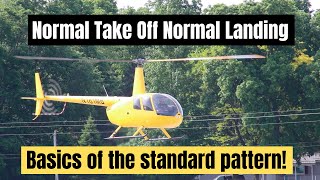
Kenny Keller flies a standard helicopter traffic pattern and approach, starting with a slow hover takeoff to 60 knots and a 500 ft/min climb, then climbing to 300 feet AGL before turning. The video walks through proper pattern setup and approach geometry step by step.
Chapters
Gonna want Lindsay filming me on the collective, okay? And I'm this really important what I'm going to show them, we're going to.
Get right back to that video. I promise. I'm going to show you an entire takeoff not touching the collective and how it will give you 60 and 500 your standard climb out. We're going to go right back to the video. But real quick, since we're doing a bunch of maneuver videos, we have a free PDF maneuver guide we put together for you. Free PDF down below. Private pilot study guide. There's a link down below for that. Hang around after the video, and we're going to talk about some more fun stuff like how to get a no go button and how to get up here on the Hogs Wall of Fame. If you're new to us, over 300 private, instrument, commercial, and CFI people that have passed their checkrides. So go ahead and roll the video, Heather, and we'll see you at the end.
So now we're just goofing around as I get ready to go do a the normal pattern, normal takeoff, normal landing. Oh, I thought you said we were doing a bunch of auto rotations. Oh, absolutely not. I'll jump. All right, so I'm gonna get down to a hover, and then we're just gonna start the normal takeoff and normal landing, and I'm gonna talk through a pattern the whole time. So it's kind of a. It's a normal approach, or it's a normal takeoff, normal pattern, normal landing. There's plenty of things to talk about. And when I start this, I'm definitely gonna want Lindsey filming me on the collective, okay? Because I'm gonna do this, and I'm this really important what I'm gonna show them. Getting a lot of that is gonna be really good.
Okay?
All right, we're gonna talk through a normal takeoff, a normal pattern, and a normal approach, as simple as that sounds. A lot of people out there don't really know how to do a good.
Normal takeoff and landing.
And a lot of times they don't really understand the pattern. Hotel clear.
Right.
I do a nice clearing turn before we start the pattern just so I can check the area. We just left the hangar, Did a max take off out of there. I don't hear anybody on the radio. Been making radio calls, don't see anybody. So we pretty much have it to ourselves right now, which is good for making some videos. We're over the number nine. We're going to come back to the number nine. It's good to have a good solid spot like a number or a spot in the ground or whatever the case is, so you know exactly where you're going to come back to. Alright, so the normal takeoff, you always.
Want a hover pre takeoff check every.
Single time before you take off. So I'm looking across the top. Warning, caution lights are out. Rpm's good, manifold pressure is about 22, just a hair above carbs. Heats out of the yellow. 15 minutes on the flight gauges are in the green. Everything's good to go. So what I'm going to do is for demonstration purposes, I'm going to take my left hand off the collective. Now I tell everybody, never, never, never do this. Well, I'm doing this for demonstration purposes because I want to show you how the helicopter can take off without adding any power, using only hover power. And you can get your 60 climb and your 500 standard climb, or 60 and your 500 climb without ever adding power. My hand will be right there beside the collective. I'm ready to grab it if I need it, but I'm going to release my grip. And I got a camera on that so you're going to be able to see that. So we'll make our radio call Warsaw traffic helicopter 1 Mike Bravo departing 9 for right traffic Warsaw. I'm stay on top of my pedals and this is a painfully slow takeoff. I'm just going to go a little bit forward, a little bit forward. And if it sinks, it sinks. It's okay if the skids touch, it's okay as long as I keep my nose straight. I'm going to keep inching forward again. My hands on the collective or near it, but I'm not adjusting throttle, I'm not adjusting the collective and is right there just in case. Others on the instruments with a camera. You're going to see airspeed start coming alive. I'm going to push a little forward. I got some ATL there, a little shake. I push forward cyclic to get through that. But I want to stay down near the ground until we get to around 50 to start our climb. Still haven't moved the collective as you can see in Lindsay's camera. So there we're at 55. I'm going to start my climb up now. Heather's on the instrument, so you're going to see that I'm going to get 60 and I'm going to get 500. And I have never ever moved that collective. There it is, there's 60, there's 500 standard takeoff, standard rate. Not adding any power. They tell us if the engine is going to quit, it's probably going to quit during a power change. And you also need to know how to do these takeoffs on a hot, hot, humid day. Now we're going to climb to 300 AGL, because that is textbook. We're going to climb to 300 AGL before we start our turn. It tells you that in the Helicopter Flying Handbook. That was our standard in ems. Didn't matter whether you're taking off for a scene or you're taking off for training. You climb to 300 AGL before starting your turn. So we're going to clear to the left, clear to the right. I've got my 300 AGL. I'm going to start a right turn. That's what we'll call our crosswind. And I want to get to about 1350, which will be our 500 AGL. I'm going to clear left and right again and start my turn, get on downwind. A lot of time people extend out farther than they need to on this crosswind. So there's approaching my 1350. I like 70 on the speed. I'm going to do my downwind checks right now to get them out of the way. Warning, caution lights are out. Gauge is green. Everything's looking good. There's my 1350. I'm a little high and my speed is just under 70, so I'll just go a little forward to speed up. Little down collector so we don't climb any higher. And now I can look outside and I can make my radio call. Warsaw traffic helicopter one, Mike Breville right downwind for Runway nine, Warsaw. So I got my 70, I got 1400, 550ft. Good enough looking around. Don't hear anybody on the radio. Beautiful day. And here's the next trick. Setting up these approaches so when I. When I'm at beam number nine, which I am right about now, I'm just going to start a real small descent. Very simple. I only want to lose 200ft between now and the time that I intercept my normal approach angle. So there's all kinds of, all kinds of time. And I want to have 200 AGL before I intercept my normal approach angle. A good setup is key. If you set it up nice, it's going to be nice. If you set it up sloppy, it's going to be sloppy. So let's get descending down a little bit. I'm going to keep just above 60 so that when I start my approach, I can go a little bit aft Cyclic and keep that 60. I could use a little bit of left pedal for trim. Quarterbackers are gonna be going, hey, you're flying without your left pedal in there. That's alright, I'm psychotypical student. No wait, they don't want to push right pedal. All right, I'm gonna clear left and right again and I'm gonna turn two radio calls into one. Instead of making two for basin final, I'm gonna make one call. Warsaw traffic helicopter one Mike Bravo right base turning final four, Runway nine. Warsaw. All right, so I got my 60, I want to get about 1150 that way. I have 300 AGL. I want to line up for the Runway and I got all kinds of time to get this set up. So listen to me people, this is the key. And normal approach sounds easy, but a lot of people struggle with this. We're going to clear left and clear right again. I've got all kinds of time. I got my 60, I can lose 50 more feet. And we want consistency. That's how you can consistently go out and fly decent approaches is if you set it up the same way every time and then you take the same numbers and use at any airport in the world. Alright, so I'm in trim by the strings. I got my 60, about 1200. So I'm going to hold this until what I believe is a normal sight picture. And I see the red over white on the vasi so I know I'm three degrees there, so I know I want to go a little farther because 10 degrees is our normal approach. I slowed to 50. That's alright, let's speed back up just a little bit. Now I'm seeing white over white, so I know I'm greater than a 5 or greater than a 3. Should be greater than a 5 now. Now I'm intercepting what I think is a normal approach. So I'm going to go down collective right pedal aft cyclic. And now all the way down to the number nine. I'm just going to use the collective to control the angle, cyclic to control the speed. And everybody wants to focus inside too much. You learn to do this by fill. It should look like we're always approaching those numbers at the same speed. I'm not even looking at the instrument panel. I'm using the collective to control my angle. I'm using the cyclic to control my speed. Pedals staying in trim until we get to 50ft. Then we'll get parallel with the Runway. This is a nice normal approach. The angle is good. Look how nice and slow we're coming in. Angle's still nice. So again, elective controls the angle, cyclic controls the speed. It should always look like you're approaching those numbers at the same speed. Where imaginary line going from my windshield all the way down to the number nine. Now I'm going to put in a little bit of right pedal, keeping it nice and level. And we're just going to keep slowly bleeding off that speed. Yeah, I'm not even looking at this shrimp panel. I don't need it. Looking at the number nine nice and slow. Clearing the Runway left and right on our way down to the number nine. This is a nice normal approach. And by doing it this way, look, now when I pull the collective, it's nice and easy. I'm not yanking it. I'm not putting a big flare on it, which some people do that and that's a technique. But I prefer to come in this way, super slow. Look at that. Nice and level. All the way down to the numbers. That is a nice normal takeoff, normal pattern and a normal approach.
And some other freebies for you while we're sitting here in our final approach course area. Final approachcourse.com that is. We'll put that link down below. This past summer, we've done eight ratings. Getting ready to do rating number nine members come up with their requirements. Done. They go through the hogs videos, make sure that their knowledge is solid. Before we get here, we do zooms. Make sure you have every document you need. Make sure your requirements are done. When you walk in the door, we start flying. Then we sit down here to do the 8710. Go through the PTS R44s right there, push it right out, get fuel right into the pattern. Final approach course has been awesome. So we can help you finish up your rating if you need help. And it's. We know around the country people have struggled with that. It's finding an instructor along with an aircraft, with an examiner. Putting all three of those together to work for the date that you need has been a problem for a lot of people. We don't have that problem here. So this is the final approach course area. Two couches. We sit down, lay everything out. Right there's the poh, right there's the helicopter. Right over here is the maintenance log books. Everything we need is right here. We're not chasing anything. So some other freebies for you. I put this out. This is my first book I ever did. 2017, I think, or so. Or 15, maybe 15. Amazon number one best seller, free PDF down below for that one general helicopter stuff, a lot of tips and things about flying in general. Then another freebie top 10 checkride tips. I put this together with flight instructor of the year, Dan Taz Christman, a whole ton. It's called top 10, but there's about 30 tips in there because Taz went out and interviewed examiners in the Las Vegas area to tips on problems examiners see with applicants showing up at checkrides. I mentioned at the beginning, Helicopter Maneuver Guide. We're going to put that down below. Operations manager Brian Rutledge put that together based on the Helicopter Flying Handbook. Helicopters have buttons and switches in different places, but ultimately you fly the maneuvers the same maneuver guide down below. Quick reference PDF. You could print it off and make a little book like we did, if you like. And then we also mentioned that we keep mentioning the Private Pilot Study Guide. Why? Because people are digging this. Instructors are digging it. And I've had some examiners that said it's amazing. Operations manager Brian Rutledge put three months of work going through the practical test standards and coming up with anything he could think of that you could be possibly asked on a private pilot checkride. I'll just open some pages. You know, just like, you know, what is standard empty weight? What is basic empty weight? If you fail to notify the faa, can you still exercise the privileges of your private pilot? If you moved? If you do move, how long do you have to notify the FAA? 400 questions. What are the requirements and procedures for obtaining a special flight permit? And it goes on. And we laid this, and it made it a spiral bound. And you can imagine, why did we do that? Because there are some aviation books out there that I actually enjoy, but they're, they're, they're bound. And so you're always trying to fight with this and you're trying to do written test prep, and you got a book that you got to bind here and bind there. We said, hell with that. We ain't doing that. We made this spiral bound. That way you can lay it out, you can go through it, and then there's room to write in your answers for each chapter. So I'll show you that. So the first part of the chapter is the question. You can write it in for practice. Because how do we learn through repetition? We learn from writing things down. And then the second half of each chapter is the same question with the proper answer. So if you really want to study, if you're like a madman or mad woman or mad. Whatever you identify as, I'm just saying that's the world we live in. If you're just. I want to ace this checkride. You sit down, you flop this dude open, and you start going through it and you write in your answers. You think about it, you find the answer, you figure it out and then go through and check yourself. So check yourself before you wreck yourself. Ice cube. Aircraft certificates and documents, airworthiness requirements, weather information, cross country airspace performance limitations, operation of systems, aeromedical factor, general aerodynamics, they're all tabbed so you can go to. Right, right to. Specifically to whatever you want to go to. Tabs are in there, I promise. There you can see them. It's all tabbed up. Nice book. We paid for the. The best stuff, you know, good cover, good pages. It's a quality piece. No, it's not cheap. But nothing with helicopters is. So you know, if you can't afford it, you shouldn't be doing it in the first place. I say that because somebody who I know who's super successful in the business for 50 years, that's what he says. If you can't afford it, don't do it. If you're gonna cry about it, whine about it, don't call us. Because helicopters are expensive. Everything that you do is expensive. And then we got the no go button. The members, once the pastor check rides, they get a no go button. We send this to you. Live to fly another day. And you know what? I got that camera. I'm gonna grab that camera. I have that on a. I have that. I can just, I can take that dude and go mobile with it. If you don't know, over here's the Hogs Wall of Fame. This had 300 pictures on it. And we run out of space, so we had to go digital. I'll give you a good shot of it. That's over 300 people. Private pilot, commercial pilot, instrument pilot and certified flight instructor. They're rolling on there. So we add you to that when you pass your checkride and you send us your photo. And then just a couple lines, couple sentences about how we helped you. Some people write a lot more than that. We've been online 12 years. We're super proud of everybody. We, everybody we've been able to help. So whole bunch of freebies down below. And we'll put the website for helicopterground.com down below. You can click on that. You can also reach out to Customer Service at 574-767-1797. Peace out.
When you feel the pressure to fly, but know the right decision is to stay on the ground. Hit the hogs no go and live to fly another day. Helicopterground.com.










