My $50,000.00+ Checklist Mistake | Preventing Possible Fatal Accident Later!
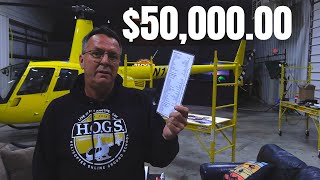
YouTube video by Kenny Keller describing a personal instructor error during a helicopter training flight that caused an engine/rotor overspeed requiring the R44 (135 hours, received in May) to be returned to the overhaul facility for heavy maintenance. The video also showcases a new HOGS certified flight instructor kit/backpack and related training materials, and emphasizes strict checklist discipline and honesty/reporting after exceedances. Keller estimates downtime of roughly 2–3 months and stresses admitting mistakes to avoid later fatal accidents.
Questions this video answers
Robinson R44
135 hours
Received in May (year not specified in transcript chunk).
Student's third lesson / third flight (second day of flying).
Probably two months, maybe three (depends on parts and damage).
Chapters
That engine comes apart and it causes somebody's fatal accident because you didn't fess up to what you did. There lies the problem, you know, and we know how people like to spread rumors. And I'm gonna get to that story in a minute. But first, check this out. Hog's backpack. We just put out a video a little bit earlier, but. And we're gonna roll that here. I think we should roll it because we have a whole whole new kit here. We're gonna show you this. The good news is, and then I'm going to come back and tell you about my $50,000 mistake I made yesterday that involves the aircraft going back for maintenance. And we're talking heavy duty maintenance. So good news, let's roll the video. All right, so we're going to show you the everything that comes with the new certified flight instructor kit. Not really like the name kit, but that's what people like calling them. Kit pilot logbook. First and foremost, this is for the person who wants to go off the street all the way to professional pilot. You want to start building your time as a cfi, move on with your career and you don't have anything yet. This is everything you're going to need as a basis to get started. Good old fashioned plotter. Yes, you need to learn as a private pilot with this. Yes, you can use the iPad in the aircraft, but examiners still want you to be taught the basics. Learn how to use the map, which means you're going to have to have the E6B again. I know people are going to snoot their nose, but if you're going to be the cfi, you need to have one of these, know how to use it and teach your basic students the basics and then let them move on to the iPad. You are going to need a private pilot. Rotorcraft helicopter PTS mandatory. Then check this out. PTS for then your commercial flight, commercial pilot and flight instructor. So those two checkrides covered in this pts Private pilot study guide. You're going to use that for your private and then you're going to use it again for your commercial because they ask you the same stuff, they just want you to know it to higher level. So even though it says private pilot, you're going to use this for your commercial pilot checkride and then you're going to use this as a cfi because every checkride starts out the same. What do you have to have on you? What's the aircraft got to have? Blah, blah, blah. You're going to want to use this and you're going to use it as a CFI to ask your students questions. Mandatory FAR aim 2024. You have to have this. You have a FAR aim. You have to have a FAR aim. An updated one student private commercial CFI. You got to have this. Sure. You can have the electronic version and that's great. I recommend you have both as a cfi. You need hard copy and you need, you can have electronic, electronic copy if you like. Helicopter Flying Handbook Another one that's required Student private commercial CFI examiner. We all need that, everybody. Then again, because you're going on a cfi, you're going to need the Aviation Instructors Handbook. Fundamentals of Instructing required. First part of your checkride is going to be examiner testing on FOIs. Before you ever get to the technical areas, you got to know the fois. You need this book as a CFI and then extra special on top. Highly recommended Helicopters Instructors Handbook. Okay, so you're going to learn the basics of the knowledge out of the Helicopter Flying Handbook. You get your fois out of the aviation instructor's handbook and then this is going to point you as a cfi. Common errors students make the way things should be taught. Helicopter Instructor's Handbook. So these are all included with the current pro pilot and this is unlimited access. You training's there for you. It's a one time payment. That's it. And then check this out. Brand new, never seen before until this video. These came in last night. This is the HOGS backpack. Has the HOGS logo compartments on the side. I think one of them is for a water bottle. Nice unit. We don't buy cheap stuff here. We only order good quality stuff. We're going to give this to Heather and she's going to see if she can pack all of this neatly into that and while she gets started on figuring out is it all going to fit and how it's going to work. Also along with this one, Hogs ball cap. These have been limited edition. We don't sell them. You only get them with special certain packages. So currently included with this offer that you're seeing Hogs ball cap. Did you throw the. Nope, you didn't. And flight patch. The HOGS flight patch also included. Look at her go on. This backpack, it also included the flight patch and did I mention pilot logbook? I don't remember. I might have started with that. And a pilot logbook. Look at her go. And there's even room for like an iPad pocket. Okay, so there's still room for iPad for your electronic stuff. Your iPad houses your weight and balance foreflight. All that good stuff. There's still room in there. There's the hat. Look at that. And then we're going to figure out how we're going to ship this again. We just got the bag last night, so we may just try to ship this to you all in the bag. But we'll experiment with it because I like to ship like Apple. Right. Like we want you to receive a package and open up and go. Oh yeah, right. We want you to have it show up in good condition, not being tore up. There you go. Heather's going to walk away. Look at that. Ready to go. Okay, see, so we didn't even know until this video. I just said as we laid everything out, we're like, let's lay it out, show people what is going to be included and then we'll pack it in the bag and see how it works. I want to take my go at it. Not bad. Not bad at all. Yeah. Alright. With the exception of the flight patch laying there, that's everything. So here you are going to your first lesson. You've already been through Hogg's membership and you got your knowledge all put together and you're going to walk in like a student into the flight school because you got your stuff, you got your gear, you got your knowledge down because you've been going through the HOGS courses. Yeah, this is the next phase. The first one had a smaller bag that was cool but was just like a computer bag. And we thought let's go for something a little better. We're looking at flight bags as well. But I think in this day and age, I think that's better than the flight bag personally. It is. Especially since you can just throw it on your back. Yep. And again, we don't order junk here, we order nice stuff. And I can tell you what I paid for those, but it's a nice unit. Again, like all of our stuff is quality. We don't send out less than awesome quality stuff that is currently included. If you're on this video, that means that's what's your current package right now. And I just grabbed the checklist because this I think is, you know, there's several valuable lessons to be learned here. And here's what I want to tell you. If you think that you're good enough that you don't need to use this, you're a fool. If you think that you can just kind of half ass go through this mix and match and oh yeah, well that's okay. Let's move on. It's not a good idea. If you think that you shouldn't stop what you're doing and go back and start over after a screw up, then you're not thinking right either. All right, bottom line. Yesterday morning on our R44, with 135 hours that has been operating flawlessly. Cold start, hot start, daytime, nighttime. The aircraft has been flawless since we received it in May. I cannot say enough good things about this helicopter right here. It's been amazing. And now it's going to get loaded on a truck and it's going to go back to where it was overhauled and it's going to get tore apart. And the bottom line is, I was with a student yesterday morning, a student's third lesson. And don't think for a second that I'm going to blame the student, because I'm not. I'm the instructor. It's my aircraft. It's my responsibility. We were going through the checklist. And a person. When you're nervous and new, you get excited, you get nervous, things happen, right? That's just the way it is. And that's part of nerves. As instructors, it's our job to make sure that you, as the student, do everything right. Okay? So people can armchair, armchair quarterback all day long. And I don't really care if you do. I want to tell the story that I might save you. It mostly maybe save your life or somebody else's life because you did something dumb and you didn't fess up to it. That's the hard part. And I did it after I ate my sandwich. And I'll tell you. So it was our third flight, second day of flying, and we sit at length at the couches here where we do ground school. And I. And we talked about governor and throttle and. And I'm. And I'm so anal about the way you grab stuff, the way you lock stuff, guard this, guard that. I am just. I preach to it to no end. And we sat at length and discussed governor correlator, up and down, collective, how all this stuff works. And the best way I can explain it without making the story an hour long. A couple times we were struggling or the student was struggling with the checklist, which is normal, right? And I even said we should get the knee board. And here's a tip for you. And I did this back when I started. You have a little strap across the knee board, so you put your checklist on there and you can just keep sliding it up. You go through cyclic neutral check Slide it so that every time you do something, when you come back, you know right where you are on the checklist. And yesterday I even said, you know, I should get my knee board. And we should. And he goes, ah, let's do that on the next flight. Okay. Again, I should have just said, let's do that. We got out of sequence. And where we got a sequence was we didn't do the hydraulic check before he rolled up the rpm And I said, okay, this is done. On the checklist before the. Before we let the governor take over. In my mind, I thought, well, okay, we do. We fly with the hydraulic soft. During training, I guess it'd be okay to do our. Turn it off and do our little X pattern, make sure the cyclic moves. Okay, Put it back on. So then, you know, we do the RPM check, make sure the horn works. We finish out the checklist and put it away. And then when we're getting ready to go, I notice, why is the collective not coming up? We're getting ready to lift. And I'm going, where is the collective? Did you unlock the collective? And he's like, yeah, I unlocked it. And I look, my attention is diverted. We're trying to start a pickup, but the collective won't come up. So am I looking at rpm? No, I'm distracted, going, well, what the hell? It's unlocked. Why doesn't it want to come up? And I. And I can't remember the exact. Whether it was that second or when, but I remember looking up and going, oh, shit. Engine RPM and rotor RPM are way up here. And my heart sank because I knew. I'm like, oh, my God. So we figure out the hydraulic was still off. That's the reason the collective wasn't coming up. We did the hydraulic check, switch didn't get back. Put back on. That's my fault. I should have said, all right, hydraulic off, back on. We're good to go. My first problem is with what we did is we got out of sequence. I should have backed up, maybe even go back to the beginning. You know, they say that's a good way to do it. And we were having. We were struggling, but again, with a third person on the third flight, that's normal, right? And I said, well, we got to work better on getting better at the checklist. So all I know. And I. I don't believe. All I know is this happened because my. My attention was distracted. Did he turn it? Did I turn it? Did we turn it? No, I did not hear that engine noise. And this is what's weird. I didn't notice a difference in the engine noise. I didn't notice the difference in the rotor RPM noise. And somebody's going to get in the comments and say, well, you should have known that. You should have heard that. I didn't hear it. I don't know why I didn't hear it. I know what an engine, when it's running too fast, sounds like. I know what RPM sounds like when it runs too fast. I know how it sounds. Why didn't I catch it? I don't know why I caught it. All I can tell you is I got distracted because we got out of sequence. We did something out of sequence, and then something bad happened. That's what I can tell you. So that's my point of what I started with is that's why we have a checklist. That's why you have a manufacturer's checklist. And that's why they want you to do things step by step in a certain order. And maybe you do that already. And sometimes you just make a mistake. We're human. We all make mistakes. You might do doverify you do a few things and then verify I did those four things. And then you do three more things and you verify. There's different ways of approaching this, but going out of sequence, you probably better have your plan in order. Where do. How far do we go back? Do we just go back, shut it down, go back to the beginning and start over? Because we got out of sequence. That's. That's my thing of this video. So let's move on. I knew it was bad, and I had a sandwich in here. Heather went and got his food. I walked in, I sat down, I ate my fish cod filet and my onion rings and drink my Pepsi. And my student said, did you call your mechanic or your maintenance guys? I'm like, I'm going to as soon as I finish my sandwich. And I called my main guy, and of course when I told him what I did, he said, oh, shit, let's get this. Call your local guys. I called my local guys. Oh, shit. I called my guy in Ohio. I've known for 25 years. Oh, shit, Kenny. So you got the idea. It's an oh, shit, right? It's an oh, shit. And I wish I could say I only went, you know, 4% over for two seconds. I wish I could say that. Here lies the problem. I was honest. I don't know. I don't know when it went high. I don't know how long it went high. I have no way of knowing because I was distracted, because we've had a problem. And I'm not paying attention up here because I'm looking down here and I'm looking over here and I'm trying to figure out. And, you know, judge me in the comments if you want. I want to be ahead of this and honest and tell you what I did because I talked to everybody involved. The aircraft is going to get loaded on a truck, and it's going to go back to the maintenance facility where it was overhauled, and the engine's going to come out and the rotor system is going to come apart, and the drive system is going to come apart, and it's going to go through every single Robinson inspection that needs to be done to put the helicopter back to 100%, because this has happened before. I'm not the first guy that ever did an overspeed. And Robinson knows what to do and what to check. And moral of the story, you have to fess up. Okay? Anybody on the planet could go, oh, shit, I just screwed up. Well, how bad is it? Maybe I just won't tell anybody and you'll hope it just goes away and nothing bad ever happens. Do we think that goes on in the world, in the industry? I'm sure it does. And my thing was, everybody that I called said, well, you did the right thing. You fessed up. And I know it's going to be expensive. I knew it when it happened. I was like, oh, my God. And I'm like, is this going to put me out of business? Right. That's your first primal oh, God moment, and I'm going to recover from it. And of course, we're talking to, you know, everybody involved, and I'm putting my plans in place and starting to figure my plan on how I'm going to get through this and move on. And the good news is we've had some good months at hogs. We've been updating HOGS online content, and we flew a lot through the summer. And now we've been focusing mainly on flying and updating videos inside hogs, which is great. And the way I look at it as well, we already got this great jump. CFI 29 new videos, R44, 26 new videos, free radio course, I don't know, nine new videos. We have a bunch more content to edit yet, and now we've dug into hogs, then we're updating content like crazy. So we have a lot of content to work with back on the online sales, where they should be. And maybe I'LL even document the process here of what's going to happen over the next one week, two weeks. But we're figuring two months. You know, it's going to be probably two months that we're going to be out of service, maybe three, you know, depends on how everything goes and parts availability and how many parts are really damaged and how many parts are going to be okay. There's no way to know. And that's the reason why you have to fess up and you have to call the mechanic and say, here's what I did. How long did I go over? How far did I go over? What did I was I doing when I went over? In my case, I was on the ground with flat pitch, trying to figure out an issue. It goes high. I look up and it's high. I can't. And I was honest. I told him, I wish I could tell you two seconds, and I can't. I don't know if it was 2 seconds or 10 seconds. And when I told him where it was at, they all just went. Doesn't matter. Doesn't matter. Because you went high enough at that point, you're done, you're out, Engine's coming out, rotor system's coming apart. You're done, you're done. So it is important to note when something happens and you exceed a limitation, you have to note the best you can. What were you doing? What went over, how long did it get over? And you immediately need to call somebody. And whether it's your instructor or the flight school or the owner, whoever, you got to let somebody know, here's what I just did. And the one mechanic that I've known for 25 years, our discussion was, he said, hey, Kenny, you fessed up. And you called. And he's like, sure, people can hide that stuff and just go on and fly. The problem is, if something inside that engine is stretched, you know, a connecting rod bolt or whatever, it'll fly just fine for a while. And then you've got a student out there or a customer or somebody down the road that has a helicopter, that engine comes apart and it causes somebody's fatal accident. Because you didn't fess up to what you did. There lies the problem. And that's why we have been preaching in hog for 12 years. You know, fess up, admit it, it sucks. It's hard. It wasn't. You know what it was. It wasn't hard for me to make that phone call. It wasn't. I would have thought it would have been harder than it was. But I was just like, I'm not going to dick around. I'm just going to call right now, I'm going to eat my sandwich and then I'm going to call. I got up, went outside and made the phone call and I went out so I could tell him exactly. I could sit in the helicopter and go, here's what I saw here what I did, here's what's happening. And he immediately said, oh, shit, Kenny, we gotta do some math. But I'm pretty sure that engine's gonna have to come out. I don't think we're gonna be able to get around it. And then we did the math, we did some digging, talked again to everybody involved, and the common sense is, nope, you're done. Engine's gotta come out, everything's gotta be inspected because we don't know, maybe you didn't do any damage. We don't know. Nobody knows until things are inspected and pulled apart. So how can I wrap it up? Use the checklist. Take your time with the checklist. And you know, if I'd have been rushing through it, I'd feel differently. But we were taking our time. We have a laid back atmosphere here. We discussed everything at length when we climbed in the aircraft. I said, take your time today. There's no rush. There's no rush here whatsoever. All those things were in motion that were all right. The way we discussed our pre flight, pre flighting the aircraft inside, pushing it out, getting fuel, walk around, climbing in, take our time. There was no, it was a great day. There wasn't warning signs of, oh, we stayed out too late the night before and we were late and everything was going good until we got out of sequence and I got distracted and bad thing, a bad thing happened. So I'll get through it and I want to learn from it and I want you to learn from it. And you know, everybody I talk to, particularly the maintenance guy. I just talked to the guys that did the rebuild. When I called, I told him what I did and he's like, what? You're never supposed to do that. And I go, I know. And he kind of laughed and he goes, well, Kenny, you know, this happens often. And he goes, won't do this again, will ya? And I said, no, you're right, I won't make this mistake again. From now on, when you're with someone, it's step by step, piece by piece. If you're unsure, get a knee board, have that thing on there. And like I said, I ordered a new one of these by the way because I'm putting together another package where we're going to add an E board. Shouldn't have told, that's not ready yet. And the one I ordered, I'm adding the strap. And so I did this as a new student, the straps here in the middle. So like I said, you can. You're nervous, you're not sure yourself. Okay, you keep going through. And as you complete, whether one task or three tasks, you keep sliding that checklist up because you do get distracted. You're looking around and doing things and you come back and you go, where was I? Oh, I was down here. Oh, no, I was up here. So that strap, that simple little act of just having that there where you could just keep inch and cross, inch and across. Take your time, follow that checklist step by step. And if you make a mistake and something happens, the best advice is probably just start over. If the engine's running, even shut it down, cool it off, go back and go. Okay, take a big deep breath and go. All right, let's start over. Because we're on a bad path there when we got out of sequence and something didn't happen correctly. So, you know, like my helicopter accident. I'd love to hear some feedback down below from anybody that has the guts to fess up to something they've done. You know, I've talked about my helicopter accident at length, and that's one thing I've always said in 12 years is why don't you hear more people talking about their accidents? I see all kinds of fancy videos on YouTube and everywhere else on social media and everybody's doing cool stuff and look at me and look how cool I fly and look at my quickstep and look at my this and look at my that. I'm sure there's some guys out there talking about their, their screw ups, but in my time doing this, I right now can't think of other than maybe a couple guys that have actually talked openly about their accident. You know, I've talked about mine and I'll have no problem talking about it. That's how I've survived. And I had nightmares over it for the last 16 or 18 years because I talked about it after it happened. That's all I did. Even though the attorney said don't talk to anybody, I wouldn't stop talking about it. And I haven't had a nightmare to this day. All right, we're gonna wrap it up. There's my story. Like I said, cool new kits coming. This one we have now is cfi. But we're gonna be building them for private commercial and then eventually probably instrument as well. Where you want somebody to say, you know what, here's what you need, here's the main things you can always add to it. So lots of cool stuff coming from HOGS as normal and go down below for all of our memberships and freebies and all the cool stuff we offer is all down below. Great big long line list of courses and products and freebies. Anything to add, Heather? Nope. Peace out.










