My Tribute to a Helicopter Industry Legend
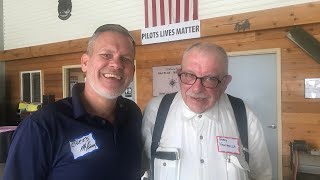
Kenny Keller (Helicopter Land Ground School) presents a personal tribute to helicopter examiner and Vietnam-era pilot Jerry Ventrella. Kenny recounts receiving an email from a viewer who met Jerry and shares memories of doing both his private and commercial checkrides with Jerry ~20 years earlier. He describes Jerry as a legendary, well-respected examiner (reported ~3,000 checkrides) and explains several teaching points he learned from Jerry—how the height/velocity diagram applies, the ‘‘air cushion’’ at 6–8 inches for pickups/setdowns, and the value of slow/gradual approaches—arguing these fundamentals shaped his long-term flying and instructing style.
Chapters
Hey, it's Kenny with Helicopter Land Ground School. Want to do something kind of special today? It's just basically as the title of the video is, says my tribute to a helicopter industry legend. And I've talked about this gentleman many, many times through the 10 years of making videos. I mention him in our ground school all the time and I haven't seen him. His name is Jerry Ventrella, and I'm going to share a picture with you right now. And I just got this email from a member and I wanted to share this. He said, hey, Kenny, I went to a Pilot's Lives Matter gathering a couple Saturdays ago and our first examiner, Jerry Ventrella, was there. Of course, I went over and said hi and told him that I watch your YouTube channel and how much you mention him all the time. His wife took down the information to look up your channel so they could watch it. Jerry jokingly said that maybe he should charge you a commission for every time you mention his name. I laughed and. Let's see, I laughed and told him that I would email you and pass on that information. I think he was flattered by the fact that you mentioned him in your videos. Side note, I asked him if he still carries his little typewriter with him for typing up temporary licenses. He told me everything is automated online now, but he does carry it and blanks in case the automated website happens to go down. We were surrounded by Vietnam helicopter pilot. He rose that day. Chris and Jerry saying hi to Kenny Keller. Take care, Kenny. Chris McKinney. So that's awesome. I just wanted to share this today because he is a helicopter industry legend as far as I'm concerned. I did my private and my commercial checkrides with Jerry. This was after I had failed my private license the first time around. Right. And I tell that story all the time. I took it with an FAA examiner, didn't make it through the oral, and I went home completely devastated and didn't go back for six months. And I created a notebook in that time when I was preparing to go back because I didn't want to fail the second time around. And I was thinking about this this morning. And I even put in my notebook, and this was the first official version of my notebook, a proof copy. And I can remember writing about him in the notebook. And here I'm doing a demonstration. Put down a diagram of selling the power and what happens when the wind is behind you on a steep approach. And I even wrote, think about Jerry showing downwash on a checkride. And then in the notes, because this was A proof expand on who Jerry is. And I'm not sure if I ever did that in the next version, but I talk about him all the time. And the point, I guess, that I want to get at is, you know, two checkrides with this gentleman. I learned so many things that I'm using to this day. So it kind of brings it back full circle for me when I get this email and I was honored or flattered or whatever you want to say that someone who watches our videos or whether he's a ground school member or not, I'm not even sure. But either way, he knows how much I talk about Jerry. And you know, the cool thing was the man is this oh my God, wealth of knowledge. You know, probably forgot more about helicopters than I'll ever know. And he's been given. He's a Vietnam era pilot. I don't know how old he is now, but the last I talked to somebody from the faa, he's still giving checkrides. And when I did my checkrides with him 20 years ago, I remember the number coming out. They said he'd done like 3,000 helicopter checkrides at that point in his lifetime. Right. So it's so cool because he's just such a wealth of knowledge and these little tidbits of things that he, that we talked about and he showed me on a checkride were so invaluable to me as a cfi. Well, as an everyday pilot, you know, I think about these things all the time. And it's pretty amazing that just out of two checkrides, when a guy is evaluating me, he's also teaching you things at the same time. Right. And the first example that comes to mind is the high velocity diagram. Okay. Jerry was the first one to explain to me how the high velocity diagram is geared for takeoffs. It's not geared for landing. And he said, in your career, you're going to have people arguing this point. And he said, but let me tell you, on a takeoff, anyone into the deep aerodynamics of it, but basically high power, high pitch, you're asking a lot out of that aircraft. You're probably pulling it to max power, or you're at least pulling some available power and you're putting a load on that aircraft. And he went in deep in detail about how the high velocity diagram is geared for takeoff. Right. So I'd always kept that knowledge to the ears. So whenever that debate comes up, I'm like, well, you know, I know what Jerry told me. That's the way I teach. And so I've always stuck with that, and I've had good luck by sticking to the basics, right? Sticking to the things that we learned as private pilot. You know, sometimes I think people just think, oh, well, you know, that's just a private place, private license. Well, what you learn at the private level should be shaping the type of pilot you're going to be 20 years later, 30 years, 40 years later. You know, you shouldn't forget the basics and the essence of these things that we learn that are so important. You know, I say all the time when people say, well, you know, how do I be like the best instructor? How do I be a really good instructor? And I say, it's not that difficult. It's apply yourself and it's study and understand and apply yourself to a point, you know, beyond what a lot of other people are willing to do. Just passing a checkride is one thing. Excelling at a checkride is another. And, you know, I'll probably talk about a couple other things that he taught me, but I want to talk about the checkride, right? He knew that I had failed the first time. And Jerry is known for going through the pts, and I mean, going through every single step of the pts. And I can't tell you how many hours long the private oral test was, but I can guarantee you he hit every single thing. And I posted this picture already on Facebook. And Johan, one of our star students that I talk about all the time, that did so well when he came to the US and did his private in three weeks, he actually did his commercial and he posted on there, hey, Kenny, I took my commercial check ride with Jerry, and yes, what a legend. And that guy, you know, he made the comment about how he hits every single thing in the pts, right? I know some people might kind of cringe at that, but he's a very fair examiner. But he wants to make sure you know your stuff, right? So he's known for that. It's not going to be just sampling pts. He's going to hit every single thing. So my first failure hurt me so much, right? And so the second time around, I wasn't going to fail. I studied and I studied through that notebook that I built, and I studied over and over. And the day of the private checkride, say we were probably maybe halfway through. We'll say we were halfway through the private check, right? Oral portion. At a certain point, he stops, take a little break, and he goes, you know what, we're not done yet, but you came in here with a pink slip today. Right. And I go, yep. And he goes, tell me what happened, why you came in with that pink slip. And I said, well, I didn't know my stuff then. Like, I know it now, you know, I said, after failing, I was just devastated. And I just went home and I just applied myself, and I studied like a madman. And I created this notebook, and I just studied it over and over and over with all the things that I had trouble remembering and all the things that I knew I needed to know. But. And I arranged everything in the notebook that made sense to me. I didn't create it for anybody else. I created it for me to sit and study. And he said, well, you're batting 100%. He said, you're nailing everything. And he goes, we're not done yet, but I just wanted to let you know that you're doing so well, and I've just been sitting here wondering why you ever failed because you're batting 100%. And he said, you know what? When this is all over, if you're done today and you have your license, he said, I'll call that first examiner. Because as examiners, we're a tightly knit, you know, we're tightly knit. I don't know, family or club or whatever you want to call it. And he said, I'm going to make sure I make a phone call to that examiner so he knows that you did come back. And even though you came to me, you came back, you didn't give up. And I'm going to specifically tell him how you excelled at this checkride and how well you did, because I'm pretty sure I told him that, you know, when I got failed the first time, when the FAA guy failed me, he said, basically, I don't want to come to your accident. You know, if you can't answer the questions and go boom, boom, boom, boom, boom, here sitting across the table from me, then what are you going to do out there in the real world when you have a problem in the aircraft and you can't recall just like this, what you need to do or what's going on? And he said, so before you come back, you need to know your stuff, and you need to know it like this. Boom, boom, boom. So, you know, on to the couple of things that Jerry taught me. Here's a cool one. You know, and I know that Jerry knew the instructor that I was flying with, so he had. He already knew the way I was going to fly, right? So it's kind of cool, because let's. First example, this is A big one, let's say. You know, for all intents and purposes, what you see right here, this table is a Runway, okay? So this young guy's flying with in the R22. He had me doing these running landings that were, you know, sliding, you know, all probably a quarter of a mile down the taxiway. And that's all we ever did, right? High speed, high speed. Slide, slide, slide, slide, slide. Not saying anything's wrong with that. That may be how you have to do it, right? But so on the private or commercial, I don't remember, but doesn't matter, Jerry. We're going on the pattern. He says, hey, I want you to do a shallow approach in running landing, but I don't want you to use the taxiway. I want you to go across the taxiway. And I said, what? What are you talking about? You can't do that. And he goes, why not? I go, well, I don't have enough room to slide. Well, ended up. I don't remember exactly how it happened, but he kind of talked me through it and taught me that. Hey, and this is what we did. We actually came in and we did a shallow approach, slowed it way down and did this short little running landing, going this way. And he was going, See, he goes, depending on the day, depending on where you're at, depending on. Depending on the type of malfunction you're having, depending on the weather, you don't have to slide a quarter of a mile down the dang Runway, right? Very simple little thing. But to this day, people still seem to want to train and slide like, a quarter of a mile. And I'll do the same thing with a student. I'll go, well, let's do running a landing across the taxiway, across the Runway. And they'll go, what? I've never seen that before. Well, you know you can do it. I know. Mention in the notebook, one thing that Jerry showed me was that air cushion at 6 to 8 inches above the ground. I got that from Jerry. No instructor out of this. I had probably, I don't know, at least three or four different instructors, maybe five or six that I threw out, I flew with throughout my private training. Nobody ever showed me that air cushion. Jerry just showed me on a checkride as I was doing my pickups and set downs. He's like, ever heard of the air cushion? It's six to eight inches above. And I'm like, no. And he's like, well, let me show you something. So over the years, I've taken that, and I've made videos on it, and it's in our training. And so many times people go, wow, I've never heard that before. Even a guy that might have two or three or four or 500 hours and they're struggling with pickups and set downs. And I go, hey, do you understand the air cushion? What are you talking about? Another little one approaches. Here's a big one again. The young guy I was flying with, he was awesome friend, and he did a great job. He got me through it, right? Taught the fast approach. I'm sure Jerry knew that, right? So he knew the type of approach that I was going to fly. So he says, okay, show me a normal approach. So I come flying in, do my normal thing, and we get down to the end, come to hover, and he's like, so what'd you think of that? I'm like, I thought it was pretty good. And he's like, wow. He goes, I thought, this kid's coming in hot. He's going to kill somebody. And I was like, freaking out, right? Did he fail me? No, he didn't fail me. But we went into the discussion and we discussed it more at length after the checkride, but we sat and talked about it. And he explained how again, how, you know, the height velocity diagram is geared for approaches and explained to me the technique of the slow approach, right? How it should always look like you're approaching the numbers at the same speed, how you start slowing it down up here and you bring it in and you slow it down the whole time gradually, bit by bit, you're slowing it down the whole time that you come in, right? So that was one that you'll hear people argue, right? You'll hear people give both sides to that argument. I'm not going to go into it. I just know what Jerry taught me about why you need to fly the slow approaches. So I stuck with that throughout my career. Well, guess what? It's worked out many times over and over again. You know, I've told the story how working for Air Methods, largest air medical provider in the world, at one point they said, hey, guys, we're going to split the room here and you're going to let you argue back and forth, but we're going to tell you something. Your approaches will be 200ft per minute or less for every single approach you fly, or you won't work for us. We're going to let you guys talk amongst yourselves and we'll come back. And they come back and let everybody in the room, you know, make their peace and some guys hated it, right? They hated that. And I was like, oh, okay, cool. I've already been taught that super slow approach. I know how it works. Didn't bother me. Another time I was flying ems, not for that company, but before that, I'm flying at this hospital where all the other pilots fly the fast approaches and I'm flying the slow approach. And the base manager kind of complained and said, oh, man, you guys, you are 22 guys, you civilian guys, you like those slow approaches. And you spend too much time coming in, you know, and you might be, you know, knocking hats off of people's heads going over the parking lot and you need to, you know, speed those approaches up. Well, I know how the Czech airman, you know, worked, I worked with to get that job or to be trained at the beginning of the job. So I started flying the faster approaches in my next 135 checkride, I went flying in a little faster into the hospital helipad. And the checker was like, what was that? I'm like, well, that's how they want him flown. He goes, who? And I said, a gentleman's name. And I go, in the hospital, I guess because they're complaining about how slow my approaches are. And he goes, I'm going to talk to them. I know because I flew with you in your original training. I know you know how to fly the slow approach. That's how you're going to do it. That's how you need to go back to doing it. I will talk to the hospital tonight. And if they don't like it, then they should probably get rid of their helicopter program because this is the way we're going to fly the approaches. You need to go back to the way you did it, right? So time and time again, all these little bits and pieces and things that I learned from Jerry stuck with my mind. And then I used them throughout my commercial training and then my CFI training. And there's all those little bits and pieces and there's more. You know, I could go on and give you even more. But the impact that he had on me, I mean, no offense to all the instructors I had, I had great instructors, right? Wonderful guys that I flew with that taught me so much. But then when you, you know, in that early stages of my career, to jump in with the guy, you know, a Vietnam era pilot 20 years ago that given 3,000 checkrides and a very well respected guy in the industry, it's pretty easy to, you know, take what they say and go, you know, what if he's telling me this is pretty darn valuable. And he told me, you know, always stick with your guns and, and, or stick to your guns and do these things the right way. And when I first started as a cfi, one of my main jobs, I was, I quite honestly, I intimidated the pilots that I, that I was going to fly with because I moved to a different area of the country and they didn't like the way I flew, they didn't like my slow approaches, they didn't like the, you know, a lot of things I just talked about they didn't like, right? And I flew this one old timer who was checking me out that was going to retire and I was going to take his place. And he said, Kenny, everybody that's here, all these other pilots, all these part timers that come in, you're the full time guy, rest, these guys are part timers. He goes, they're all going to tell you how you're doing it wrong. And he said, let me tell you something. And this was another Vietnam air pilot after we flew together, he said, someone has trained you well, don't let any of these guys around you, change what you do. And I was told that same thing again later in some advanced training with some other gurus I flew with in the industry. So, you know, having good people with you in your training in the beginning and taking these things that we learned from day one and sticking with those are so important. And that's what it takes to be a safe and prudent pilot, right? I mean everybody's into oh, you know, fancy helicopter pictures and shiny paint and navigation lights and how cool I look in my flight suit and my helmet, you know, and that's all good. But understanding the basics of how these things fly and understanding the basics of what is acceptable and what is not and sticking to those basic basics is what's going to make you incredible frickin pilot. And you know, I just think back to my training. I have flown with some awesome people, right? And flying with those good people who have, you know, said, man, keep doing that like that, that's the way it should be done. And don't let anybody tell you different, right? And sticking to my guns all this way through my career has worked out really well, let me tell you. Because the people you might argue with it on the street or down the local flight school is one thing, but when it goes to flying with key people in the industry, examiners, you know, factory check airmen, check Airmen on 135 check rights for an EMS operation. The majority of them kind of fly with the same school of thinking, right? Many, many, many of them do. Now you're always going to have your little different intricacies here or there, but the basic elements of flying a helicopter is the same. And again, this is about Jerry Ventrella. The video is what it's about. So my tribute to helicopter industry legend to have trained so many people over the years, I can't even tell you about his career. I know that I read an article about Jerry after I'd already known Jerry and did my private commercial and I was out working in the CFI world. I wish I remember the article I read, but they put out a big article about Jerry and Rotor and Wing or one of those big aviation magazines. Wish I would have kept that article because it was a really amazing article. When you go through it and read it and gave you all the elements of his career. And it was like when I remember reading that article, I was so proud that I had taken two checkrides with a guy who, you know, was a legend in the industry. So I'm going to wrap it up with that for this member to say that he was at a fly in and they went over and talked to Jerry and Jerry apparently didn't even know that I had been using him all these years and using the things that I'd learned from him and actually mentioning his name. I'm honored that, you know, he went home to with him and his wife. We're gonna go home and check out my YouTube channel. Right. So I thought, you know what, I want to do a video cover this so that hopefully. Actually I'll email that gentleman that sent me that and say, hey, could you see that Jerry gets this link just to make sure. I'm hoping he remembers me since I haven't seen him in 20 years. But what an awesome examiner and what an awesome contribution he's made in the, in the world of helicopter training to have worked with so many pilots over the years. So all the people he's worked, right, that have been out in the industry working and all the people that we've helped through helicopter land ground school, you know, it's part of his legacy, right? We took those things or I've taken those things that I learned from Jerry and stuck with them. So thank you, Jerry Ventrella. I'm glad that I had the opportunity to fly with you for my private and commercial check rides. I know you're only a couple hours away from here. Hopefully maybe I'll run into you somewhere. At some kind of event soon. I'd love to see you again. So, my tribute to an industry legend. Do us a favor, like, and subscribe, and we shall see in the next video. Sam.










