Never Means Never… Until It Doesn’t (Collective Safety Explained)
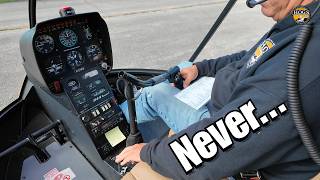
Kenny Keller walks through the collective control checklist in helicopter training, emphasizing never removing your hand except in specific moments. Two helicopters were lost in the last six months when solo pilots let go of the collective.
Questions this video answers
R44
About 30 months
30 check rides
Two helicopters
About 24 (limit manifold pressure)
Chapters
In the training environment, I say once the engine's running until the engine stops, you never, ever, ever take your hand off the collective. Except for a few times when you're with an instructor and there's two of you, somebody should always be guarding that collective. I want to move to the solo scenario. So again, this is for training because I know I'm going to. You know, in comments, people love to argue these different points, but in a training environment, we want to keep things really, really protected and especially guarding the collective. So I've done everything on the startup on the R44 up until the point of actually starting the engine. So I'm going to just go ahead and do the startup from this point moving forward where we start the engine. And I want to see how many times I think it's appropriate to actually remove my hand from the collective to do something else and bring it back. Now, again, I see people come from around the country have been coming here for the last 30 months. We've done 30 check rides. And a lot of people do a really good job with guarding everything and keeping everything well guarded. But we get a lot of sloppiness too, and people getting sloppy with engines running, even maybe at full rpm, they take their hand off to be moving stuff around without this locked. And I just don't think in the training environment it's just not acceptable. So let's go ahead and we're going to go through or clear on the right and left. Alternator, Avionics, strobe. Start my timer engine. Oil pressure's up. Now the engine's running, so I'm going to do my best to guard that collective, except for a few times. So let's move on with the checklist. Starter on. Light out. Engine 50 to 60%. Oh, we need to engage the clutch. They were turning in less than 5 seconds. Just came out of maintenance. They got that set. All set. Nice. Alternator switch on? Yep. Oil pressure off. Zero within 30 seconds. Yep. Headset's on. Yep. Now I'm going to get my 50 to 60%. Also try to move the cyclic to the spot where we'll get the least vibration. And that's one thing I see sometimes is they've never been shown that if you move the cyclic around when you're at this point, you can usually find a smooth spot. Some guys let the cyclic come clear over against their leg, or they have it far forward and the helicopter's shaking with the friction on, you can move it and you can find usually a sweet spot. So when you feel a lot of vibrations. Usually it's a little bit forward, a little bit aft to find that sweet spot. So for right now, I have the friction on. So this is sitting nice against my leg. So no problem there. So go back to the checklist. We got 50 to 60%. Right now we're waiting for the clutch light to go out. We don't have enunciator panel test. We don't have that button audio alert. We don't have that clutch light is out. So now we can go to 60 to 70%. So at this point, I'm still. I'm using my right hand for my checklist. Leave my hand on the collective cyclic spine with a little bit of friction on resting right against my leg. And now I'm just waiting for the temperatures to come into the green, particularly the cylinder head temperature. Oil temperature is almost there. And I'll point out as that as that's coming into the green there, these are those times where I see people just taking their hands off the controls and hand here and hand there, moving all around. I'm doing just fine keeping that collective guarded. My hands on it. It's on the throttle. It's not going to come up. The throttle is not going to get twisted. Nothing's going to happen as long as I'm just keeping everything nice and smooth and going through in a nice smooth manner. All right, we're in the green and everything. So I'm going to go up and do the mag check and uncollective, of course, easy with my right hand to reach down, check both the mags. I've seen guys take their do that with their left hand. And it's like, why you can reach up with your right hand and do it. Keep guarding that collective. That's actually easier. I believe the mag check was good. Now here's one where some people reach across and grab the carb heat. And I could. I'm gonna make sure the collective's locked air back down to back down about 70%. Make sure I'm locked. Okay, collective is locked. It's not going to go anywhere here. I don't mind pulling my hand off, pulling the carb heat up back to it. And I'm just going to wait, make sure that I have a rise in the carburetor air temperature. But again, I made sure it was locked. And now we're down at like 60%. So not really worried about anything. I can see that the needle's coming up for the carb temp. So again, collective locked. Reach Forward real quick. Just. I can even keep my thumb on the collective. Push that down. Hand back to the collective. So there's the carb heat again. I was locked. I moved forward, came right back to it. All right, so sprag clutch, check. I'm going to roll it up a little bit, roll off throttle, add a little bit of right pedal. Make sure the needle split and that. That's kind of fun. I just did that video, and a lot of people are having a lot of wild comments on that. It's just a simple little push to make sure if you're on a slick surface, the helicopter doesn't spin on you. All right, doors closed and latched. There's no door here. Heather's actually filming. She's going to climb in and latch that here in a minute before we take off. Limit manifold pressure. I checked that already. About 24 for us today. So then to finish out the checklist, we have collective friction off, hydraulic system check, governor on, which it is on. Warning, lights out, and then do our horn. So I've done this enough times that I feel confident I can get through these, and I can actually put the checklist away. So what I'm going to do is checklist away, make sure my collective is locked, then reach forward, release my friction, and then I put just a little bit back on. Just kind of how I like it. Just a little bit of friction and back here. So the lock still locked. So now I'm going to check the hydraulic system. A little small X pattern with it on. Going to turn it off. Another small X pattern, back to neutral. Hydraulic back on. Now I'm going to release that collective lock, hand back forward again. Now I can roll it up, Let the governor take over. Now I'm going to reach back. Collective is unlocked. All I got to do before takeoff, other than a pre liftoff check, is raise collective roll off throttle. There's my horn back down, let the governor take it back to full throttle, and that's it. Actually, that's pretty simple. Nothing really too awkward there. A very simple method to follow. A lot of people have a good method like that, but I see a lot of people and really sloppy on taking that hand off. And then, of course, the other times you could take your hand off is once you're up at altitude, you can take your hand off. And then depending on what helicopter you're flying, some helicopters allow you to put friction on during flight, some do not on the collective. It depends on the aircraft you're in, but it's acceptable once you're in flight, it's really not accepted during any kind of hovering hand on the collective, take off a landing hand the collective. And at your flight school, hopefully you're taught if you're soloing and you have to change of frequency or you got to do car beat and there's nobody in with you, set the helicopter down, lock the controls, do what you got to do, and then unlock and pick back up. A lot of helicopters are getting wrecked because people taking their hand off during a hover. And if you don't believe me, just look around on anywhere on the Internet and you'll see it. It's happening frequently. And we know of two helicopters we've lost in the last six months from people we know because somebody took their hand off during a sort of solo and both of them were like first solos. So guarding that collective super, super important. So do us a favor, we got some more flight videos coming for you. We are covering things that we're seeing in training over the last 30 months, last 30 check rights. So subscribe, click the bell and we'll see you in the next video. Peace out. When you feel the pressure to fly, but know the right decision is to stay on the ground, hit the hogs no go and live to fly another day. Helicopterground. Com.










