Passenger Briefing...What is Included??
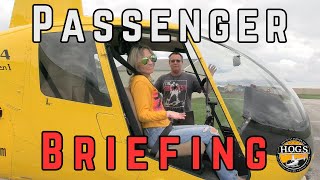
Kenny Keller walks through the 10 essential items to cover in a helicopter passenger briefing, from headset fitting to seatbelt operation. He stresses keeping passengers in the pilot's sight line, never approaching the tail rotor, and always crouching near the aircraft, then shares real fatal accidents that happened when these rules were skipped.
Chapters
Another fatal accident can happen, and that's happened right here in Indiana. I've landed at a helipad where a trained crew member just forgot. Got out, walked forward, didn't crouch, decapitated. And while we're at it, free tips here. Private Pilot 101 Helicopter Training Blueprint. You can get the PDF for free down below. You can also get the paperback or the Kindle copy at the link down below as well. Here's what. If you don't explain to them, here's what they do. They get in the helicopter and they'll put the headset on here for purposes. Let's do this. I'm a typical person. I. Nobody explained to me how to use this. So I do this, and then I do something like this, and then I'm like this. Okay, so this is clear back here. So then you're the engine's running, and you're the pilot, and you're trying to tell me how to get the headset properly put on.
You could probably flip it around, but.
You just took your hand off the collective and the engine's running. So you're. Here's the. Here's the passenger wasn't told properly how to install their headset. You got the engines running. You can't take your hand off. And you gotta get me to get the damn headset on right here.
Kenny, you need to swap your headset side and put your mic in front of your mouth.
Swap my headset? Yep.
There you go.
Now, like this?
Yes. Now put your mic down.
But you can't hear me because I'm not talking in because my mic's clear up here. So you gotta yell at me.
Put your bike down. Put it in front of your lips. Closer. Closer. Now say, check, check, 1, 2, 3.
Check, 1, 2, 3. Okay. As silly and awkward as that is, if you don't give somebody the proper instruction on how to put the headset on, how to adjust the headset, tell them, is there a push to talk switch, a foot switch, or is it voice activated? And if it's voice activated, you have to explain to them that they got to get the mic up there close to their mouth. In this scenario, Heather's got the engines run and she can't take her hands off the controls. And you're trying to yell over the sound of the engine, trying to get the passenger to get their heads on straight. So this is one of 10 things that should be included in a passenger briefing.
Probably a good idea to do that before you even start the helicopter.
Yes. Should Be done before you even start the helicopter. So next, something should be included of 10 things of passenger briefing. You want to explain to your passengers that they always should be in an area where the pilot can see you. So that means in the event you had to get out, we don't want you getting out while the blades are moving. But for some reason you're sick or something bad happened, there's some kind of emergency. When you exit the helicopter, always be where the pilot can see you. In this case, it's heather. So from this direction, 180 degrees all the way around to there is where you need to be. If you're outside of the cockpit when the blades are spinning, you need to be where the pilot can see you. Well, I should say anytime, right? Because maybe this blades aren't spinning yet, but the pilot's getting ready to start. So you never want to approach from behind. So never approach the tail boom. Okay? This will be obvious to some, but if you don't think and tell people, think about this. This thing is back here spinning. And when it's spinning, you can barely even see it. So that's why you're telling your passengers to stay 180 degrees in the where the pilot can always see you. Because if they walk into this, this is a fatal accident. There's plenty of stories out there. If you go to the Robinson factory, they'll tell you about a horrendous, horrendous event. I'm not even going to go into it. People have been killed from walking the tail rotors and even experienced people. A good friend of mine, a mechanic that I've known for years. One day he was doing some tracking and he was talking about how he went to pick up a tool and he turned and did this. And he said the rotor blade was right there in front of his face. Trained a mechanic who knew better just by in the moment, not thinking, almost walked into it. So that's why the tail rotor is so super dangerous. And your passengers need to be briefed about staying away from this at all costs because it will be fatal. Can be fatal. Enter the helicopter only as briefed passengers should approach a helicopter in a crouching manner. You see it on television. We all do it. And this helicopter, luckily you've got some pretty good clearance. But we still. People tell them to crouch, approaching and exiting the helicopter. I still do. It doesn't matter how high it is. Some of the helicopters, the blades are lower. And if you're on uneven terrain, another fatal accident can happen. And that's happened right here in Indiana. I've landed at a helipad where a trained crew member just forgot. Got out, walked forward, didn't crouch, decapitated. I landed at that heliport. It happened. What if I want to take my shoes off and hang the feet out? This is something you see on social media all the time. Personally, I know a lot of people to do that. I want you sitting in the seat, I want you strapped in. And I don't. People have asked me about my opinion on this whole turning in the seat and hanging your feet out the window. I don't like it, but fortunately, all I do is training. I don't do rides anyway, so it doesn't really matter what I think because I don't do rides. I only do training. But no, I'm not thrilled about passengers twisting in their seat and hanging their feet out the window. I just don't think it's a good idea.
What about hanging out with my phone?
Good one. Hanging out with your phone, that's made me nervous plenty of times. You have somebody with you, they want to get some shots of something and they're hanging out the edge with their phone or their camera or whatever the device is. Can be very dangerous. So, yes, you want your passengers to be able to take photos, but I would explain to them, please keep your camera inside and try to get the shots you want from inside. I don't recommend hanging out right. Either you or even the camera. Gust of wind slips out of your hand could be fatal to somebody on the ground. And also objects that come out this side of a helicopter. On Robinson, anything that comes out of the cockpit could go into the tail rotor and that again, could be a fatal accident. Keeping your arms, your legs, your equipment. Flip flops, flip flops. You know, if you kicked your flip, your passenger kicks off the flip flops and then flip flops go out into the tail rotor and fatal accident. So keep your shoes on. People never drop anything from a helicopter, which kind of goes with what we just said there. It is legal. And there are companies that go out and do golf ball drops and some other things, but those are train pilots. They have an area secured with people watching it. That can be done in that environment. But as far as a normal setting going for riding a helicopter, no dropping anything out of the helicopter. So you're up flying. Your passenger wants to take your seatbelt off, go ahead. No, put it back on. Seat belt should be on at all times. In a helicopter, there's really no reason to take your seatbelt off. Regardless of whether it's legal or not, something bad happens. You want that seat belt to be latched. Something else. Make sure you show your passengers. Seat belts are different between different helicopters. This and the Robinson. Very easy. You push the red button and it comes out. Push the click, go inside. And again, different helicopters have different seat belts. So it's a very simple thing, but you need to take the time to explain to the person for whatever aircraft you're flying how to properly engage and disengage the seat belt. In an emergency, only exit a helicopter after the rotors have stopped spinning. The only exception is if the helicopter has smoke or fire. So again, we urge new pilots. You want to take the helicopter and go give rise at your friend's house or your family's house. Unless you have rated pilots there, I would recommend shutting the aircraft down. And I know people go, oh, my God, that's more time on the aircraft. All I got, I got to shut down, start up every time people go in and out. They tell you that at the Robinson factory, unless you have rated pilots there to escort people up to and away from the helicopter, shut the aircraft down. Well, like it says here, the exception would be you've landed, you got an engine fire, and you want the passengers to exit for their own safety. Again, making sure they've already been briefed. Remind them, hey, when you climb out, head that way or head that way where I can see you. You all cost. You don't want them going to the rear of the aircraft. Point out to your passengers where the fire extinguisher is and how to use it. In this case, there's only one fire extinguisher, and it's right down there in the corner. Your passenger might need to help you put out a fire when you get on the ground. If you have some type of a fire. Fire in flight, know all your life preserver locations and how to use them. In this case, we have no life preservers. We're in the Midwest, in Indiana, we're over corn fields all the time. In this case, we don't need them. But if you do have life preservers, you're over water. Make sure that you know where they're at and how to use them. And we already covered this one, but I'm going to read it to you anyway. When exiting helicopter, only marshaling personnel should be allowed to open helicopter doors, release safety belts, and escort people out. Sounds simple, but the three of us here had somebody helping us here this summer, and we're like, hey, we're going to she want to take her kids up for a ride. And we're like, hey, gonna have Heather help you escort people up into and back from the helicopter. She's like, well, I've been helping you guys this summer. I understand about the safety of everything. But then in the moment when she brings her kids out, they're all excited and they're kind of following over each other and then they had trouble getting seated. It's better to just take one person at a time, give them the safety briefing, go up, open the doors for them, help them get the seat belts latched, help them get the headsets on so you know, they go on right, and then secure the door back up for them. Much easier than having your passengers try to do it themselves because half the time they're not going to get it right. And then you're delaying your takeoff and just making things more complicated. So there's 10 things you could think about. Of course you could add to that list. There could be more. Depends on the country you're flying, the aircraft you're flying, the procedures for any school or, you know, flight company that you work at. So there's a good basis of a lot of the things that should be included in a pre flight briefing. Examiner is going to ask you on a checkride. They're going to have you do that. They're going to get you through the oral portion and then he's going to say something like, okay, we got to the aircraft today. I expect a passenger briefing when we get to the helicopter. So the examiner is going to test you on what do you need to tell someone before climbing in the aircraft and going to a flight. And don't forget, Private Pilot 101 free PDF down below. See you next video. Peace out. When you feel the pressure to fly, but know the right decision is to stay on the ground, hit the hogs. No, go and live to fly another day. Helicopterground.com so I'm gonna put this on, see, because whoever was here last didn't put the headset back. I'm telling you, this is real world right here. We were jacking around trying to find the goddamn headsets.










